
Behavioral Design Patterns Morteza Yousefi University Of Science
Behavioral Design Patterns Morteza Yousefi University Of Science & Technology Of Mazandaran yousefi@ustmb. ac. ir Behavioral Design Patterns 1 of 27
Outline q q q q Template Method Mediator Observer Strategy Chain of Responsibility State Iterator Memento Behavioral Design Patterns 2 of 27
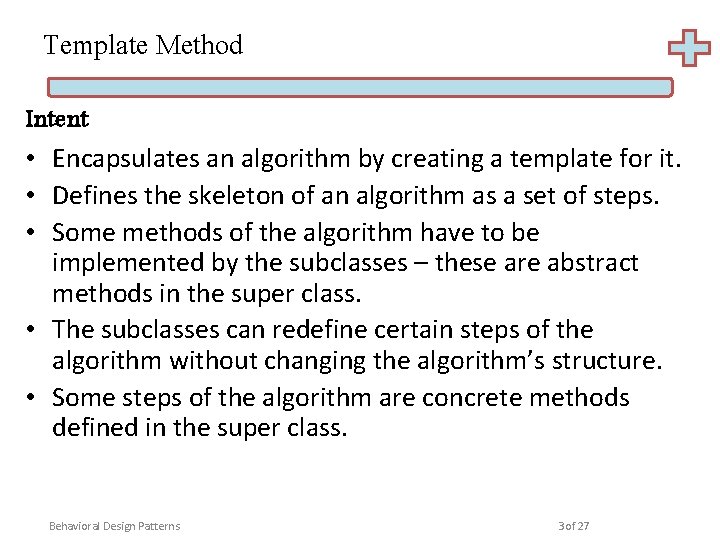
Template Method Intent • Encapsulates an algorithm by creating a template for it. • Defines the skeleton of an algorithm as a set of steps. • Some methods of the algorithm have to be implemented by the subclasses – these are abstract methods in the super class. • The subclasses can redefine certain steps of the algorithm without changing the algorithm’s structure. • Some steps of the algorithm are concrete methods defined in the super class. Behavioral Design Patterns 3 of 27
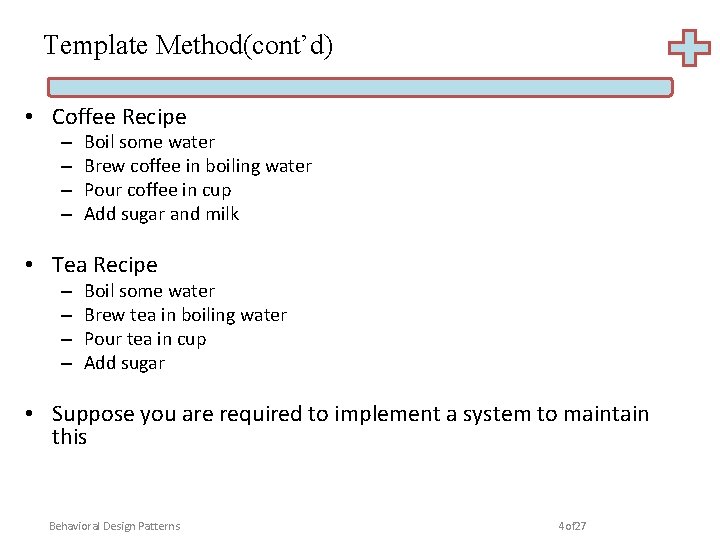
Template Method(cont’d) • Coffee Recipe – – Boil some water Brew coffee in boiling water Pour coffee in cup Add sugar and milk • Tea Recipe – – Boil some water Brew tea in boiling water Pour tea in cup Add sugar • Suppose you are required to implement a system to maintain this Behavioral Design Patterns 4 of 27
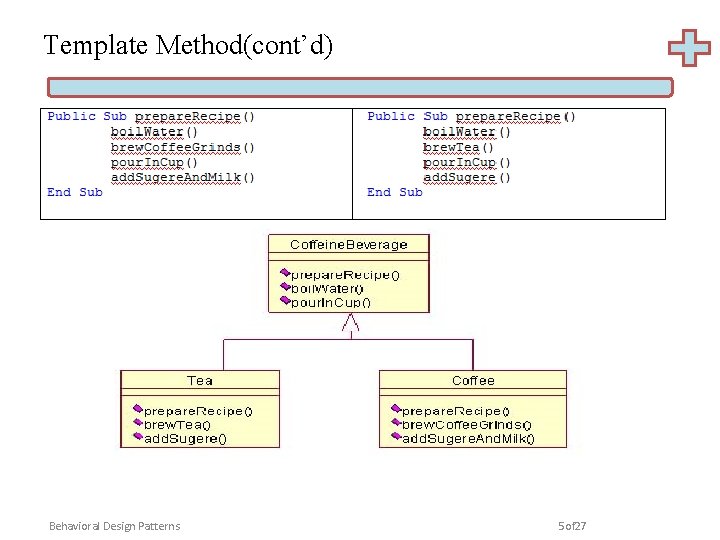
Template Method(cont’d) Behavioral Design Patterns 5 of 27

Template Method(cont’d) Template Pattern Structure Behavioral Design Patterns 6 of 27
Template Method(cont’d) Advantages of the New Approach • A single class protects and controls the algorithm, namely, Caffeine. Beverage. • The superclass facilitates reuse of methods. • Code changes will occur in only one place. • Other beverages can be easily added. Behavioral Design Patterns 7 of 27
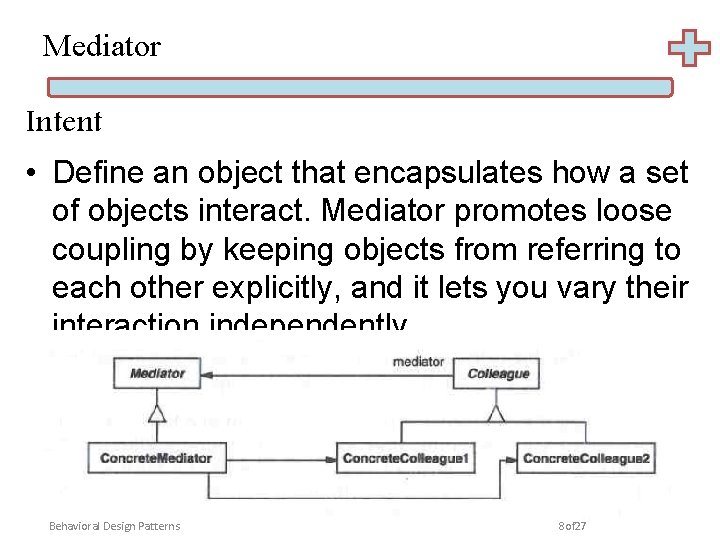
Mediator Intent • Define an object that encapsulates how a set of objects interact. Mediator promotes loose coupling by keeping objects from referring to each other explicitly, and it lets you vary their interaction independently. Behavioral Design Patterns 8 of 27
Mediator(cont’d) 1. When you select one of the names in the left -hand list box, it is copied into the text field for editing, and the Copy button is enabled. 2. When you click on Copy, that text is added to the right hand list box, and the Clear button is enabled. 3. If you click on the Clear button, the right hand list box and the text field are cleared, the list box is deselected and the two buttons are again disabled. Behavioral Design Patterns 9 of 27
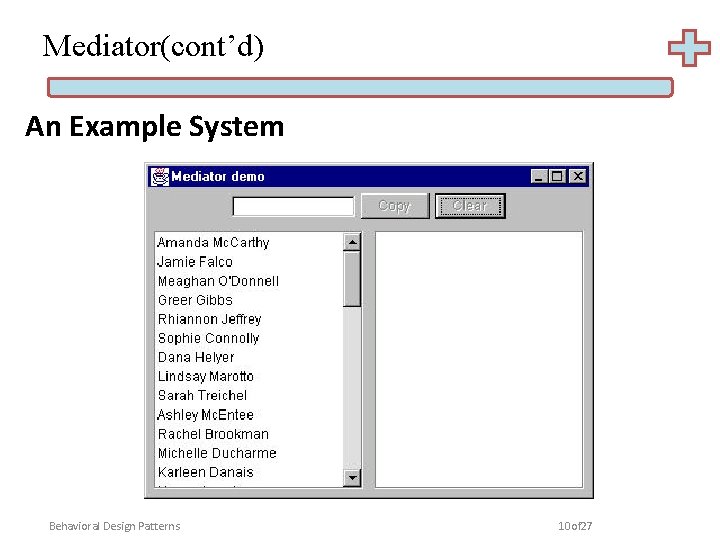
Mediator(cont’d) An Example System Behavioral Design Patterns 10 of 27
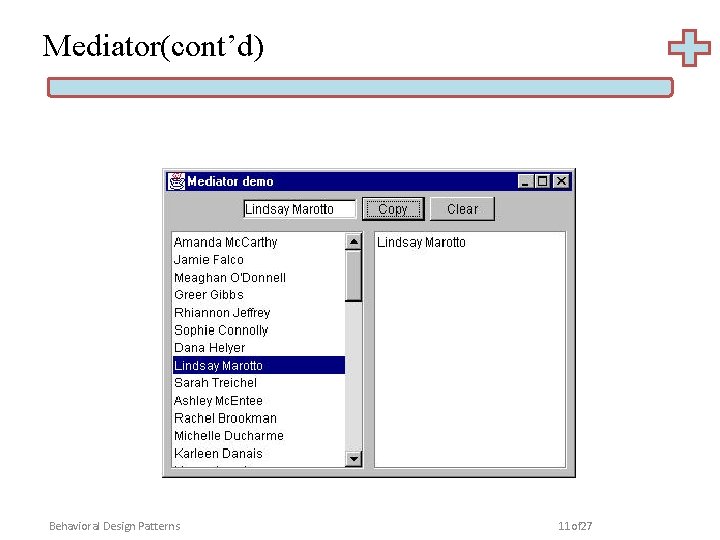
Mediator(cont’d) Behavioral Design Patterns 11 of 27
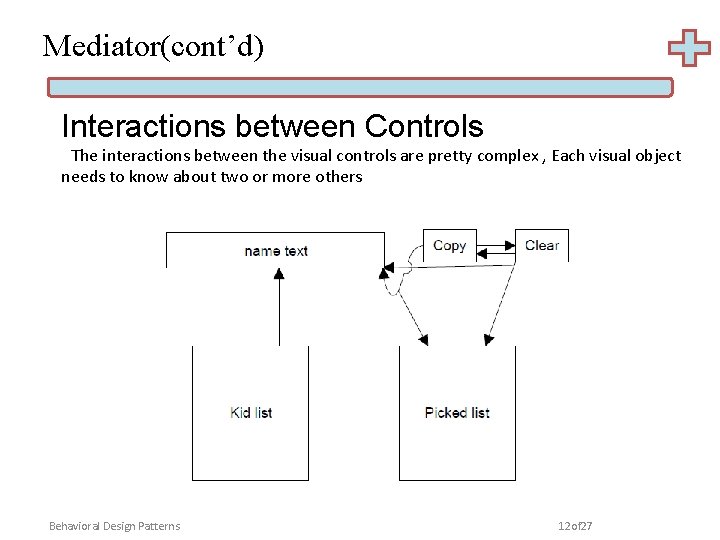
Mediator(cont’d) Interactions between Controls The interactions between the visual controls are pretty complex , Each visual object needs to know about two or more others Behavioral Design Patterns 12 of 27
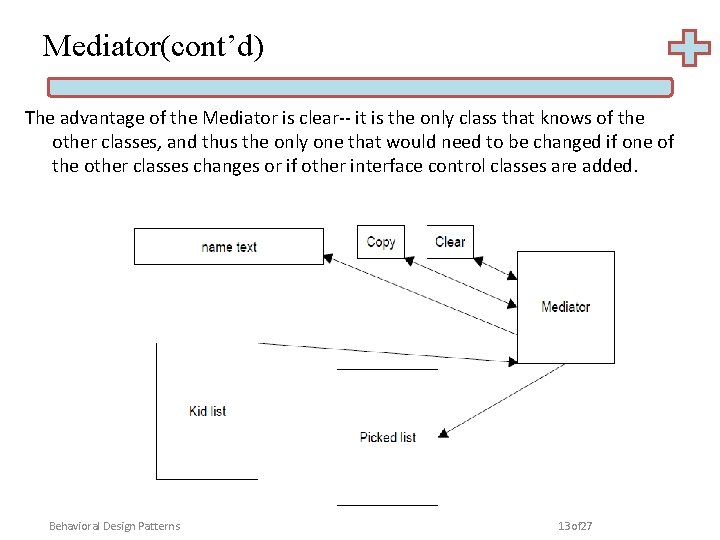
Mediator(cont’d) The advantage of the Mediator is clear-- it is the only class that knows of the other classes, and thus the only one that would need to be changed if one of the other classes changes or if other interface control classes are added. Behavioral Design Patterns 13 of 27
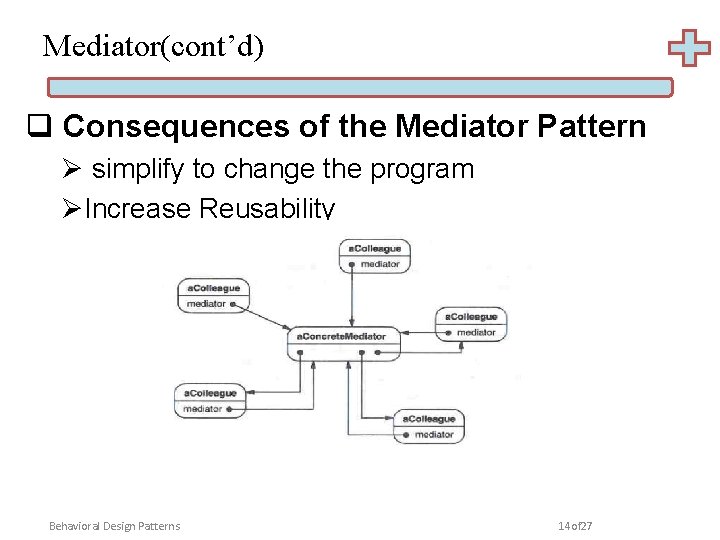
Mediator(cont’d) q Consequences of the Mediator Pattern Ø simplify to change the program ØIncrease Reusability Behavioral Design Patterns 14 of 27
Observer Intent • Define a one-to-many dependency between objects so that when one object changes state, all its dependents are notified and updated automatically. • The object that changes state is called the subject and the other objects are the observers. Behavioral Design Patterns 15 of 27
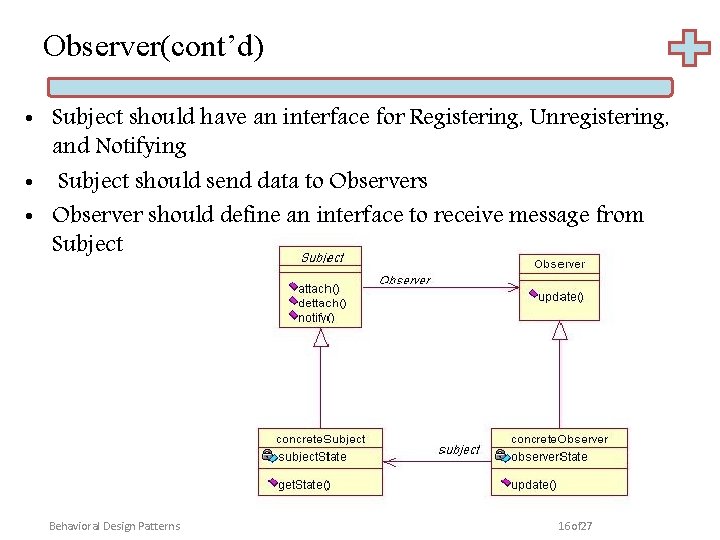
Observer(cont’d) • Subject should have an interface for Registering, Unregistering, and Notifying • Subject should send data to Observers • Observer should define an interface to receive message from Subject Behavioral Design Patterns 16 of 27
Observer(cont’d) Consequences Loose Coupling • Subjects and observers are loosely coupled. • The subject only knows the observer interface and not its implementation. • Observers can be added and removed at any time. • In adding new observers the subject does not need to be modified. • Subjects and observers can be reused independently. • Changes to the subject or observer will not affect the other. Behavioral Design Patterns 17 of 27
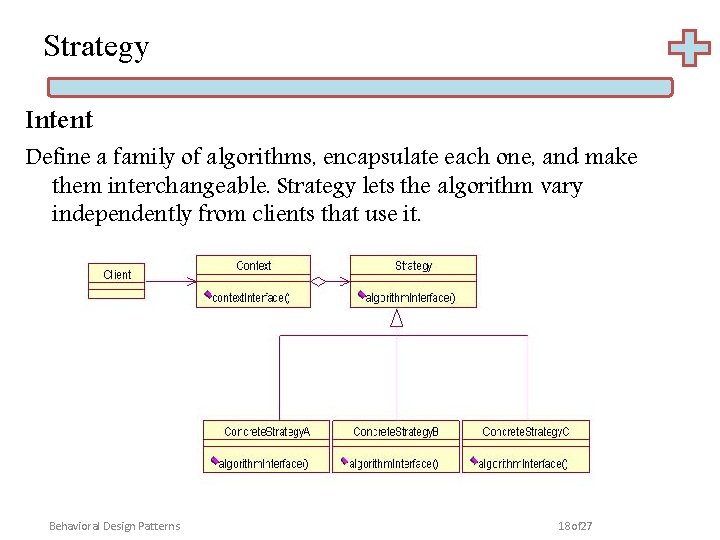
Strategy Intent Define a family of algorithms, encapsulate each one, and make them interchangeable. Strategy lets the algorithm vary independently from clients that use it. Behavioral Design Patterns 18 of 27
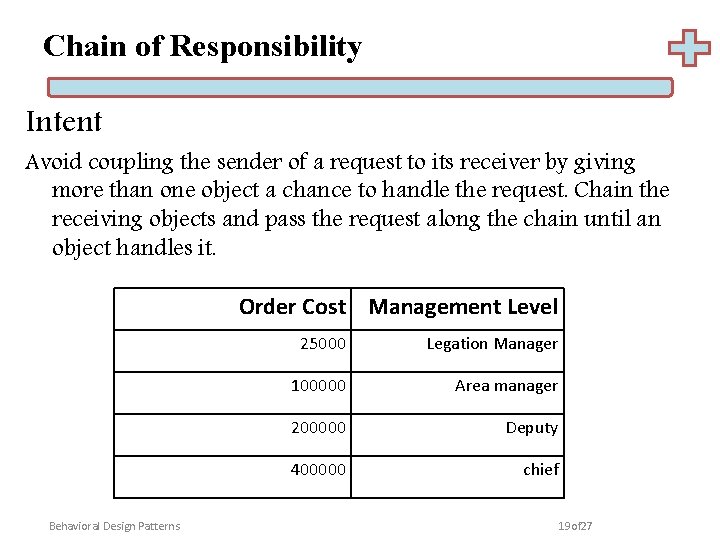
Chain of Responsibility Intent Avoid coupling the sender of a request to its receiver by giving more than one object a chance to handle the request. Chain the receiving objects and pass the request along the chain until an object handles it. Order Cost Management Level Behavioral Design Patterns 25000 Legation Manager 100000 Area manager 200000 Deputy 400000 chief 19 of 27
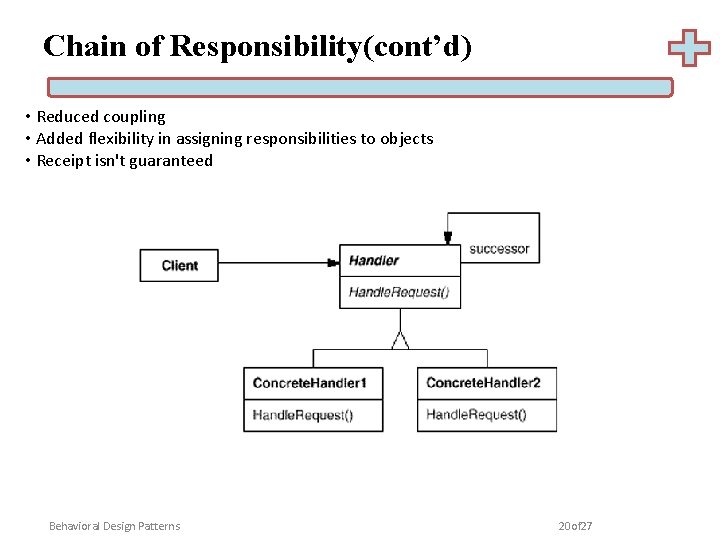
Chain of Responsibility(cont’d) • Reduced coupling • Added flexibility in assigning responsibilities to objects • Receipt isn't guaranteed Behavioral Design Patterns 20 of 27
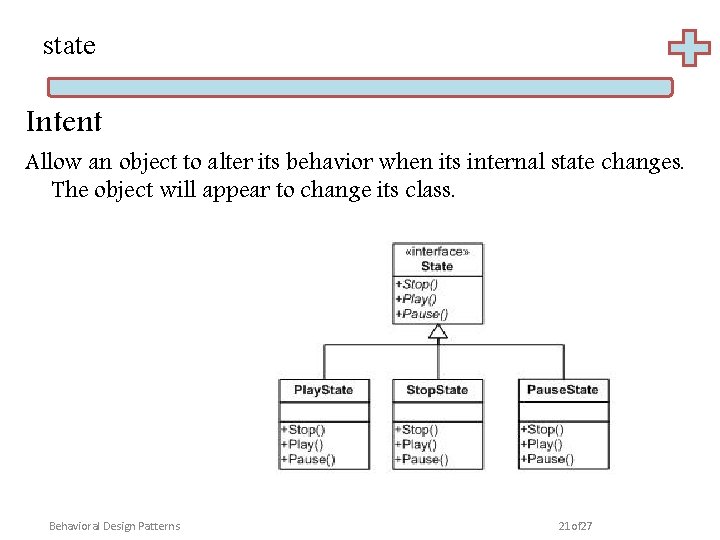
state Intent Allow an object to alter its behavior when its internal state changes. The object will appear to change its class. Behavioral Design Patterns 21 of 27
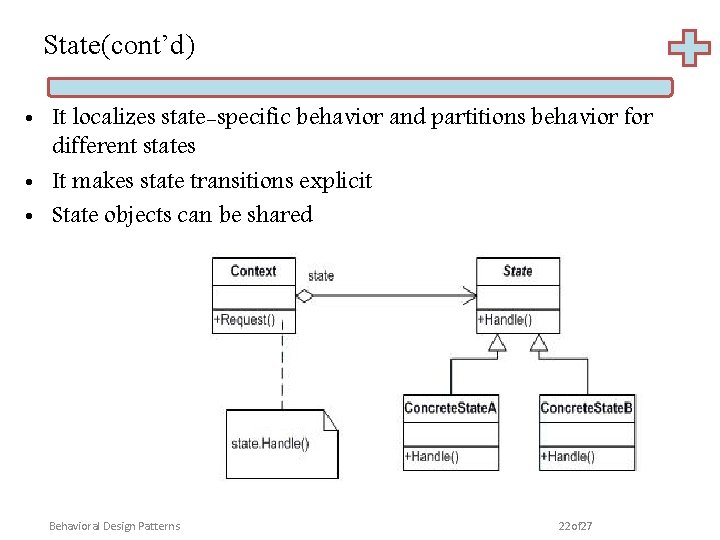
State(cont’d) • It localizes state-specific behavior and partitions behavior for different states • It makes state transitions explicit • State objects can be shared Behavioral Design Patterns 22 of 27
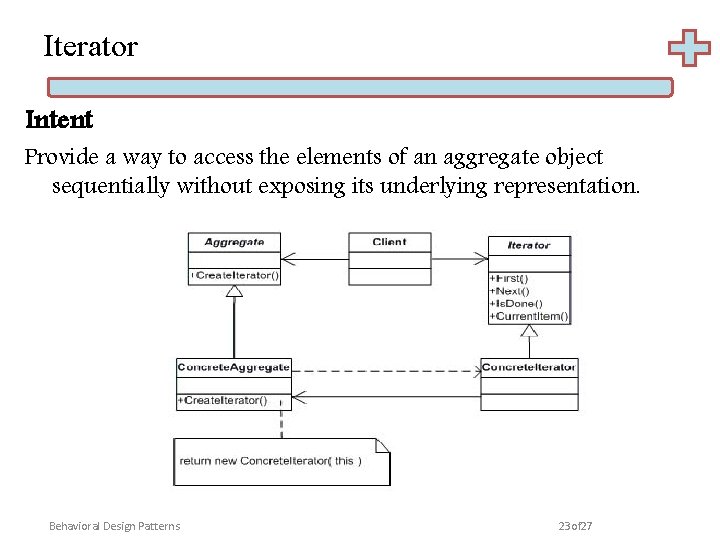
Iterator Intent Provide a way to access the elements of an aggregate object sequentially without exposing its underlying representation. Behavioral Design Patterns 23 of 27
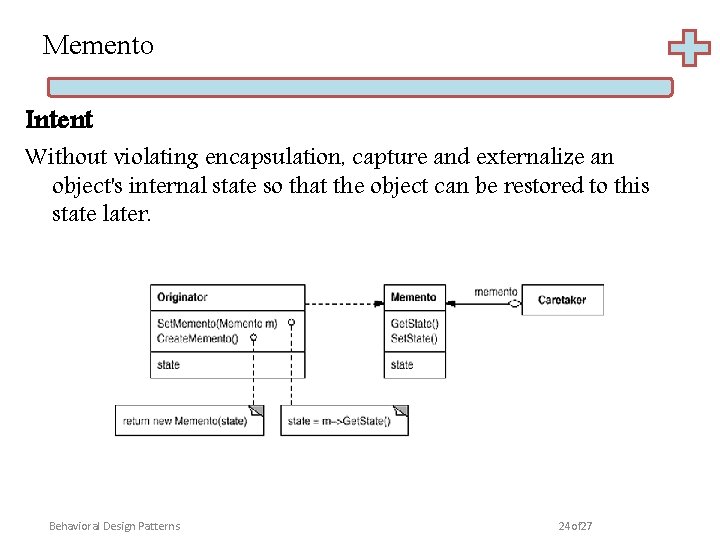
Memento Intent Without violating encapsulation, capture and externalize an object's internal state so that the object can be restored to this state later. Behavioral Design Patterns 24 of 27
Refrence [1 Erich Gamma, Richard Helm, Ralph Johnson, John Vlissides "Design Patterns Elements of Reusable Object-Oriented Software Addison-Wesley Pub Co"; 1 st edition (January 15, 1995) [2] Head First Design Patterns, Freeman and Freeman, O'Reilly, 2004 Behavioral Design Patterns 25 of 27
Thanks for your Attention Questions? ? Behavioral Design Patterns 26 of 27
- Slides: 26