
BEHAVIOR SUPPORT TOOLKIT FOR PARENTS Department of Student
BEHAVIOR SUPPORT TOOLKIT FOR PARENTS Department of Student Discipline, Prevention and Intervention Behavior Intervention Specialists Clayton County Public Schools
Overview Every child has the power to succeed in school and in life, and every parent, family member and caregiver can help. • The Behavior Intervention Specialist Team is committed to supporting schools, students, and families virtually and face-toface. • We recognize selecting materials can be overwhelming, so we selected resources specific to coping and behavior management.
Truths of Parent Involvement ● Parents have hopes and goals for their children. They differ in how they support their children’s efforts to achieve those goals. ● The home is one of several areas that simultaneously influence a child. The school must work with people in the other areas for the child’s benefit.
Truths of Parent Involvement ● The parent is an important contributor to a child’s education. Schools can either ignore this fact or recognize the potential of the parent. ● Parent involvement must be a legitimate element of education. It deserves equal emphasis.
Truths of Parent Involvement ● Parent involvement is a process, not a program of activities. It requires ongoing energy and effort. ● Parent involvement requires a vision, policy, and framework. A consensus of understanding is important.
Parents • One of the biggest challenges parents face is managing difficult or defiant behavior on the part of children. • Whether they’re refusing to complete their school work, being defiant, or throwing full-blown tantrums, parents are often at a loss for an effective way to respond. • For parents at their wits end, behavioral therapy techniques can provide a roadmap to calmer, more consistent ways to manage problem behaviors and offers a chance to help children develop, and gain the developmental skills they need to regulate their own behaviors.
ABC’s of Behavior Management at home • To understand respond effectively to problematic behavior, you have to think about what came before it, as well as what comes after it. There are three important aspects to any given behavior: ❑ Antecedents: Preceding factors that make a behavior more or less likely to occur. Another more familiar term for this is triggers. Learning and anticipating antecedents is an extremely helpful tool in preventing misbehavior. ❑ Behaviors: The specific actions you are trying to encourage or discourage. ❑ Consequences: The results that naturally or logically follow a behavior. Consequences — positive or negative — affect the likelihood of a behavior recurring. The more immediate the consequence, the more powerful it is.
Creating Structure and Routines

Why do kids need routines? Routines give children a sense of security and help them develop self-discipline. Children, like the rest of us, handle change best if it is expected and occurs in the context of a familiar routine. Note: This schedule is a suggestion for how you might organize the day. You can edit or change it to fit your needs. • Suggested Daily Schedules (by grade) https: //docs. google. com/document/d/165 i. ZSOWFGuze. Wt. G 8 cj. K 6 k. Tiu. F 8 jnebm. Hzn. Gccv. PI 9 Q/edit
Structure: Physical Space ▪Define a learning space for each child ▪Consider seating and lighting ▪Minimize distractions ▪Organize learning materials ▪Give everything a place ▪Separate learning and play spaces
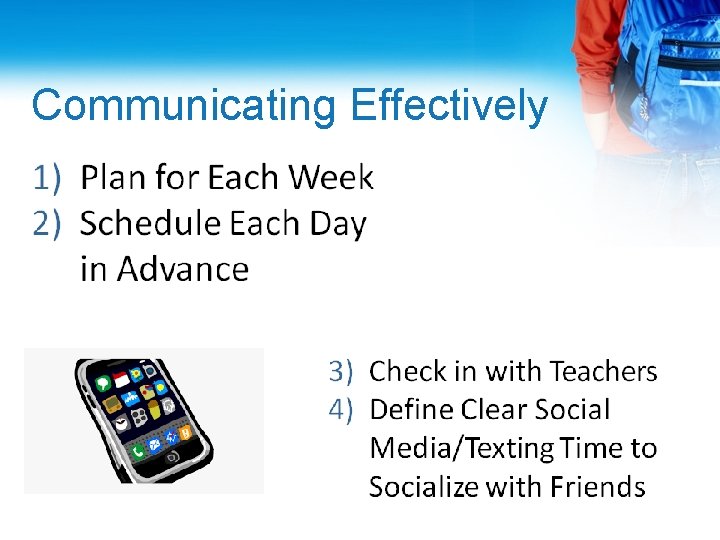
Communicating Effectively
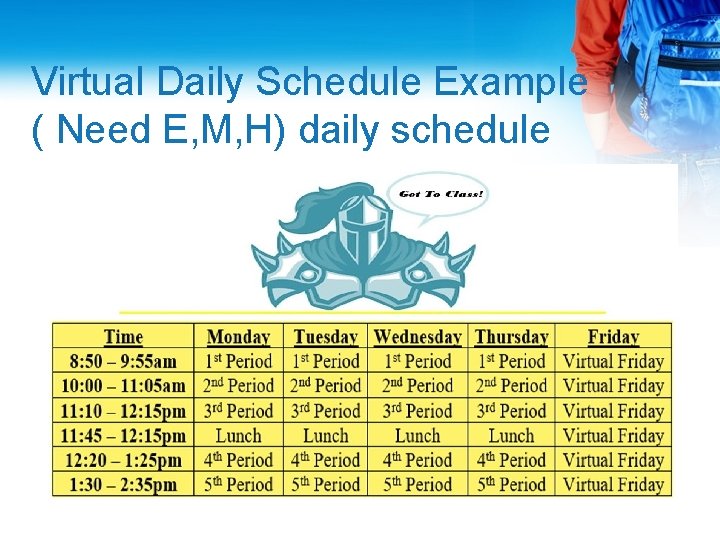
Virtual Daily Schedule Example ( Need E, M, H) daily schedule
Setting Expectations and Rules at Home ▪Brings common understanding to the core values of your family ▪Reinforces positive behavior by providing clear and consistent language to respond to disruptions effectively ▪Encourages independence, confidence and selfmanagement ▪Good for all ages , whether you have toddlers, teenagers or are all adults in the same house
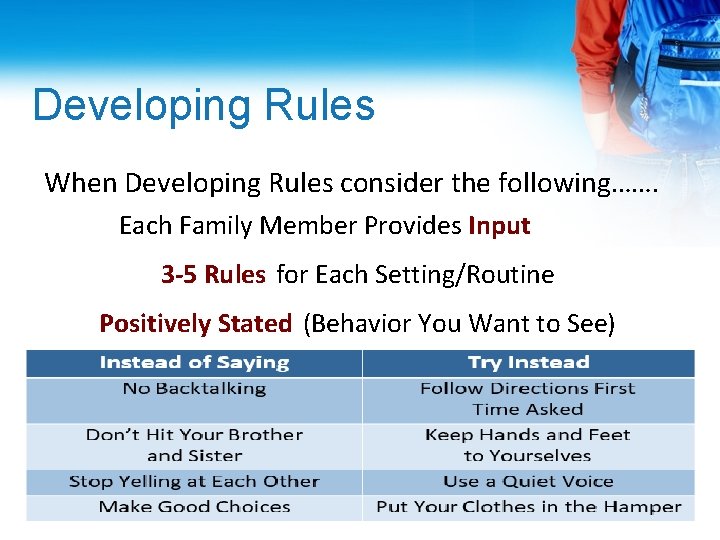
Developing Rules When Developing Rules consider the following……. Each Family Member Provides Input 3 -5 Rules for Each Setting/Routine Positively Stated (Behavior You Want to See)
Acknowledging Positive Behavior
Positive Practices at Home ❖ Promotes Self Control ❖ Teaches Responsibility ❖ Fosters Strong Esteem and Independence ❖ Assist with making thoughtful choices
Examples of Positive Praise Be Specific, Positive, and Highlight the Behavior you were happy to see “Justin, I really liked how you were responsible and started on your work without being reminded. ” “Haley, thank you for being respectful and waiting until I was off my important phone call. ”
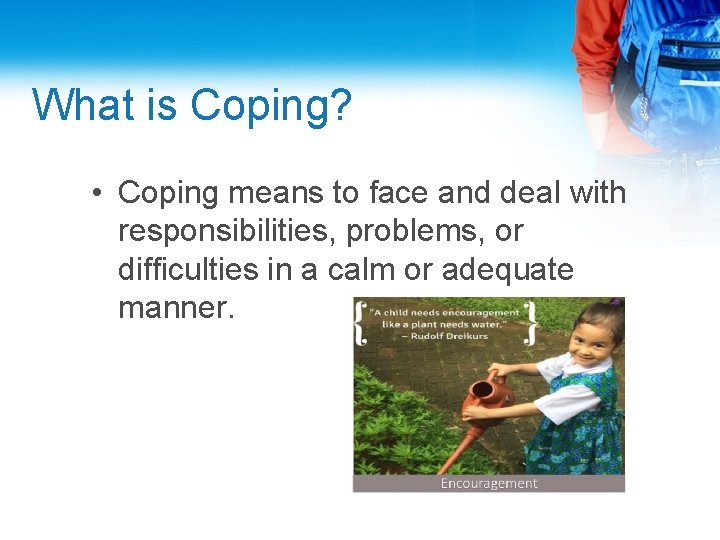
What is Coping? • Coping means to face and deal with responsibilities, problems, or difficulties in a calm or adequate manner.
Helping Children Cope during Covid-19 When parents and caregivers deal with COVID-19 calmly and confidently, they can provide the best support for their children. https: //www. cdc. gov/coronavirus/2019 -ncov/daily-life-coping/for-parents. html Watch for behavior changes in your child ● ● ● ● ● Excessive crying or irritation in younger children. Returning to behaviors they have outgrown (for example, toileting accidents or bedwetting). Excessive worry or sadness. Unhealthy eating or sleeping habits. Irritability and “acting out” behaviors in teens. Poor school performance or avoiding school. Difficulties with attention and concentration. Avoidance of activities enjoyed in the past. Unexplained headaches or body pain. Use of alcohol, tobacco, or other drugs.
Coping Tips The following are useful tips to keep in mind when teaching your child these coping skills. • Prompt your child. Say things like, “It looks like you're feeling frustrated. . • Let your child feel bad sometimes. . • Praise your child. . • Debrief after an event. . • Make sure coping skills are in moderation. https: //www. yourlifeyourvoice. org/pages/tip-99 -copingskills. aspx
Healthy at Home: Lowering Stress • How do I keep a healthy perspective and lower my own stress? • The most important thing is to limit what you are • • seeing and where you are seeing it. Go to factual websites so you can filter out misinformation. Keep up your self-care routines like exercising, sleeping, and eating as routinely as possible. Maintain communication with friends with technology. Finally, remember that "This too shall pass"!
Healthy at Home: Lowering Stress in Children • While a child under stress may not be able to describe it, we can see their stress through their behaviors. A happy -go lucky child may become very clingy. • The child may anxiously ask the same question more than once even though you give the same answer every time. • Children may have more difficulty with sleeping or eating. • Parent/Caregiver can reduce your child's stress by pointing out all the things people are doing to help. Look for ways to empower your child to help in his or her own way. https: //healthyathome. readyrosie. com/en/
Social and Emotional Learning or Emotional Intelligence ● It’s critical to pay attention to the development of the whole young person, including character education. ● Parents have a dual role to play in raising a selfaware, respectful child who knows how to manage his or her emotions, make responsible decisions, and resolve conflicts nonviolently. ● At home, parent/caregiver should strive to create an environment of trust, respect, and support.
Social and Emotional Learning or Emotional Intelligence ● At home, parent/caregiver should strive to create an environment of trust, respect, and support. ● Here are some specific steps you can take to nurture an emotionally intelligent child: 1. 2. 3. 4. 5. Be a good listener Model the behavior you seek Nurture your child's self-esteem Respect differences Take advantage of support services
RESOURCES Reinforcing small changes in behavior. Written by a psychologist who works extensively with children and teens with AD/HD and explosive and defiant behaviors, this article talks about how children and adolescents learn, about misbehavior, and small steps that parents can use to help their child toward better behavior. http: //www. greatschools. org/gk/articles/reinforcing-small-changes-in-yourchilds-behavior/ Social Emotional Learning (SEL) at home: How do you create a positive behavioral support system in your home? An informational video by CASEL and a state public school for parents on social and emotional learning (SEL). The video aims to inform parents of SEL in schools and provide them with insights on SEL in their own parenting practices in order to support their children’s social and emotional know-how. . https: //www. youtube. com/watch? v=y 2 d 0 da 6 BZWA
Resources Top 7 behavior management tips: Many behaviors can be minimized by controlling your response to them. With these tips, you can decrease behavior problems using redirection. The goal of redirection is to teach the student to monitor and correct his own behavior. https: //www. verywell. com/top-behavior-management-tips-2162703 • Ensure Your Child Understands Why his/her Behavior Is a Problem • Explain Why Behavior Is a Problem and • What Will Be Done About It • Model Appropriate Behavior for Your Child • Show by Your Actions and Attitude That You Believe in Your Child • Recognize That Behavior Change Can Take Time • Plan Ahead for Safe and Appropriate Options When Behavior Is a Problem
Resources Alternatives to spanking: Based on research, experts offer productive and concrete alternatives to spanking that parents can implement after young children have misbehaved. http: //www. huffingtonpost. com/2012/07/03/experts-recommend-alternatives-to -spanking_n_1647306. html • Give your kid a time-out • Give yourself a time-out • Implement logical consequences • Say “no” -- and mean it • Show, don’t tell
Resources Fact sheets! Get your fact sheets here! This site is a fact sheet treasure chest. You’ll find information on a wide range of topics such as: http: //www. mentalhealthamerica. net/mental-health-information • • Anxiety disorders, Bullying (Cyber) ADHD Autism. Mental health fact sheets. This web site has dozens of fact sheets on various issues, including ADHD, depression, conduct disorders, oppositional defiant disorder, and violent behavior. • In our own words: Teens talking about coping https: //www. aacap. org/AACAP/Families_and_Youth/Youth_Resources/Learning_About_Mental_Illness /In_Our_Own_Words_Coping_with_Mental_Illness. aspx • Myths about mental illness https: //www. aacap. org/AACAP/Families_and_Youth/Youth_Resources/Learning_About_Mental_Illness /In_Our_Own_Words_Myths_and_Facts. aspx
Resources Working with your child’s Temperament: Get ideas on helping children in ways that match their natural tendencies. This site offers suggestions for managing extreme behaviors. Click on the link to the Parent to Parent message board to read tips from other parents. http: //www. greatschools. org/gk/articles/tips-for-handling-problematictemperament-traits/ • • • Avoid using confinement as a method of discipline. Acknowledge your child’s feelings and provide ways for them to make themselves more comfortable. Create a routine, even if it seems odd. Ask the child(ren) to sit down with the family for dinner even if they are not hungry or go to bed at a regular time even if they are not sleepy. Teach the child(ren) to make their own decisions rather than just go along with the peer groups. Teach appropriate ways to express feelings of sadness, anger, fear, and frustration.
Resources Teen Mental Health and Coping Addiction Medicine: COVID Guidance This guidance addresses youth who are managing addiction during the COVID 19 Pandemic: • addiction • vaping, How Teenagers Can Protect Their Mental Health During COVID-19 • A resource from UNICEF for understanding youth anxiety and strategies for teens facing a “new” normal. Helping Children Cope with COVID • From the National Association of School Psychologists, strategies for parents in English and Spanish on ways to help children cope with COVID) • National Suicide Prevention Hotline The hotline provides help and support to anyone contemplating suicide
Resources Substance Abuse and Mental Health Services Administration SAMHSA resources for individuals and family members facing mental and/or substance use disorders Parenting and Caring for your Family Quaranteenagers: Strategies for Parenting in Close Quarters Guidance for parents of teens using compassion during this crisis, from the New York Times. Managing Anxiety over reopening Strategies for parents and families to manage anxiety during reopening Teenagers and re-opening Tips for helping teens stay safe during reopening
Relationship Building and Self-Care ● Children may not understand the intricacies of adult life, but they are acutely sensitive to parents’ emotional states. • When parents are stressed or anxious, children may feel fearful. Try to slow life down as much as possible and engage in family time activities, especially in the evenings. • Eat dinner together, read stories at bedtime, and take time to talk about the day. • These little moments cement your relationship and give children the security they need.
Activities to do with your Kids ● ● ● Make decorations, create a playlist, and throw a family dance party. Try a new cookie or cake recipe. Bonus idea: Set up a camera or smartphone and film a cooking show! Go camping in the living room. Play board games. Make ice cream in a Bag!
Activities to do with your Kids ● ● ● Dress up in your best clothes and have a fancy dinner. Make friendship bracelets. Create a family tree, Have a pizza party. Make your own popsicles. Create a nature scavenger hunt in your backyard.
3 Tips to Prevent Teens from Texting and Driving https: //drive. google. com/file/d/1 wq 7 D 1 Pi. Ig. T 6 XPYyhemz 2 Keq. Gv 9 Kce 7 JM/vie w? usp=sharing Common sense. org
8 Things You and Your Teen Need to Know about Sexing https: //drive. google. com/file/d/1 wmx. Blp f. TTD 9 Ud. GYJLZ 9 un. As. DLgk 8 ye. RM/vie w? usp=sharing Common sense. org
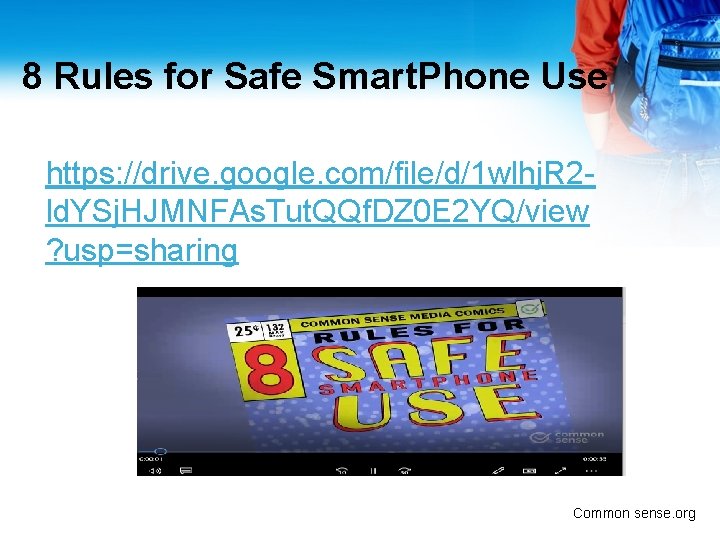
8 Rules for Safe Smart. Phone Use https: //drive. google. com/file/d/1 wlhj. R 2 ld. YSj. HJMNFAs. Tut. QQf. DZ 0 E 2 YQ/view ? usp=sharing Common sense. org
Visit the Department of Student Discipline, Prevention and Intervention Virtual Calming Room to Relax and De-stress https: //tinyurl. com/dpivirtualroom
Questions/Behavior Support? Click on the Link to Contact your scholar’s Behavior Intervention Specialist https: //tinyurl. com/BISSch. Assignment
- Slides: 40