
Behavior Programming for Resource Room Students Secondary Penny
Behavior Programming for Resource Room Students Secondary Penny Williams BCBA, M. Ed. pennywilliams 12@gmail. com
Have you ever thought or said…… • “If you just applied yourself. . . “ • “You’re so smart, why can’t you. . . “ • “He’s bright but lazy. . . “ • “She lives in her own world. . . ” • “She knows better…. ” • “He knows the rule…”
Behaviors Defined • Anything we SAY or DO • How we REACT to our environment • Behaviors are often LEARNED and continue because they serve a PURPOSE or FUNCTION • We engage in behaviors because we have learned that a DESIRED OUTCOME occurs
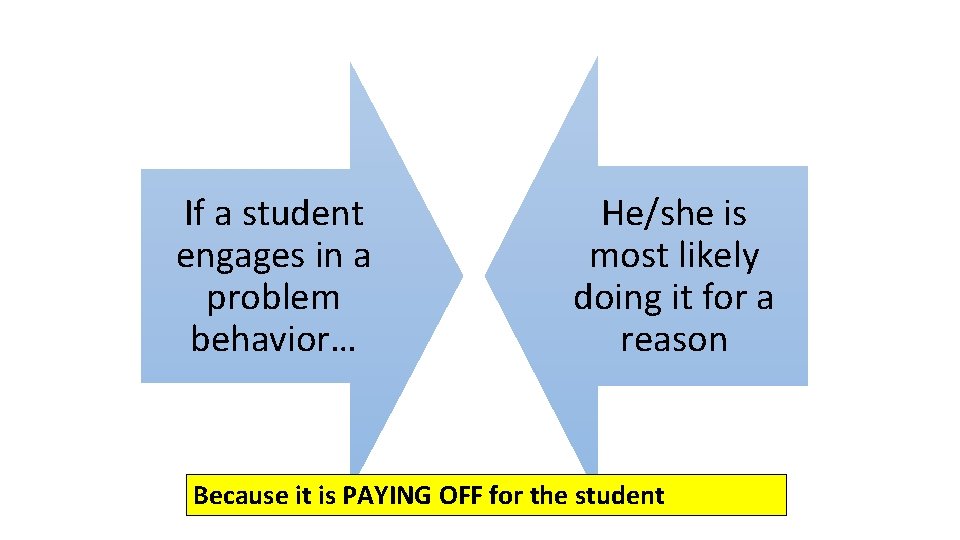
If a student engages in a problem behavior… He/she is most likely doing it for a reason Because it is PAYING OFF for the student
Understanding the function of behavior Behavior is lawful When we understand why a student is demonstrating a behavior, we say that we understand the function of that behavior
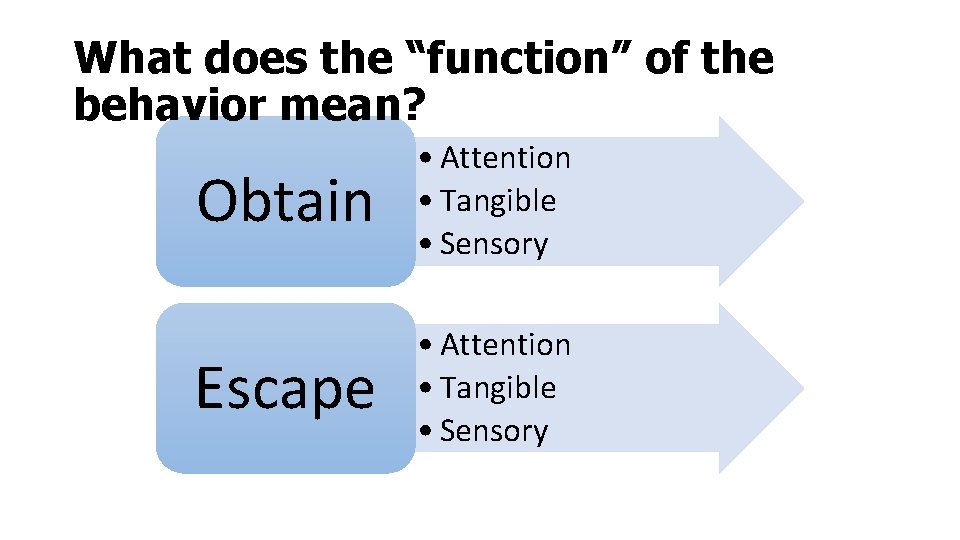
What does the “function” of the behavior mean? Obtain • Attention • Tangible • Sensory Escape • Attention • Tangible • Sensory
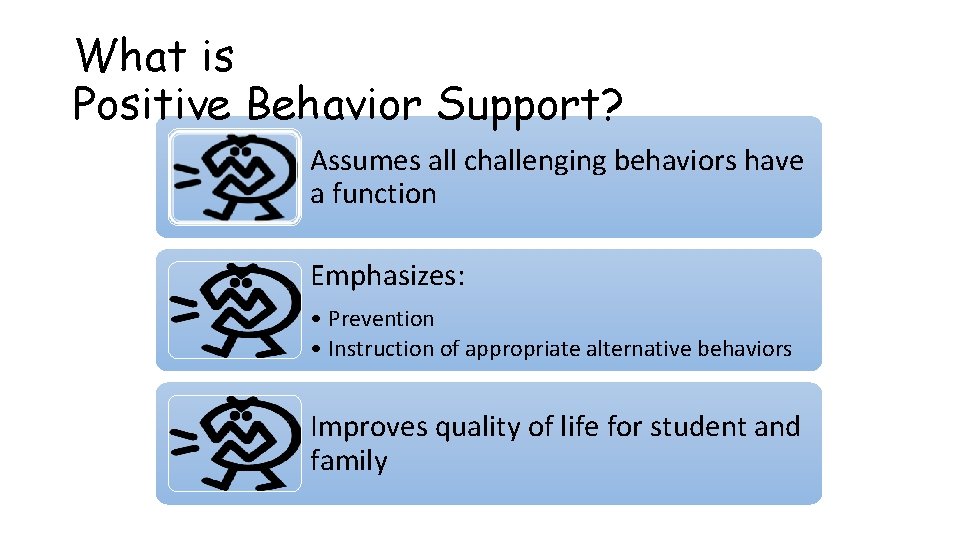
What is Positive Behavior Support? Assumes all challenging behaviors have a function Emphasizes: • Prevention • Instruction of appropriate alternative behaviors Improves quality of life for student and family
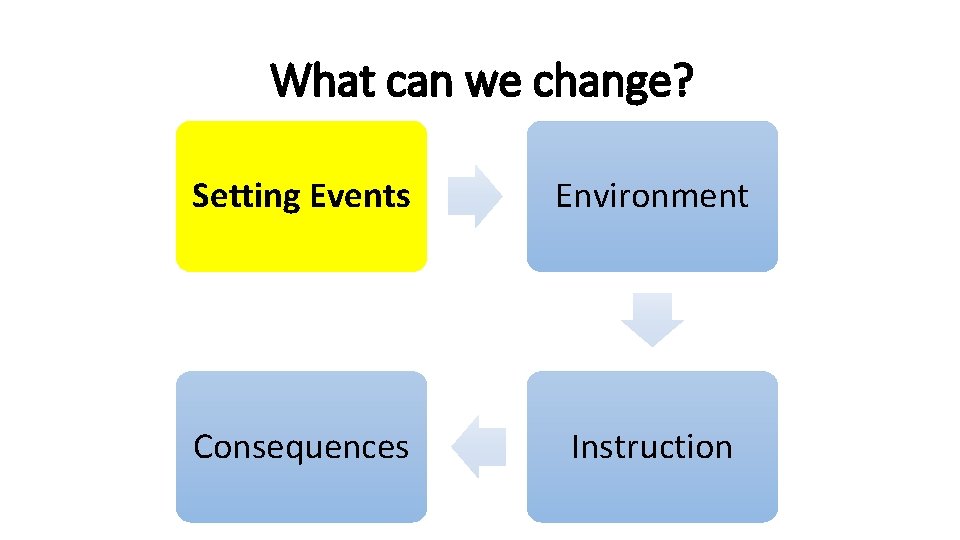
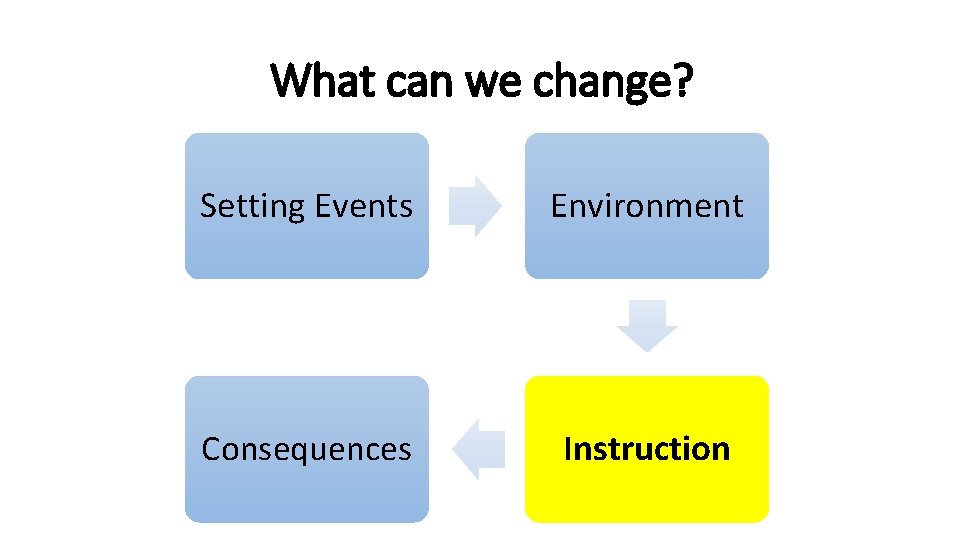
What can we change? Setting Events Environment Consequences Instruction
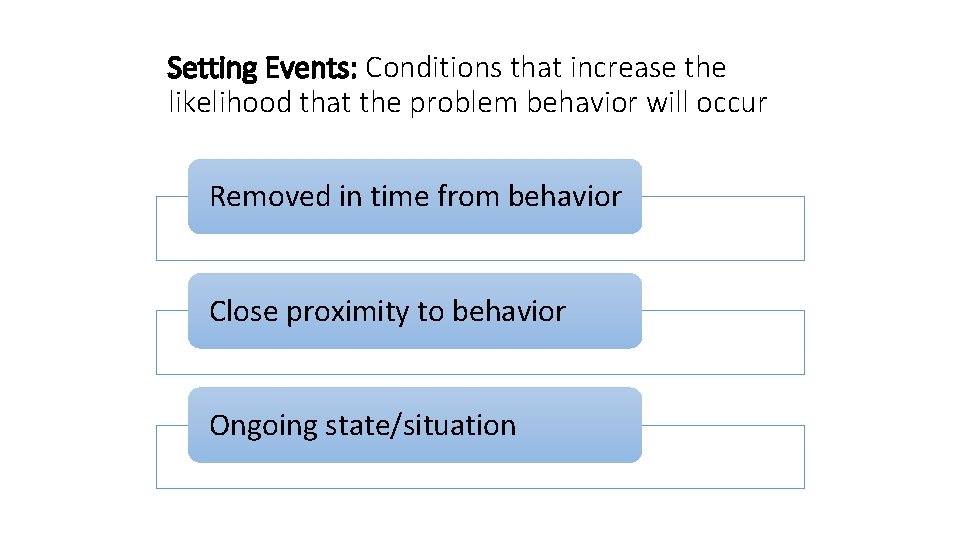
Setting Events: Conditions that increase the likelihood that the problem behavior will occur Removed in time from behavior Close proximity to behavior Ongoing state/situation
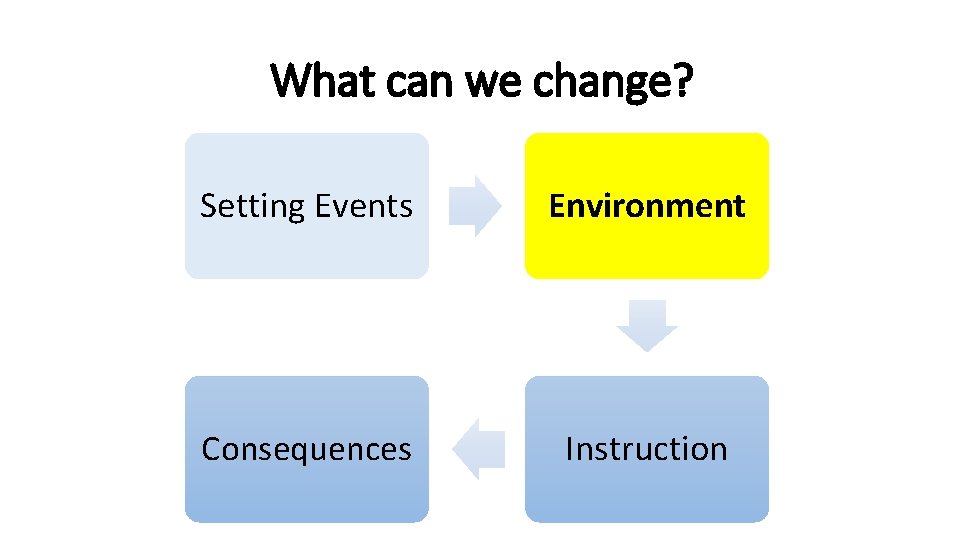
What can we change? Setting Events Environment Consequences Instruction
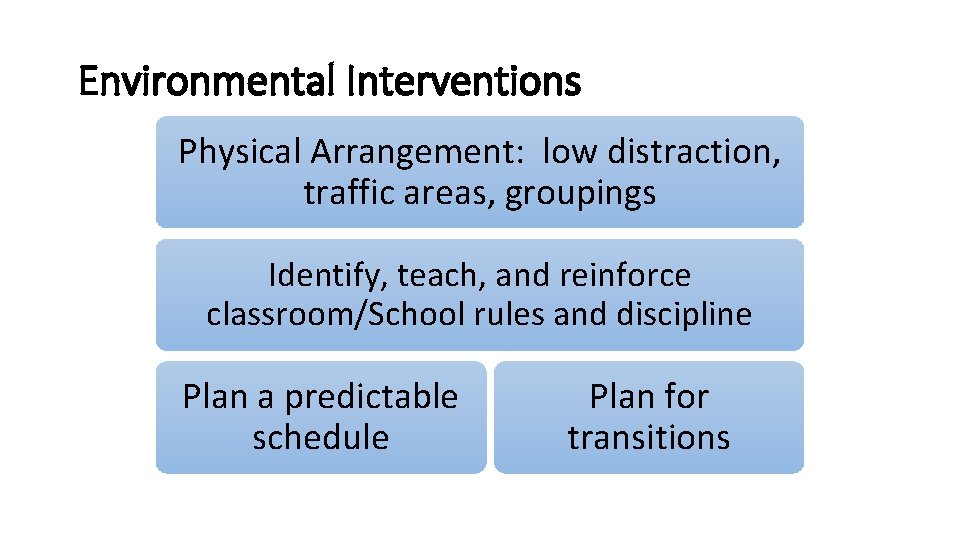
Environmental Interventions Physical Arrangement: low distraction, traffic areas, groupings Identify, teach, and reinforce classroom/School rules and discipline Plan a predictable schedule Plan for transitions
What can we change? Setting Events Environment Consequences Instruction
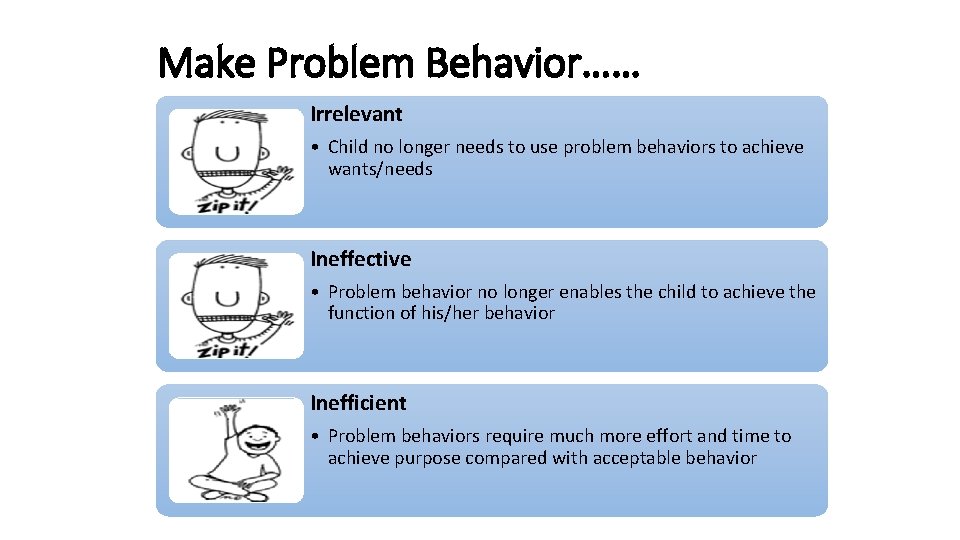
Make Problem Behavior…… Irrelevant • Child no longer needs to use problem behaviors to achieve wants/needs Ineffective • Problem behavior no longer enables the child to achieve the function of his/her behavior Inefficient • Problem behaviors require much more effort and time to achieve purpose compared with acceptable behavior
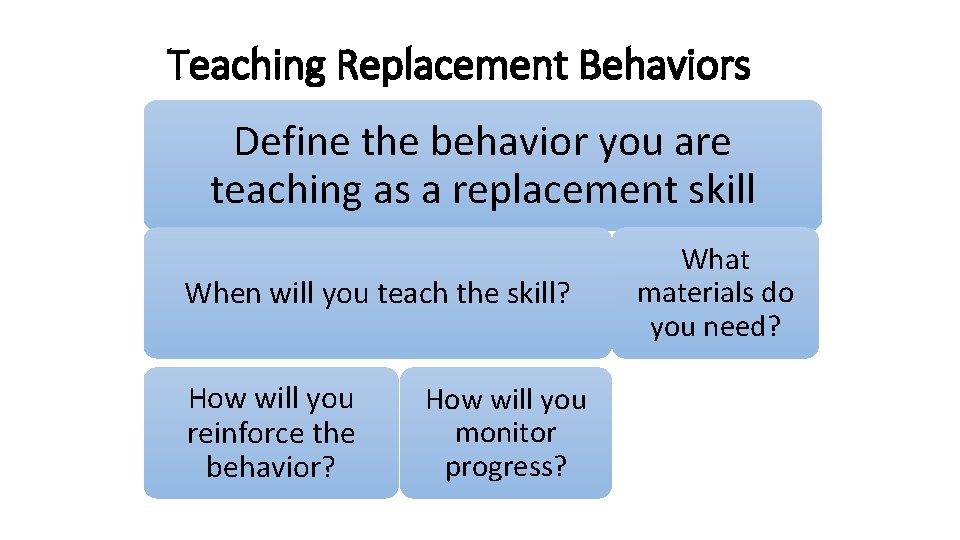
Teaching Replacement Behaviors Define the behavior you are teaching as a replacement skill When will you teach the skill? How will you reinforce the behavior? How will you monitor progress? What materials do you need?
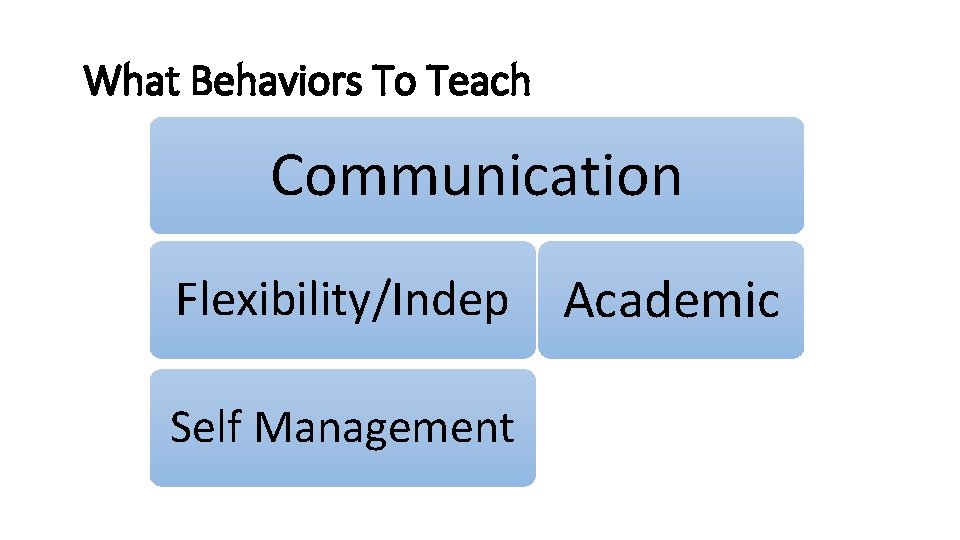
What Behaviors To Teach Communication Flexibility/Indep Self Management Academic
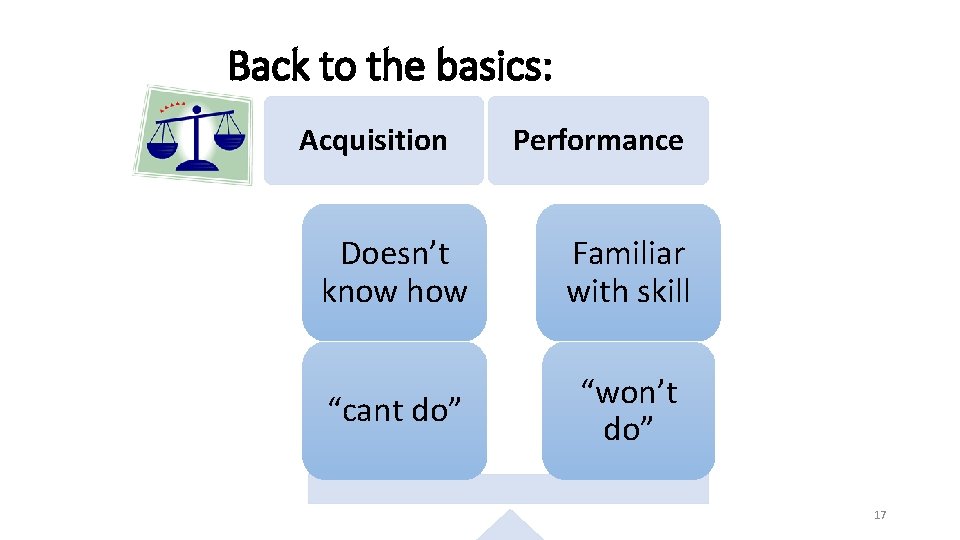
Back to the basics: Acquisition Performance Doesn’t know how Familiar with skill “cant do” “won’t do” 17
Stress and ASD • As many as 84% have an anxiety disorder • Levels of endorphins significantly higher in ASD than typicals • Anxiety leads to social withdrawal, repetitive movements, difficulty with attention and cognitive function, easy to arouse/anger, impaired memory, poor decision making, difficulty to calm
Handwriting!!!! Arrrgh………. • “having to engage in handwriting is the most significant and serious impediment to academic participation for students with autism spectrum disorders in schools in North America today”. (Dr. Richard Simpson, 2007) • multiple tasks (printing and thinking) leads to “a system wide resource constraint”—blood and oxygen for each component task are reduced and coordination of brain decreases
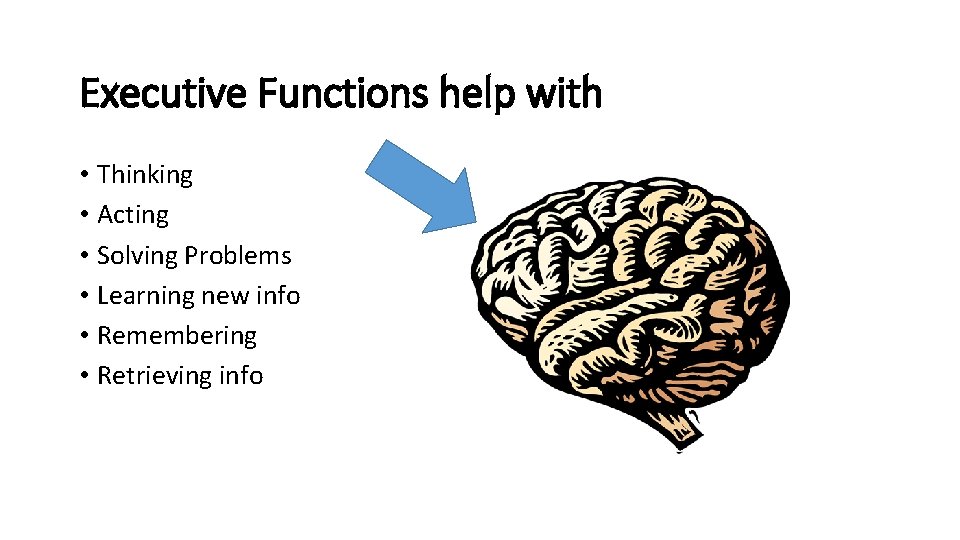
Executive Functions help with • Thinking • Acting • Solving Problems • Learning new info • Remembering • Retrieving info
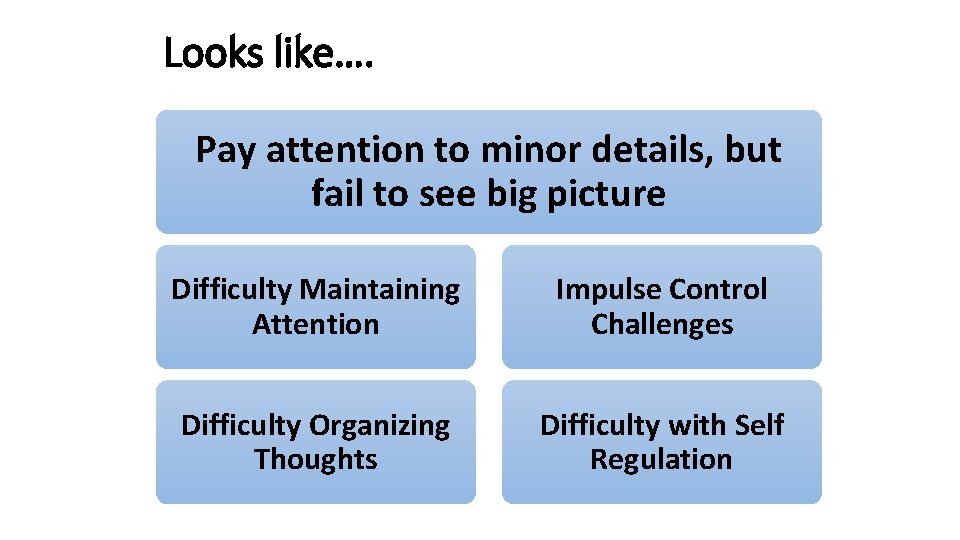
Looks like…. Pay attention to minor details, but fail to see big picture Difficulty Maintaining Attention Impulse Control Challenges Difficulty Organizing Thoughts Difficulty with Self Regulation
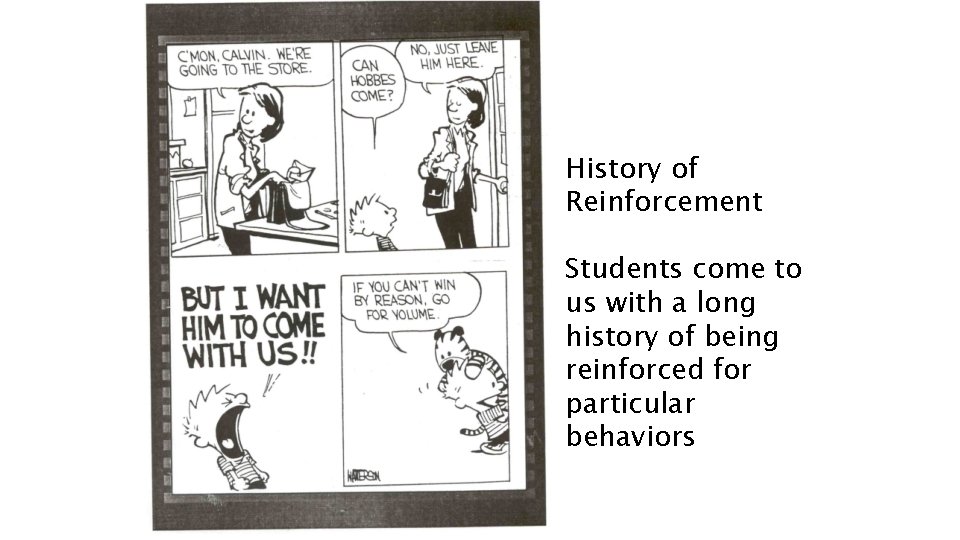
History of Reinforcement Students come to us with a long history of being reinforced for particular behaviors
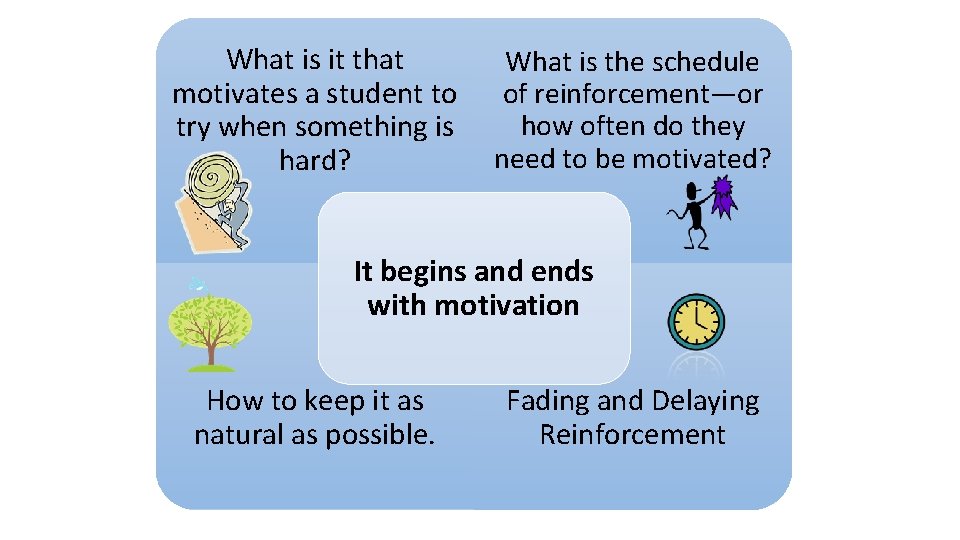
What is it that motivates a student to try when something is hard? What is the schedule of reinforcement—or how often do they need to be motivated? It begins and ends with motivation How to keep it as natural as possible. Fading and Delaying Reinforcement
What is Reinforcement? Something that immediately follows a behavior and increases the likelihood that behavior will happen again. 24
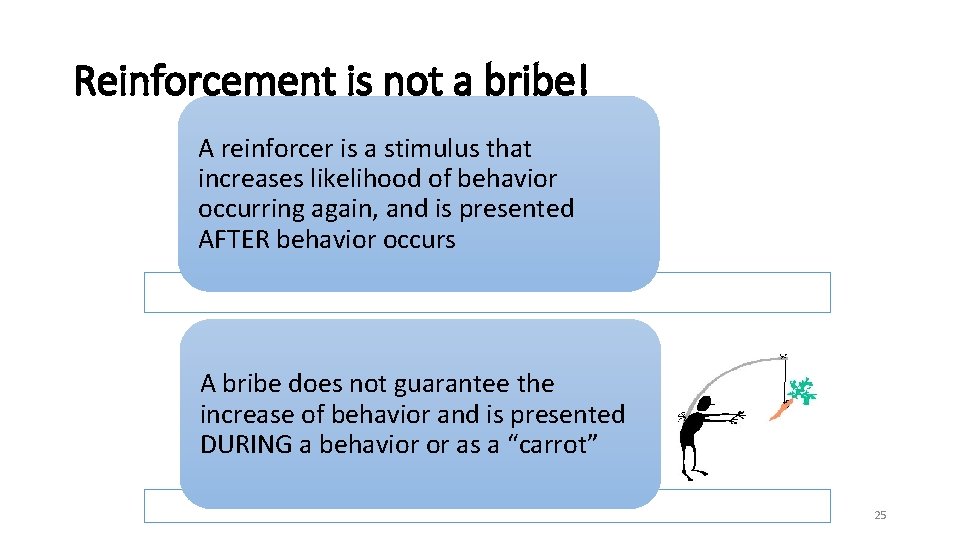
Reinforcement is not a bribe! A reinforcer is a stimulus that increases likelihood of behavior occurring again, and is presented AFTER behavior occurs A bribe does not guarantee the increase of behavior and is presented DURING a behavior or as a “carrot” 25
Choosing Reinforcers • Reinforcers are individual • Use natural reinforcers whenever you can
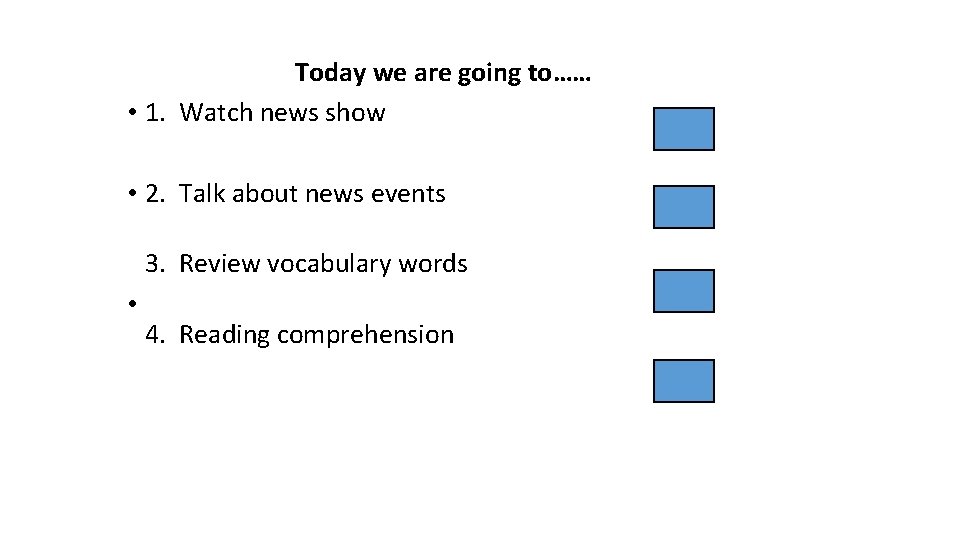
Today we are going to…… • 1. Watch news show • 2. Talk about news events 3. Review vocabulary words • 4. Reading comprehension
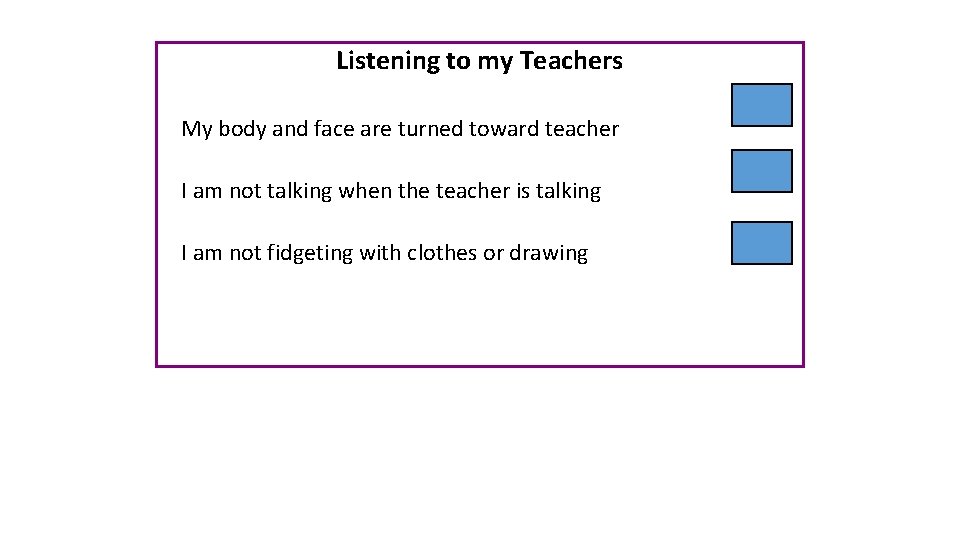
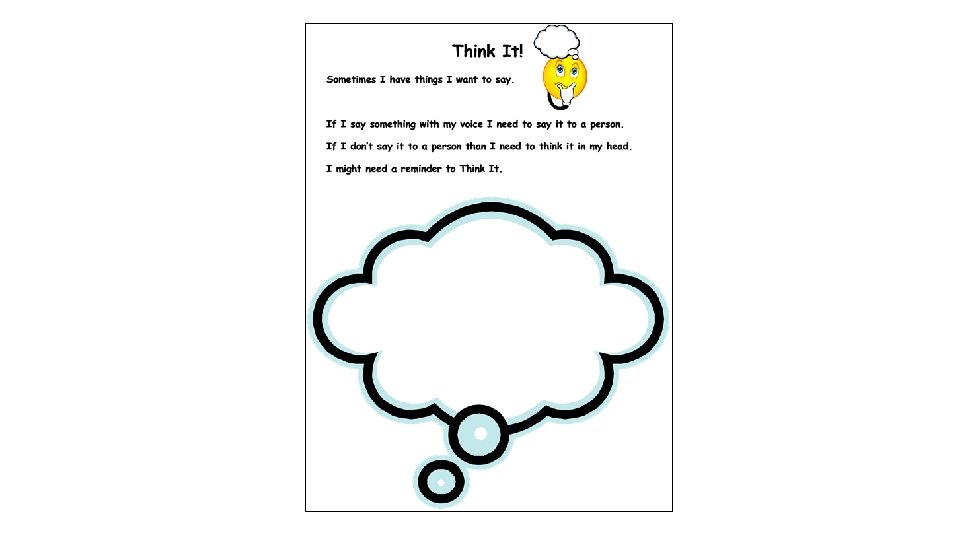
Listening to my Teachers My body and face are turned toward teacher I am not talking when the teacher is talking I am not fidgeting with clothes or drawing
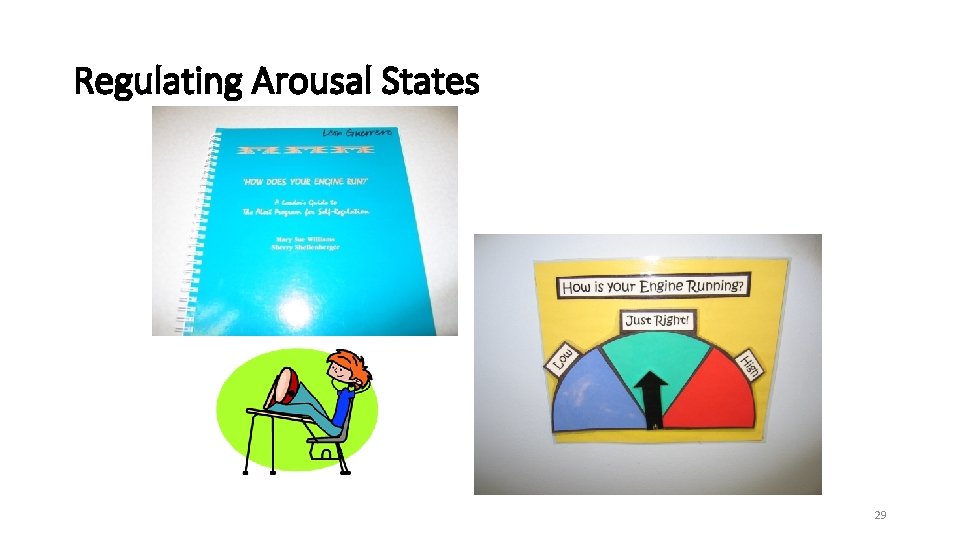
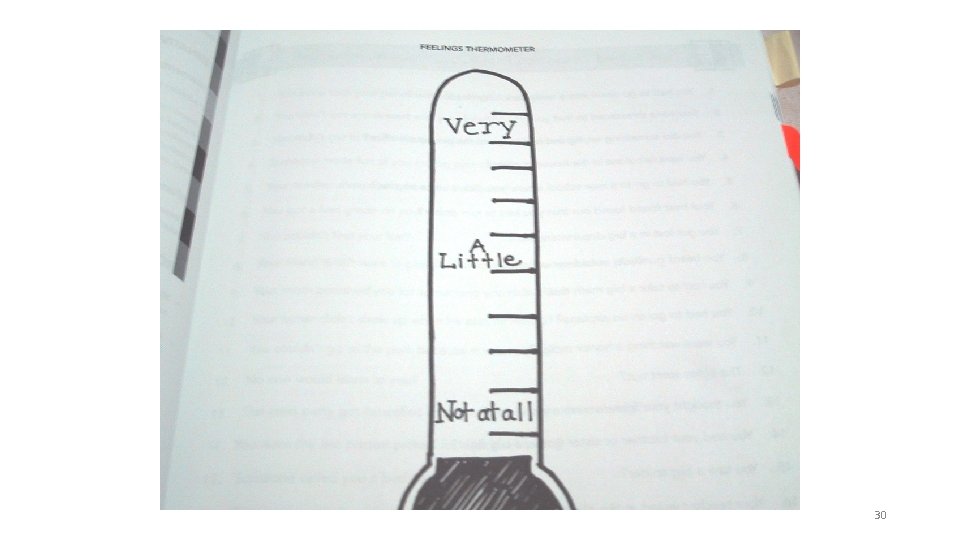
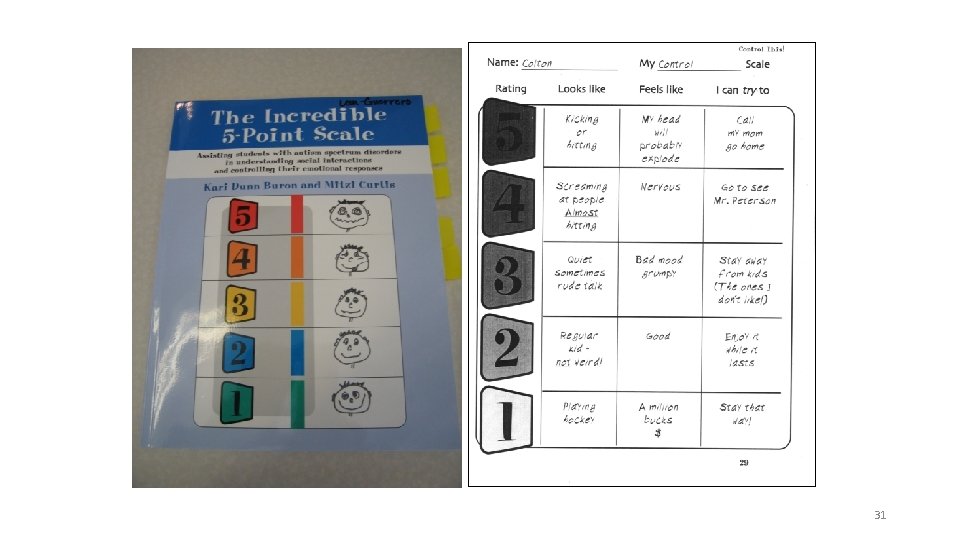
Regulating Arousal States 29
30
31
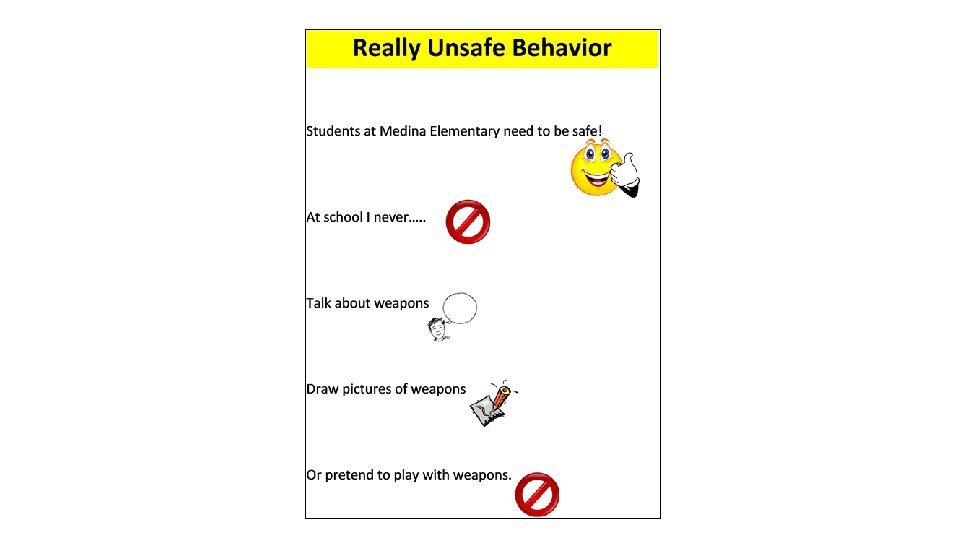
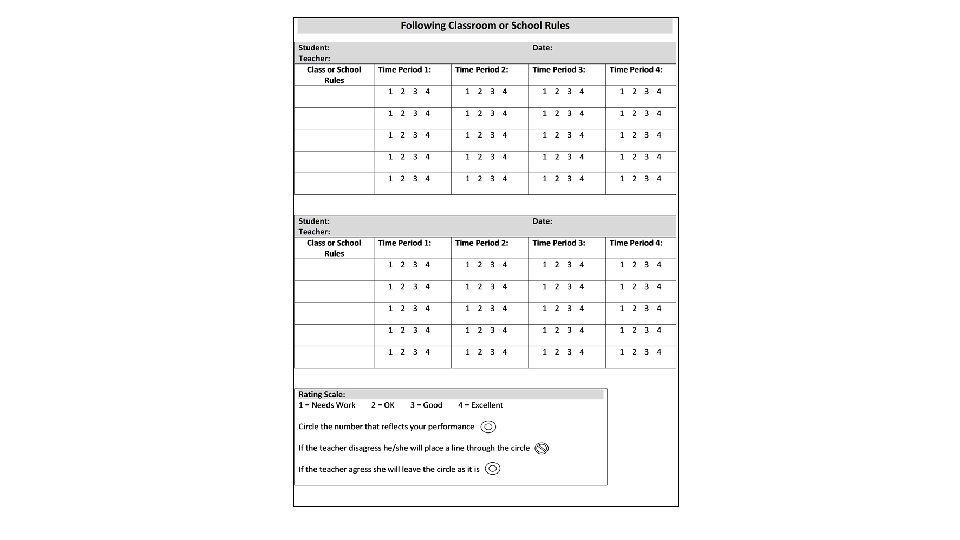
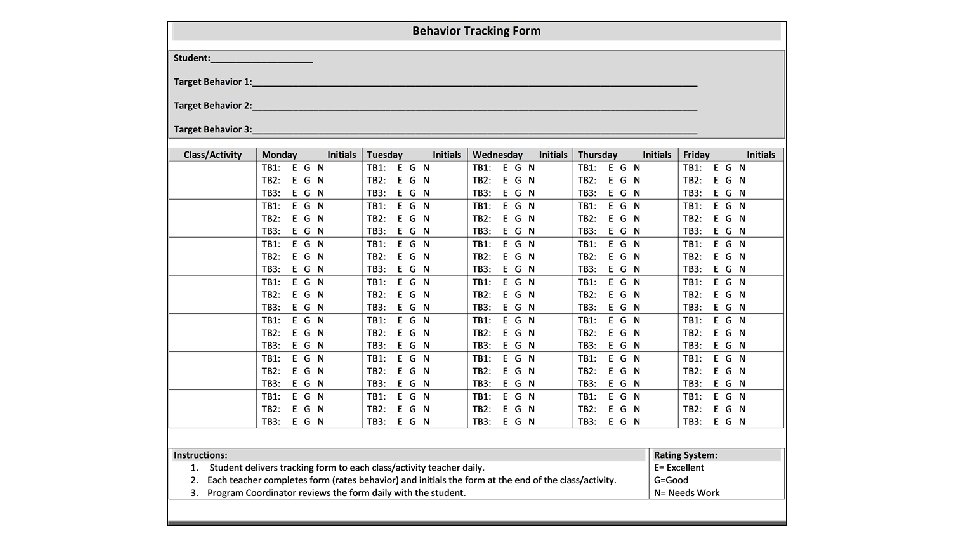
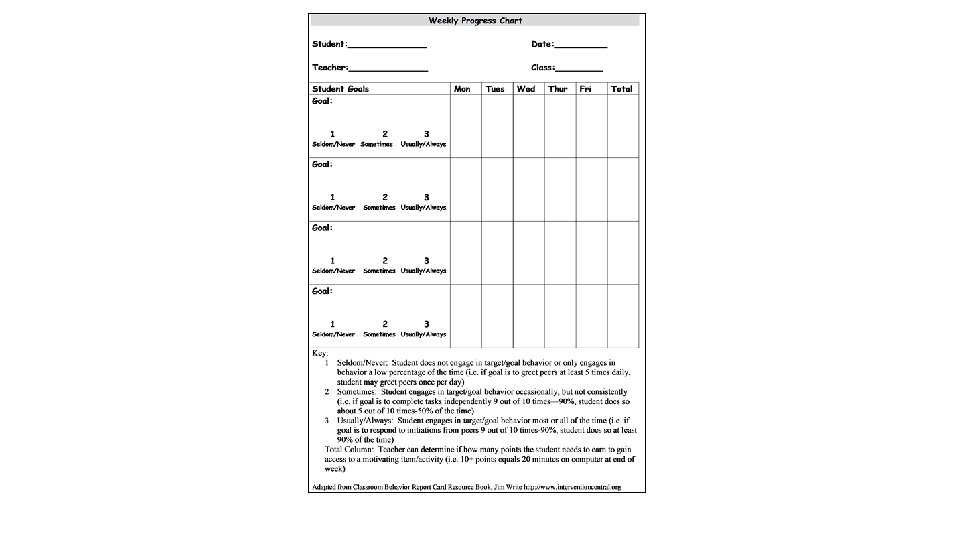
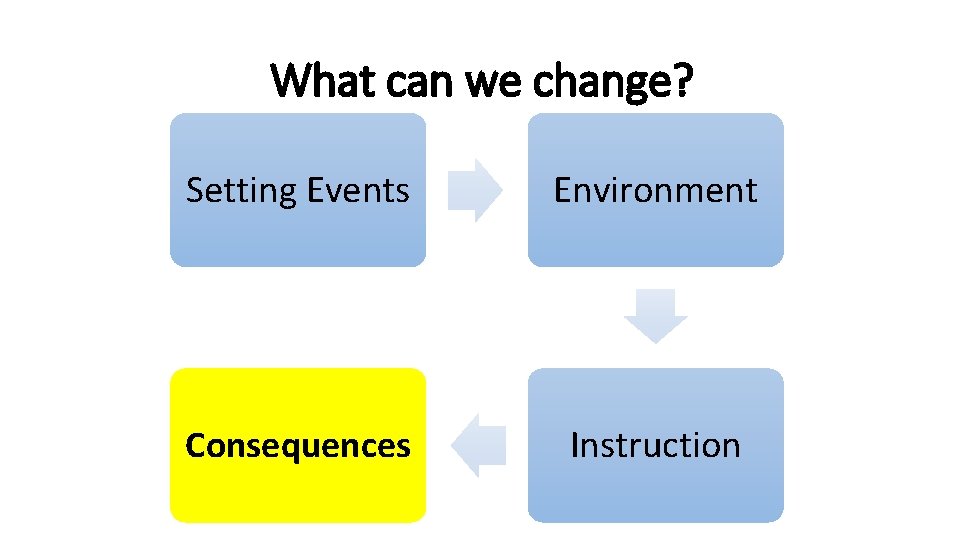
What can we change? Setting Events Environment Consequences Instruction
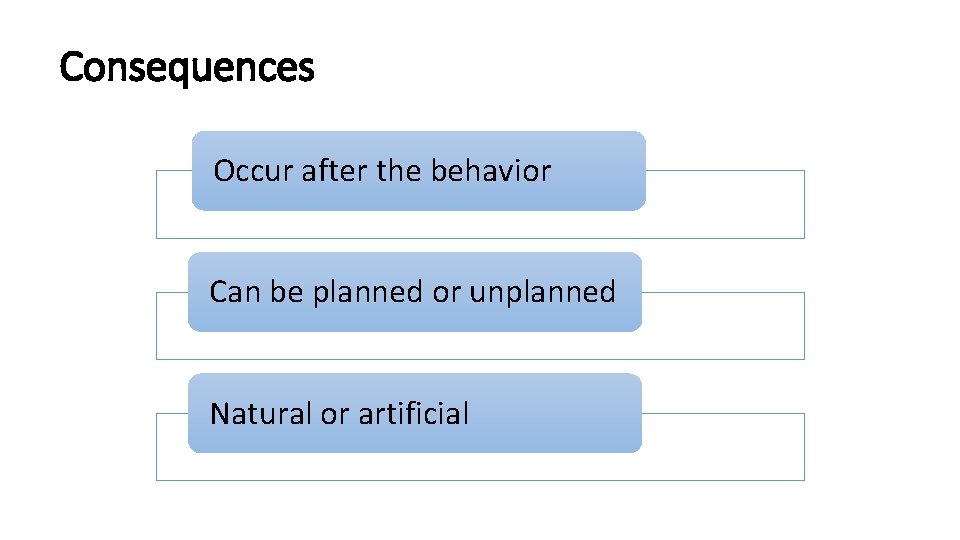
Consequences Occur after the behavior Can be planned or unplanned Natural or artificial
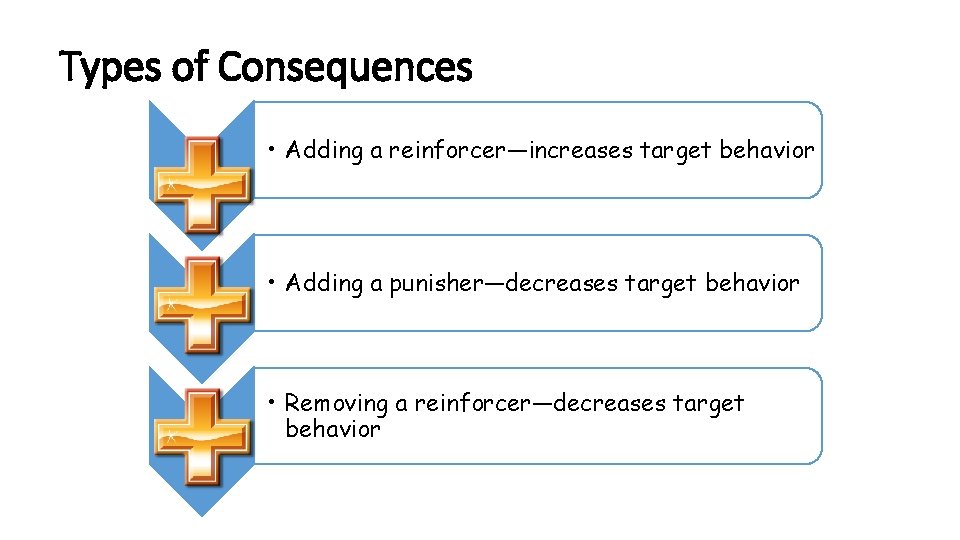
Types of Consequences • Adding a reinforcer—increases target behavior • Adding a punisher—decreases target behavior • Removing a reinforcer—decreases target behavior
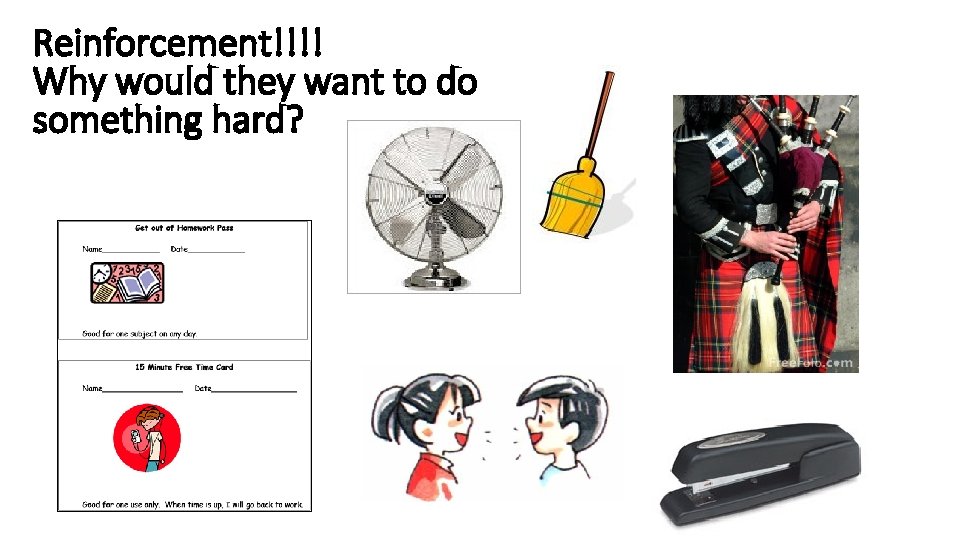
Reinforcement!!!! Why would they want to do something hard?
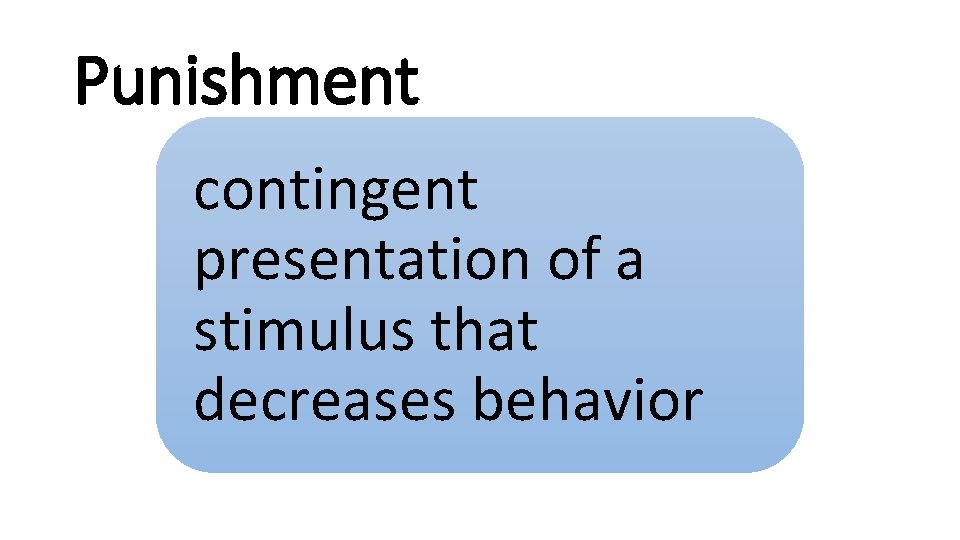
Punishment contingent presentation of a stimulus that decreases behavior
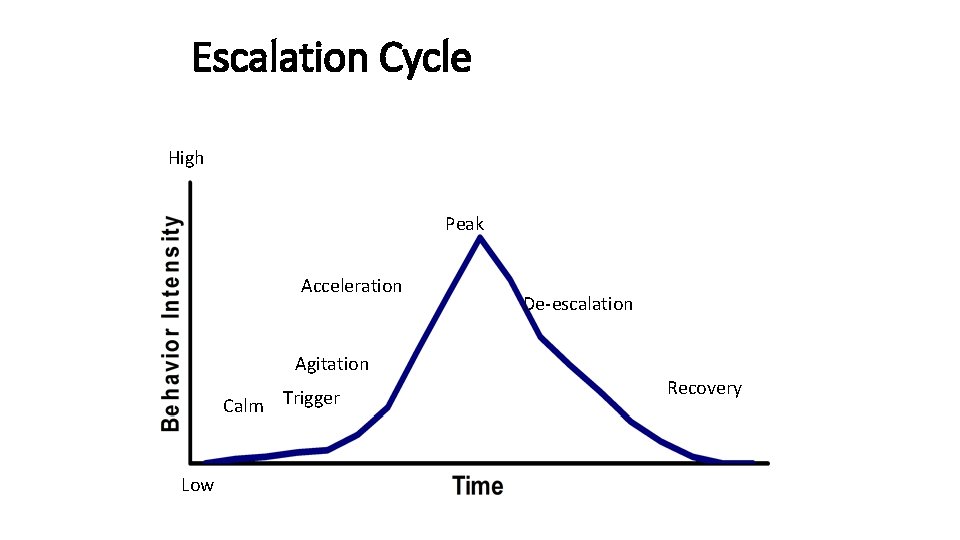
Escalation Cycle High Peak Acceleration Agitation Calm Trigger Low De-escalation Recovery
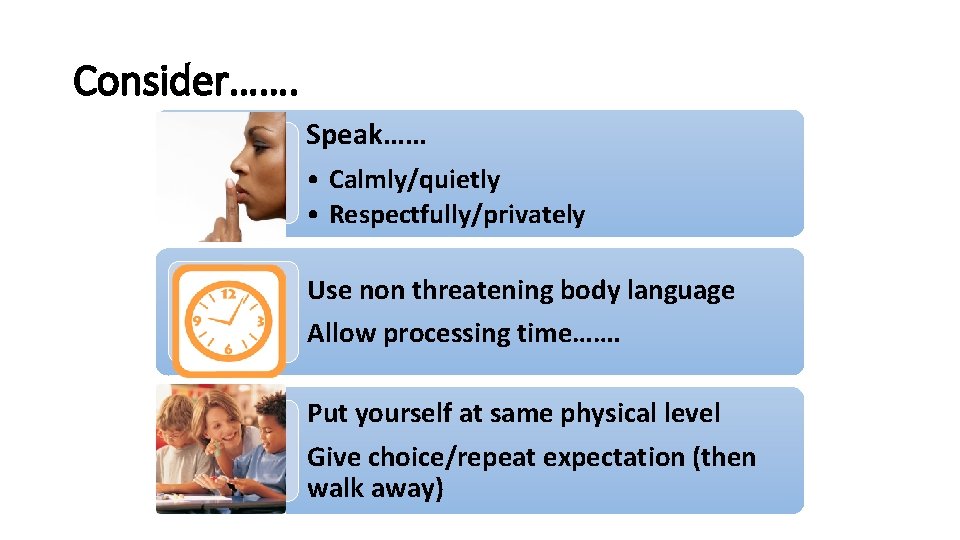
Consider……. Speak…… • Calmly/quietly • Respectfully/privately Use non threatening body language Allow processing time……. Put yourself at same physical level Give choice/repeat expectation (then walk away)
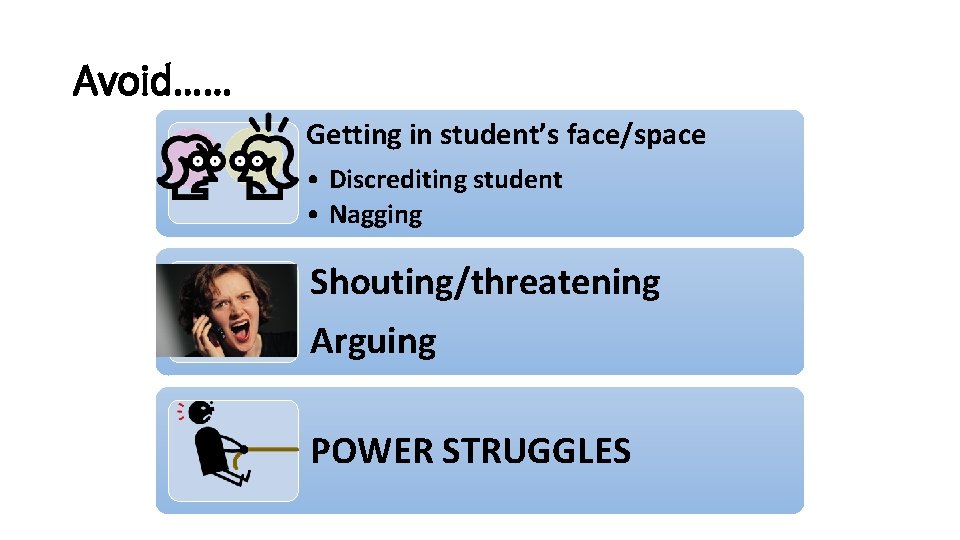
Avoid…… Getting in student’s face/space • Discrediting student • Nagging Shouting/threatening Arguing POWER STRUGGLES
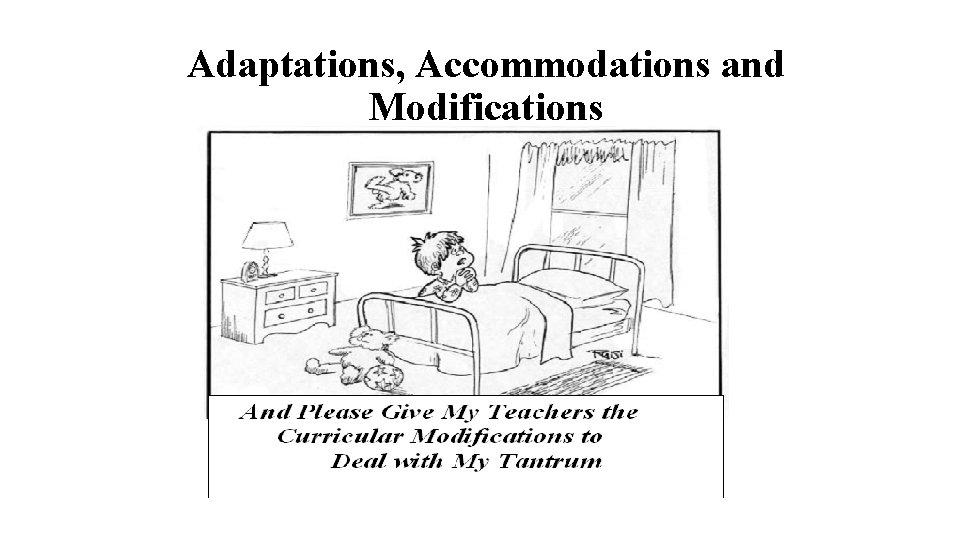
Adaptations, Accommodations and Modifications
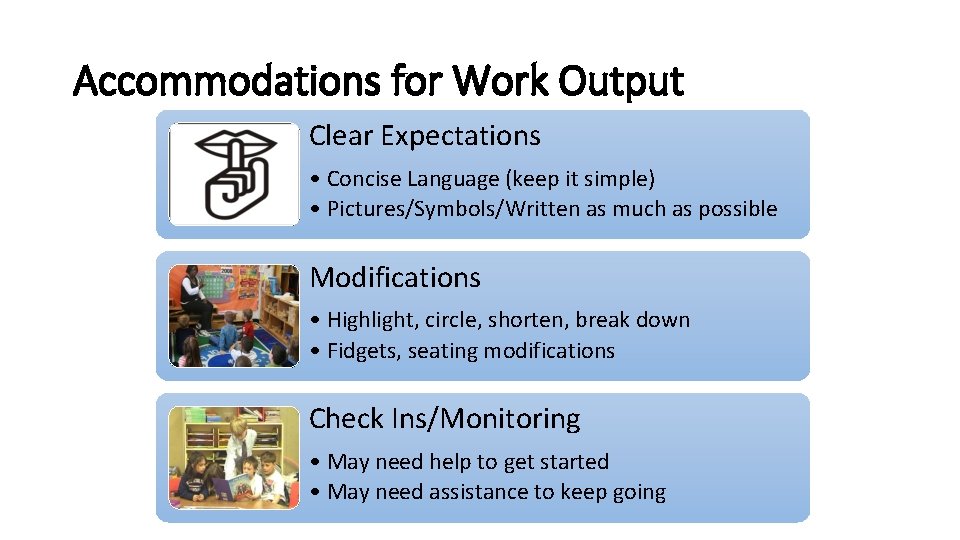
Accommodations for Work Output Clear Expectations • Concise Language (keep it simple) • Pictures/Symbols/Written as much as possible Modifications • Highlight, circle, shorten, break down • Fidgets, seating modifications Check Ins/Monitoring • May need help to get started • May need assistance to keep going
Hand Writing Accommodations • Permit student to verbally express information and tape record it • Allowing the student to state information to a scribe • Modify assignments/tests to incorporate multiple-choice, fill-in-the-blank, matching, and/or short-answer questions • Computer, laptop use • Allow student to underline or highlight answers to questions in reading passage • Supply student with a teacher-made outline of main ideas and key points from readings and/or presentations
Other Strategies…. Shorten/chunk assignments Minimize Clutter Visual Supports Assistive Technology Planners and organizers Notetaking accommodations (guided notes) Memorization (acronyms)
“Home Base” A place the student can go to… • Plan/review daily events • Escape stress of a current environment • Regain control if needed (meldown, tantrum) Important that student recognizes home base as: • A predictable and positive place • Not presented used as a time out Amount of time in home base: • Some students may need more time initially • Some activities may be scheduled daily (social skills)
Key Concepts • Twice as much “Asperger time half as much Time” done Manage Anxiety • Changes…… • Setting Events
General Considerations… Work and Directions • Tasks and skills broken down? Task lists? • Amount of work? Hand writing accommodations? Directions • Have you given enough processing time? • Avoid overloading student with too much verbal information—can you use gestures/visuals? Reinforcement and Visuals • Is motivation considered? Lots of Praise • Schedules, social scripts, behavior cues?
What Else? Consider Sensory needs • Built in schedule of sensory activities • Accommodations (seating, group work, etc. ) Physical and Health needs • Food intake, bathroom habits, fatigue • Temperature, clothing, odors, etc. Any scheduling changes? • Too tired in the am? • Crowded environments
- Slides: 52