
Behavior of Quadratics All slides in this presentations
Behavior of Quadratics All slides in this presentations are based on the book Functions, Data and Models, S. P. Gordon and F. S Gordon ISBN 978 -0 -88385 -767 -0
Behavior of Polynomial Functions depend on: a. Degree of the polynomial (most important) b. Value of the zeros c. Sign of the leading coefficient p. 2
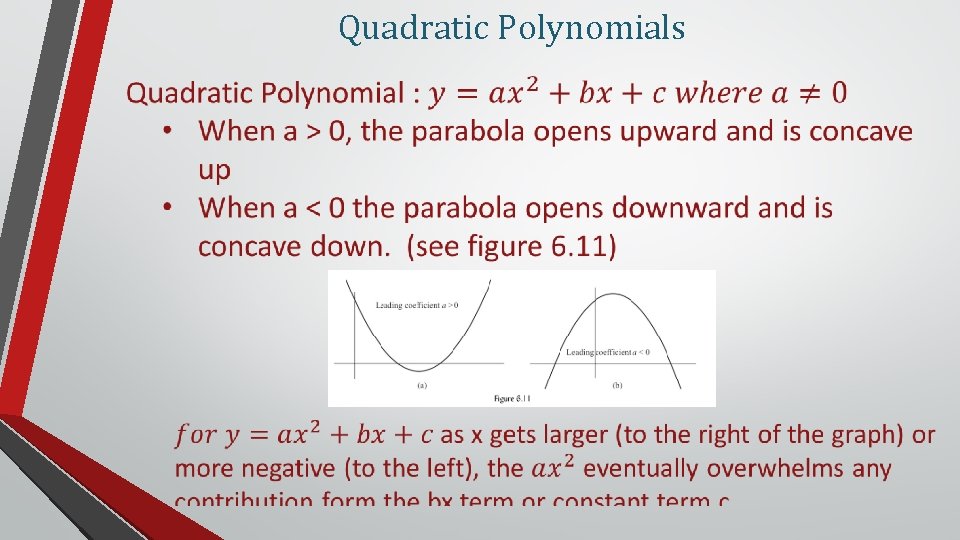
Quadratic Polynomials
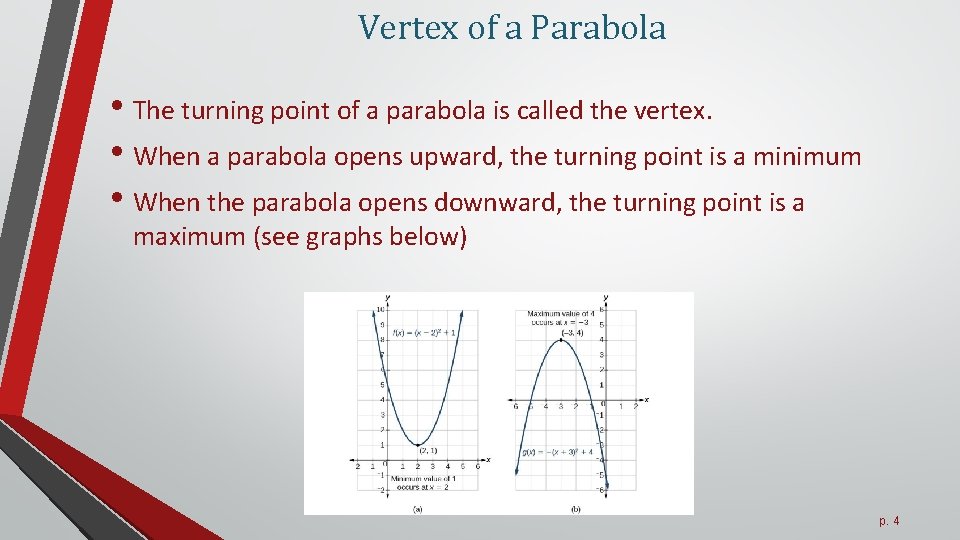
Vertex of a Parabola • The turning point of a parabola is called the vertex. • When a parabola opens upward, the turning point is a minimum • When the parabola opens downward, the turning point is a maximum (see graphs below) p. 4
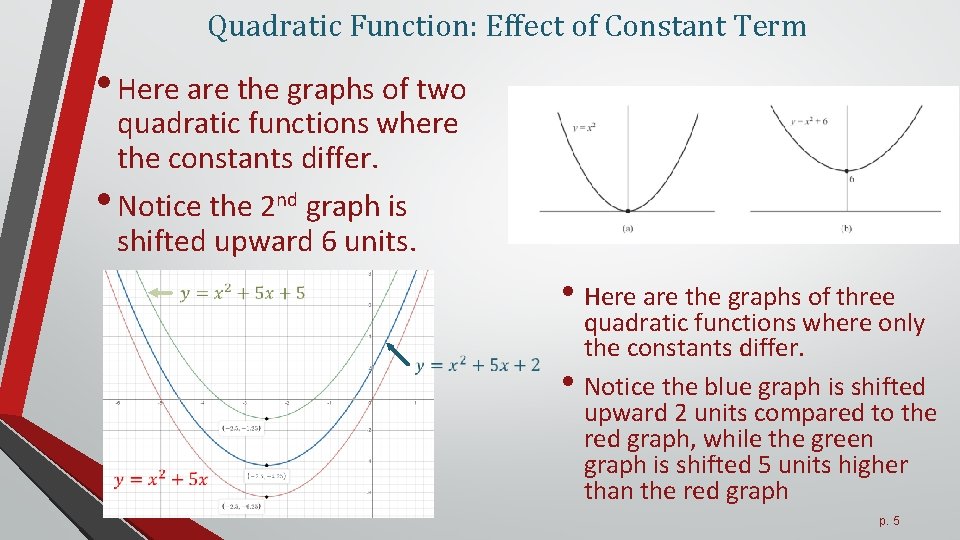
Quadratic Function: Effect of Constant Term • Here are the graphs of two quadratic functions where the constants differ. • Notice the 2 nd graph is shifted upward 6 units. • Here are the graphs of three • quadratic functions where only the constants differ. Notice the blue graph is shifted upward 2 units compared to the red graph, while the green graph is shifted 5 units higher than the red graph p. 5
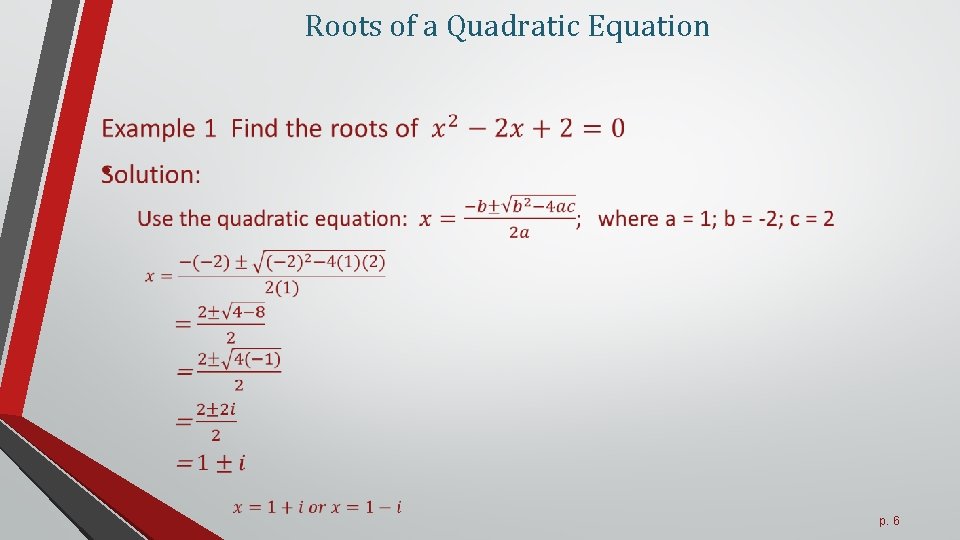
Roots of a Quadratic Equation • p. 6
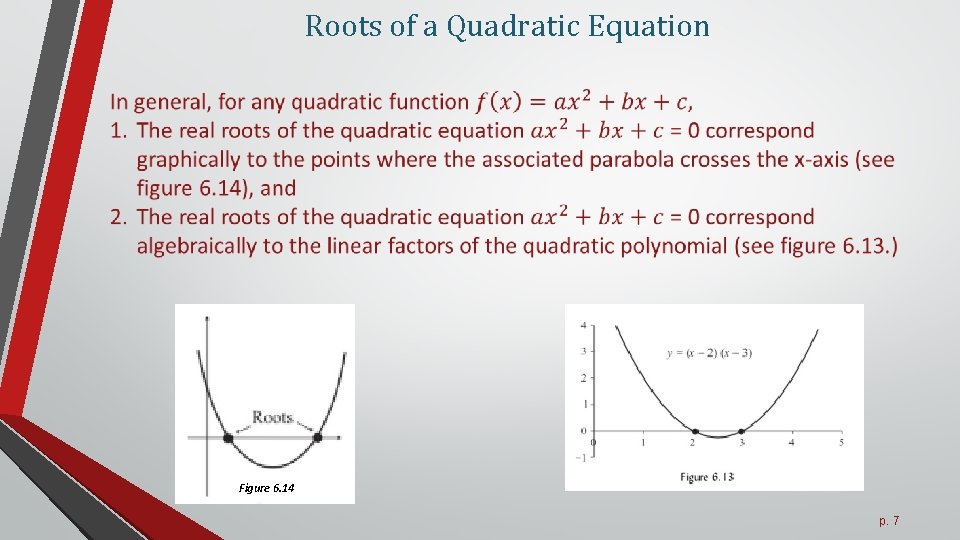
Roots of a Quadratic Equation Figure 6. 14 p. 7
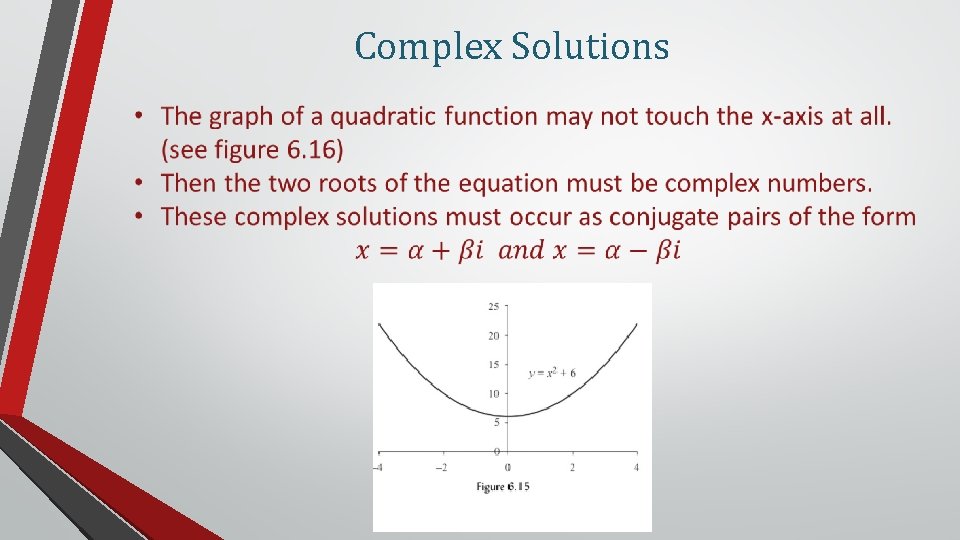
Complex Solutions
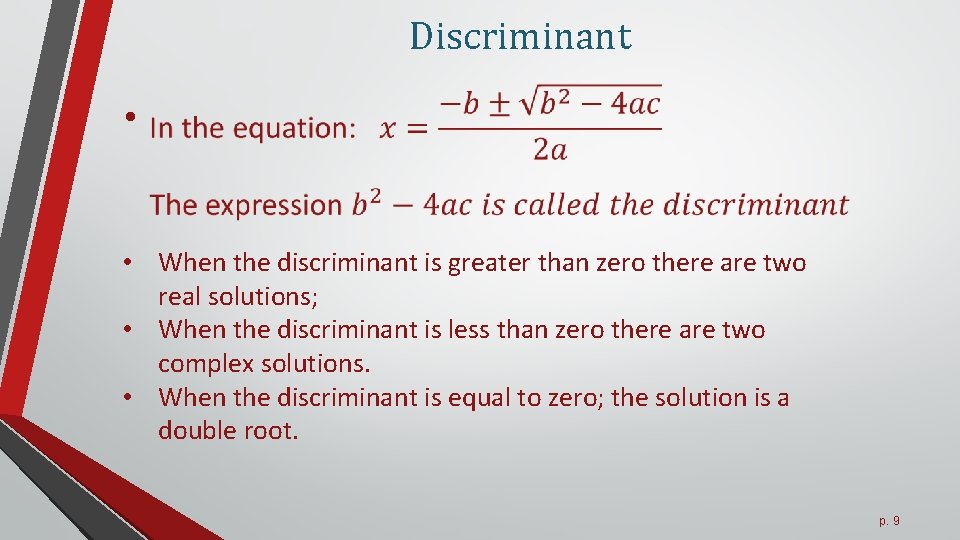
Discriminant • • When the discriminant is greater than zero there are two real solutions; • When the discriminant is less than zero there are two complex solutions. • When the discriminant is equal to zero; the solution is a double root. p. 9
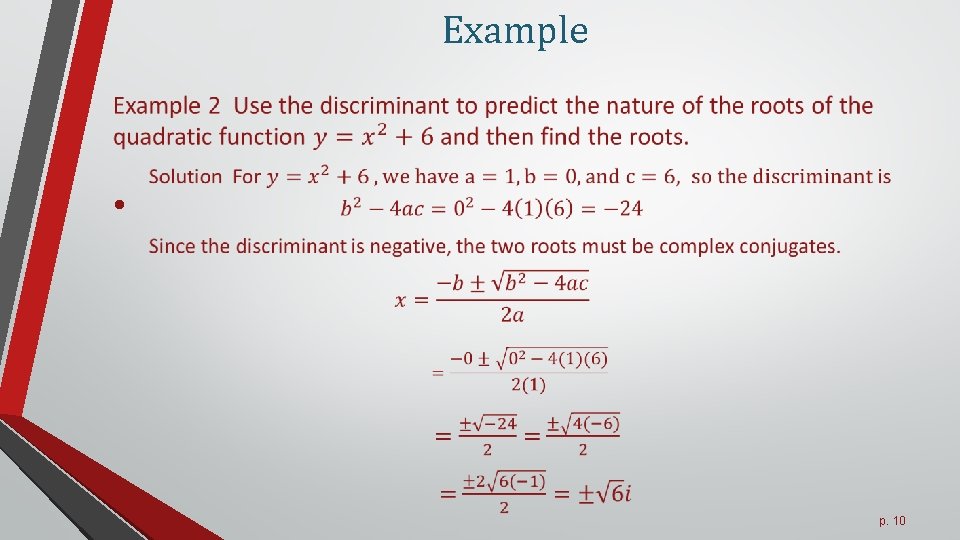
Example • p. 10
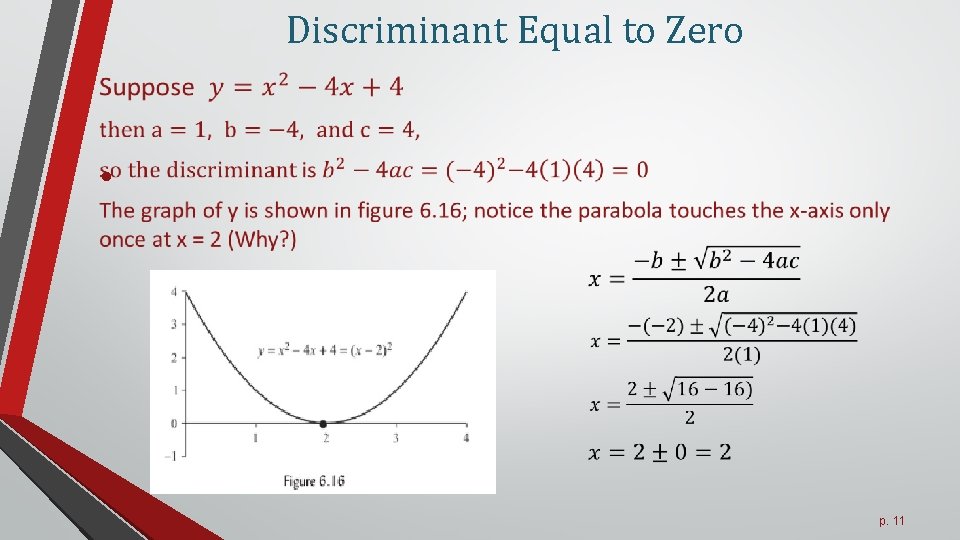
Discriminant Equal to Zero • p. 11
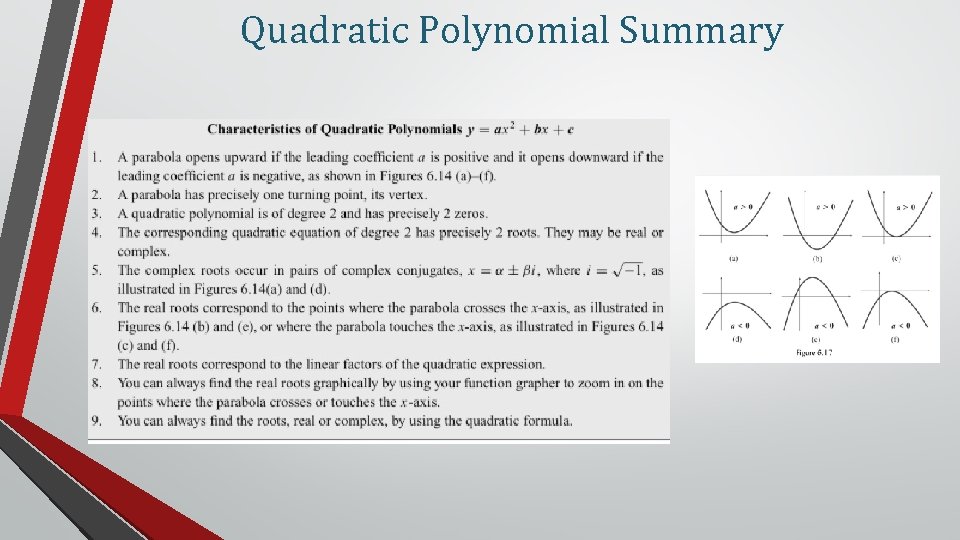
Quadratic Polynomial Summary
- Slides: 12