
Behavior Intervention Teams Susan Mack MA Steve Vitto
Behavior Intervention Teams Susan Mack, MA Steve Vitto, MA MAISD
Outcomes of Training The Participating Staff will… n n Form a team and meet regularly to create effective plans for students with intensive behavior challenges Identify method(s) of identifying Intensive Students Work through a form that demonstrates a basic understanding of PBIS for intensive behaviors Demonstrate the ability to evaluate the effectiveness of a plan
School Connectedness n n n n Positive classroom management climates Participation in extracurricular activities Higher grades Attending class Tolerant discipline policies Self-Discipline (autonomy, goal setting) Small school sizes (weak connection)
EVIDENCE BASED PRACTICES IN CLASSROOM MANAGEMENT 1. 2. 3. 4. 5. Maximize structure in your classroom. Post, teach, review, monitor, and reinforce a small number of positively stated expectations. Actively engage students in observable ways. Establish a continuum of strategies to acknowledge appropriate behavior. Establish a continuum of strategies to respond to inappropriate behavior. (Simonsen, Fairbanks, Briesch, & Myers Sugai, in preparation)
Identify Roles n n Recorder Time Keeper Facilitator Data Keeper
Identify a student n n From this year High rate of referrals, but not so complex a specialist needs to be called
Functional Assessment n n n An investigation into why the behavior is occurring – what is motivating the behavior How aspects of the environment impact the behavior Creation of a hypothesis statement
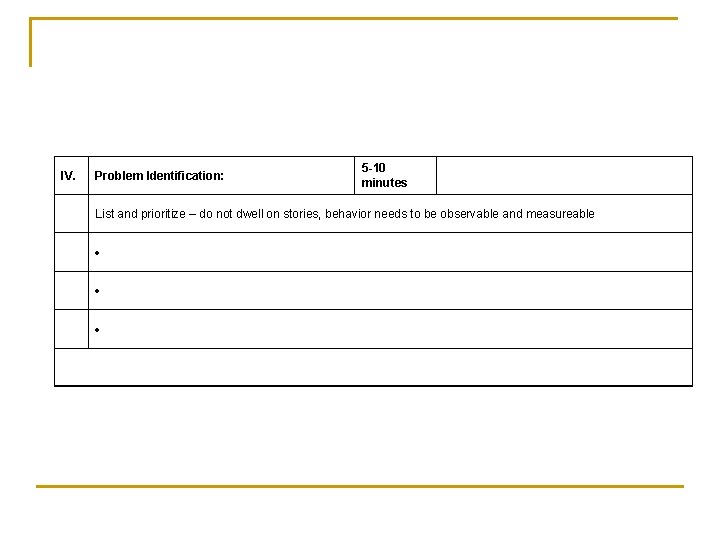
IV. Problem Identification: 5 -10 minutes List and prioritize – do not dwell on stories, behavior needs to be observable and measureable
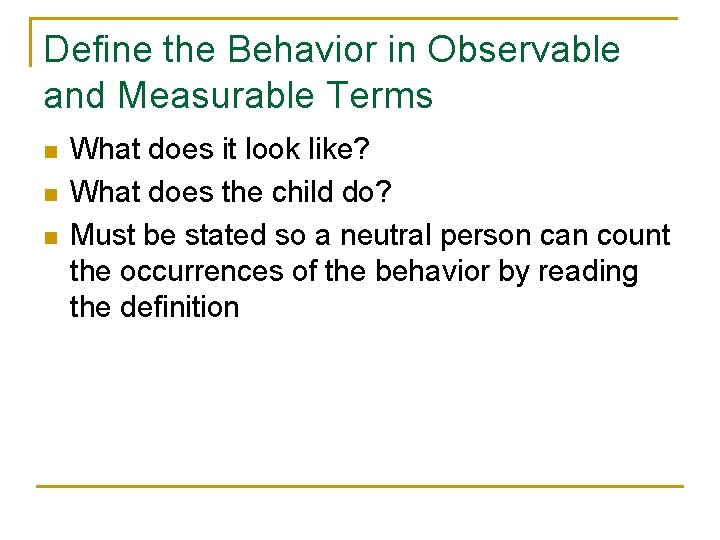
Define the Behavior in Observable and Measurable Terms n n n What does it look like? What does the child do? Must be stated so a neutral person can count the occurrences of the behavior by reading the definition
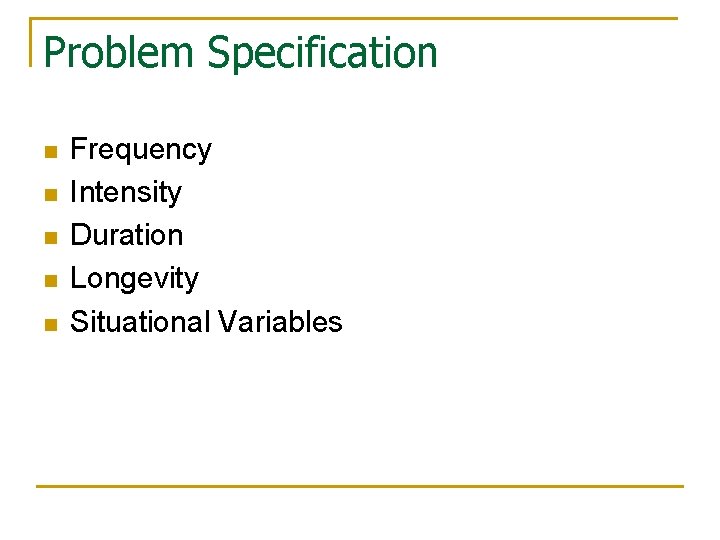
Problem Specification n n Frequency Intensity Duration Longevity Situational Variables
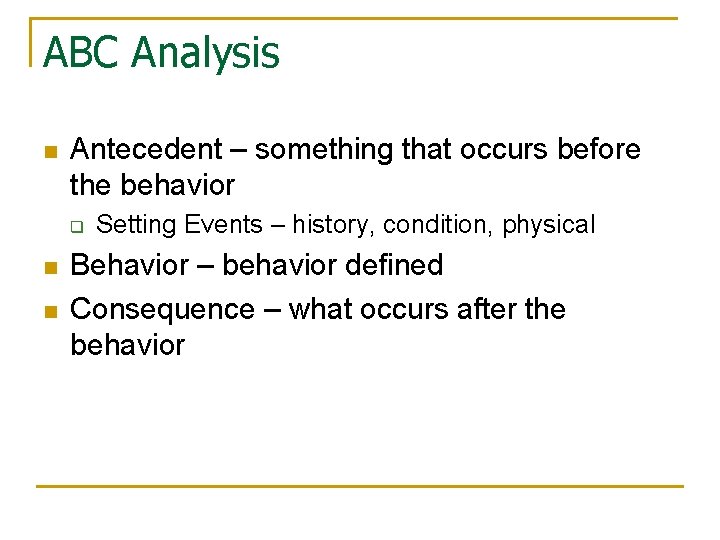
ABC Analysis n Antecedent – something that occurs before the behavior q n n Setting Events – history, condition, physical Behavior – behavior defined Consequence – what occurs after the behavior
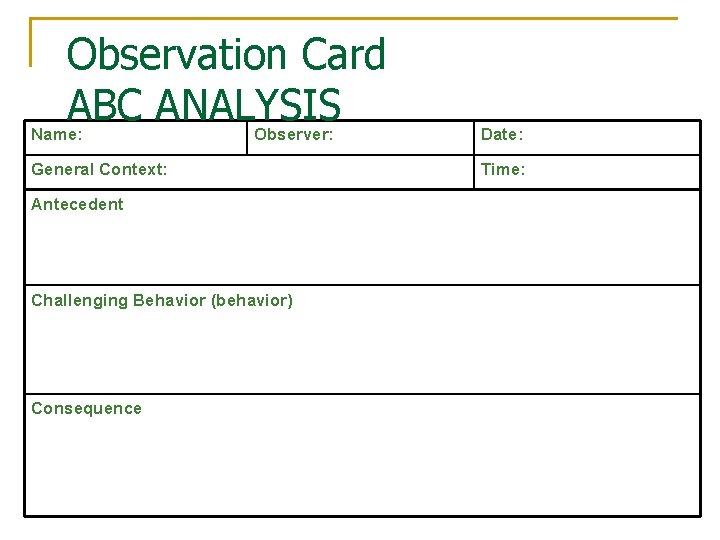
Observation Card ABC ANALYSIS Name: Observer: Date: General Context: Time: Antecedent Challenging Behavior (behavior) Consequence
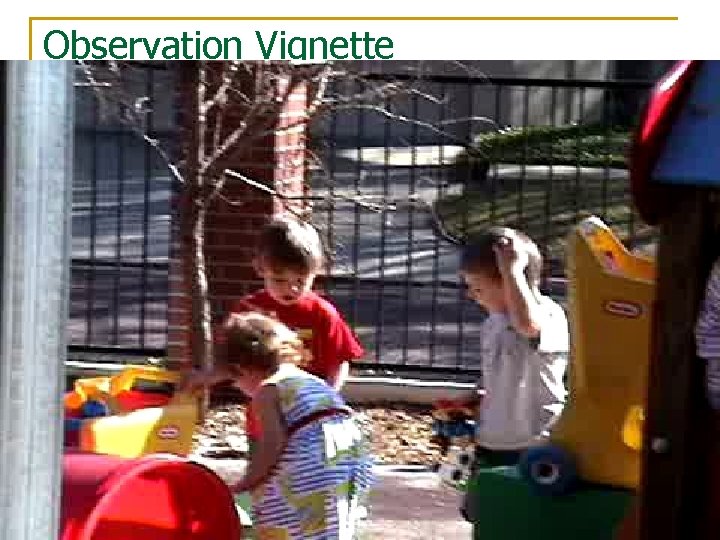
Observation Vignette
Settings/Situations n n Provide information regarding specific people, classes, activities effects on the student and their behavior and look for connections between them Do not use specific names Describe personality characteristics Some sections may not need to be addressed
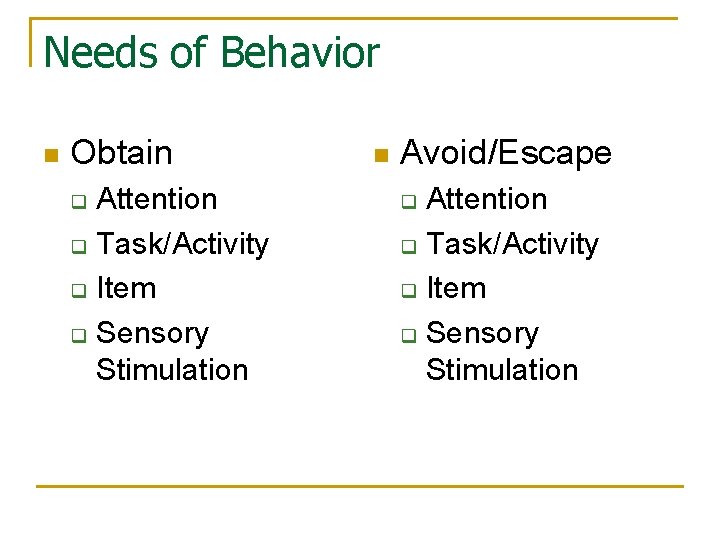
Needs of Behavior n Obtain Attention q Task/Activity q Item q Sensory Stimulation q n Avoid/Escape Attention q Task/Activity q Item q Sensory Stimulation q
The student’s needs are legitimate. It is the behavior used to communicate those needs that may not be acceptable.
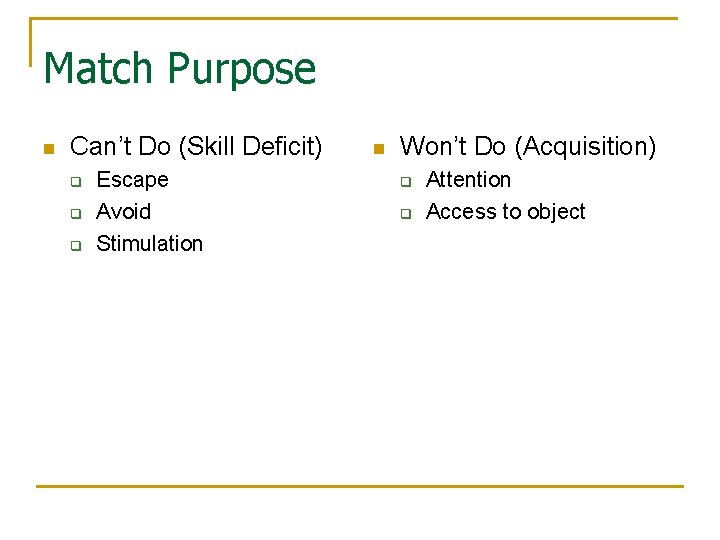
Match Purpose n Can’t Do (Skill Deficit) q q q Escape Avoid Stimulation n Won’t Do (Acquisition) q q Attention Access to object
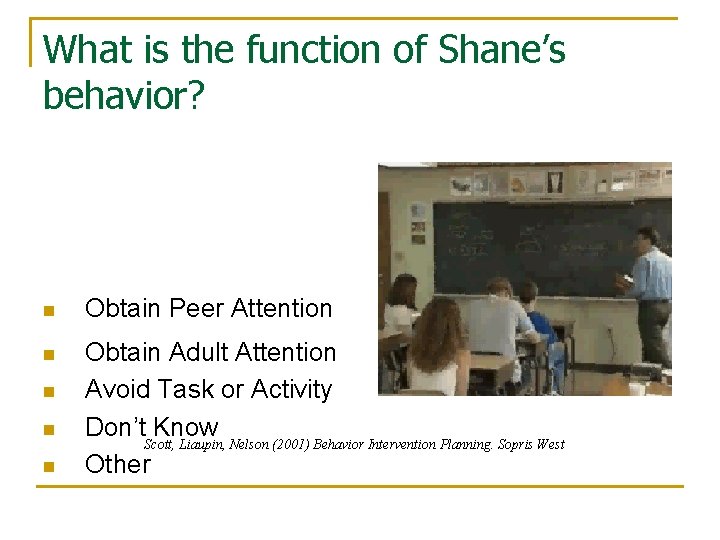
What is the function of Shane’s behavior? n Obtain Peer Attention n Obtain Adult Attention Avoid Task or Activity Don’t Know Scott, Liaupin, Nelson (2001) Behavior Intervention Planning. Sopris West Other n n n
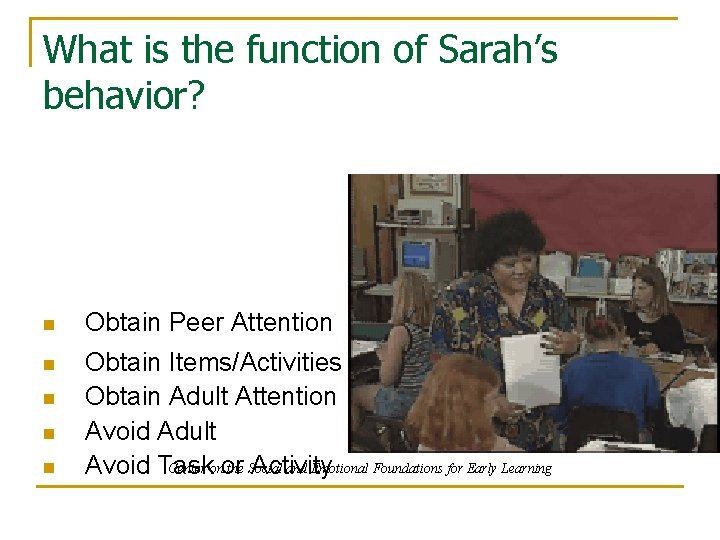
What is the function of Sarah’s behavior? n Obtain Peer Attention n Obtain Items/Activities Obtain Adult Attention Avoid Adult Center onor the Social and Emotional Foundations for Early Learning Avoid Task Activity n n n
What is the function Scott’s behavior? n Obtain Peer Attention n Obtain Items/Activities Avoid Peer(s) Don’t Know Other n n n
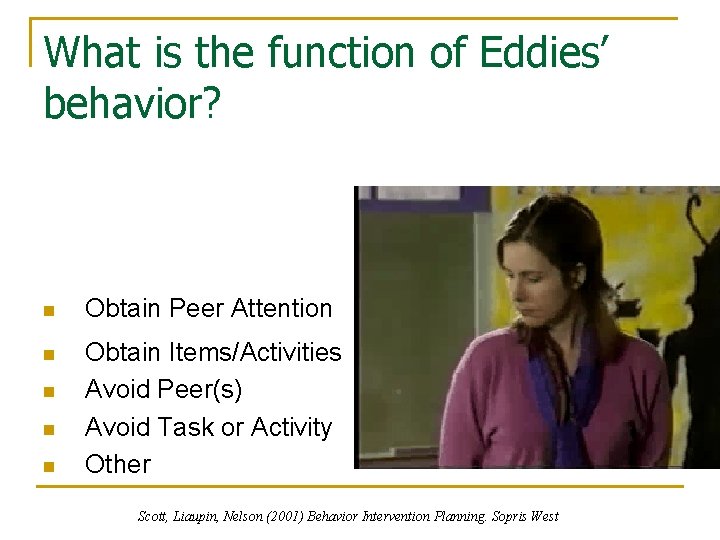
What is the function of Eddies’ behavior? n Obtain Peer Attention n Obtain Items/Activities Avoid Peer(s) Avoid Task or Activity Other n n n Scott, Liaupin, Nelson (2001) Behavior Intervention Planning. Sopris West
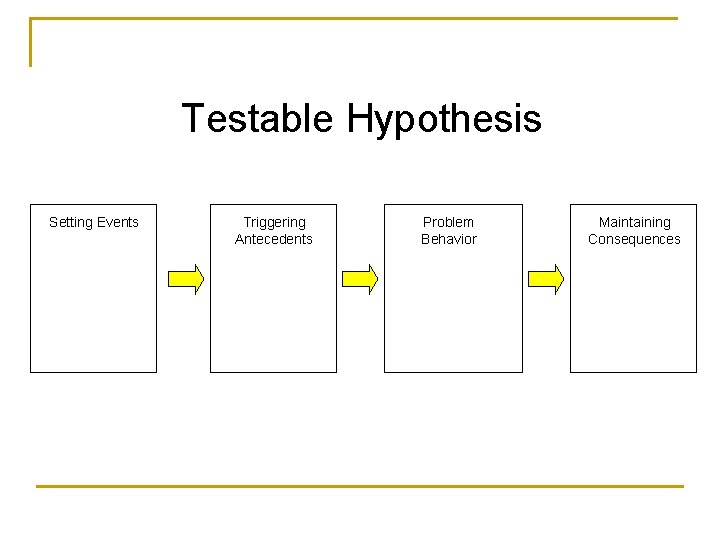
Testable Hypothesis Setting Events Triggering Antecedents Problem Behavior Maintaining Consequences
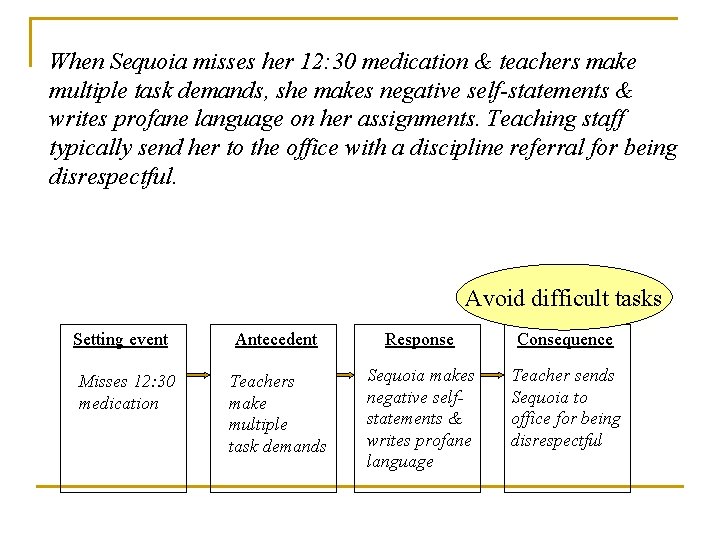
When Sequoia misses her 12: 30 medication & teachers make multiple task demands, she makes negative self-statements & writes profane language on her assignments. Teaching staff typically send her to the office with a discipline referral for being disrespectful. What function? Avoid difficult tasks Setting event Misses 12: 30 medication Antecedent Response Consequence Teachers make multiple task demands Sequoia makes negative selfstatements & writes profane language Teacher sends Sequoia to office for being disrespectful
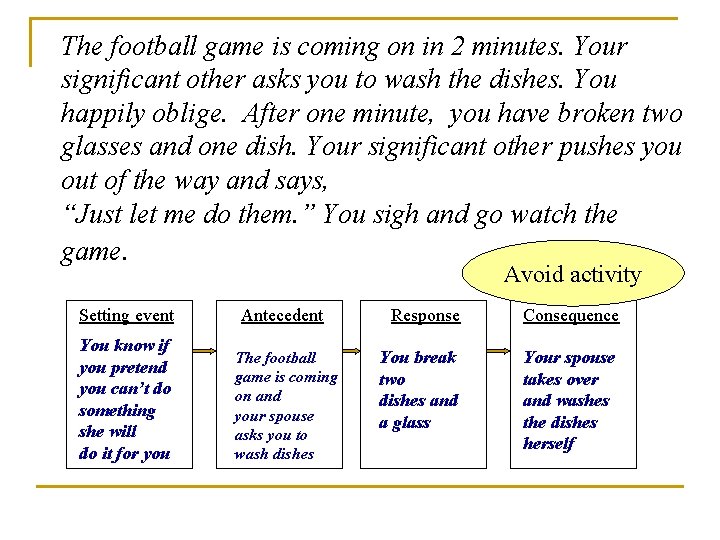
The football game is coming on in 2 minutes. Your significant other asks you to wash the dishes. You happily oblige. After one minute, you have broken two glasses and one dish. Your significant other pushes you out of the way and says, “Just let me do them. ” You sigh and go watch the game. Avoid activity What function? Setting event Antecedent You know if you pretend you can’t do something she will do it for you The football game is coming on and your spouse asks you to wash dishes Response Consequence You break two dishes and a glass Your spouse takes over and washes the dishes herself
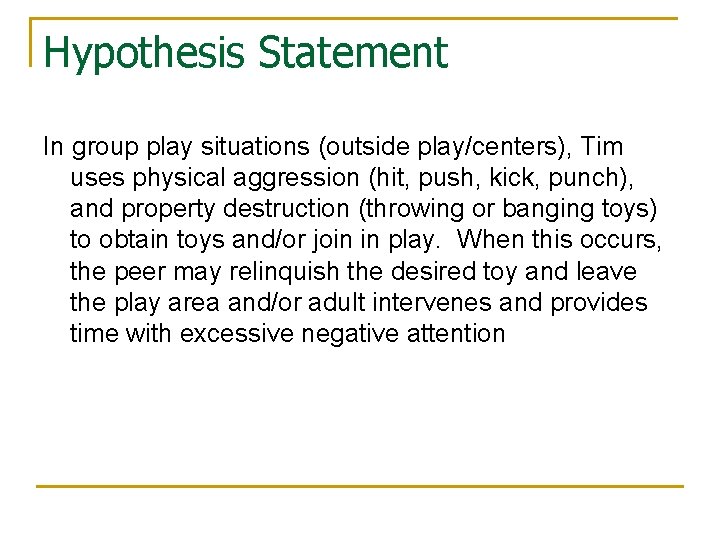
Hypothesis Statement In group play situations (outside play/centers), Tim uses physical aggression (hit, push, kick, punch), and property destruction (throwing or banging toys) to obtain toys and/or join in play. When this occurs, the peer may relinquish the desired toy and leave the play area and/or adult intervenes and provides time with excessive negative attention
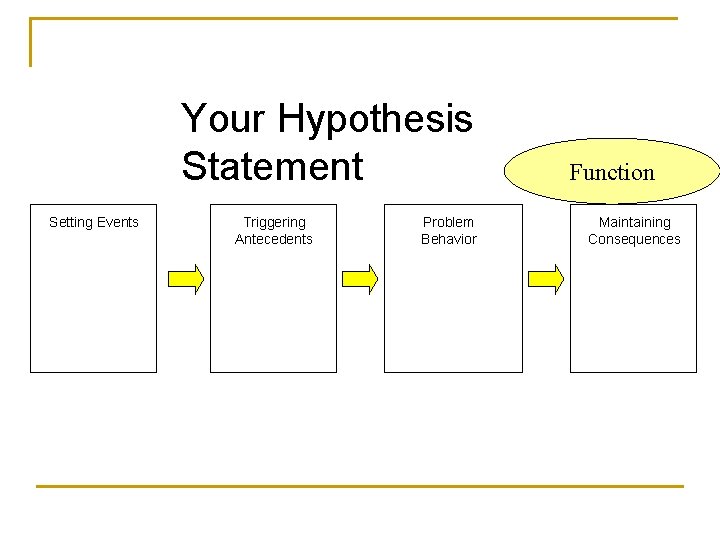
Your Hypothesis Statement Setting Events Triggering Antecedents Problem Behavior Function Maintaining Consequences
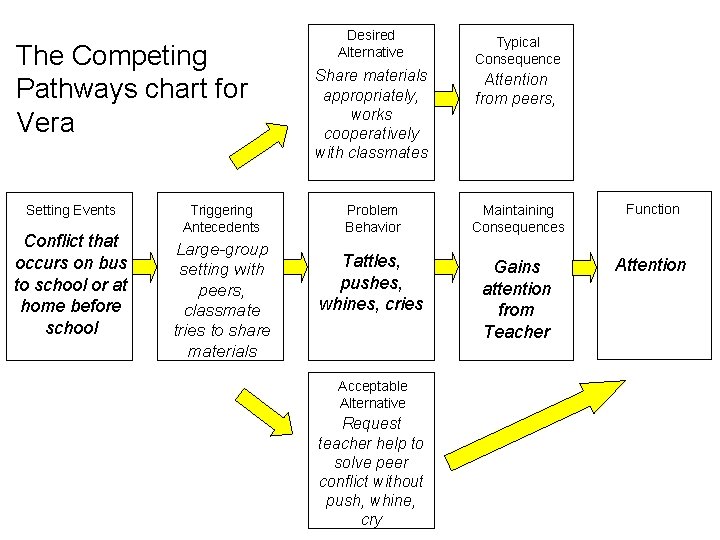
Schoolwide Desired Should expectations Alternative Schoolwider ewards support The Competing Share materials appropriate behavior of Attention Pathways chart for This appropriately, from peers, is what we’d like to most. However, these works Vera cooperatively have happen eventually students with classmates need much more Setting Events Conflict that occurs on bus to school or at home before school Triggering Antecedents Problem Behavior Large-group setting with peers, classmate tries to share materials Typical Consequence Maintaining Consequences Function Tattles, Gains now. Attention This is what is happening pushes, whines, cries Acceptable Alternative attention from Teacher Thisteacher is. Request what we’d be happy help to solvein peerthe meantime with conflict without push, whine, cry
Behavior Intervention Plan
BIP n A good behavior plan makes the challenging behavior: q q q n Inefficient Ineffective and Irrelevant A good behavior plan focuses on changing the adult’s behavior, not the child’s behavior
Three Main Ideas in Addressing Problem Behavior n Preventative: What environmental adjustments will be used to make the student’s problem behavior unnecessary? n Educative: What behaviors (skills) will be taught to replace or meet the same function as the student’s problem behavior and improve his or her ability to function more effectively? n Functional: How will consequences be managed to insure the student receives reinforcers for positive behavior, not problem behavior? Adapted from: Tilly, W. D. , Kovaleski, J. , Dunlap, G. , Knoster, T. P. , Bambara, L. , & Kincaid, D. (1998). Functional behavioral assessment: Policy development in light of emerging research and practice. Alexandria, VA: National Association of State Directors of Special Education (NASDSE)
Behavior Intervention Plans n n Prevent the problem behavior from occurring in the future Teach replacement behaviors Acknowledge occurrences of replacement behaviors Respond effectively when the challenging behavior occurs
Prevention Strategies n n Prevention strategies are the most important component of your behavior intervention plans. “ 80% of behavior can be changed just by pointing out what someone is doing right. ” - Laura Riffel
Prevention n The immediate affect of prevention, decreases the “problem” behavior and allows you to re-teach appropriate behavior. Changes the environment in which the behavior occurs Most of the preventative “treatment” occurs when the behavior doesn’t occur.
Prevention Strategies n n n Environmental Visual Sensory Developing Relationships Approach Styles Routines - Structure
Activity n On the Behavior Support Plan, fill in q q n Setting Event Strategies and Antecedent Strategies. Those strategies staff could implement to prevent the challenging behavior from occurring What are some changes in the environment that could occur to prevent the challenging behavior from occurring? List three preventative strategies
Replacement Behaviors Misbehavior generally occurs for two reasons: n. Skill deficits n. Performance deficits Remember, “diagnosis matters” Replacement behaviors must be provided
Replacement Behavior n n n For every behavior you decrease, you must increase another behavior Can’t leave a child in a vacuum of “no behavior” Can’t “stamp out” behaviors in individuals without providing a replacement behavior to substitute
Functional Equivalence of Replacement Behavior Problem (yelling) Communication (ask for a break) ESCAPE Undesirable task If you strengthen one, the other behavior becomes irrelevant
When a functionally equivalent response is taught, a decrease in the frequency of the problem behavior should occur.
Replacement Behaviors n n Must be taught Must be acknowledged when it occurs Strive to achieve a four to one ratio of positive reinforcement for appropriate behavior for each instance of corrective feed back for problem behavior Rewards may have to be systematic
Reinforcement Strategies n n May need to be more individualized than School Coupon/Tickets Make sure reinforcement strategy is motivating to the student Start off with a criteria that the student can achieve success with Make sure the reinforcement is a celebration, not a threat
Activity n n On Behavior Support Plan, fill in the strategies you might use for Behavior Teaching Strategies. What will be taught, how will it be taught and how will it be acknowledged
Response or Consequence Strategies n What to do when the behavior occurs. Should be: q q q Effective at reducing the behavior Supportive and therapeutic Respectful and never degrade or humiliate Typically addresses staff behavior Focus on teaching and restoration
Consequence Strategies Unfortunately, typical discipline strategies rely almost entirely on this component
Responding to Problem Behavior n n n How should staff deal with the problem behavior to decrease the intensity and frequency of the challenging behavior Staff response should make the problem behavior ineffective in meeting the need Responding or consequences does not necessarily mean punishment
Negative consequences within a system of Positive Behavioral Interventions & Supports n Negative consequences are a way to “keep the lid on” n Prevents escalation of problem behaviors n Prevents or minimizes reward for problem behaviors
It is important to remember: Before you consider punishing inappropriate behavior you should… Clearly identify the behavior you want to see • Teach students how to perform the behavior • Acknowledge students for engaging in the identified behavior expectations Do not expect negative consequences to change behavior patterns. Teaching changes behavior. •
Ideas for consequence strategies n Ignoring q n Redirection q n Do NOT ignore the student, ignore the behavior. Break the “cycle” of the behavior Presenting feedback q Non-threatening; what to do next
Ideas for consequence strategies n Active listening q n Stimulus control q n If your reaction escalates behavior, it’s not a good reactive strategy. Interpositioning q n “what do you need? ” Use close proximity only if it works Self-Control
Activity n On Behavior Support Plan sheet fill in Consequence Strategies
Collecting Data n Data should be collected to insure the student is responding to the behavior plan. q q Multiple days across time periods During activities Across settings Periodically throughout the day
Action Plan n Who will support the teacher with the student’s behavior by q q q Securing materials Making materials Taking data Assisting with crisis situations Teaching behaviors Rewarding behaviors
Monitoring for Effectiveness and Fidelity n n n How long do you try an intervention before you know it is not effective? How will your team monitor the plans fidelity of implementation When will the team reconvene to review progress? If the plan is successful, how will the plan be faded? If unsuccessful, what are the next steps?
- Slides: 53