
Behavior Change Workshop Introduction HELVETAS Based on the
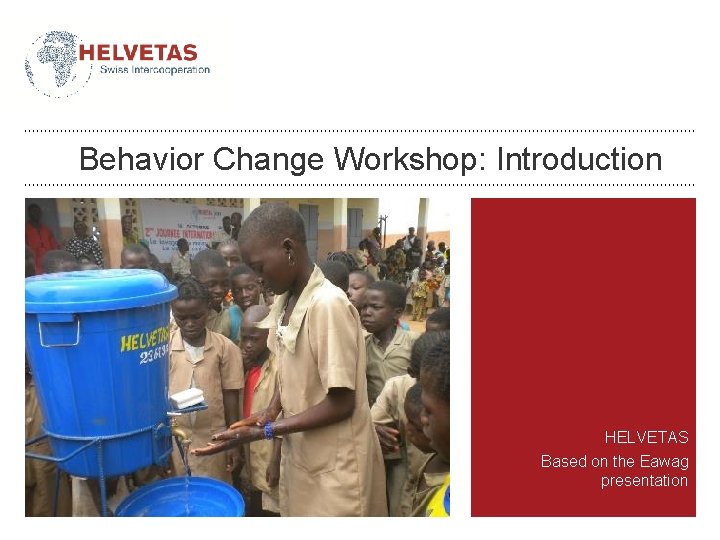
Behavior Change Workshop: Introduction HELVETAS Based on the Eawag presentation

Introduction • Which of your own behaviours have you wanted to change? • When did you last change a behavior of your own?

Goal of Session 1 Increase knowledge about behavior change and introduce the RANAS approach o Share people’s own experiences o Become familiar with the Ranas model o Know the factors that determine behaviors
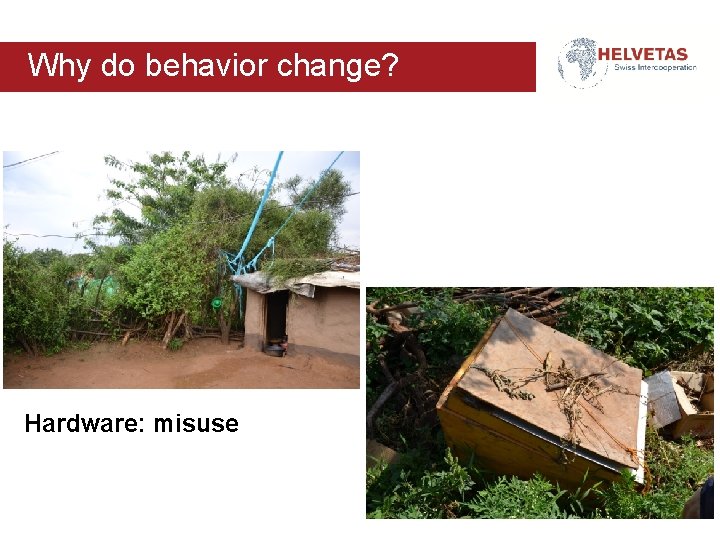
Why do behavior change? Hardware: misuse
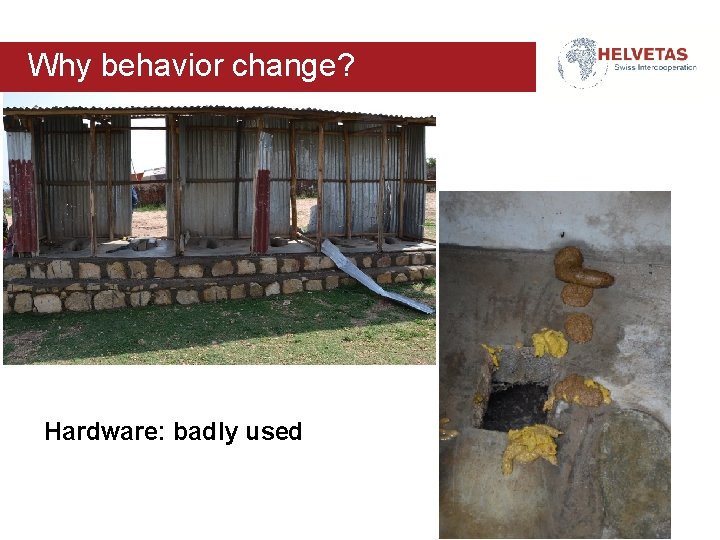
Why behavior change? Hardware: badly used
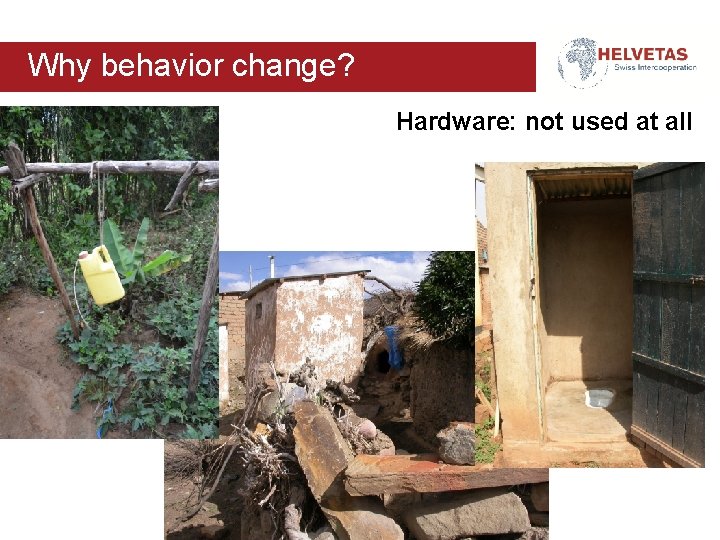
Why behavior change? Hardware: not used at all
Own Yourexperiences? own experiences • What are your experiences of behaviour change in your project work? • Which kinds of behaviour change approach do you know?
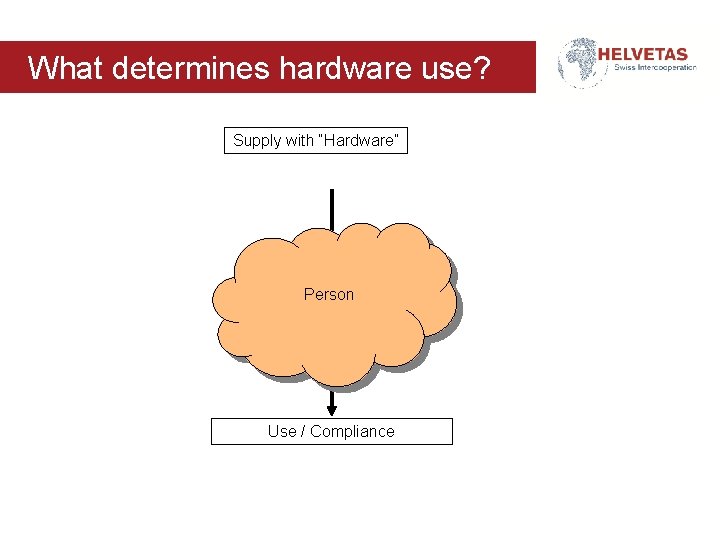
What determines hardware use? Supply with “Hardware” Person Use / Compliance
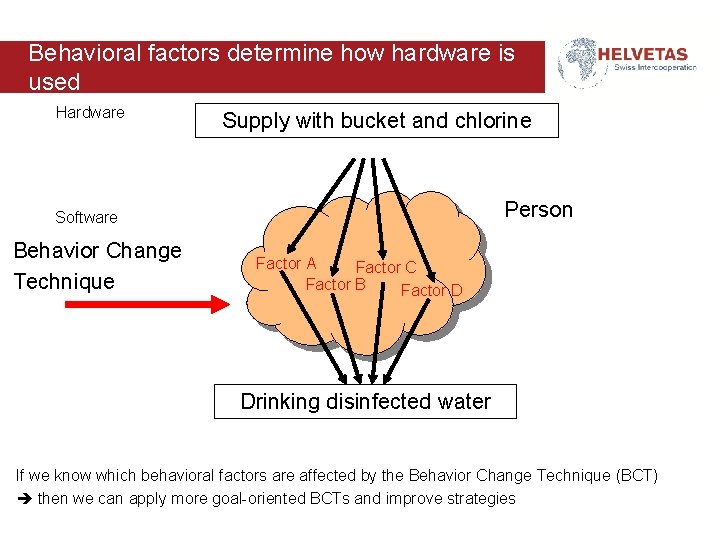
Behavioral factors determine how hardware is used Hardware Supply with bucket and chlorine Person Software Behavior Change Technique Factor A Factor C Factor B Factor D Drinking disinfected water If we know which behavioral factors are affected by the Behavior Change Technique (BCT) then we can apply more goal-oriented BCTs and improve strategies
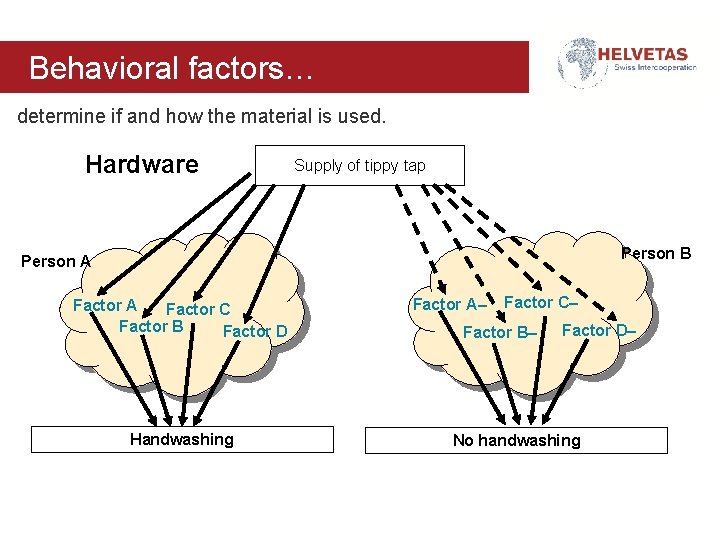
Behavioral factors… determine if and how the material is used. Hardware Supply of tippy tap Person B Person A Factor C Factor B Factor D Handwashing Factor A– Factor C– Factor B– Factor D– No handwashing
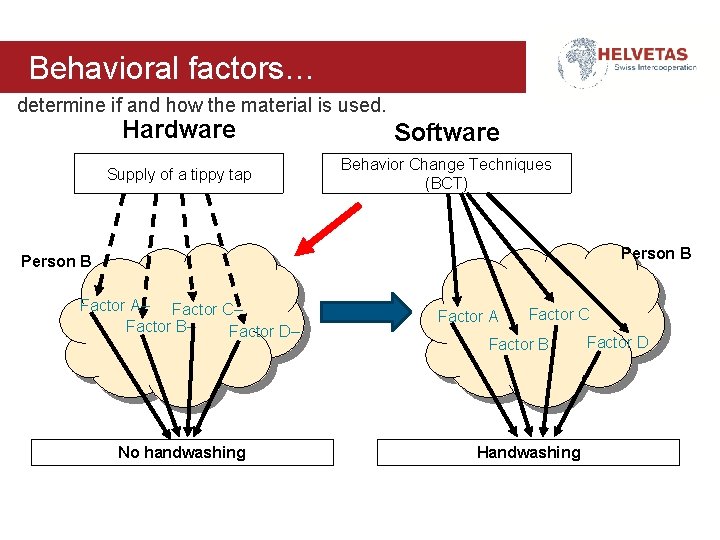
Behavioral factors… determine if and how the material is used. Hardware Software Supply of a tippy tap Behavior Change Techniques (BCT) Person B Factor A– Factor C– Factor B– Factor D– No handwashing Factor A Factor C Factor B Handwashing Factor D
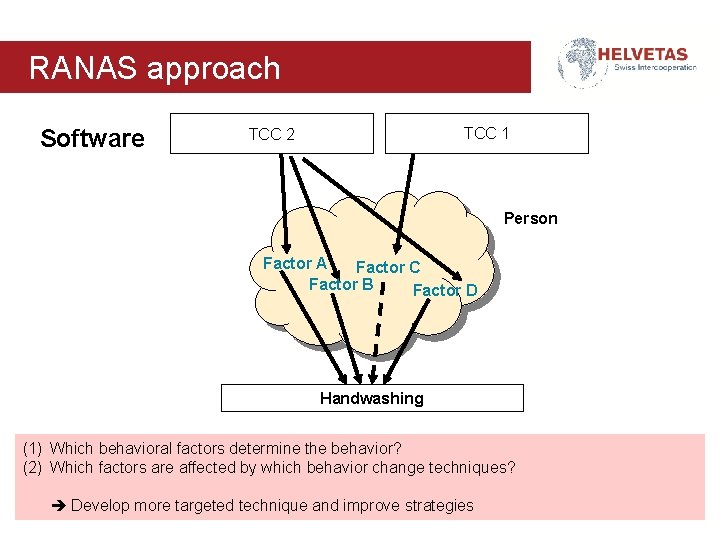
RANAS approach Software TCC 1 TCC 2 Person Factor A Factor C Factor B Factor D Handwashing (1) Which behavioral factors determine the behavior? (2) Which factors are affected by which behavior change techniques? Develop more targeted technique and improve strategies
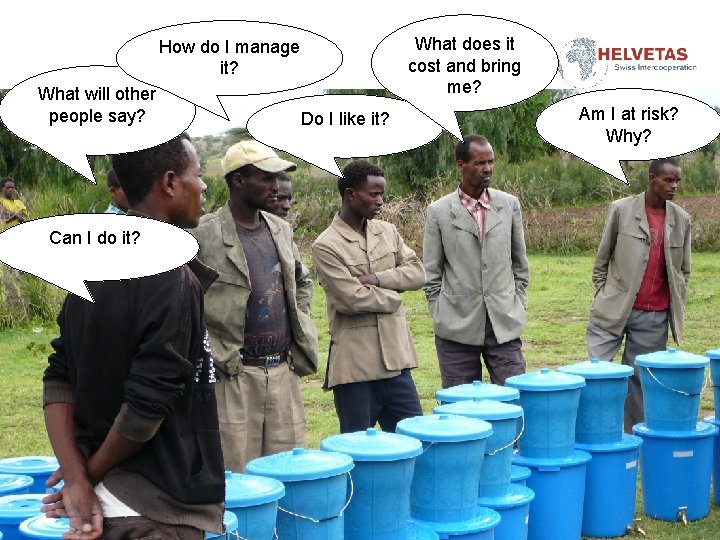
What does it cost and bring me? How do I manage it? What will other people say? Can I do it? Do I like it? Am I at risk? Why?

Psychological factors for behavior change Am I at risk? Why? Risk factors: Health knowledge Vulnerability Severity Behavior A What does it cost and bring me? Do I like it? Attitude factors: Beliefs about costs and benefits Feelings What will other people say? Intention Use Habit Norm factors: Others’ behavior Others’ (dis)approval Personal importance Ability factors: Can I do it? How do I manage it? How do I do it? How-to-do knowledge Confidence in performance Confidence in continuation Confidence in recovering Self-regulation factors: Behavior B Intention Use Habit Action planning Action control Barrier planning Remembering Commitment Mosler, H. J. , (2012). A systematic approach to behavior change interventions for the water and sanitation sector in developing countries. A conceptual model, a review, and a guideline. International Journal of Environmental Health Research, 22 (5), 431 -449.
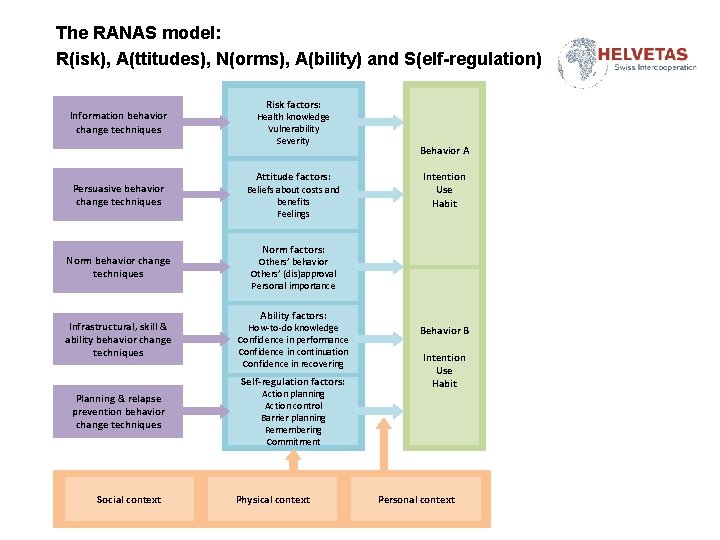
The RANAS model: R(isk), A(ttitudes), N(orms), A(bility) and S(elf-regulation) Information behavior change techniques Risk factors: Health knowledge Vulnerability Severity Attitude factors: Persuasive behavior change techniques Beliefs about costs and benefits Feelings Norm behavior change techniques Others’ behavior Others’ (dis)approval Personal importance Infrastructural, skill & ability behavior change techniques How-to-do knowledge Confidence in performance Confidence in continuation Confidence in recovering Social context Intention Use Habit Norm factors: Ability factors: Self-regulation factors: Planning & relapse prevention behavior change techniques Behavior A Action planning Action control Barrier planning Remembering Commitment Physical context Behavior B Intention Use Habit Personal context
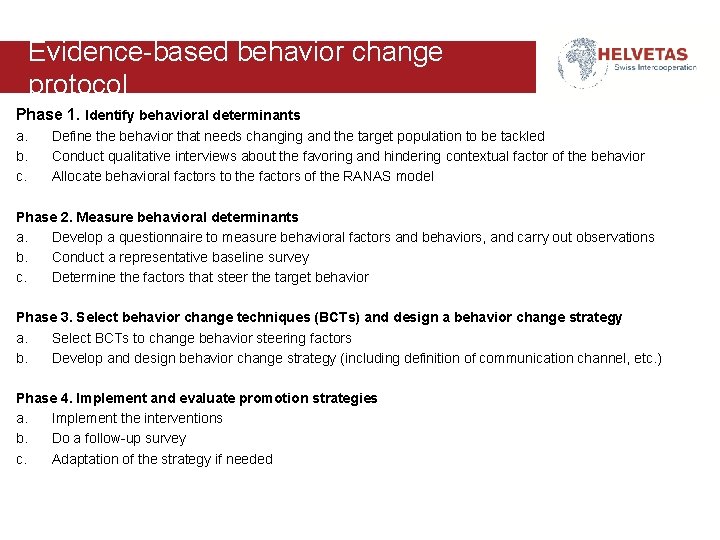
Evidence based behavior change Evidence-based protocol Phase 1. Identify behavioral determinants a. Define the behavior that needs changing and the target population to be tackled b. Conduct qualitative interviews about the favoring and hindering contextual factor of the behavior c. Allocate behavioral factors to the factors of the RANAS model Phase 2. Measure behavioral determinants a. Develop a questionnaire to measure behavioral factors and behaviors, and carry out observations b. Conduct a representative baseline survey c. Determine the factors that steer the target behavior Phase 3. Select behavior change techniques (BCTs) and design a behavior change strategy a. Select BCTs to change behavior steering factors b. Develop and design behavior change strategy (including definition of communication channel, etc. ) Phase 4. Implement and evaluate promotion strategies a. Implement the interventions b. Do a follow-up survey c. Adaptation of the strategy if needed
- Slides: 16