
Beginning with PREHISTORY History is pretty expansive most
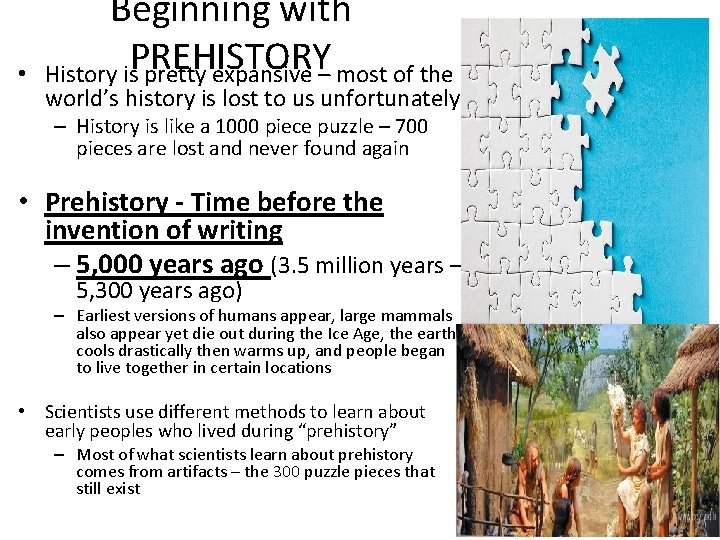
• Beginning with PREHISTORY History is pretty expansive – most of the world’s history is lost to us unfortunately – History is like a 1000 piece puzzle – 700 pieces are lost and never found again • Prehistory - Time before the invention of writing – 5, 000 years ago (3. 5 million years – 5, 300 years ago) – Earliest versions of humans appear, large mammals also appear yet die out during the Ice Age, the earth cools drastically then warms up, and people began to live together in certain locations • Scientists use different methods to learn about early peoples who lived during “prehistory” – Most of what scientists learn about prehistory comes from artifacts – the 300 puzzle pieces that still exist

ARTIFACTS • Artifacts - Objects that people left behind that give hints as to how they lived – Bones – Jewelry – Tools – Clothing (remains)
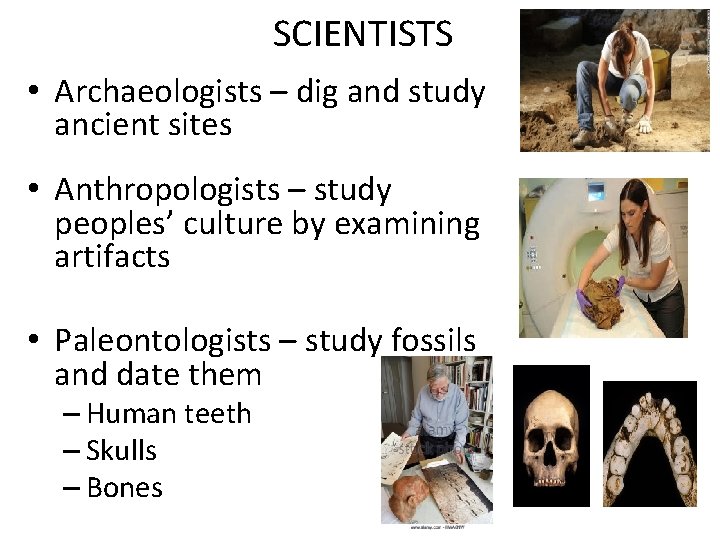
SCIENTISTS • Archaeologists – dig and study ancient sites • Anthropologists – study peoples’ culture by examining artifacts • Paleontologists – study fossils and date them – Human teeth – Skulls – Bones
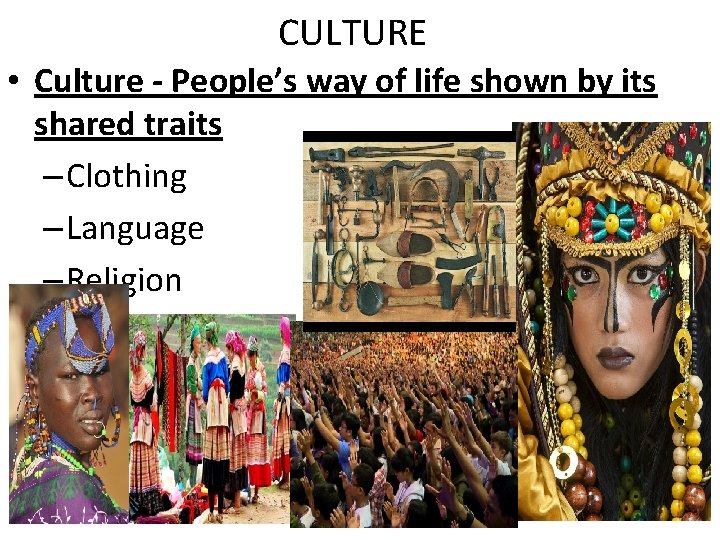
CULTURE • Culture - People’s way of life shown by its shared traits – Clothing – Language – Religion – Tools and Technology
The “Old” Stone Age • Much of known history begins with the “Paleolithic Age” – Lasted from about 2. 5 million to 8, 000 B. C. – Considered part of prehistory – there weren’t any written languages developed at the time – World temperatures cooled – large game animals appeared (mammoths, mastodons, dire wolves, etc. ) – Early humans appeared - communicated with verbal cues and wall art • Early people during this time period developed: – Stone tools – Experimented with different stones to see which were durable – Development of language – Used verbal sounds/cues to communicate – Mastery over Fire – the usage of certain materials caused sparks – leads to creating a fire
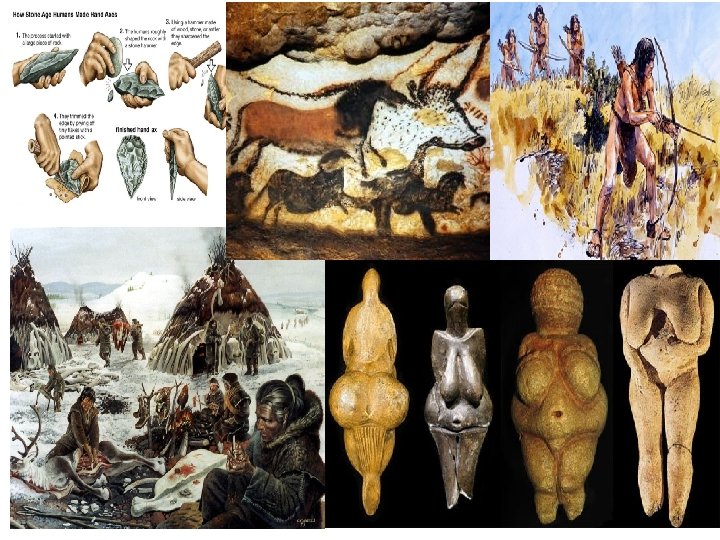

EVOLUTION OF HUMAN SOCIETY • Hominids emerge during the Paleolithic Age – Mammals that walked upright on two legs – only creature of that time that could (true to this day) – Had opposable thumbs (only other animals that can are gorillas, chimps, other great apes) – Throughout the thousands of years that passed, hominids stood more erect – limbs elongated – Brains got bigger as well – correlation to how intelligent each version of hominid was
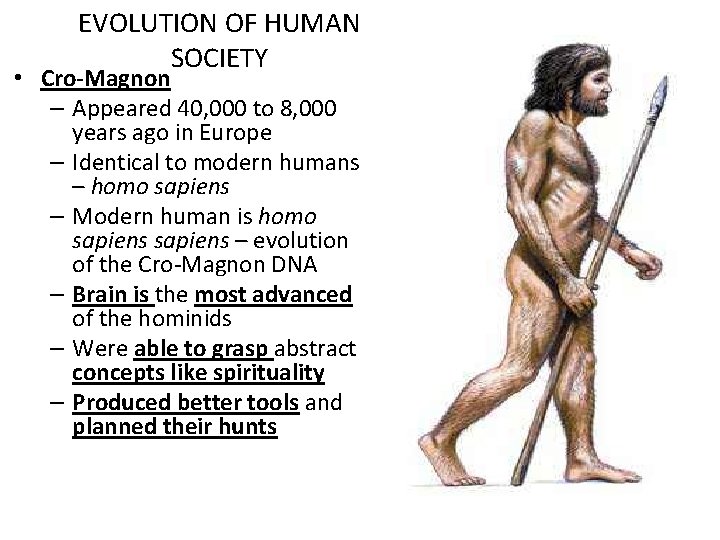
EVOLUTION OF HUMAN SOCIETY • Cro-Magnon – Appeared 40, 000 to 8, 000 years ago in Europe – Identical to modern humans – homo sapiens – Modern human is homo sapiens – evolution of the Cro-Magnon DNA – Brain is the most advanced of the hominids – Were able to grasp abstract concepts like spirituality – Produced better tools and planned their hunts
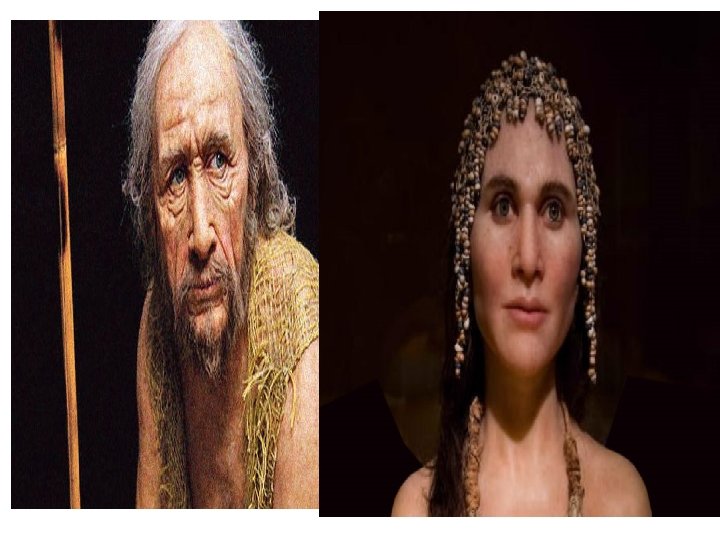
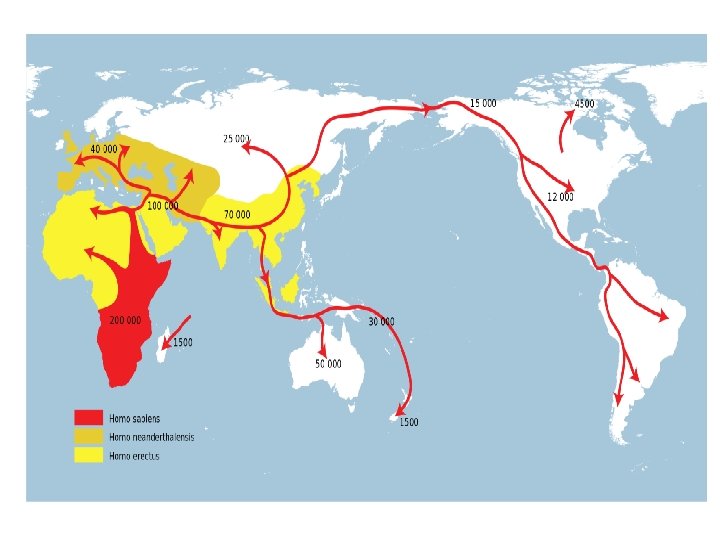
Neolithic Revolution • Cro-Magnon groups became Hunter Gatherers – look for edible plants and hunted animals for food • Women dropped seeds into the earth before group moved on – Eventually came back to the same area and saw more fruit had grown • Neolithic Revolution – Switch from looking for food to growing food in fields – Ice age ended, big game died out, climate got warmer, easier for hunter gather’s to travel
The “New” Stone Age • Also known as the “Neolithic Age” (the age where early human society undergoes social/technological transformations) • Lasted from 8, 000 to 3, 000 B. C. – Move from prehistory to history because writing will be developed –People began to Grow crops – built terraced hillsides, irrigation ditches, and canals – used to maintain agriculture • Slowly move away from hunting and gathering to settling down in one place to live
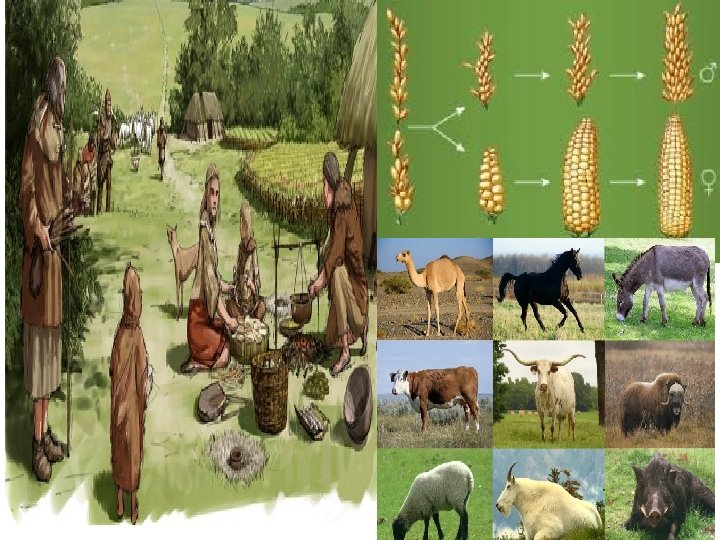

Settlements • Humans settle by rivers – Noticed more crops grow there • Growing food means people don’t have to move around as much – People Specialize in their work – work with one skill (Farmer, Merchant, Weaver, etc) • Develop “River Valley” civilizations:
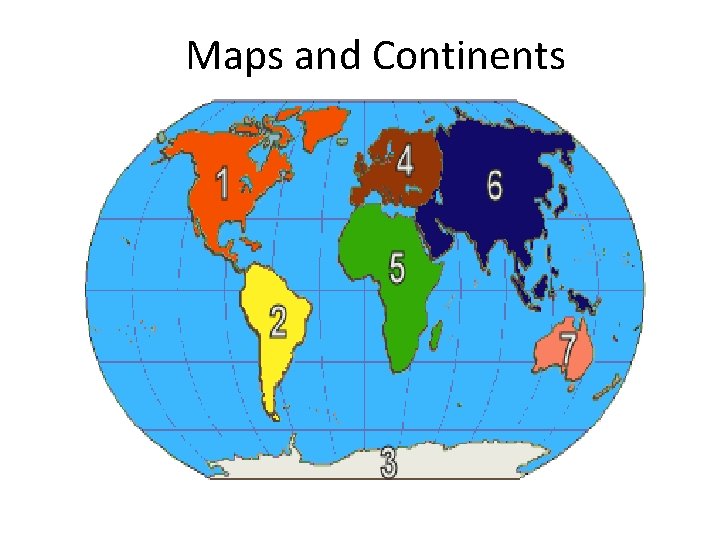
Maps and Continents
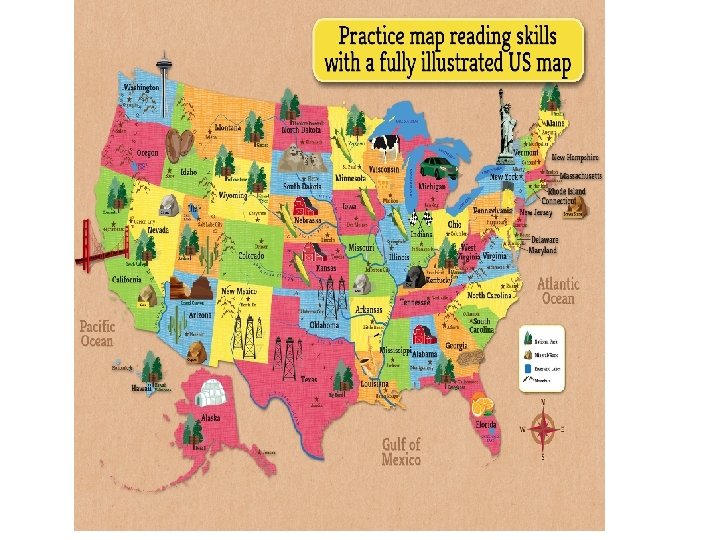
Importance of Maps • Maps are an important part of history. Maps show us things like where people have lived and moved, the weather of different continents and regions, and other changes in that take place in the world.
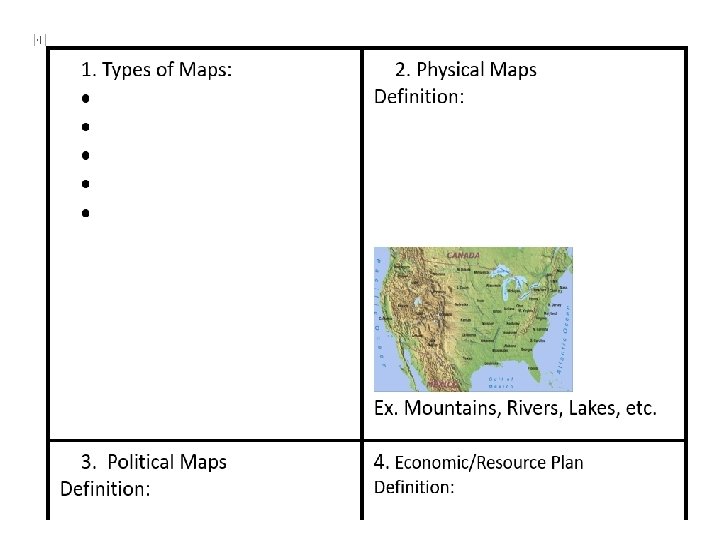
Kind of Maps • There are several different kinds of maps including: – Physical Maps – Political Maps – Topographical Maps – Road Maps – Economic or Resource Maps
Physical Maps • Shows the natural features of an area. Water is colored blue and land either in green or brown (elevation). – Ex: Mountains, Rivers, Lakes
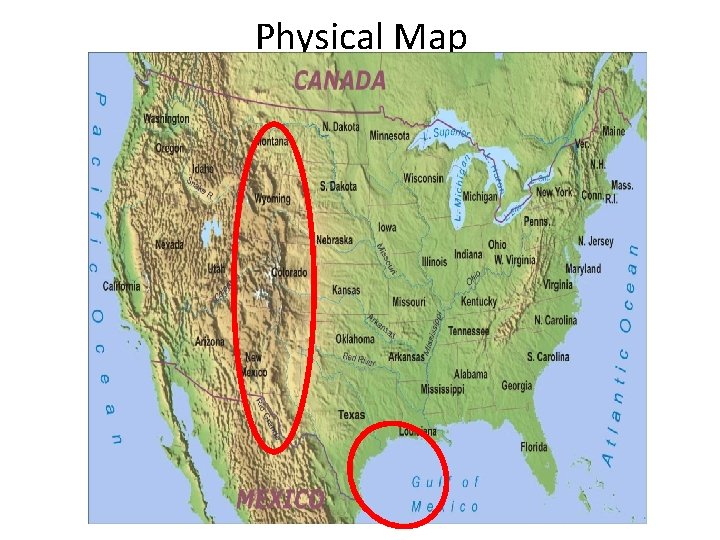
Physical Map
Political Maps • Shows state and national boundaries, capitals and major cities – Ex: New York City, Austin, Sacramento
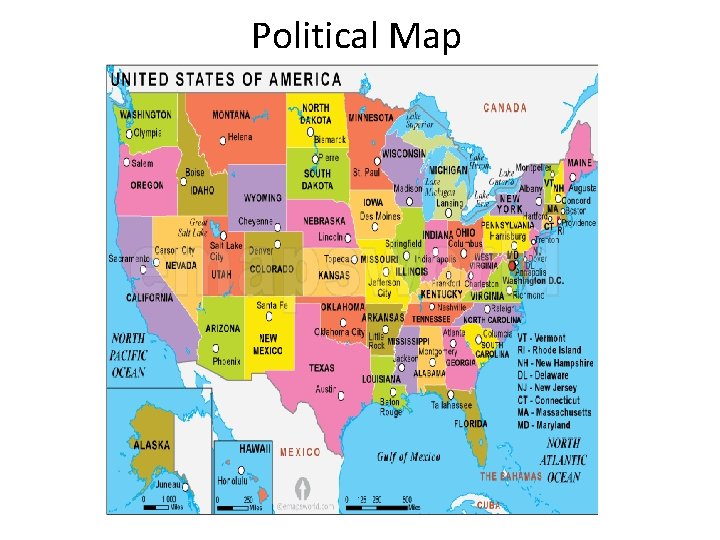
Political Map
Economic/Resource Maps • Features the natural resources and economic activity in an area – Farming, Mining, Forestry, Manufacturing
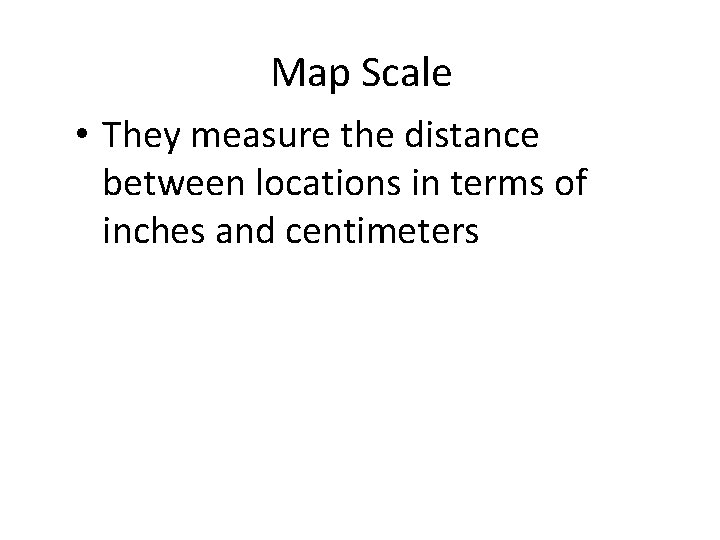
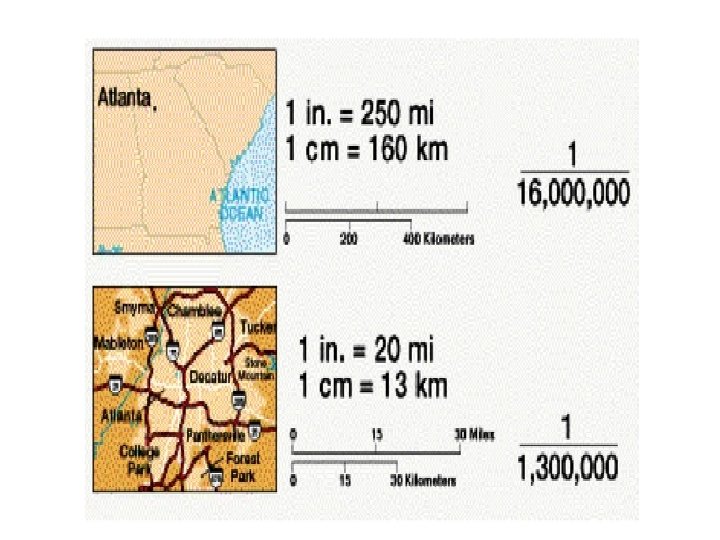
Map Scale • They measure the distance between locations in terms of inches and centimeters
Map Key • A table/legend used to explain symbols on a map
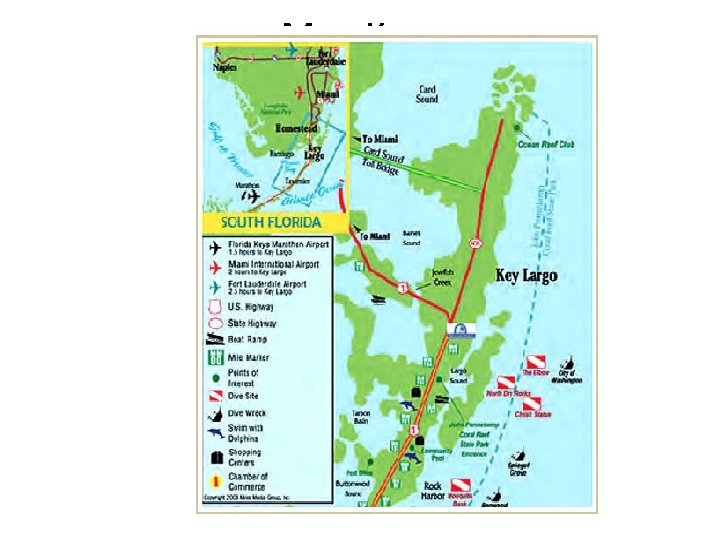
Map Key
Compass Rose • Figure on a map used to display directions – points on a compass
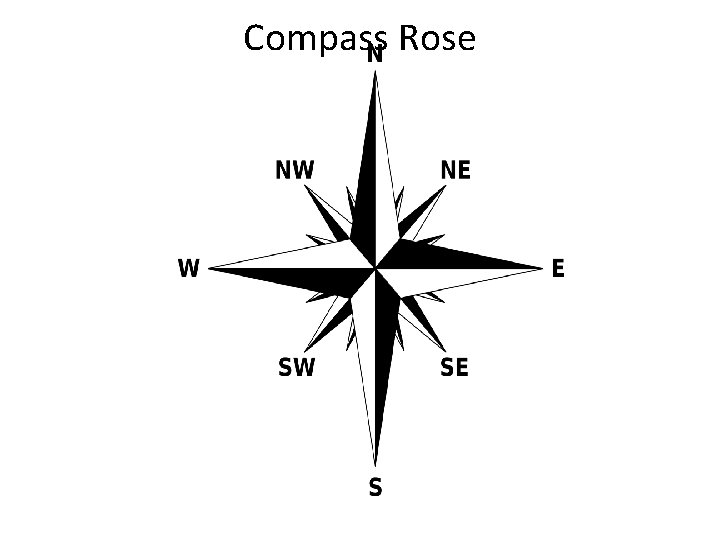
Compass Rose
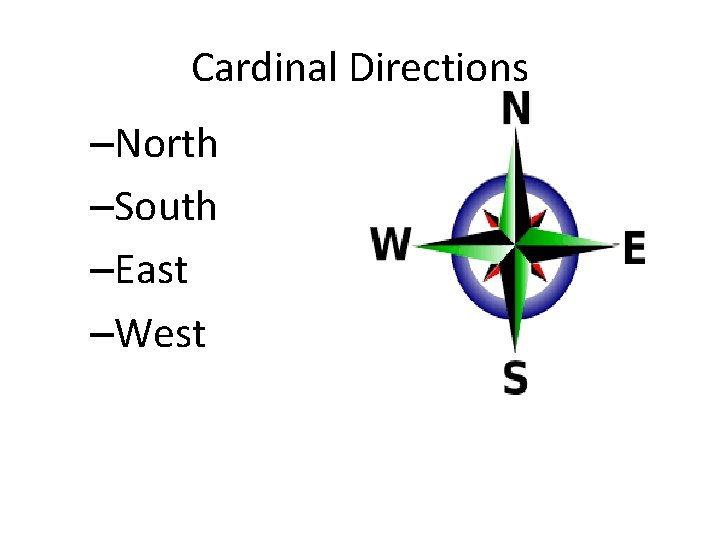
Cardinal Directions –North –South –East –West
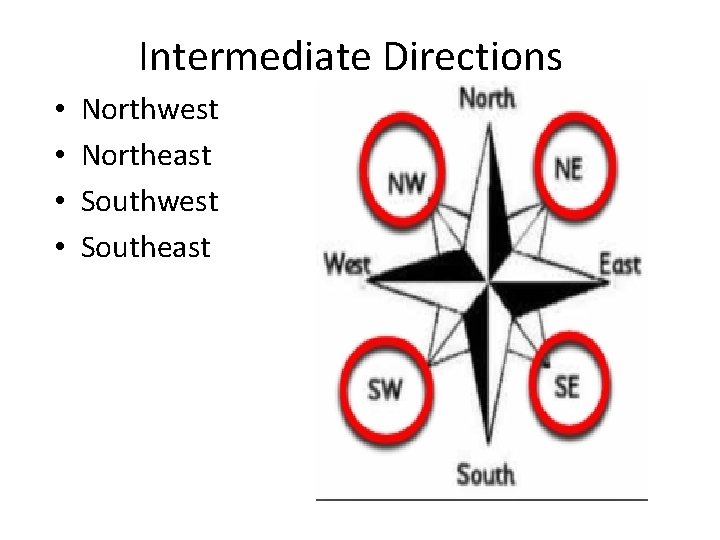
Intermediate Directions • • Northwest Northeast Southwest Southeast
Compass Rose Activity • Trace the template pieces onto construction paper • Cut out the traced pieces • Glue down the big circle on the background a single piece of construction paper • Glue down the larger points • Glue down the smaller points • Use small pieces of construction/colored paper to write the cardinal and intermediate directions
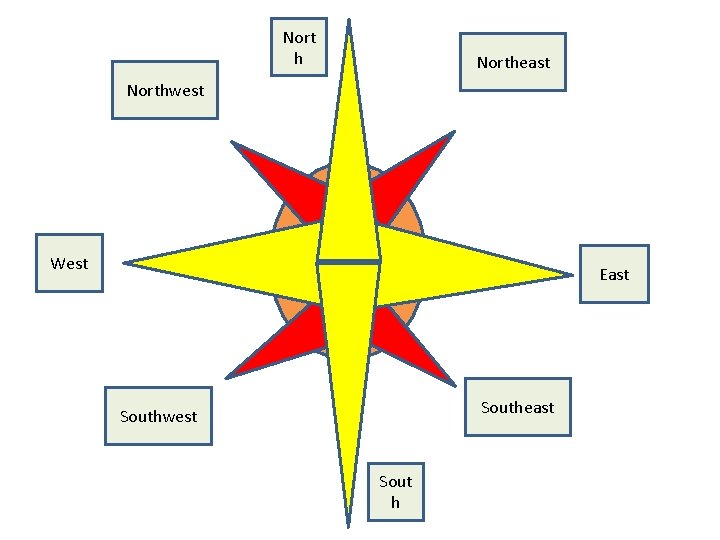
Nort h Northeast Northwest West East Southeast Southwest Sout h
- Slides: 34