
BEGINNING TRAUMA INFORMED CARE TIC ABCS OF BUILDING
BEGINNING TRAUMA INFORMED CARE (TIC) ABC’S OF BUILDING BETTER LIVES COUNSELING SERVICES ASHLEY GLEASON LPC CEAP; ROBERT GIANNAMORE LPC; LYNN OBORSKI LPC
SETTING THE STAGE • A clinic serving mostly Medicaid and uninsured families is struggling to help patients keep their appointments. Its patients, who come from the surrounding community, are often either unemployed or working minimum wage jobs. Most of the adults have at least one chronic illness, often heart disease or diabetes. Many have been touched by community violence, substance abuse, mental illness, or incarceration in some way. Some grew up in abusive homes, witnessing or experiencing physical, emotional, or sexual violence. • When they come to the clinic, the patients are often stressed, and many become impatient. When last-minute changes or long waits occur, some patients shout profanities, make threats, or slam doors. Perhaps anticipating this hostility, the front-desk staff rarely make eye contact with patients, preferring to keep their gaze on the computer screen as they ask rapid-fire questions about health insurance and reasons for visiting. Their disengagement often creates more animosity and patients are often even more irritated when they enter the exam room to interact with the clinicians.
WHAT IS TRAUMA? • Trauma refers to intense and overwhelming experiences that involve serious loss, threat of harm to a person’s physical and/or emotional well being. • Single Event or Repeated over many years. • These trauma experiences often overwhelm the persons coping resources. This often leads the person to find a way of coping that may work for the short run but may cause serious harm in the long run.

EXAMPLES OF TRAUMATIC LIFE EXPERIENCES • • Physical, emotional, and/or sexual abuse in childhood or adulthood. • In Childhood: • Neglect or abandonment Combat related trauma • Refugee • Torture • Civil unrest • Food insufficiency, lack of money to meet basic needs, homelessness. • Witnessing or experiencing violence • Death of a parent • Catastrophic loss (natural disaster) • Divorce • Family life that includes drug addictions, alcoholism, parental incarceration, violence • Terrorism • Rape • Serious medical illness or disease • Disabling conditions, loss of function, invasive or distressing procedures.
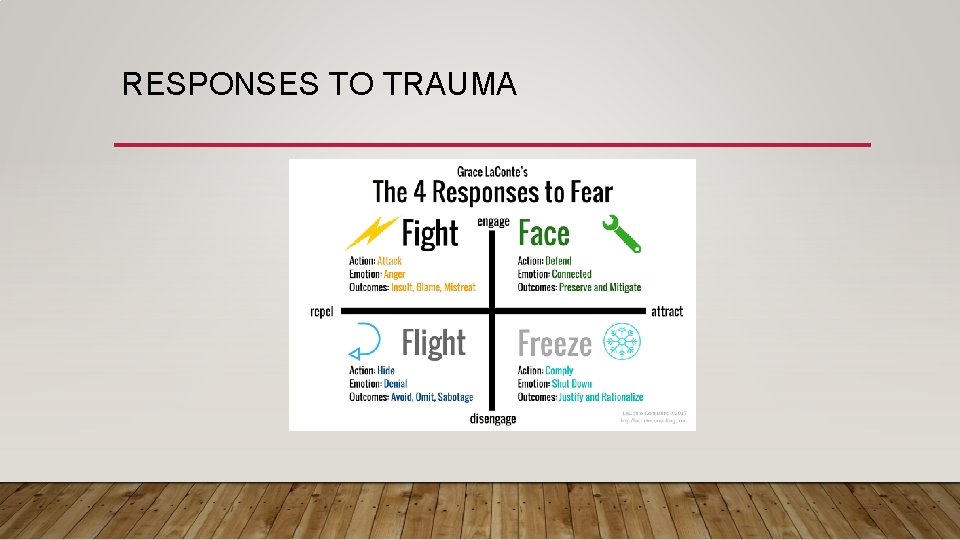
RESPONSES TO TRAUMA
IMPACT OF TRAUMA OVER THE LIFESPAN • Changes in brain neurobiology • Social, emotional, and cognitive impairment • Adoption of health risk behaviors as coping mechanisms • • • Eating disorders Smoking Substance abuse Self-harm Sexual promiscuity violence • Severe and persistent behavioral health, physical health, and social problems, early death. • (Felitti et al, 1998)
HEALTHCARE CONDITIONS OFTEN ASSOCIATED WITH HISTORY OF ADVERSE CHILDHOOD EXPERIENCES • Diabetes • Cancer • COPD • Liver Disease • Heart Disease • Gynecological Disorders • High Blood Pressure • Sexually Transmitted Diseases • Obesity • Unintended Pregnancy • (The Hidden Impact of Early Life Trauma on Health and Disease. Chapter 8 By Felliti and Anda, 2010)

WHICH POPULATIONS ARE MORE AT RISK FOR EXPERIENCING TRAUMA • Members of historically marginalized populations appear to have a disproportionately higher prevalence of trauma and ACEs than the general population. • These groups include (but are not limited to): • People living in low-income communities; • Ethnic and racial minorities; • LGBTQ individuals; • Individuals with disabilities; • Women and girls.
WHY IS UNDERSTANDING TRAUMA IMPORTANT? • To provide effective services we need to understand the life situations that may be contributing to the persons current problem. • Many current problems faced by people we serve may be related to traumatic life experiences. • People who have experienced traumatic life events are often very sensitive to situations (triggers) that remind them of people, places, or things involved in their traumatic event. • Triggers may cause a person to relive the trauma and view our setting/organization as a source of distress rather than a place of healing and wellness.
A TRAUMA-INFORMED APPROACH (THE 4 R’S): • Realizes the widespread impact of trauma and understands potential paths for recovery • Recognizes the signs and symptoms of trauma in clients, families, staff, and others involved with the system • Responds by fully integrating knowledge about trauma into policies, procedures, and practices • Resists re-traumatization
HOW CAN HEALTH CARE PROVIDERS HELP PATIENTS HEAL FROM TRAUMA • Health care providers can build trauma-informed health care organizations that create safe caring, inclusive environments for all patients. • Improve patient engagement, treatment adherence, and health outcomes. • Avoid provider and staff burnout and workforce turnover.

PRINCIPLES OF TRAUMA INFORMED APPROACH • Safety • Trustworthiness & transparency • Peer support • Collaboration and mutuality • ” One does not have to be a therapist to be therapeutic” • Empowerment, voice, and choice • Cultural historical and gender issues
TRAUMA MAY NEGATIVELY INFLUENCE ACCESS TO AND ENGAGEMENT IN PRIMARY CARE • Avoidance of medical and dental services • Non-adherence to treatment • Postponing medical and dental services until things get very bad • Misuse of medical treatment services-ex. Overuse of ER Services, and misuse of pain meds.
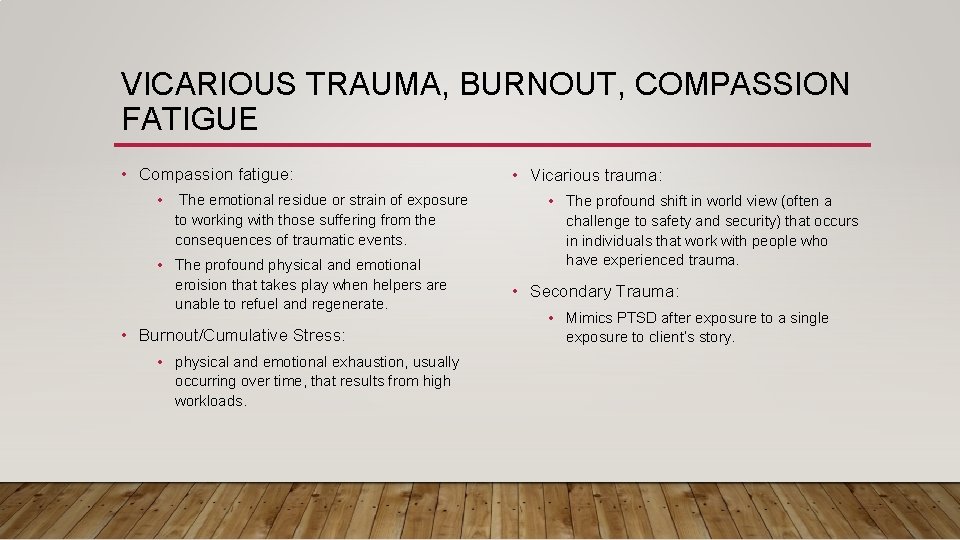
VICARIOUS TRAUMA, BURNOUT, COMPASSION FATIGUE • Compassion fatigue: • The emotional residue or strain of exposure to working with those suffering from the consequences of traumatic events. • The profound physical and emotional eroision that takes play when helpers are unable to refuel and regenerate. • Burnout/Cumulative Stress: • physical and emotional exhaustion, usually occurring over time, that results from high workloads. • Vicarious trauma: • The profound shift in world view (often a challenge to safety and security) that occurs in individuals that work with people who have experienced trauma. • Secondary Trauma: • Mimics PTSD after exposure to a single exposure to client’s story.
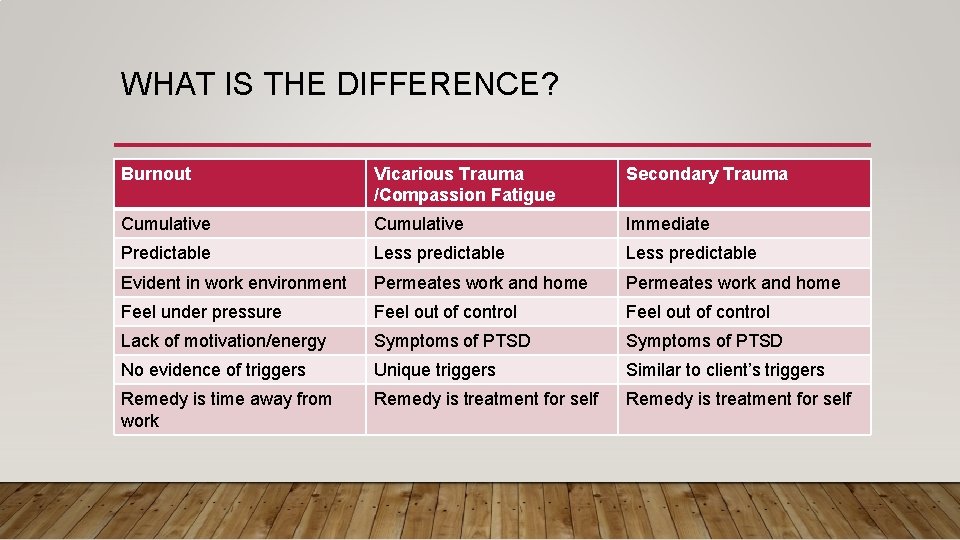
WHAT IS THE DIFFERENCE? Burnout Vicarious Trauma /Compassion Fatigue Secondary Trauma Cumulative Immediate Predictable Less predictable Evident in work environment Permeates work and home Feel under pressure Feel out of control Lack of motivation/energy Symptoms of PTSD No evidence of triggers Unique triggers Similar to client’s triggers Remedy is time away from work Remedy is treatment for self
SIGN AND SYMPTOMS • Diminished sense of safety and control • Social withdrawal • No time or energy for oneself • Reduce sense of respect for patients • Increased illness and absenteeism • Reduced motivation for work • Cynicism • Changes in identify, world view, spirituality. • Emotional numbing • Difficulty trusting others • Alterations in sensory experiences, intrusive imagery, disassociation.
MANAGING VICARIOUS TRAUMA • Anticipating • Transforming • Awareness • Create meaning • Balance • Challenge negative beliefs • Connection • Participate in community building • Addressing • Self-care • Self-nurturing • escape
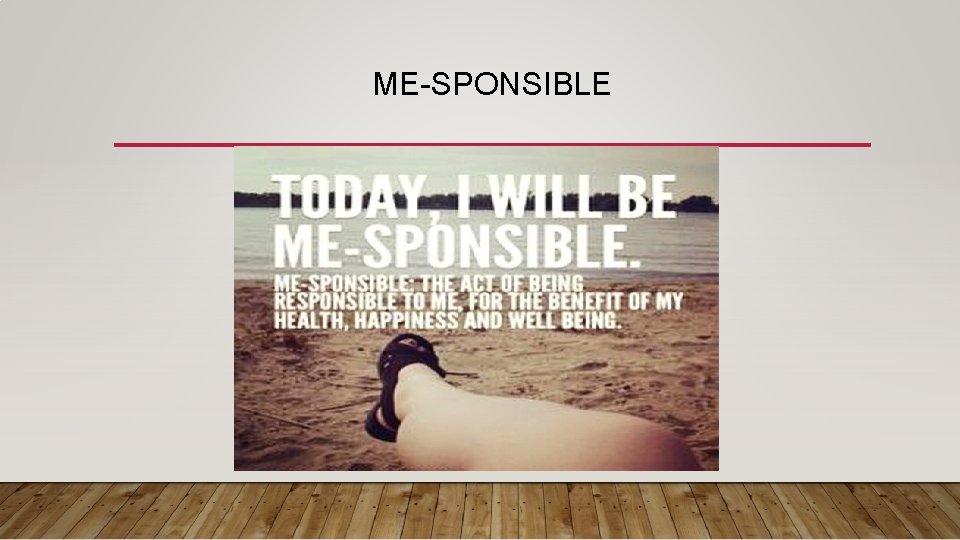
ME-SPONSIBLE
WHAT CAN BE DONE TO PROVIDE TRAUMA SENSITIVE CARE AND PRACTICES? A. Train all staff about trauma, sensitive practice, and sharing critical information. B. Screen and assess for trauma C. Communicate a sensitivity to trauma issues D. Create a safe and comfortable environment.
A. TRAIN STAFF ABOUT TRAUMA SENSITIVE PRACTICES AND SHARE CRITICAL INFORMATION. • Increase awareness' and importance of trauma as a factor in health outcomes. • Primary and behavioral health have communication channels to inform each other about a person’s trauma and its affects on; • Mental health, substance use, and physical wellbeing • The person’s comfort with and use of medical and dental services.
B. SCREEN AND ASSESS-HEALTH APPRAISAL QUESTIONNAIRE • ACES Questionnaire • PHQ-9 Depression • Beck Depression Inventory • Beck Anxiety Inventory

C. COMMUNICATING A SENSITIVITY TO TRAUMA ISSUES • Trauma related materials in waiting areas. • Posters inviting individuals to talk about trauma and/or needs located in exam rooms. • Asking questions about trauma and/or needs before and during exams.
D. CREATING A SAFE AND SECURE ENVIRONMENT • Survey service recipients to gain feedback about their experiences, including the physical environment. • Solicit staff to suggest improvements to care and the environment. • Insure individuals feel welcome and comfortable from reception through exiting. • Do no harm- prevent re-traumatizing. • Provide trauma sensitive practice and care.
TRIGGERS IN HEALTHCARE SETTINGS • An external events that causes internal discomfort or distress such as: • Sights: white lab coats, medical equipment, restraints, x-ray bib, room temperature. • Sounds: dental drill, ambulance sirens, chaos in environment. • Smells: rubbing alcohol, antiseptic odors, latex gloves
WHY MEDICAL SETTING MAY BE DISTRESSING FOR PEOPLE WITH TRAUMA EXPERIENCE • Invasive procedures • Power dynamic of relationship • Removal of clothing • Gender of healthcare provider • Physical touch • Vulnerable physical position • Personal questions that may be embarrassing/distressing • Loss of and lack of privacy
SIGNS THAT A PERSON MAY BE FEELING DISTRESSED • Emotional reactions-anxiety, fear, powerlessness, helplessness, worry, anger • Physical or somatic reactions- nausea, light headedness, increase in BP, headaches or holding breath. • Behavioral reactions- crying, uncooperative, argumentative, unresponsive, restlessness. • Cognitive reactions- memory impairment or forgetfulness, inability to provide adequate history.
TIC: PRACTICAL TIPS • Engage person; develop rapport and build trust over time. • Give as much control and choice as possible. • Provide calm and soothing office environment. • Validate any concerns as understandable and normal. • Give relaxed and unhurried attention. • Allow a support person or female staff person to be present within the room. • Talk about concerns and procedures before doing anything (ex. Asking a patient to disrobe. ) • Explain thoroughly each procedure and get consent.
PRACTICAL TIPS CONT. • Ask a patient if they are ready to begin and inform they can pause or stop procedure at anytime. • Encourage questions and ask abut any worries or concerns and how you can help (ex. Leaving door ajar). • Maintain a personable, respectful and kind honest manner. • Talk to person throughout to let them know what you are doing and why. • Encourage person to do what feels most comfortable (leaving their coat on, listening to music; remaining upright. ) • Place a high priority on culture, including ethnicity, race, religion, sexual orientation, historical and social trauma such as homelessness and poverty. )

IN SUMMARY • https: //www. youtube. com/watch? v=j. Fdn 9479 U 3 s
- Slides: 29