
Before Microscopes People were sick because of a
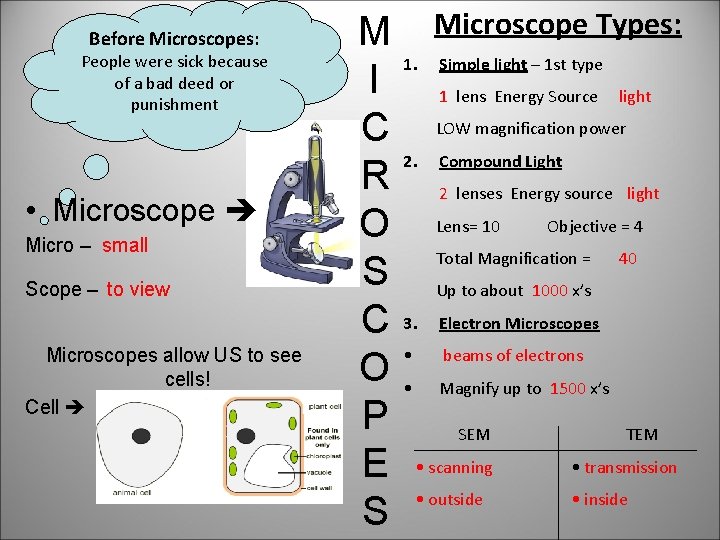
Before Microscopes: People were sick because of a bad deed or punishment • Microscope Micro – small Scope – to view Microscopes allow US to see cells! Cell M Microscope Types: 1. Simple light – 1 st type I 1 lens Energy Source light C LOW magnification power 2. Compound Light R 2 lenses Energy source light O Lens= 10 Objective = 4 Total Magnification = 40 S Up to about 1000 x’s C 3. Electron Microscopes • beams of electrons O • Magnify up to 1500 x’s P SEM TEM • transmission E • scanning • outside • inside S
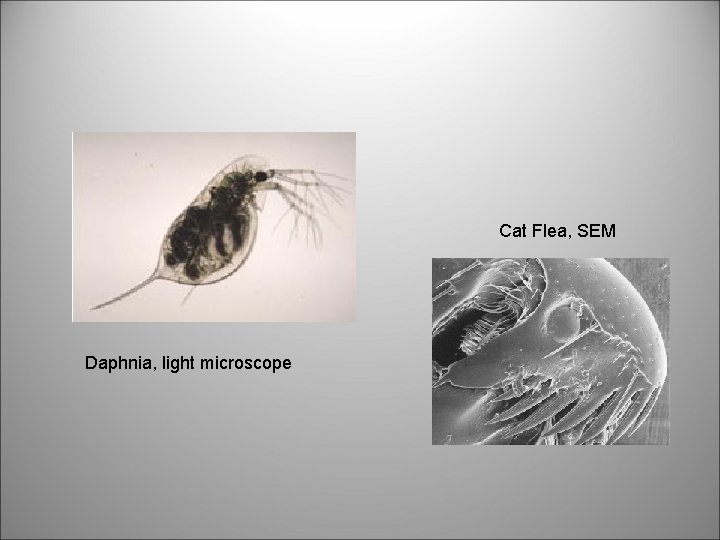
Cat Flea, SEM Daphnia, light microscope
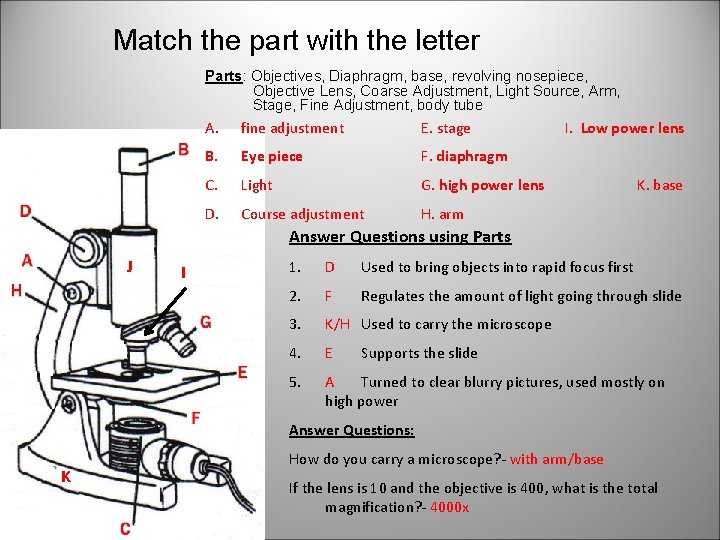
Match the part with the letter Parts: Objectives, Diaphragm, base, revolving nosepiece, Objective Lens, Coarse Adjustment, Light Source, Arm, Stage, Fine Adjustment, body tube A. fine adjustment E. stage B. Eye piece F. diaphragm C. Light G. high power lens D. Course adjustment H. arm I. Low power lens K. base Answer Questions using Parts J I 1. D Used to bring objects into rapid focus first 2. F Regulates the amount of light going through slide 3. K/H Used to carry the microscope 4. E 5. A Turned to clear blurry pictures, used mostly on high power Supports the slide Answer Questions: K How do you carry a microscope? - with arm/base If the lens is 10 and the objective is 400, what is the total magnification? - 4000 x
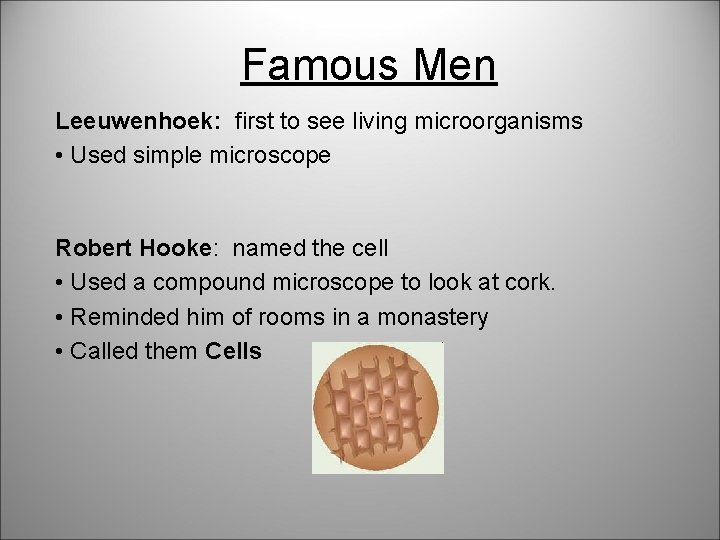
Famous Men Leeuwenhoek: first to see living microorganisms • Used simple microscope Robert Hooke: named the cell • Used a compound microscope to look at cork. • Reminded him of rooms in a monastery • Called them Cells
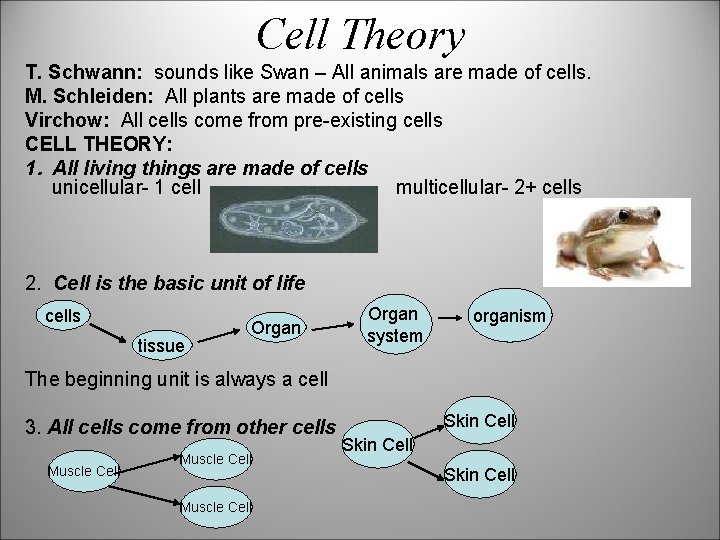
Cell Theory T. Schwann: sounds like Swan – All animals are made of cells. M. Schleiden: All plants are made of cells Virchow: All cells come from pre-existing cells CELL THEORY: 1. All living things are made of cells unicellular- 1 cell multicellular- 2+ cells 2. Cell is the basic unit of life cells tissue Organ system organism The beginning unit is always a cell 3. All cells come from other cells Muscle Cell Skin Cell
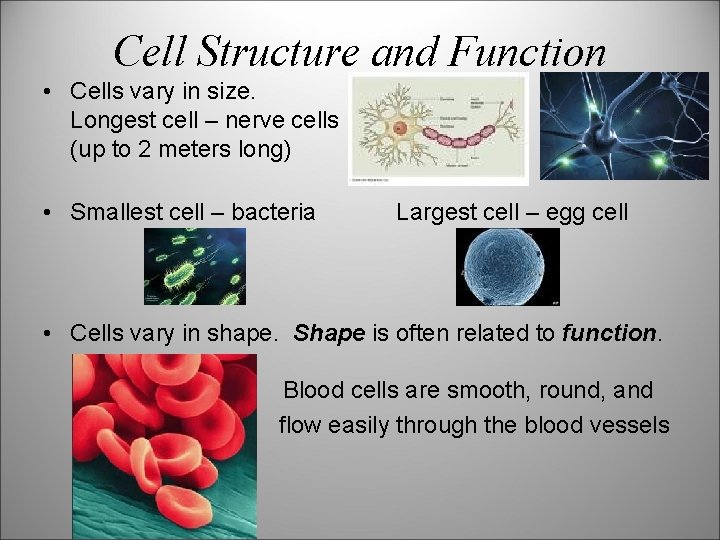
Cell Structure and Function • Cells vary in size. Longest cell – nerve cells (up to 2 meters long) • Smallest cell – bacteria Largest cell – egg cell • Cells vary in shape. Shape is often related to function. Blood cells are smooth, round, and flow easily through the blood vessels
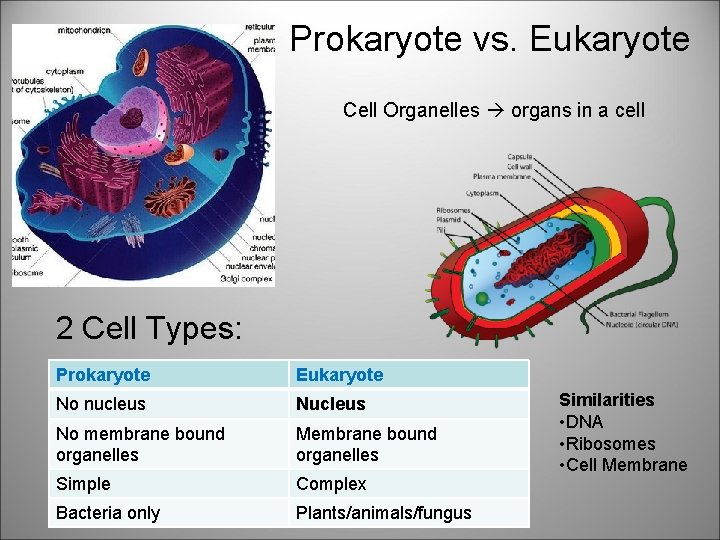
Prokaryote vs. Eukaryote Cell Organelles organs in a cell 2 Cell Types: Prokaryote Eukaryote No nucleus No membrane bound organelles Membrane bound organelles Simple Complex Bacteria only Plants/animals/fungus Similarities • DNA • Ribosomes • Cell Membrane

Prokaryote Plasmid – ring of DNA
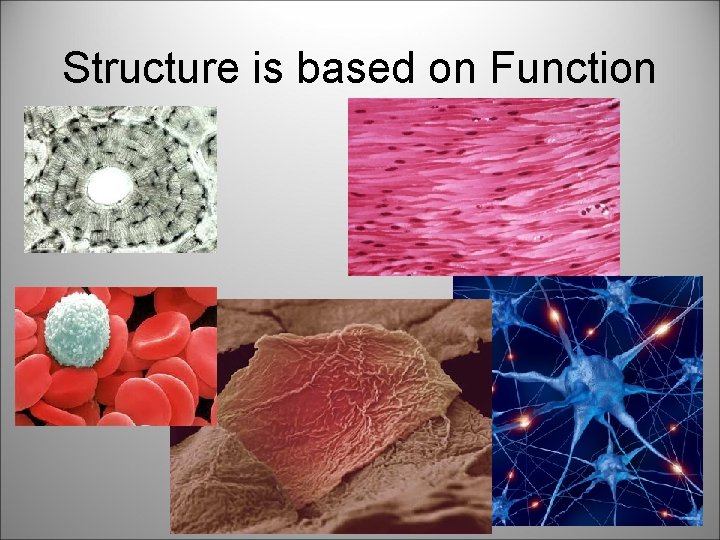
Structure is based on Function
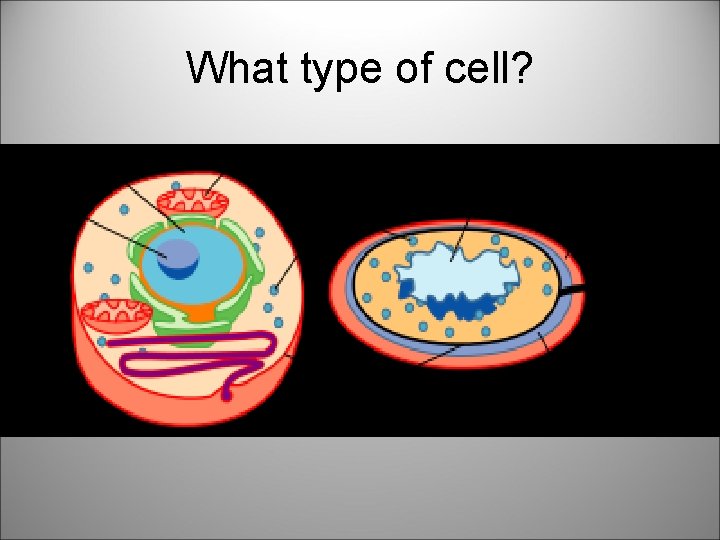
What type of cell?
Cell Theory 1. All living things are made of cells 2. Cell is the basic unit of life 3. Cells come from other cells
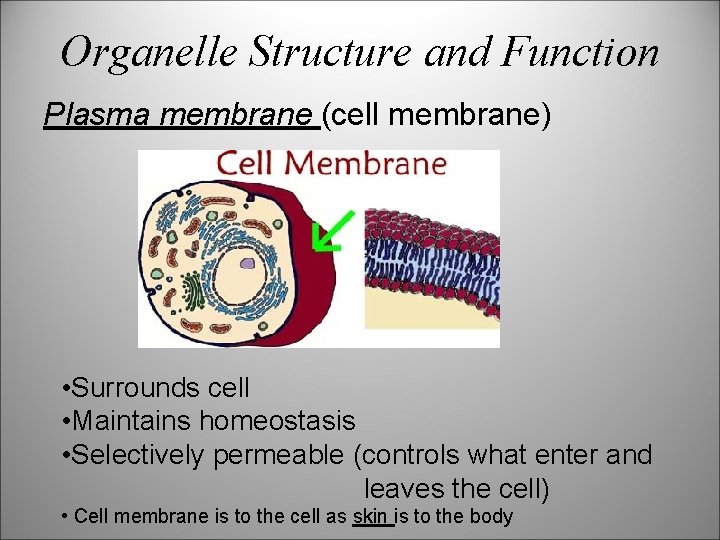
Organelle Structure and Function Plasma membrane (cell membrane) • Surrounds cell • Maintains homeostasis • Selectively permeable (controls what enter and leaves the cell) • Cell membrane is to the cell as skin is to the body
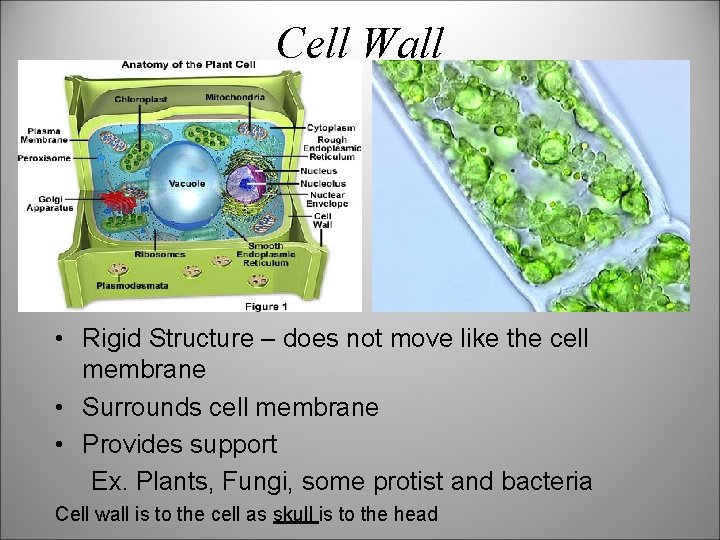
Cell Wall • Rigid Structure – does not move like the cell membrane • Surrounds cell membrane • Provides support Ex. Plants, Fungi, some protist and bacteria Cell wall is to the cell as skull is to the head
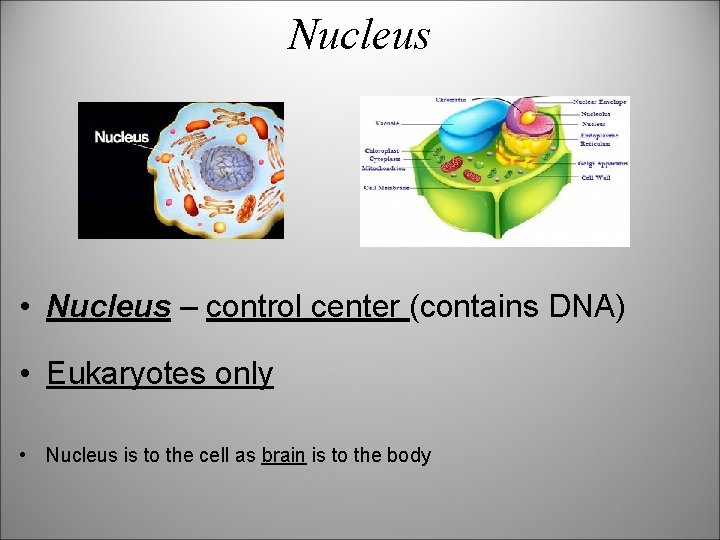
Nucleus • Nucleus – control center (contains DNA) • Eukaryotes only • Nucleus is to the cell as brain is to the body
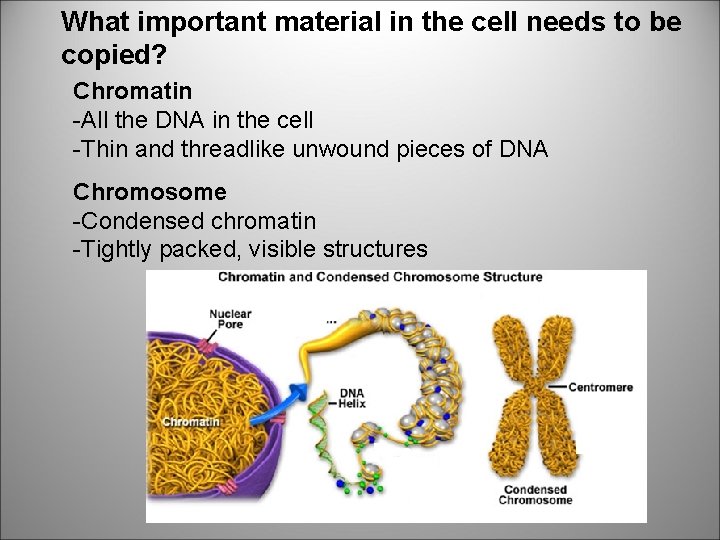
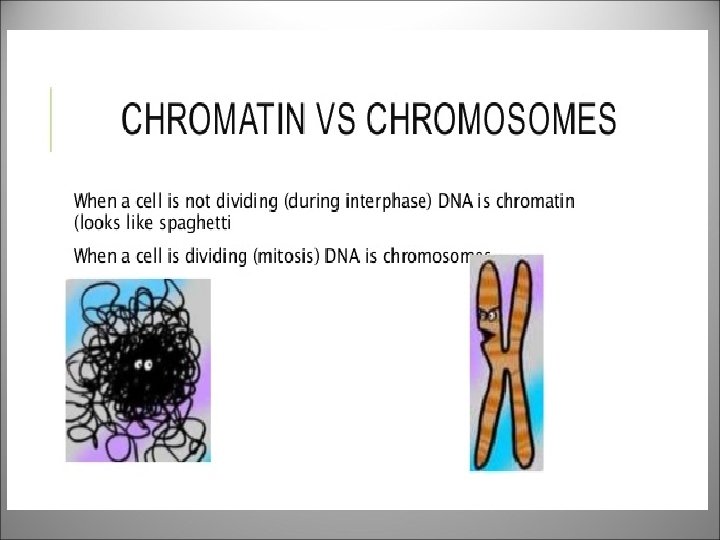
What important material in the cell needs to be copied? Chromatin -All the DNA in the cell -Thin and threadlike unwound pieces of DNA Chromosome -Condensed chromatin -Tightly packed, visible structures
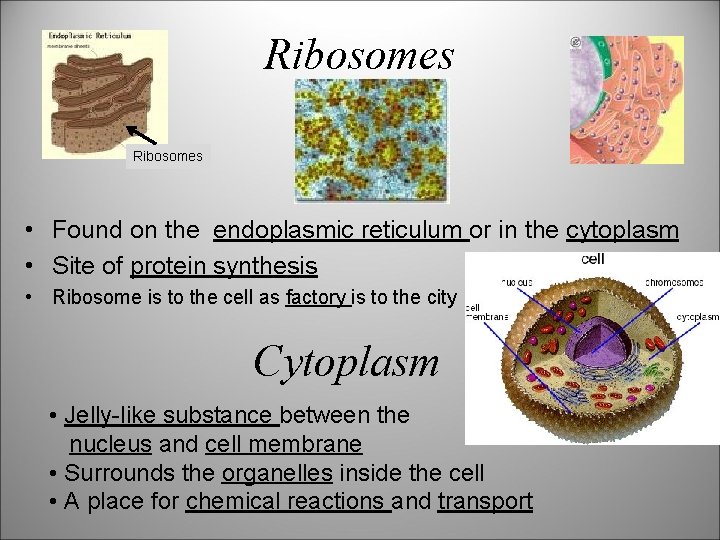
Ribosomes • Found on the endoplasmic reticulum or in the cytoplasm • Site of protein synthesis • Ribosome is to the cell as factory is to the city Cytoplasm • Jelly-like substance between the nucleus and cell membrane • Surrounds the organelles inside the cell • A place for chemical reactions and transport

Vacuole • Storage of food, water, and waste • Larger in plant cells – usually contains water • Vacuole is to the cell as refrigerator is to the kitchen
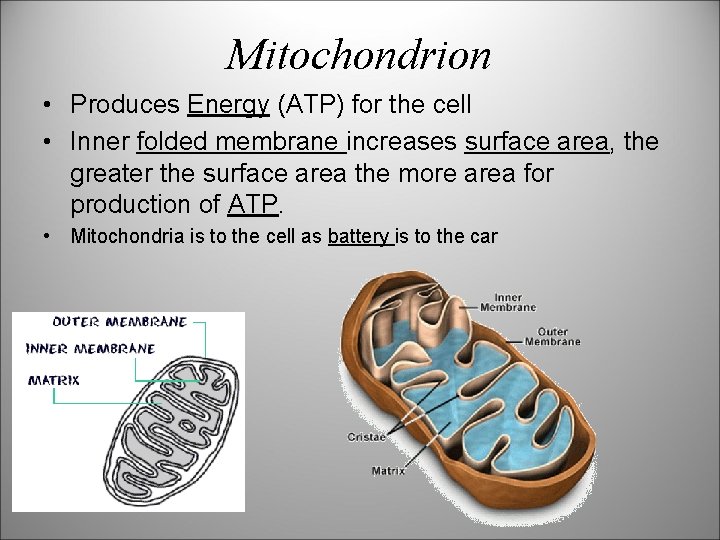
Mitochondrion • Produces Energy (ATP) for the cell • Inner folded membrane increases surface area, the greater the surface area the more area for production of ATP. • Mitochondria is to the cell as battery is to the car
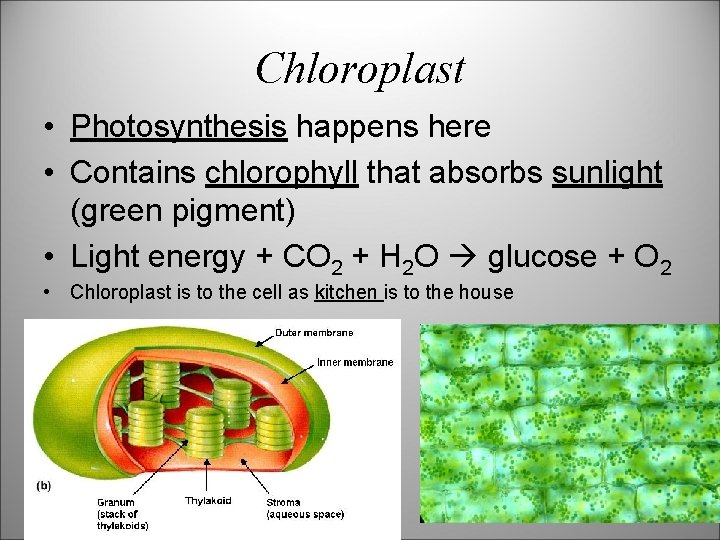
Chloroplast • Photosynthesis happens here • Contains chlorophyll that absorbs sunlight (green pigment) • Light energy + CO 2 + H 2 O glucose + O 2 • Chloroplast is to the cell as kitchen is to the house
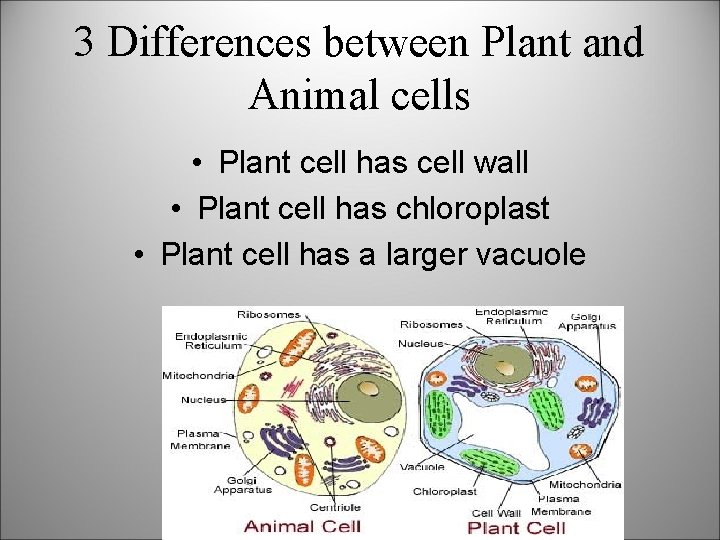
3 Differences between Plant and Animal cells • Plant cell has cell wall • Plant cell has chloroplast • Plant cell has a larger vacuole
Cell Organelles Active art http: //www. phschool. com/webcodes 10/index. cfm? fuseaction=home. goto. Web. Cod e&wcprefix=cbp&wcsuffix=3072 Virtual Pond Lab Objective: The purpose of this activity is to learn about different cell structures that unicellular organisms have to help them survive in the water. 1. Go to the following site to examine your "virtual " jar of pond water. http: //www. microscopy-uk. org. uk/index. html? http: //www. microscopyuk. org. uk/ponddip/index. html 2. Move your cursor over the different organisms in the jar to find out what they are named. The first one you will need to find is Euglena.
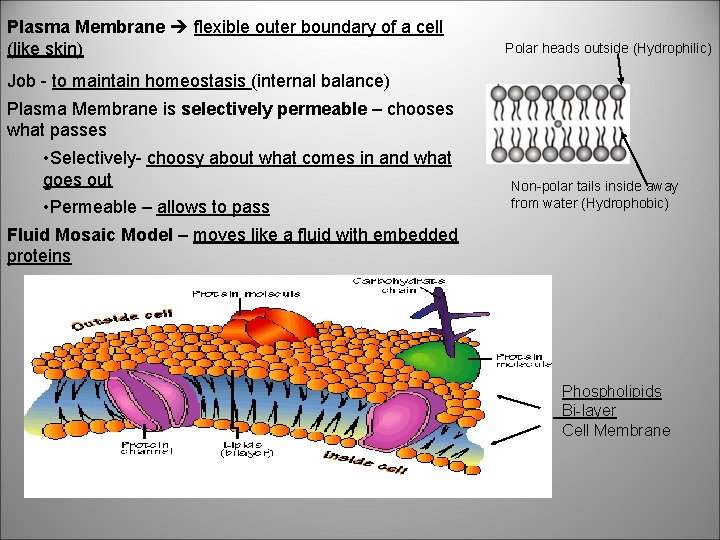
Plasma Membrane flexible outer boundary of a cell (like skin) Polar heads outside (Hydrophilic) Job - to maintain homeostasis (internal balance) Plasma Membrane is selectively permeable – chooses what passes • Selectively- choosy about what comes in and what goes out • Permeable – allows to pass Fluid Mosaic Model – moves like a fluid with embedded proteins Non-polar tails inside away from water (Hydrophobic) Phospholipids Bi-layer Cell Membrane
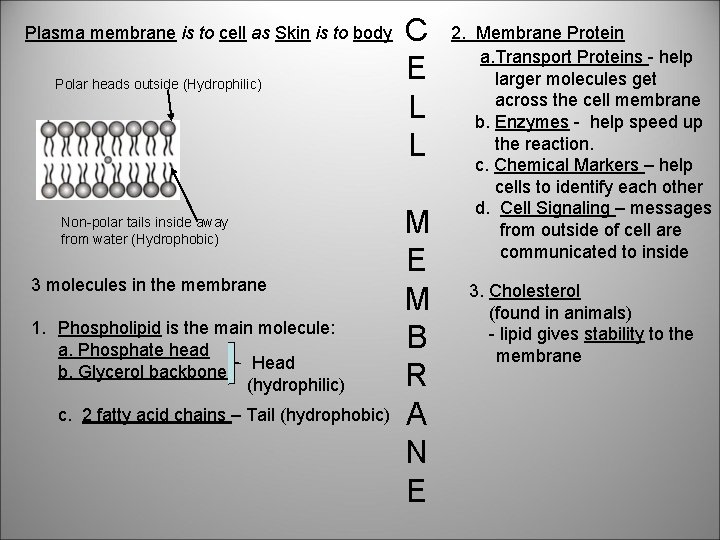
Plasma membrane is to cell as Skin is to body Polar heads outside (Hydrophilic) Non-polar tails inside away from water (Hydrophobic) 3 molecules in the membrane 1. Phospholipid is the main molecule: a. Phosphate head b. Glycerol backbone Head (hydrophilic) c. 2 fatty acid chains – Tail (hydrophobic) C E L L M E M B R A N E 2. Membrane Protein a. Transport Proteins - help larger molecules get across the cell membrane b. Enzymes - help speed up the reaction. c. Chemical Markers – help cells to identify each other d. Cell Signaling – messages from outside of cell are communicated to inside 3. Cholesterol (found in animals) - lipid gives stability to the membrane
Cell Membrane Review: http: //www. wisc-online. com/objects/View. Object. aspx? ID=ap 1101
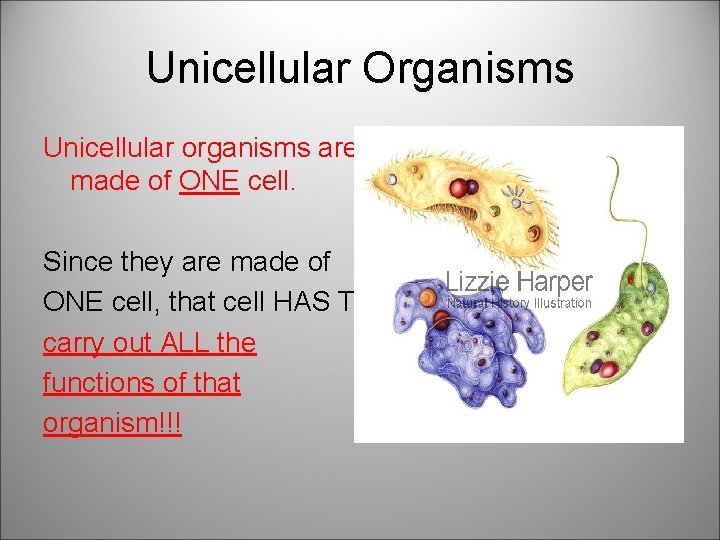
Unicellular Organisms Unicellular organisms are made of ONE cell. Since they are made of ONE cell, that cell HAS TO carry out ALL the functions of that organism!!!
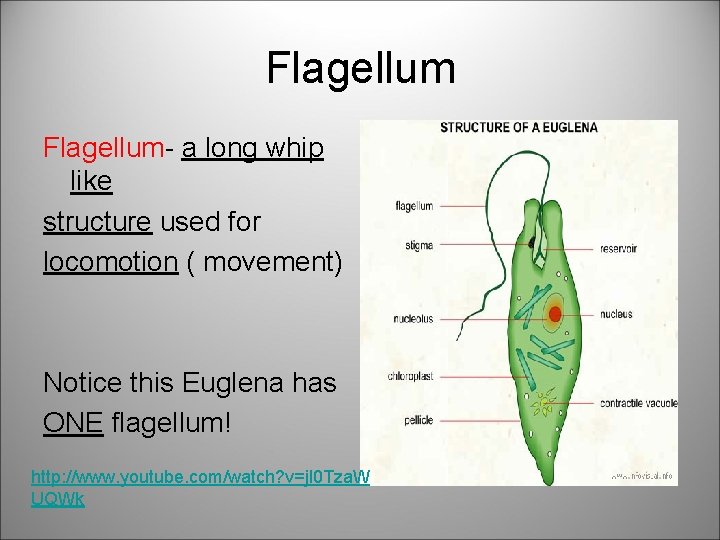
Flagellum- a long whip like structure used for locomotion ( movement) Notice this Euglena has ONE flagellum! http: //www. youtube. com/watch? v=jl 0 Tza. W UQWk
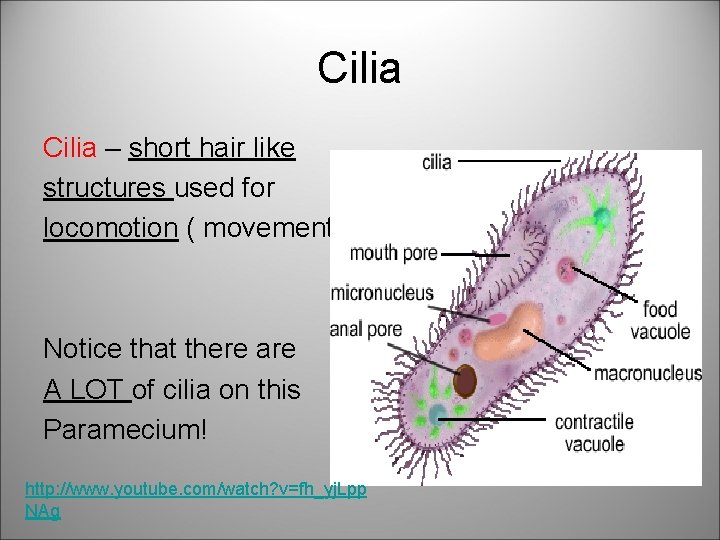
Cilia – short hair like structures used for locomotion ( movement) Notice that there are A LOT of cilia on this Paramecium! http: //www. youtube. com/watch? v=fh_yj. Lpp NAg
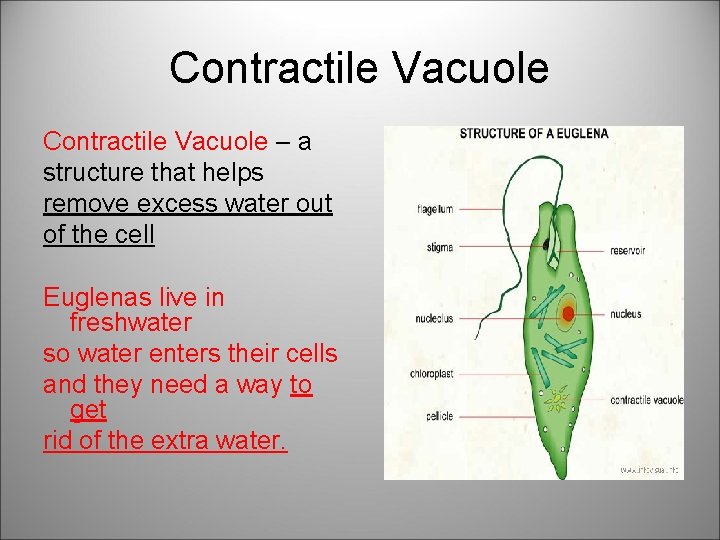
Contractile Vacuole – a structure that helps remove excess water out of the cell Euglenas live in freshwater so water enters their cells and they need a way to get rid of the extra water.
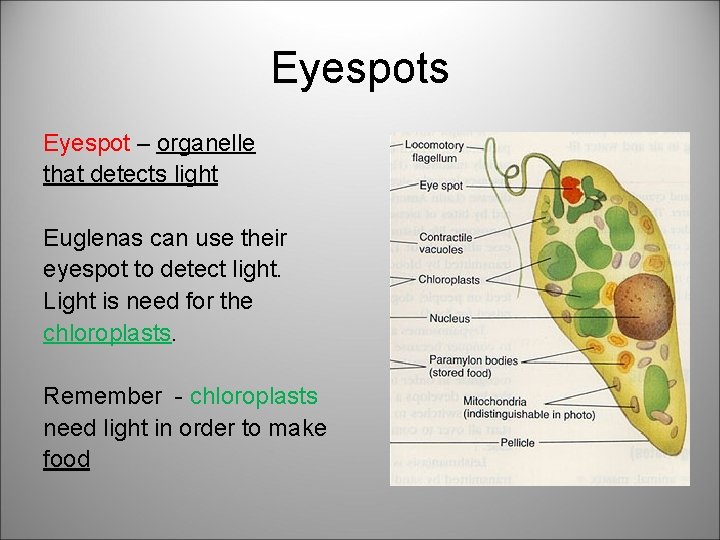
Eyespots Eyespot – organelle that detects light Euglenas can use their eyespot to detect light. Light is need for the chloroplasts. Remember - chloroplasts need light in order to make food
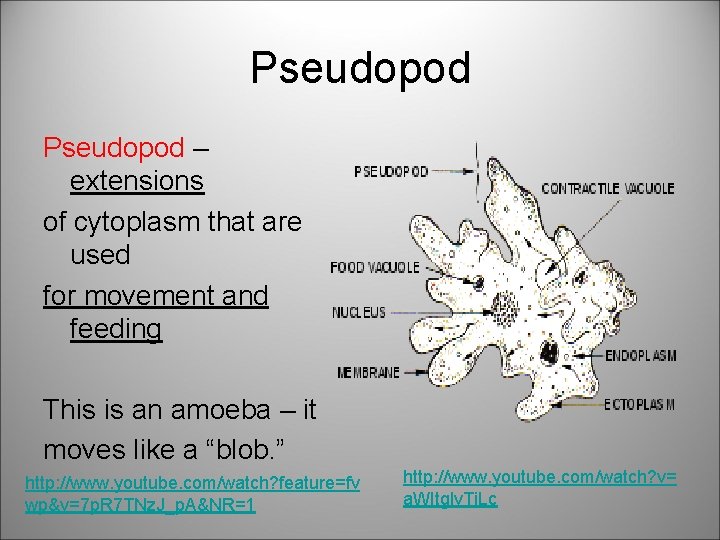
Pseudopod – extensions of cytoplasm that are used for movement and feeding This is an amoeba – it moves like a “blob. ” http: //www. youtube. com/watch? feature=fv wp&v=7 p. R 7 TNz. J_p. A&NR=1 http: //www. youtube. com/watch? v= a. WItglv. Ti. Lc
- Slides: 31