
Beer Terminology Beer and Food Pairing Alcohol by
Beer Terminology Beer and Food Pairing
Alcohol by volume: Amount of alcohol in beer in terms of percentage volume of alcohol per volume of beer. Terms to Know Ale: Beers distinguished by use of top fermenting yeast strains, Saccharomyces cerevisiae. The top fermenting yeast perform at warmer temperatures than do yeast's used to brew lager beer, and their byproducts are more evident in taste and aroma. Fruitiness and esters are often part of an ale's character.
Astringent: A drying, puckering taste; tannic; can be derived from boiling the grains, long mashes, over sparging or sparging with hard water. Terms to Know Barley: A cereal grain that is malted for use in the grist that becomes the mash in the brewing of beer. Body: Thickness and mouth-filling property of a beer described as "full or thin bodied".
Bottle-conditioning: Secondary fermentation and maturation in the bottle, creating complex aromas and flavors. Terms to Know Fermentation: Conversion of sugars into ethyl alcohol and carbon dioxide, through the action of yeast. Hefe: A German word meaning "yeast". Used mostly with wheat (weiss) beers to denote that the beer is bottled or kegged with the yeast in suspension (hefe-weiss).

IBU: International Bitterness units. A system of indicating the hop bitterness in finished beer. Terms to Know Lager: Beers produced with bottom fermenting yeast strains, Saccharomyces uvarum (or carlsbergensis) at colder fermentation temperatures than ales. This cooler environment inhibits the natural production of esters and other byproducts, creating a crisper tasting product.

Alcohol By Volume (ABV) A measurement of the alcohol content in terms of the percentage volume of alcohol per volume of beer. To calculate the approximate volumetric alcohol content, subtract the final gravity from the original gravity and divide by 0. 0075. Formula: ABV = (OG – FG) Example: OG 1. 050, FG 1. 012 ABV = (1. 050 – 1. 012) / 0. 0075 ABV = 0. 038 / 0. 0075 ABV = 5. 066 ABV = 5. 1% (approximately)

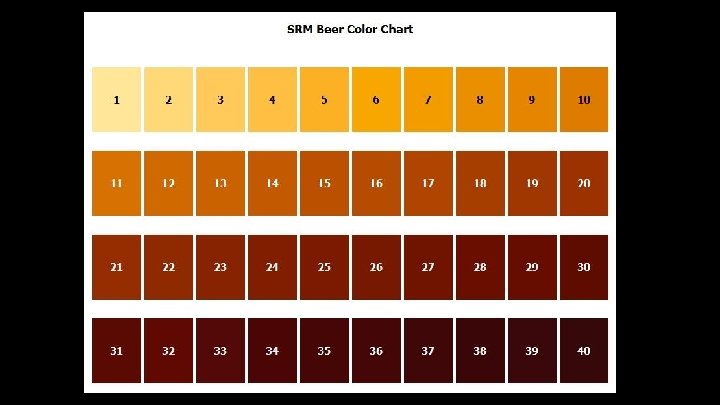
Color/Standard Reference Method (SRM) ● Light Yellow (1 -1. 5), Straw (2 -3), Pale (4), Gold (5 -6) ● Light Amber (7), Amber (8), Medium Amber (9), Copper/Garnet (10 -12) ● Saddle Brown (16 -17), Dark Brown (18 -24), Dark (25 -39), Black (40+)
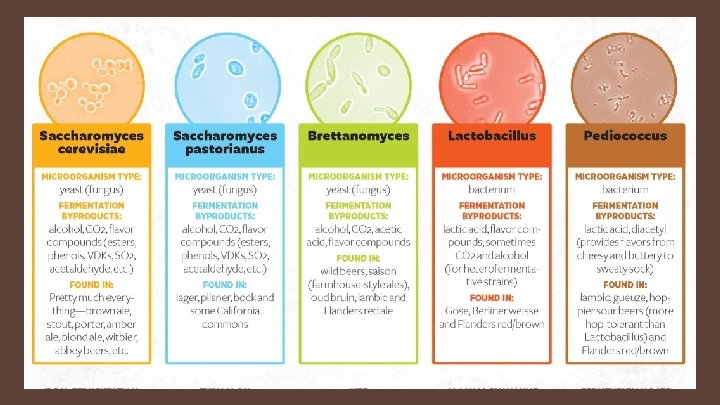
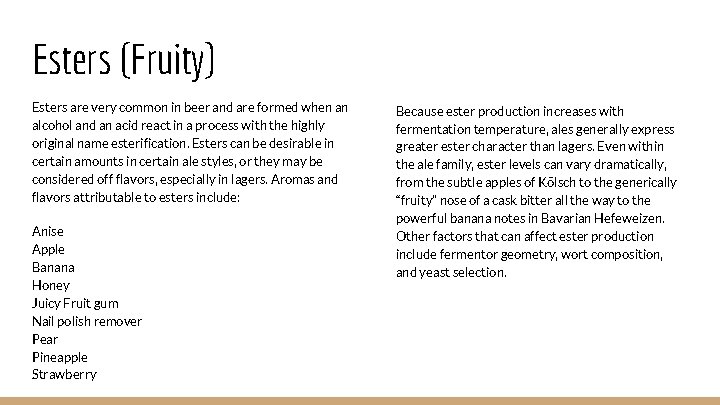
Esters (Fruity) Esters are very common in beer and are formed when an alcohol and an acid react in a process with the highly original name esterification. Esters can be desirable in certain amounts in certain ale styles, or they may be considered off flavors, especially in lagers. Aromas and flavors attributable to esters include: Anise Apple Banana Honey Juicy Fruit gum Nail polish remover Pear Pineapple Strawberry Because ester production increases with fermentation temperature, ales generally express greater ester character than lagers. Even within the ale family, ester levels can vary dramatically, from the subtle apples of Kölsch to the generically “fruity” nose of a cask bitter all the way to the powerful banana notes in Bavarian Hefeweizen. Other factors that can affect ester production include fermentor geometry, wort composition, and yeast selection.
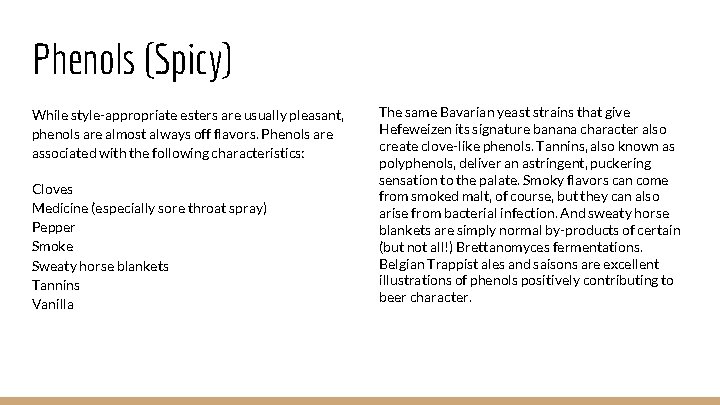
Phenols (Spicy) While style-appropriate esters are usually pleasant, phenols are almost always off flavors. Phenols are associated with the following characteristics: Cloves Medicine (especially sore throat spray) Pepper Smoke Sweaty horse blankets Tannins Vanilla The same Bavarian yeast strains that give Hefeweizen its signature banana character also create clove-like phenols. Tannins, also known as polyphenols, deliver an astringent, puckering sensation to the palate. Smoky flavors can come from smoked malt, of course, but they can also arise from bacterial infection. And sweaty horse blankets are simply normal by-products of certain (but not all!) Brettanomyces fermentations. Belgian Trappist ales and saisons are excellent illustrations of phenols positively contributing to beer character.
- Slides: 11