
Beef Quality Assurance Certification September 23 2017 What
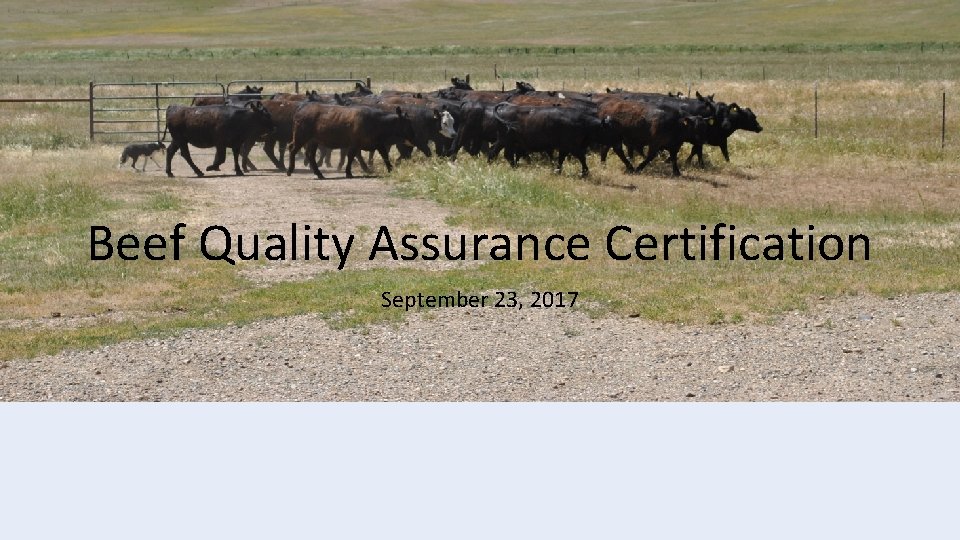
Beef Quality Assurance Certification September 23, 2017
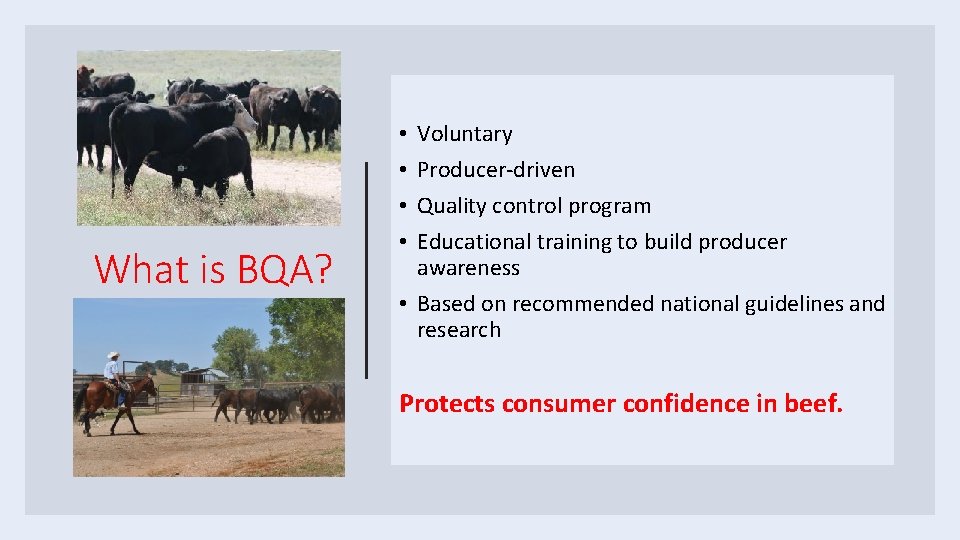
What is BQA? Voluntary Producer-driven Quality control program Educational training to build producer awareness • Based on recommended national guidelines and research • • Protects consumer confidence in beef.
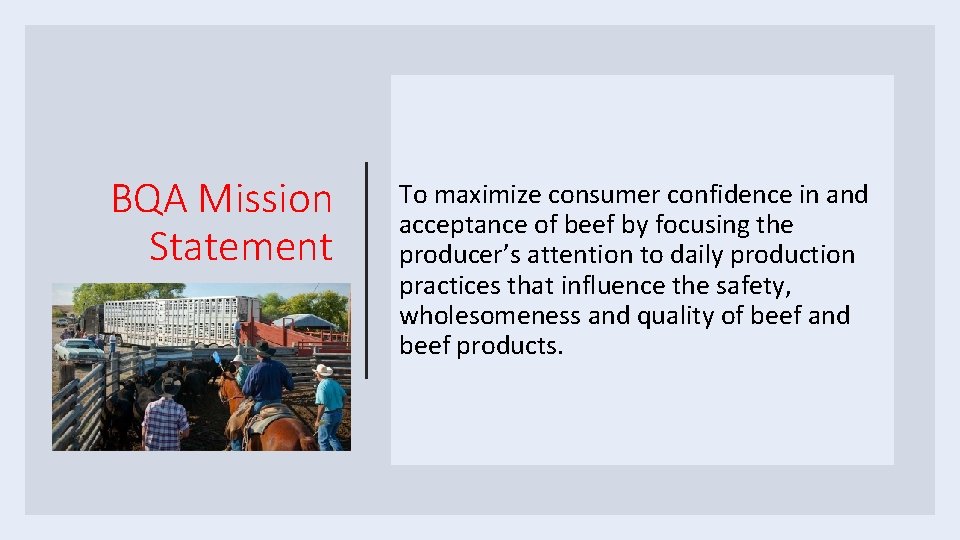
BQA Mission Statement To maximize consumer confidence in and acceptance of beef by focusing the producer’s attention to daily production practices that influence the safety, wholesomeness and quality of beef and beef products.
BQA Mission Statement To maximize consumer confidence in and acceptance of beef by focusing the producer’s attention to daily production practices that influence the safety, wholesomeness and quality of beef and beef products.
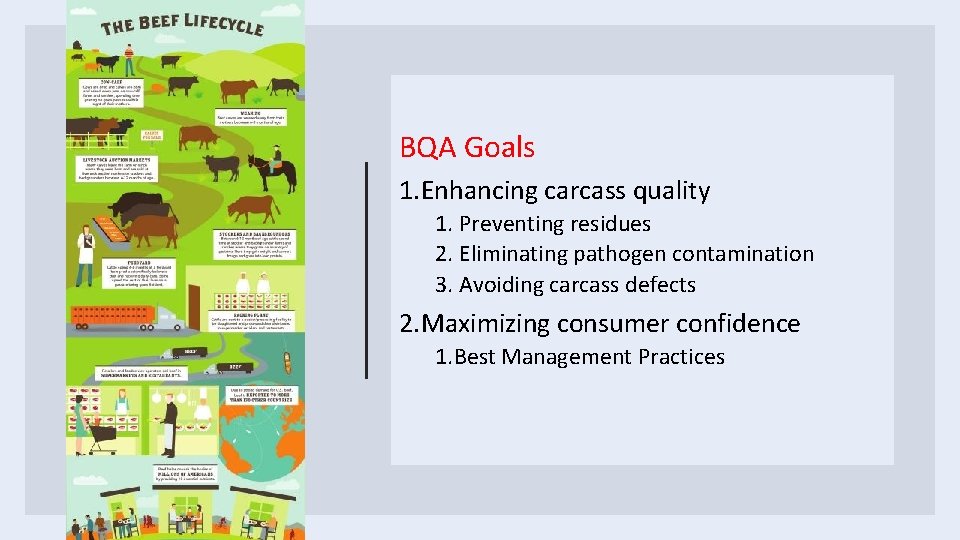
BQA Goals 1. Enhancing carcass quality 1. Preventing residues 2. Eliminating pathogen contamination 3. Avoiding carcass defects 2. Maximizing consumer confidence 1. Best Management Practices
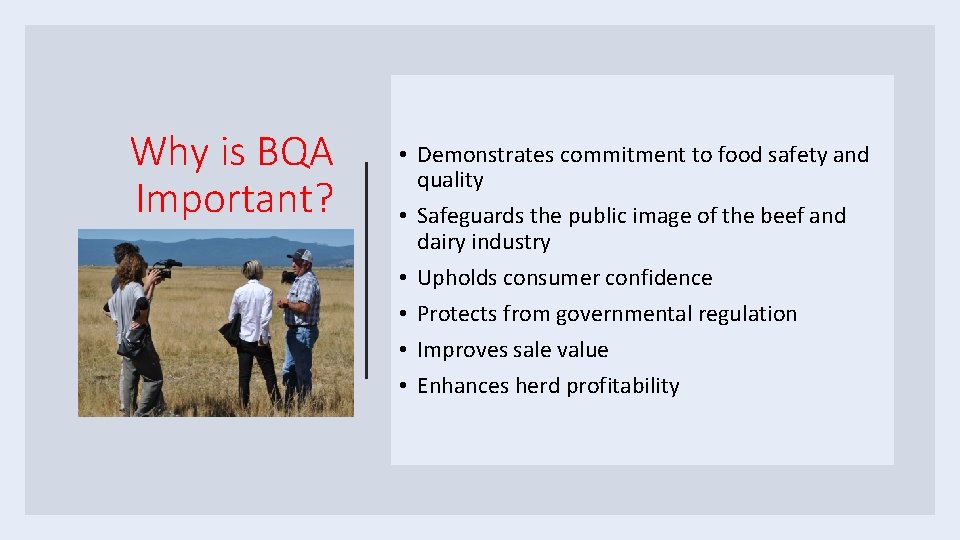
Why is BQA Important? • Demonstrates commitment to food safety and quality • Safeguards the public image of the beef and dairy industry • Upholds consumer confidence • Protects from governmental regulation • Improves sale value • Enhances herd profitability
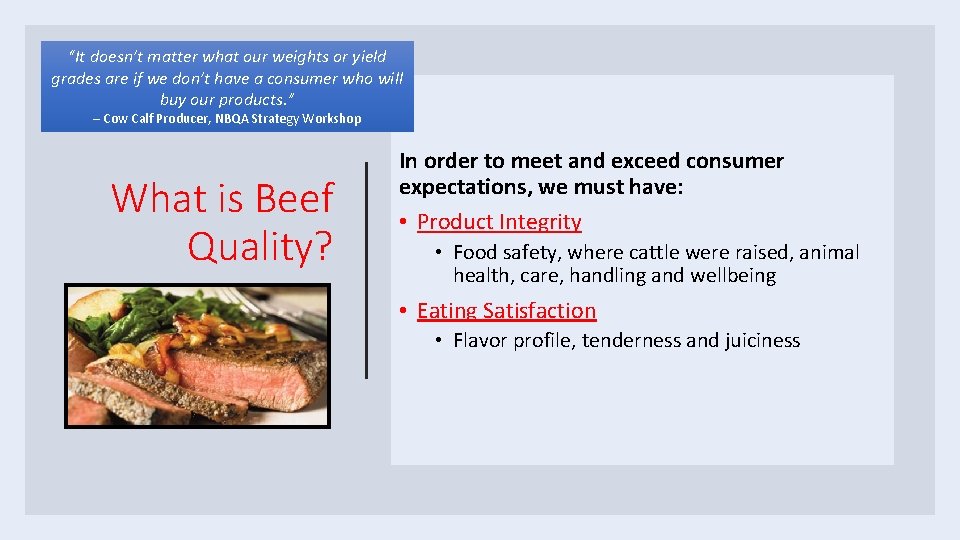
“It doesn’t matter what our weights or yield grades are if we don’t have a consumer who will buy our products. ” – Cow Calf Producer, NBQA Strategy Workshop What is Beef Quality? In order to meet and exceed consumer expectations, we must have: • Product Integrity • Food safety, where cattle were raised, animal health, care, handling and wellbeing • Eating Satisfaction • Flavor profile, tenderness and juiciness
Measuring Quality: National Beef Quality Audits Every 5 years National Beef Quality Audit (NBQA) is conducted: • Measure to manage • Benchmark to provide direction to improve quality • Identify shortfalls to allow greater profit through increasing demand • 2016 BQA to be released next month! BQA Success Story: Injection Site Lesions 1991 22. 3% 2001 <5% Still a loss of $188 million dollars annually
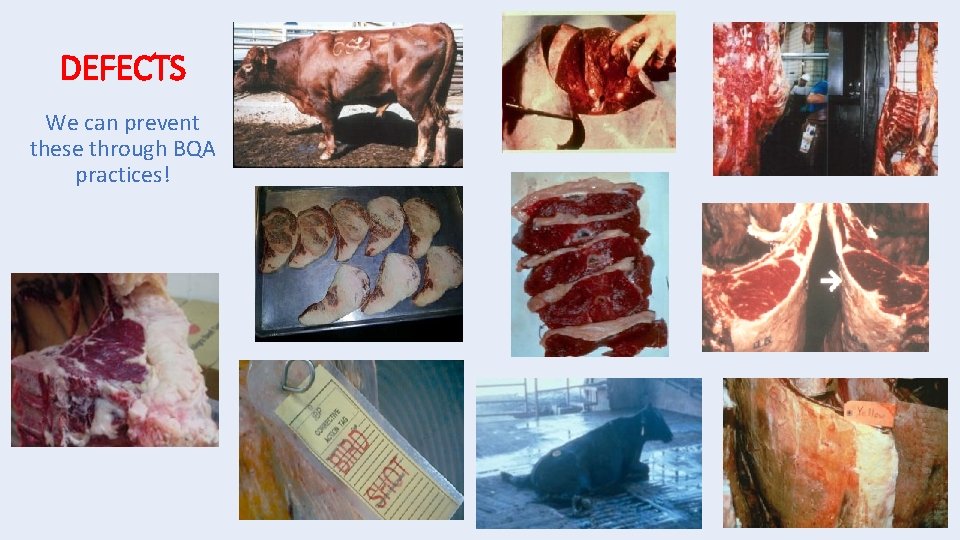
DEFECTS We can prevent these through BQA practices!
The audit is based upon the beliefs that: • only that which is measured can be managed • an industry-wide scorecard provides direction to decision makers to improve the quality and value of the beef supply • identifying and correcting quality shortfalls will lead to greater profitability through improved demand
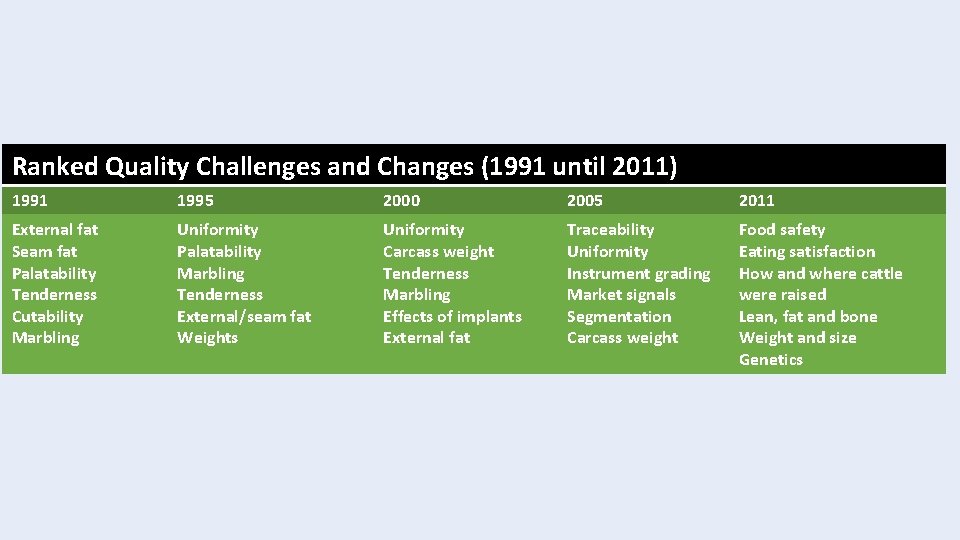
Ranked Quality Challenges and Changes (1991 until 2011) 1991 1995 2000 2005 2011 External fat Seam fat Palatability Tenderness Cutability Marbling Uniformity Palatability Marbling Tenderness External/seam fat Weights Uniformity Carcass weight Tenderness Marbling Effects of implants External fat Traceability Uniformity Instrument grading Market signals Segmentation Carcass weight Food safety Eating satisfaction How and where cattle were raised Lean, fat and bone Weight and size Genetics
Label Information for Over The Counter Drugs • • • Diseases or Condition Species Dosage Route of Administration Frequency of Treatment Duration of Treatment Precautionary Statements Warnings Withdrawal Time
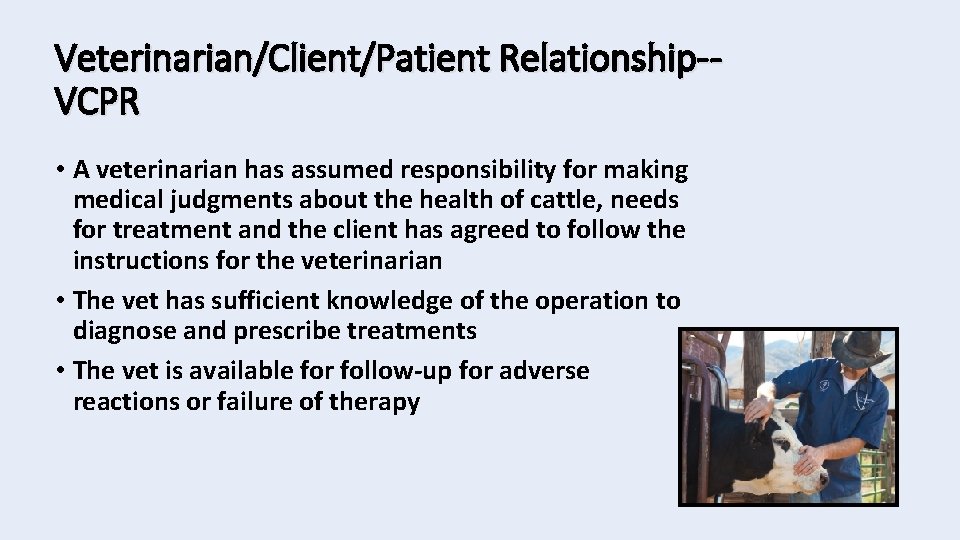
Veterinarian/Client/Patient Relationship-VCPR • A veterinarian has assumed responsibility for making medical judgments about the health of cattle, needs for treatment and the client has agreed to follow the instructions for the veterinarian • The vet has sufficient knowledge of the operation to diagnose and prescribe treatments • The vet is available for follow-up for adverse reactions or failure of therapy
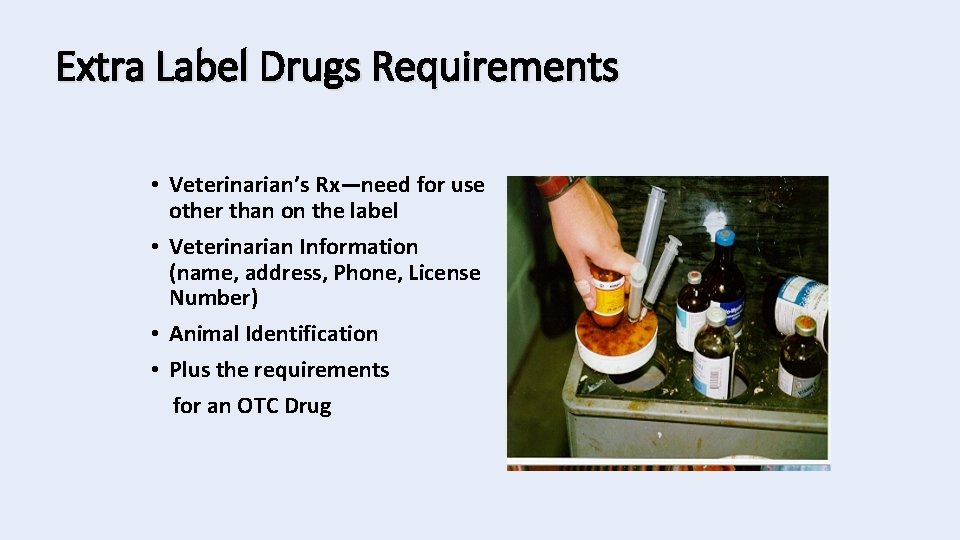
Extra Label Drugs Requirements • Veterinarian’s Rx—need for use other than on the label • Veterinarian Information (name, address, Phone, License Number) • Animal Identification • Plus the requirements for an OTC Drug
Drugs Prohibited from Extralabel Use in Cattle • • • Chloramphenicol Clenbuterol Diethylstillbesterol Dimetridazole, Ipronidazole, other nitroimidizoles Furazolidone, Nitrofurazone Sulfonamides in lactating dairy cows (approved sulfa drugs OK—sulfadimethoxine, etc) Fluoroquinolones (Baytril, Saraflox) Glycopeptides (Vancomycin) Cephalosporings (not including cephapirin) Drugs used as feed additives for cattle (chlortetracycline, bacitracin, Se, etc. )
Withdrawal Time • Hours or days after the last treatment before a drug is cleared from the animal • No violative residues in meat, milk, or other tissues
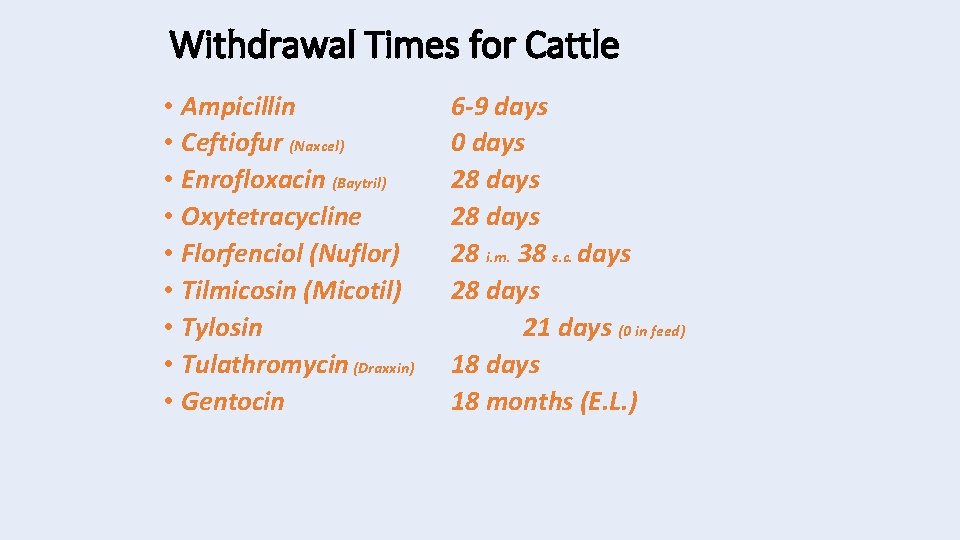
Withdrawal Times for Cattle • Ampicillin • Ceftiofur (Naxcel) • Enrofloxacin (Baytril) • Oxytetracycline • Florfenciol (Nuflor) • Tilmicosin (Micotil) • Tylosin • Tulathromycin (Draxxin) • Gentocin 6 -9 days 0 days 28 i. m. 38 s. c. days 28 days 21 days (0 in feed) 18 days 18 months (E. L. )
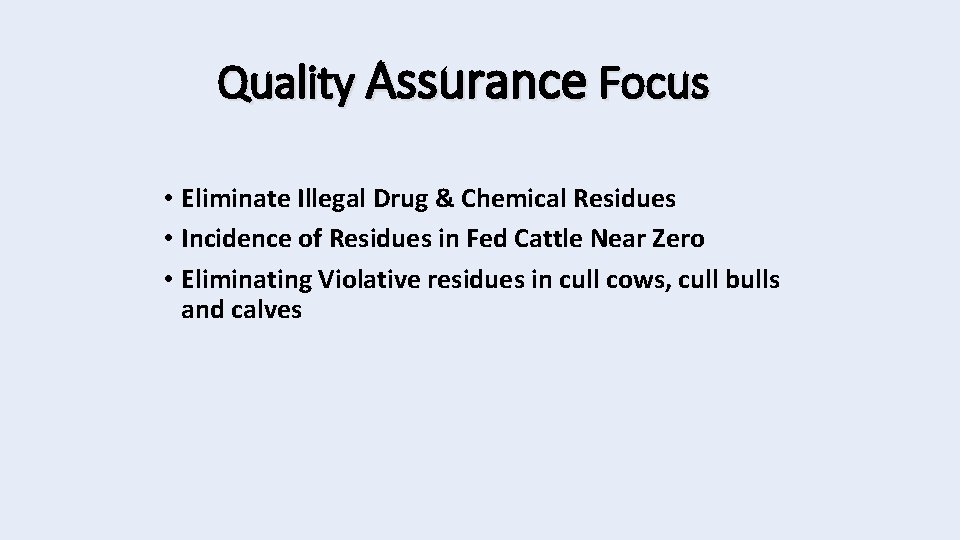
Quality Assurance Focus • Eliminate Illegal Drug & Chemical Residues • Incidence of Residues in Fed Cattle Near Zero • Eliminating Violative residues in cull cows, cull bulls and calves
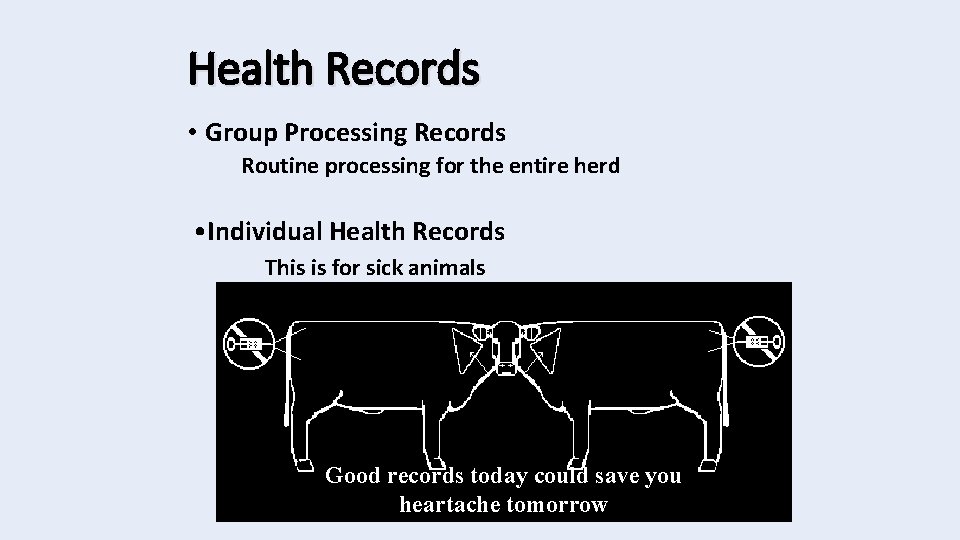
Health Records • Group Processing Records Routine processing for the entire herd • Individual Health Records This is for sick animals Good records today could save you heartache tomorrow
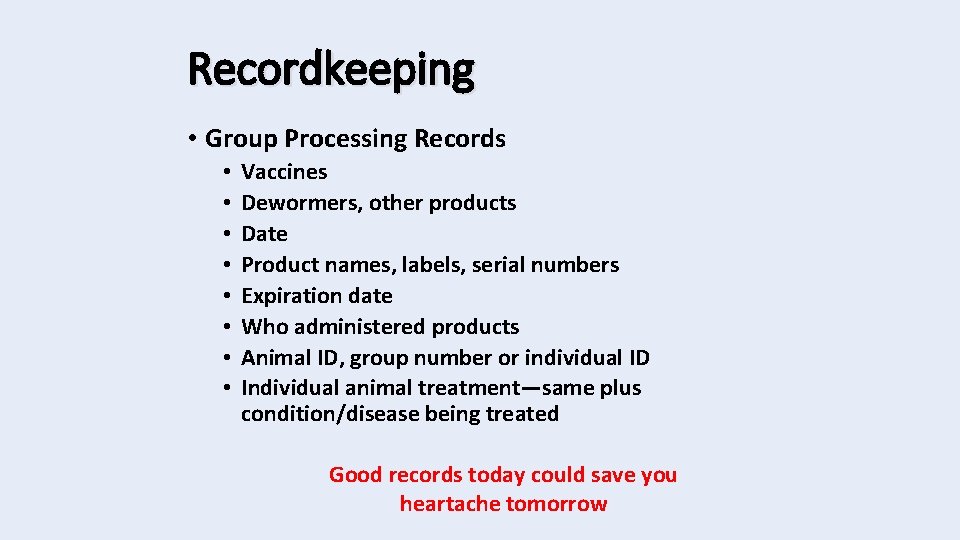
Recordkeeping • Group Processing Records • • Vaccines Dewormers, other products Date Product names, labels, serial numbers Expiration date Who administered products Animal ID, group number or individual ID Individual animal treatment—same plus condition/disease being treated Good records today could save you heartache tomorrow
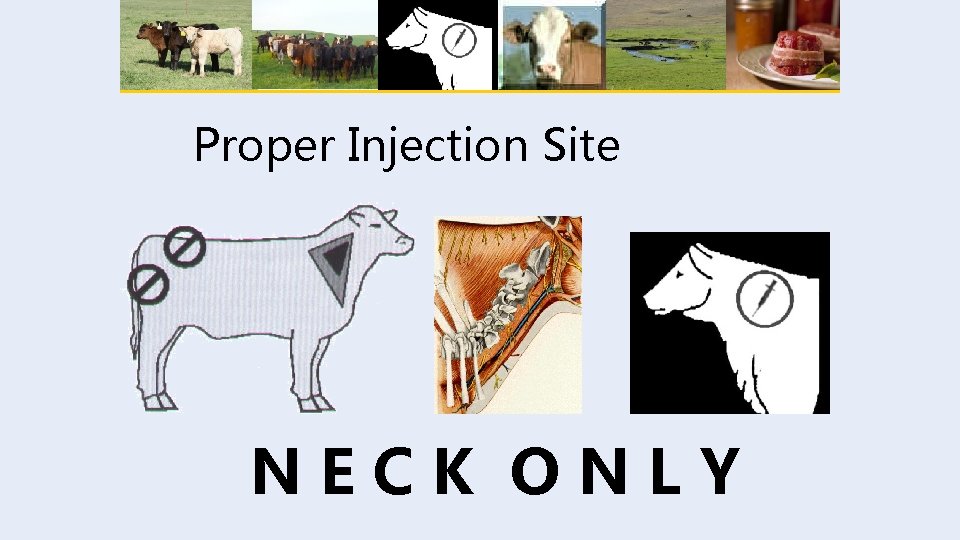
Proper Injection Site NECK ONLY
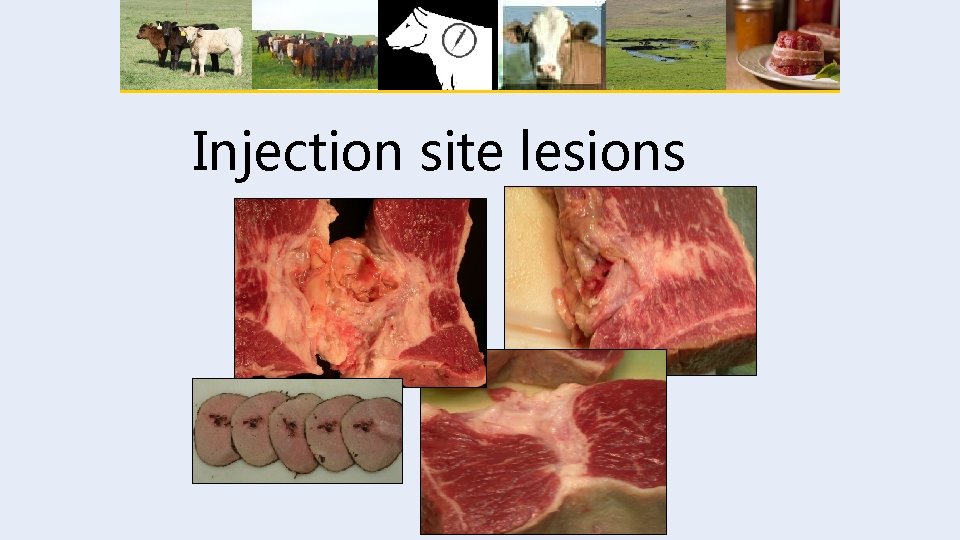
Injection site lesions
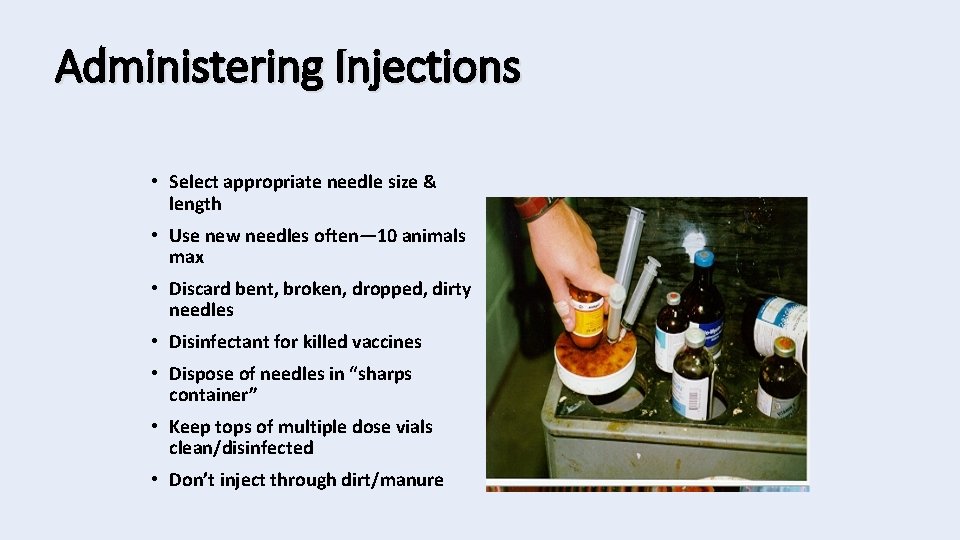
Administering Injections • Select appropriate needle size & length • Use new needles often— 10 animals max • Discard bent, broken, dropped, dirty needles • Disinfectant for killed vaccines • Dispose of needles in “sharps container” • Keep tops of multiple dose vials clean/disinfected • Don’t inject through dirt/manure
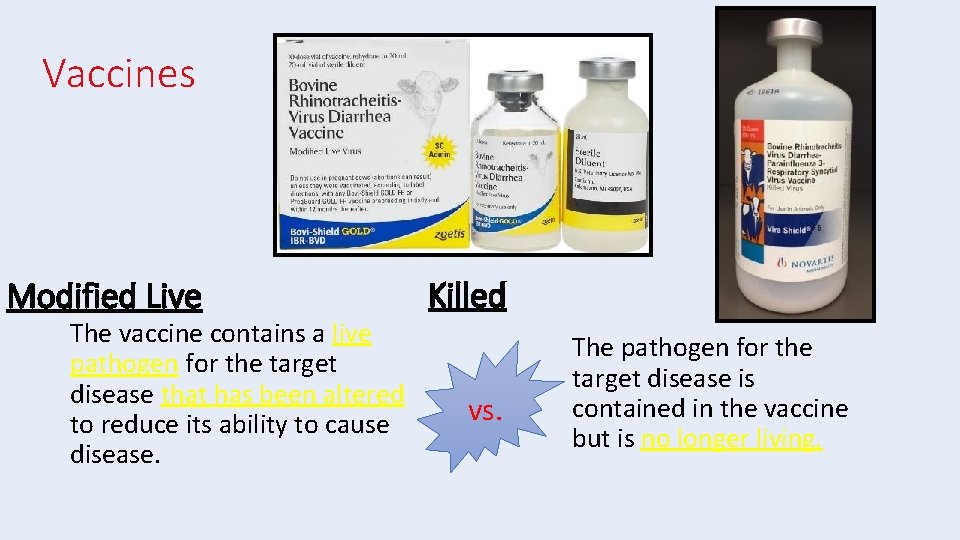
Vaccines Modified Live The vaccine contains a live pathogen for the target disease that has been altered to reduce its ability to cause disease. Killed vs. The pathogen for the target disease is contained in the vaccine but is no longer living.
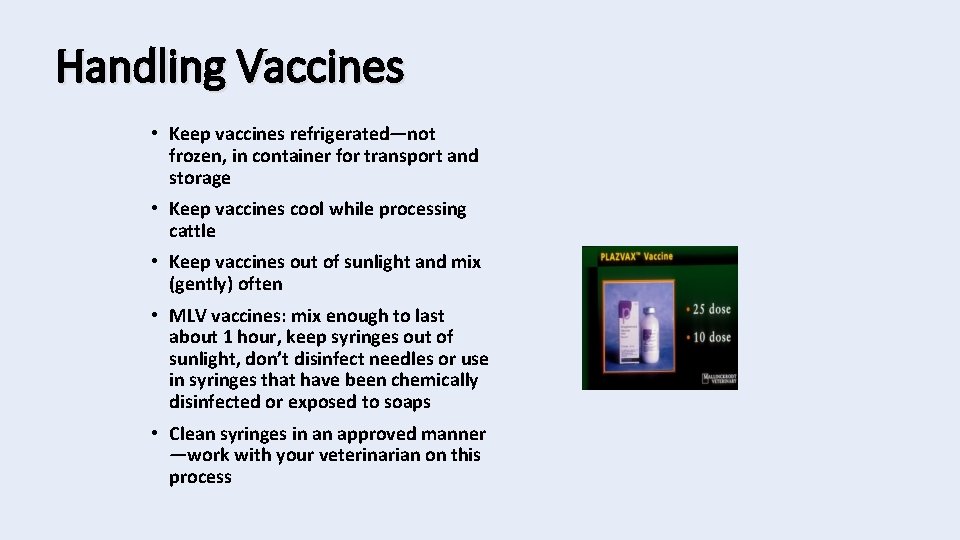
Handling Vaccines • Keep vaccines refrigerated—not frozen, in container for transport and storage • Keep vaccines cool while processing cattle • Keep vaccines out of sunlight and mix (gently) often • MLV vaccines: mix enough to last about 1 hour, keep syringes out of sunlight, don’t disinfect needles or use in syringes that have been chemically disinfected or exposed to soaps • Clean syringes in an approved manner —work with your veterinarian on this process
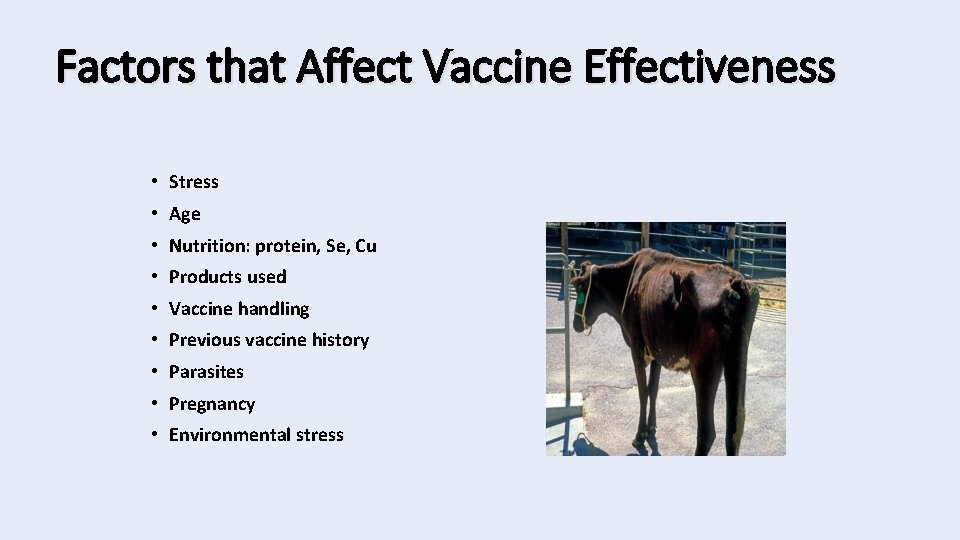
Factors that Affect Vaccine Effectiveness • Stress • Age • Nutrition: protein, Se, Cu • Products used • Vaccine handling • Previous vaccine history • Parasites • Pregnancy • Environmental stress
Reasons for Euthanasia • Make a prompt decision to treat • Segregate sick or injured animals from the herd • Fractures of the legs, hip or spine that are not repairable and result in immobility or inability to stand • Emergency medical conditions that result in excruciating pain that cannot be relieved by treatment • Animals that are too weak to be transported due to debilitation from disease or injury • Paralysis from traumatic injuries or disease that result in immobility • Disease conditions where no effective treatment is known, prognosis is terminal, or a significant threat to human health is present.
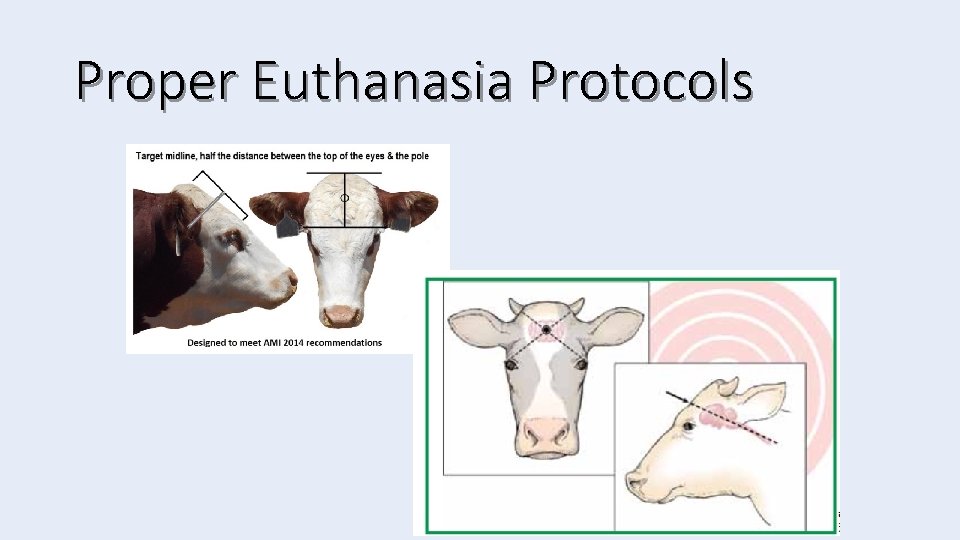
Proper Euthanasia Protocols

Handling, Facilities and Transportation
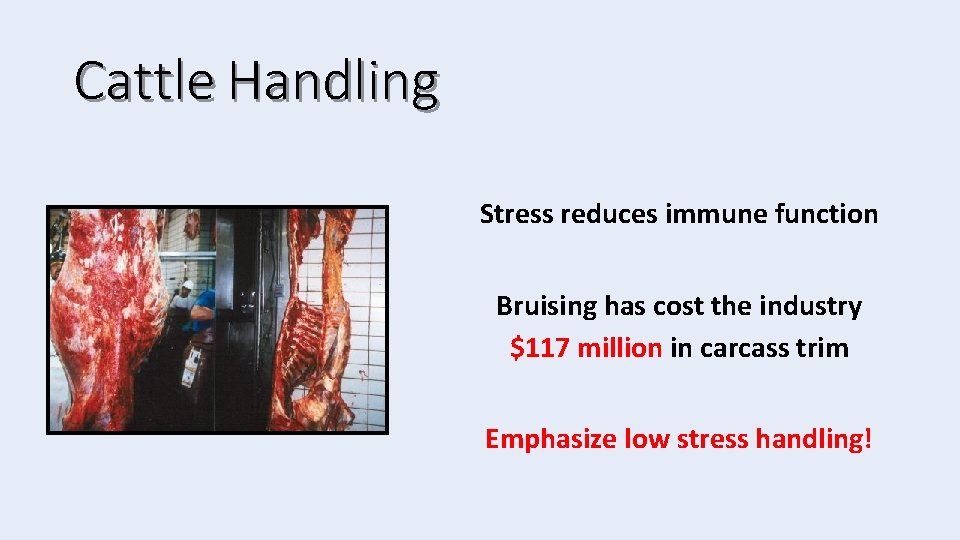
Cattle Handling Stress reduces immune function Bruising has cost the industry $117 million in carcass trim Emphasize low stress handling!
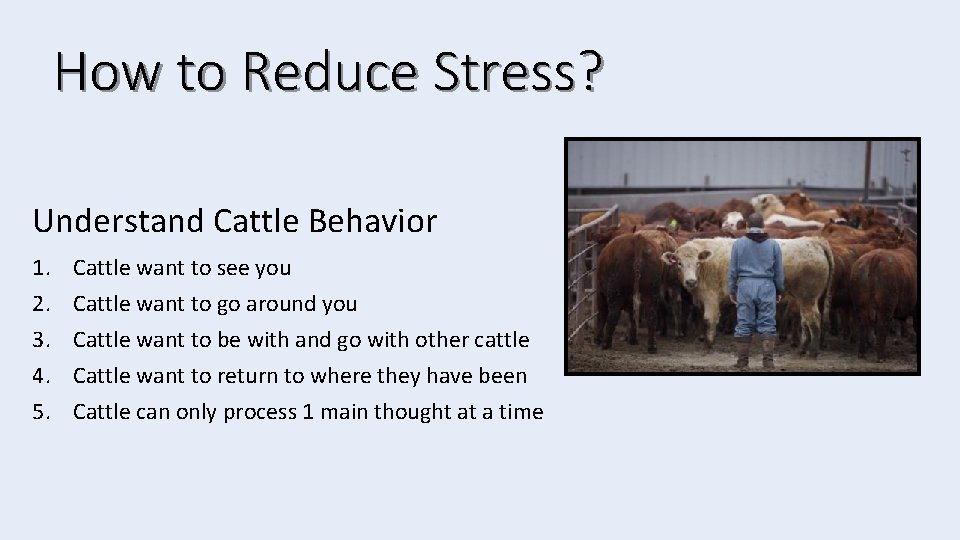
How to Reduce Stress? Understand Cattle Behavior 1. 2. 3. 4. 5. Cattle want to see you Cattle want to go around you Cattle want to be with and go with other cattle Cattle want to return to where they have been Cattle can only process 1 main thought at a time
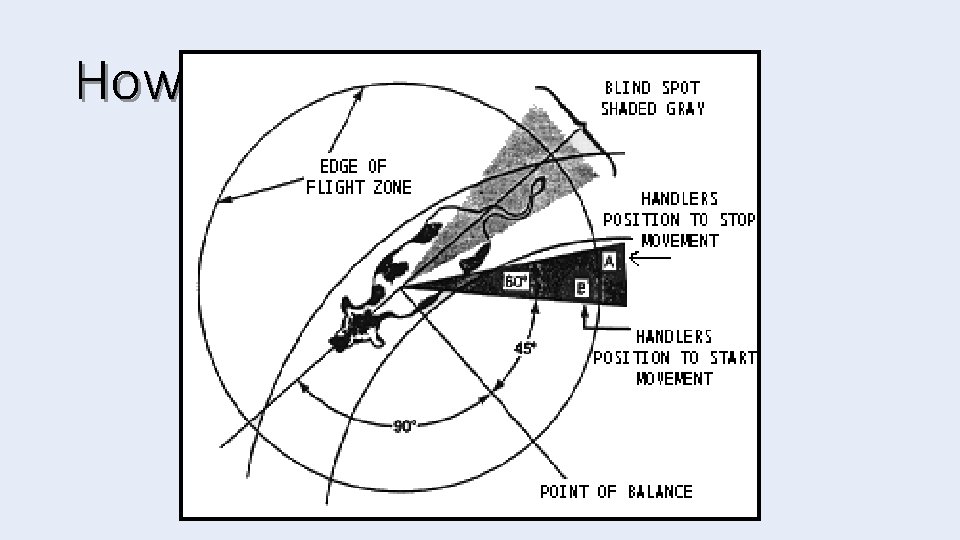
How to Reduce Stress?
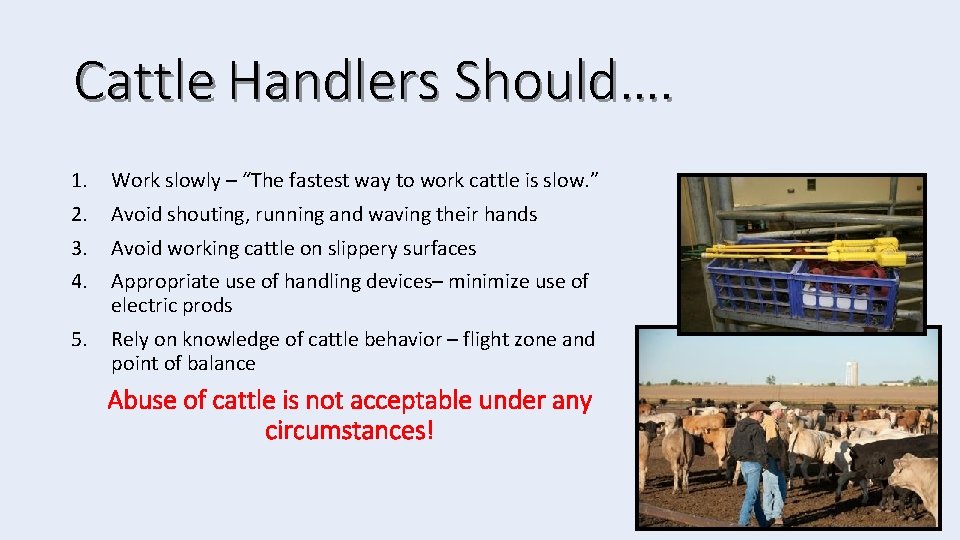
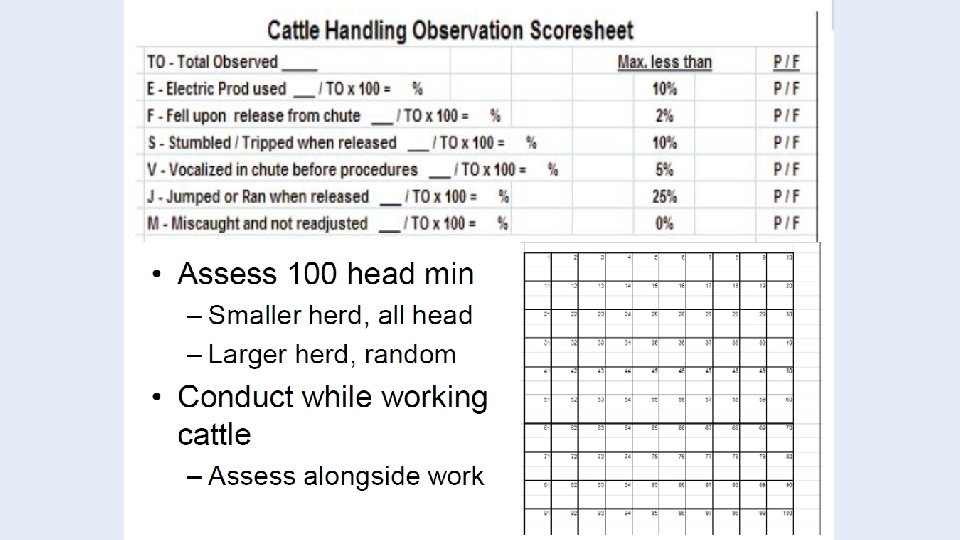
Cattle Handlers Should…. 1. Work slowly – “The fastest way to work cattle is slow. ” 2. Avoid shouting, running and waving their hands 3. Avoid working cattle on slippery surfaces 4. Appropriate use of handling devices– minimize use of electric prods 5. Rely on knowledge of cattle behavior – flight zone and point of balance Abuse of cattle is not acceptable under any circumstances!
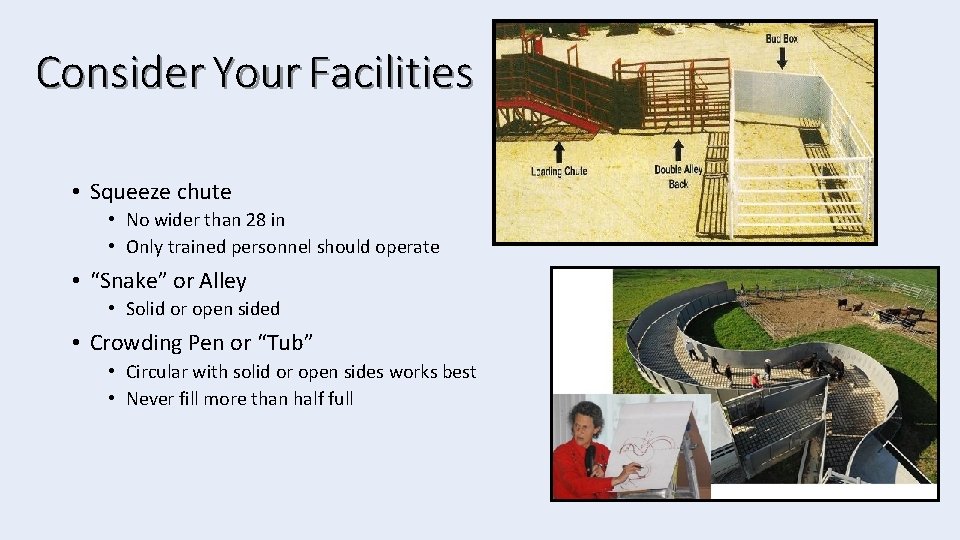
Consider Your Facilities • Squeeze chute • No wider than 28 in • Only trained personnel should operate • “Snake” or Alley • Solid or open sided • Crowding Pen or “Tub” • Circular with solid or open sides works best • Never fill more than half full
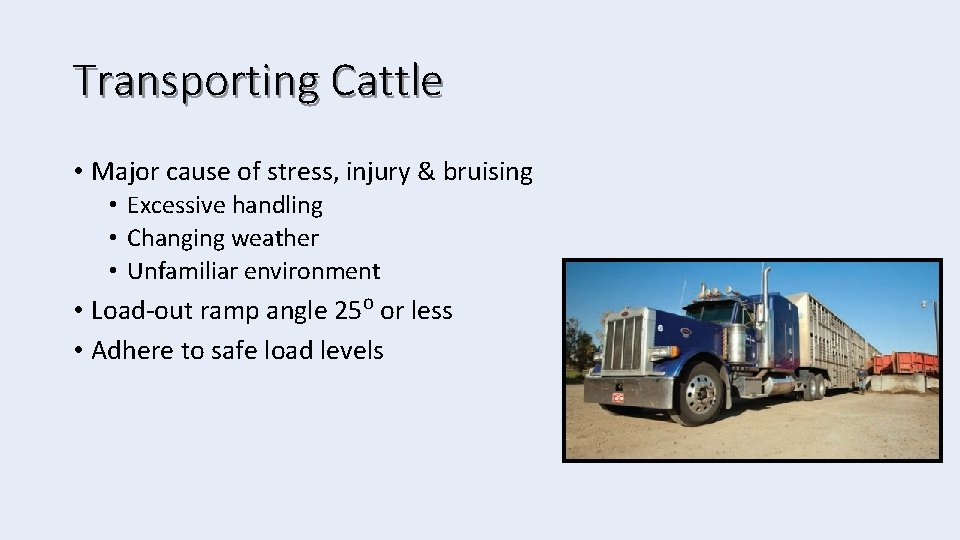
Transporting Cattle • Major cause of stress, injury & bruising • Excessive handling • Changing weather • Unfamiliar environment • Load-out ramp angle 25⁰ or less • Adhere to safe load levels
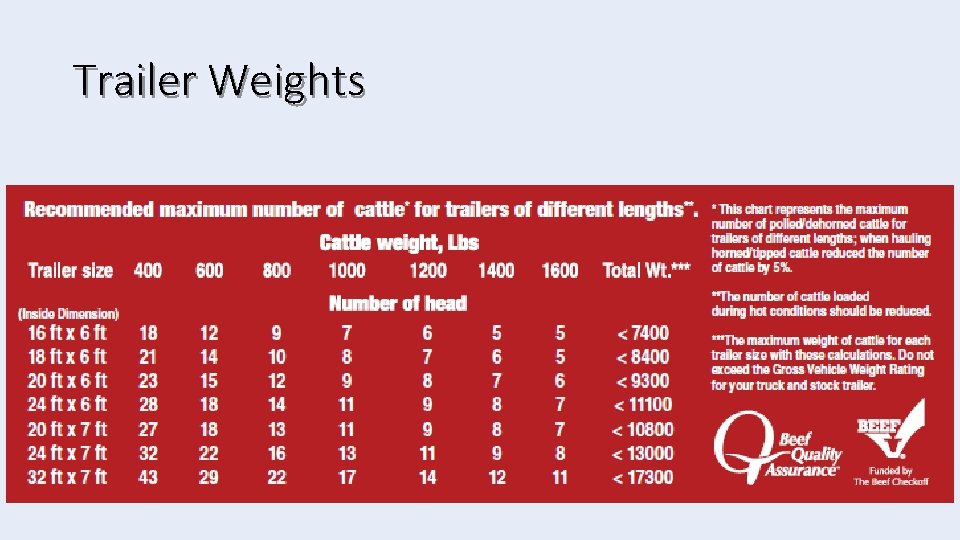
Trailer Weights
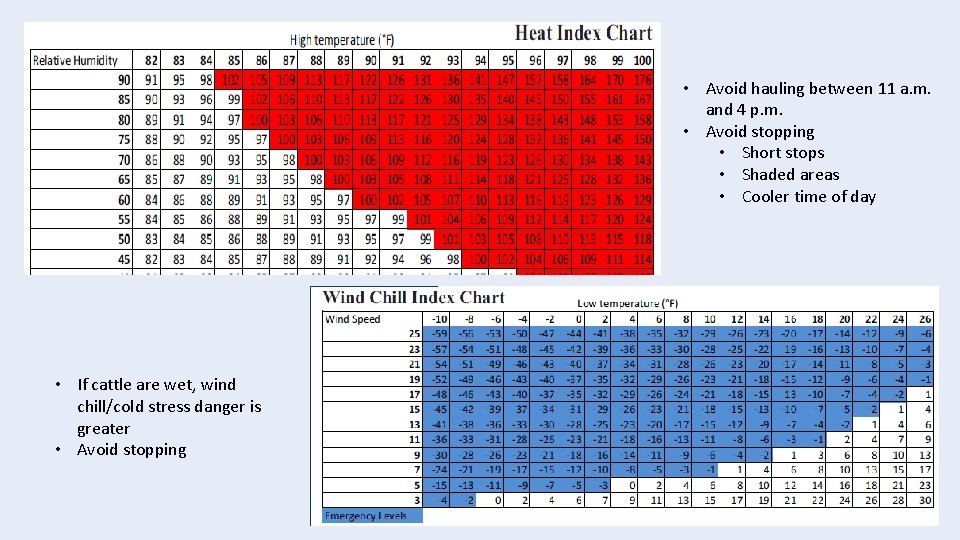
• Avoid hauling between 11 a. m. and 4 p. m. • Avoid stopping • Short stops • Shaded areas • Cooler time of day • If cattle are wet, wind chill/cold stress danger is greater • Avoid stopping
- Slides: 38