
Bedform phase diagram for classification of sedimentary structures
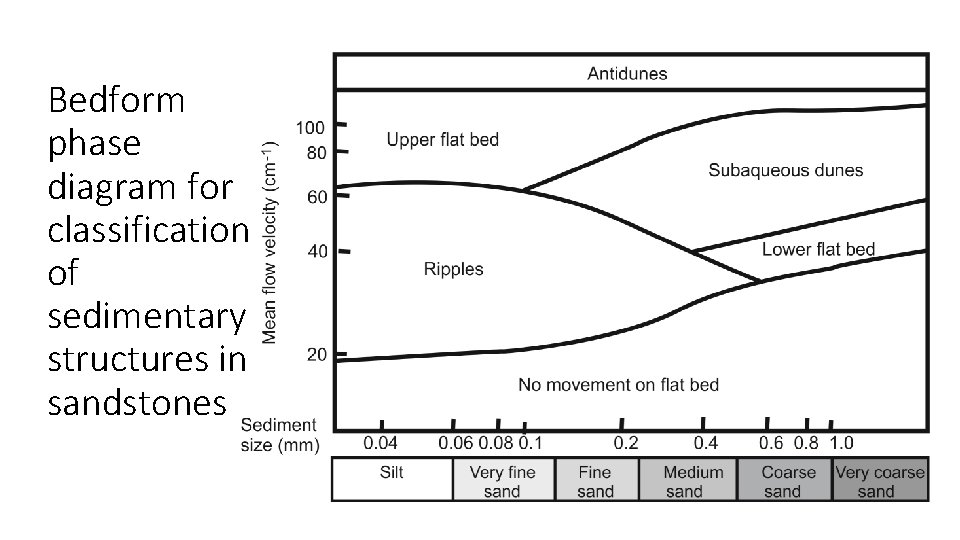
Bedform phase diagram for classification of sedimentary structures in sandstones
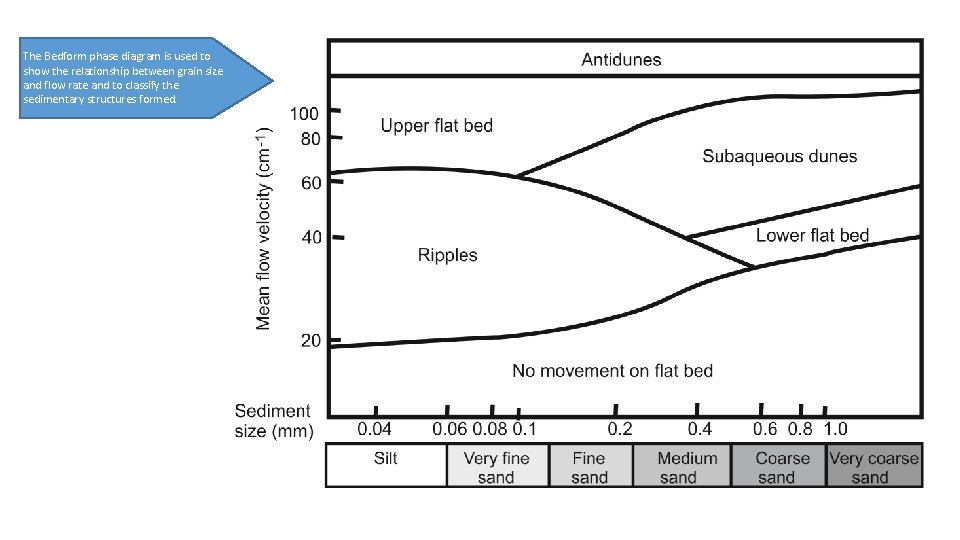
The Bedform phase diagram is used to show the relationship between grain size and flow rate and to classify the sedimentary structures formed.
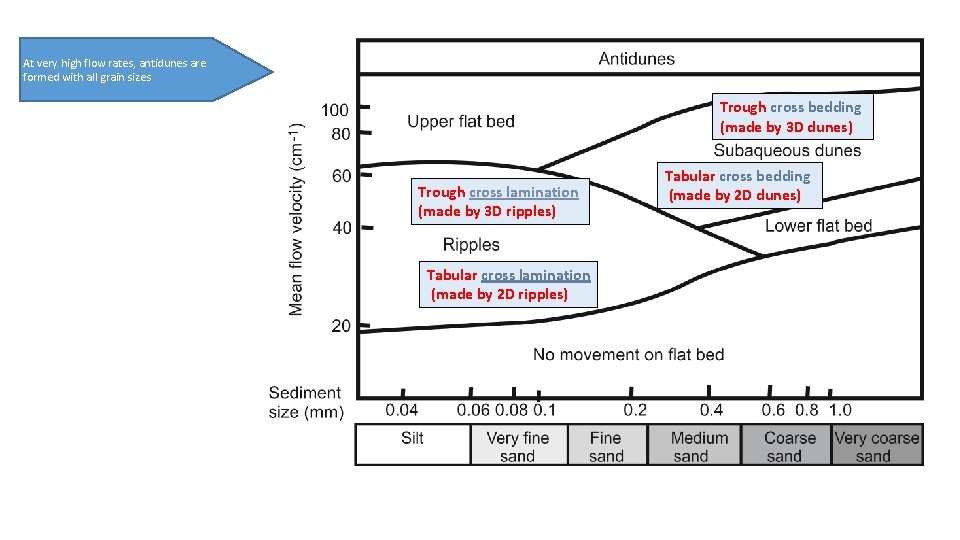
At very high flow rates, antidunes are formed with all grain sizes Trough cross bedding (made by 3 D dunes) Trough cross lamination (made by 3 D ripples) Tabular cross lamination (made by 2 D ripples) Tabular cross bedding (made by 2 D dunes)
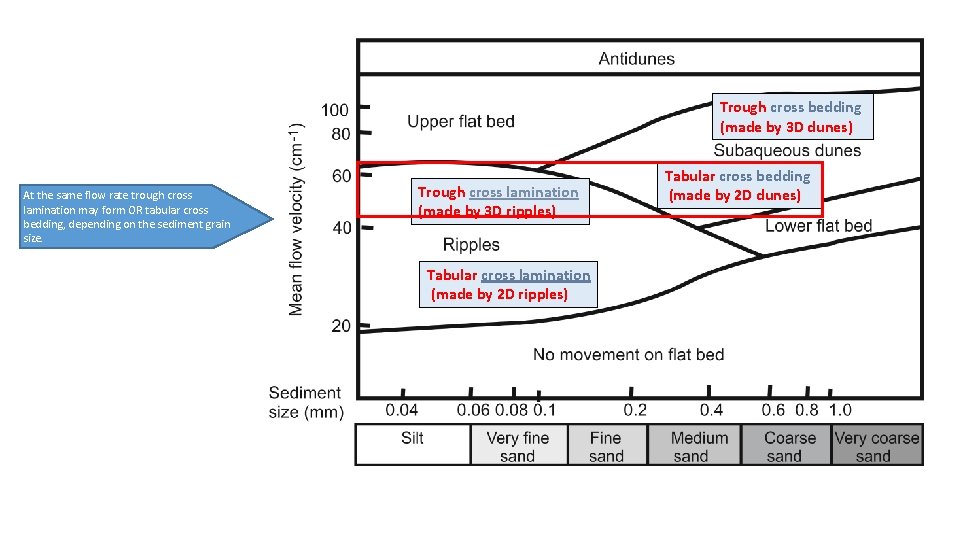
Trough cross bedding (made by 3 D dunes) At the same flow rate trough cross lamination may form OR tabular cross bedding, depending on the sediment grain size. Trough cross lamination (made by 3 D ripples) Tabular cross lamination (made by 2 D ripples) Tabular cross bedding (made by 2 D dunes)
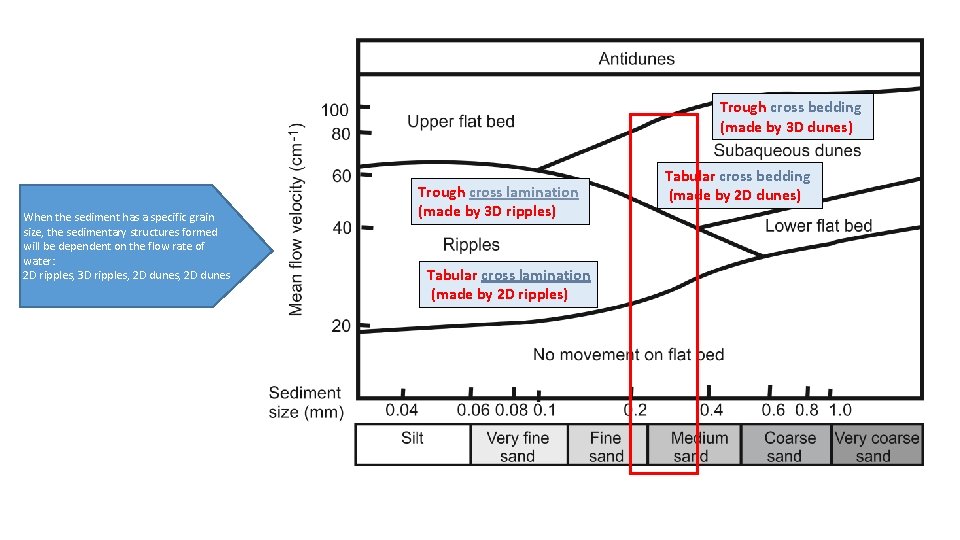
Trough cross bedding (made by 3 D dunes) When the sediment has a specific grain size, the sedimentary structures formed will be dependent on the flow rate of water: 2 D ripples, 3 D ripples, 2 D dunes Trough cross lamination (made by 3 D ripples) Tabular cross lamination (made by 2 D ripples) Tabular cross bedding (made by 2 D dunes)
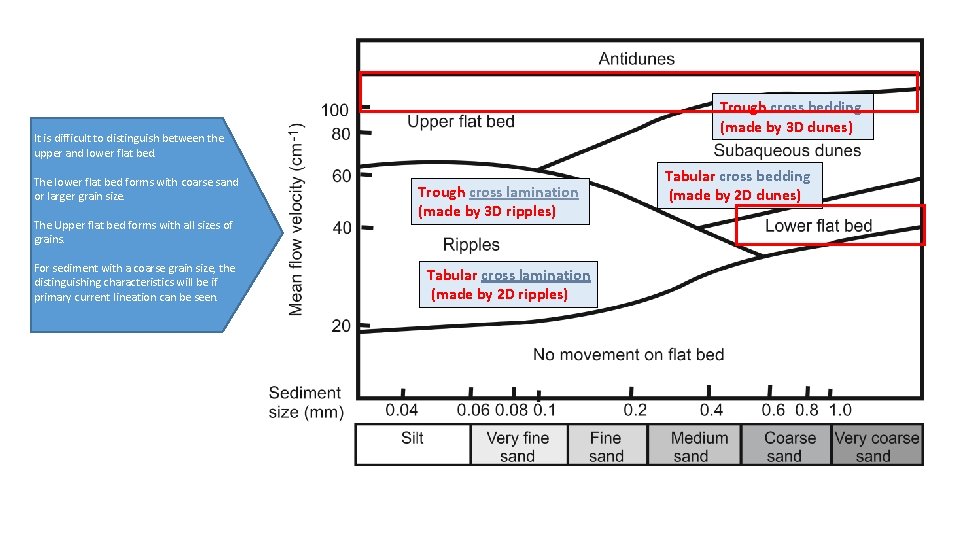
Trough cross bedding (made by 3 D dunes) It is difficult to distinguish between the upper and lower flat bed. The lower flat bed forms with coarse sand or larger grain size. The Upper flat bed forms with all sizes of grains. For sediment with a coarse grain size, the distinguishing characteristics will be if primary current lineation can be seen. Trough cross lamination (made by 3 D ripples) Tabular cross lamination (made by 2 D ripples) Tabular cross bedding (made by 2 D dunes)
- Slides: 6