
Becoming an Organisational Trauma Counselling Specialist Dr Noreen
Becoming an Organisational Trauma Counselling Specialist Dr Noreen Tehrani www. noreentehrani. com Noreen Tehrani Associates
• Traumatic stress in High Risk organisations • Levels of response • How the trauma therapy service started Outline of Session • The role of the trauma practitioner & counsellor • Key attributes of organisational trauma practitioners • Early interventions • Trauma therapy • Complications • Case studies

www. noreentehrani. com
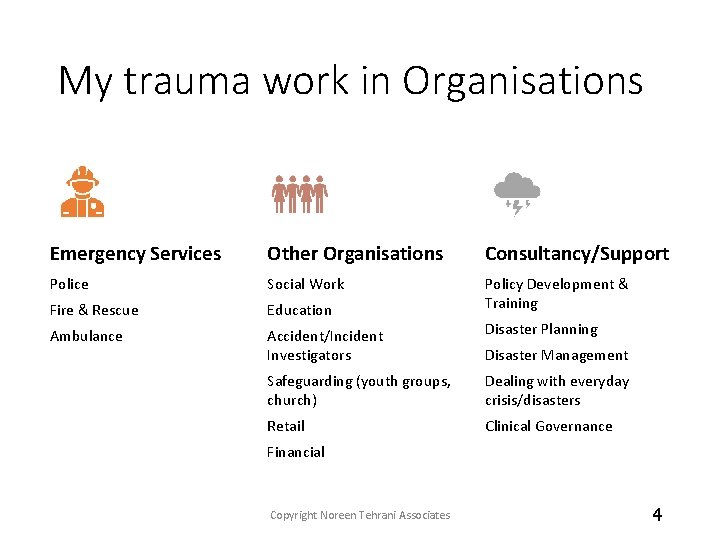
My trauma work in Organisations Emergency Services Other Organisations Consultancy/Support Police Social Work Fire & Rescue Education Policy Development & Training Ambulance Accident/Incident Investigators Disaster Planning Disaster Management Safeguarding (youth groups, church) Dealing with everyday crisis/disasters Retail Clinical Governance Financial Copyright Noreen Tehrani Associates 4
Duty of Care Every employer shall ensure that his employees are provided with such health surveillance as is appropriate having regard to the risks to their health and safety which are identified by the assessment. Health and Safety at Work Act (1999) Copyright Noreen Tehrani Associates 5
• Exposure to actual or threatened death, serious injury or sexual violence in one of the following ways: Criteria for Developing PTSD (DSM 5) • Direct experience • Witness in person of events that happen to others • Learning that a traumatic event has happened to a close family member or friend • Experiencing repeated or extreme exposure to aversive details of the traumatic event e. g. first responders, police officers (and others) exposed to details of child abuse – must be work related

Levels of Response
1. Response Trauma • Part of the job • Random • Unpredictable 2. Secondary Trauma/Compassion Fatigue • Working with traumatised people • Predictable • Duty of care 3. Crisis and Disasters • Unpredictable • Overwhelming • Need to maintain business as usual Three Types of Organisational Trauma Copyright Noreen Tehrani Associates 8
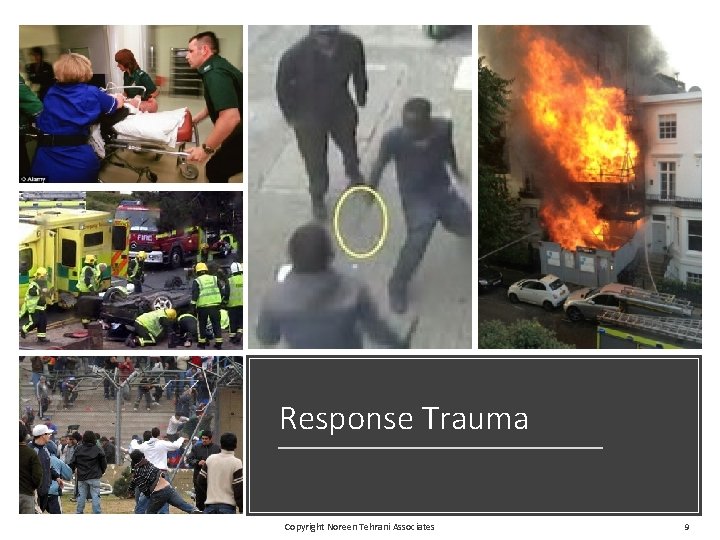
Response Trauma Copyright Noreen Tehrani Associates 9
Response Trauma Interventions 1. Psycho-Education • Symptoms and signs of trauma • Resilience building tools 2. Supervisor Support • Regular team time • Daily wellbeing checks • Situational risk assessments • Team & personal stress assessments 3. Referrals • Early interventions • Debriefing/Psychological First Aid • Psychological Screening, Assessments • Referral for trauma therapy Copyright Noreen Tehrani Associates 10

Secondary Trauma Copyright Noreen Tehrani Associates 11
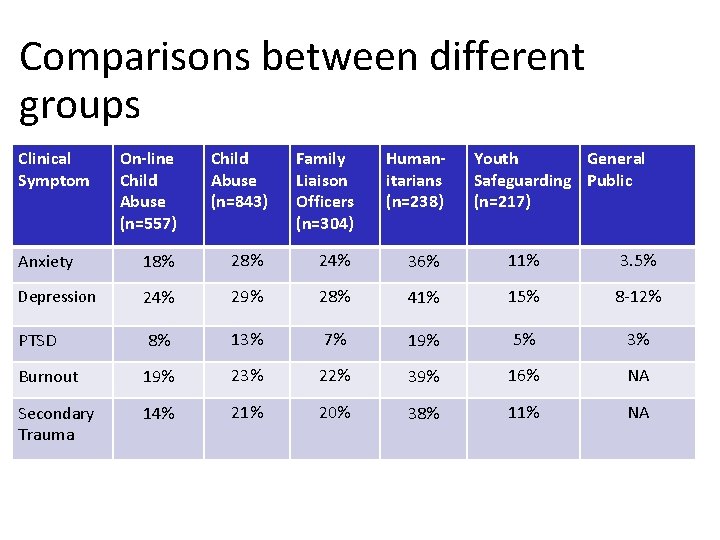
Comparisons between different groups Clinical Symptom On-line Child Abuse (n=557) Child Abuse (n=843) Family Liaison Officers (n=304) Humanitarians (n=238) Youth General Safeguarding Public (n=217) Anxiety 18% 24% 36% 11% 3. 5% Depression 24% 29% 28% 41% 15% 8 -12% PTSD 8% 13% 7% 19% 5% 3% Burnout 19% 23% 22% 39% 16% NA Secondary Trauma 14% 21% 20% 38% 11% NA
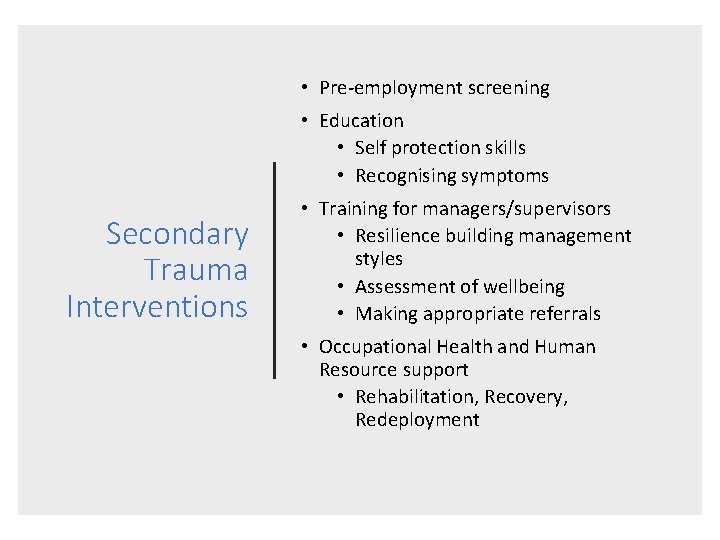
• Pre-employment screening • Education • Self protection skills • Recognising symptoms Secondary Trauma Interventions • Training for managers/supervisors • Resilience building management styles • Assessment of wellbeing • Making appropriate referrals • Occupational Health and Human Resource support • Rehabilitation, Recovery, Redeployment

Crisis & Disaster Trauma Copyright Noreen Tehrani Associates 14
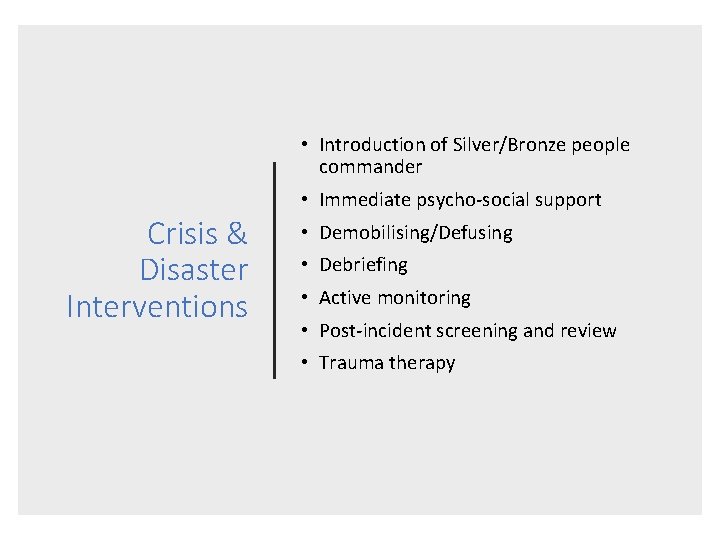
• Introduction of Silver/Bronze people commander Crisis & Disaster Interventions • Immediate psycho-social support • Demobilising/Defusing • Debriefing • Active monitoring • Post-incident screening and review • Trauma therapy
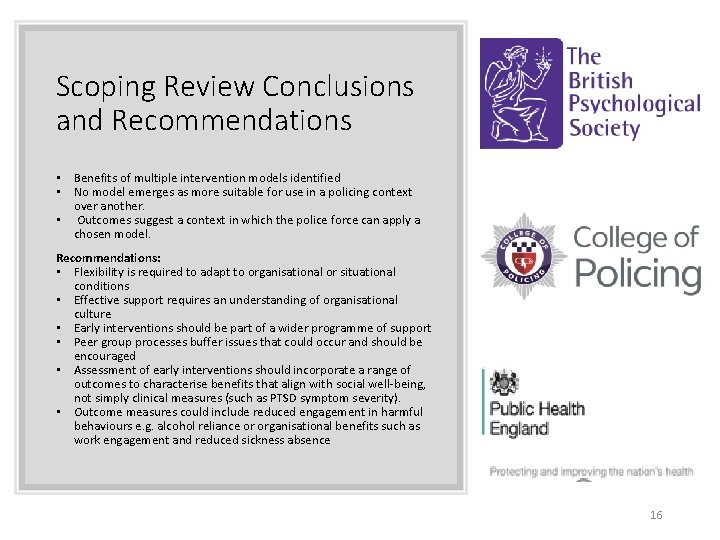
Scoping Review Conclusions and Recommendations • Benefits of multiple intervention models identified • No model emerges as more suitable for use in a policing context over another. • Outcomes suggest a context in which the police force can apply a chosen model. Recommendations: • Flexibility is required to adapt to organisational or situational conditions • Effective support requires an understanding of organisational culture • Early interventions should be part of a wider programme of support • Peer group processes buffer issues that could occur and should be encouraged • Assessment of early interventions should incorporate a range of outcomes to characterise benefits that align with social well-being, not simply clinical measures (such as PTSD symptom severity). • Outcome measures could include reduced engagement in harmful behaviours e. g. alcohol reliance or organisational benefits such as work engagement and reduced sickness absence 16
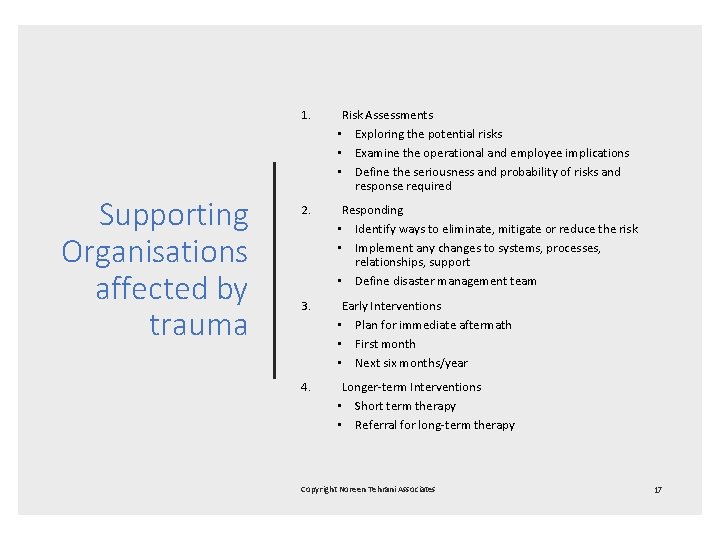
Supporting Organisations affected by trauma 1. Risk Assessments • Exploring the potential risks • Examine the operational and employee implications • Define the seriousness and probability of risks and response required 2. Responding • Identify ways to eliminate, mitigate or reduce the risk • Implement any changes to systems, processes, relationships, support • Define disaster management team 3. Early Interventions • Plan for immediate aftermath • First month • Next six months/year 4. Longer-term Interventions • Short term therapy • Referral for long-term therapy Copyright Noreen Tehrani Associates 17
How did the trauma service begin?
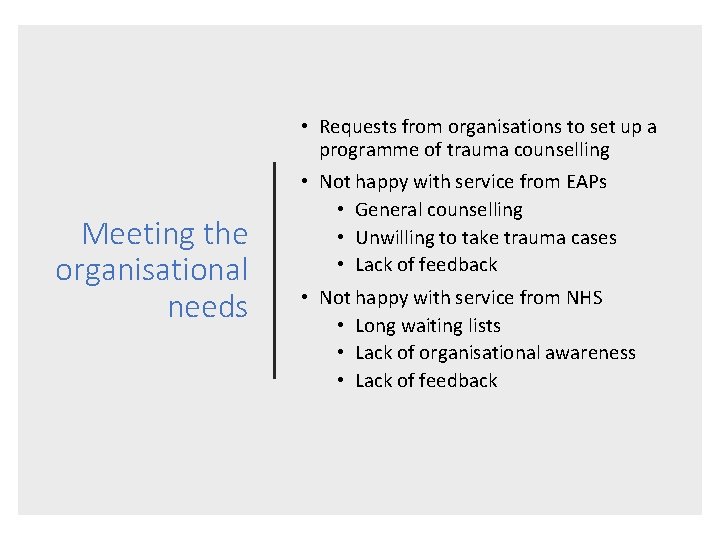
• Requests from organisations to set up a programme of trauma counselling Meeting the organisational needs • Not happy with service from EAPs • General counselling • Unwilling to take trauma cases • Lack of feedback • Not happy with service from NHS • Long waiting lists • Lack of organisational awareness • Lack of feedback
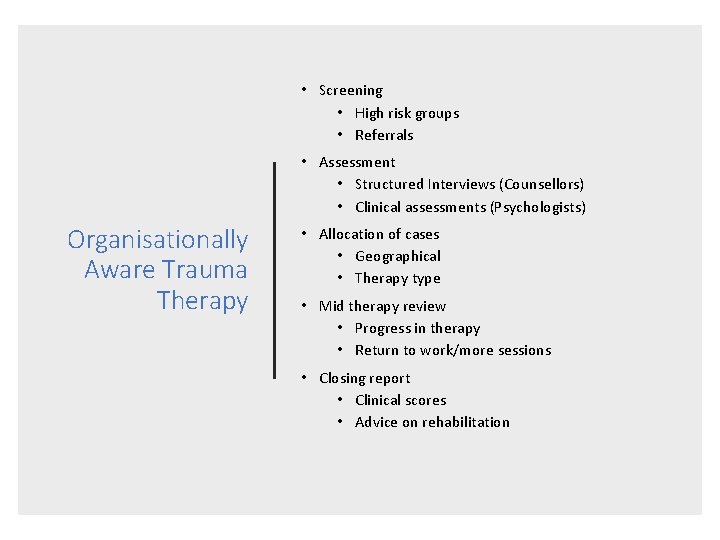
• Screening • High risk groups • Referrals • Assessment • Structured Interviews (Counsellors) • Clinical assessments (Psychologists) Organisationally Aware Trauma Therapy • Allocation of cases • Geographical • Therapy type • Mid therapy review • Progress in therapy • Return to work/more sessions • Closing report • Clinical scores • Advice on rehabilitation
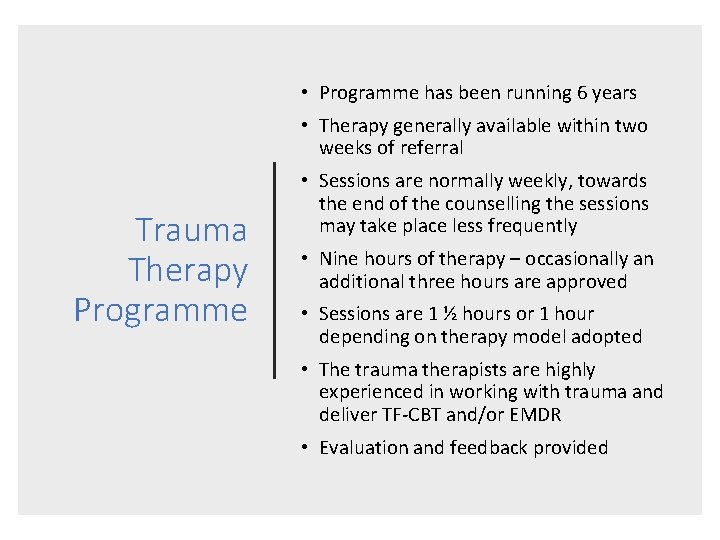
• Programme has been running 6 years • Therapy generally available within two weeks of referral Trauma Therapy Programme • Sessions are normally weekly, towards the end of the counselling the sessions may take place less frequently • Nine hours of therapy – occasionally an additional three hours are approved • Sessions are 1 ½ hours or 1 hour depending on therapy model adopted • The trauma therapists are highly experienced in working with trauma and deliver TF-CBT and/or EMDR • Evaluation and feedback provided
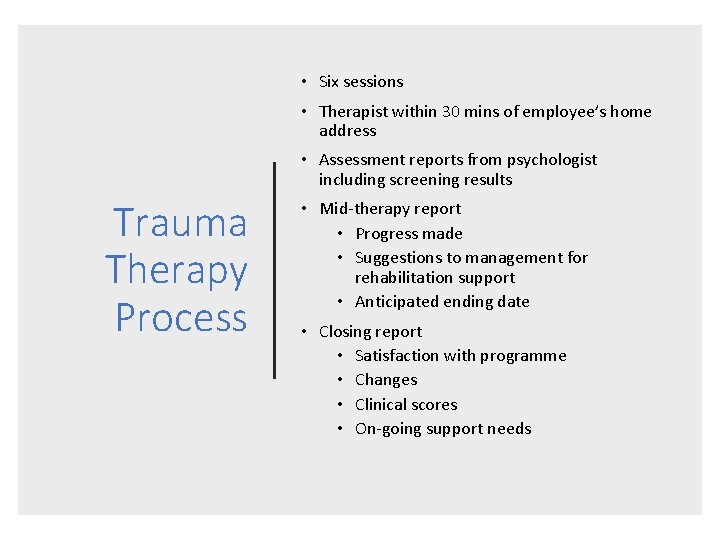
• Six sessions • Therapist within 30 mins of employee’s home address • Assessment reports from psychologist including screening results Trauma Therapy Process • Mid-therapy report • Progress made • Suggestions to management for rehabilitation support • Anticipated ending date • Closing report • Satisfaction with programme • Changes • Clinical scores • On-going support needs
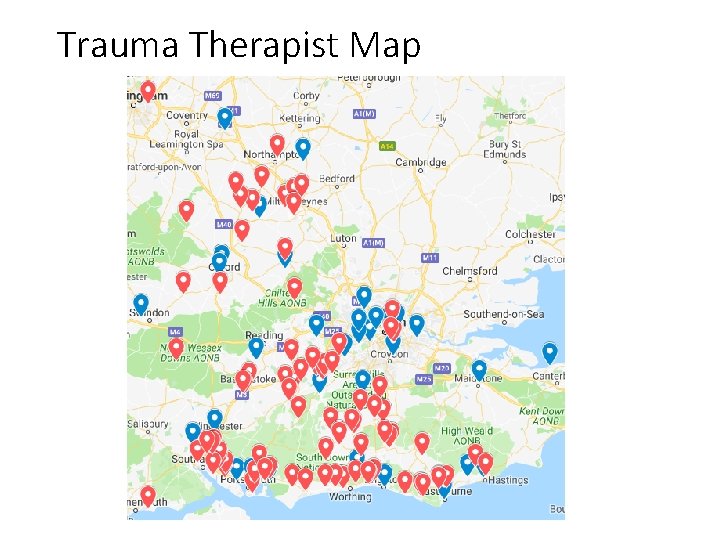
Trauma Therapist Map
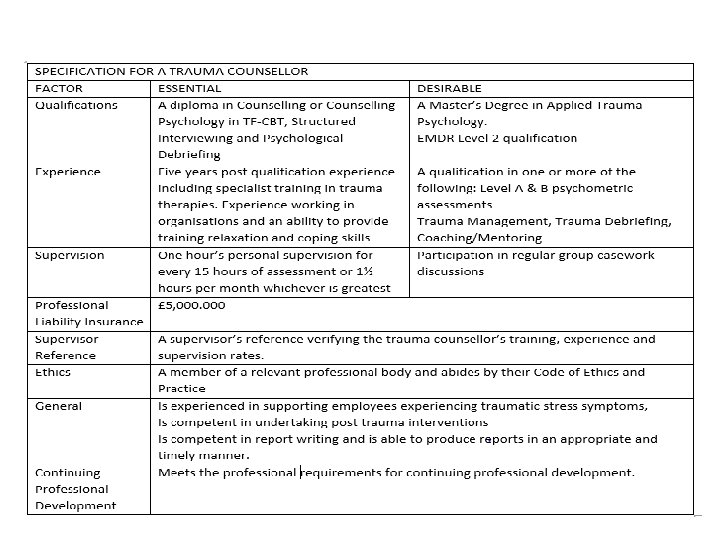
• Psychological Debriefing • Ability to undertake individual debriefing as minimum Essential Training • Structured Interviewing & Reading Screening Data • Surveillance sessions for high risk groups • Using screening results in therapy • Trauma Focussed CBT • Essential framework for the trauma therapy • Training in completing paperwork
• Case supervision • Contact with the referring psychologist • Help with challenging cases Support Provided • Advice and support • Contact with administrator and colleagues • Six monthly Counsellor Days • Group supervision • Updates • Hot topics • Lunch • Part of a team!!
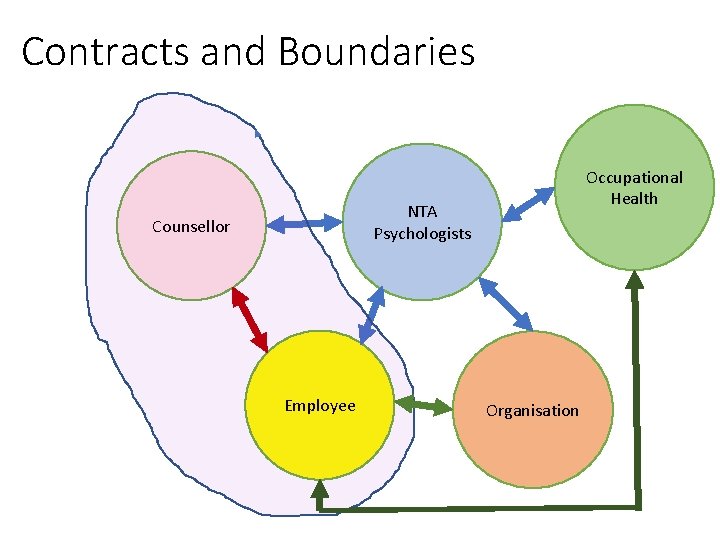
Contracts and Boundaries Occupational Health NTA Psychologists Counsellor Employee Organisation
What are the roles of the Trauma Specialist Practitioner & Counsellor
Structured Interview and Feedback • The trauma counsellors need to be able to: • Understand the screening results • Provide useful feedback • Undertake coaching to improve wellbeing/lifestyle • Write assessment reports • Understand what is allowed regarding: • Rehabilitation programme • Reasonable adjustments • Operational duties • Medical retirement
Supporting employees affected by trauma • Coaching in surveillance sessions • Giving feedback on screening results • Delivering seminars and training sessions • Providing useful feedback to management and employees in midtherapy and closing reports
Education for employees • How to recognise signs of anxiety, depression and trauma in themselves and others • Some understanding of what the signs and symptoms mean • How to reduce symptoms of trauma • How to support colleagues • When to ask for help
• Demobilise the team at the end of a shift • How did the shift go? • Anything significant happen? • Are you OK? • Look out for signs of distress Training for supervisors • Defuse traumatic incident with those affected • Ask what happened • Identify any positives • Provide information/support • Check up next day • Wellbeing Assessments • Personal Wellbeing • Organisational Wellbeing • Refer for more support • OH • HR/H&S �Noreen Tehrani Associates Ltd
Issues that can arise • Generally the trauma therapy goes well but occasionally there are problems: • Taking on employee on privately without a break or telling NTA • Counsellor offering to provide a report for solicitor/union/federation • Employee becoming suicidal (rope under bed) • Counsellor not identifying and referring long term cases to NHS • Counsellor talking to line manager direct • Problems dealing with an litigious employee • Counsellor keeping data (GDPR) • Telling employee to take time off work • Telling employee that their manager is unreasonable
• How is it different to working for an EAP? Feedback from team members • Clients are motivated to get better and willing to do homework • EAPs do not allow counsellors to work with traumatised clients with suicidal ideation • The trauma psychologists are highly experienced in working with emergency services and understand their way of thinking • The programme is proactive and identifies potential clients through screening before they become unwell • Evidence is collated on the effectiveness of the service and directs future avenues of working • There is a sense of being part of a team with regular contact with the psychologists and otherapists • The work is underpinned from a psychological position by specific research • Although EAPs may use measures in this programme the measures are integrated into therapy and used to assess success • Lots of information on the client is provided
• What do you like about the programme? Feedback from team members • I like being part of a team and having an organisational focus to the work • I like the fact that there is constant ongoing research being undertaken on the data gathered • It is innovative, supportive and has a clear structure to the work • NTAPS is professionally responsible and it is nice to know they are there to support your work • The clients are generally motivated to get better so instantly working with hope and direction • There are lots of resources and training opportunities • We are able to inform OH on rehabilitation so can advocate on behalf of the client • We are treated like grown-up professionals • Working with one client group helps inform work with clients
• What would you say to anyone wanting to join the programme? Feedback from team members • The work is rewarding as we are working with first responders who have such an important job on the front line. They are resourceful, resilient people who have had to deal with their own lives and issues. • The training provided is solid and well established, and therapists are trusted to provide quality treatment without being bound too tightly to a one-size fits all protocol • Supervision support is always available • There is a feeling of belonging to a group of professionals • We have opportunities to meet together and share our experiences in a professional setting where we can also get to know each other

Questions?
- Slides: 37