
Becoming a Learning Team A guide to a
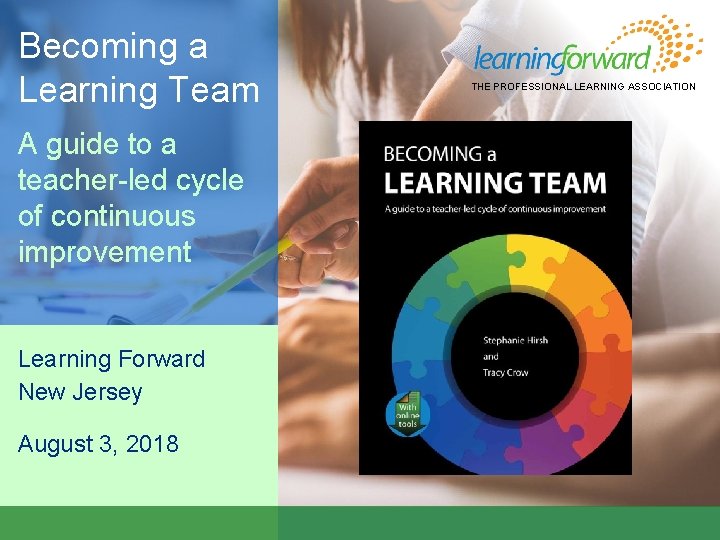
Becoming a Learning Team A guide to a teacher-led cycle of continuous improvement Learning Forward New Jersey August 3, 2018 THE PROFESSIONAL LEARNING ASSOCIATION
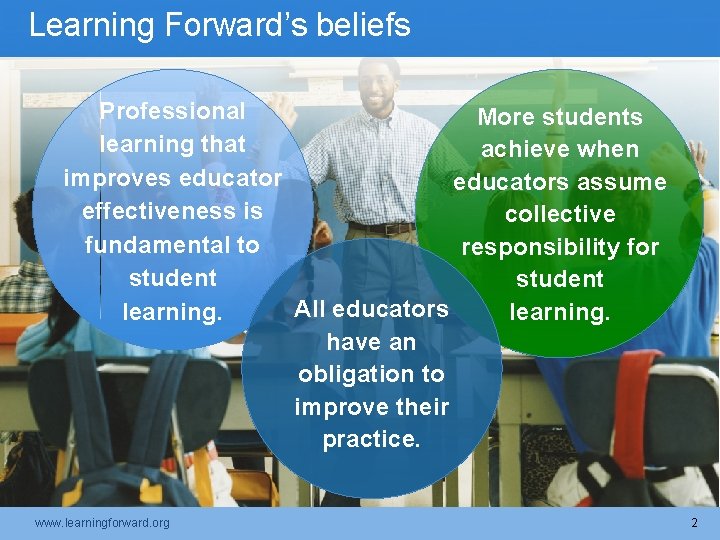
Learning Forward’s beliefs Professional More students learning that achieve when improves educators assume effectiveness is collective fundamental to responsibility for student All educators learning. have an obligation to improve their practice. www. learningforward. org 2

Learning Forward’s beliefs Successful leaders create and sustain a culture of learning. www. learningforward. org Effective school systems commit to continuous improvement for Diversity all adults and strengthens students. decisions. . 3
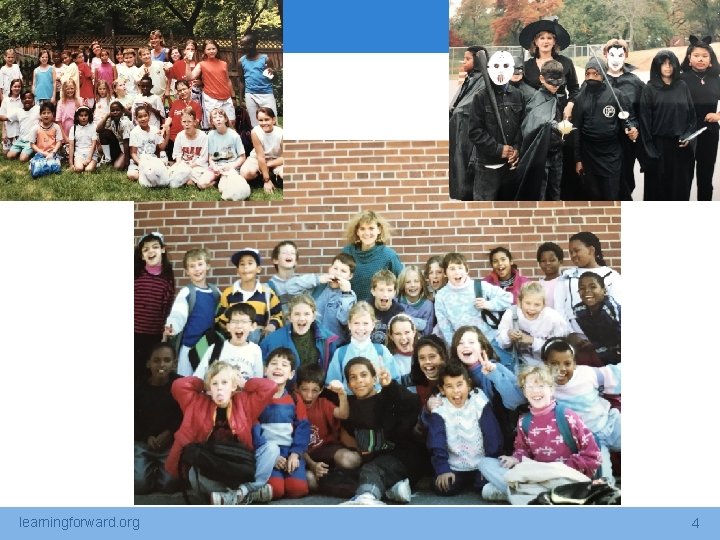
Picture from 1990 learningforward. org 4
Today’s agenda • • The case for teacher-led learning teams Overview of the learning team cycle Teacher teams in action in New Jersey Conditions for successful implementation learningforward. org 5
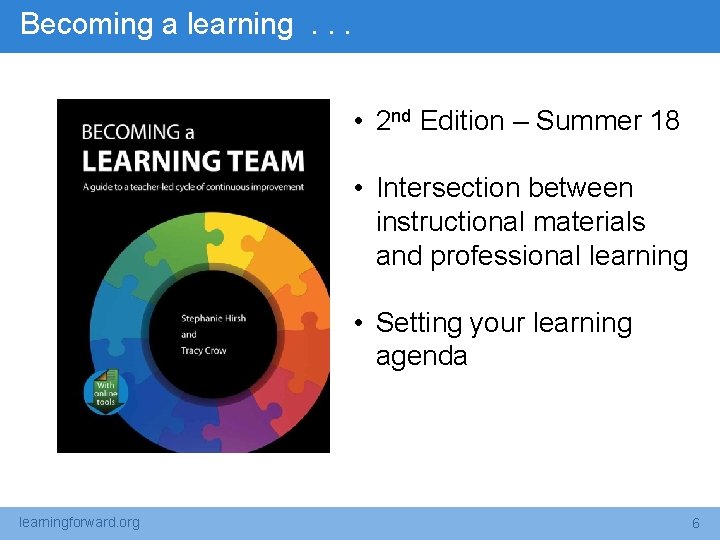
Becoming a learning. . . • 2 nd Edition – Summer 18 • Intersection between instructional materials and professional learning • Setting your learning agenda learningforward. org 6
Three Big Ideas 1. Teachers and leaders value a system of professional learning over sporadic instances of professional development. 2. Collaborative learning is at the heart of a system of continuous learning. 3. Teacher teams are intentional about their learningforward. org 7
Who is this book for? Teachers Teacher leaders/coaches Principals/school leaders District/school professional learning leaders External supporters/providers learningforward. org 8
Connect with your experience • When you hear the phrase “learning cycle, ” what components come to mind? • What other learning cycle models are familiar to you? learningforward. org 9
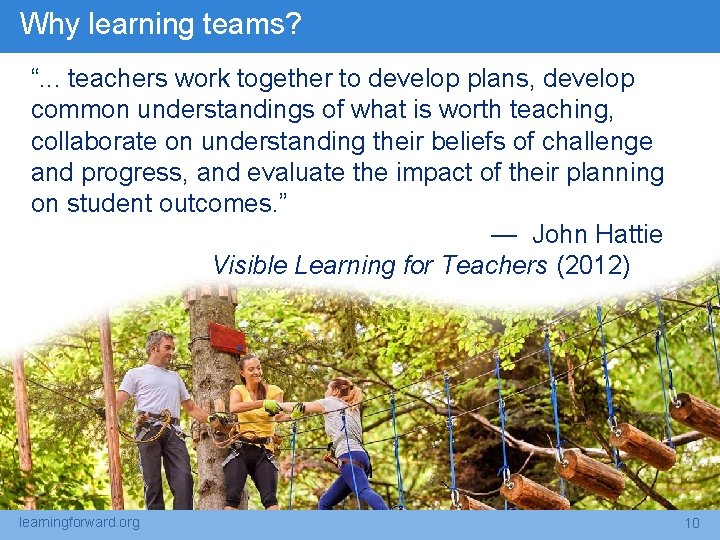
Why learning teams? “. . . teachers work together to develop plans, develop common understandings of what is worth teaching, collaborate on understanding their beliefs of challenge and progress, and evaluate the impact of their planning on student outcomes. ” — John Hattie Visible Learning for Teachers (2012) learningforward. org 10
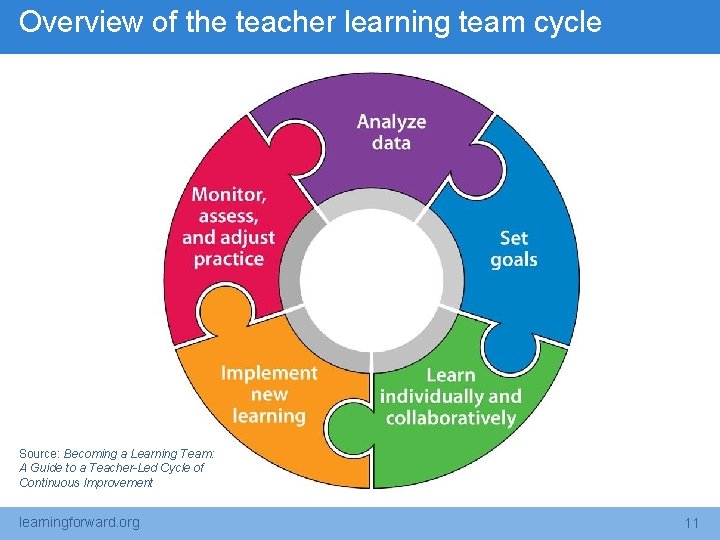
Overview of the teacher learning team cycle Source: Becoming a Learning Team: A Guide to a Teacher-Led Cycle of Continuous Improvement learningforward. org 11
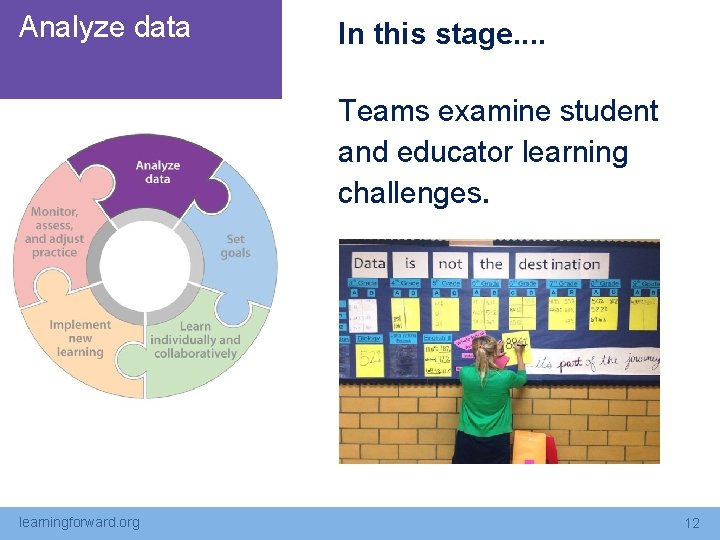
Analyze data In this stage. . Teams examine student and educator learning challenges. learningforward. org 12
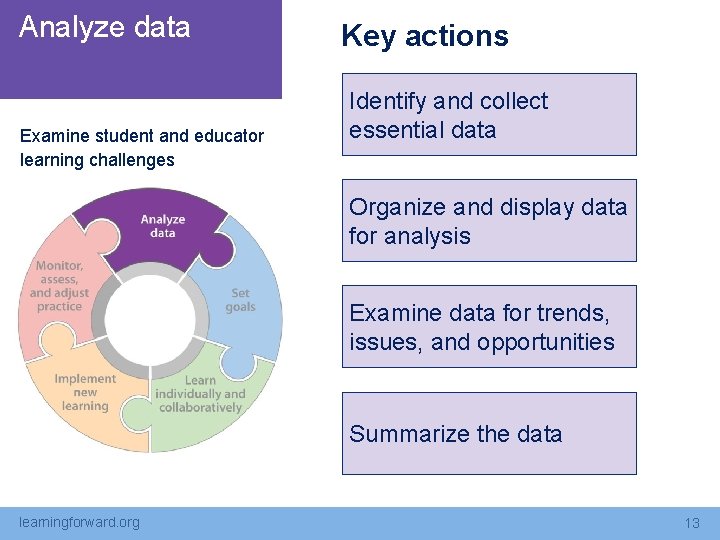
Analyze data Examine student and educator learning challenges Key actions Identify and collect essential data Organize and display data for analysis Examine data for trends, issues, and opportunities Summarize the data learningforward. org 13
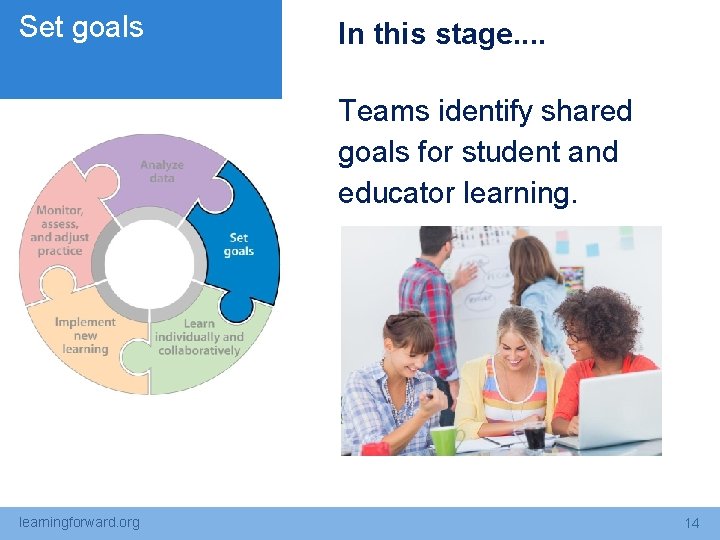
Set goals In this stage. . Teams identify shared goals for student and educator learningforward. org 14
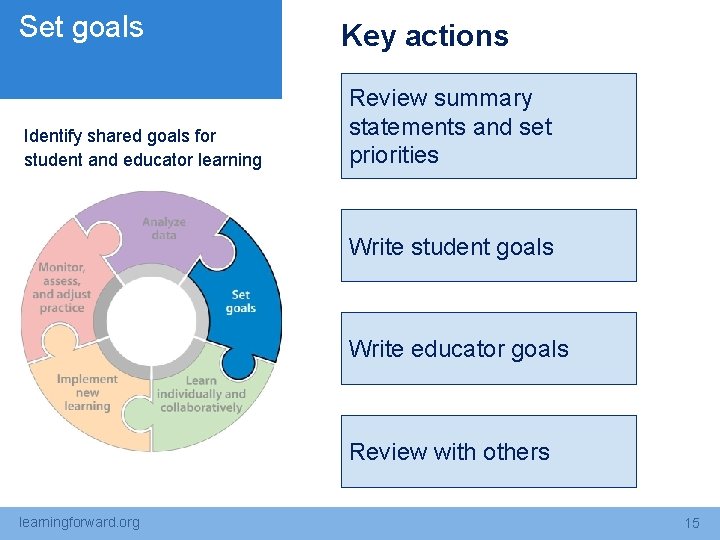
Set goals Identify shared goals for student and educator learning Key actions Review summary statements and set priorities Write student goals Write educator goals Review with others learningforward. org 15
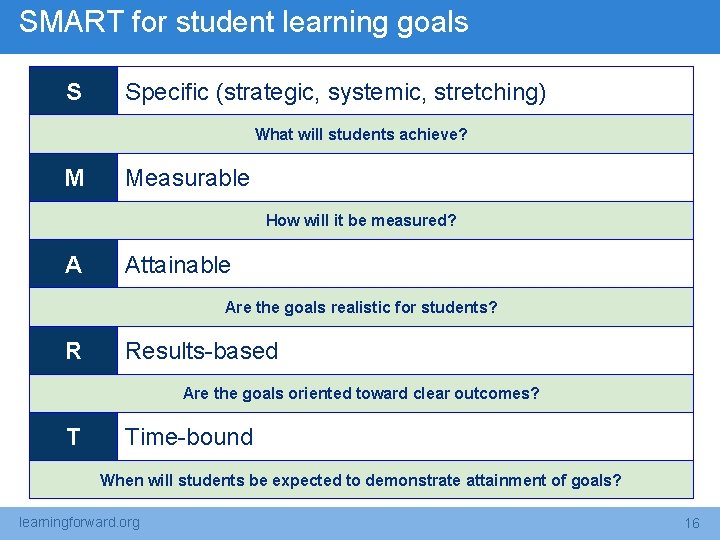
SMART for student learning goals S Specific (strategic, systemic, stretching) What will students achieve? M Measurable How will it be measured? A Attainable Are the goals realistic for students? R Results-based Are the goals oriented toward clear outcomes? T Time-bound When will students be expected to demonstrate attainment of goals? learningforward. org 16
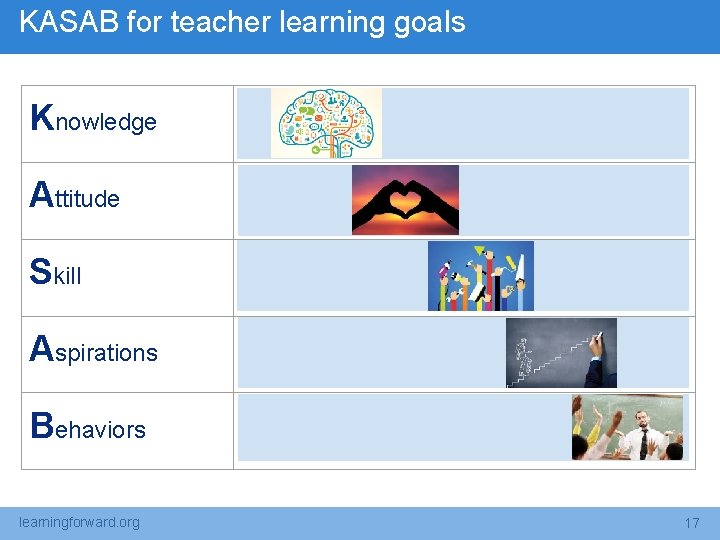
KASAB for teacher learning goals Knowledge Conceptual understanding of information, theories, principles, research Attitude Beliefs about the value of particular information or strategies Skill Strategies and processes to apply knowledge Aspirations Desires, or internal motivation, to engage in a particular practice Behaviors Consistent application of knowledge and skills learningforward. org 17
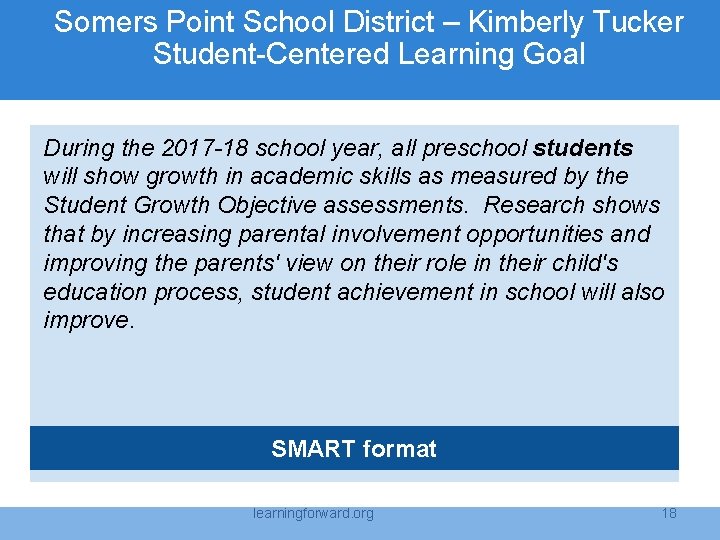
Somers Point School District – Kimberly Tucker Student-Centered Learning Goal During the 2017 -18 school year, all preschool students will show growth in academic skills as measured by the Student Growth Objective assessments. Research shows that by increasing parental involvement opportunities and improving the parents' view on their role in their child's education process, student achievement in school will also improve. SMART format learningforward. org 18
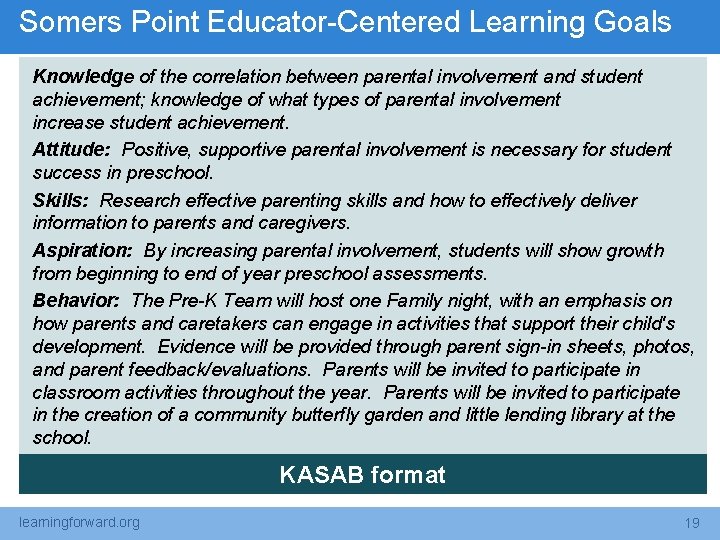
Somers Point Educator-Centered Learning Goals Knowledge of the correlation between parental involvement and student achievement; knowledge of what types of parental involvement increase student achievement. Attitude: Positive, supportive parental involvement is necessary for student success in preschool. Skills: Research effective parenting skills and how to effectively deliver information to parents and caregivers. Aspiration: By increasing parental involvement, students will show growth from beginning to end of year preschool assessments. Behavior: The Pre-K Team will host one Family night, with an emphasis on how parents and caretakers can engage in activities that support their child's development. Evidence will be provided through parent sign-in sheets, photos, and parent feedback/evaluations. Parents will be invited to participate in classroom activities throughout the year. Parents will be invited to participate in the creation of a community butterfly garden and little lending library at the school. KASAB format learningforward. org 19
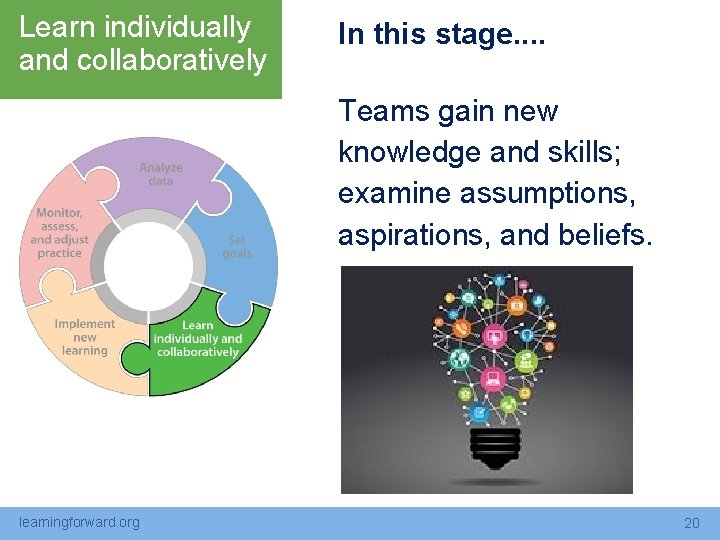
Learn individually and collaboratively In this stage. . Teams gain new knowledge and skills; examine assumptions, aspirations, and beliefs. learningforward. org 20
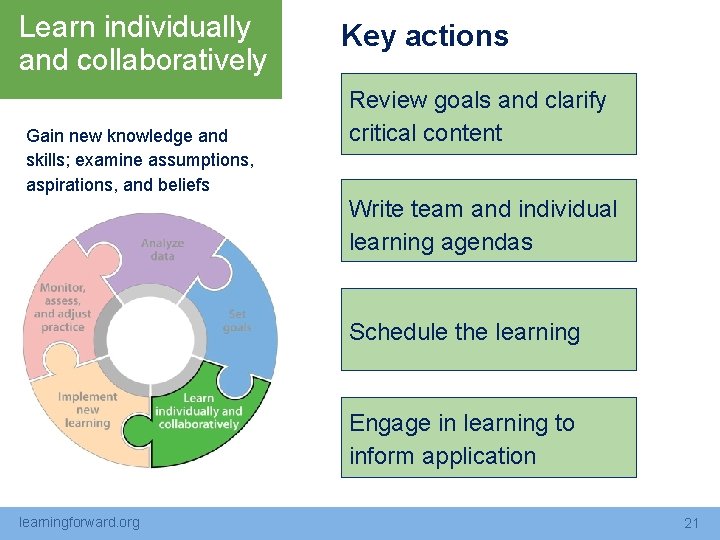
Learn individually and collaboratively Gain new knowledge and skills; examine assumptions, aspirations, and beliefs Key actions Review goals and clarify critical content Write team and individual learning agendas Schedule the learning Engage in learning to inform application learningforward. org 21
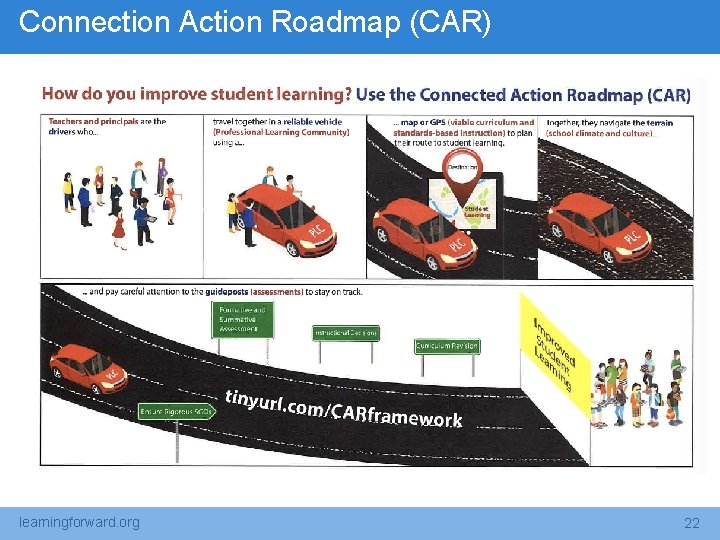
Connection Action Roadmap (CAR) learningforward. org 22
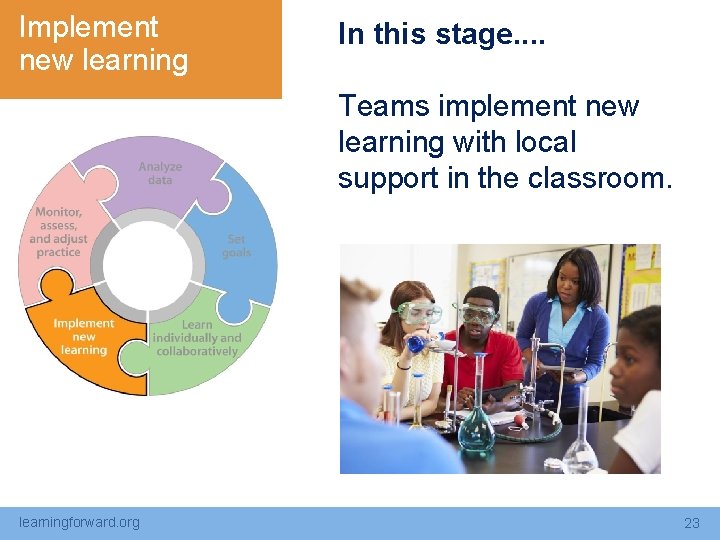
Implement new learning In this stage. . Teams implement new learning with local support in the classroom. learningforward. org 23
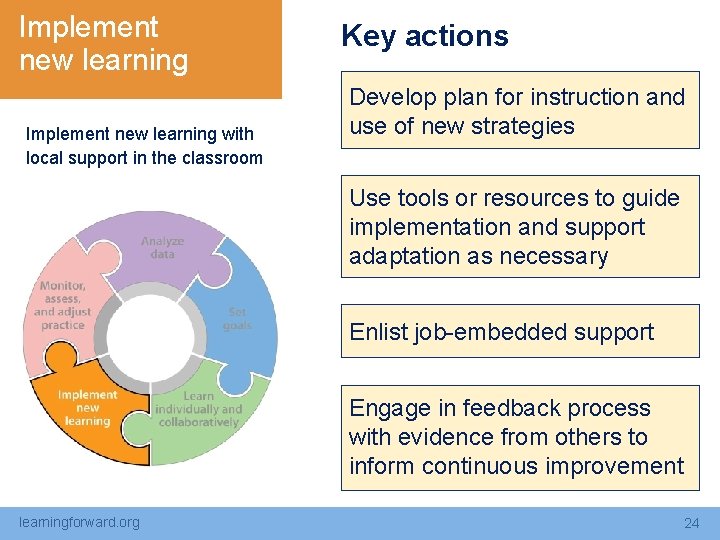
Implement new learning with local support in the classroom Key actions Develop plan for instruction and use of new strategies Use tools or resources to guide implementation and support adaptation as necessary Enlist job-embedded support Engage in feedback process with evidence from others to inform continuous improvement learningforward. org 24
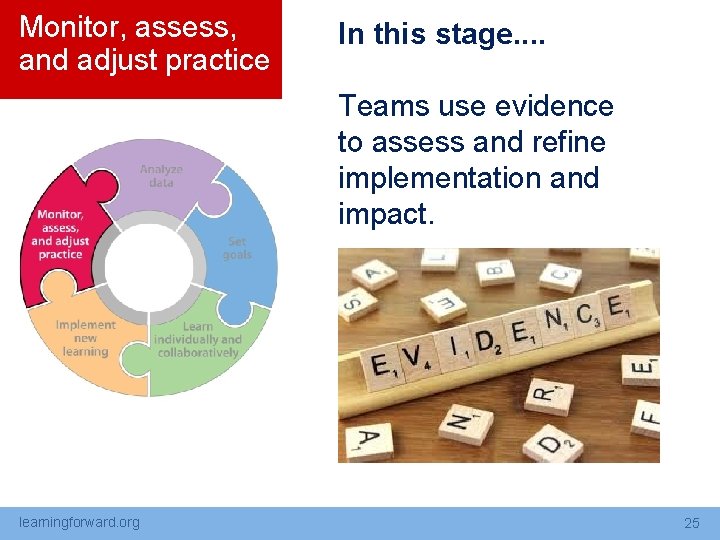
Monitor, assess, and adjust practice In this stage. . Teams use evidence to assess and refine implementation and impact. learningforward. org 25
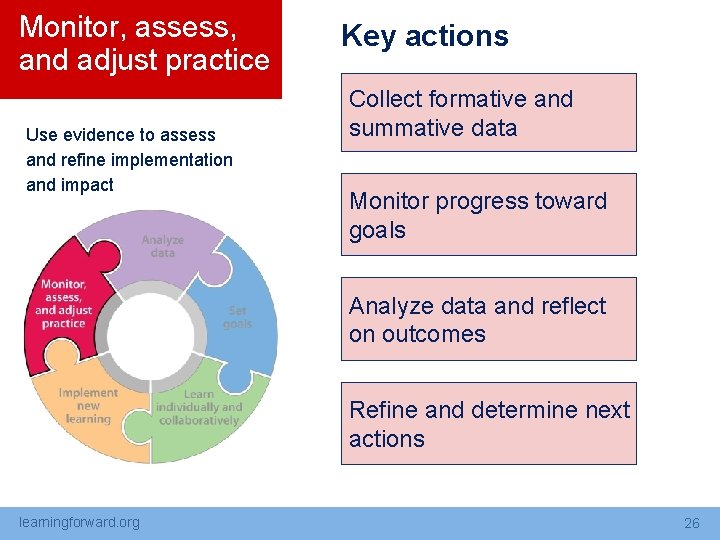
Monitor, assess, and adjust practice Use evidence to assess and refine implementation and impact Key actions Collect formative and summative data Monitor progress toward goals Analyze data and reflect on outcomes Refine and determine next actions learningforward. org 26
Conditions for successful implementation • Vision and leadership • Time • Alignment and accountability • Clarity of team goals • Facilitation • Collaboration skills • Commitment to collective responsibility learningforward. org 27
Call to Action #1: Be intentional about collaboration and problem solving with colleagues #2: Take the lead #3: Build and strengthen learning teams learningforward. org 28
- Slides: 28