
Become An Intelligent Investor Fred Rockwell Phone 202

Become An Intelligent Investor Fred Rockwell Phone: 202 -256 -9707 E-mail: frockwell@tarsiercm. com
Introduction • Who am I • Who is in the audience • What will we be learning
What We Won’t Discuss • • Interest rates The economy Politics Apple
Investing Tips • Know what you own • Take a long-term view • Don’t get too attached
Owning Part Of A Business • Stockholders own a percentage of a business • What does that mean? • How to think like a business owner • Think about market trends in your business
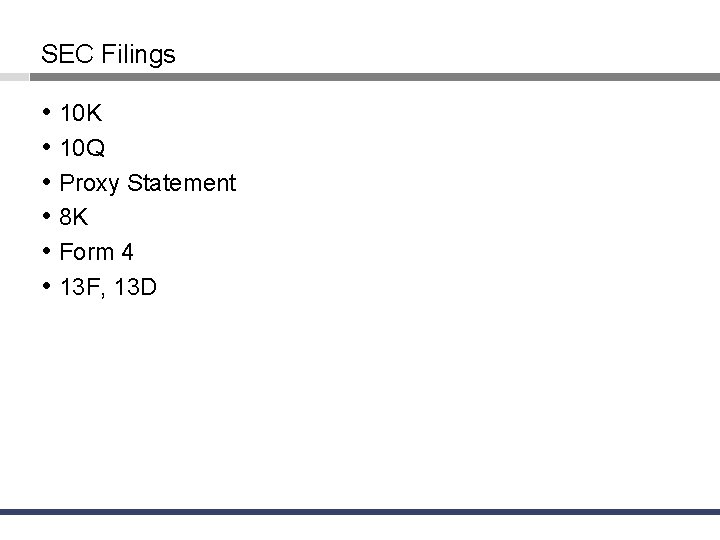
SEC Filings • • • 10 K 10 Q Proxy Statement 8 K Form 4 13 F, 13 D
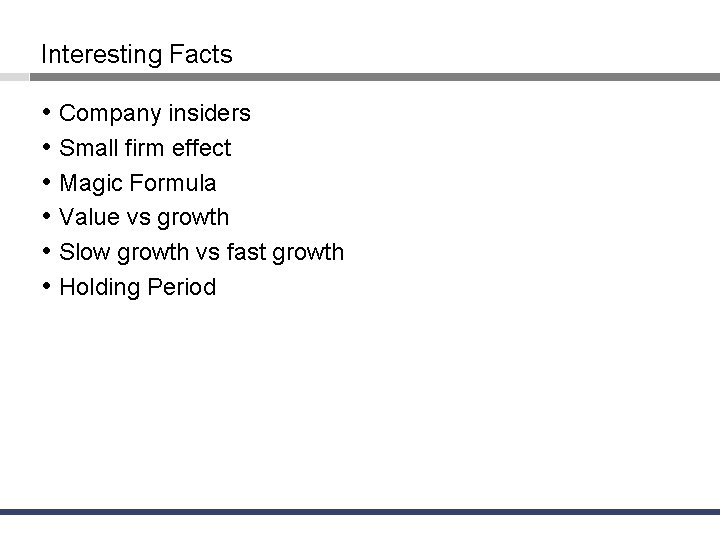
Interesting Facts • • • Company insiders Small firm effect Magic Formula Value vs growth Slow growth vs fast growth Holding Period
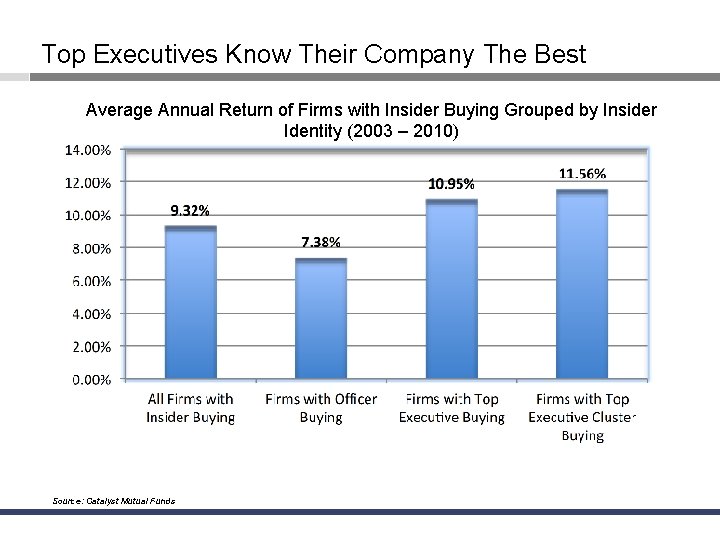
Top Executives Know Their Company The Best Average Annual Return of Firms with Insider Buying Grouped by Insider Identity (2003 – 2010) Source: Catalyst Mutual Funds
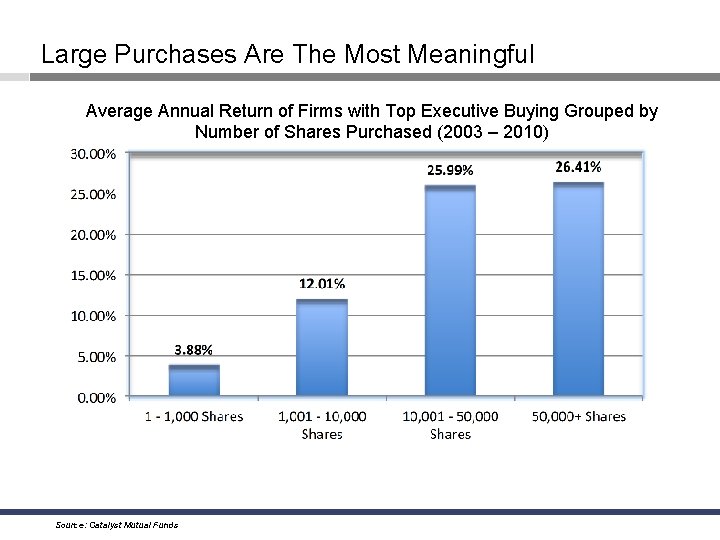
Large Purchases Are The Most Meaningful Average Annual Return of Firms with Top Executive Buying Grouped by Number of Shares Purchased (2003 – 2010) Source: Catalyst Mutual Funds
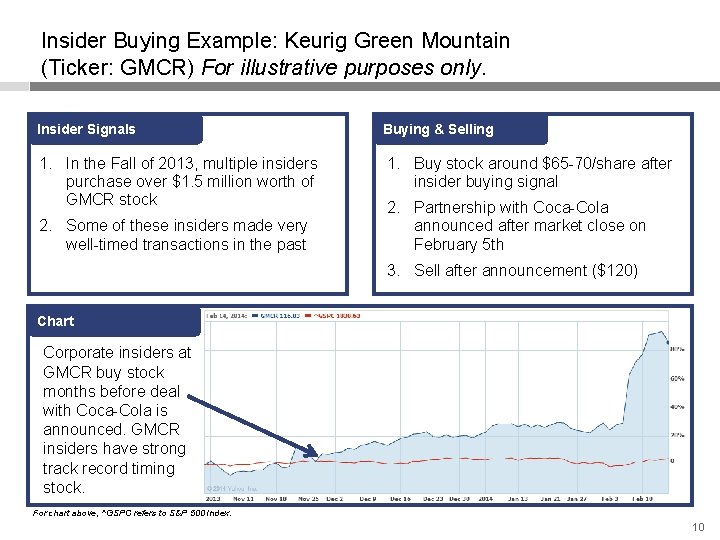
Insider Buying Example: Keurig Green Mountain (Ticker: GMCR) For illustrative purposes only. Insider Signals 1. In the Fall of 2013, multiple insiders purchase over $1. 5 million worth of GMCR stock 2. Some of these insiders made very well-timed transactions in the past Buying & Selling 1. Buy stock around $65 -70/share after insider buying signal 2. Partnership with Coca-Cola announced after market close on February 5 th 3. Sell after announcement ($120) Chart Corporate insiders at GMCR buy stock months before deal with Coca-Cola is announced. GMCR insiders have strong track record timing stock. For chart above, ^GSPC refers to S&P 500 Index. 10
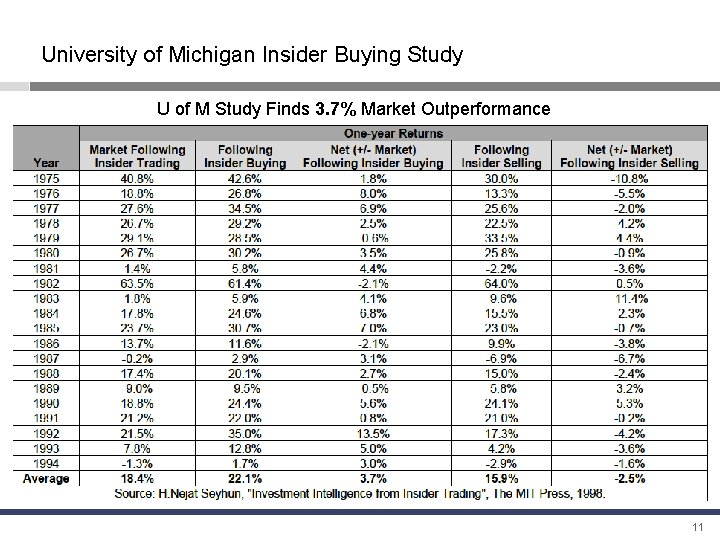
University of Michigan Insider Buying Study U of M Study Finds 3. 7% Market Outperformance 11
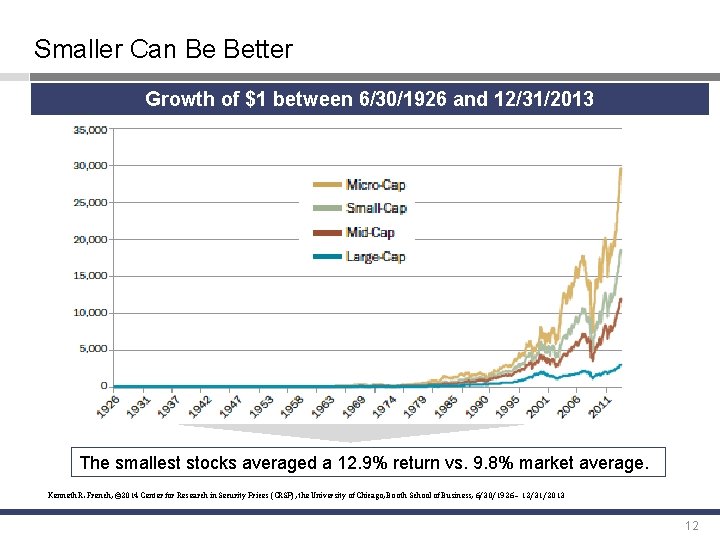
Smaller Can Be Better Growth of $1 between 6/30/1926 and 12/31/2013 The smallest stocks averaged a 12. 9% return vs. 9. 8% market average. Kenneth R. French, © 2014 Center for Research in Security Prices (CRSP), the University of Chicago, Booth School of Business, 6/30/1926 – 12/31/2013 12
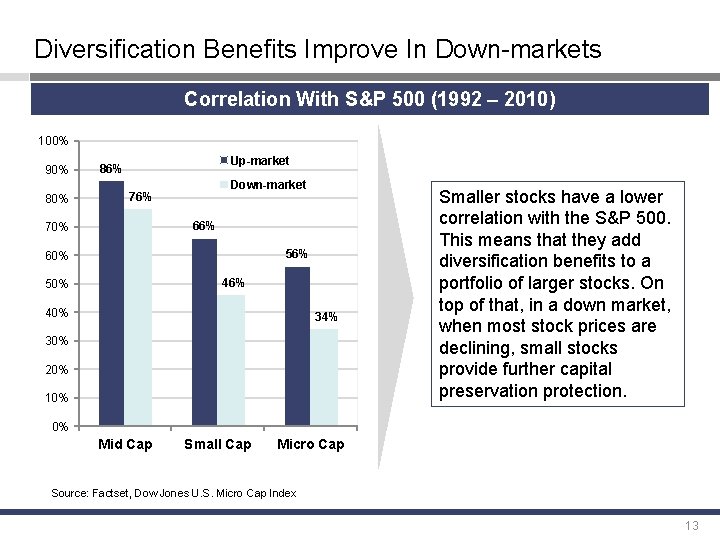
Diversification Benefits Improve In Down-markets Correlation With S&P 500 (1992 – 2010) 100% 90% 80% Up-market 86% Down-market 76% 66% 70% 56% 60% 46% 50% 40% 34% 30% 20% 10% Smaller stocks have a lower correlation with the S&P 500. This means that they add diversification benefits to a portfolio of larger stocks. On top of that, in a down market, when most stock prices are declining, small stocks provide further capital preservation protection. 0% Mid Cap Small Cap Micro Cap Source: Factset, Dow Jones U. S. Micro Cap Index 13
Smaller Stocks Have Their Share of Risks • Volatility: Smaller stocks have larger price swings than larger stocks, which is why investors should be ready to buy and hold through a full market cycle. In a portfolio that includes larger stocks, smaller stocks actually decrease overall volatility. • Liquidity: Smaller stocks trade less frequently and in smaller volume. That being said, a study by Roger Ibbotson revealed an average annual return premium of 5. 34% for the lowest liquidity quartile of the 3, 500 largest US companies stocks over the highest liquidity quartile of the same stocks, from 1972 to 2011. * • Fraud: Investors most perform thorough due diligence in order to avoid pumpand-dumps and companies with no business models in this space. Liquidity as an Investment Style, Roger Ibbotson, Financial Analysts Journal Volume 69 Number 3 © 2013 CFA Institute http: //www. ibbotson. com/US/documents/Methodology. Documents/Research. Papers/Liquidity. As. An. Investment. Style. pdf 14
Magic Formula for Investing Joel Greenblatt: • Ivy League professor • Hedge Fund Manager • Author The Formula: • Beats the market 96% of the time • Has averaged +30% returns 15
Magic Formula for Investing 1. Establish a minimum market capitalization. 2. Exclude utility and financial stocks. 3. Exclude foreign companies (American Depositary Receipts). 4. Determine company's earnings yield = EBIT / enterprise value. 5. Determine company's return on capital = EBIT / (net fixed assets + working capital). 6. Rank all companies above chosen market capitalization by highest earnings yield and highest return on capital (ranked as percentages). 7. Invest in 20– 30 highest ranked companies, accumulating 2– 3 positions per month over a 12 -month period. 8. Re-balance portfolio once per year, selling losers one week before the year-mark and winners one week after the year mark. 9. Continue over a long-term (5– 10+ year) period. 16
- Slides: 16