
BECBCS crossover in the exciton gas Monique Combescot
BEC-BCS cross-over in the exciton gas Monique Combescot Institut des Nano. Sciences de Paris, CNRS Université Pierre et Marie Curie Taipei march 2012 1
1) Very dilute limit 2) Under a density increase 3) Optical traps for dark excitons 2
Part 1 very dilute limit 3
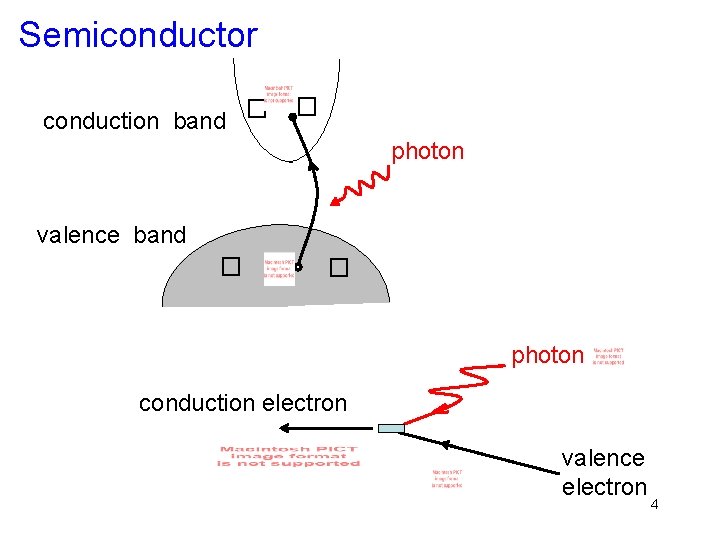
Semiconductor � � conduction band photon valence band � � photon conduction electron valence electron 4
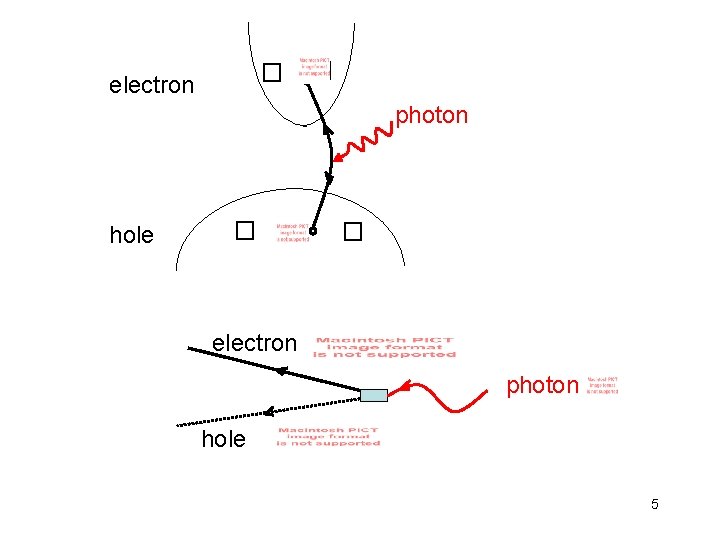
� � electron photon hole � � electron photon hole 5
hole: full valence band minus one electron formidable reduction of the many-body problem ! 6
valence electron hole 7
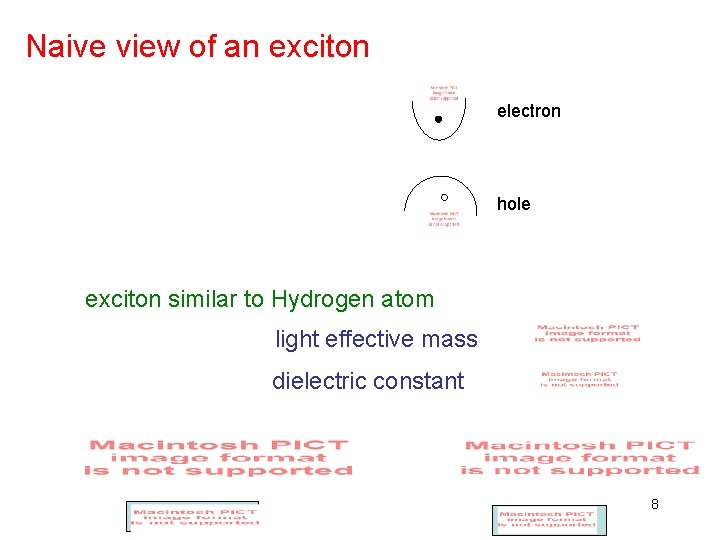
Naive view of an exciton electron hole exciton similar to Hydrogen atom light effective mass dielectric constant 8
The true story is far more complex 9
Coulomb interaction in a periodic lattice Bloch states 10
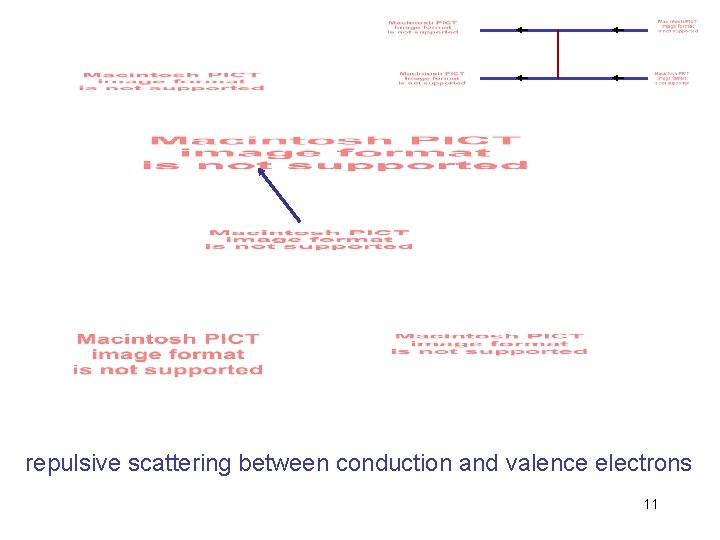
repulsive scattering between conduction and valence electrons 11
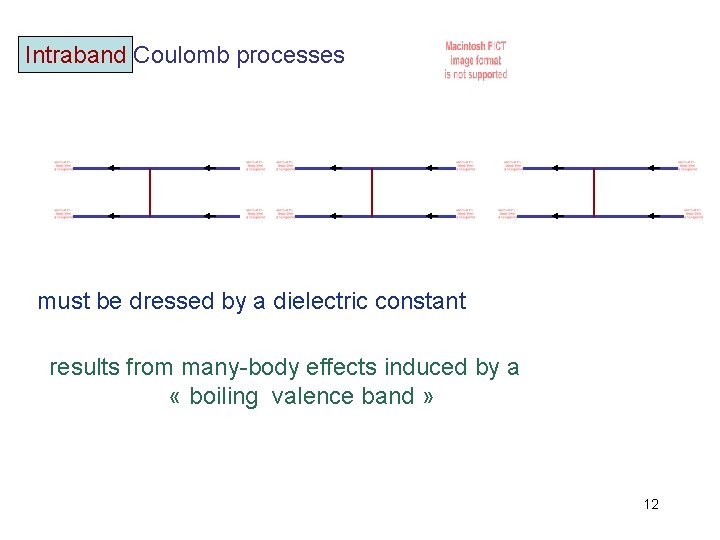
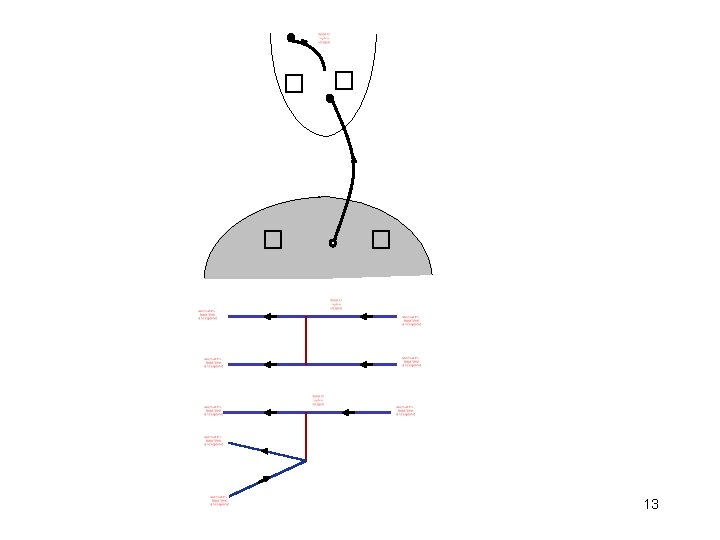
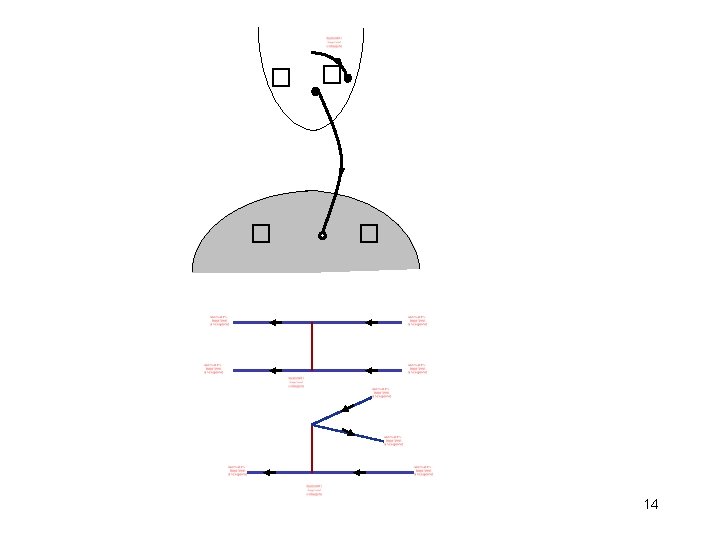
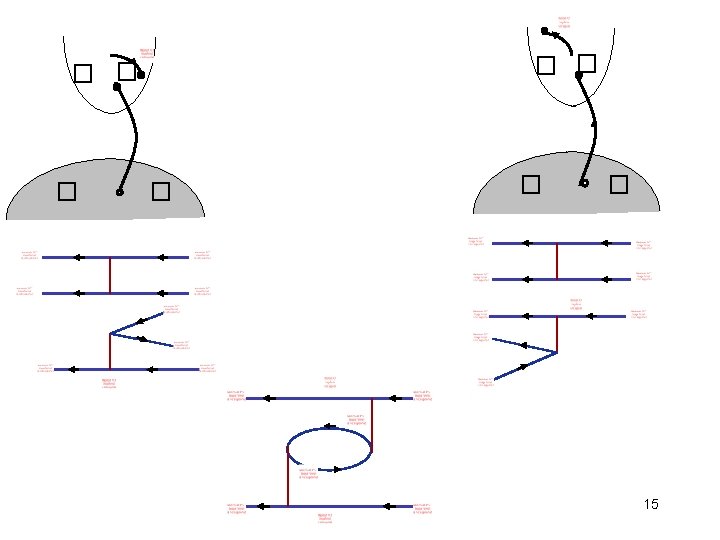
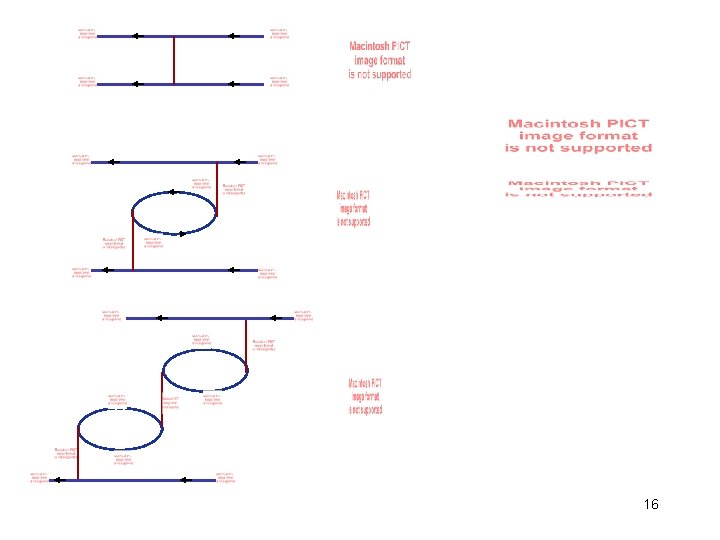
Intraband Coulomb processes must be dressed by a dielectric constant results from many-body effects induced by a « boiling valence band » 12
16
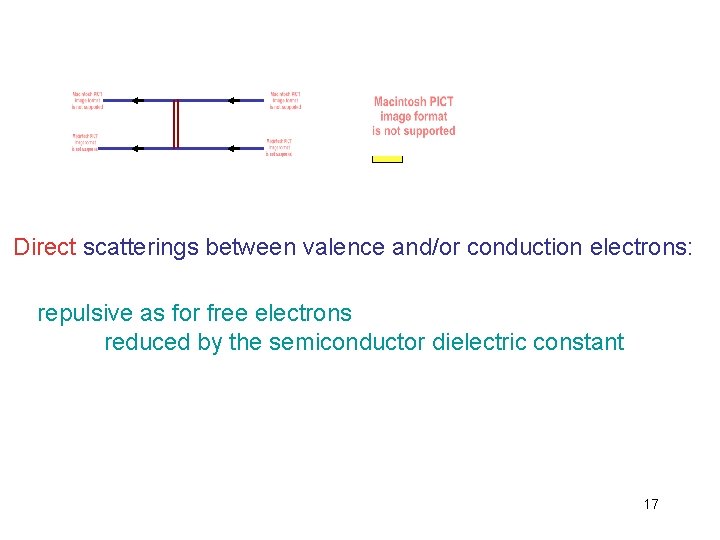
Direct scatterings between valence and/or conduction electrons: repulsive as for free electrons reduced by the semiconductor dielectric constant 17
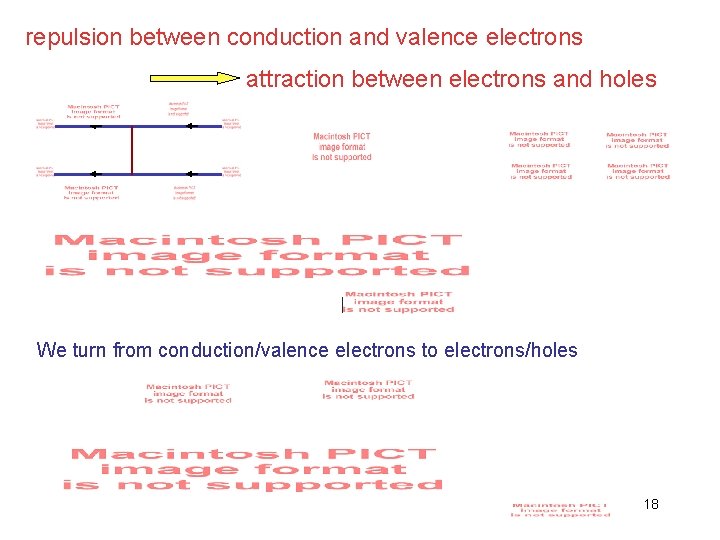
repulsion between conduction and valence electrons attraction between electrons and holes We turn from conduction/valence electrons to electrons/holes 18
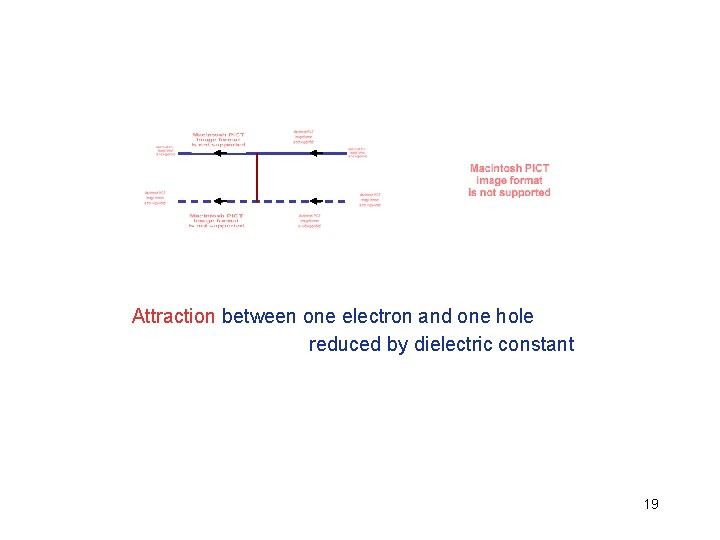
Attraction between one electron and one hole reduced by dielectric constant 19
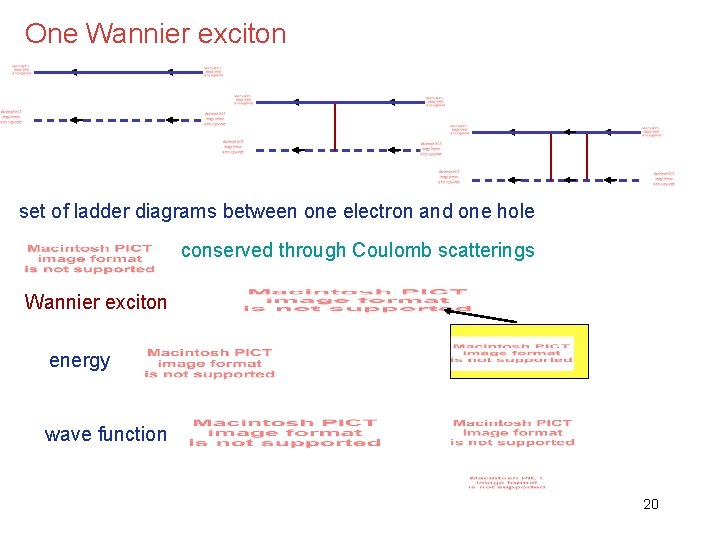
One Wannier exciton set of ladder diagrams between one electron and one hole conserved through Coulomb scatterings Wannier exciton energy wave function 20
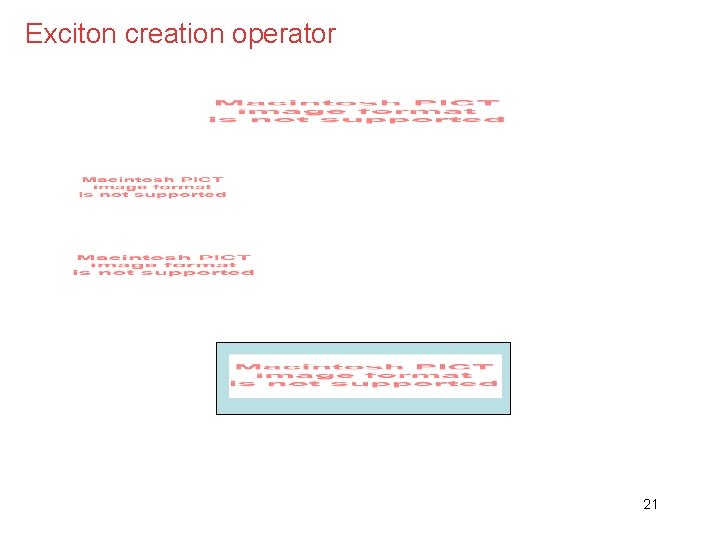
Exciton creation operator 21
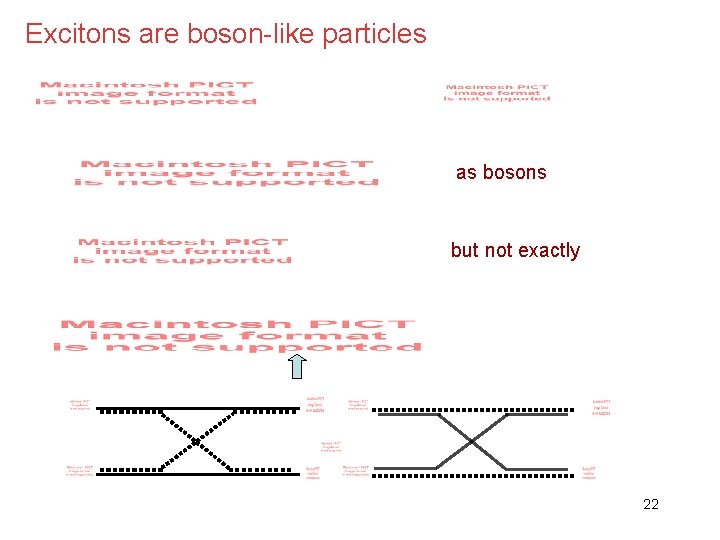
Excitons are boson-like particles as bosons but not exactly 22
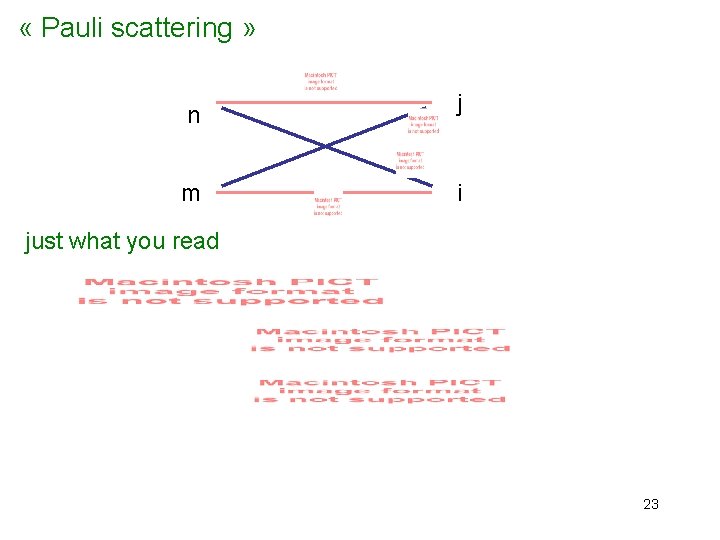
« Pauli scattering » n m j i just what you read 23
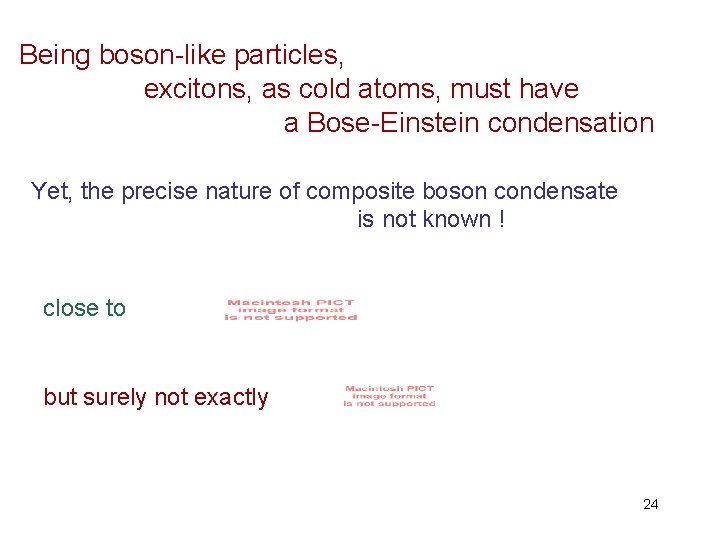
Being boson-like particles, excitons, as cold atoms, must have a Bose-Einstein condensation Yet, the precise nature of composite boson condensate is not known ! close to but surely not exactly 24
Exciton BEC searched for decades …. but never evidenced ! Reason: the condensate must be dark … and search has been done through photoluminescence experiments 25
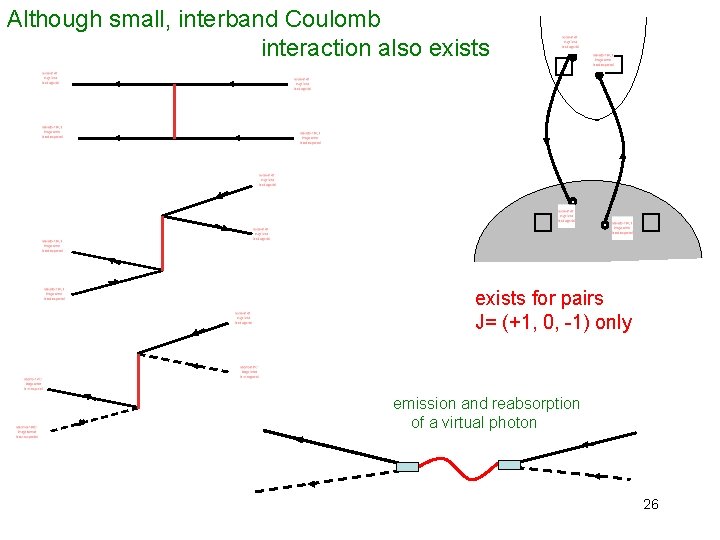
� � Although small, interband Coulomb interaction also exists � � exists for pairs J= (+1, 0, -1) only emission and reabsorption of a virtual photon 26
conduction band made of S atomic level valence band made of P atomic level 27
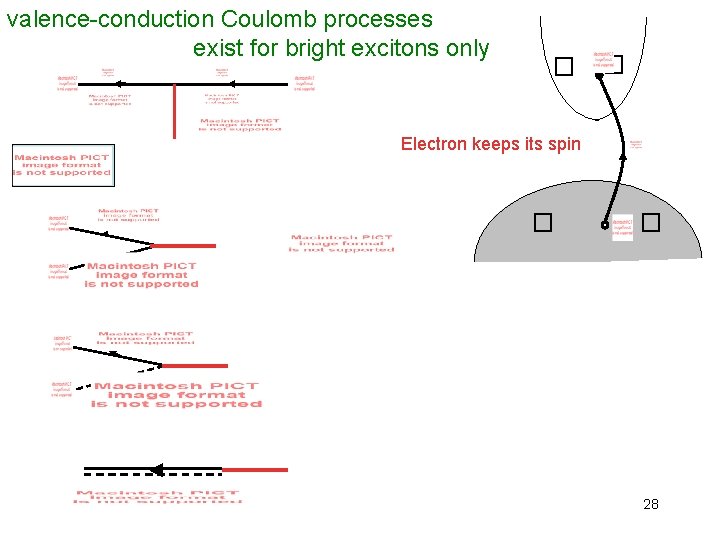
� � valence-conduction Coulomb processes exist for bright excitons only Electron keeps its spin � � 28
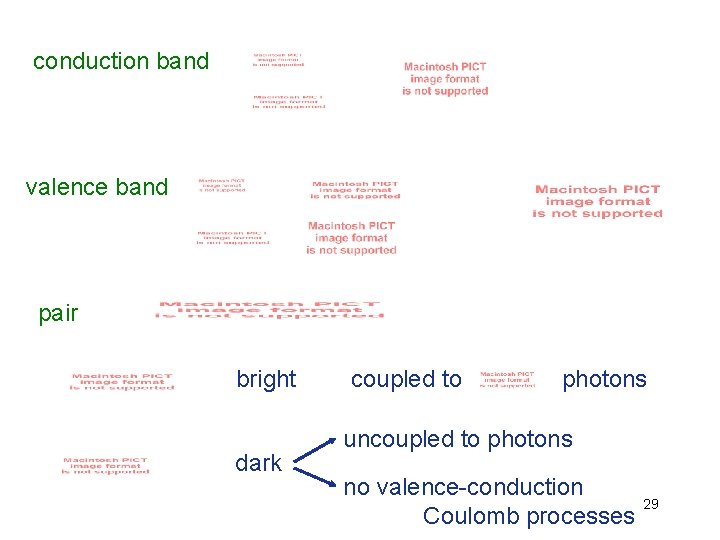
conduction band valence band pair bright dark coupled to photons uncoupled to photons no valence-conduction Coulomb processes 29
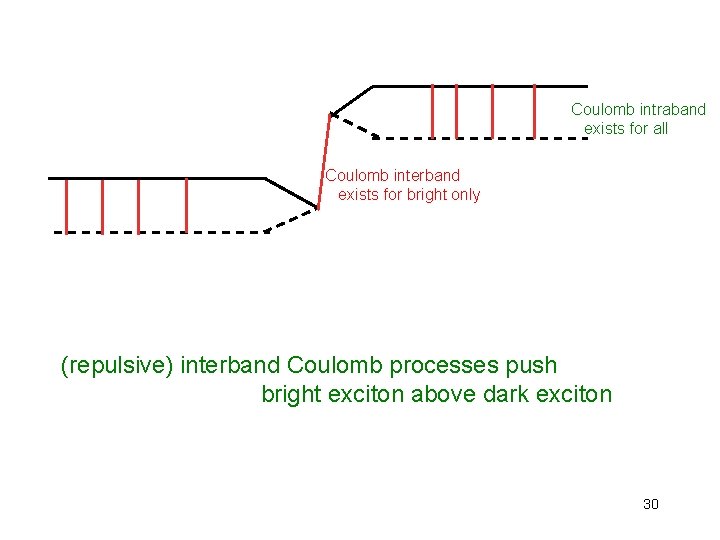
Coulomb intraband exists for all Coulomb interband exists for bright only (repulsive) interband Coulomb processes push bright exciton above dark exciton 30
Dark excitons have the lowest energy just because they are dark ! Exciton BEC must be dark … No hope to see it (directly) with photoluminescence experiments Better to know where condensation takes place ! 31
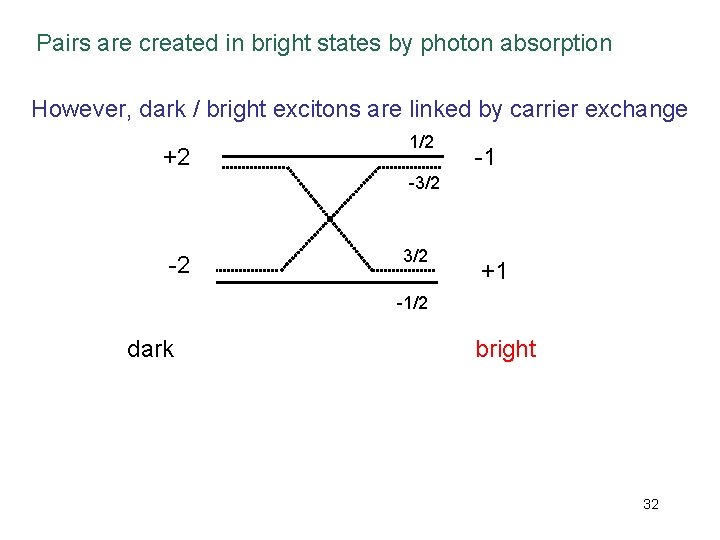
Pairs are created in bright states by photon absorption However, dark / bright excitons are linked by carrier exchange +2 1/2 -1 -3/2 -2 3/2 +1 -1/2 dark bright 32
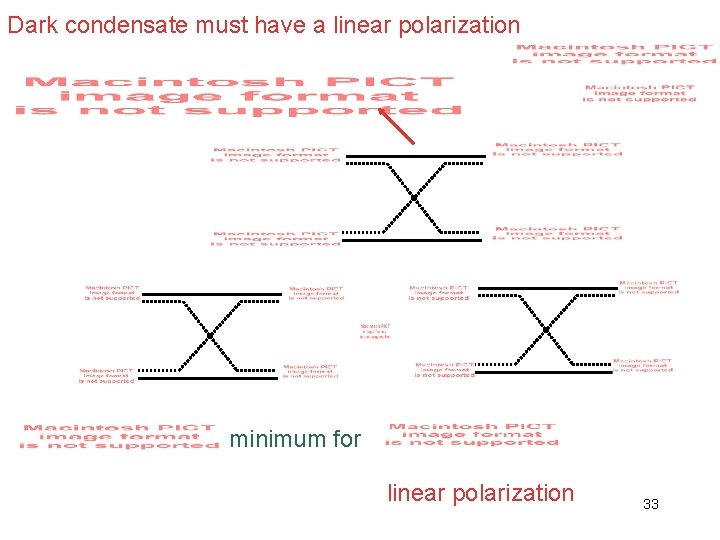
Dark condensate must have a linear polarization minimum for linear polarization 33
So, in the dilute limit, electrons and holes form excitons. At low T, we must have a dark exciton Bose-Einstein condensate 34
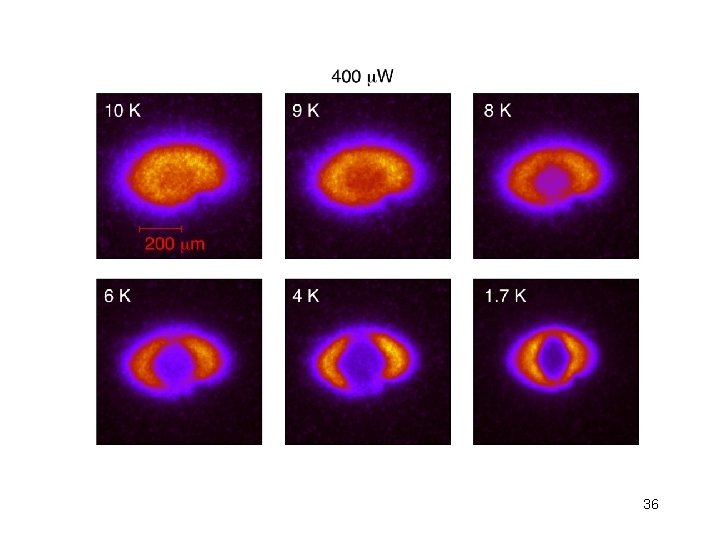
How can we see a dark condensate ? parabolic trap dark lowest state lowest trap level we predict the appearance of a dark spot at the center of the trap when BEC takes place 35
36
Part 2 Under a density increase 37
(A) a bright component appears in the condensate 38
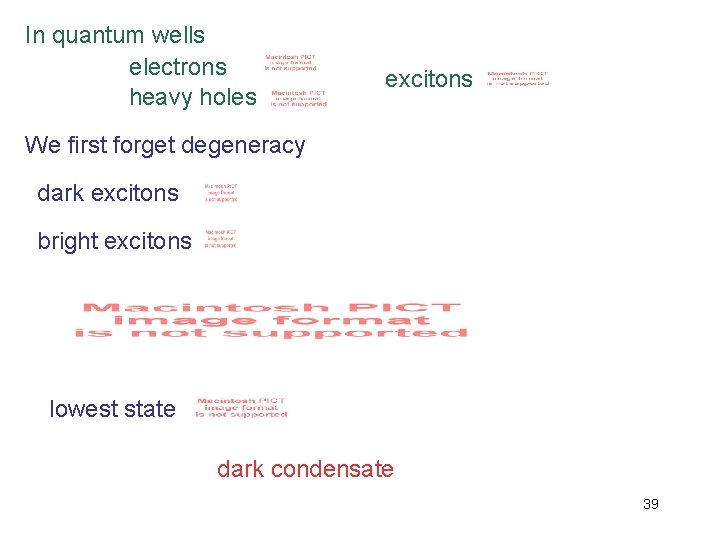
In quantum wells electrons heavy holes excitons We first forget degeneracy dark excitons bright excitons lowest state dark condensate 39
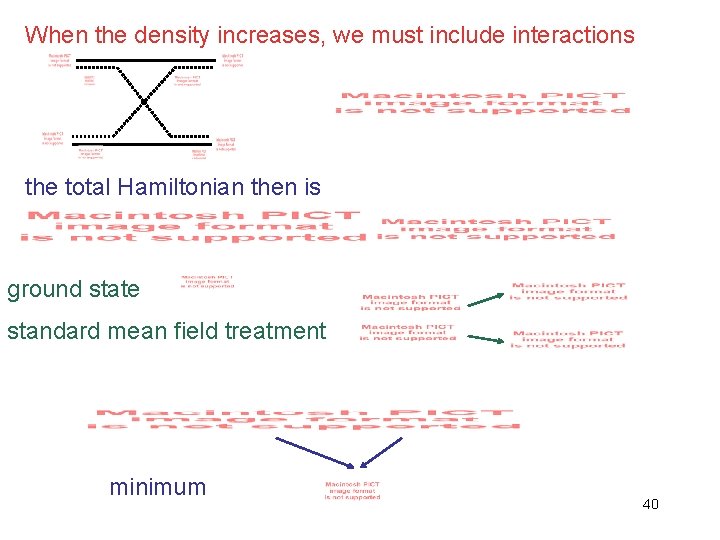
When the density increases, we must include interactions the total Hamiltonian then is ground state standard mean field treatment minimum 40
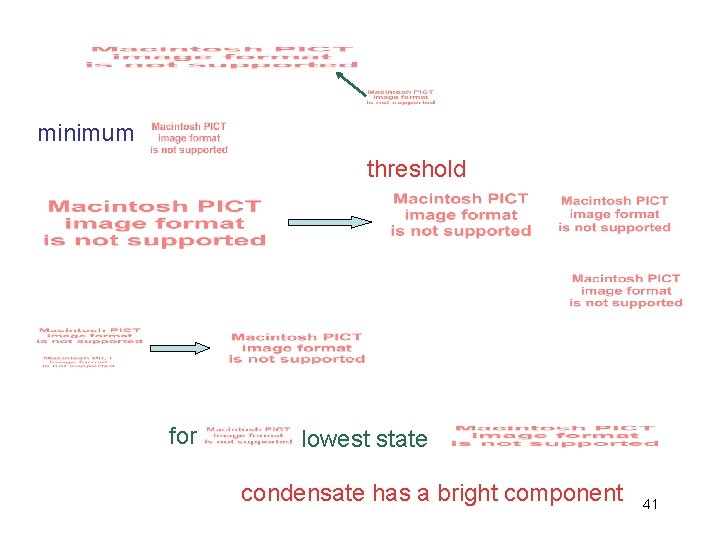
minimum threshold for lowest state condensate has a bright component 41
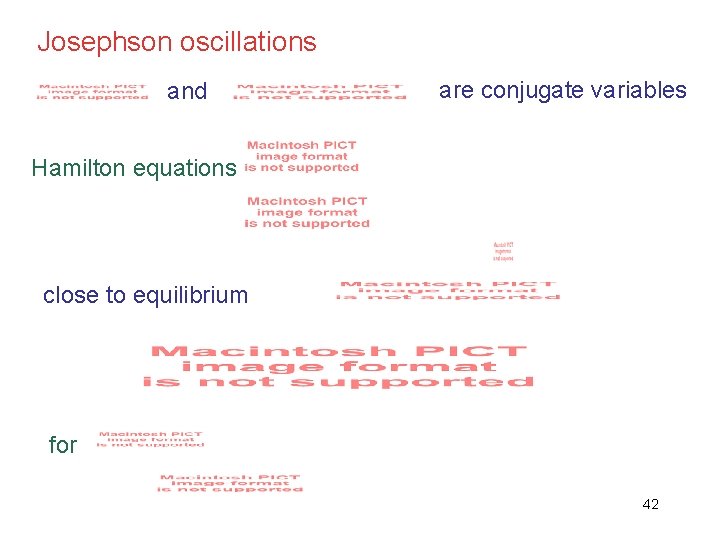
Josephson oscillations and are conjugate variables Hamilton equations close to equilibrium for 42
(B) a phase separation takes place between an exciton gas and an electron-hole plasma 43
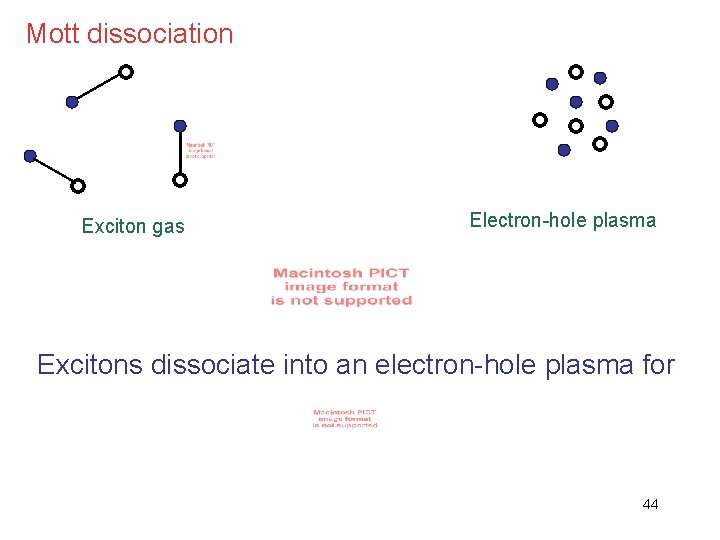
Mott dissociation Exciton gas Electron-hole plasma Excitons dissociate into an electron-hole plasma for 44
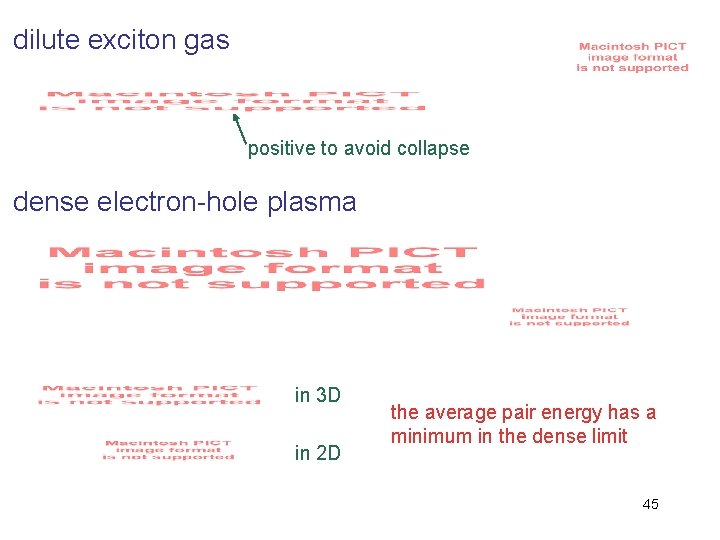
dilute exciton gas positive to avoid collapse dense electron-hole plasma in 3 D in 2 D the average pair energy has a minimum in the dense limit 45
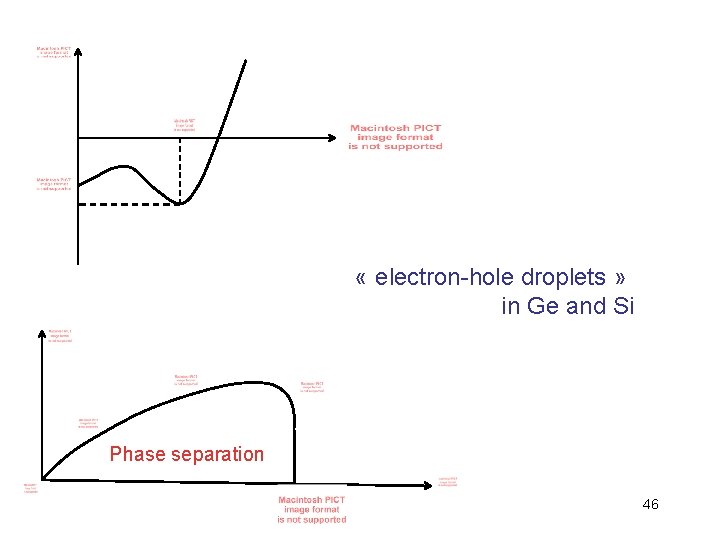
« electron-hole droplets » in Ge and Si Phase separation 46
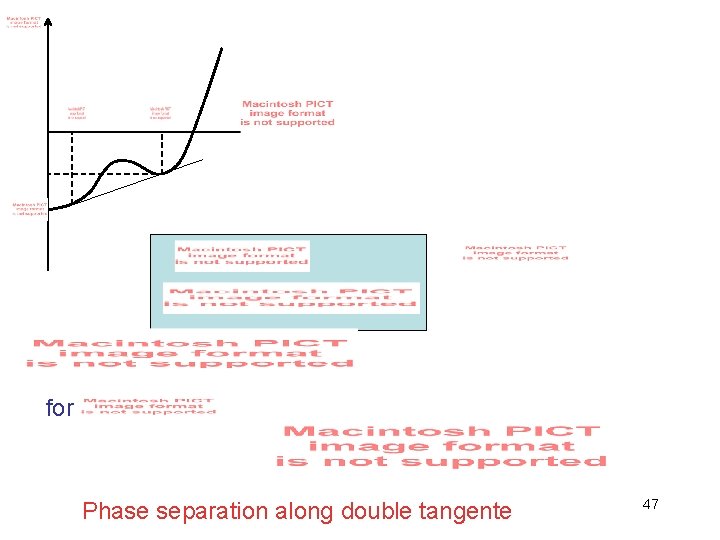
for Phase separation along double tangente 47
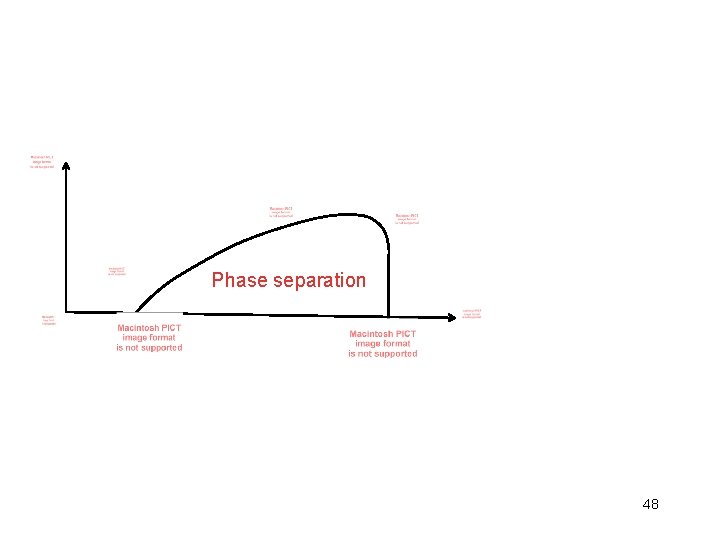
Phase separation 48
(C) a BCS condensation occurs in the dense electron-hole plasma 49
Even if strongly screened by Fermi seas of electron-hole free carriers electrons and holes still attract each other Formation of « electron-hole Cooper pairs » neutral, so not superconducting but still superfluid 50
Again, dark pairs have the lowest energy exchange coupling must however bring a bright component in the condensate since it is dense Degeneracy between the two dark and the two bright pairs must lead to a linear polarisation as optimum state 51
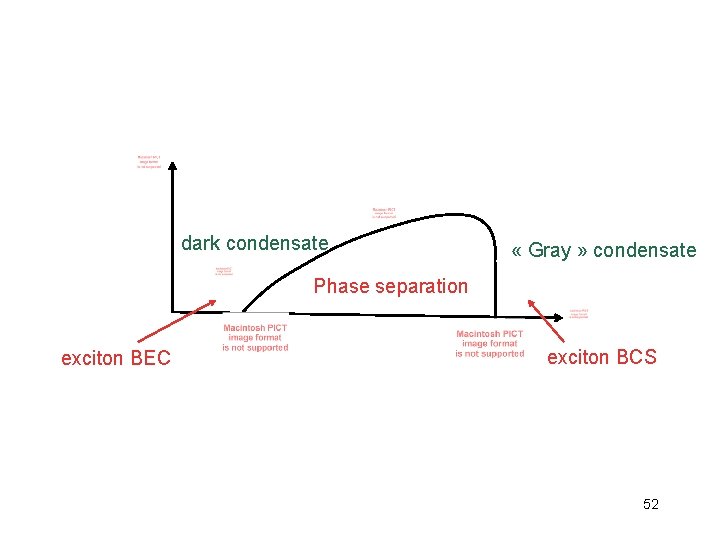
dark condensate « Gray » condensate Phase separation exciton BEC exciton BCS 52
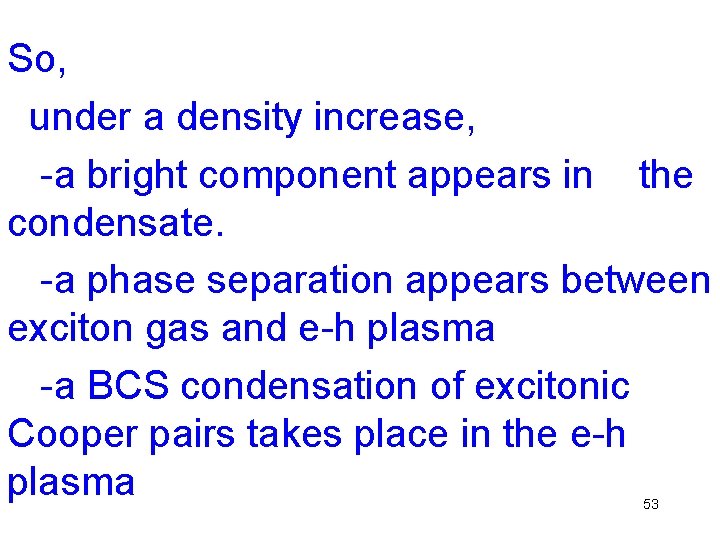
So, under a density increase, -a bright component appears in the condensate. -a phase separation appears between exciton gas and e-h plasma -a BCS condensation of excitonic Cooper pairs takes place in the e-h plasma 53
Part 3 Optical traps for dark excitons 54
Exciton-photon interaction 55
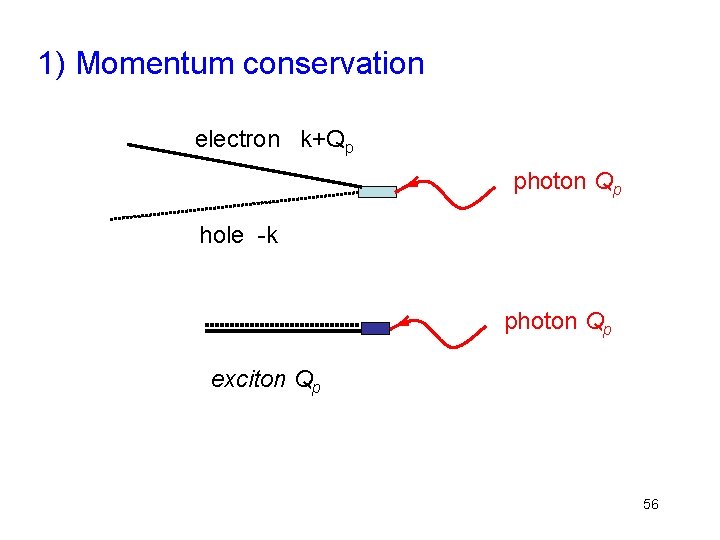
1) Momentum conservation electron k+Qp photon Qp hole -k photon Qp exciton Qp 56
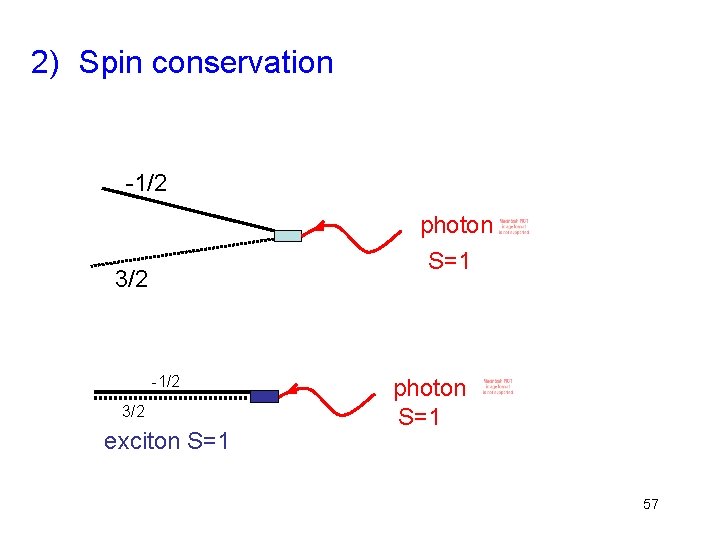
2) Spin conservation -1/2 photon S=1 3/2 -1/2 3/2 exciton S=1 photon S=1 57
Optical traps with standing waves 58
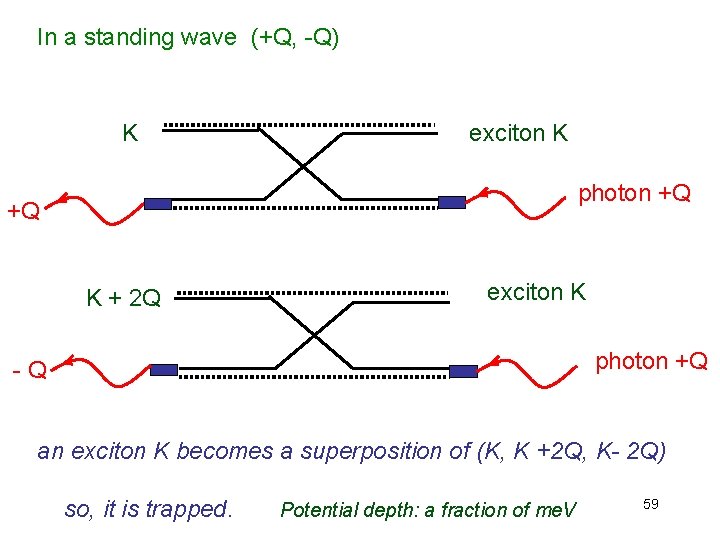
In a standing wave (+Q, -Q) K exciton K photon +Q +Q exciton K K + 2 Q photon +Q - Q an exciton K becomes a superposition of (K, K +2 Q, K- 2 Q) so, it is trapped. Potential depth: a fraction of me. V 59
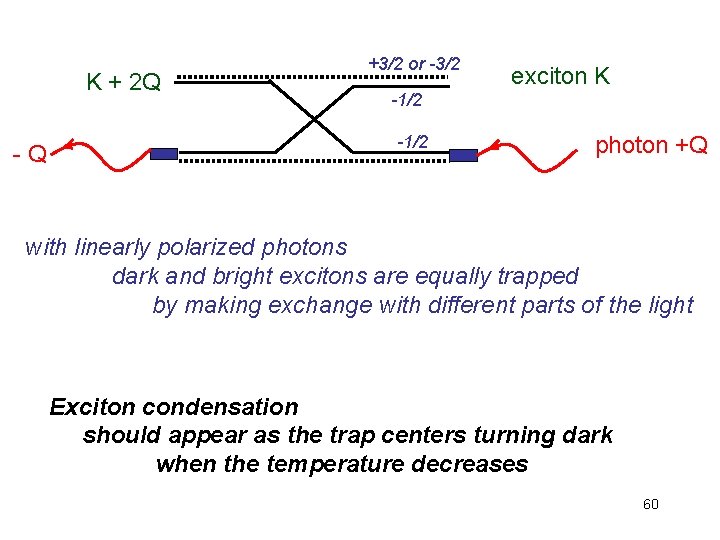
+3/2 or -3/2 K + 2 Q exciton K -1/2 - Q photon +Q with linearly polarized photons dark and bright excitons are equally trapped by making exchange with different parts of the light Exciton condensation should appear as the trap centers turning dark when the temperature decreases 60
Conclusion The electron-hole system is really fascinating ! 1) At low density, excitons are formed. They have a BEC condensation into a dark state with linear polarisation 2) Under a density increase, - a bright component appears in the condensate - a phase separation takes place with coexistence of an exiton gas and an electron-hole plasma - a BEC condensation of excitonic Cooper pairs takes place in the dense plasma 3) Dark excitons can be optically trapped by standing waves through carrier exchange with virtual exciton coupled to photon 61
References Bose-Einstein condensation of excitons: the key role of dark excitons Monique Combescot, Odile Betbeder-Matibet, Roland Combescot Phys. Rev. Lett. 99, 176403 (2007) Optical traps for dark excitons Monique Combescot, Michael Moore, Carlo Piermarocchi Phys. Rev. Lett. 106, 206404 (2011) « Gray » BCS condensate of excitons and internal Josephson oscillations Roland Combescot, Monique Combescot Arxiv 1202. 5976 62
- Slides: 62