
BEARINGS By Laurence Kwok Common Types 2 Types
BEARINGS By: Laurence Kwok
Common Types • 2 Types: – Linear – Rotary
6 Principles of Operation ØPlain Bearings ØRolling-Element Bearings ØJewel Bearings ØFluid Bearings ØMagnetic Bearings ØFlexure Bearings
Plain Bearings • Carries loads by sliding • Usually made of 2 parts • Commonly used
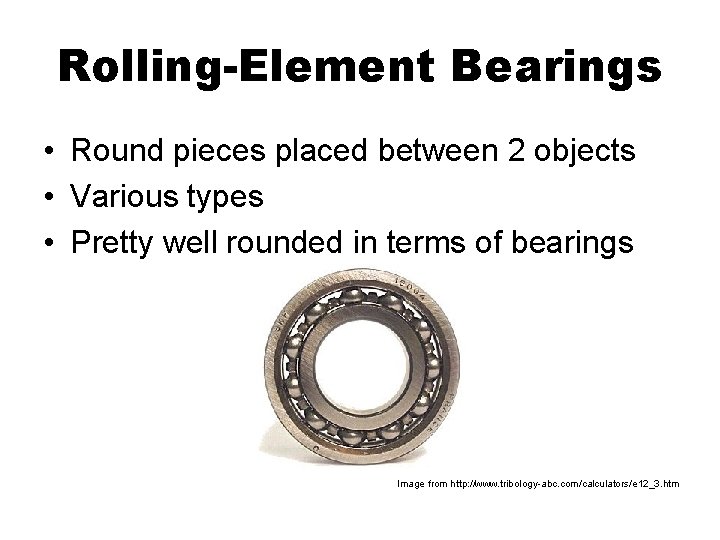
Rolling-Element Bearings • Round pieces placed between 2 objects • Various types • Pretty well rounded in terms of bearings Image from http: //www. tribology-abc. com/calculators/e 12_3. htm
Jewel Bearings • Rolls shaft into bearing, rather than sliding • Used mechanical watches • Used in sensitive measuring tools
Fluid Bearings • Supports load on thin later of gas or liquid • Cheaper than other bearing types • Lasts very long
Magnetic Bearings • Supports loads using magnetic levitation • Supports objects in vacuum environment • Used in some trains for magnetic levitation • High cost, low accuracy, large size
Flexure Bearings • Made of 1 part, connecting 2 others • Simple • No specialized equipment required • Relies on repeated flexing
Sources: • http: //www. bearings. machinedesign. com/ • http: //en. wikipedia. org/wiki/Bearing_%28 m echanical%29 • http: //science. howstuffworks. com/bearing. htm • http: //www. efunda. com/Design. Standards/b earings/bearings_introduction. cfm
- Slides: 10