
Beams and Frames beam theory can be used
Beams and Frames
beam theory can be used to solve simple beams u complex beams with many cross section changes are solvable but lengthy u many 2 -d and 3 -d frame structures are better modeled by beam theory u

One Dimensional Problems The geometry of the problem is three dimensional, but the variation of variable is one dimensional Variable can be scalar field like temperature, or vector field like displacement. For dynamic loading, the variable can be time dependent
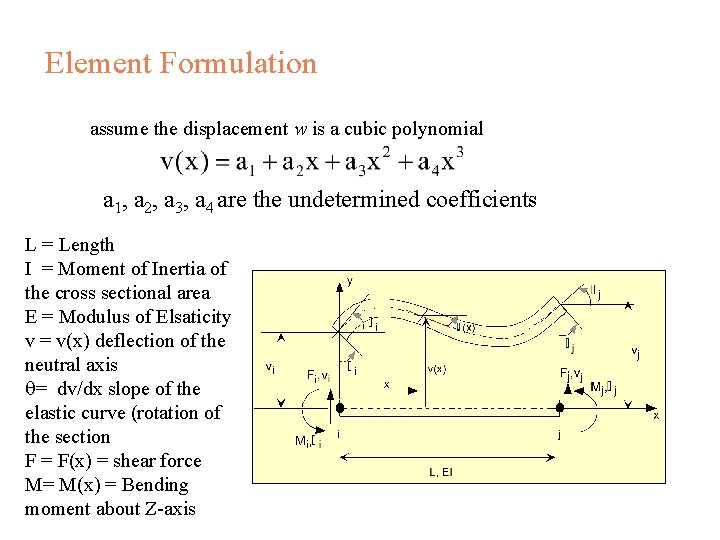
Element Formulation – assume the displacement w is a cubic polynomial in a 1, a 2, a 3, a 4 are the undetermined coefficients L = Length I = Moment of Inertia of the cross sectional area E = Modulus of Elsaticity v = v(x) deflection of the neutral axis q= dv/dx slope of the elastic curve (rotation of the section F = F(x) = shear force M= M(x) = Bending moment about Z-axis

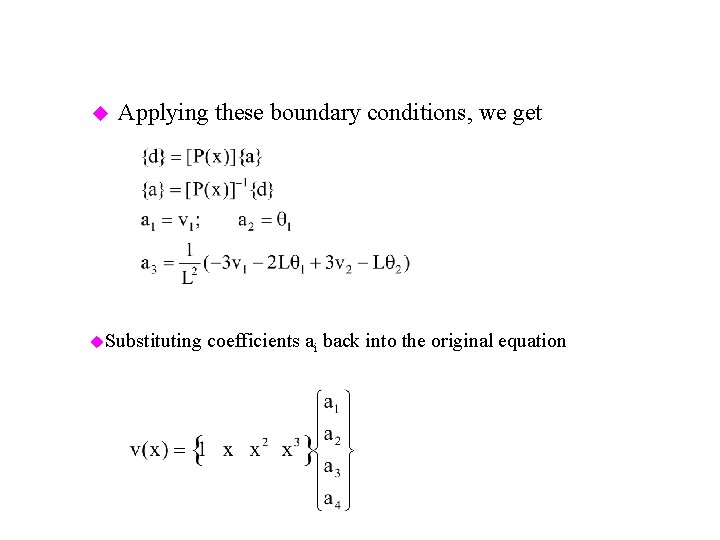
u Applying these boundary conditions, we get u. Substituting coefficients ai back into the original equation for v(x) and rearranging terms gives
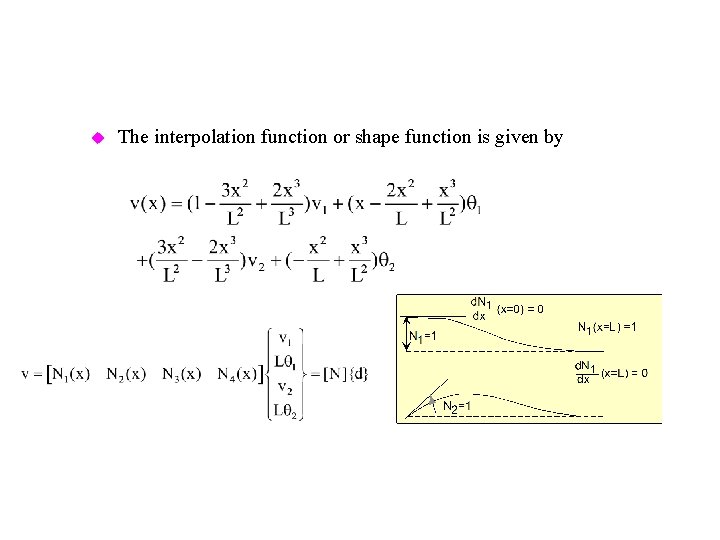
u The interpolation function or shape function is given by
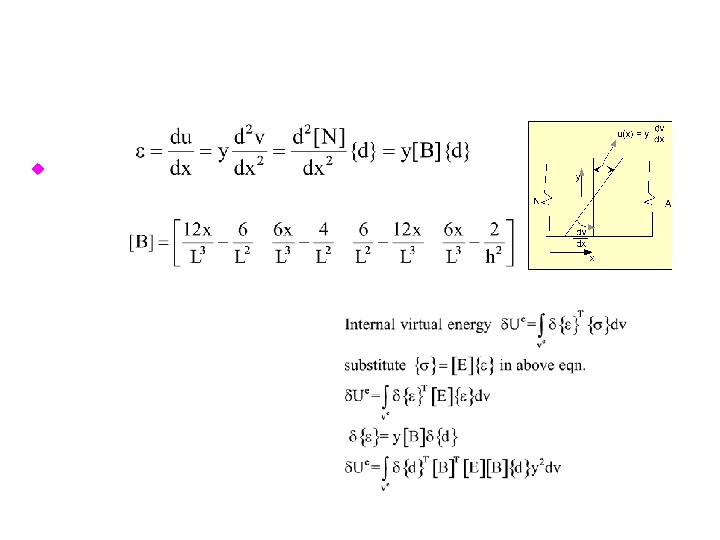
strain for a beam in bending is defined by the curvature, so u Hence
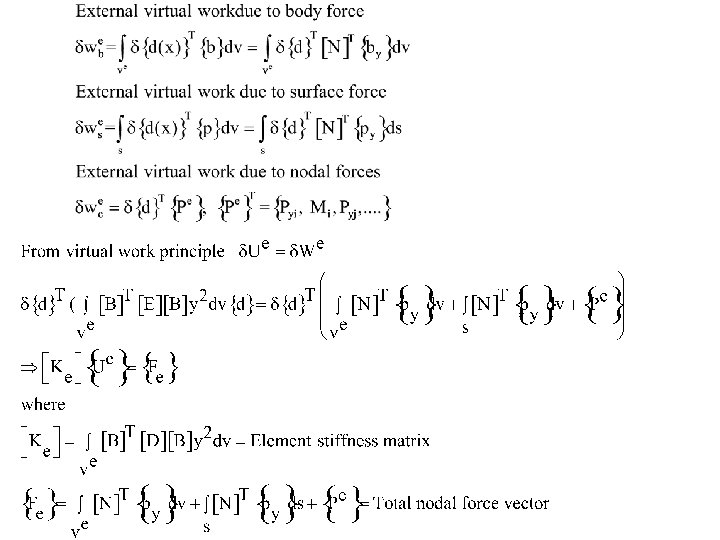
![uthe stiffness matrix [k] is defined To compute equivalent nodal force vector for the](http://slidetodoc.com/presentation_image_h/e5e2a3c61c9b2965c412dd6579ab6aa8/image-10.jpg "uthe stiffness matrix [k] is defined To compute equivalent nodal force vector for the")
uthe stiffness matrix [k] is defined To compute equivalent nodal force vector for the loading shown
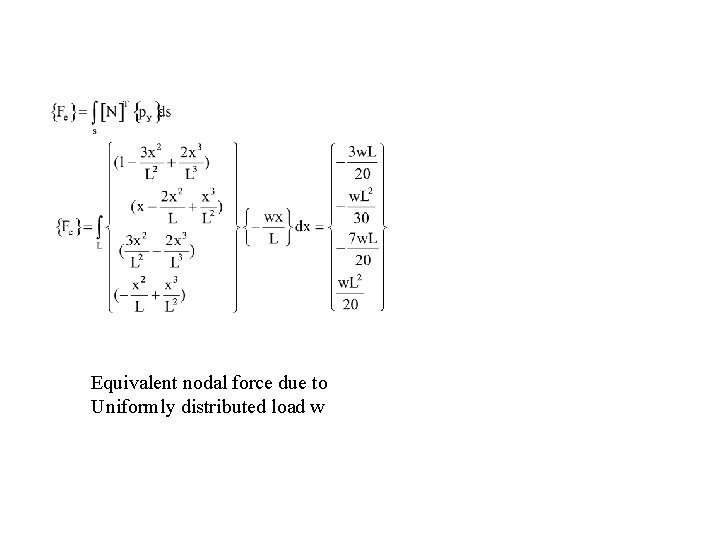
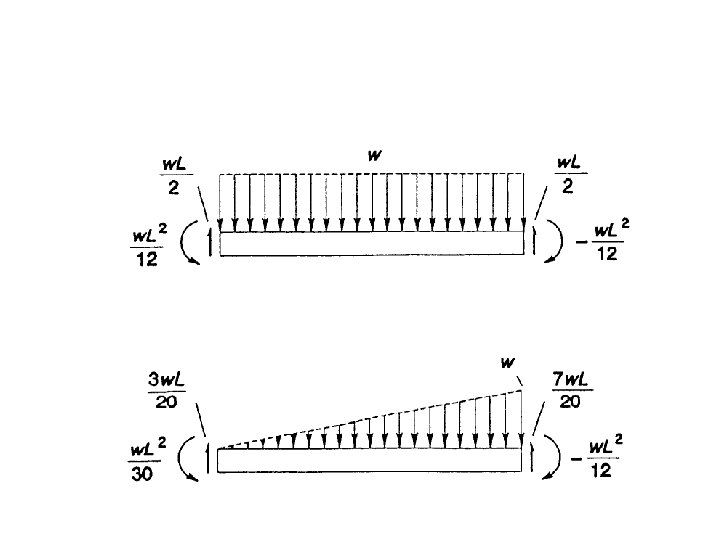
Equivalent nodal force due to Uniformly distributed load w
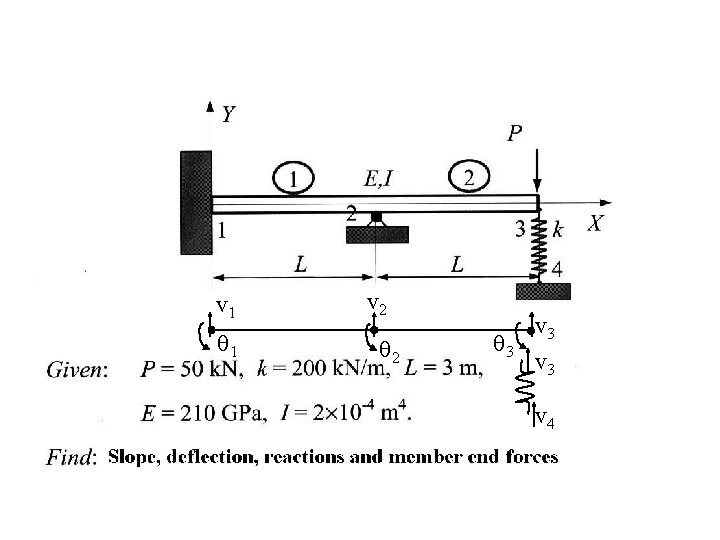
v 1 q 1 v 2 q 3 v 3 v 4
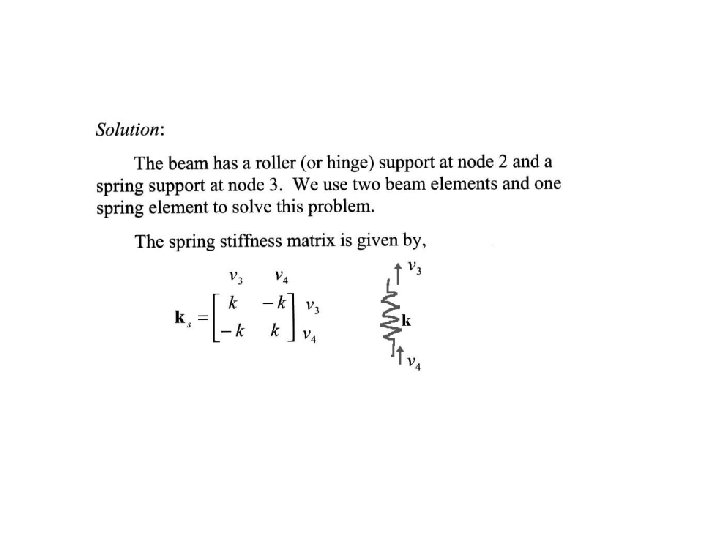
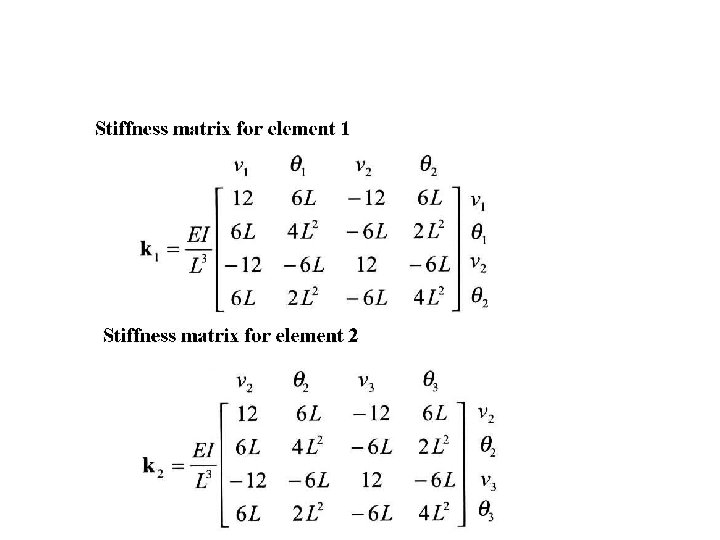
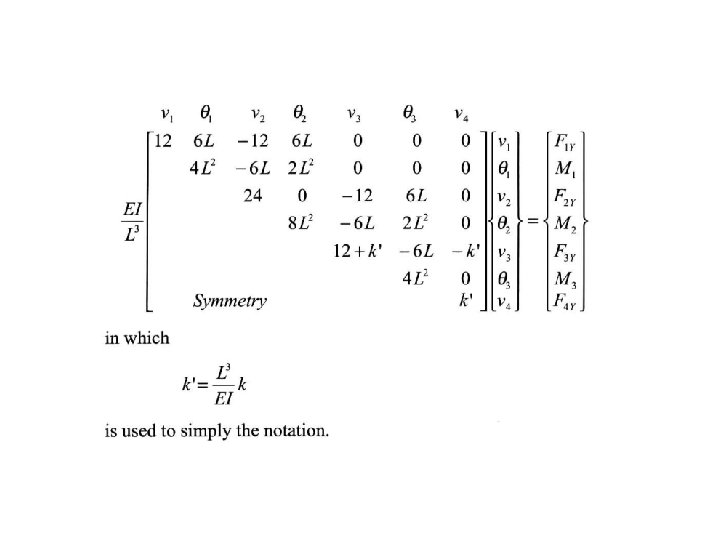
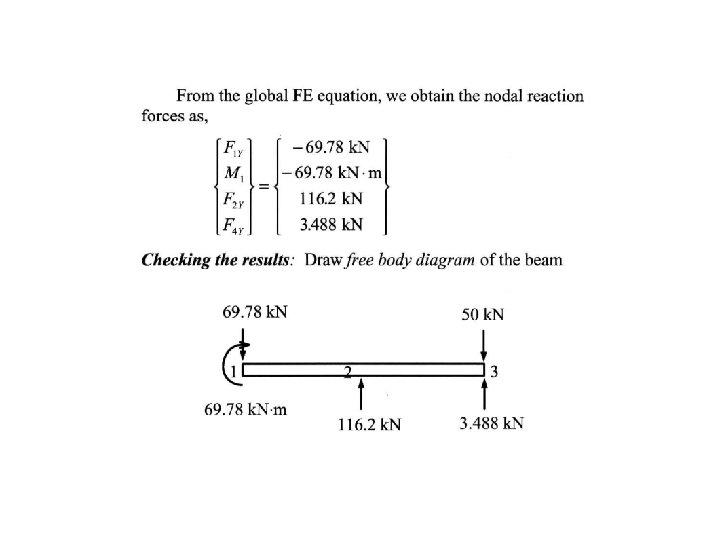
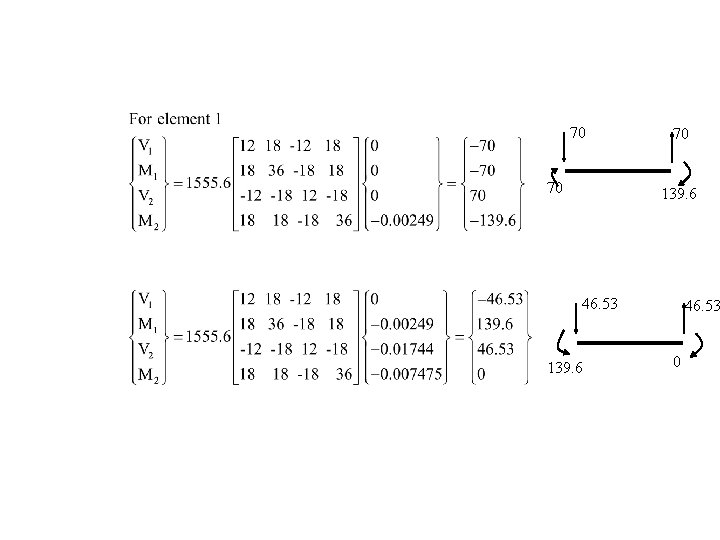
Member end forces 70 70 70 139. 6 46. 53 0
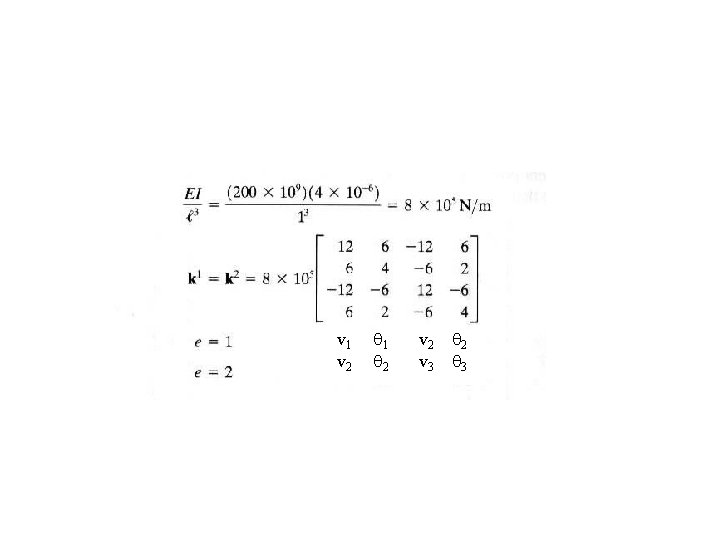
v 1 q 1 v 2 v 3 q 2 v 1 v 2 q 1 q 2 v 3 q 2 q 3
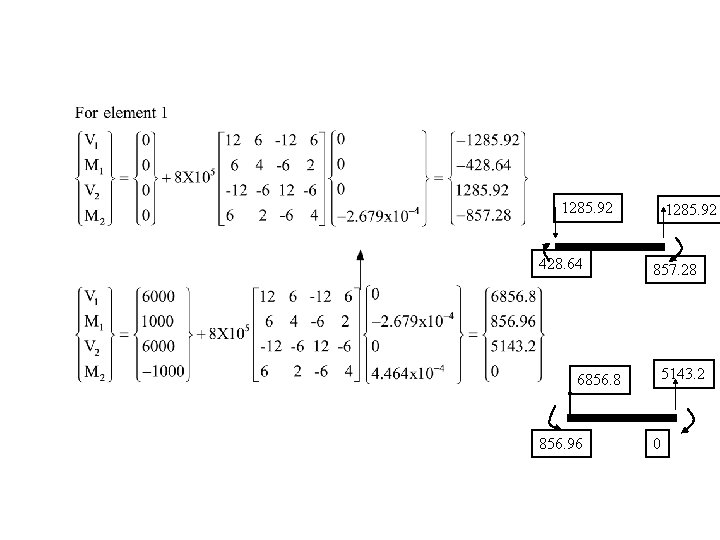
1285. 92 428. 64 1285. 92 857. 28 5143. 2 6856. 8 856. 96 0
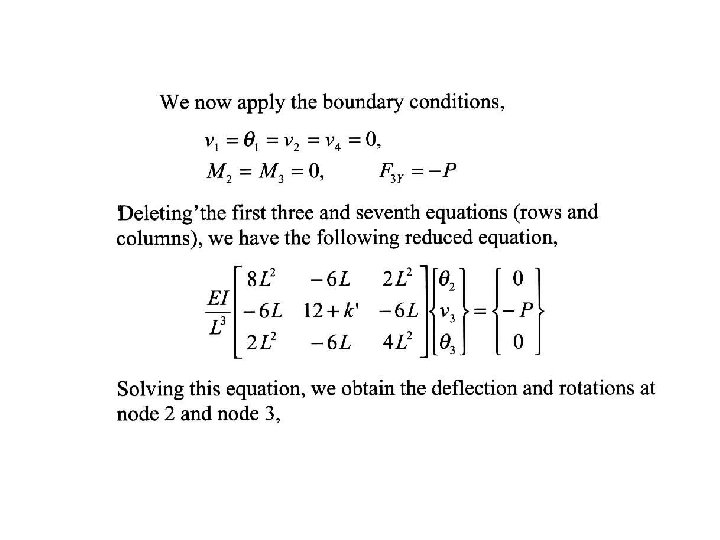
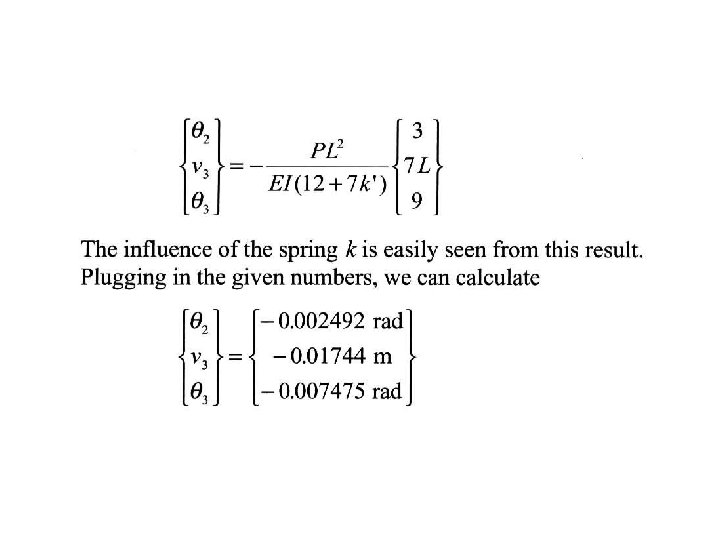
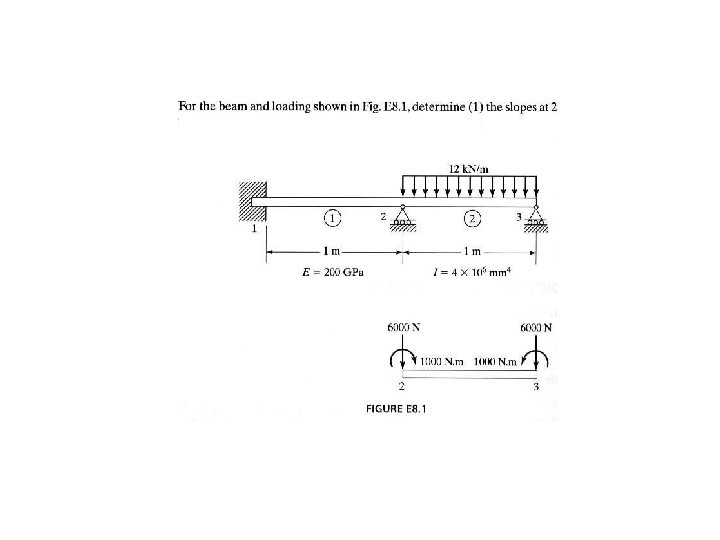
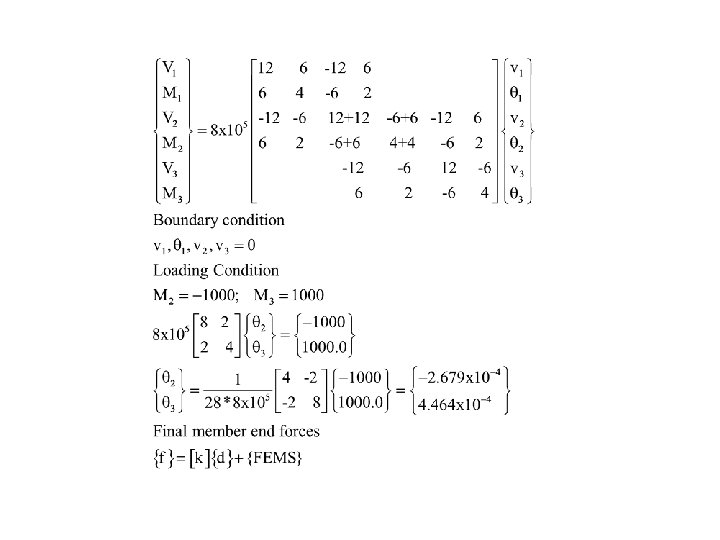
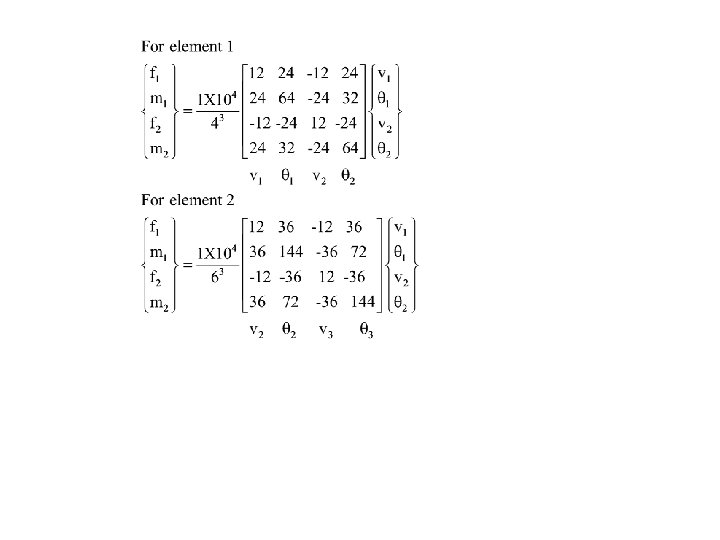
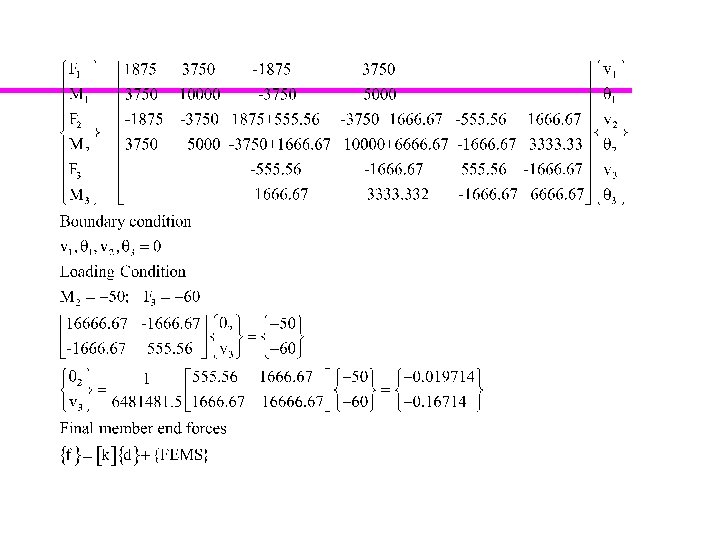
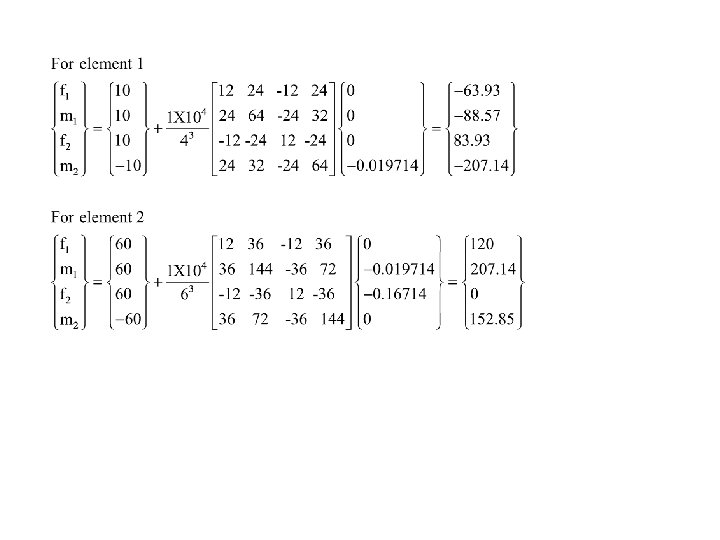
Find slope at joint 2 and deflection at joint 3. Also find member end forces Global coordinates Fixed end reactions (FERs) Action/loads at global coordinates
12/4/2020 26
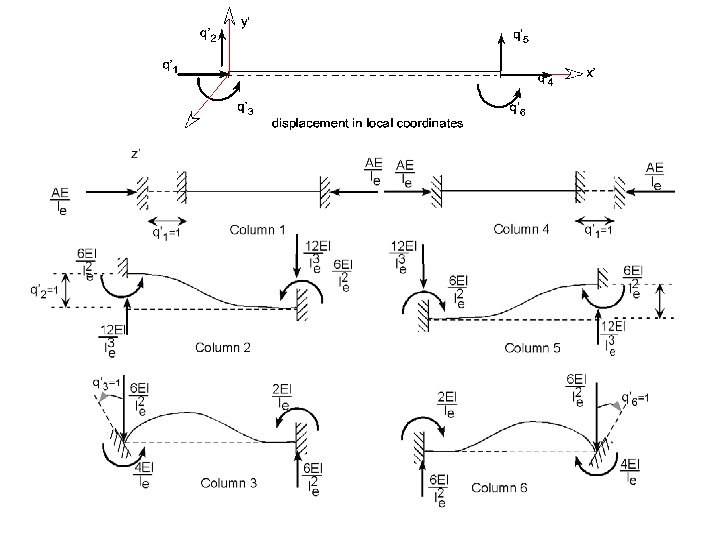
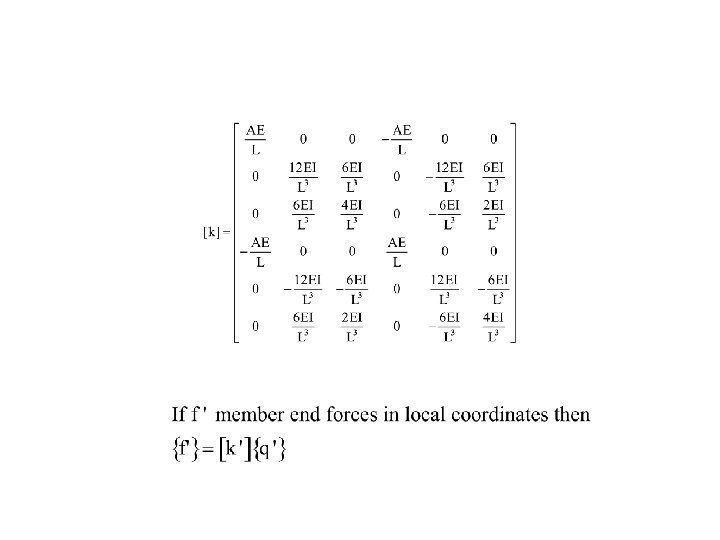
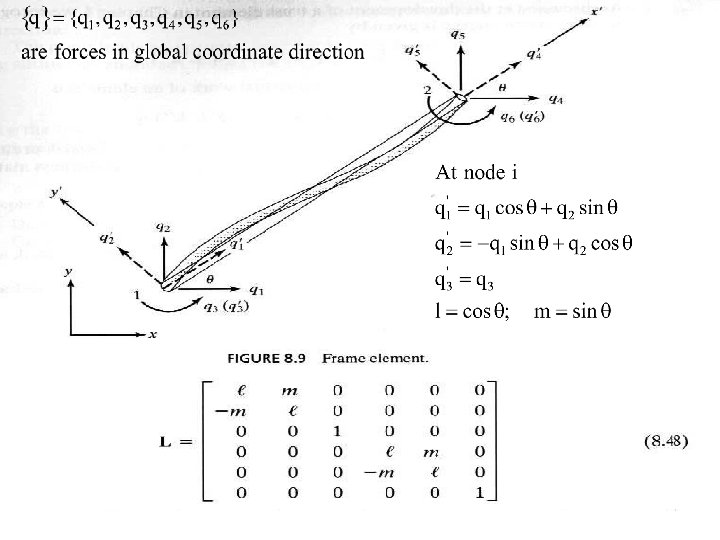
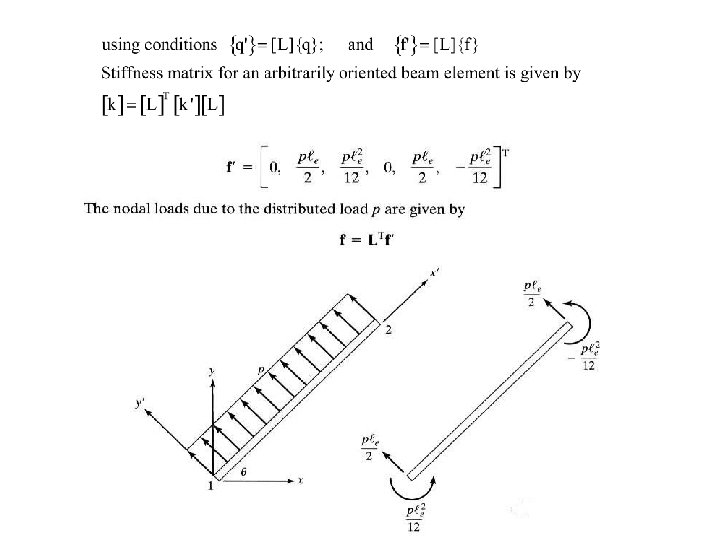
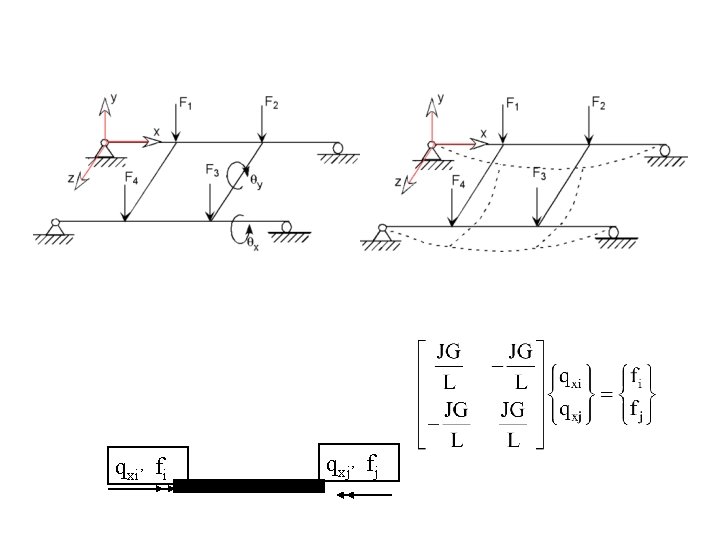
Grid Elements qxi’ fi qxj’ fj
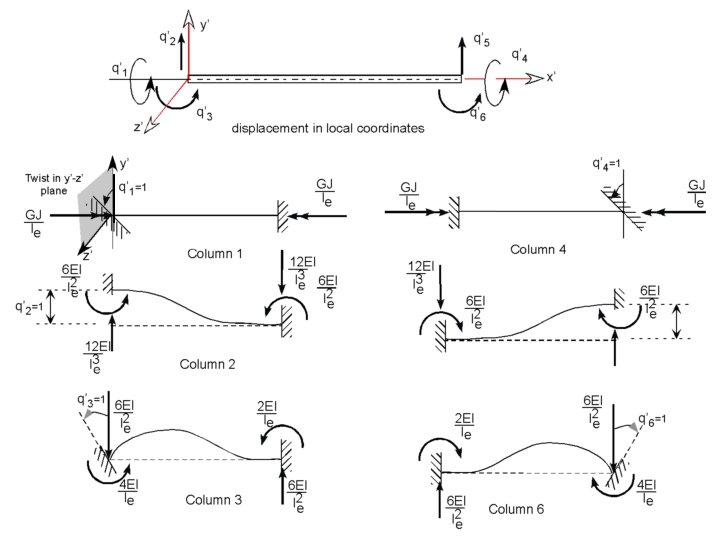
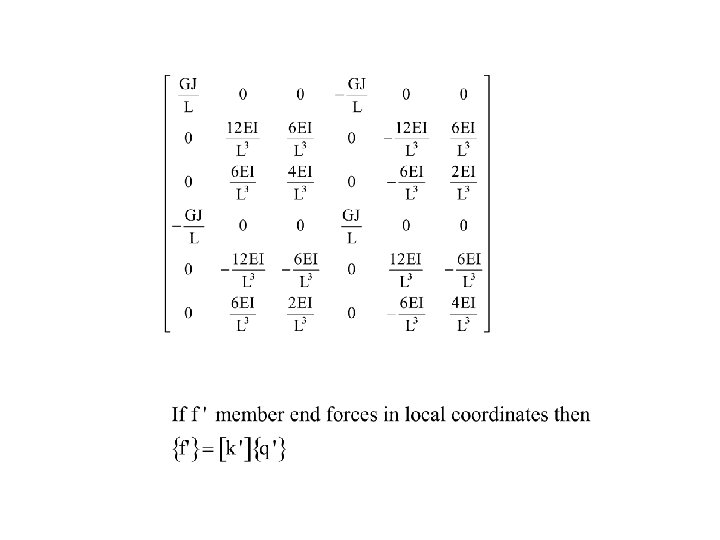
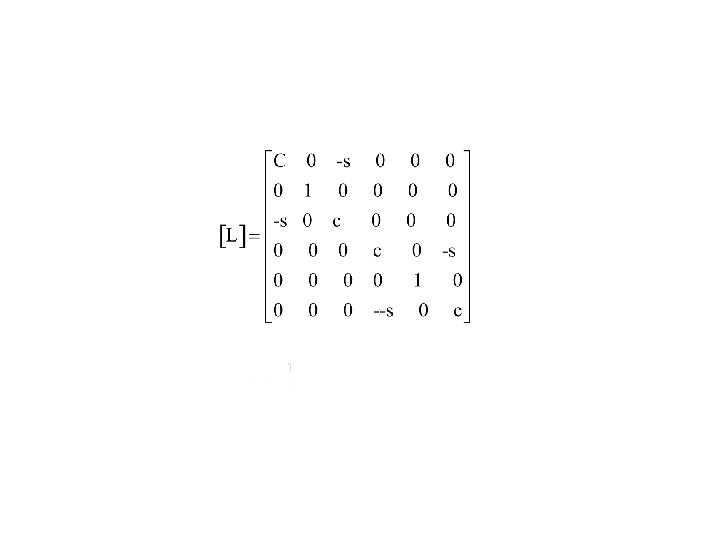
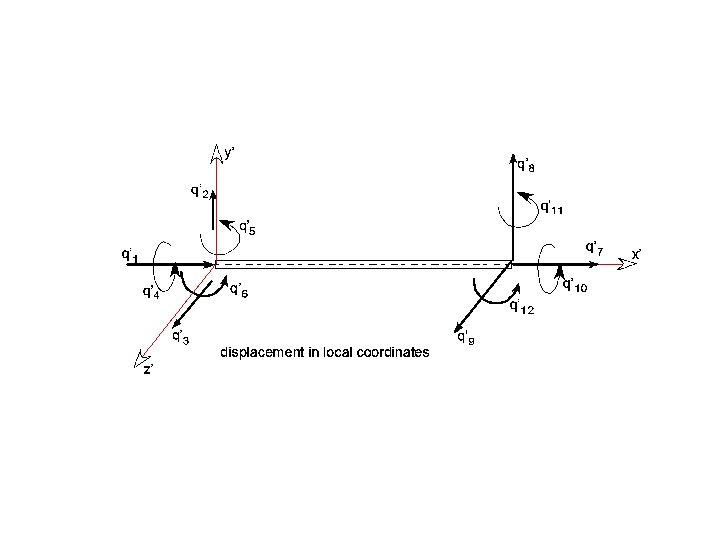
Beam element for 3 D analysis
u if axial load is tensile, results from beam elements are higher than actual Þ results are conservative u if axial load is compressive, results are less than actual – size of error is small until load is about 25% of Euler buckling load
u for 2 -d, can use rotation matrices to get stiffness matrix for beams in any orientation u to develop 3 -d beam elements, must also add capability for torsional loads about the axis of the element, and flexural loading in x-z plane
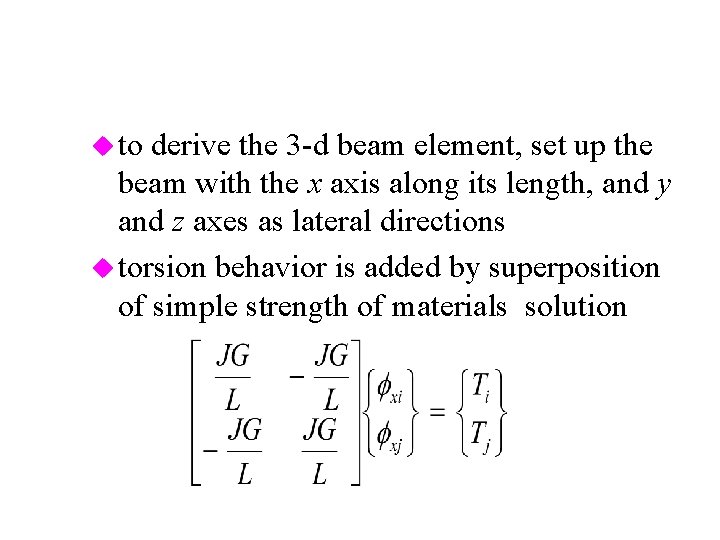
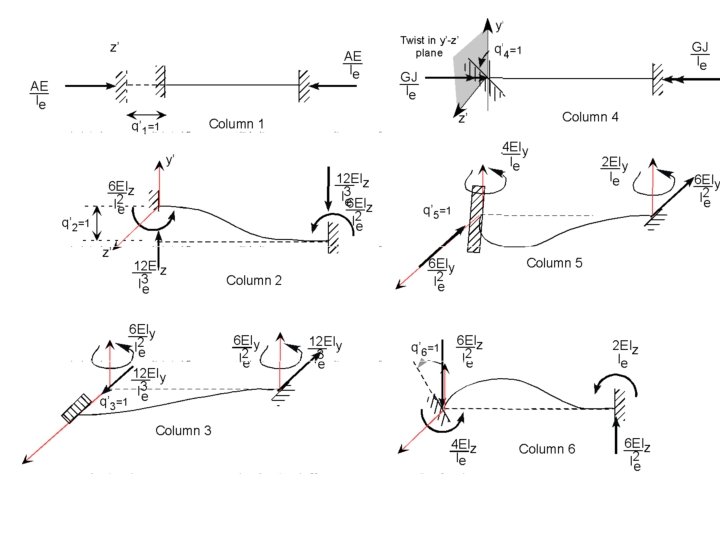
u to derive the 3 -d beam element, set up the beam with the x axis along its length, and y and z axes as lateral directions u torsion behavior is added by superposition of simple strength of materials solution
u. J = torsional moment about x axis u G = shear modulus u L = length u fxi, fxj are nodal degrees of freedom of angle of twist at each end u Ti, Tj are torques about the x axis at each end
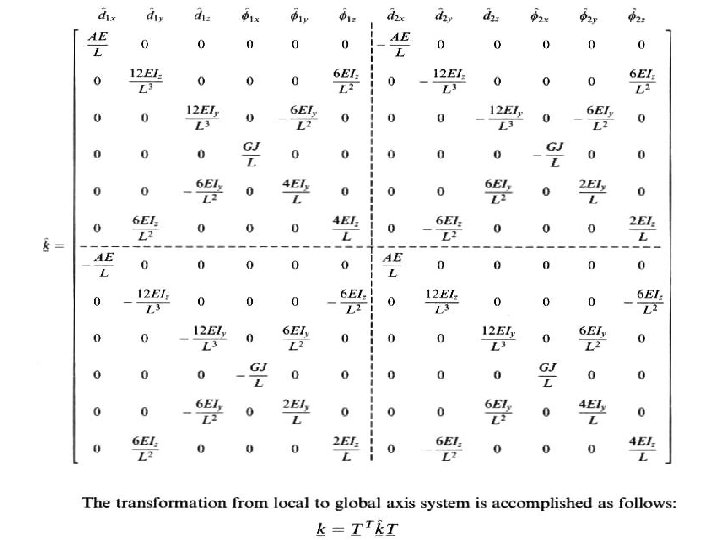
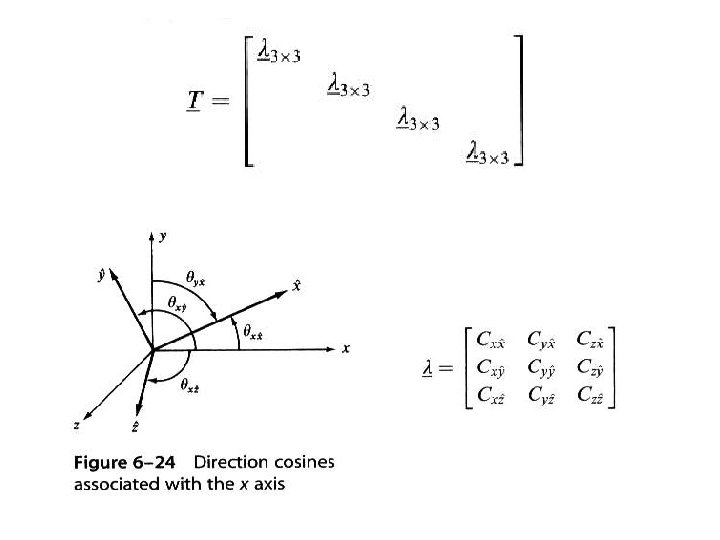
u flexure in x-z plane adds another stiffness matrix like the first one derived u superposition of all these matrices gives a 12 ´ 12 stiffness matrix u to orient a beam element in 3 -d, use 3 -d rotation matrices
u for beams long compared to their cross section, displacement is almost all due to flexure of beam u for short beams there is an additional lateral displacement due to transverse shear u some FE programs take this into account, but you then need to input a shear deformation constant (value associated with geometry of cross section)
u limitations: – same assumptions as in conventional beam and torsion theories Þno better than beam analysis – axial load capability allows frame analysis, but formulation does not couple axial and lateral loading which are coupled nonlinearly
– analysis does not account for » stress concentration at cross section changes » where point loads are applied » where the beam frame components are connected
Finite Element Model u Element formulation exact for beam spans with no intermediate loads – need only 1 element to model any such member that has constant cross section u for distributed load, subdivide into several elements u need a node everywhere a point load is applied
u need nodes where frame members connect, where they change direction, or where the cross section properties change u for each member at a common node, all have the same linear and rotational displacement u boundary conditions can be restraints on linear displacements or rotation
u simple supports restrain only linear displacements u built in supports restrain rotation also
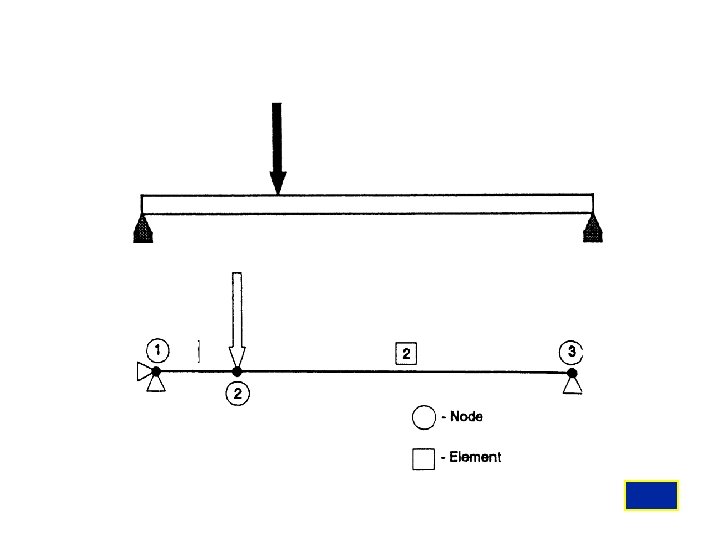
– restrain vertical and horizontal displacements of nodes 1 and 3 – no restraint on rotation of nodes 1 and 3 – need a restraint in x direction to prevent rigid body motion, even if all forces are in y direction
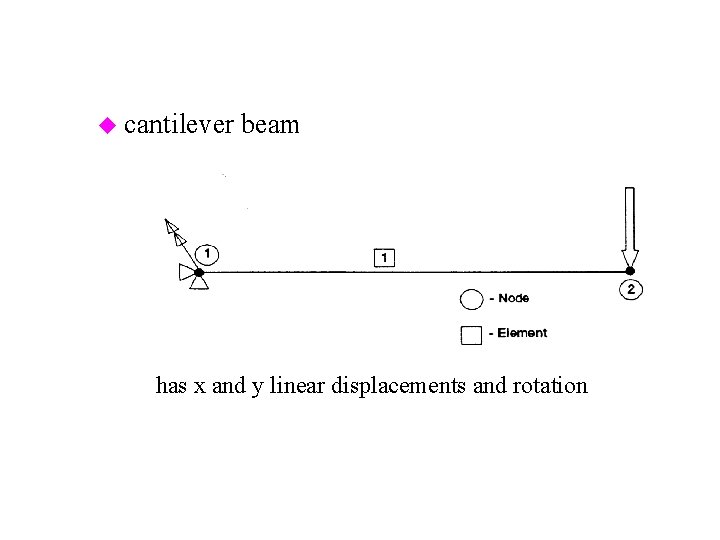
u cantilever beam – has x and y linear displacements and rotation of node 1 fixed
u point loads are idealized loads – structure away from area of application behaves as though point loads are applied
u only an exact formulation when there are no loads along the span – for distributed loads, can get exact solution everywhere else by replacing the distributed load by equivalent loads and moments at the nodes
Computer Input Assistance u preprocessor will usually have the same capabilities as for trusses u a beam element consists of two node numbers and associated material and physical properties
u material properties: – modulus of elasticity – if dynamic or thermal analysis, mass density and thermal coefficient of expansion u physical properties: – cross sectional area – 2 area moments of inertia – torsion constant – location of stress calculation point
u boundary conditions: – specify node numbers and displacement components that are restrained u loads: – specify by node number and load components – most commercial FE programs allows application of distributed loads but they use and equivalent load/moment set internally
Analysis Step u small models and carefully planned element and node numbering will save you from bandwidth or wavefront minimization u potential for ill conditioned stiffness matrix due to axial stiffness >> flexural stiffness (case of long slender beams)
Output Processing and Evaluation u graphical output of deformed shape usually uses only straight lines to represent members u you do not see the effect of rotational constraints on the deformed shape of each member u to check these, subdivide each member and redo the analysis
u most FE codes do not make graphical presentations of beam stress results – user must calculate some of these from the stress values returned u for 2 -d beams, you get a normal stress normal to the cross section and a transverse shear acting on the face of the cross section – normal stress has 2 components » axial stress » bending stress due to moment
– expect the maximum normal stress to be at the top or bottom of the cross section – transverse shear is usually the average transverse load/area » does not take into account any variation across the section
u 3 -d beams – normal stress is combination of axial stress, flexural stress from local y- and z- moments – stress due to moment is linear across a section, the combination is usually highest at the extreme corners of the cross section – may also have to include the effects of torsion » get a 2 -d stress state which must be evaluated – also need to check for column buckling
- Slides: 64