
BeamBeam Simulations Ji Qiang Lawrence Berkeley National Laboratory
Beam-Beam Simulations Ji Qiang Lawrence Berkeley National Laboratory US LARP CM 12 Collaboration Meeting Napa Valley, April 8 -10, 2009
Outline • Strong-strong beam-beam simulation for crab cavity compensation at LHC • Strong-strong beam-beam simulation for conducting wire compensation at LHC
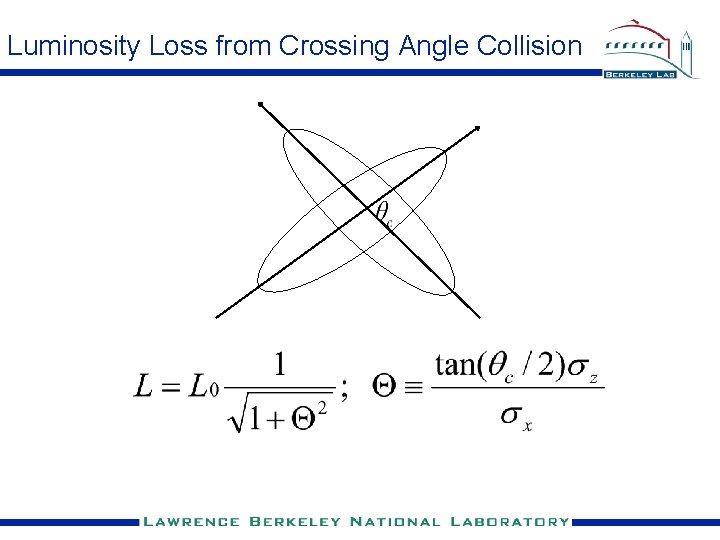
Luminosity Loss from Crossing Angle Collision

Crab Cavity Compensation Scheme 90 degree
Beam 3 D: Parallel Strong-Strong / Strong-Weak Simulation • Beam-Beam forces – integrated, shifted Green function method with FFT – O(N log(N)) computational cost • Multiple-slice model for finite bunch length effects • Parallel particle-based decomposition to achieve perfect load balance • Lorentz boost to handle crossing angle collisions • Arbitrary closed-orbit separation (static or time-dep) • Multiple bunches, multiple collision points • Linear transfer matrix + one turn chromaticity+thin lens sextupole kicks • Conducting wire, crab cavity, and electron lens compensation

A Schematic Plot of the Geometry of Two Colliding Beams Head-on collision y 2 R Long-range collision Field Domain -R 0 Particle Domain R 2 R x Crossing angle collision

Green Function Solution of Poisson’s Equation ; r = (x, y) Direct summation of the convolution scales as N 4 !!!! N – grid number in each dimension
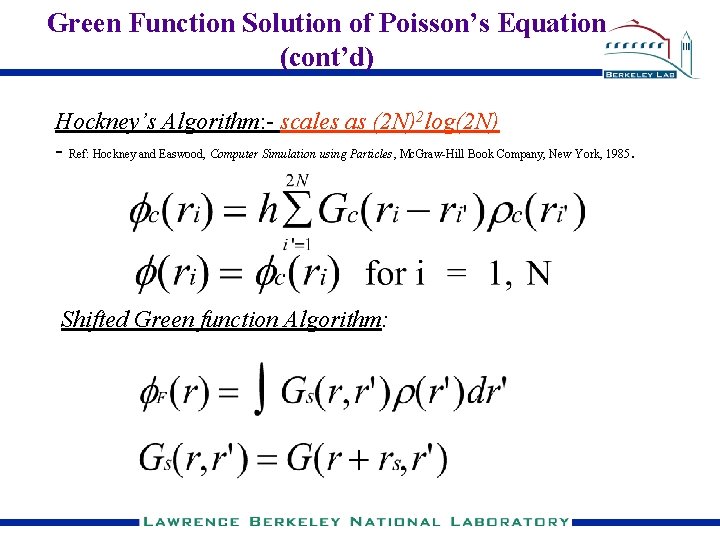
Green Function Solution of Poisson’s Equation (cont’d) Hockney’s Algorithm: - scales as (2 N)2 log(2 N) - Ref: Hockney and Easwood, Computer Simulation using Particles, Mc. Graw-Hill Book Company, New York, 1985. Shifted Green function Algorithm:
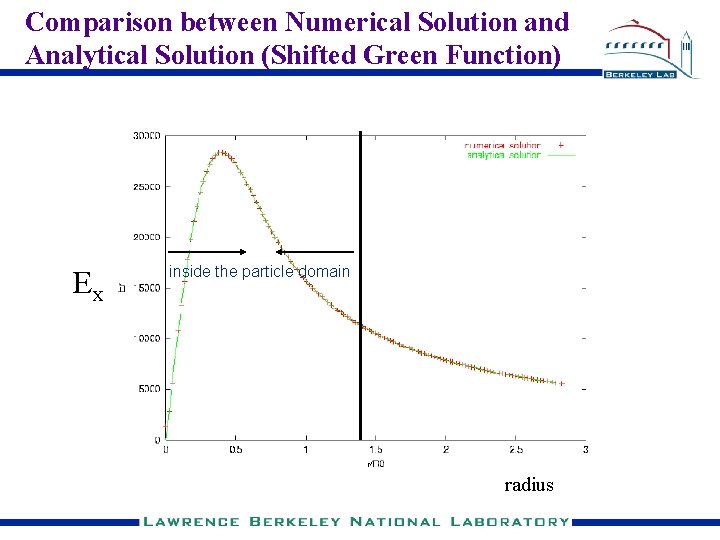
Comparison between Numerical Solution and Analytical Solution (Shifted Green Function) Ex inside the particle domain radius

Green Function Solution of Poisson’s Equation (Integrated Green Function) Integrated Green function Algorithm for large aspect ratio: Ey x (sigma)

Head-on Beam-Beam Collision with Crossing Angl Moving frame: c cos(f) 2 f IP Lab frame
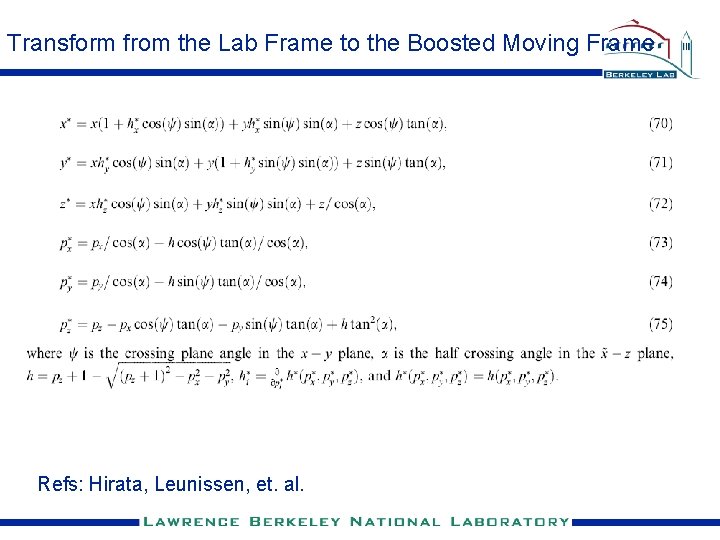
Transform from the Lab Frame to the Boosted Moving Frame Refs: Hirata, Leunissen, et. al.
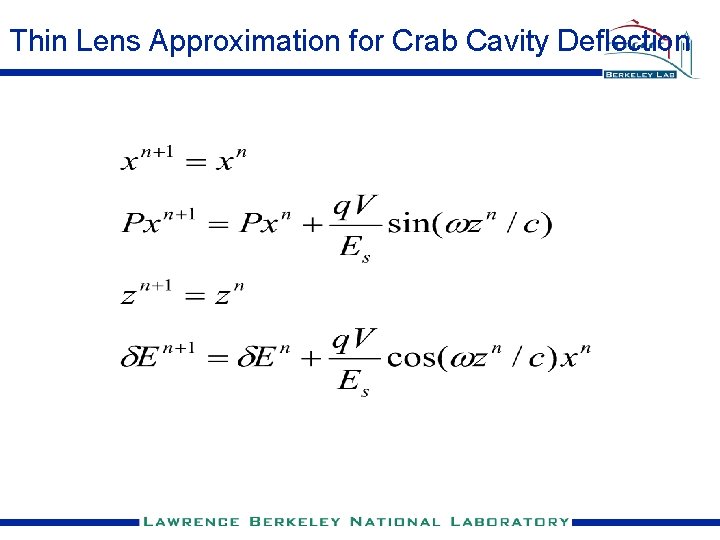
Thin Lens Approximation for Crab Cavity Deflection
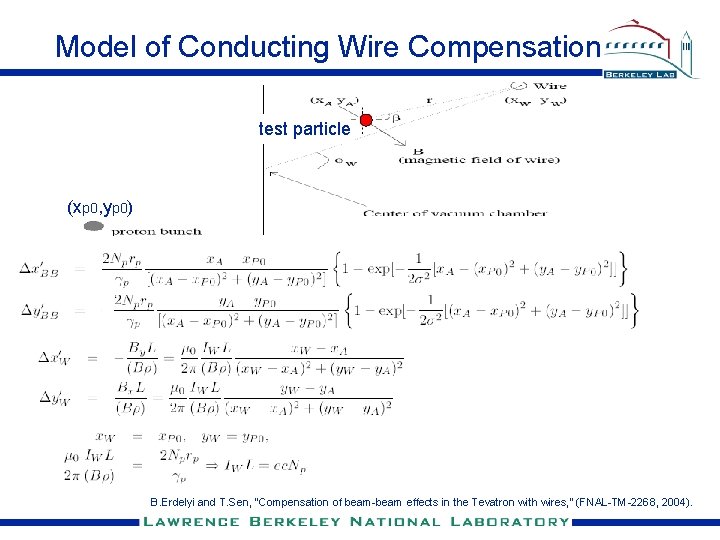
Model of Conducting Wire Compensation test particle (xp 0, yp 0) B. Erdelyi and T. Sen, “Compensation of beam-beam effects in the Tevatron with wires, ” (FNAL-TM-2268, 2004).
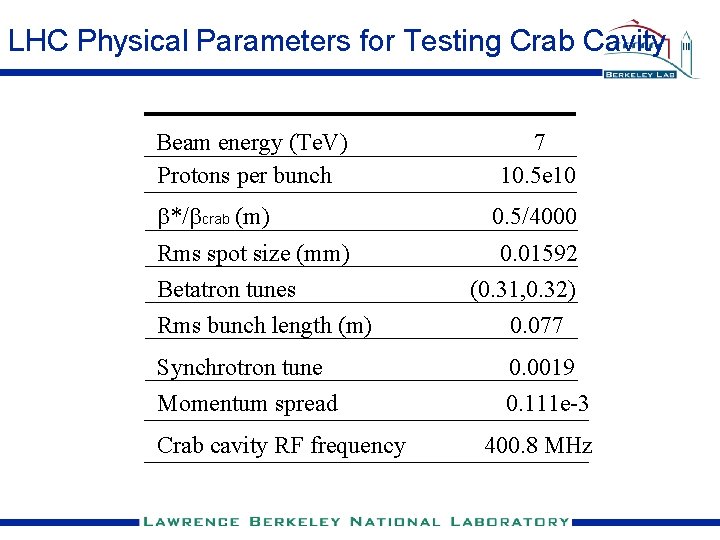
LHC Physical Parameters for Testing Crab Cavity Beam energy (Te. V) Protons per bunch b*/bcrab (m) Rms spot size (mm) Betatron tunes Rms bunch length (m) Synchrotron tune Momentum spread Crab cavity RF frequency 7 10. 5 e 10 0. 5/4000 0. 01592 (0. 31, 0. 32) 0. 077 0. 0019 0. 111 e-3 400. 8 MHz
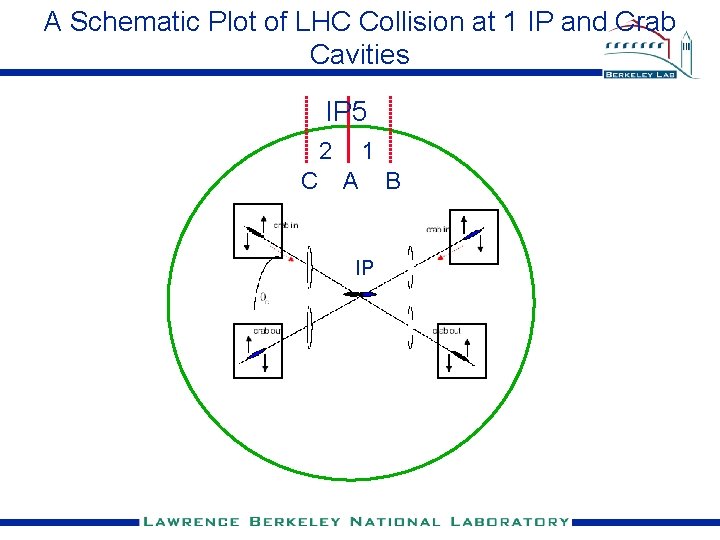
A Schematic Plot of LHC Collision at 1 IP and Crab Cavities IP 5 2 C 1 A IP B
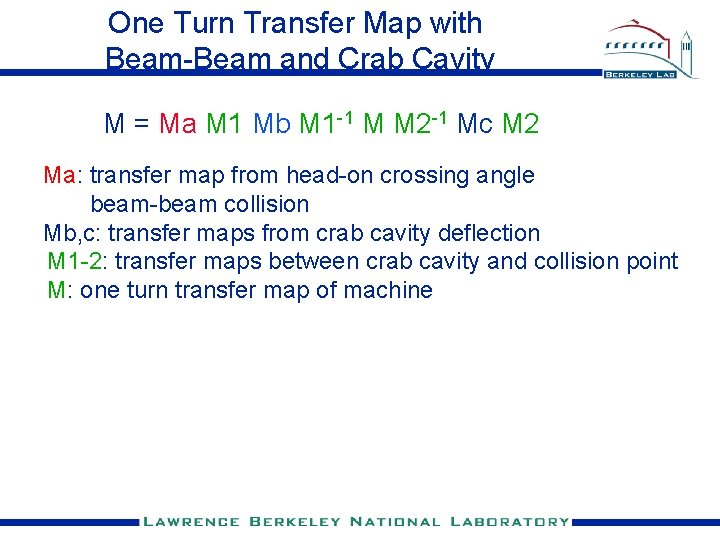
One Turn Transfer Map with Beam-Beam and Crab Cavity M = Ma M 1 Mb M 1 -1 M M 2 -1 Mc M 2 Ma: transfer map from head-on crossing angle beam-beam collision Mb, c: transfer maps from crab cavity deflection M 1 -2: transfer maps between crab cavity and collision point M: one turn transfer map of machine
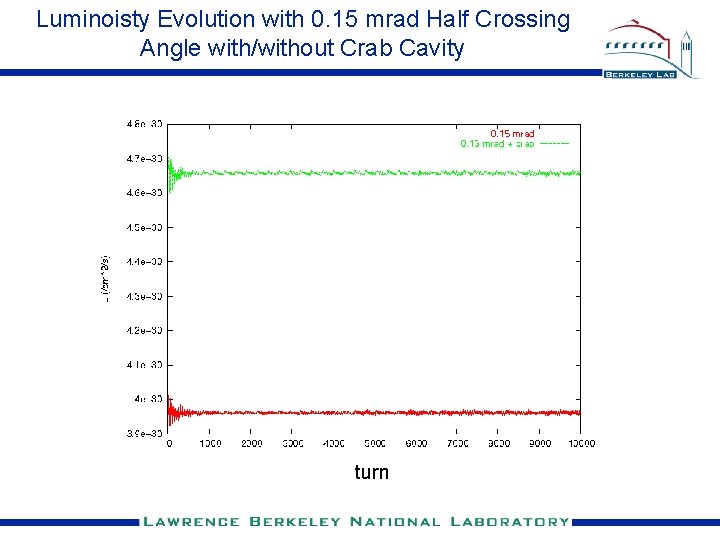
Luminoisty Evolution with 0. 15 mrad Half Crossing Angle with/without Crab Cavity turn
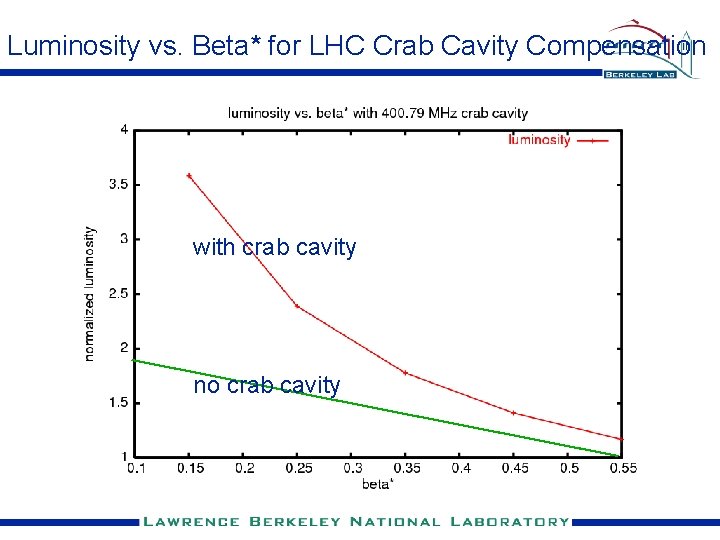
Luminosity vs. Beta* for LHC Crab Cavity Compensation with crab cavity no crab cavity
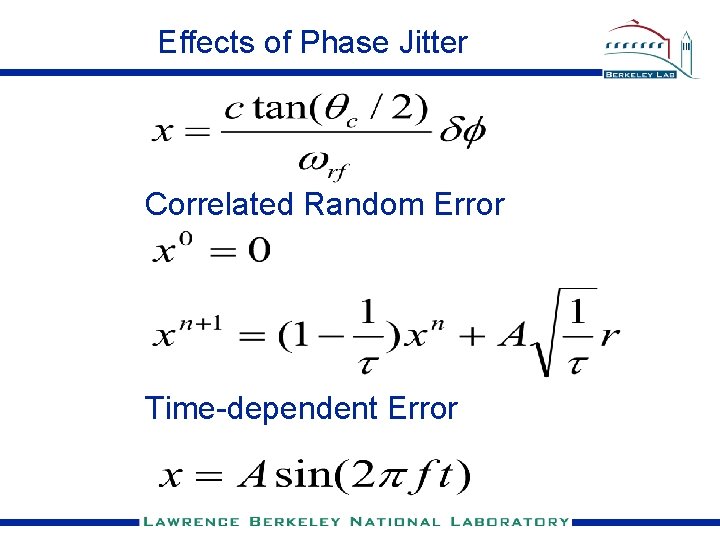
Effects of Phase Jitter Correlated Random Error Time-dependent Error
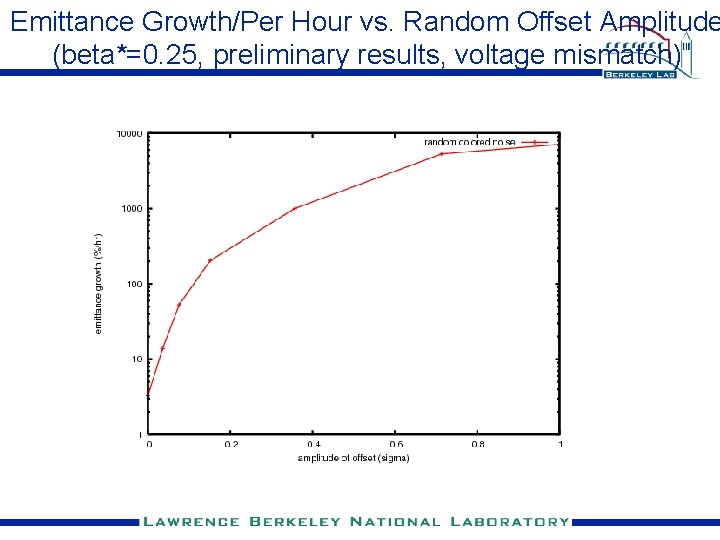
Emittance Growth/Per Hour vs. Random Offset Amplitude (beta*=0. 25, preliminary results, voltage mismatch)
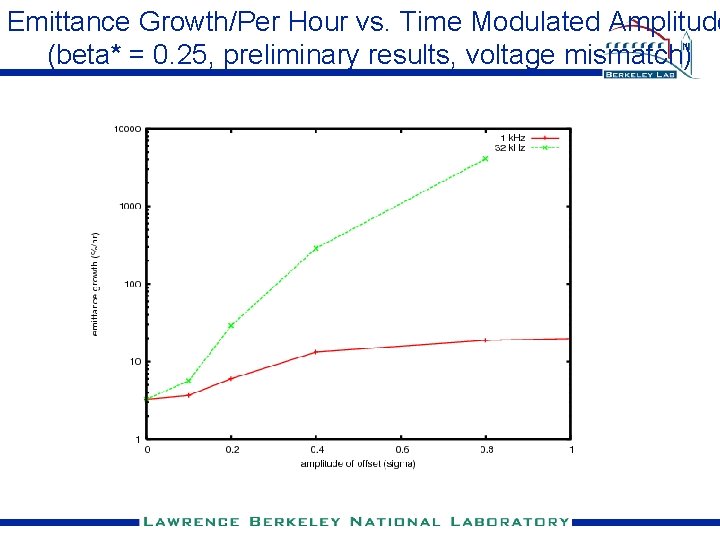
Emittance Growth/Per Hour vs. Time Modulated Amplitude (beta* = 0. 25, preliminary results, voltage mismatch)
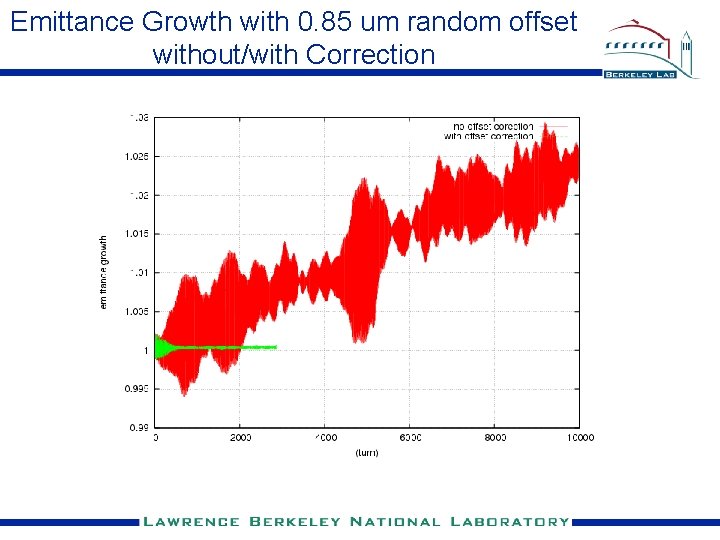
Emittance Growth with 0. 85 um random offset without/with Correction
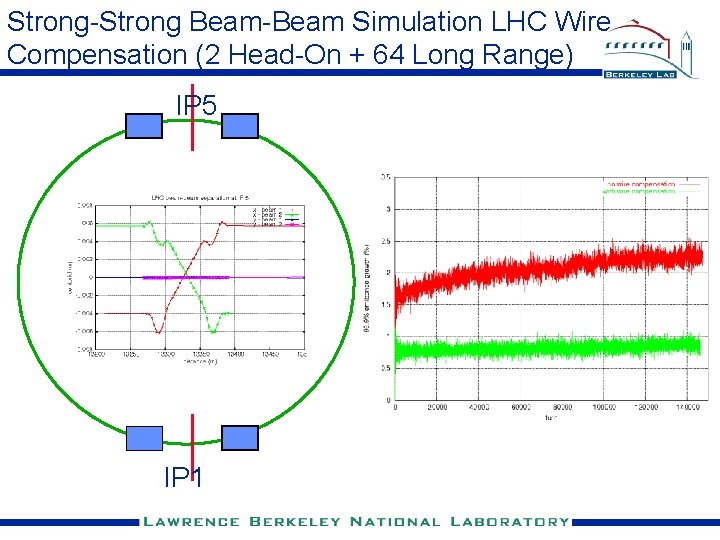
Strong-Strong Beam-Beam Simulation LHC Wire Compensation (2 Head-On + 64 Long Range) IP 5 IP 1
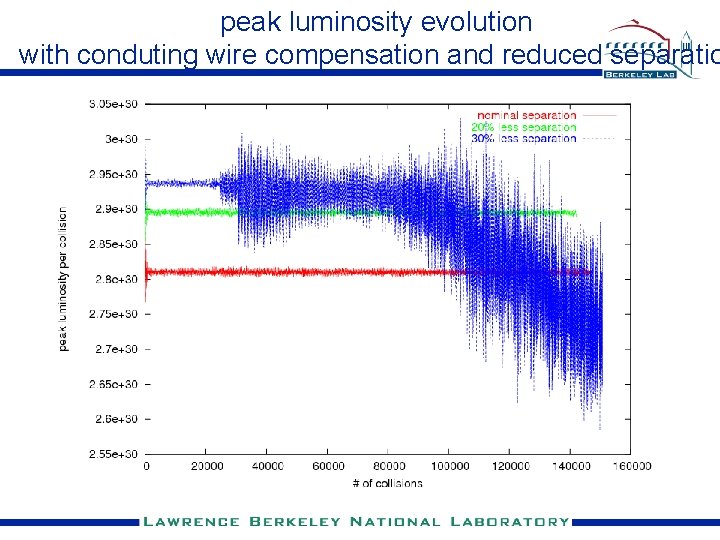
peak luminosity evolution with conduting wire compensation and reduced separatio
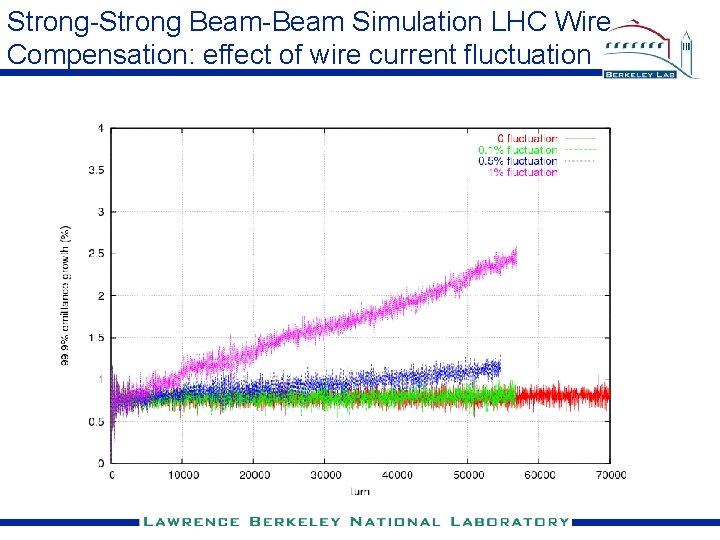
Strong-Strong Beam-Beam Simulation LHC Wire Compensation: effect of wire current fluctuation
- Slides: 26