
Beam observation monitors in ELENA ring at CERN

Beam observation monitors in ELENA ring at CERN Presented by Nikoloz SHARMAZANASHVILI (In framework of collaboration between CERN and GTU) 2
Subjects Introduction - General overview of AD (Antiproton decelerator) at CERN - ELENA ring – objectives and capacities Beam observation monitors (BOM) - Electronics/image processing - Mechanical composition - Magnetically coupled Push pull device as a new technology under implementation at CERN
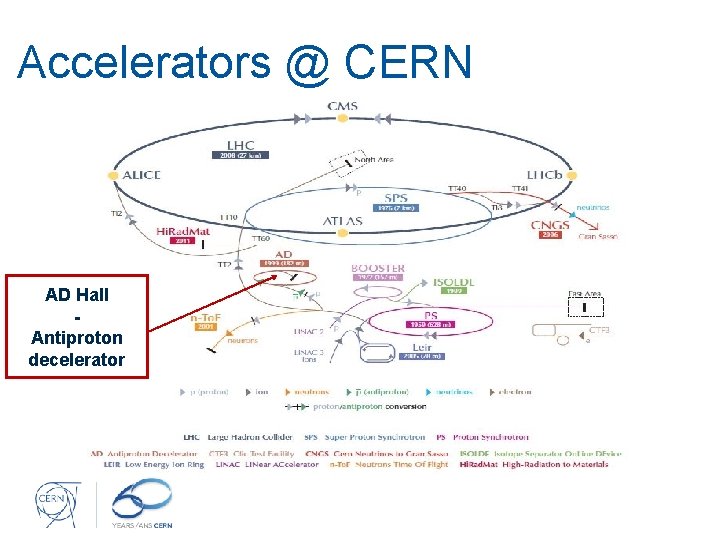
Accelerators @ CERN AD Hall Antiproton decelerator
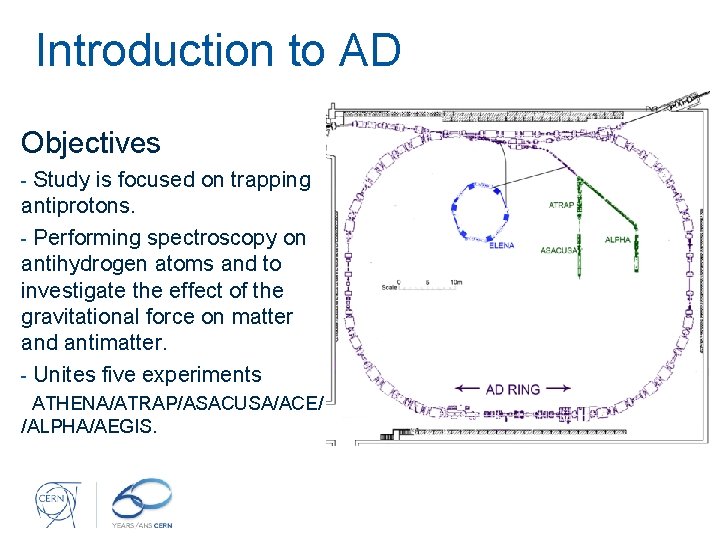
Introduction to AD Objectives - Study is focused on trapping antiprotons. - Performing spectroscopy on antihydrogen atoms and to investigate the effect of the gravitational force on matter and antimatter. - Unites five experiments ATHENA/ATRAP/ASACUSA/ACE/ /ALPHA/AEGIS.
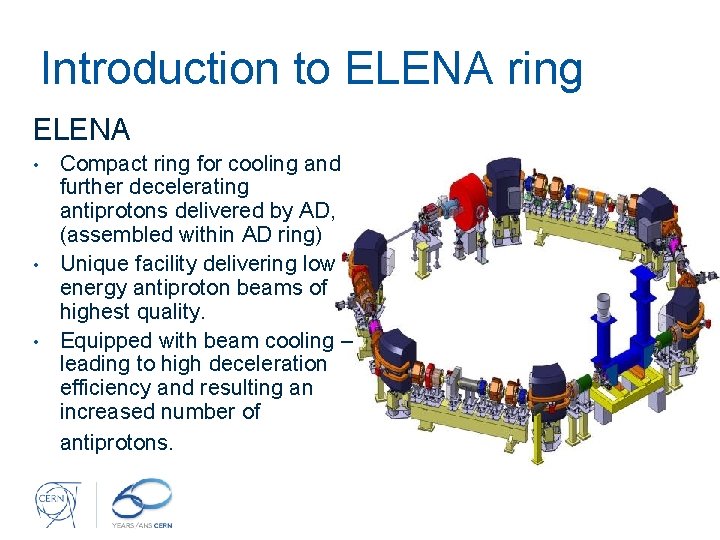
Introduction to ELENA ring ELENA Compact ring for cooling and further decelerating antiprotons delivered by AD, (assembled within AD ring) • Unique facility delivering low energy antiproton beams of highest quality. • Equipped with beam cooling – leading to high deceleration efficiency and resulting an increased number of antiprotons. •
Beam observation monitor • • • To optimize and calibrate injection and circulating beam profiles Composed of two screen in/out systems Situated on cross section of AD and ELENA beam lines Vacuum pressure – 3 e-12 m. Bar Mass – 100 kg
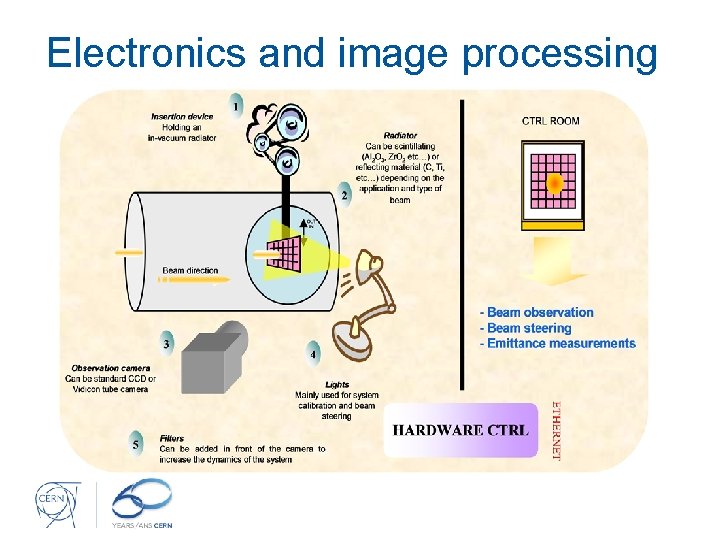
Electronics and image processing
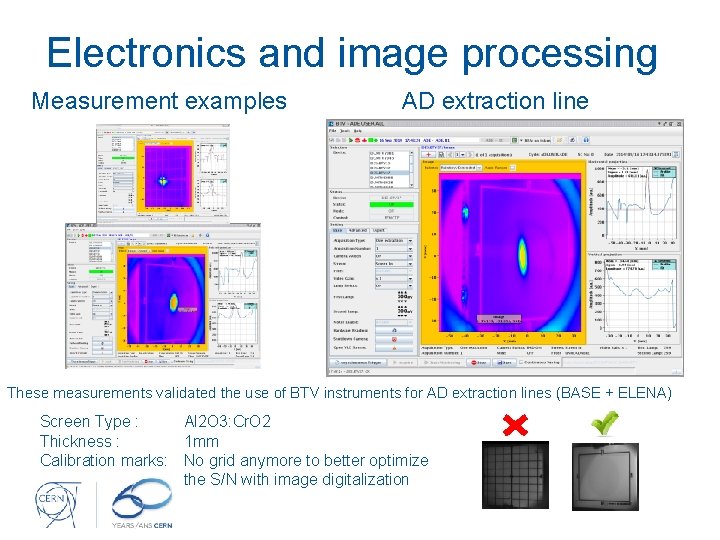
Electronics and image processing Measurement examples AD extraction line These measurements validated the use of BTV instruments for AD extraction lines (BASE + ELENA) Screen Type : Al 2 O 3: Cr. O 2 Thickness : 1 mm Calibration marks: No grid anymore to better optimize the S/N with image digitalization
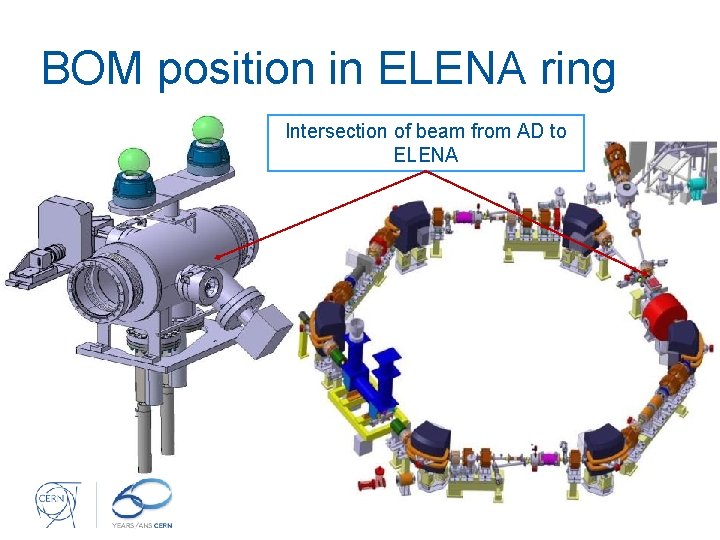
BOM position in ELENA ring Intersection of beam from AD to ELENA
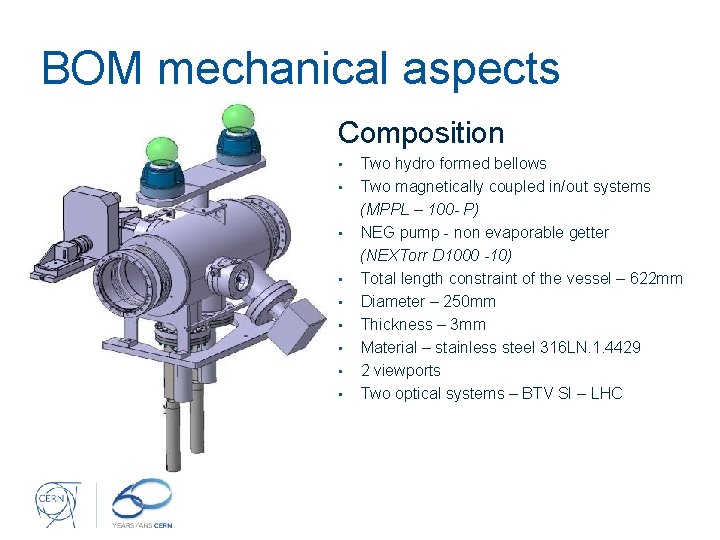
BOM mechanical aspects Composition Two hydro formed bellows • Two magnetically coupled in/out systems (MPPL – 100 - P) • NEG pump - non evaporable getter (NEXTorr D 1000 -10) • Total length constraint of the vessel – 622 mm • Diameter – 250 mm • Thickness – 3 mm • Material – stainless steel 316 LN. 1. 4429 • 2 viewports • Two optical systems – BTV SI – LHC •
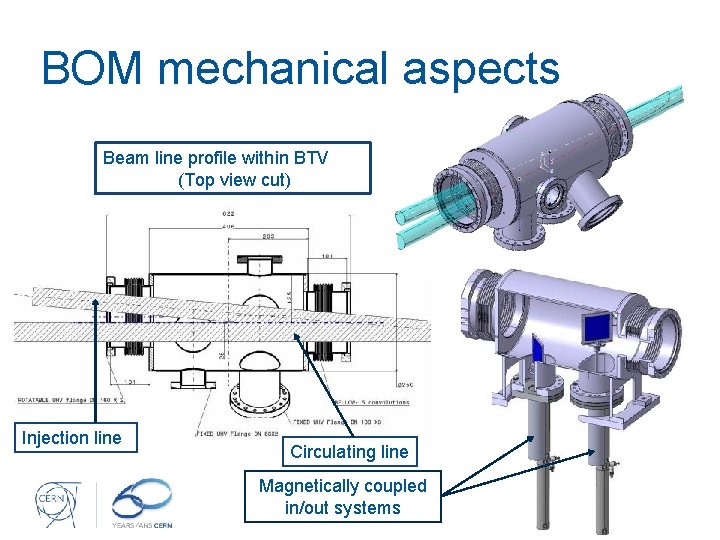
BOM mechanical aspects Beam line profile within BTV (Top view cut) Injection line Circulating line Magnetically coupled in/out systems
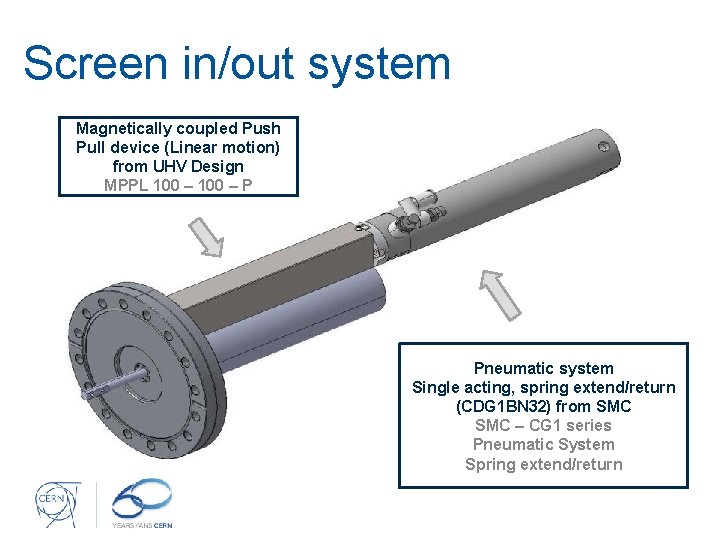
Screen in/out system Magnetically coupled Push Pull device (Linear motion) from UHV Design MPPL 100 – P Pneumatic system Single acting, spring extend/return (CDG 1 BN 32) from SMC – CG 1 series Pneumatic System Spring extend/return
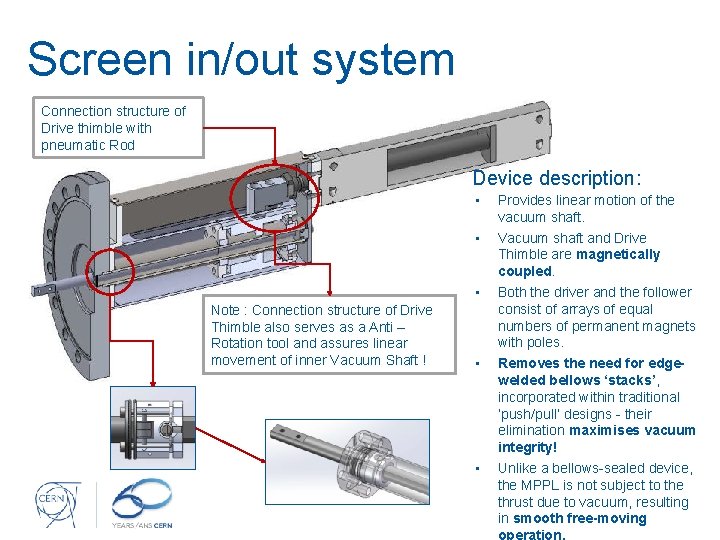
Screen in/out system Connection structure of Drive thimble with pneumatic Rod Device description: • • • Note : Connection structure of Drive Thimble also serves as a Anti – Rotation tool and assures linear movement of inner Vacuum Shaft ! • • Provides linear motion of the vacuum shaft. Vacuum shaft and Drive Thimble are magnetically coupled. Both the driver and the follower consist of arrays of equal numbers of permanent magnets with poles. Removes the need for edgewelded bellows ‘stacks’, incorporated within traditional ‘push/pull’ designs - their elimination maximises vacuum integrity! Unlike a bellows-sealed device, the MPPL is not subject to the thrust due to vacuum, resulting in smooth free-moving
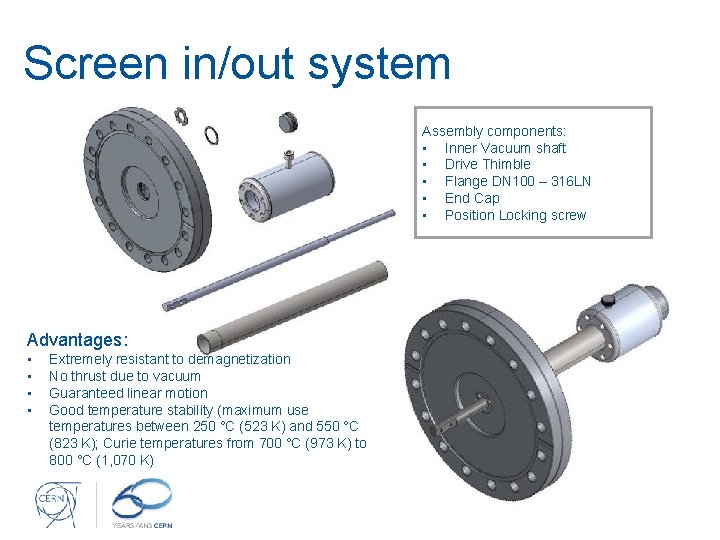
Screen in/out system Assembly components: • Inner Vacuum shaft • Drive Thimble • Flange DN 100 – 316 LN • End Cap • Position Locking screw Advantages: • • Extremely resistant to demagnetization No thrust due to vacuum Guaranteed linear motion Good temperature stability (maximum use temperatures between 250 °C (523 K) and 550 °C (823 K); Curie temperatures from 700 °C (973 K) to 800 °C (1, 070 K)
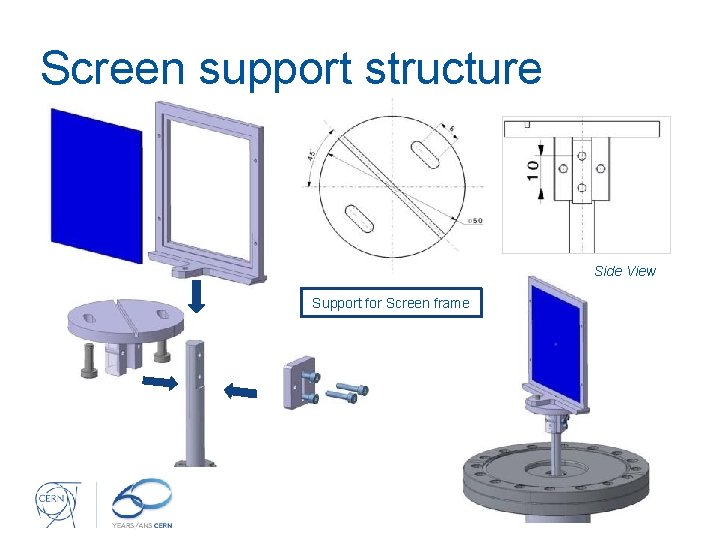
Screen support structure Side View Support for Screen frame
Conclusions Need of new instrumentation for the injection line optimization from AD to ELENA ring. • Implementation of new technology for the mechanical systems – replacing bellow motioned devices by magnetically coupled ones. • The tests to approve new technologies are under progress in framework of collaboration between GTU and CERN. •
In collaboration with: S. Burger (CERN) – project coordinator R. Sautier (CERN) – design and testing N. Sharmazanshvili (GTU) – design and testing
- Slides: 18