
Be Ready NH A Personal Plan for All
Be Ready. NH! A Personal Plan for All Emergencies Train-the-Trainer <Insert Training Location> <Insert Training Date> Trainers: <Insert Names>
Train-the-Trainer Objectives • After this workshop, you will be able to: – Facilitate a community workshop to assist individuals to prepare for a range of possible emergencies and disasters – Use the resources available on Ready. NH. gov to prepare for your community workshop
Is the US Prepared? • 47% of people in the US believe they will experience a major disaster in the next 5 years • 89% of people in the US believe it is important to be prepared • But, only 34% have started preparing or are prepared • And 43% said they are not planning to do anything to prepare
Brainstorming Activity What barriers are stopping individuals from preparing for an emergency?
Barriers to Preparing • • Denial Not my responsibility Too expensive to buy everything No space to store supplies Lack of time Fear Lack of information Don’t know where to start
Factors Influencing the Preparedness Message • • • Personal barriers to planning Perception of risk Presentation of message Ability to influence outcomes Personal experience
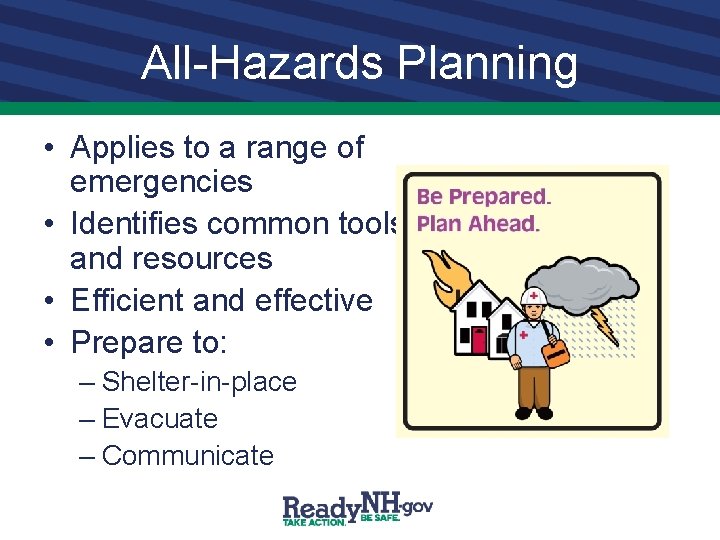
All-Hazards Planning • Applies to a range of emergencies • Identifies common tools and resources • Efficient and effective • Prepare to: – Shelter-in-place – Evacuate – Communicate
Community Workshop Materials • From www. Ready. NH. gov: – Ready. NH Emergency Kit handouts – Ready. NH Family Emergency Plan handout – Ready. NH Emergency Contact Cards – Slides and Speaker’s notes – Sign in sheet – Evaluations • Sample Go-kit (optional)
Community Workshop Prep • • Confirm location and time Prepare workshop materials Prepare necessary equipment Test video – Check if you will have internet access at location • Assemble sample go-kit or supplies
Be Ready. NH! A Personal Plan for All Emergencies <Insert Training Location> <Insert Training Date> Trainers: <Insert Names>
Learning Objectives • After this workshop, participants will be able to: – Understand the importance of personal preparedness – Identify personal barriers to planning – Assess their level of preparedness – Use resources on Ready. NH. gov – Sign up for NH Alerts – Identify steps they can take to develop or improve their emergency plan
Preparing a Family Emergency Kit in Plain English
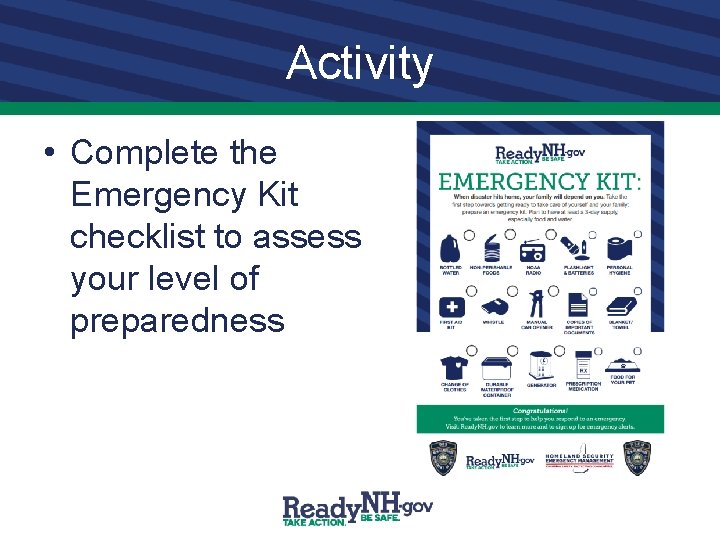
Activity • Complete the Emergency Kit checklist to assess your level of preparedness
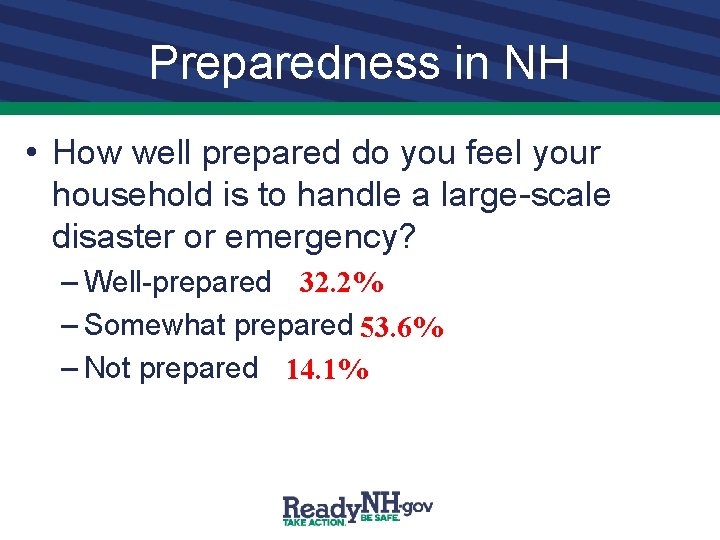
Preparedness in NH • How well prepared do you feel your household is to handle a large-scale disaster or emergency? – Well-prepared 32. 2% – Somewhat prepared 53. 6% – Not prepared 14. 1%
Approach to Preparedness • Have plans in place to: – Shelter-in-Place – Evacuate – Connect with loved ones
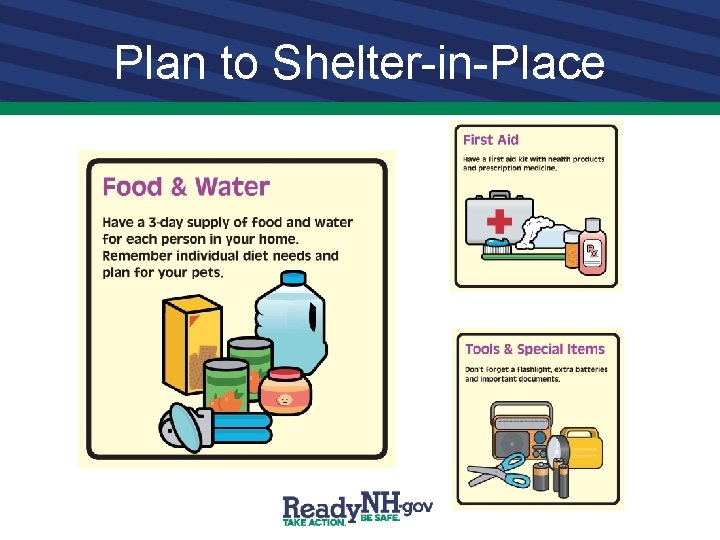
Plan to Shelter-in-Place
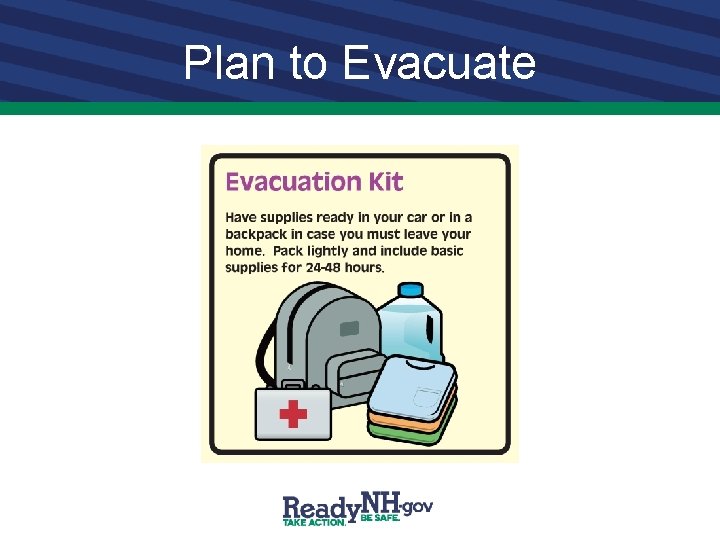
Plan to Evacuate
Tips for Preparing on a Budget • Have your preparedness shopping list ready and watch for sales • Stockpile tap water • Use the water in your home water heater • Don’t make French toast • Check the dollar store • Set a preparedness budget and purchase items slowly
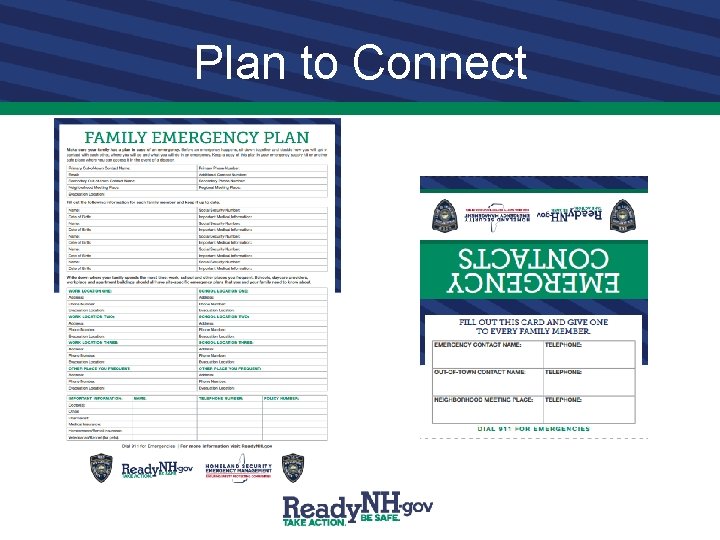
Plan to Connect
Sign up for NH Alerts • https: //public. coderedweb. com/CNE/BFC 2664 C 2 B 92
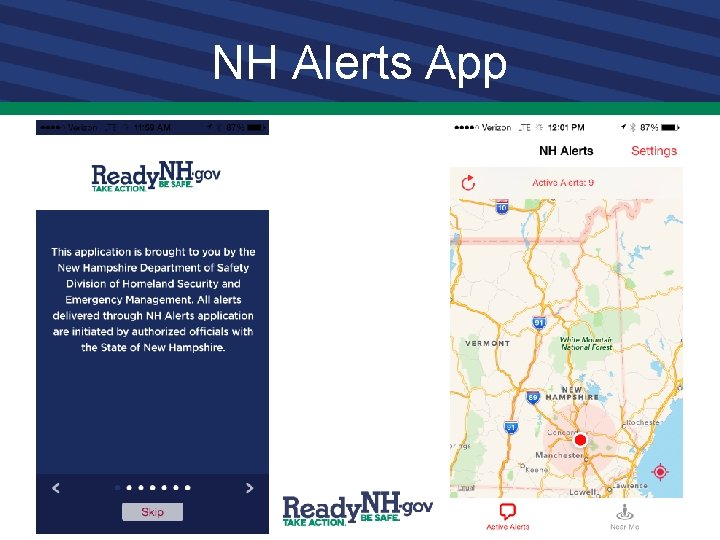
NH Alerts App
Workplace Preparedness • Shelter-in-place • Evacuate – Alternative work arrangements • Emergency phone tree or other alert system for employees • Other ideas?
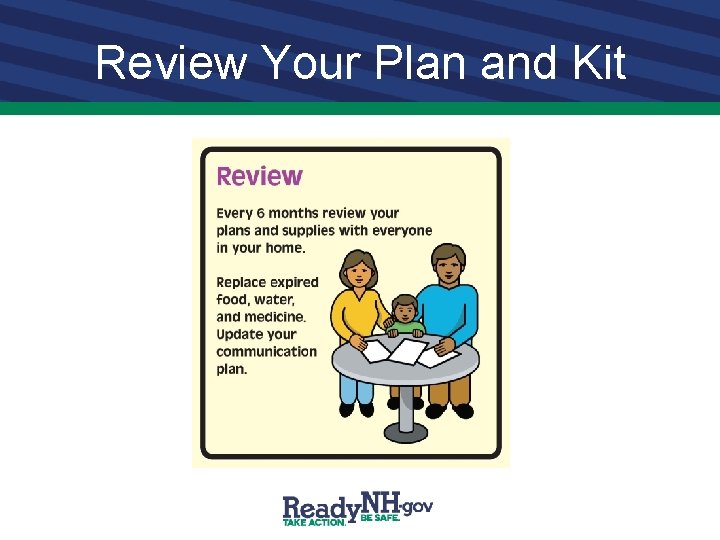
Review Your Plan and Kit
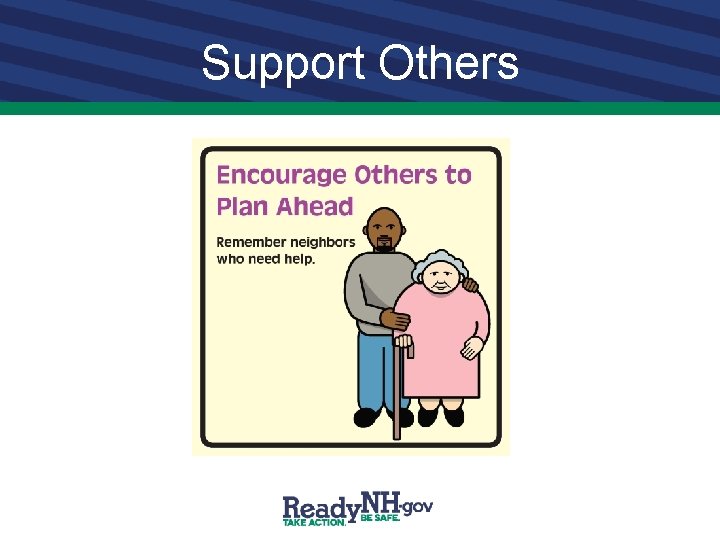
Support Others
www. Ready. NH. gov
Questions? Please complete your evaluation!
Facilitation Tips § Ask open-ended questions § Make sure the questions you ask are questions you would answer § Be supportive and non-judgmental – remind people there are no right or wrong answers
Facilitation Tips § Do not defend or argue if there is disagreement – ask more questions § Repeat what the person said and summarize ideas § Affirm/acknowledge attempts to prepare § Do not make assumptions about peoples’ needs
Brainstorming Activity • Where could you offer this workshop?
Questions? Please complete your evaluation!
Special Thanks to. . . Developed in collaboration with the Community Health Institute, NH DHHS, NH HSEM, Volunteer. NH, the American Red Cross, and the Public Health Networks based on material developed by the Cambridge Advance Practice Center for Emergency Preparedness through a cooperative agreement from CDC to NACCHO. These materials do not necessarily represent the official views of CDC or NACCHO.
- Slides: 31