
Be Business 1 13 INCOME EXPENDITURE AND BANK
Be Business 1. 13 INCOME, EXPENDITURE AND BANK STATEMENTS
1. 13 INCOME, EXPENDITURE AND BANK STATEMENTS Learning Intentions At the end of this unit I will: • Know about recording income and expenditure in a cash account • Be able to prepare an analysed cash book • Understand financial position • Be able to present information graphically • Understand bank statements • Value accounts for individuals and households • Value financial planning and budgeting 2
1. 13 INCOME, EXPENDITURE AND BANK STATEMENTS 3 3
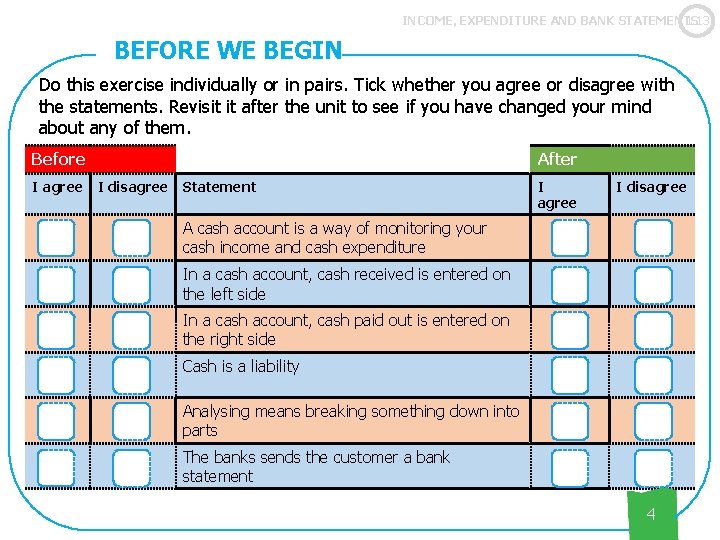
1. 13 INCOME, EXPENDITURE AND BANK STATEMENTS BEFORE WE BEGIN Do this exercise individually or in pairs. Tick whether you agree or disagree with the statements. Revisit it after the unit to see if you have changed your mind about any of them. Before I agree After I disagree Statement I agree I disagree A cash account is a way of monitoring your cash income and cash expenditure In a cash account, cash received is entered on the left side #04 AFEF In a cash account, cash paid out is entered on the right side Cash is a liability Analysing means breaking something down into parts The banks sends the customer a bank statement 4
1. 13 INCOME, EXPENDITURE AND BANK STATEMENTS ‘ 3 Ts’ = Turn, Think, Talk • Why should you keep good financial records? • What is a cash book? • What should you do with your bank statements? 5
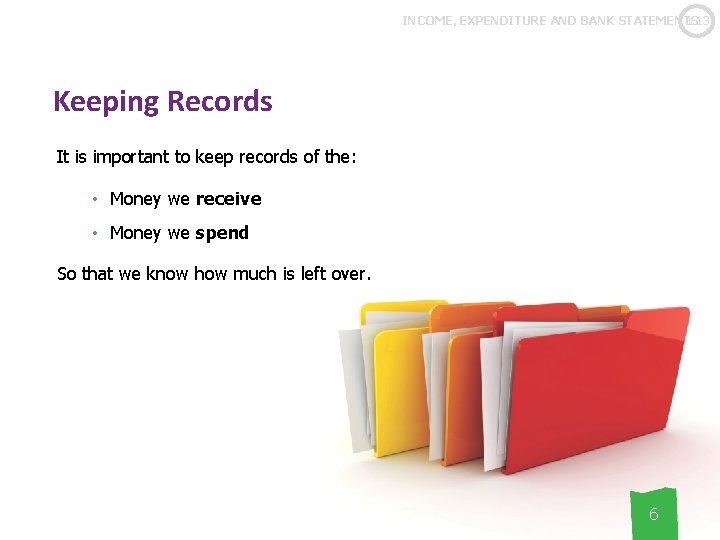
1. 13 INCOME, EXPENDITURE AND BANK STATEMENTS Keeping Records It is important to keep records of the: • Money we receive • Money we spend So that we know how much is left over. 6
1. 13 INCOME, EXPENDITURE AND BANK STATEMENTS Cash Account A cash accountis used to monitor: • Actual money coming in (income) Account is written a/c for short form. • Actual money going out (expenditure ) If the cash coming in is equalto the cash going out, your accounts will be balanced. If the cash coming in is greaterthan the cash going out, you will have surpluscash. 7
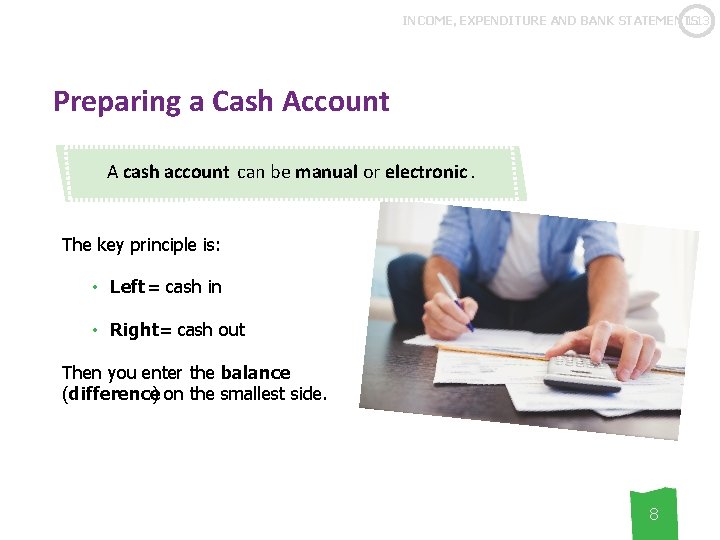
1. 13 INCOME, EXPENDITURE AND BANK STATEMENTS Preparing a Cash Account A cash account can be manual or electronic. The key principle is: • Left = cash in • Right= cash out Then you enter the balance (difference) on the smallest side. 8
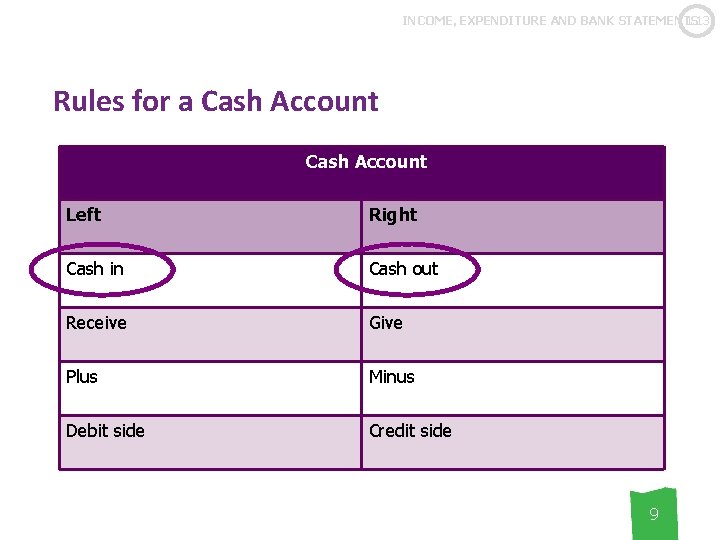
1. 13 INCOME, EXPENDITURE AND BANK STATEMENTS Rules for a Cash Account Left Right Cash in Cash out Receive Give Plus Minus Debit side Credit side 9
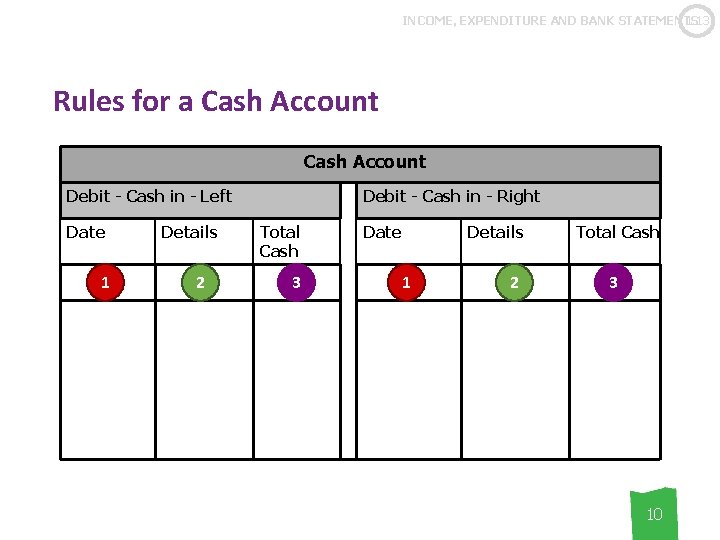
1. 13 INCOME, EXPENDITURE AND BANK STATEMENTS Rules for a Cash Account Debit - Cash in - Left Date Details Debit - Cash in - Right Total Cash Date Details 1 2 3 1 Actual date the money was received Where the money was received from Amount of money Actual date the money was paid out 2 Where the money was spent Total Cash 3 Amount of money 10
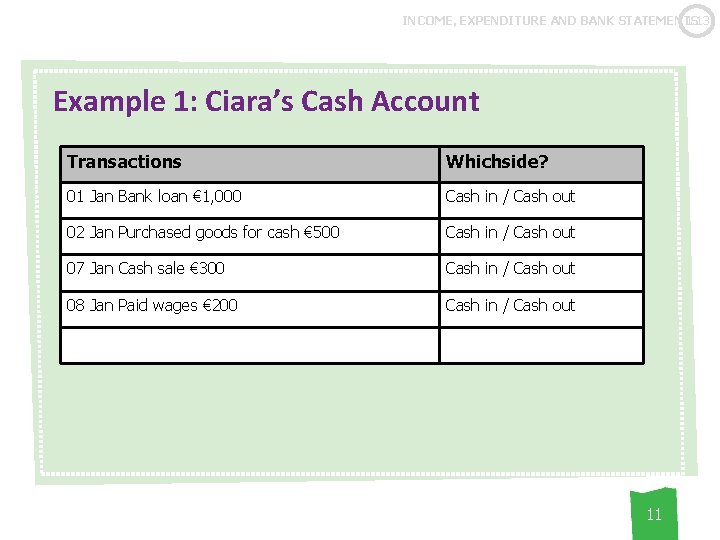
1. 13 INCOME, EXPENDITURE AND BANK STATEMENTS Example 1: Ciara’s Cash Account Transactions Whichside? 01 Jan Bank loan € 1, 000 Cash in / Cash out 02 Jan Purchased goods for cash € 500 Cash in / Cash out 07 Jan Cash sale € 300 Cash in / Cash out 08 Jan Paid wages € 200 Cash in / Cash out 11
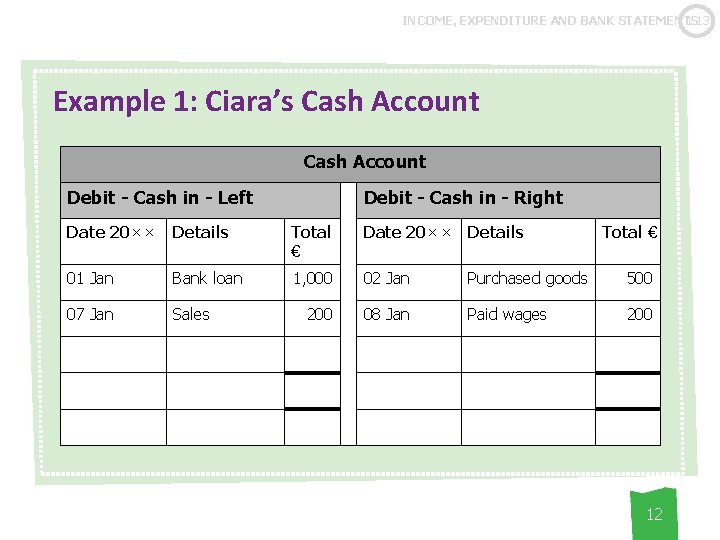
1. 13 INCOME, EXPENDITURE AND BANK STATEMENTS Example 1: Ciara’s Cash Account Debit - Cash in - Left Debit - Cash in - Right Date 20×× Details Total € 01 Jan Bank loan 1, 000 02 Jan Purchased goods 500 07 Jan Sales 200 08 Jan Paid wages 200 12
1. 13 INCOME, EXPENDITURE AND BANK STATEMENTS Balancing the Account Remember, the balanceis the difference between money in and money out. • If the money received = money spent, then your accounts will be balanced • If the money received > money spent, then your accounts will be in surplus Question Time to think Why can’t a cash account be in deficit? 13
1. 13 INCOME, EXPENDITURE AND BANK STATEMENTS WORKING WITH OTHERS In pairs, work your way through the example of balancing an account on pages 177 and 178 in#04 AFEF your book. Page 177 -78 14
1. 13 INCOME, EXPENDITURE AND BANK STATEMENTS N I G N I K C CHE 1. Explain what is meant by the term ‘cash account’. State why you might keep a cash account. 2. What might happen if Ciara did not have sales of € 300? Recalculate for sales of € 100. 3. Present the information on pages 177 -178 graphically in the form of a pie chart, a bar chart and a line graph (see pages 170 -171 for more details. ) 15
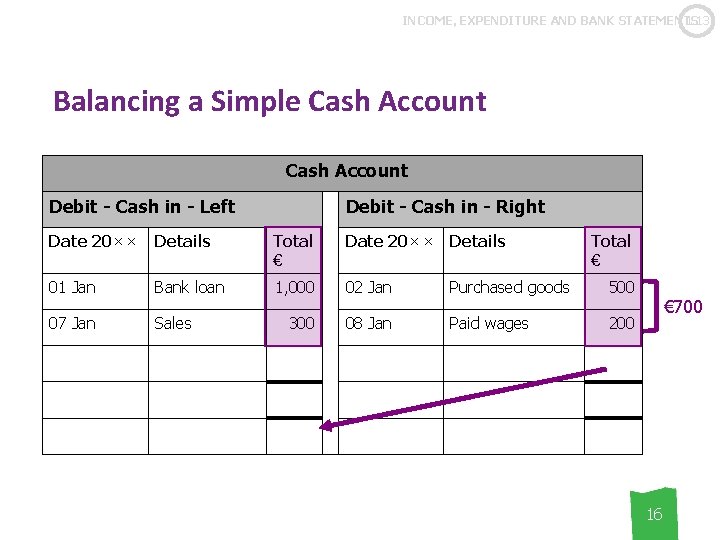
1. 13 INCOME, EXPENDITURE AND BANK STATEMENTS Balancing a Simple Cash Account Debit - Cash in - Left Debit - Cash in - Right Date 20×× Details Total € Date 20×× Details 01 Jan Bank loan 1, 000 02 Jan Purchased goods 500 07 Jan Sales 300 08 Jan Paid wages 200 08 Jan Balance c/d 600 1, 300 09 Jan Balance b/d Total € € 700 1300 600 16
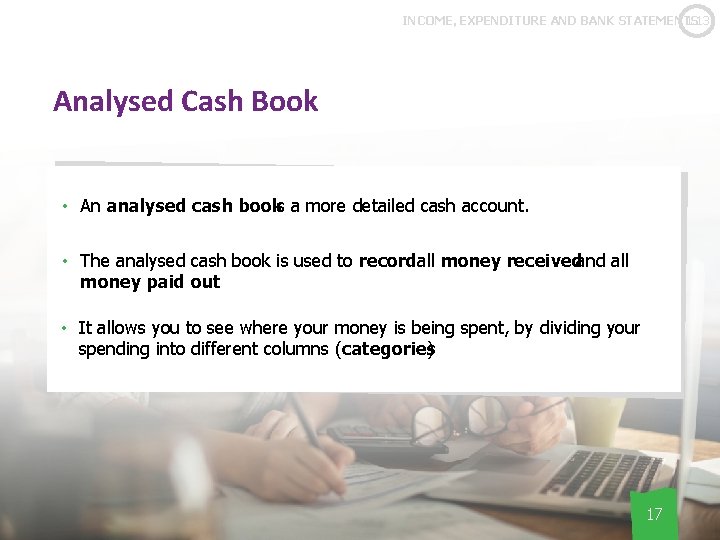
1. 13 INCOME, EXPENDITURE AND BANK STATEMENTS Analysed Cash Book • An analysed cash book is a more detailed cash account. • The analysed cash book is used to recordall money receivedand all money paid out • It allows you to see where your money is being spent, by dividing your spending into different columns (categories ) 17
1. 13 INCOME, EXPENDITURE AND BANK STATEMENTS Example 2: Simpsons’ Analysed Cash Book Let’s try a simple example to understand the analysed cash book concept. The Simpsons are going to prepare an analysed cash book for their household. They will use the following headings: Debit side: Total; Wages; Child benefit; Other Credit side: Total; Grocery; Car; House; Other Look at page 180 to see the transactions they record. 18
1. 13 INCOME, EXPENDITURE AND BANK STATEMENTS Cash and Bank Account • Some transactions are made in cash • Some transactions are made by transferring money into or out of the bank account • We keep records of both these accounts in an analysed cash book You need to add a Total Cash and a Total Bank column to the analysed cash book to capture this information. 19
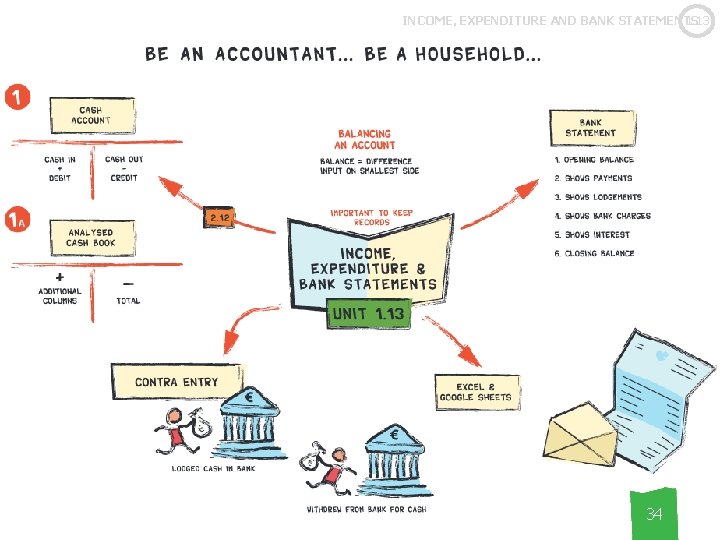
1. 13 INCOME, EXPENDITURE AND BANK STATEMENTS Transfers Between Cash and Bank You transfer money between the cash a/cand the bank a/cwhen you either: • Lodge money to the bank • Withdrawmoney from the bank Recording this transfer of money between your accounts is called a Contra Entry. 20
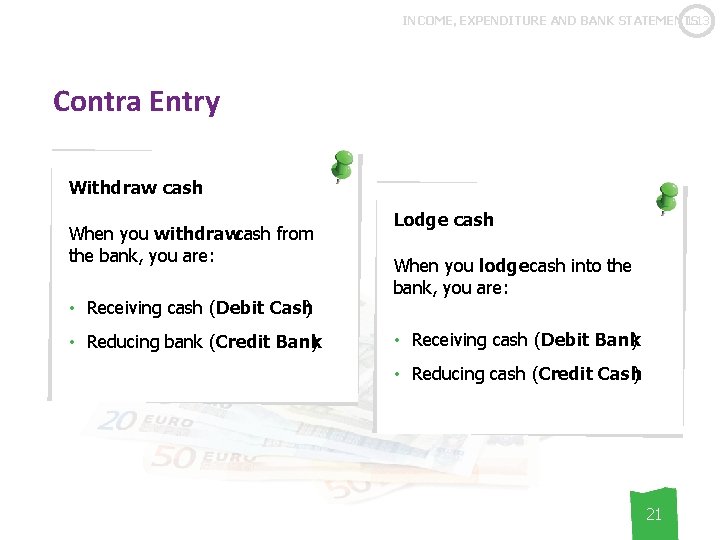
1. 13 INCOME, EXPENDITURE AND BANK STATEMENTS Contra Entry Withdraw cash When you withdrawcash from the bank, you are: • Receiving cash (Debit Cash) • Reducing bank (Credit Bank ) Lodge cash When you lodge cash into the bank, you are: • Receiving cash (Debit Bank ) • Reducing cash (Credit Cash) 21
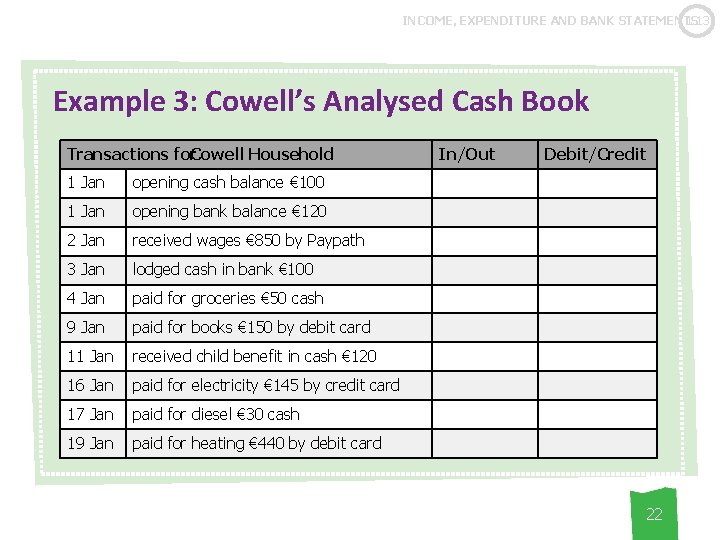
1. 13 INCOME, EXPENDITURE AND BANK STATEMENTS Example 3: Cowell’s Analysed Cash Book Transactions for. Cowell Household 1 Jan opening cash balance € 100 1 Jan opening bank balance € 120 2 Jan received wages € 850 by Paypath 3 Jan lodged cash in bank € 100 4 Jan paid for groceries € 50 cash 9 Jan paid for books € 150 by debit card 11 Jan received child benefit in cash € 120 16 Jan paid for electricity € 145 by credit card 17 Jan paid for diesel € 30 cash 19 Jan paid for heating € 440 by debit card In/Out Debit/Credit 22
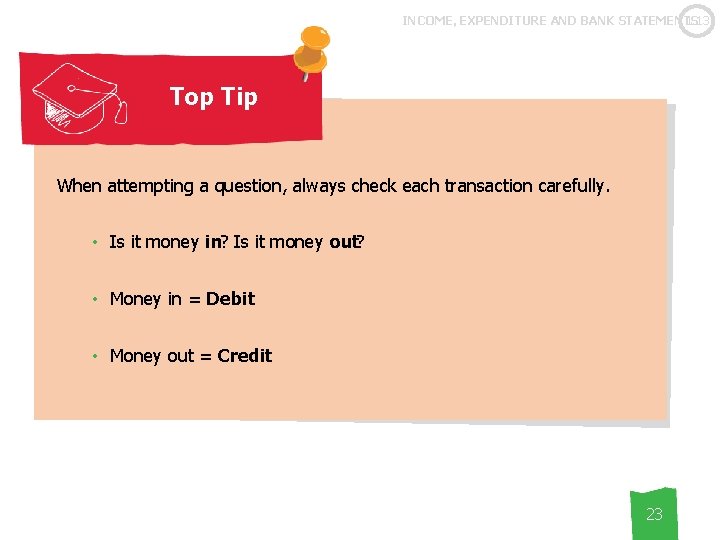
1. 13 INCOME, EXPENDITURE AND BANK STATEMENTS Top Tip When attempting a question, always check each transaction carefully. • Is it money in? Is it money out? • Money in = Debit • Money out = Credit 23
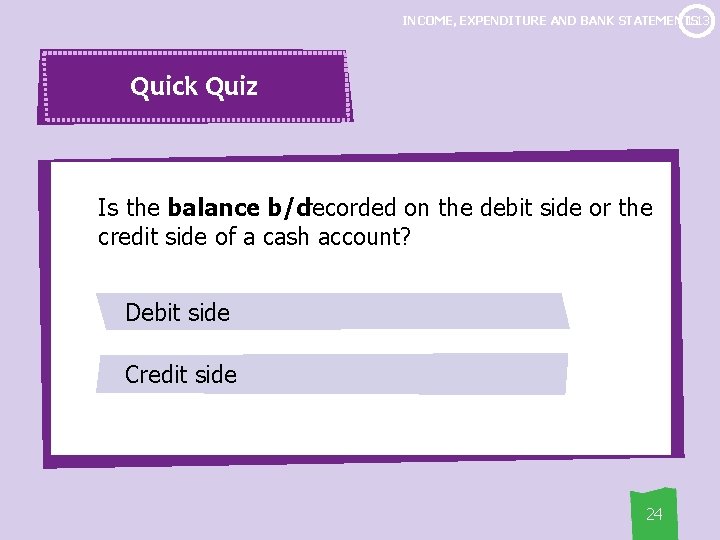
1. 13 INCOME, EXPENDITURE AND BANK STATEMENTS Quick Quiz Is the balance b/drecorded on the debit side or the credit side of a cash account? Debit side Credit side 24
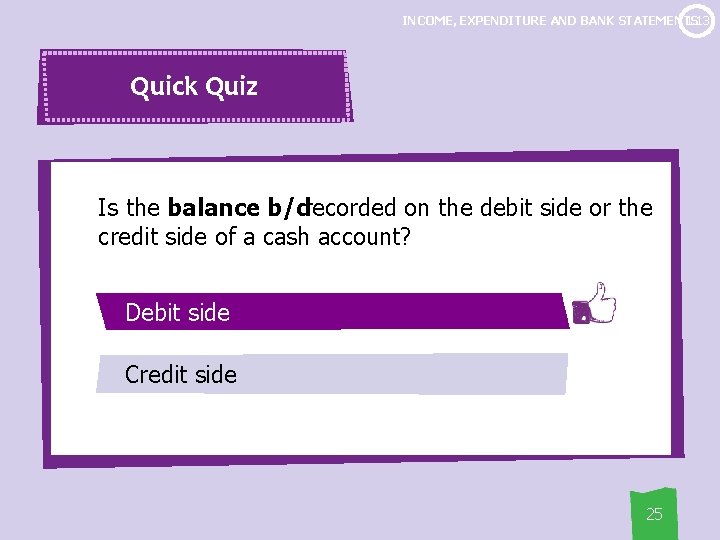
1. 13 INCOME, EXPENDITURE AND BANK STATEMENTS Quick Quiz Is the balance b/drecorded on the debit side or the credit side of a cash account? Debit side Credit side 25
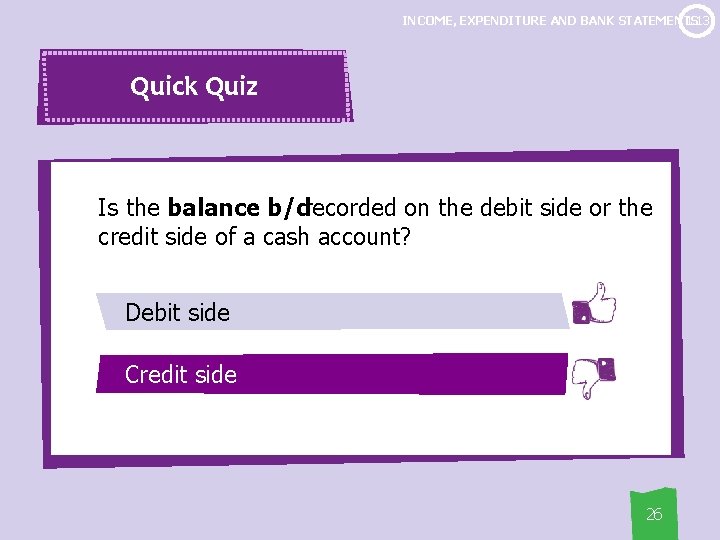
1. 13 INCOME, EXPENDITURE AND BANK STATEMENTS Quick Quiz Is the balance b/drecorded on the debit side or the credit side of a cash account? Debit side Credit side 26
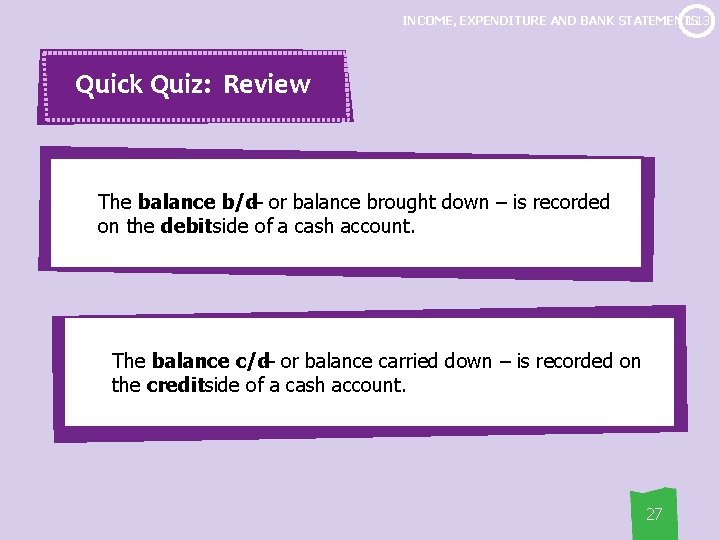
1. 13 INCOME, EXPENDITURE AND BANK STATEMENTS Quick Quiz: Review The balance b/d– or balance brought down – is recorded on the debit side of a cash account. The balance c/d– or balance carried down – is recorded on the creditside of a cash account. 27
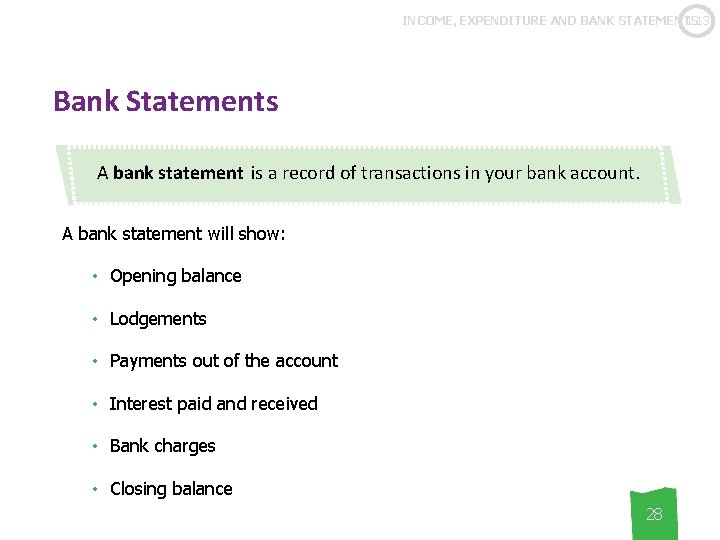
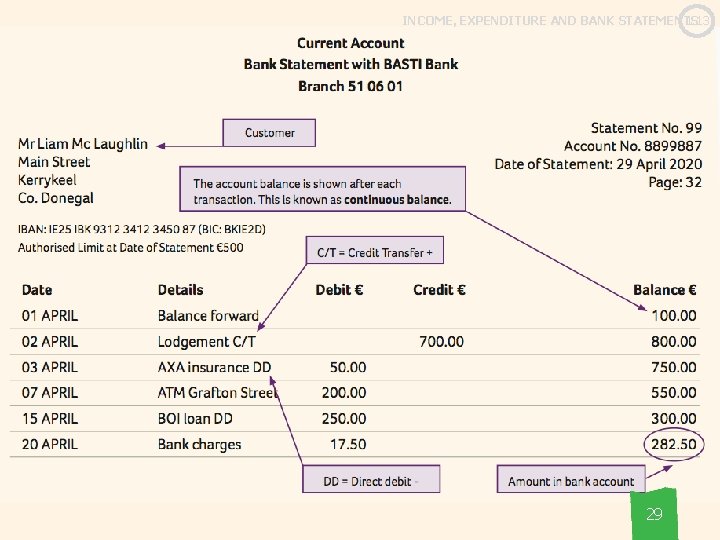
1. 13 INCOME, EXPENDITURE AND BANK STATEMENTS Bank Statements A bank statement is a record of transactions in your bank account. A bank statement will show: • Opening balance • Lodgements • Payments out of the account • Interest paid and received • Bank charges • Closing balance 28
1. 13 INCOME, EXPENDITURE AND BANK STATEMENTS 29
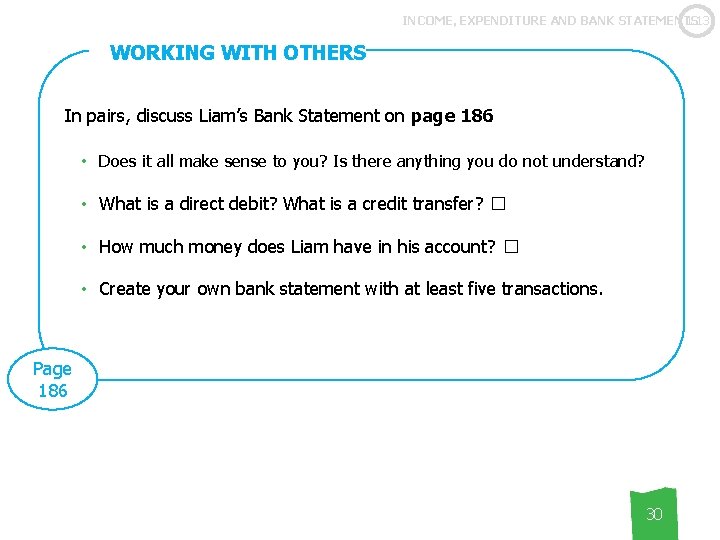
1. 13 INCOME, EXPENDITURE AND BANK STATEMENTS WORKING WITH OTHERS In pairs, discuss Liam’s Bank Statement on page 186. • Does it all make sense to you? Is there anything you do not understand? • What is a direct debit? What is a credit transfer? � #04 AFEF • How much money does Liam have in his account? � • Create your own bank statement with at least five transactions. Page 186 30
1. 13 INCOME, EXPENDITURE AND BANK STATEMENTS Time to think 1. Imagine you are a bank. A customer lodges money into his or her account. • Explain why you record it on the credit side. 2. Find out the meaning of the term ‘liability’. • Is a lodgement a liability from the bank’s perspective? 3. Sometimes the closing balance on the Bank Statement differs from the customer’s own records. • Can you suggest why this might be the case? 31
1. 13 INCOME, EXPENDITURE AND BANK STATEMENTS WORKING WITH OTHERS In pairs, explain all the transactions on Luke’s bank statement on page 188, in the order they occur. • Luke is thinking about buying a second-hand car and borrowing from the bank. Compare and contrast an overdraft with a bank loan. #04 AFEF • What information might the bank require from Luke before granting a loan? • If the bank refuses a loan, what other options might Luke have? Page 188 32
1. 13 INCOME, EXPENDITURE AND BANK STATEMENTS N I G N I K C CHE 1. What is the purpose of a bank statement? 2. Name three items that are included on a bank statement. 3. Why does a bank credit a lodgement. 33
1. 13 INCOME, EXPENDITURE AND BANK STATEMENTS 34 34
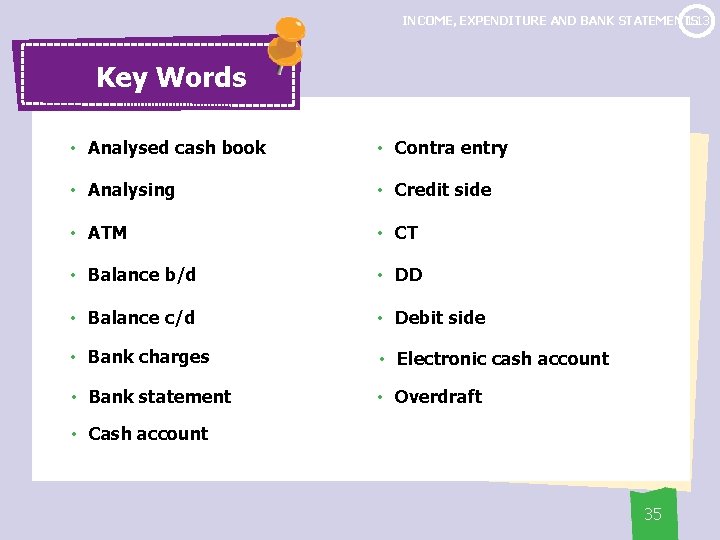
1. 13 INCOME, EXPENDITURE AND BANK STATEMENTS Key Words • Analysed cash book • Contra entry • Analysing • Credit side • ATM • CT • Balance b/d • DD • Balance c/d • Debit side • Bank charges • Electronic cash account • Bank statement • Overdraft • Cash account 35
- Slides: 35