
BCS Level 4 Certificate in Network Systems and
BCS Level 4 Certificate in Network Systems and Architecture NSa. A-QAN_60305472 1 - Load Balancing Failures
1. Load Balancing Failures
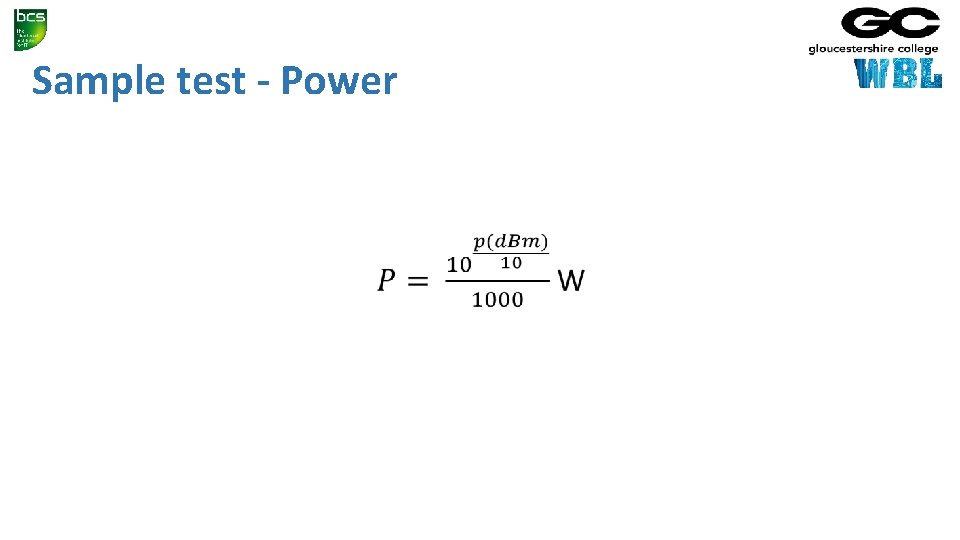
Sample test - Power •
Round Robin DNS • Round-robin (RR) is one of the algorithms employed by process and network schedulers in computing • As the term is generally used, time slices (also known as time quanta) are assigned to each process in equal portions and in circular order, handling all processes without priority (also known as cyclic executive) • Round robin DNS is mainly used to balance the load of Web servers that are geographically distributed • Commonly used in server farms • Naïve load balancing scheme • Provides simplistic redundancy (no single point of failure)
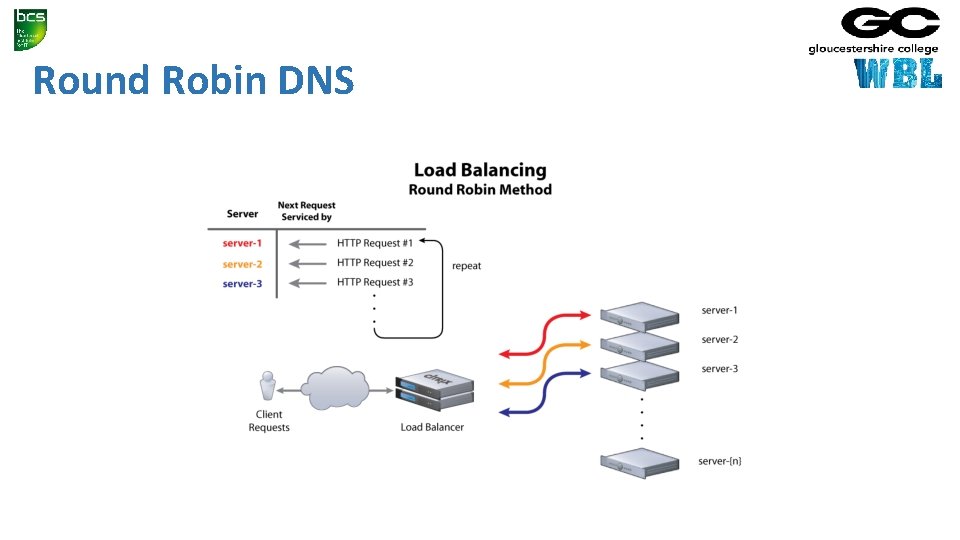
Round Robin DNS
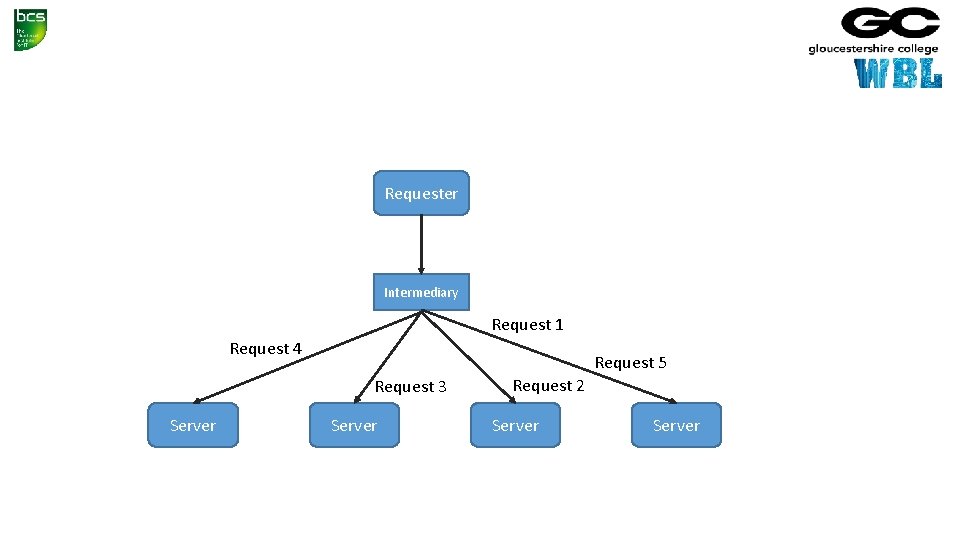
Requester Intermediary Request 1 Request 4 Request 5 Request 3 Server Request 2 Server
Causes and Impact of DNS Round Robin Failures 1. 1 Describe the causes and impact of DNS round robin failures and summarise the appropriate response for each. • misconfiguration - loss of connection to one/all nodes; • single/multiple node failure(s) - intermittent connection; • all nodes fail - complete outage. 1. 2 the Explain causes and consequences of network load balancer failures and summarise appropriate response for each. • • • misconfiguration - loss of connection to one / some nodes increasing load on remaining nodes; misconfiguration – loss of connection to all nodes; single node failure - intermittent connection; single/multiple node failures - intermittent loss of access; all nodes failure - complete outage.
Causes of RR Failures • Misconfiguration - loss of connection to one/all nodes • • • Security Port misconfiguration Permissions – services need to be registered Timing settings DNS A records Different server configurations • Single/multiple node failure(s) - intermittent connection • Single point of failure • Multiple node failure • Scaling • vertically - keep adding resources to your single system until you run out of space (memory) • Horizontally - keep adding more small autonomous systems, each having it's own portion of resources that in sum give you the power and performance you need • See document on Wiki – Features of the Load Balancer • All nodes fail - complete outage
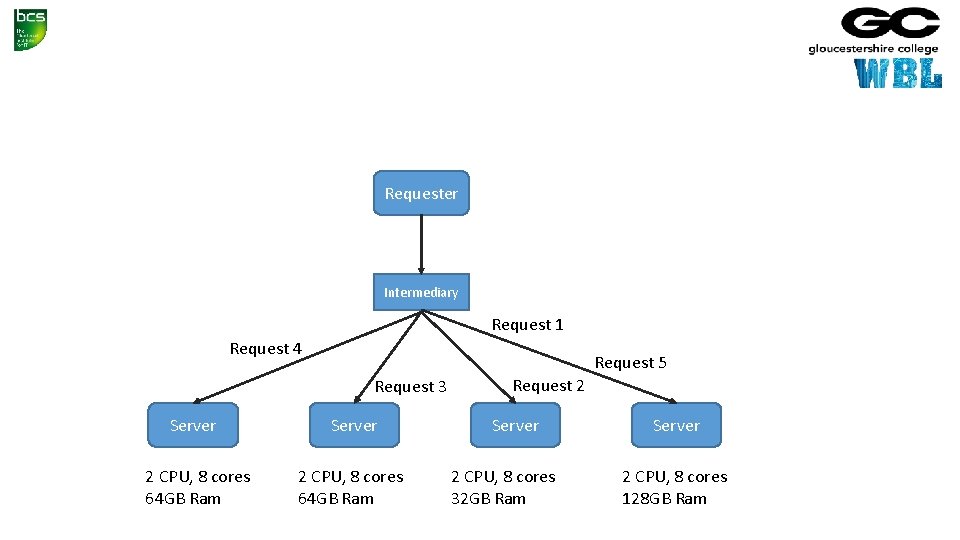
Requester Intermediary Request 1 Request 4 Request 5 Request 3 Server 2 CPU, 8 cores 64 GB Ram Request 2 Server 2 CPU, 8 cores 32 GB Ram Server 2 CPU, 8 cores 128 GB Ram
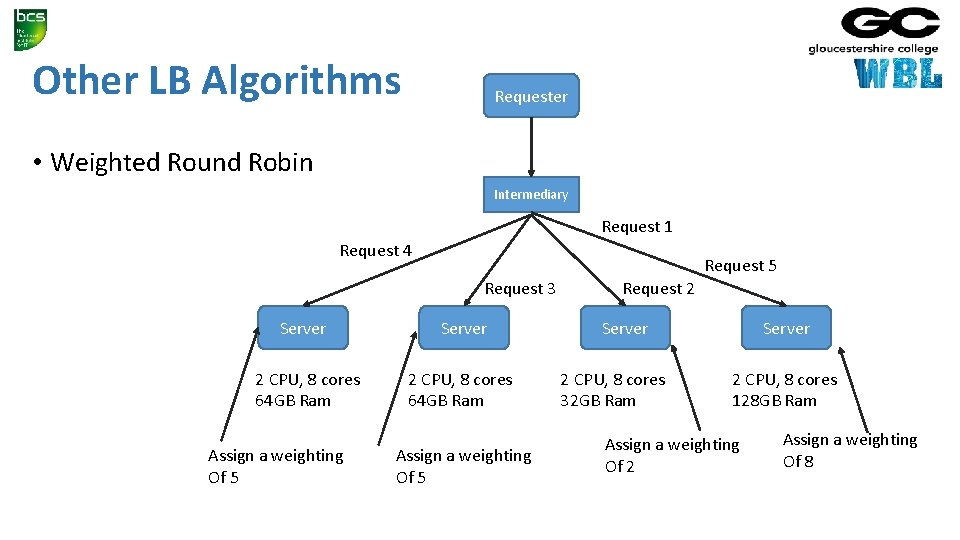
Other LB Algorithms Requester • Weighted Round Robin Intermediary Request 1 Request 4 Request 5 Request 3 Server 2 CPU, 8 cores 64 GB Ram Assign a weighting Of 5 Request 2 Server 2 CPU, 8 cores 32 GB Ram 2 CPU, 8 cores 128 GB Ram Assign a weighting Of 2 Assign a weighting Of 8
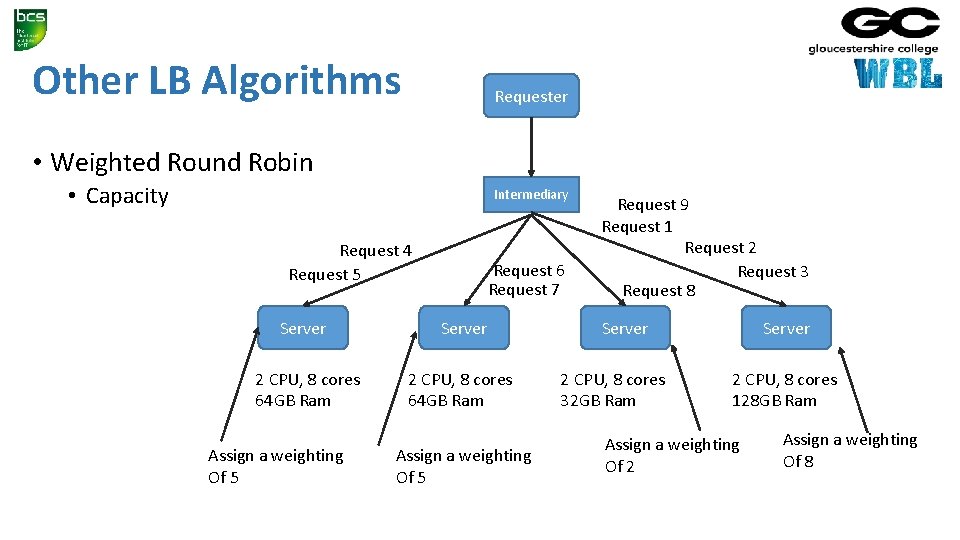
Other LB Algorithms Requester • Weighted Round Robin • Capacity Intermediary Request 4 Request 5 Request 6 Request 7 Server 2 CPU, 8 cores 64 GB Ram Assign a weighting Of 5 Request 9 Request 1 Request 2 Request 3 Request 8 Server 2 CPU, 8 cores 32 GB Ram 2 CPU, 8 cores 128 GB Ram Assign a weighting Of 2 Assign a weighting Of 8
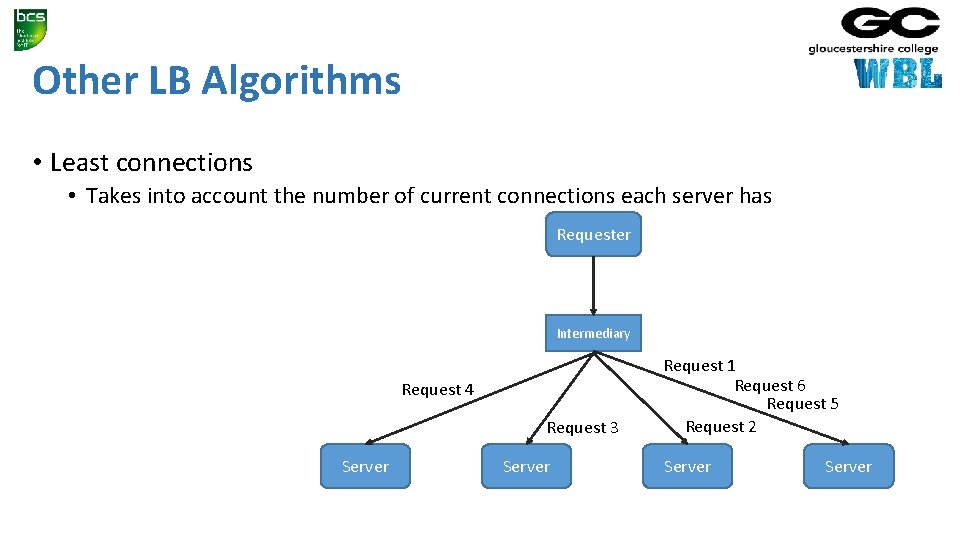
Other LB Algorithms • Least connections • Takes into account the number of current connections each server has Requester Intermediary Request 4 Request 3 Server Request 1 Request 6 Request 5 Request 2 Server
Other LB Algorithms • Weighted least connections • Takes into account the number of current connections AND the weighting of each server has
Other LB Algorithms • Random • Uses random number generator • Nodes need to be similarly configured
Causes and Consequences of NLB Failures • Windows NLB – Not recommended -> use Azure • Bad configurations • Nodes not of the same capability
- Slides: 15