
bcmsa devcogroup com What is a Striking Hazard
bcmsa. devcogroup. com What is a Striking Hazard? bcmsa. devcogroup. com
bcmsa. devcogroup. com Disclaimer The information presented in this publication is intended for general use by BCMSA members and may not apply to every circumstance. It is not a definitive guide to government regulations and does not relieve persons using this publication from their responsibilities under applicable legislation. BCMSA and / or Devco does not guarantee the accuracy of, nor assume liability for the information presented. Individual advice is available from the Association. Copyright © 2020 BCMSA All rights reserved. Any reproduction in whole or in part without expressed written consent of the BC Municipal Safety Association, or Devco is prohibited.
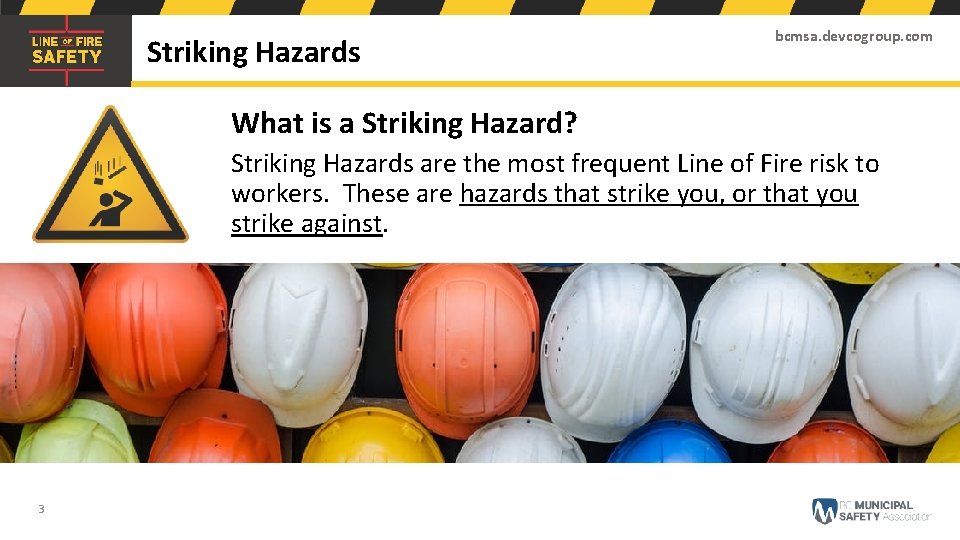
Striking Hazards bcmsa. devcogroup. com What is a Striking Hazard? Striking Hazards are the most frequent Line of Fire risk to workers. These are hazards that strike you, or that you strike against. 3
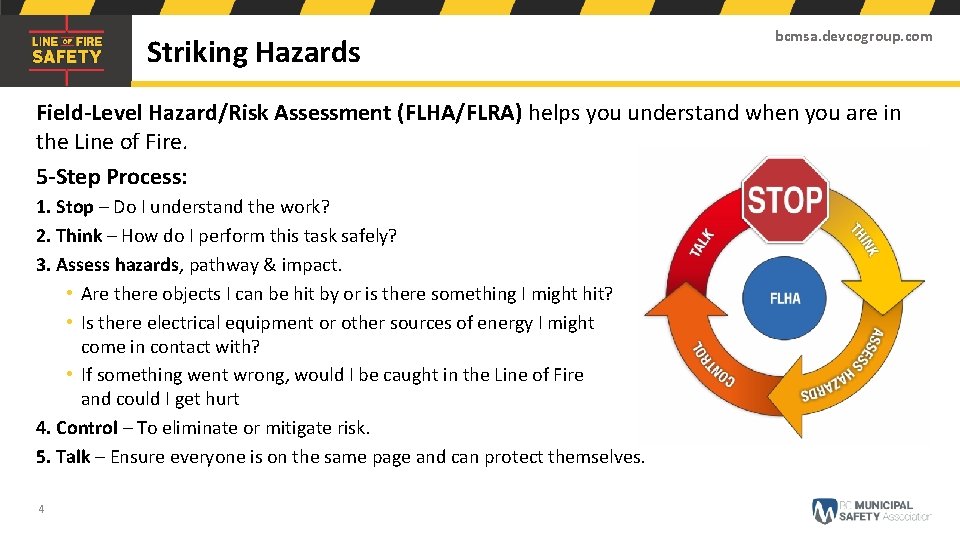
Striking Hazards bcmsa. devcogroup. com Field-Level Hazard/Risk Assessment (FLHA/FLRA) helps you understand when you are in the Line of Fire. 5 -Step Process: 1. Stop – Do I understand the work? 2. Think – How do I perform this task safely? 3. Assess hazards, pathway & impact. • Are there objects I can be hit by or is there something I might hit? • Is there electrical equipment or other sources of energy I might come in contact with? • If something went wrong, would I be caught in the Line of Fire and could I get hurt 4. Control – To eliminate or mitigate risk. 5. Talk – Ensure everyone is on the same page and can protect themselves. 4

Striking Hazards Focus on Body Placement Be alert for conditions that may change where line of fire exists, including flying, falling, swinging or rolling objects. An object can travel with speed and force potentially causing bruises, broken bones and puncture injuries when a worker is struck. Flying Objects – When a tool/equipment breaks apart propelling broken shards or when debris is expelled from a tool with considerable force at the worker. Falling Objects – Can drop from building roofs, scaffolding, cranes, and forklifts striking workers working below or nearby. The items could be anything lying around. (i. e. Tools, bolts, lumber) Swinging Objects – An injury can occur when objects are lifted and something causes the load to sway with a worker located within the swing radius. Rolling Objects – Being struck by mobile equipment or vehicles causing injuries due to the weight and force. 5 bcmsa. devcogroup. com
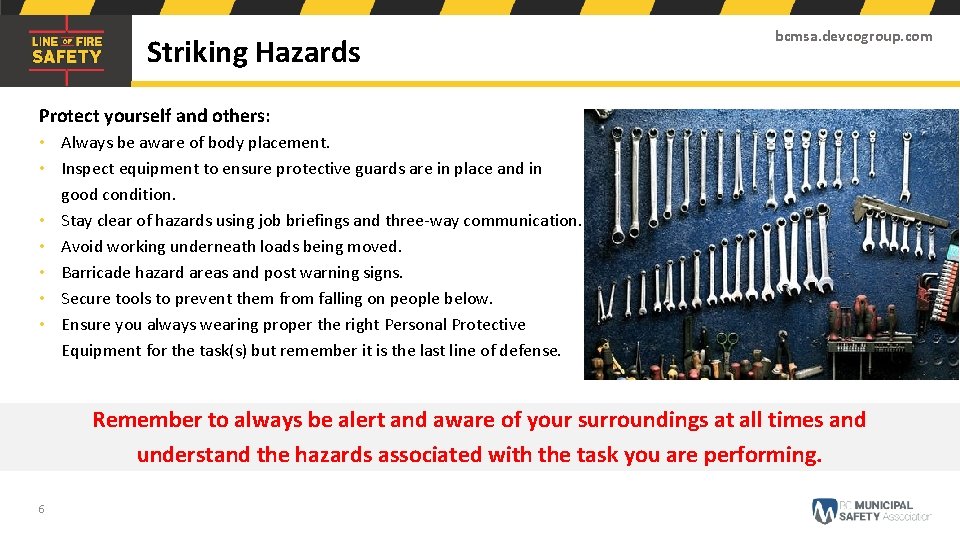
Striking Hazards bcmsa. devcogroup. com Protect yourself and others: • Always be aware of body placement. • Inspect equipment to ensure protective guards are in place and in good condition. • Stay clear of hazards using job briefings and three-way communication. • Avoid working underneath loads being moved. • Barricade hazard areas and post warning signs. • Secure tools to prevent them from falling on people below. • Ensure you always wearing proper the right Personal Protective Equipment for the task(s) but remember it is the last line of defense. Remember to always be alert and aware of your surroundings at all times and understand the hazards associated with the task you are performing. 6
- Slides: 6