
BCH 202 GENERAL BIOCHEMISTRY II OSMOTIC SOLUTIONS Hypertonic
BCH 202 (GENERAL BIOCHEMISTRY II) OSMOTIC SOLUTIONS (Hypertonic, Hypotonic and Isotonic) OSMOTIC PRESSURE AND EFFECT ON CELLS. DONNA EQUILIBRIUM

MODULE 1
OSMOSIS • Osmosis is the spontaneous net movement of solvent molecules through a selectively permeable membrane into a region of higher solute concentration, in the direction that tends to equalize the solute concentrations on the two sides. • It may also be used to describe a physical process in which any solvent moves across a selectively permeable membrane (permeable to the solvent, but not the solute) separating two solutions of different concentrations.

Figure 1: Diagram representing Osmosis; The process of osmosis over a semi-permeable membrane. The blue dots represent particles driving the osmotic gradient.
Factors affecting Osmosis 1. Osmotic Pressure; • Osmotic pressure is the minimum pressure which needs to be applied to a solution to prevent the inward flow of its pure solvent across a semipermeable membrane. It is also defined as the measure of the tendency of a solution to take in pure solvent by osmosis. • Potential osmotic pressure is the maximum osmotic pressure that could develop in a solution if it were separated from its pure solvent by a semi-permeable membrane.
2. Osmotic Gradient: • The osmotic gradient is the difference in concentration between two solutions on either side of a semi-permeable membrane, and is used to tell the difference in percentages of the concentration of a specific particle dissolved in a solution.
TONICITY • Tonicity is a measure of the effective osmotic pressure gradient; the water potential of two solutions separated by a semi-permeable cell membrane. • In other words, tonicity is the relative concentration of solutes dissolved in solution which determine the direction and extent of diffusion. • It is commonly used when describing the response of cells immersed in an external solution. • There are three classifications of tonicity that one solution can have relative to another: hypertonic, hypotonic, and isotonic.
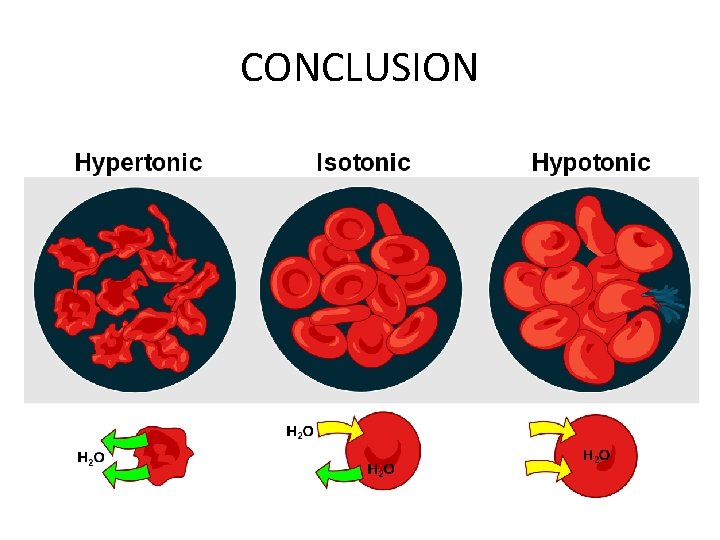
1. Hypertonic Solution: • A hypertonic solution has a greater concentration of solutes than another solution. • The tonicity of a solution usually refers to its solute concentration relative to that of another solution on the opposite side of a cell membrane; a solution outside of a cell is called hypertonic if it has a greater concentration of solutes than the cytosol inside the cell.
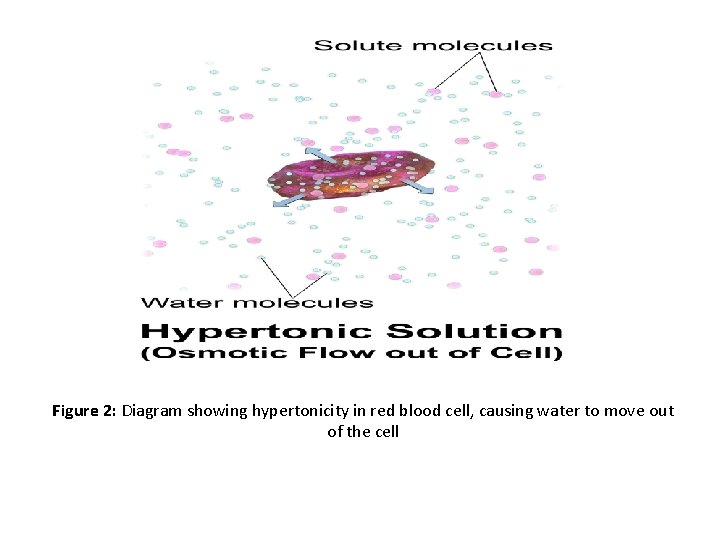
Figure 2: Diagram showing hypertonicity in red blood cell, causing water to move out of the cell
2. Hypotonic Solution: • A hypotonic solution has a lower concentration of solutes than another solution. • A solution outside of a cell is called hypotonic if it has a lower concentration of solutes relative to the cytosol. • Due to osmotic pressure, water diffuses into the cell, and the cell often appears turgid, or bloated.
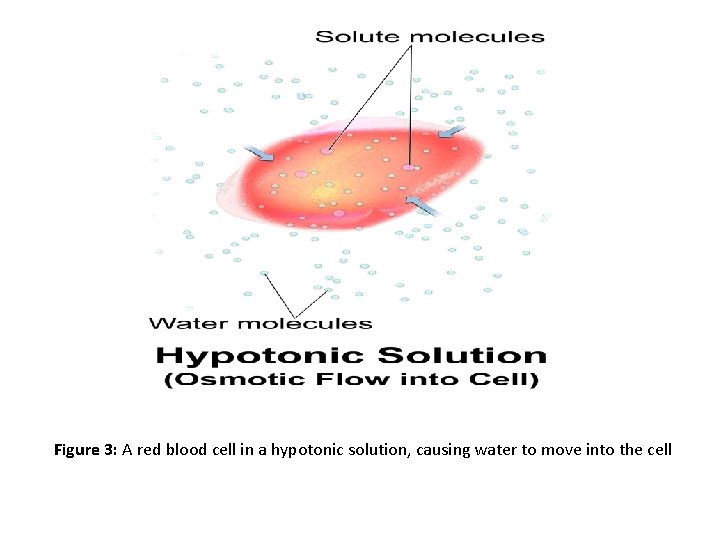
Figure 3: A red blood cell in a hypotonic solution, causing water to move into the cell
3. Isotonic Solution: • A solution is isotonic when its effective osmole concentration is the same as that of another solution. • The solutions on either side of a cell membrane are isotonic if the concentration of solutes outside the cell is equal to the concentration of solutes inside the cell. • In this case the cell neither swells nor shrinks because there is no concentration gradient to induce the diffusion of large amounts of water across the cell membrane
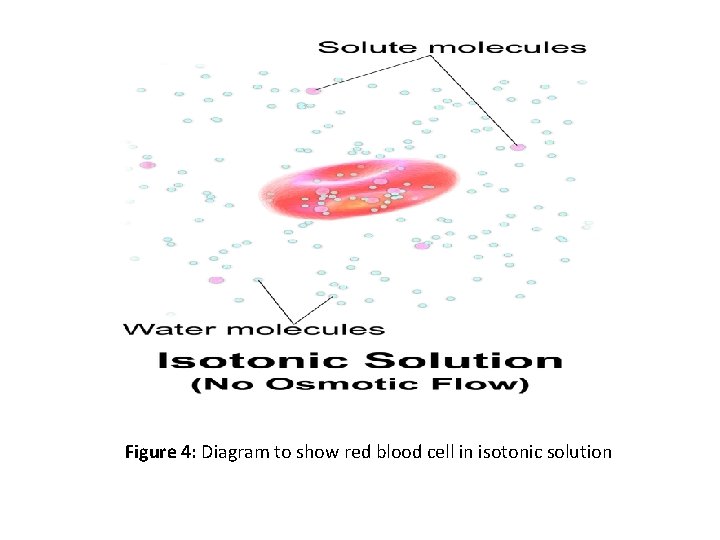
Figure 4: Diagram to show red blood cell in isotonic solution
CONCLUSION
- Slides: 14