
BC Science Connections 9 Unit 1 The continuity
BC Science Connections 9 Unit 1: The continuity of life depends on cells being derived from cells
Topic 1. 3: How do living things sexually reproduce? • Male and female reproductive cells combine to produce a zygote. • Reproductive cells are formed by meiosis. • Development of the human zygote occurs in stages. • Sexual reproduction takes many forms.
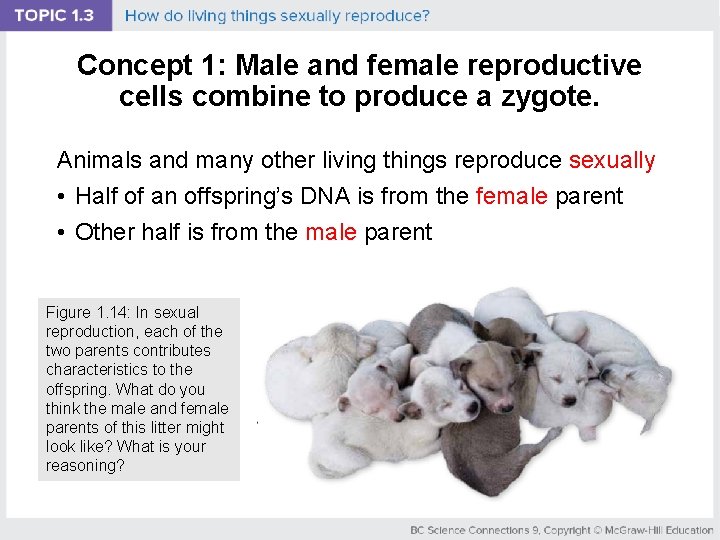
Concept 1: Male and female reproductive cells combine to produce a zygote. Animals and many other living things reproduce sexually • Half of an offspring’s DNA is from the female parent • Other half is from the male parent Figure 1. 14: In sexual reproduction, each of the two parents contributes characteristics to the offspring. What do you think the male and female parents of this litter might look like? What is your reasoning?
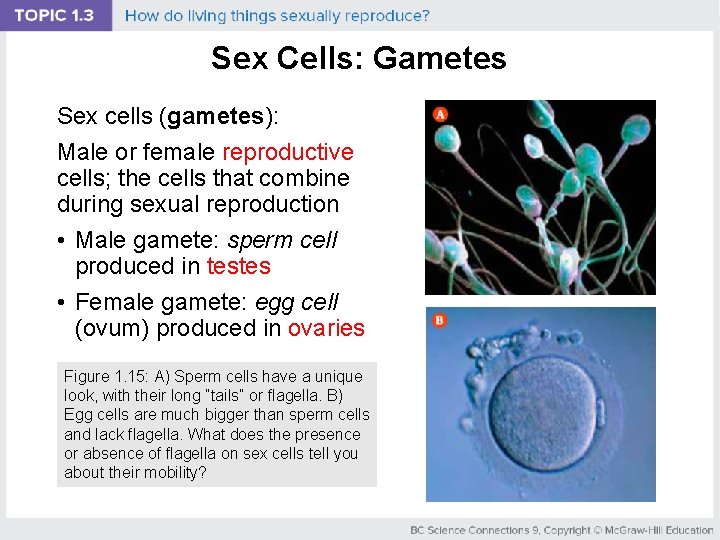
Sex Cells: Gametes Sex cells (gametes): Male or female reproductive cells; the cells that combine during sexual reproduction • Male gamete: sperm cell produced in testes • Female gamete: egg cell (ovum) produced in ovaries Figure 1. 15: A) Sperm cells have a unique look, with their long “tails” or flagella. B) Egg cells are much bigger than sperm cells and lack flagella. What does the presence or absence of flagella on sex cells tell you about their mobility?
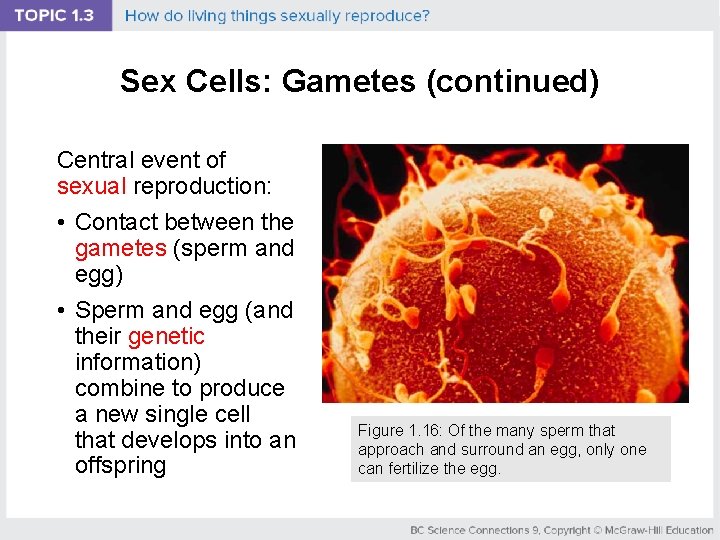
Sex Cells: Gametes (continued) Central event of sexual reproduction: • Contact between the gametes (sperm and egg) • Sperm and egg (and their genetic information) combine to produce a new single cell that develops into an offspring Figure 1. 16: Of the many sperm that approach and surround an egg, only one can fertilize the egg.
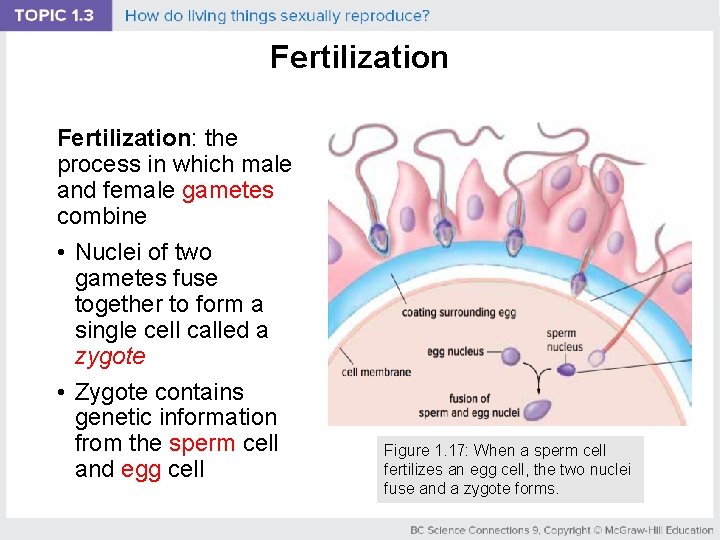
Fertilization: the process in which male and female gametes combine • Nuclei of two gametes fuse together to form a single cell called a zygote • Zygote contains genetic information from the sperm cell and egg cell Figure 1. 17: When a sperm cell fertilizes an egg cell, the two nuclei fuse and a zygote forms.
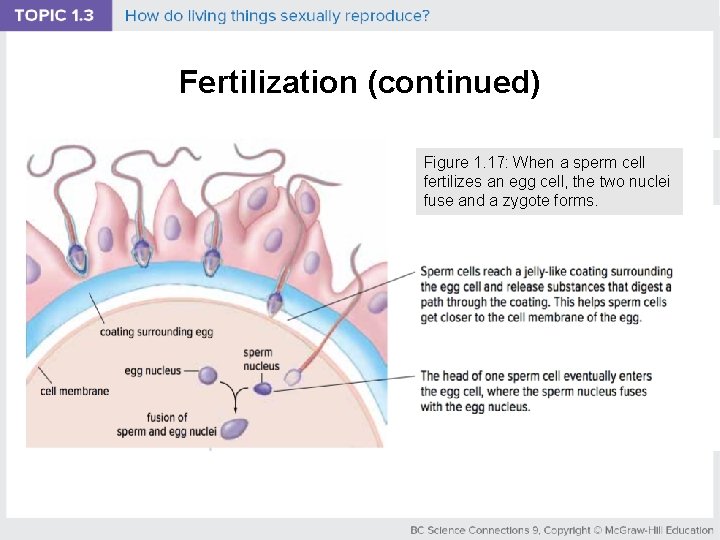
Fertilization (continued) Figure 1. 17: When a sperm cell fertilizes an egg cell, the two nuclei fuse and a zygote forms.
Discussion Questions 1. How does the process of fertilization occur? 2. What is needed for fertilization to occur?
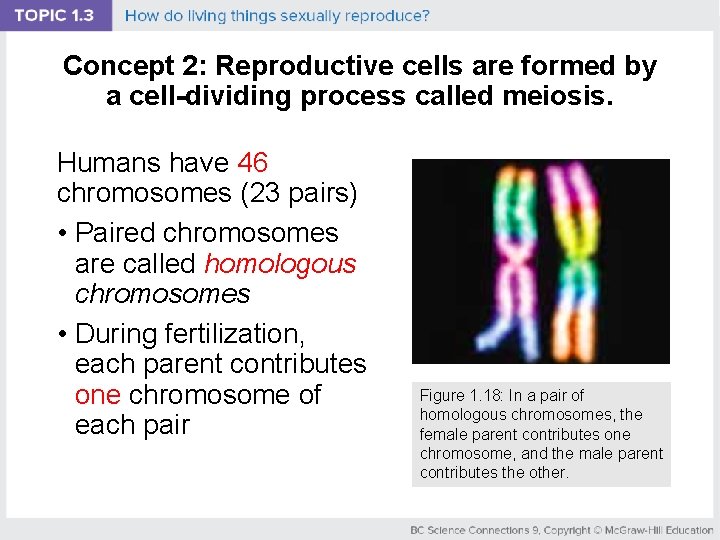
Concept 2: Reproductive cells are formed by a cell-dividing process called meiosis. Humans have 46 chromosomes (23 pairs) • Paired chromosomes are called homologous chromosomes • During fertilization, each parent contributes one chromosome of each pair Figure 1. 18: In a pair of homologous chromosomes, the female parent contributes one chromosome, and the male parent contributes the other.

Number of Chromosomes in Cells: Haploid and Diploid • Gametes are haploid cells (have half the number of normal chromosomes) • When they combine in sexual reproduction, they form a zygote which is a diploid cell (have the full number of chromosomes) • Body cells are diploid cells (example: skin cells)
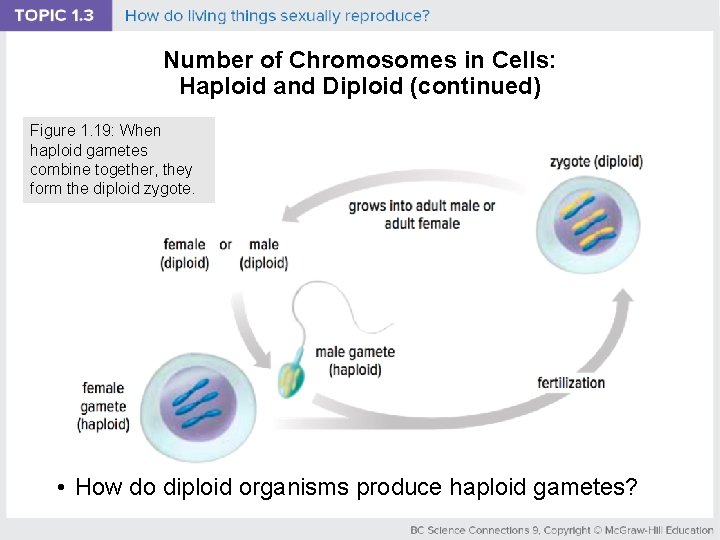
Number of Chromosomes in Cells: Haploid and Diploid (continued) Figure 1. 19: When haploid gametes combine together, they form the diploid zygote. • How do diploid organisms produce haploid gametes?
Meiosis Produces Unique Gametes Cells that produce gametes undergo a type of cell division called meiosis • Meiosis: a diploid cell divides twice to produce four haploid cells • Offspring are genetically different from parents and from one another (gametes from parents are not genetically the same)
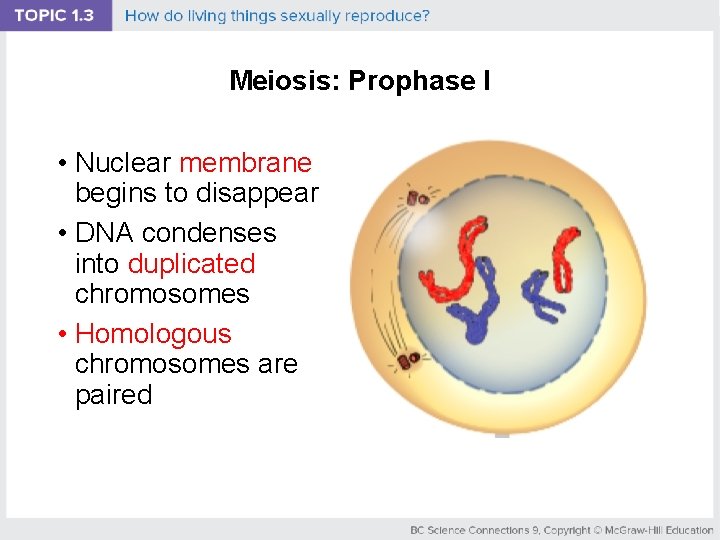
Meiosis: Prophase I • Nuclear membrane begins to disappear • DNA condenses into duplicated chromosomes • Homologous chromosomes are paired
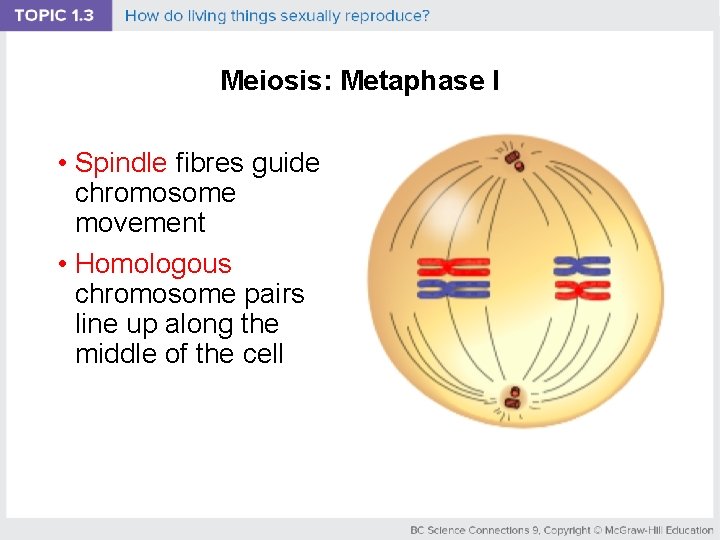
Meiosis: Metaphase I • Spindle fibres guide chromosome movement • Homologous chromosome pairs line up along the middle of the cell
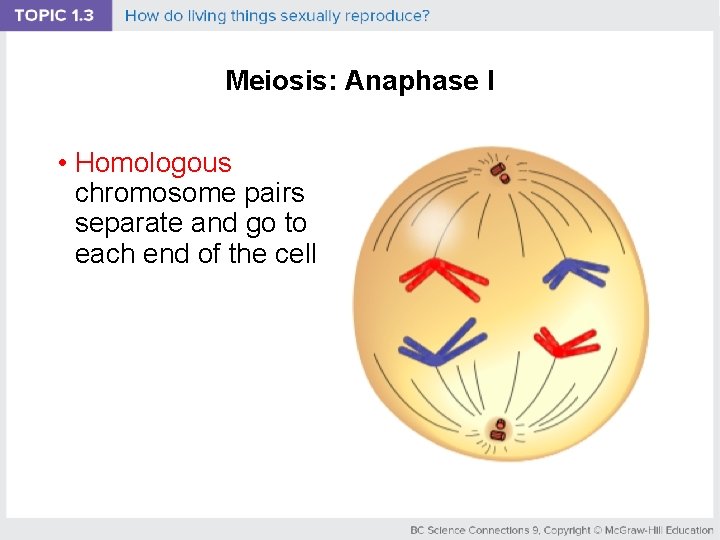
Meiosis: Anaphase I • Homologous chromosome pairs separate and go to each end of the cell
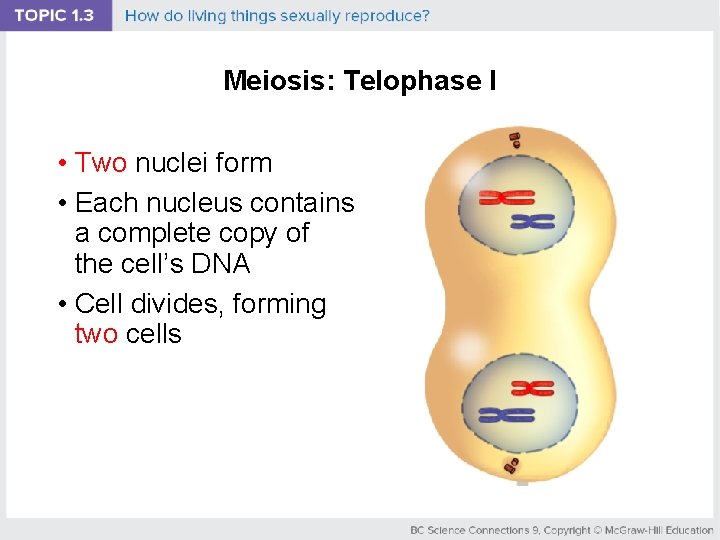
Meiosis: Telophase I • Two nuclei form • Each nucleus contains a complete copy of the cell’s DNA • Cell divides, forming two cells
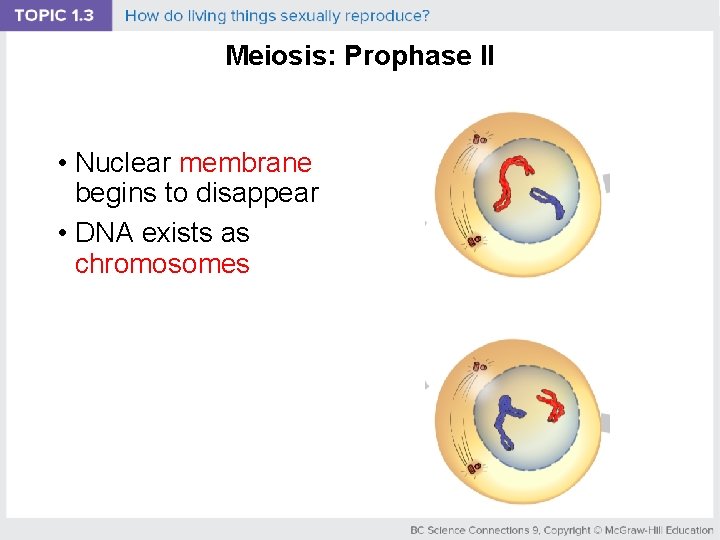
Meiosis: Prophase II • Nuclear membrane begins to disappear • DNA exists as chromosomes
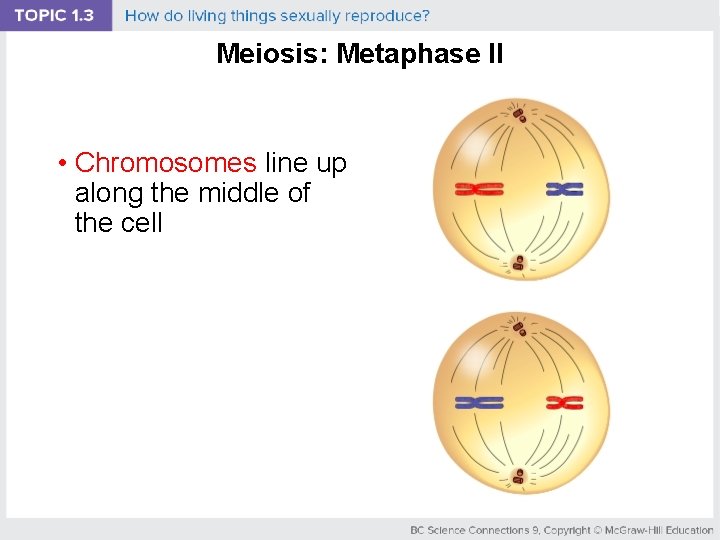
Meiosis: Metaphase II • Chromosomes line up along the middle of the cell
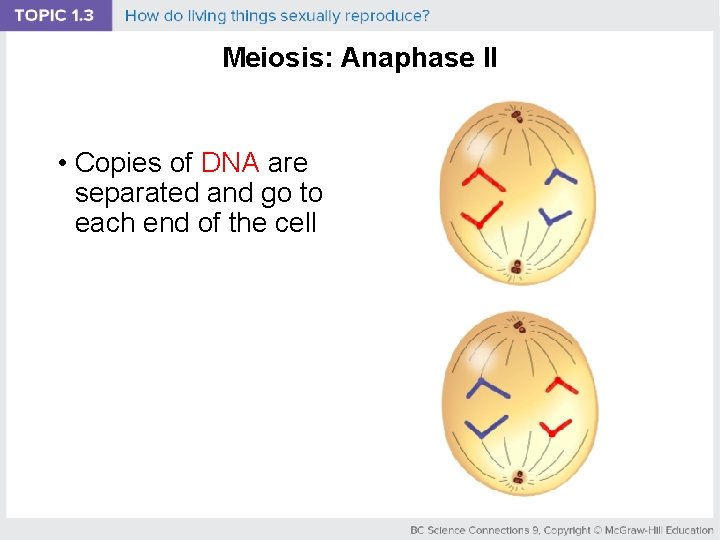
Meiosis: Anaphase II • Copies of DNA are separated and go to each end of the cell
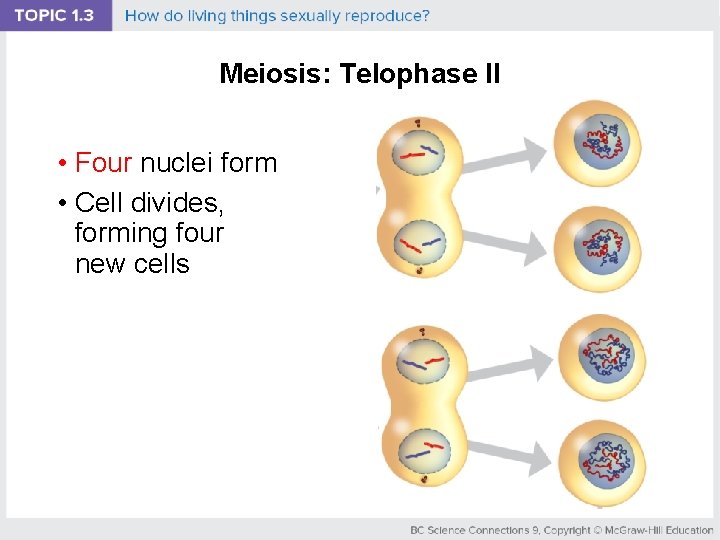
Meiosis: Telophase II • Four nuclei form • Cell divides, forming four new cells
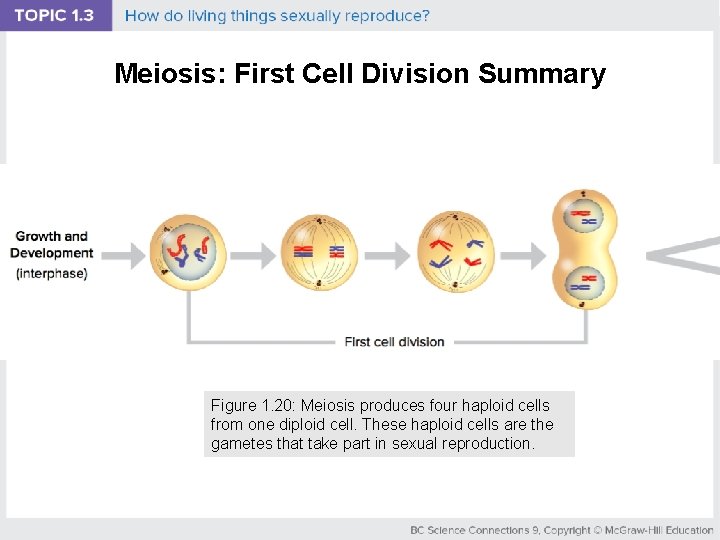
Meiosis: First Cell Division Summary Figure 1. 20: Meiosis produces four haploid cells from one diploid cell. These haploid cells are the gametes that take part in sexual reproduction.
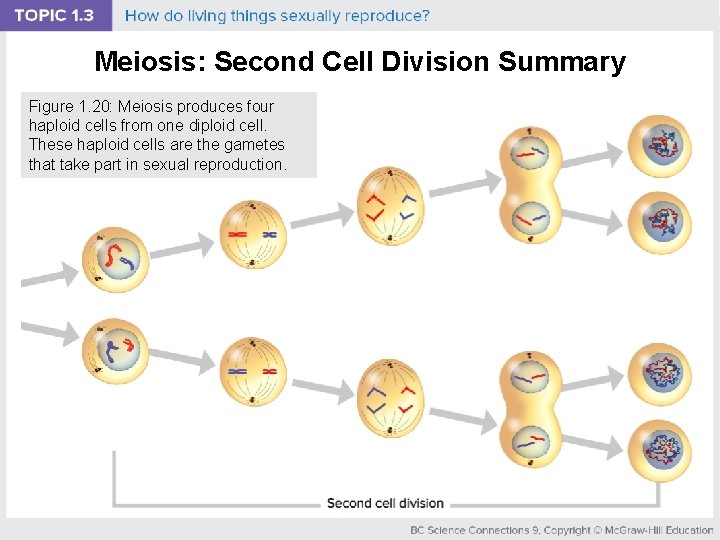
Meiosis: Second Cell Division Summary Figure 1. 20: Meiosis produces four haploid cells from one diploid cell. These haploid cells are the gametes that take part in sexual reproduction.
Discussion Questions 1. What role does meiosis play in sexual reproduction? 2. Use a graphic organizer to show meiosis is similar to and different from mitosis.
- Slides: 23