
BC Science Connections 8 UNIT 4 The theory
BC Science Connections 8

UNIT 4 The theory of plate tectonics explains Earth’s geological processes TOPIC 4. 4 How do geological features and processes affect where and how we live?

Topic 4. 4: How do geological features and processes affect where and how we live? Gwaii Haanas Legacy Pole • Sacred-One-Standing-and. Moving figure at the top of pole • Story: this figure holds Haida Gwaii steady with a tall pole, but now and then a pine marten races along the pole, creating vibrations that cause earthquakes • Haida Gwaii: 7. 7 magnitude earthquake in 2012 that stopped the flow of water to the hot springs The Gwaii Haanas Legacy Pole in Gwaii Hananas National Park

Concept 1: The geological history of British Columbia helps shape our lives. • Plate tectonics explain British Columbia’s geological processes – The geology of different parts of B. C. has a powerful impact on the characteristics of a region Figure 4. 21
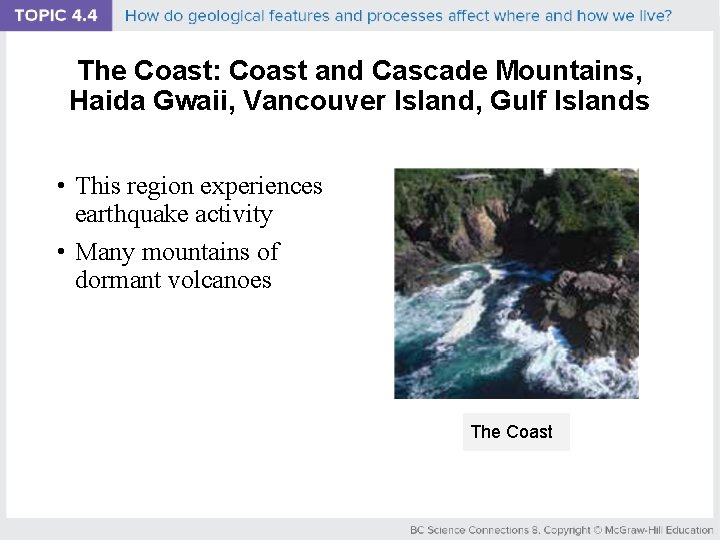
The Coast: Coast and Cascade Mountains, Haida Gwaii, Vancouver Island, Gulf Islands • This region experiences earthquake activity • Many mountains of dormant volcanoes The Coast
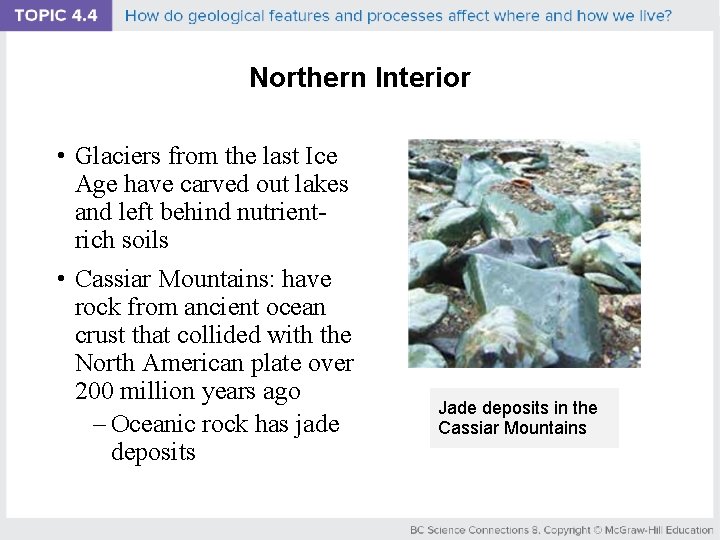
Northern Interior • Glaciers from the last Ice Age have carved out lakes and left behind nutrientrich soils • Cassiar Mountains: have rock from ancient ocean crust that collided with the North American plate over 200 million years ago – Oceanic rock has jade deposits Jade deposits in the Cassiar Mountains
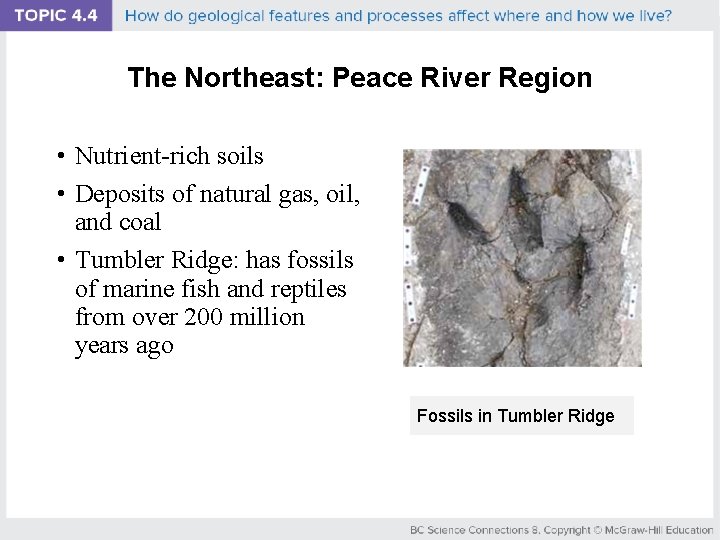
The Northeast: Peace River Region • Nutrient-rich soils • Deposits of natural gas, oil, and coal • Tumbler Ridge: has fossils of marine fish and reptiles from over 200 million years ago Fossils in Tumbler Ridge
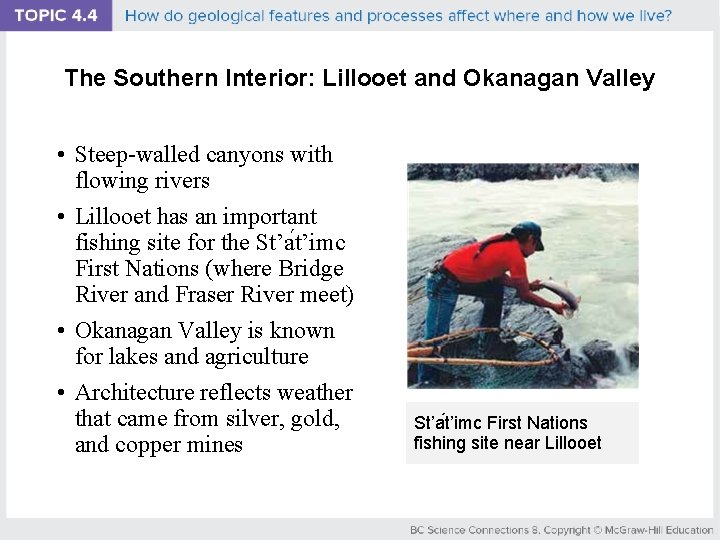
The Southern Interior: Lillooet and Okanagan Valley • Steep-walled canyons with flowing rivers • Lillooet has an important fishing site for the St’a t’imc First Nations (where Bridge River and Fraser River meet) • Okanagan Valley is known for lakes and agriculture • Architecture reflects weather that came from silver, gold, and copper mines St’a t’imc First Nations fishing site near Lillooet
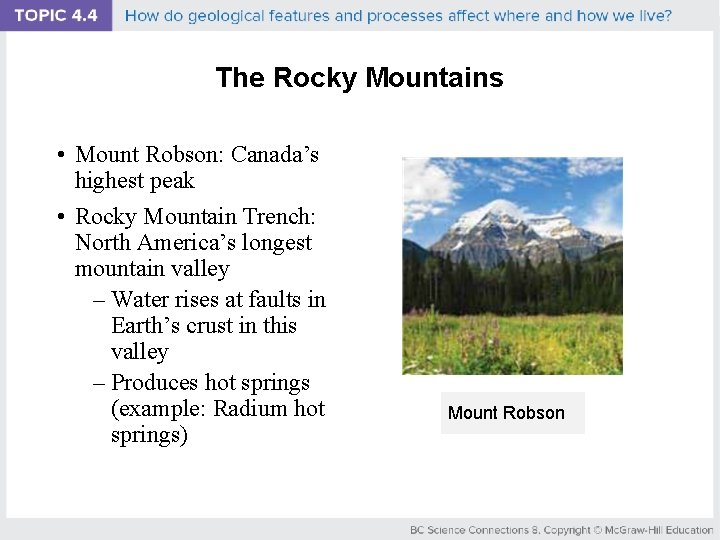
The Rocky Mountains • Mount Robson: Canada’s highest peak • Rocky Mountain Trench: North America’s longest mountain valley – Water rises at faults in Earth’s crust in this valley – Produces hot springs (example: Radium hot springs) Mount Robson
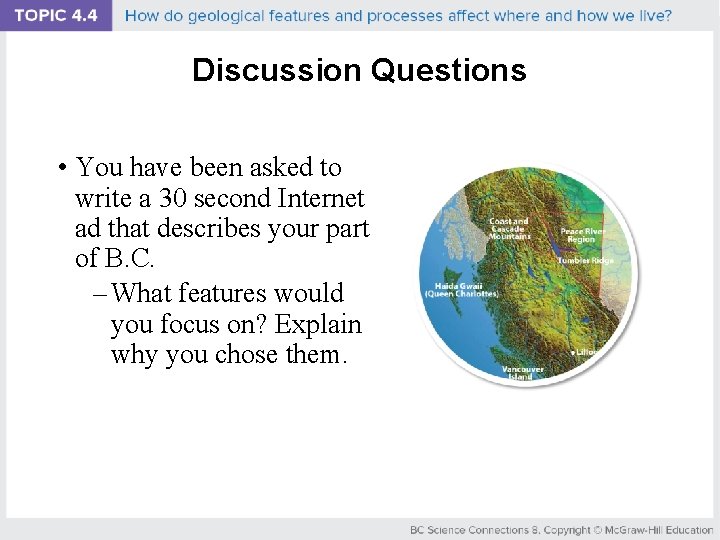
Discussion Questions • You have been asked to write a 30 second Internet ad that describes your part of B. C. – What features would you focus on? Explain why you chose them.
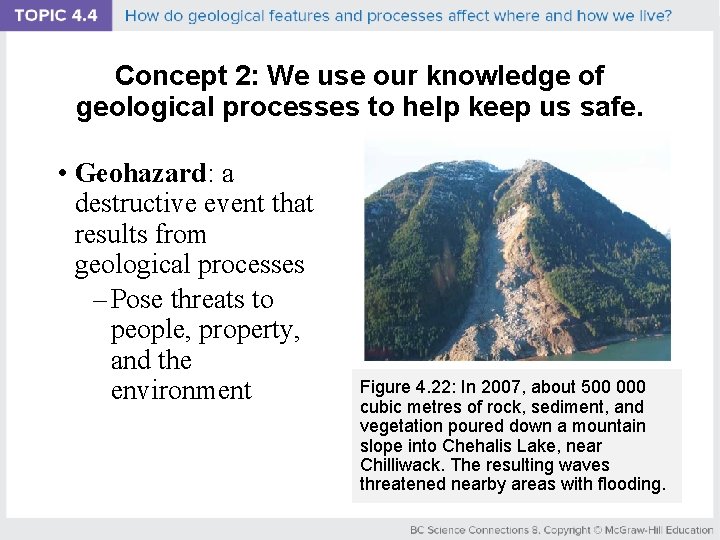
Concept 2: We use our knowledge of geological processes to help keep us safe. • Geohazard: a destructive event that results from geological processes – Pose threats to people, property, and the environment Figure 4. 22: In 2007, about 500 000 cubic metres of rock, sediment, and vegetation poured down a mountain slope into Chehalis Lake, near Chilliwack. The resulting waves threatened nearby areas with flooding.
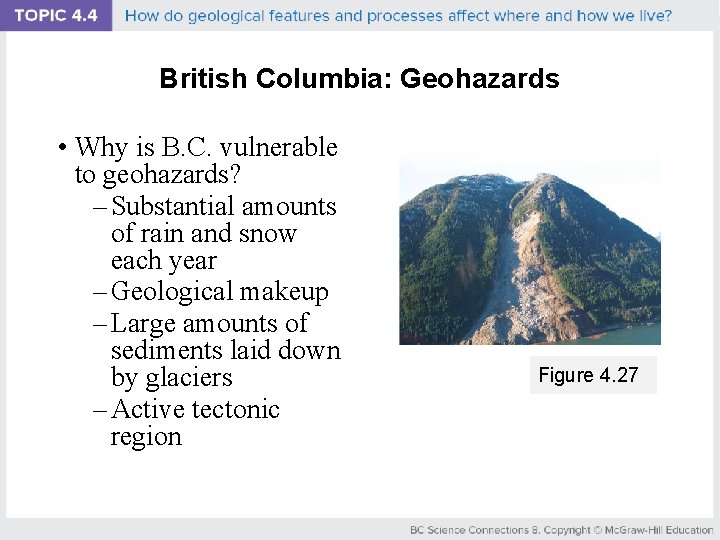
British Columbia: Geohazards • Why is B. C. vulnerable to geohazards? – Substantial amounts of rain and snow each year – Geological makeup – Large amounts of sediments laid down by glaciers – Active tectonic region Figure 4. 27
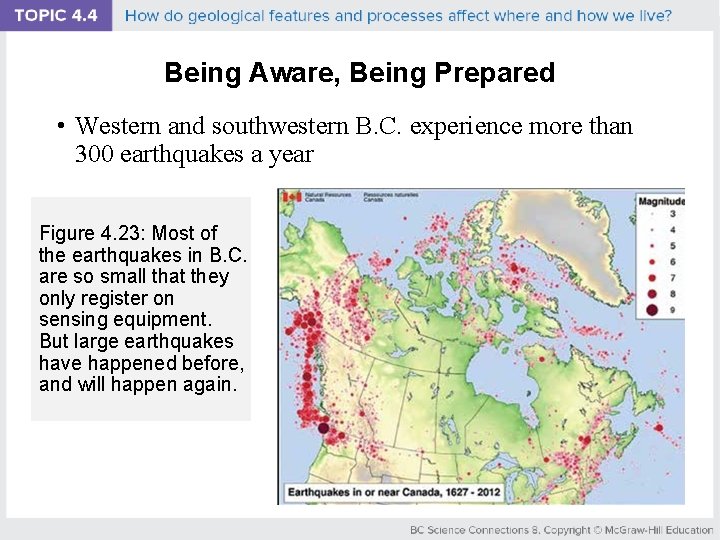
Being Aware, Being Prepared • Western and southwestern B. C. experience more than 300 earthquakes a year Figure 4. 23: Most of the earthquakes in B. C. are so small that they only register on sensing equipment. But large earthquakes have happened before, and will happen again.
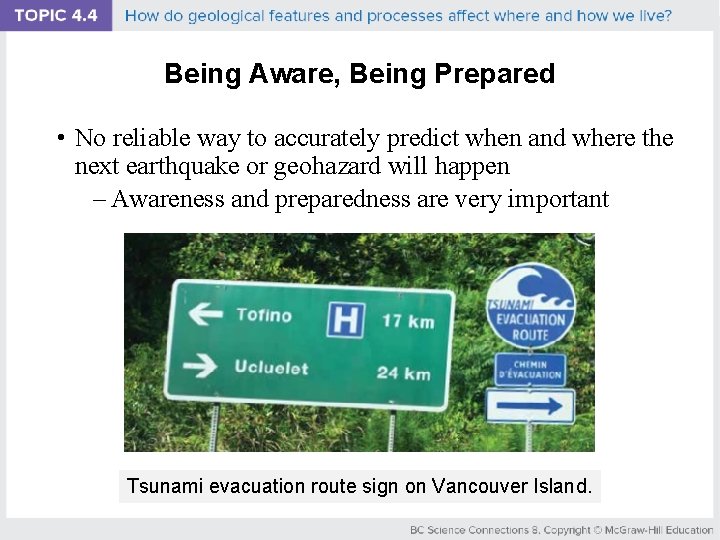
Being Aware, Being Prepared • No reliable way to accurately predict when and where the next earthquake or geohazard will happen – Awareness and preparedness are very important Tsunami evacuation route sign on Vancouver Island.

Discussion Questions • What is a geohazard? Give an example of a geohazard in your area.
Summary: How do geological features and processes affect where and how we live? • The geological history of British Columbia helps shape our lives. • We use knowledge of geological processes to help keep us safe.
- Slides: 16