
BC Science Connections 10 Unit 1 DNA is
BC Science Connections 10 Unit 1: DNA is the foundation for the unity and diversity of living things.
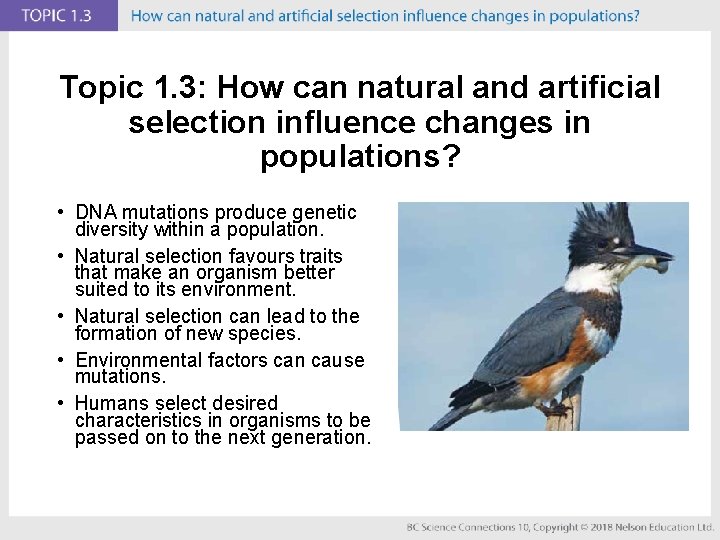
Topic 1. 3: How can natural and artificial selection influence changes in populations? • DNA mutations produce genetic diversity within a population. • Natural selection favours traits that make an organism better suited to its environment. • Natural selection can lead to the formation of new species. • Environmental factors can cause mutations. • Humans select desired characteristics in organisms to be passed on to the next generation.
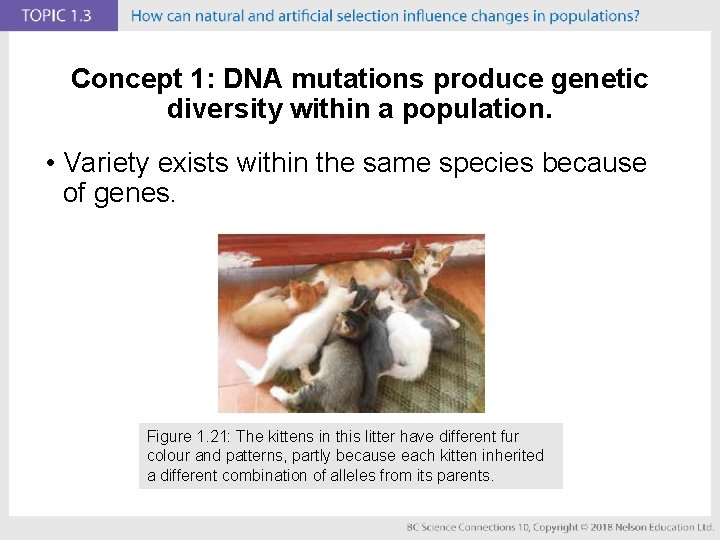
Concept 1: DNA mutations produce genetic diversity within a population. • Variety exists within the same species because of genes. Figure 1. 21: The kittens in this litter have different fur colour and patterns, partly because each kitten inherited a different combination of alleles from its parents.
Mutations • Mutations are a source of genetic variation. • Mutations: a permanent change in the genetic material of an organism • They can occur during DNA replication. • Some mutations can be harmful and can cause a cell to die, malfunction, or multiply uncontrollably. • Some mutations can be beneficial, while others have no effect.
Discussion Questions 1. What is a mutation? Are all mutations harmful? Explain. 2. Explain why mutations are the starting point for genetic variation.
Concept 2: Natural selection favours traits that make an organism better suited to its environment. • Some mutations may provide a selective advantage in changing conditions. • Selective advantage: a genetic advantage that improves an organism’s chance of survival, usually in a changing environment
Natural Selection • Natural selection: the process by which characteristics of a population change over many generations as organisms with heritable traits survive and reproduce, passing their traits to offspring • There must be genetic variation within a species for natural selection to occur.
Selective Pressure • Adaptation: structural or behavioural feature or physiological process that improves the organism’s chance of surviving in its environment to reproduce • Organisms that have an advantageous mutation may survive better in a changing environment.
Natural Selection Acts on Populations • An abiotic factor selects for certain characteristics in some individuals and against other characteristics. • Over time, the population changes because individuals with favourable characteristics survive and reproduce. • The environment exerts selective pressures that result from predators, parasites, and competition for limited resources.
Natural Selection Is Situational • Natural selection is situational. • A trait that may be a disadvantage to an individual at one time may be advantageous to its survival later. • Alleles for this trait will be passed on to the next generation to the offspring.
Discussion Questions 1. Why does genetic variation make it possible for changes in populations to occur through natural selection? Explain your answer. 2. Using the example shown in Figure 1. 23, make a graphic organizer to show the steps by which natural selection favours a population of plants to grow in a shady environment.
Concept 3: Natural selection can lead to the formation of new species. • Individuals of the same species can interbreed to produce fertile offspring. • Sometimes members of a population change so much that they are no longer able to produce fertile offspring with members of the original population. • This leads to speciation, where new species are formed.
One Type of Speciation: Adaptive Radiation • Geographic barriers can isolate a population, resulting in new species that are unable to interbreed. • Examples of geographic barriers include a glacier, a lava flow, and an island.
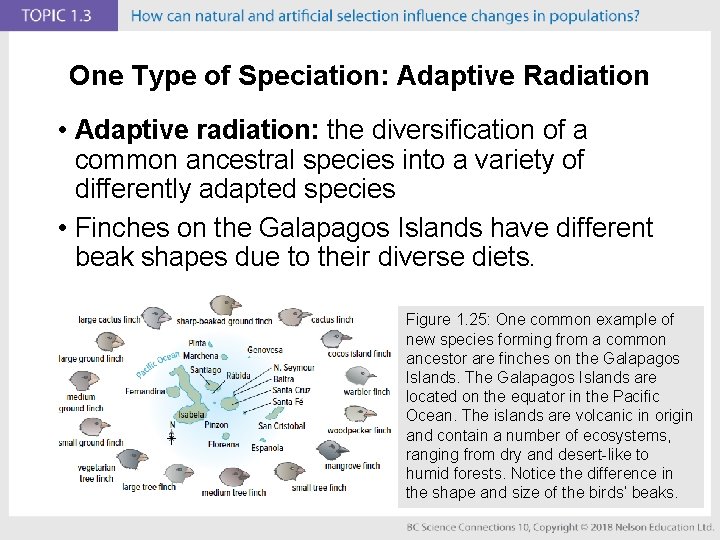
One Type of Speciation: Adaptive Radiation • Adaptive radiation: the diversification of a common ancestral species into a variety of differently adapted species • Finches on the Galapagos Islands have different beak shapes due to their diverse diets. Figure 1. 25: One common example of new species forming from a common ancestor are finches on the Galapagos Islands. The Galapagos Islands are located on the equator in the Pacific Ocean. The islands are volcanic in origin and contain a number of ecosystems, ranging from dry and desert-like to humid forests. Notice the difference in the shape and size of the birds’ beaks.
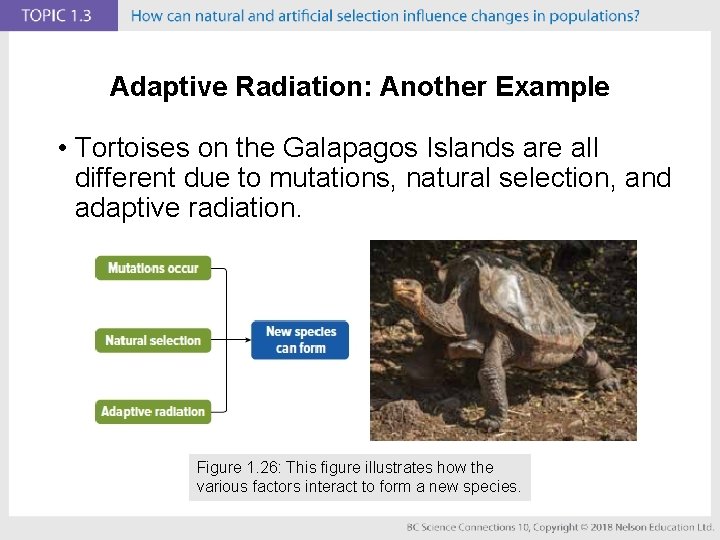
Adaptive Radiation: Another Example • Tortoises on the Galapagos Islands are all different due to mutations, natural selection, and adaptive radiation. Figure 1. 26: This figure illustrates how the various factors interact to form a new species.
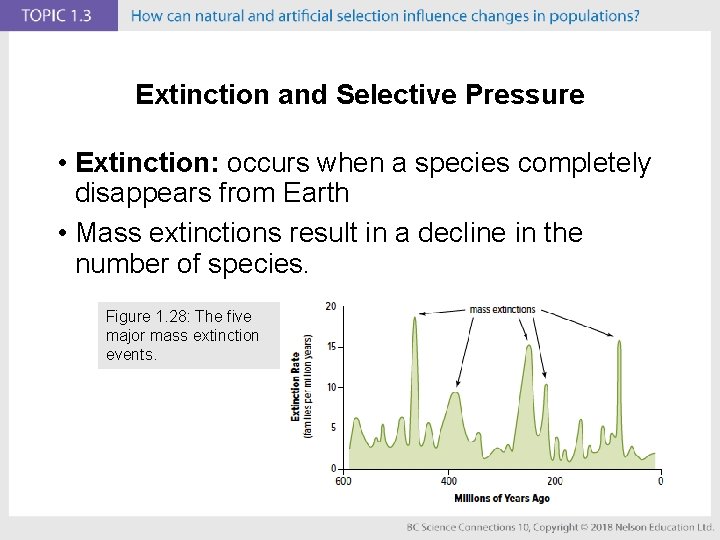
Extinction and Selective Pressure • Extinction: occurs when a species completely disappears from Earth • Mass extinctions result in a decline in the number of species. Figure 1. 28: The five major mass extinction events.
Discussion Questions 1. What is adaptive radiation? 2. Explain why it would have been possible for an ancestral finch species, having arrived on one of the Galapagos Islands, to have diversified and evolved into other species over time. 3. How is extinction related to selective pressure?
Concept 4: Environmental factors can cause mutations. • Mutations are important to natural selection and speciation. • Mutations provide genetic variation. • Mutagen: a substance or event that increases the rate of mutation • Physical mutagens cause physical changes in the DNA (i. e. , X-rays and UV radiation). • Chemical mutagens can chemically react with DNA (i. e. , nitrites and gas fumes).

Carcinogens • Carcinogen: a substance or agent that causes cancer • Some mutagens are carcinogenic. • Examples include UV radiation, cigarette smoke. • Wearing sunscreen, a hat, and sunglasses can reduce the exposure to UV radiation. Figure 1. 29: Applying sunscreen before going out in the sun can help reduce a person’s exposure to ultraviolet radiation.
Discussion Questions 1. What is a mutagen? 2. Explain how mutagens and the production of proteins are related.
Concept 5: Humans select desired characteristics in organisms to be passed on to the next generation. • Artificial selection: selective pressure exerted by humans on populations in order to improve or modify desirable traits • Humans breed cows that produce more milk, chickens that produce large numbers of eggs, and pigs with large muscles for meat.
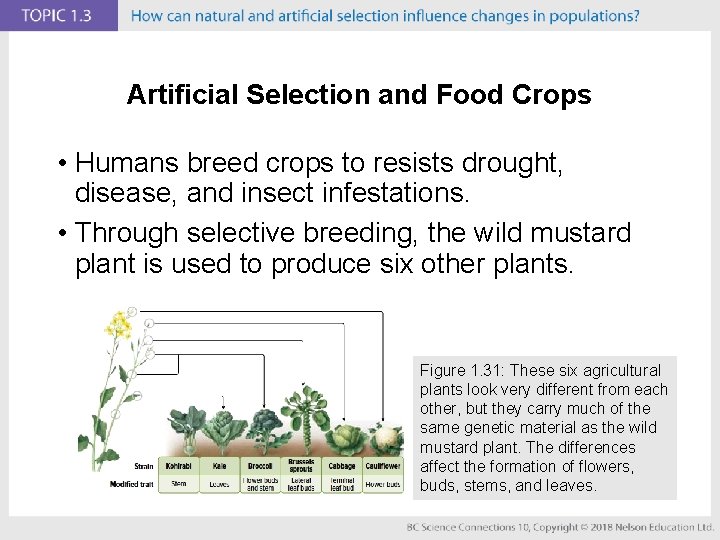
Artificial Selection and Food Crops • Humans breed crops to resists drought, disease, and insect infestations. • Through selective breeding, the wild mustard plant is used to produce six other plants. Figure 1. 31: These six agricultural plants look very different from each other, but they carry much of the same genetic material as the wild mustard plant. The differences affect the formation of flowers, buds, stems, and leaves.
Consequences of Artificial Selection • Some selectively bred animals have health problems (i. e. , English bulldogs have respiratory problems and German shepherds have hip problems). • Selectively bred plants lack genetic diversity because they are all similar. • Monoculture: repeated planting of the same varieties of a species over large expanses of land
Discussion Questions 1. What is artificial selection? 2. What are some benefits and risks associated with artificial selection of agricultural crops?
Topic 1. 3 Summary: How can natural and artificial selection influence changes in populations? • DNA mutations produce genetic diversity within a population. • Natural selection favours traits that make an organism better suited to its environment. • Natural selection can lead to the formation of new species. • Environmental factors can cause mutations. • Humans select desired characteristics in organisms to be passed on to the next generation.
- Slides: 25