
BBP CIR Employee Safety Training School Health Nursing

BBP & CIR Employee Safety Training
School Health Nursing Staff • Elizabeth Stallings - Nurse - Perquimans Central School – Grades Prek – 2 Hope Ward - Nurse - Hertford Grammar School - Grades 3 -5 • Kelli Goetsch - Nurse - Perquimans Middle School – Grades 6 -8 - Perquimans High School - Grades 9 -12
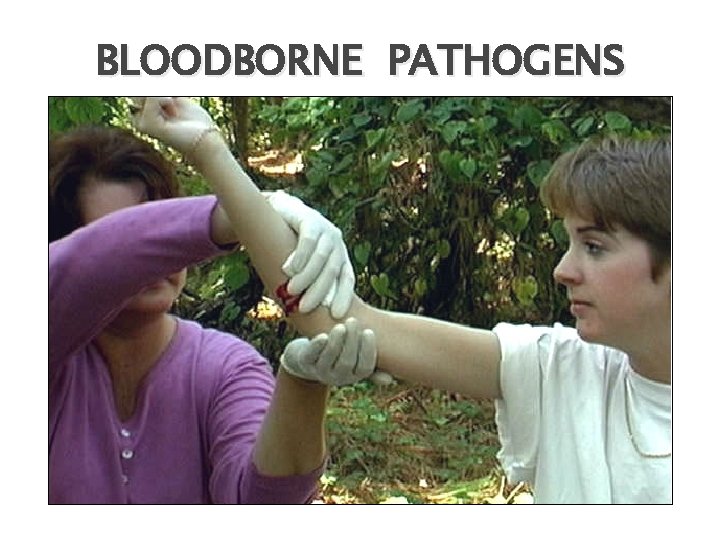
BLOODBORNE PATHOGENS
What Are Bloodborne Pathogens? � Micro-organisms present in human blood that can cause disease ◦ Viruses, bacteria, parasites, fungi � Primary workplace pathogens ◦ Human immunodeficiency virus (HIV) ◦ Hepatitis B virus (HBV) ◦ Hepatitis C virus (HCV)
HIV and AIDS � HIV leads to AIDS � HIV attacks and depletes the human immune system � Early HIV symptoms resemble common cold or flu virus � HIV antibody test is the only way to know for sure � HIV does not survive outside the body � No cure yet
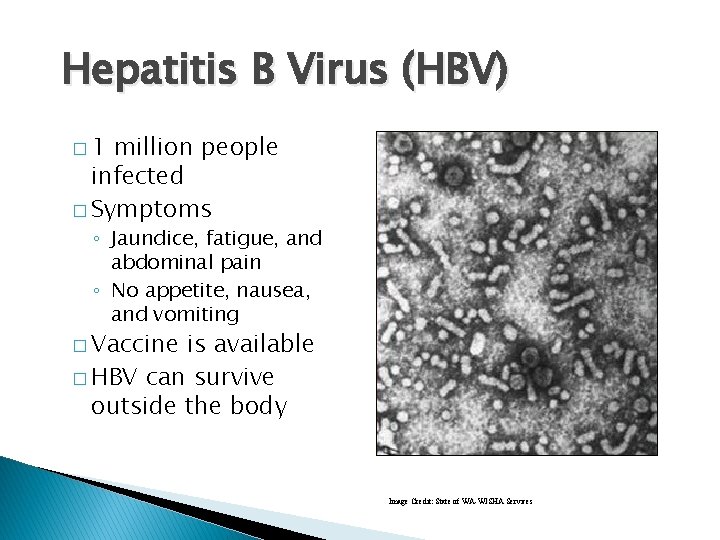
Hepatitis B Virus (HBV) � 1 million people infected � Symptoms ◦ Jaundice, fatigue, and abdominal pain ◦ No appetite, nausea, and vomiting � Vaccine is available � HBV can survive outside the body Image Credit: State of WA-WISHA Services
Hepatitis C Virus (HCV) � HCV is the most common chronic bloodborne infection— 3. 9 million infected � Symptoms can take years to manifest ◦ Flu-like symptoms, jaundice, dark urine, and fatigue ◦ Loss of appetite, nausea, and vomiting, and abdominal pain � Treatment is marginally effective
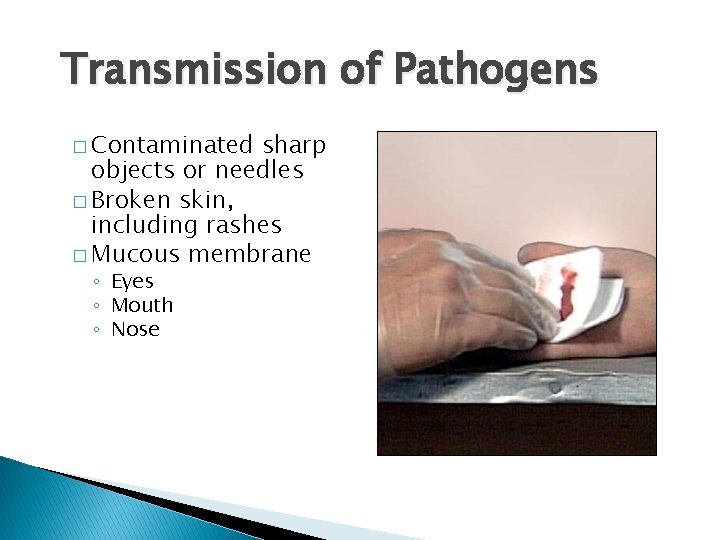
Transmission of Pathogens � Contaminated sharp objects or needles � Broken skin, including rashes � Mucous membrane ◦ Eyes ◦ Mouth ◦ Nose
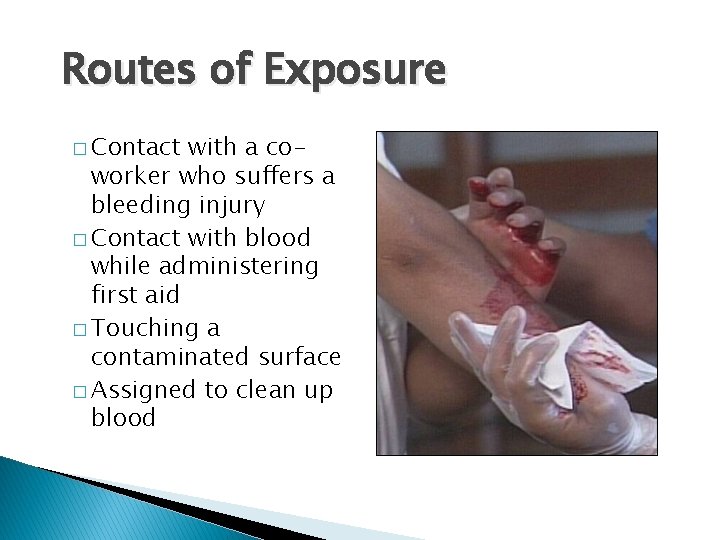
Routes of Exposure � Contact with a coworker who suffers a bleeding injury � Contact with blood while administering first aid � Touching a contaminated surface � Assigned to clean up blood
Bloodborne Pathogens Law 29 CFR 1910. 1030 requires: � A written Exposure Control Plan (ECP) is required � Engineering and work practice controls � Personal protective equipment (PPE) � Training Medical surveillance � Hepatitis B vaccination � Signs and labels � Other equipment and procedures to minimize the risk of disease transmission
Protect Yourself � Review the ECP and OSHA regulation � Take universal precautions � Use personal protective equipment � Follow safe work practices � Get the Hepatitis B vaccination � Follow decontamination and disposal procedures
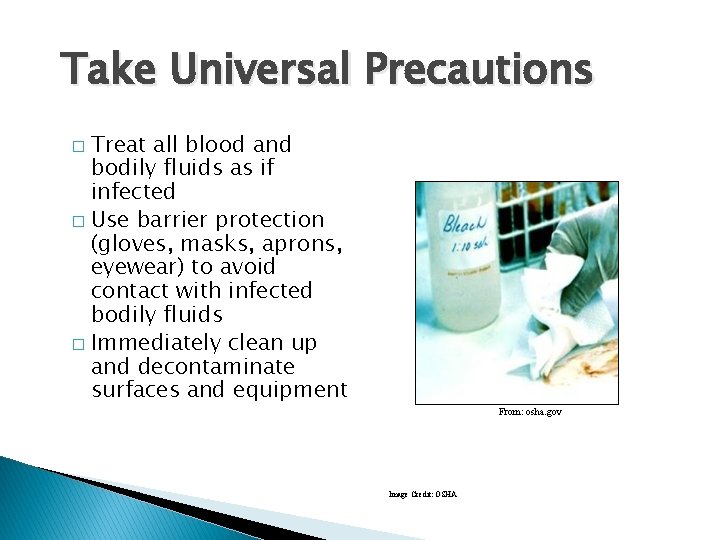
Take Universal Precautions Treat all blood and bodily fluids as if infected � Use barrier protection (gloves, masks, aprons, eyewear) to avoid contact with infected bodily fluids � Immediately clean up and decontaminate surfaces and equipment � From: osha. gov Image Credit: OSHA
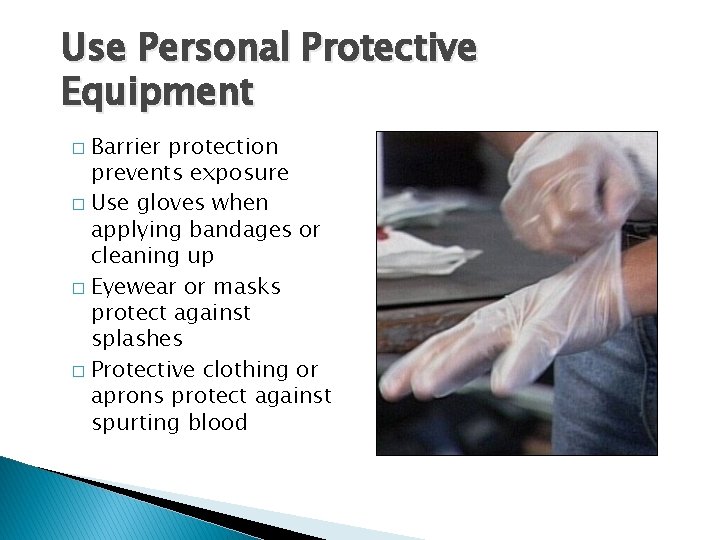
Use Personal Protective Equipment Barrier protection prevents exposure � Use gloves when applying bandages or cleaning up � Eyewear or masks protect against splashes � Protective clothing or aprons protect against spurting blood �
Safe Work Practices—Do’s � Remove contaminated PPE and clothing before leaving the work area � Disinfect contaminated equipment � Wash up immediately after exposure � Seek immediate medical attention � Double-glove to reduce contamination risk � Dispose of contaminated items properly
Safe Work Practices—Don’ts � No eating, drinking, cosmetics or other personal items in any work areas where there is the possibility of exposure to blood � Do not place or store food on bathroom shelves, cabinets, countertops, or work surfaces in any work areas where blood or bodily fluids may occur
Key Points to Remember � Bloodborne pathogens can cause fatal disease � Be aware of exposure at work � Take universal precautions ◦ Use PPE and safe work practices ◦ Decontaminate yourself and equipment � Understand follow exposure incident procedures � Report incidences of exposure
- Slides: 16