
BBFGhana Committee Member Interviews Qualitative Analysis Training a
BBF-Ghana Committee Member Interviews Qualitative Analysis Training a technical assistance webinar Cara Safon, MPH Yale University, New Haven, CT USA August 11, 2017 1
BBF-Ghana Committee Member Interviews: Qualitative Analysis Training Agenda 1. Review in-depth interview objectives 2. Define key terminology 3. Walk through data analysis steps 4. Identify and prepare for next steps http: //www. meteo. gov. gh/website/ 2
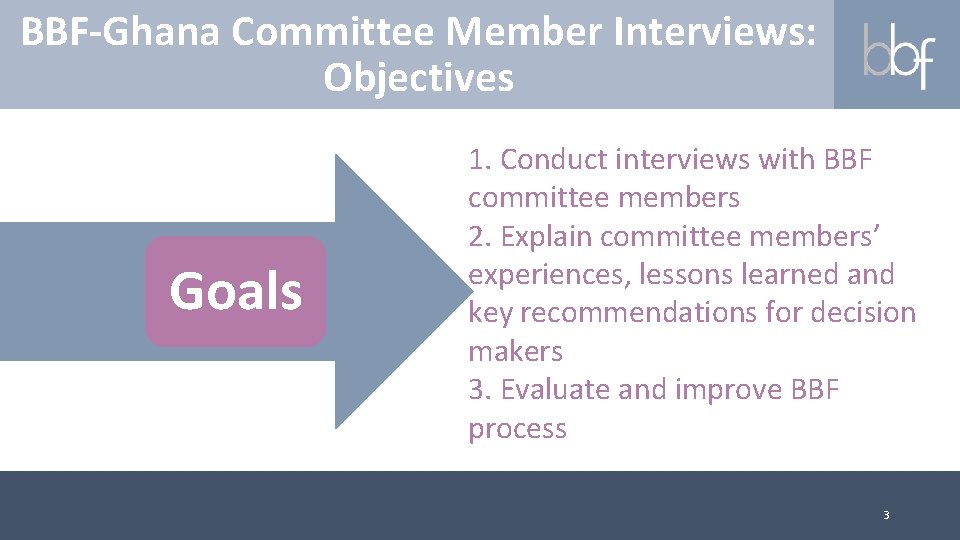
BBF-Ghana Committee Member Interviews: Objectives Goals 1. Conduct interviews with BBF committee members 2. Explain committee members’ experiences, lessons learned and key recommendations for decision makers 3. Evaluate and improve BBF process 3
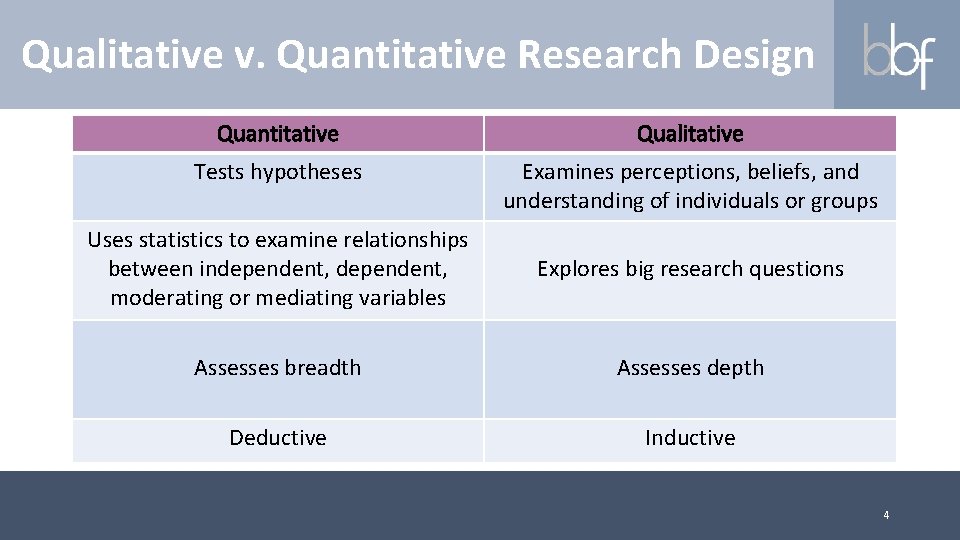
Qualitative v. Quantitative Research Design Quantitative Qualitative Tests hypotheses Examines perceptions, beliefs, and understanding of individuals or groups Uses statistics to examine relationships between independent, moderating or mediating variables Explores big research questions Assesses breadth Assesses depth Deductive Inductive 4
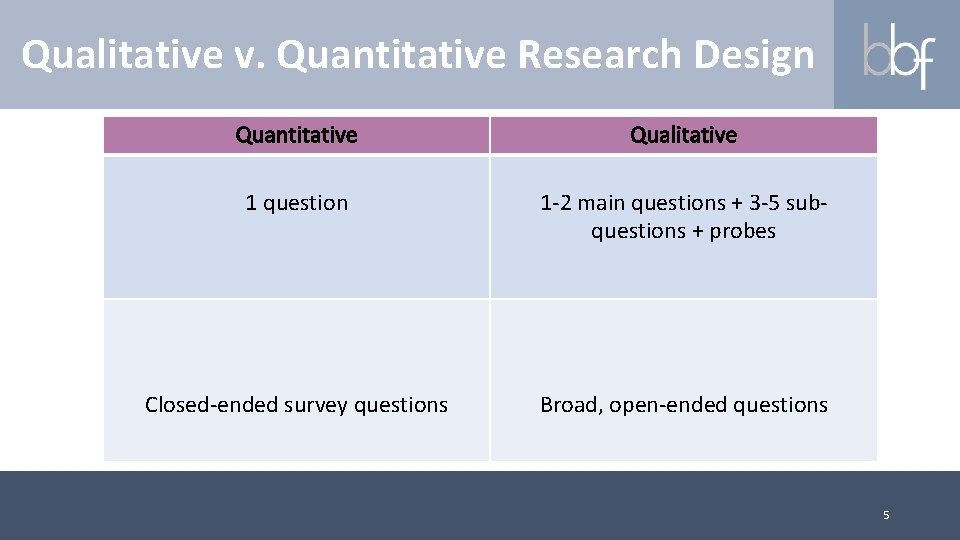
Qualitative v. Quantitative Research Design Quantitative Qualitative 1 question 1 -2 main questions + 3 -5 subquestions + probes Closed-ended survey questions Broad, open-ended questions 5
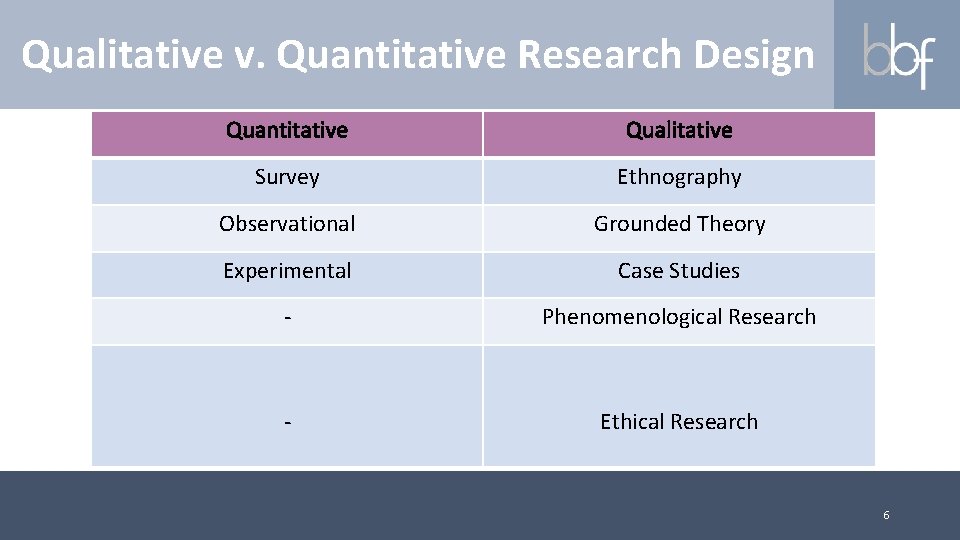
Qualitative v. Quantitative Research Design Quantitative Qualitative Survey Ethnography Observational Grounded Theory Experimental Case Studies - Phenomenological Research - Ethical Research 6
Qualitative v. Quantitative Research Design What are some benefits of qualitative research?
Qualitative v. Quantitative Research Design What are some qualitative research requirements? 8
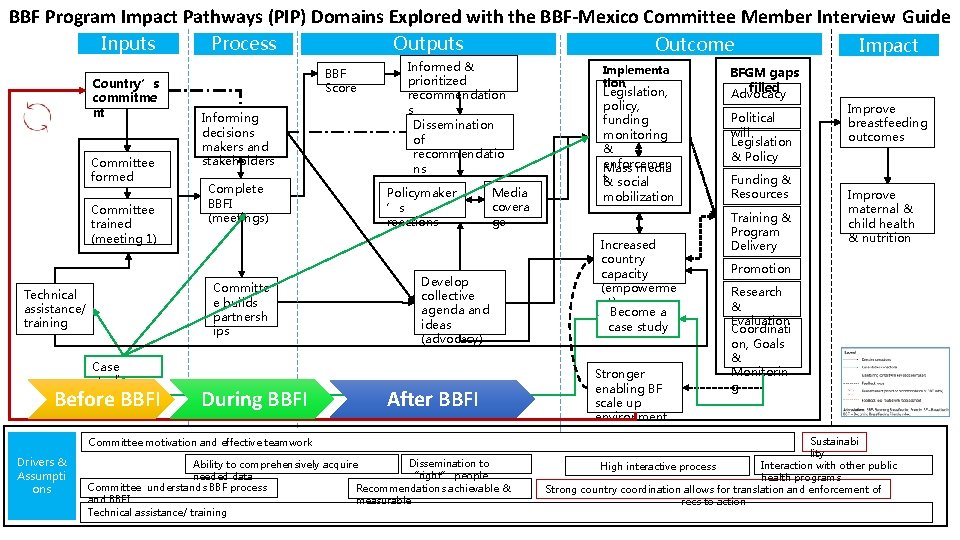
BBF Program Impact Pathways (PIP) Domains Explored with the BBF-Mexico Committee Member Interview Guide Inputs Country’s commitme nt Committee formed Committee trained (meeting 1) BBF Score Informing decisions makers and stakeholders Complete BBFI (meetings) Committe e builds partnersh ips Technical assistance/ training Case studies Before BBFI Outputs Process During BBFI Outcome Informed & prioritized recommendation s Dissemination of recommendatio ns Policymaker ’s reactions Media covera ge Develop collective agenda and ideas (advocacy) After BBFI Committee motivation and effective teamwork Drivers & Assumpti ons Dissemination to Ability to comprehensively acquire “right” people needed data Committee understands BBF process Recommendations achievable & and BBFI measurable Technical assistance/ training Implementa tion Legislation, policy, funding monitoring & enforcemen Mass media t& social mobilization Increased country capacity (empowerme nt) Become a case study Stronger enabling BF scale up environment BFGM gaps filled Advocacy Political will Legislation & Policy Funding & Resources Training & Program Delivery Impact Improve breastfeeding outcomes Improve maternal & child health & nutrition Promotion Research & Evaluation Coordinati on, Goals & Monitorin g Sustainabi lity Interaction with other public High interactive process health programs Strong country coordination allows for translation and enforcement of recs to action 9
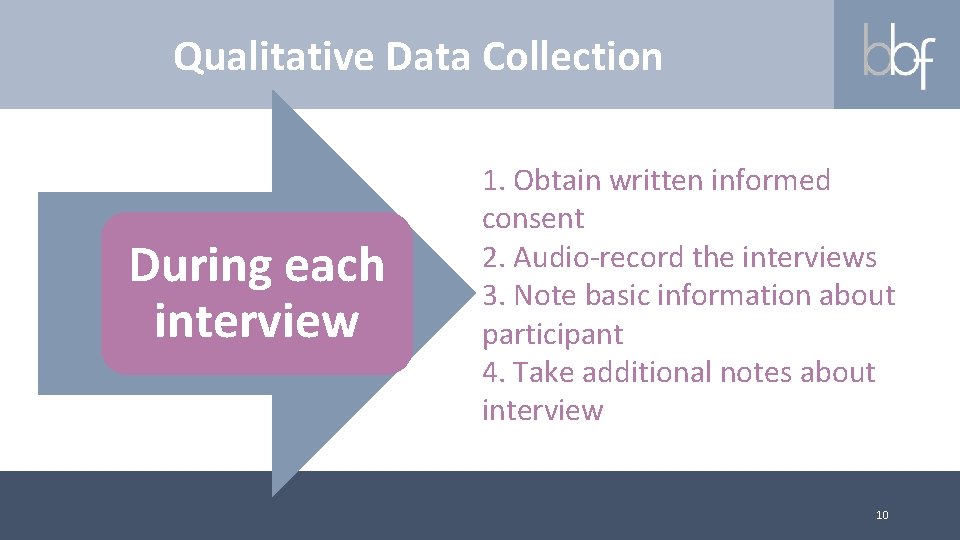
Qualitative Data Collection During each interview 1. Obtain written informed consent 2. Audio-record the interviews 3. Note basic information about participant 4. Take additional notes about interview 10
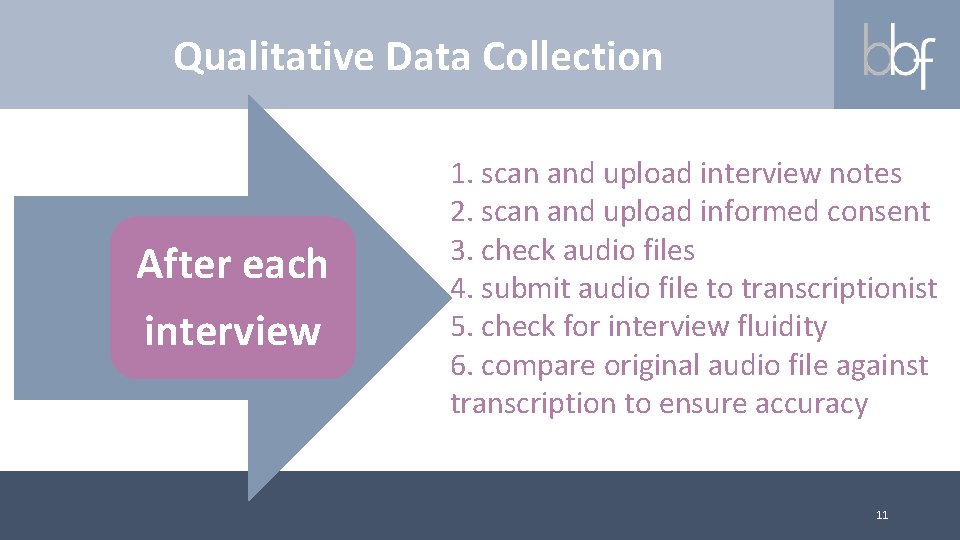
Qualitative Data Collection After each interview 1. scan and upload interview notes 2. scan and upload informed consent 3. check audio files 4. submit audio file to transcriptionist 5. check for interview fluidity 6. compare original audio file against transcription to ensure accuracy 11
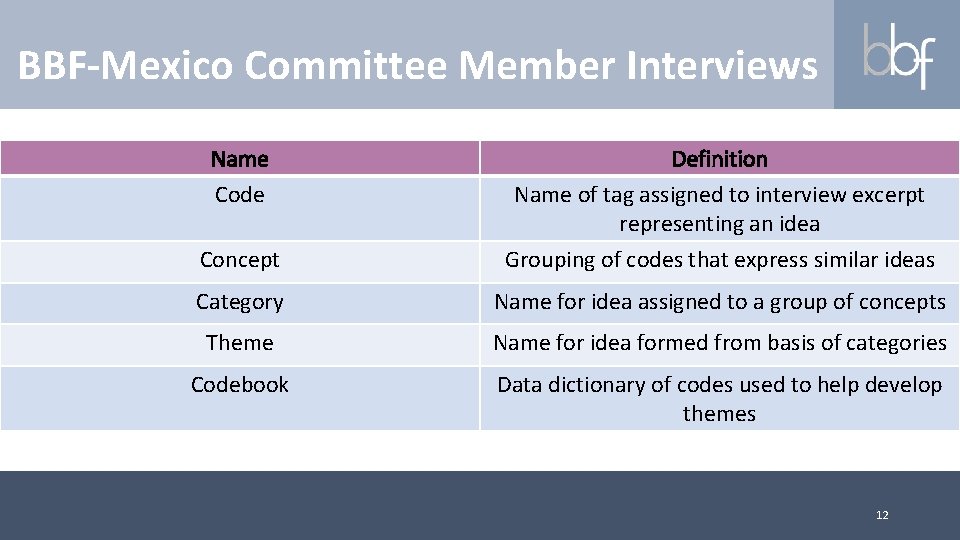
BBF-Mexico Committee Member Interviews Name Code Definition Name of tag assigned to interview excerpt representing an idea Concept Grouping of codes that express similar ideas Category Name for idea assigned to a group of concepts Theme Name for idea formed from basis of categories Codebook Data dictionary of codes used to help develop themes 12

Qualitative Data Analysis: Steps 1. Read transcript 2. Read + open-code transcript 3. Establish consensus on codes 4. Repeat steps 1 -3 (10 -20%) 5. Develop draft codebook 6. Code transcripts using codebook 7. Refine codebook iteratively
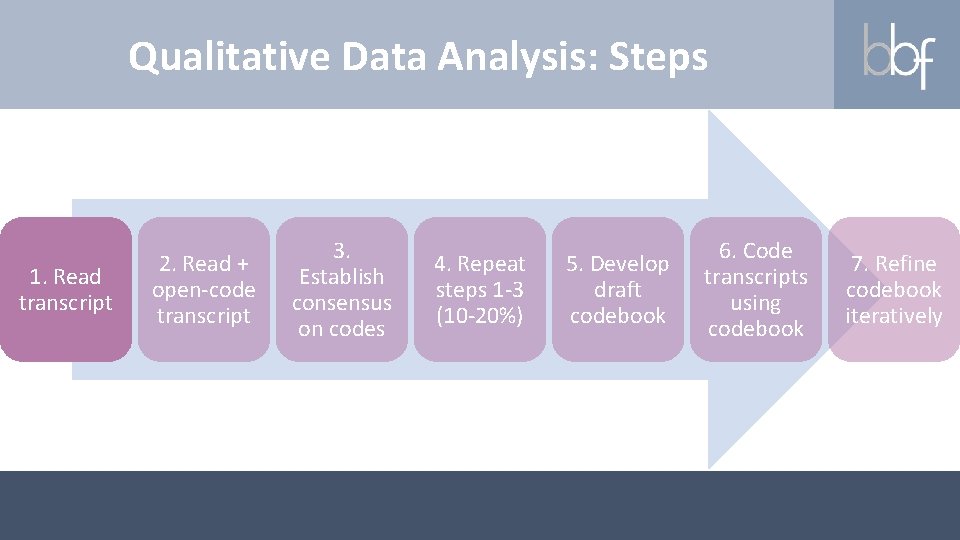
Qualitative Data Analysis: Steps 1. Read transcript 2. Read + open-code transcript 3. Establish consensus on codes 4. Repeat steps 1 -3 (10 -20%) 5. Develop draft codebook 6. Code transcripts using codebook 7. Refine codebook iteratively
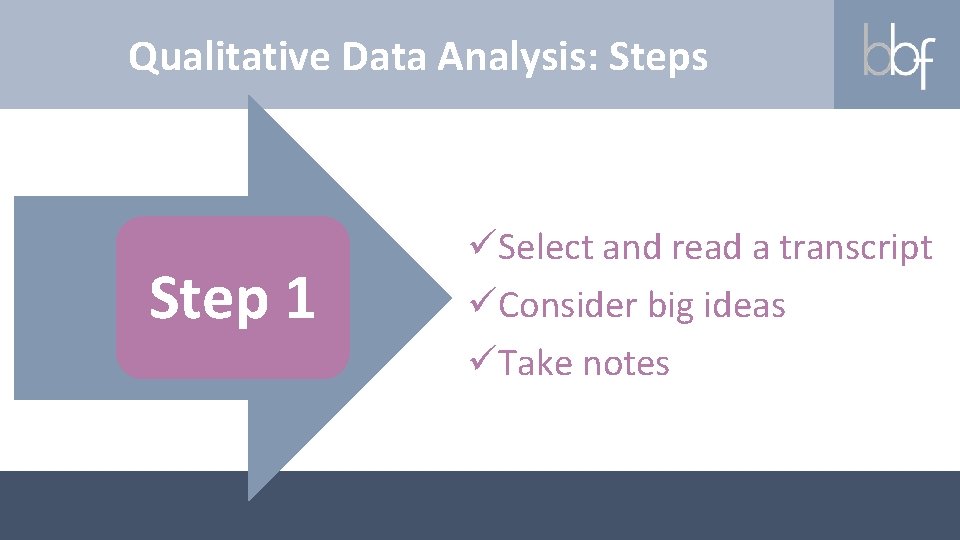
Qualitative Data Analysis: Steps Step 1 üSelect and read a transcript üConsider big ideas üTake notes
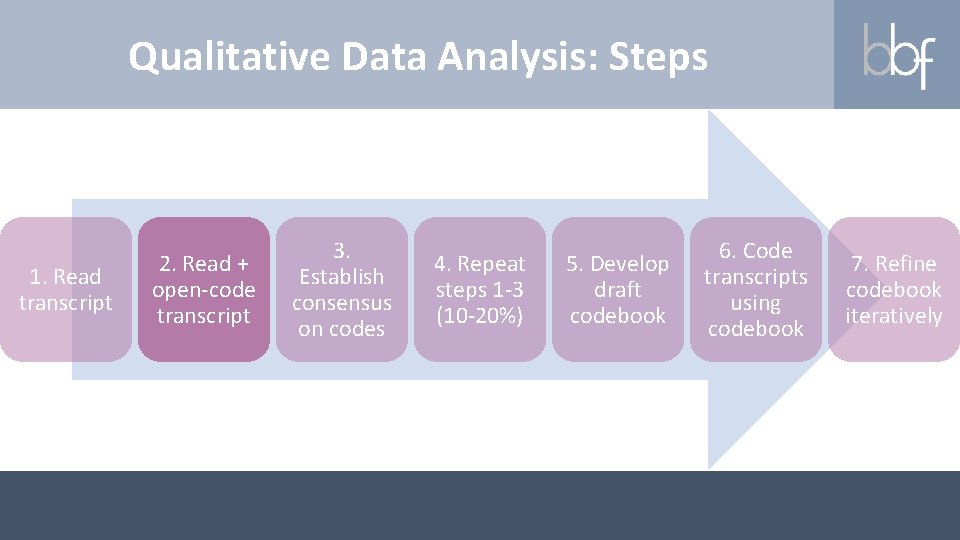
Qualitative Data Analysis: Steps 1. Read transcript 2. Read + open-code transcript 3. Establish consensus on codes 4. Repeat steps 1 -3 (10 -20%) 5. Develop draft codebook 6. Code transcripts using codebook 7. Refine codebook iteratively
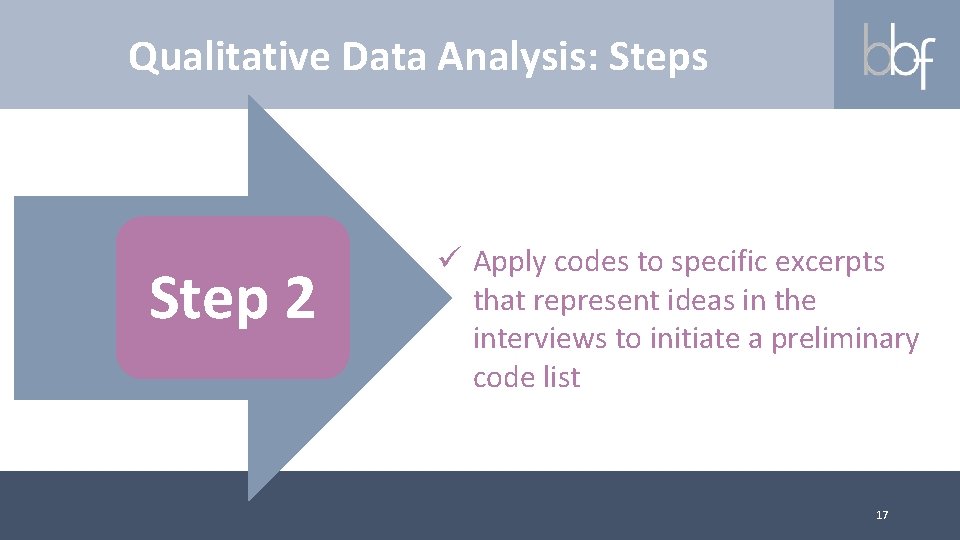
Qualitative Data Analysis: Steps Step 2 ü Apply codes to specific excerpts that represent ideas in the interviews to initiate a preliminary code list 17
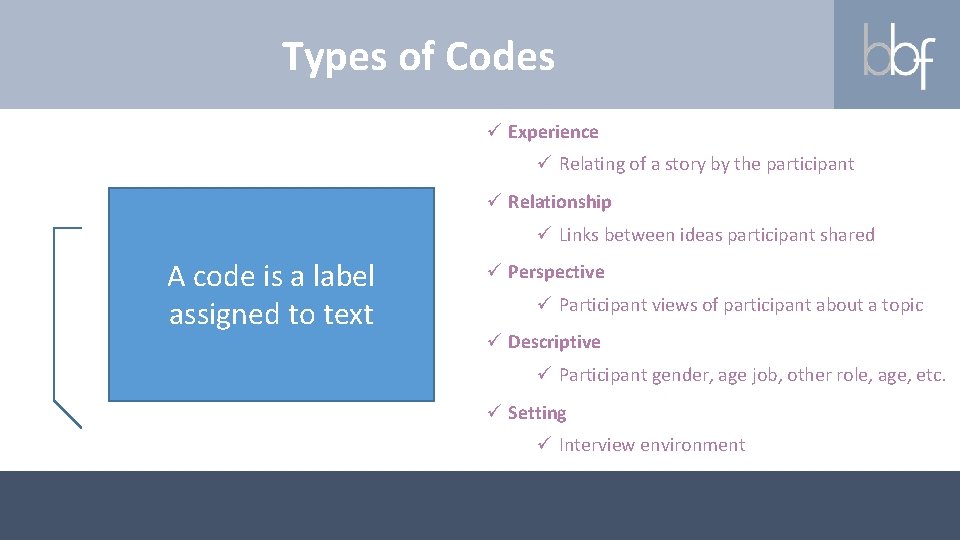
Types of Codes ü Experience ü Relating of a story by the participant ü Relationship ü Links between ideas participant shared A code is a label assigned to text ü Perspective ü Participant views of participant about a topic ü Descriptive ü Participant gender, age job, other role, age, etc. ü Setting ü Interview environment
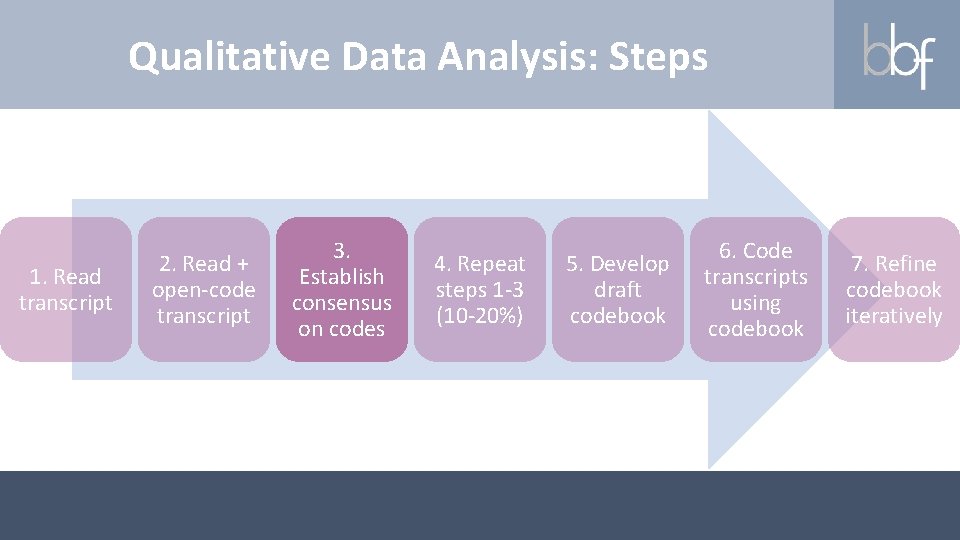
Qualitative Data Analysis: Steps 1. Read transcript 2. Read + open-code transcript 3. Establish consensus on codes 4. Repeat steps 1 -3 (10 -20%) 5. Develop draft codebook 6. Code transcripts using codebook 7. Refine codebook iteratively
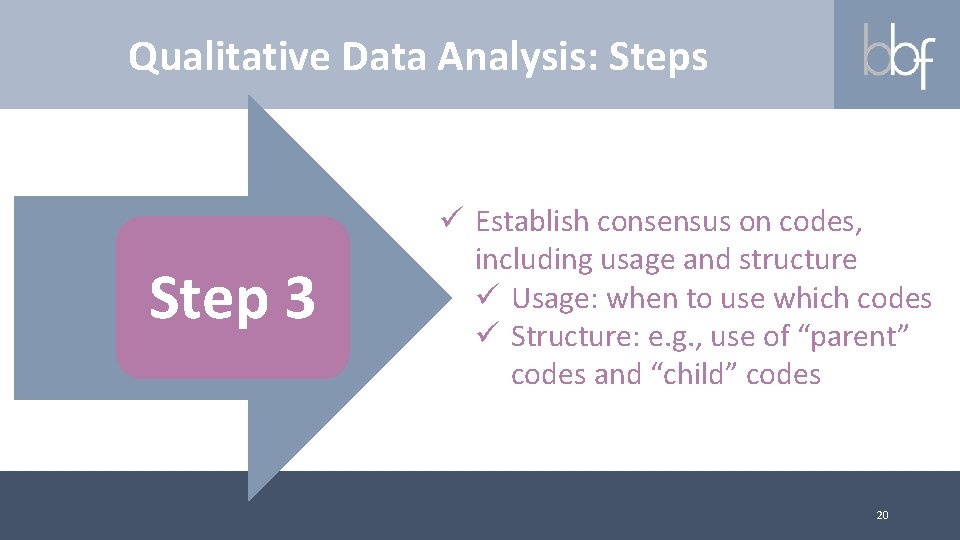
Qualitative Data Analysis: Steps Step 3 ü Establish consensus on codes, including usage and structure ü Usage: when to use which codes ü Structure: e. g. , use of “parent” codes and “child” codes 20
Qualitative Data Analysis: Steps What is the best way to come to build consensus? 21
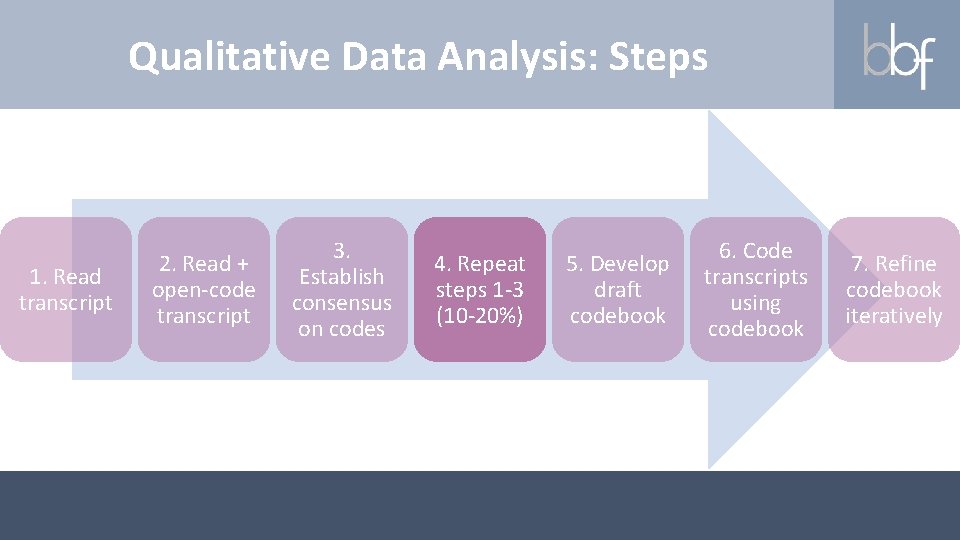
Qualitative Data Analysis: Steps 1. Read transcript 2. Read + open-code transcript 3. Establish consensus on codes 4. Repeat steps 1 -3 (10 -20%) 5. Develop draft codebook 6. Code transcripts using codebook 7. Refine codebook iteratively
Qualitative Data Analysis: Steps Step 4 ü Repeat Steps 1 -3 23
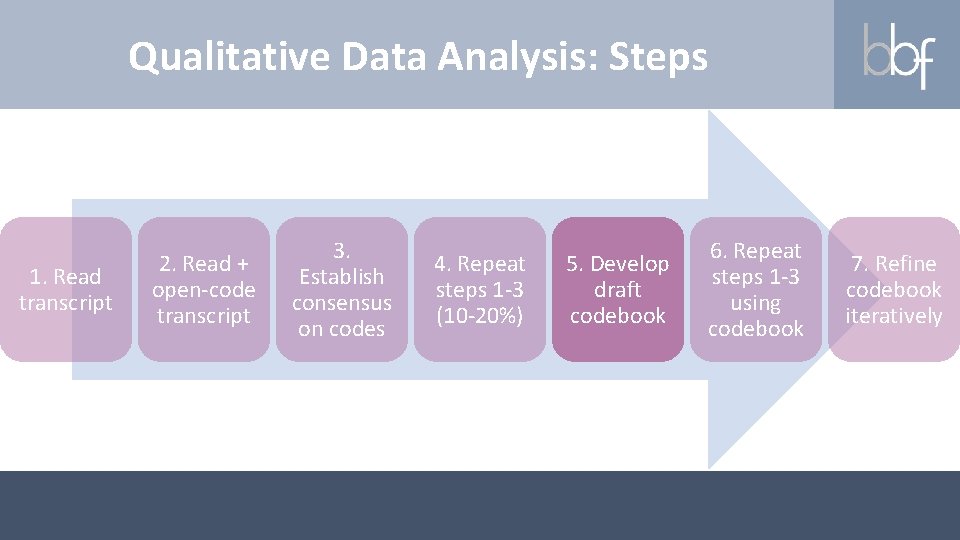
Qualitative Data Analysis: Steps 1. Read transcript 2. Read + open-code transcript 3. Establish consensus on codes 4. Repeat steps 1 -3 (10 -20%) 5. Develop draft codebook 6. Repeat steps 1 -3 using codebook 7. Refine codebook iteratively
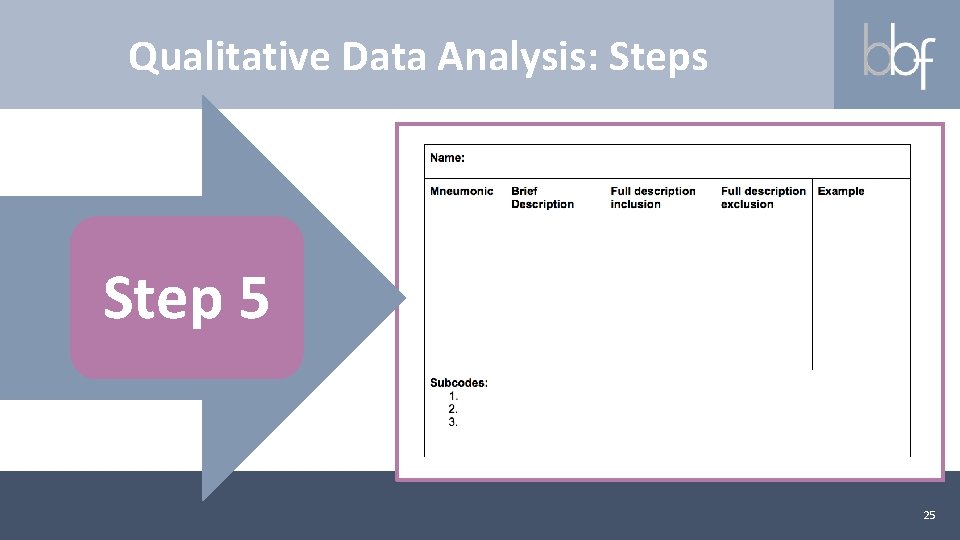
Qualitative Data Analysis: Steps Step 5 25
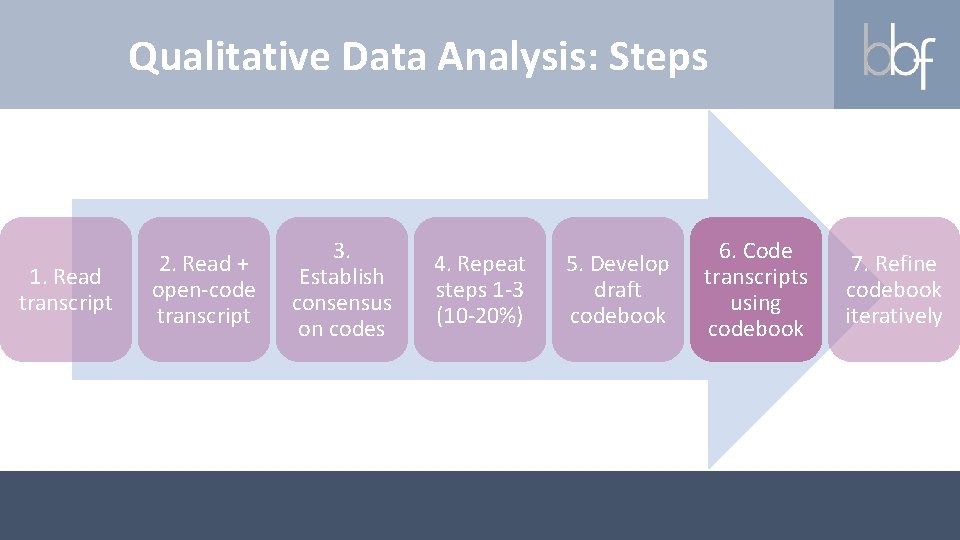
Qualitative Data Analysis: Steps 1. Read transcript 2. Read + open-code transcript 3. Establish consensus on codes 4. Repeat steps 1 -3 (10 -20%) 5. Develop draft codebook 6. Code transcripts using codebook 7. Refine codebook iteratively
Qualitative Data Analysis: Steps Step 6 ü Code subsequent transcripts using codebook 27
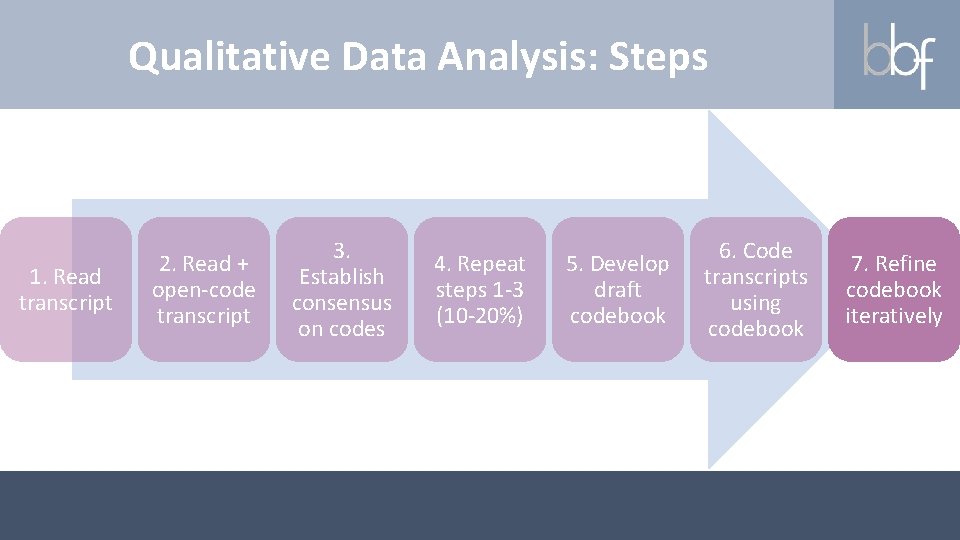
Qualitative Data Analysis: Steps 1. Read transcript 2. Read + open-code transcript 3. Establish consensus on codes 4. Repeat steps 1 -3 (10 -20%) 5. Develop draft codebook 6. Code transcripts using codebook 7. Refine codebook iteratively
Qualitative Data Analysis: Steps Step 7 ü Continue to refine codebook 29
BBF-Ghana Committee Member Interviews: Qualitative Analysis Training http: //computermalaysia. com. my/atlasti. html http: //www. timberlake. co. uk/software/nvivo. html http: //www. dedoose. com/ http: //www. maxqda. com/ 30
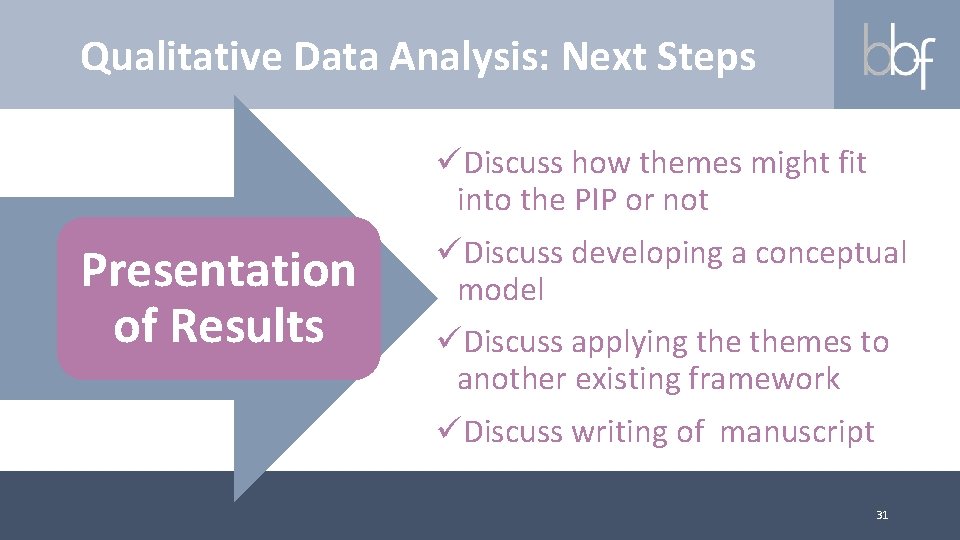
Qualitative Data Analysis: Next Steps üDiscuss how themes might fit into the PIP or not Presentation of Results üDiscuss developing a conceptual model üDiscuss applying themes to another existing framework üDiscuss writing of manuscript 31
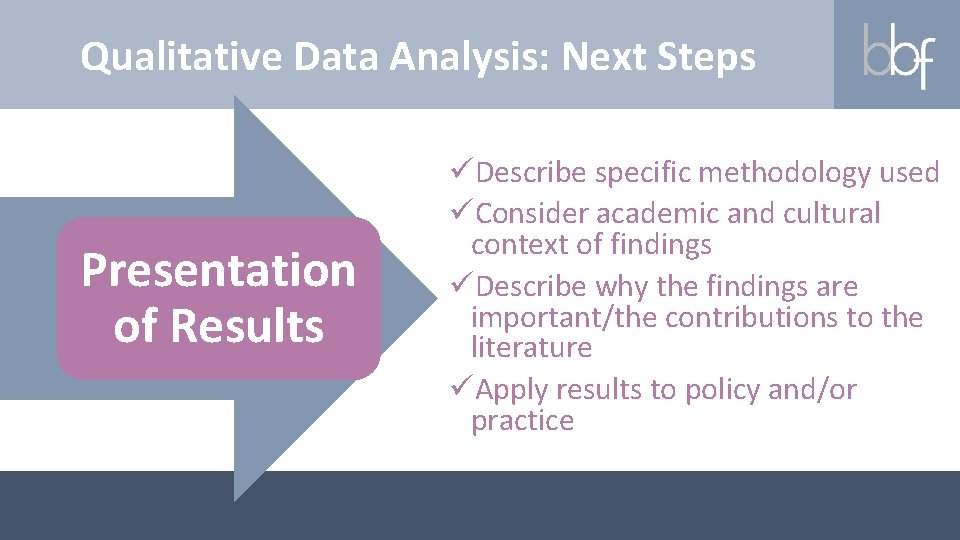
Qualitative Data Analysis: Next Steps Presentation of Results üDescribe specific methodology used üConsider academic and cultural context of findings üDescribe why the findings are important/the contributions to the literature üApply results to policy and/or practice

Acknowledgements With approval from Dr. Emily Bucholz and the YSPH Global Health Concentration Director, some of the content included in this presentation has been adapted from slides presented at the Yale School of Public Health (YSPH) Down’s Fellowship Workshop delivered by Dr. Bucholz on December 3 and 10, 2014 Thank you for your participation! 33
Additional Qualitative Analysis References Background reading Corbin and Strauss, The Basics of Qualitative Research, 4 th Edition, 2014 Creswell JW. Chapters 4 & 5 In: Research Design: Qualitative and quantitative approaches, Thousand Oaks, CA, Sage Publications, Inc. Lincoln, YS. Sympathetic Connections between Qualitative Methods and Health Research. Analytic software user guides Atlas. ti User Guide and Reference: http: //atlasti. com/wpcontent/uploads/2014/05/atlasti_v 7_manual_201312. pdf? q=/uploads/media/atlasti_v 7_manual_201312. pdf Dedoose User Guide: http: //www. dedoose. com/userguide MAXQDA 12 Reference Manual: http: //www. maxqda. com/download/manuals/MAX 12_manual_eng. pdf NVIVO 10 Getting Started Guide: http: //download. qsrinternational. com/Document/NVivo 10 -Getting-Started-Guide. pdf 34
Questions? https: //www. pinterest. com/pin/506092076855078838/ Cara. Safon@yale. edu 35
- Slides: 35