
Bayesian Networks NRES 746 Laura Cirillo Cortney Hulse

Bayesian Networks NRES 746: Laura Cirillo, Cortney Hulse, Rosie Perash
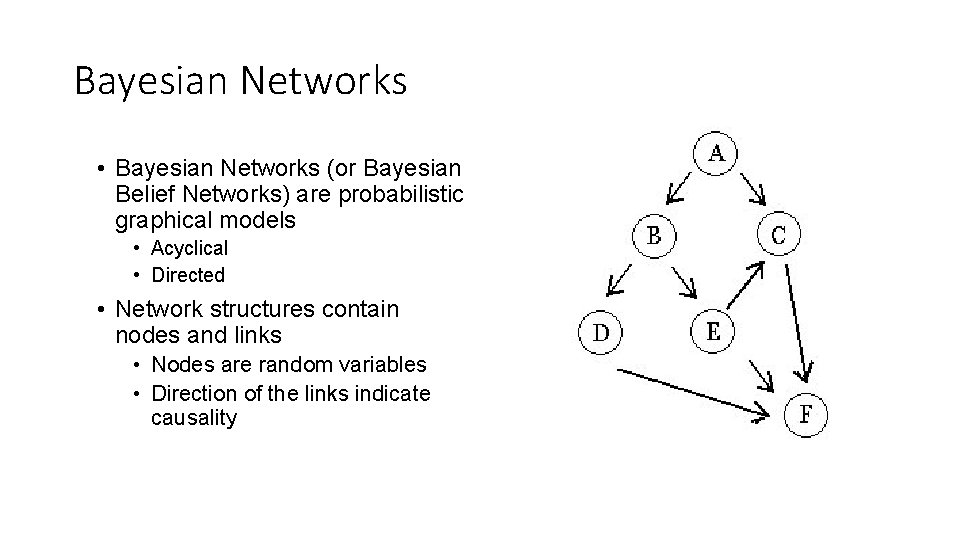
Bayesian Networks • Bayesian Networks (or Bayesian Belief Networks) are probabilistic graphical models • Acyclical • Directed • Network structures contain nodes and links • Nodes are random variables • Direction of the links indicate causality
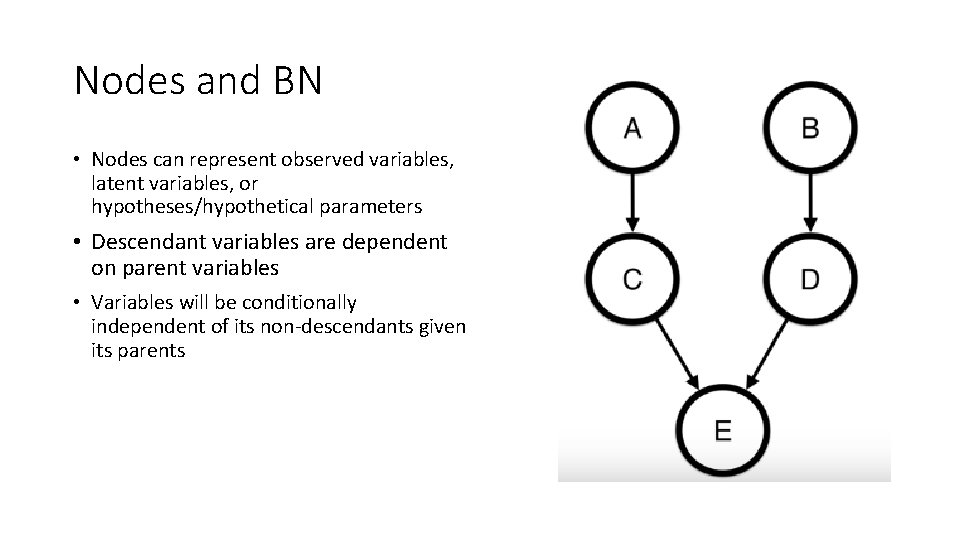
Nodes and BN • Nodes can represent observed variables, latent variables, or hypotheses/hypothetical parameters • Descendant variables are dependent on parent variables • Variables will be conditionally independent of its non-descendants given its parents
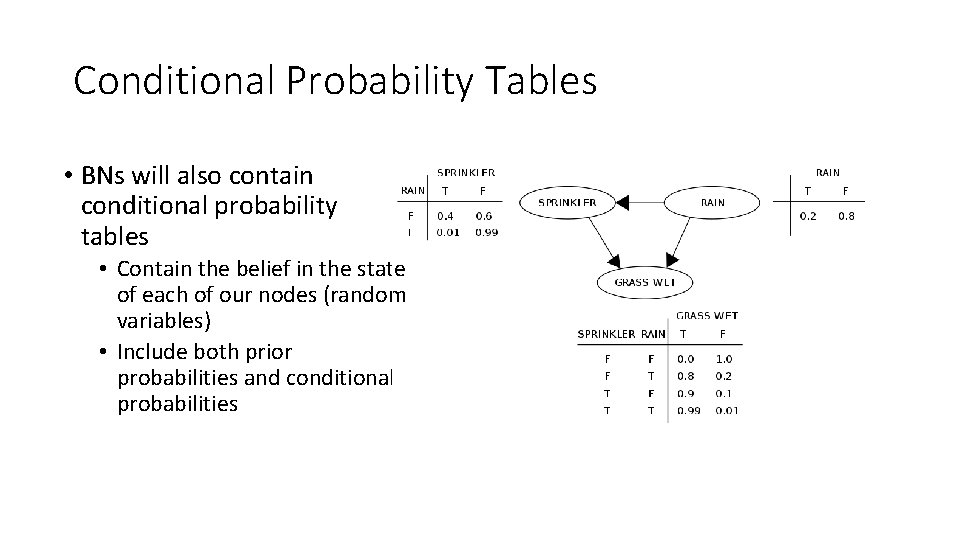
Conditional Probability Tables • BNs will also contain conditional probability tables • Contain the belief in the state of each of our nodes (random variables) • Include both prior probabilities and conditional probabilities
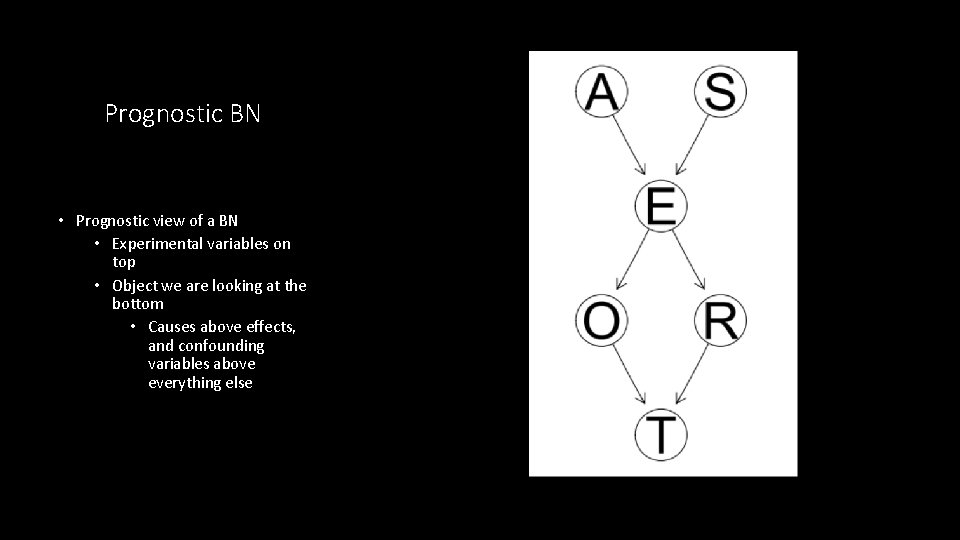
Prognostic BN • Prognostic view of a BN • Experimental variables on top • Object we are looking at the bottom • Causes above effects, and confounding variables above everything else
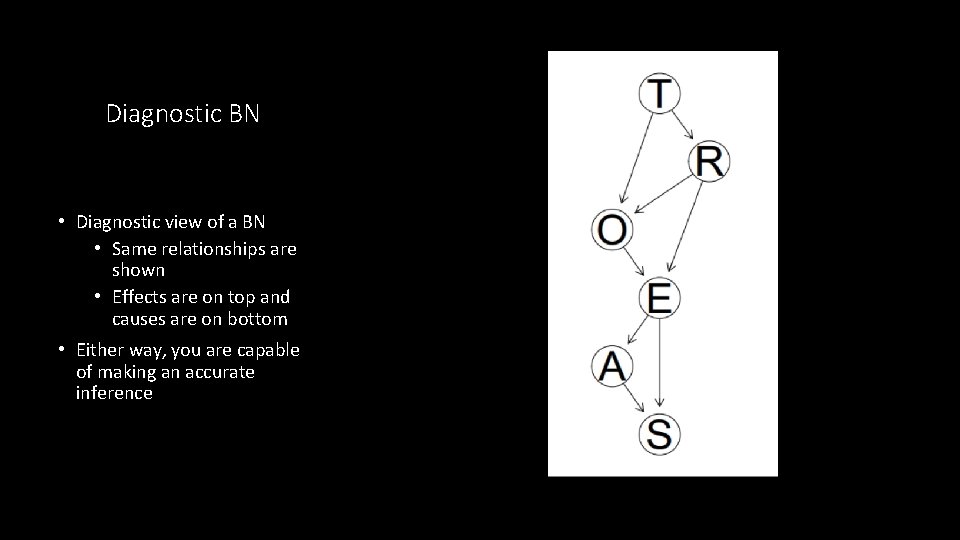
Diagnostic BN • Diagnostic view of a BN • Same relationships are shown • Effects are on top and causes are on bottom • Either way, you are capable of making an accurate inference
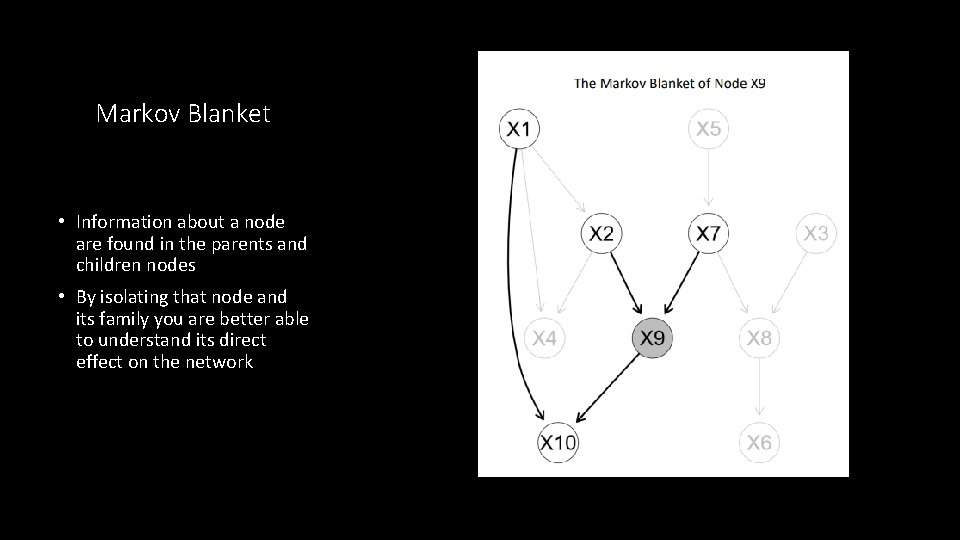
Markov Blanket • Information about a node are found in the parents and children nodes • By isolating that node and its family you are better able to understand its direct effect on the network
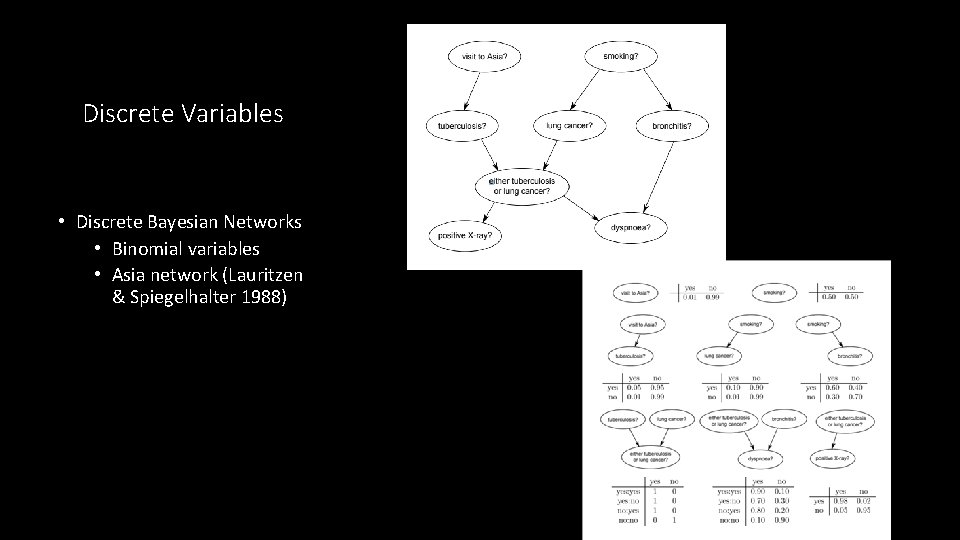
Discrete Variables • Discrete Bayesian Networks • Binomial variables • Asia network (Lauritzen & Spiegelhalter 1988)
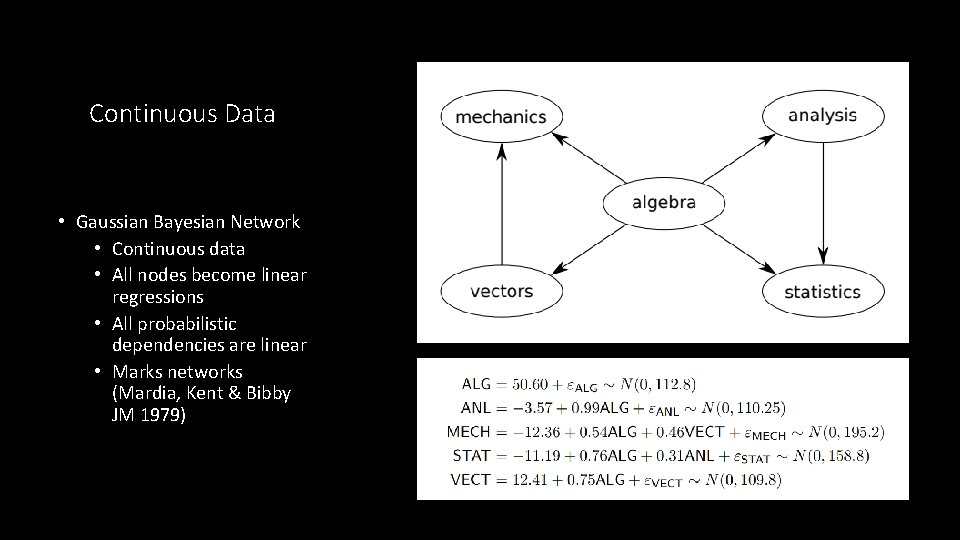
Continuous Data • Gaussian Bayesian Network • Continuous data • All nodes become linear regressions • All probabilistic dependencies are linear • Marks networks (Mardia, Kent & Bibby JM 1979)
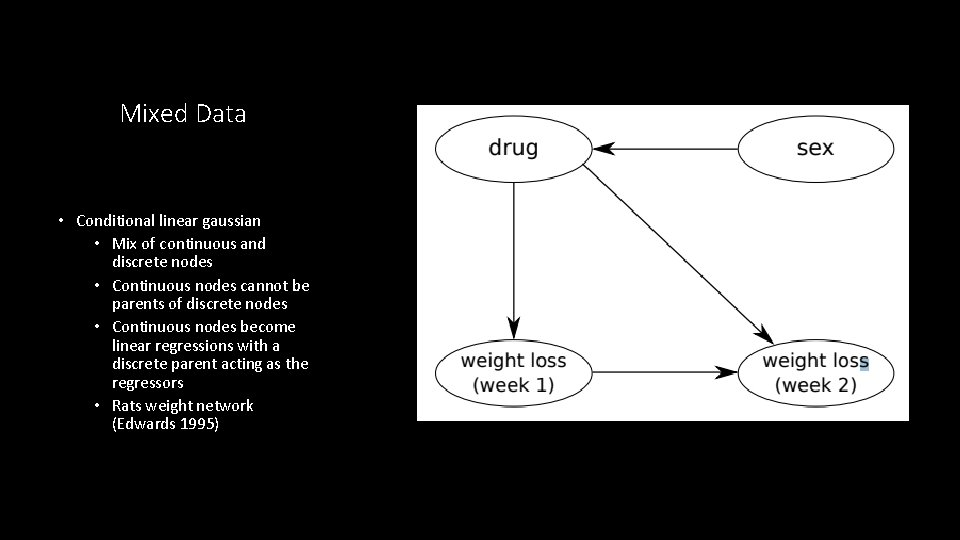
Mixed Data • Conditional linear gaussian • Mix of continuous and discrete nodes • Continuous nodes cannot be parents of discrete nodes • Continuous nodes become linear regressions with a discrete parent acting as the regressors • Rats weight network (Edwards 1995)
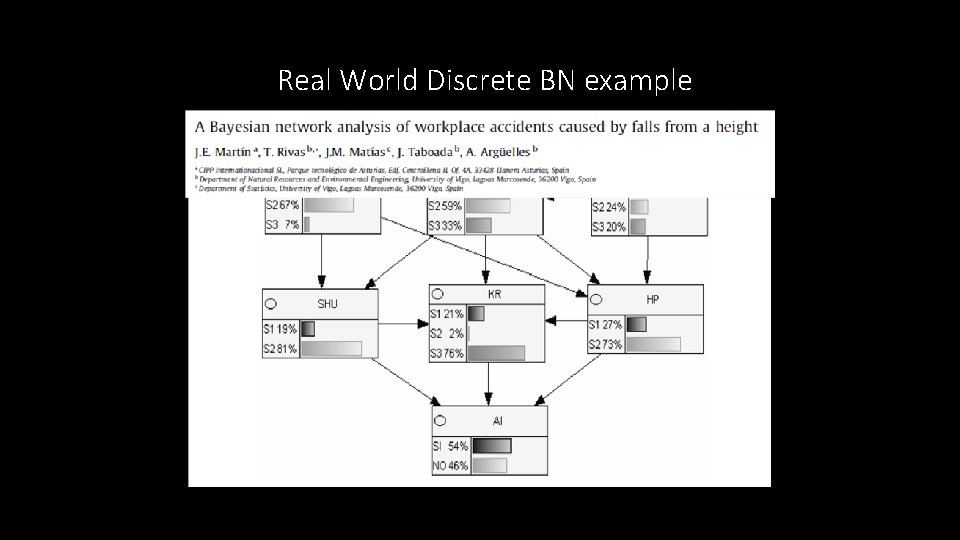
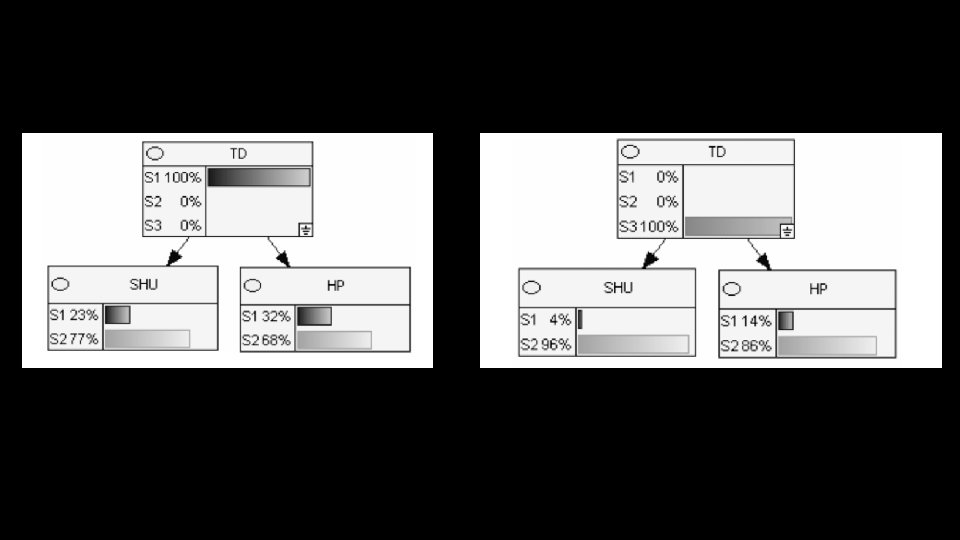
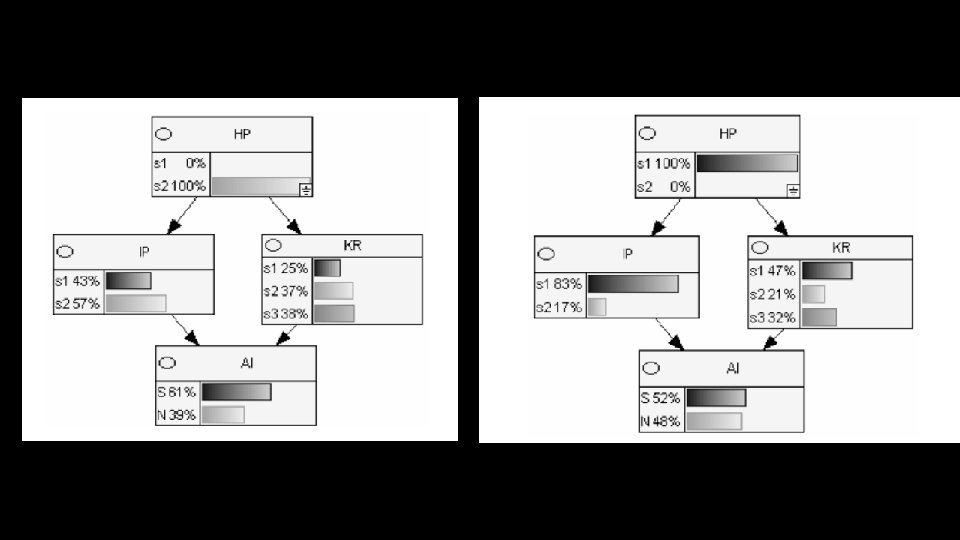
Real World Discrete BN example
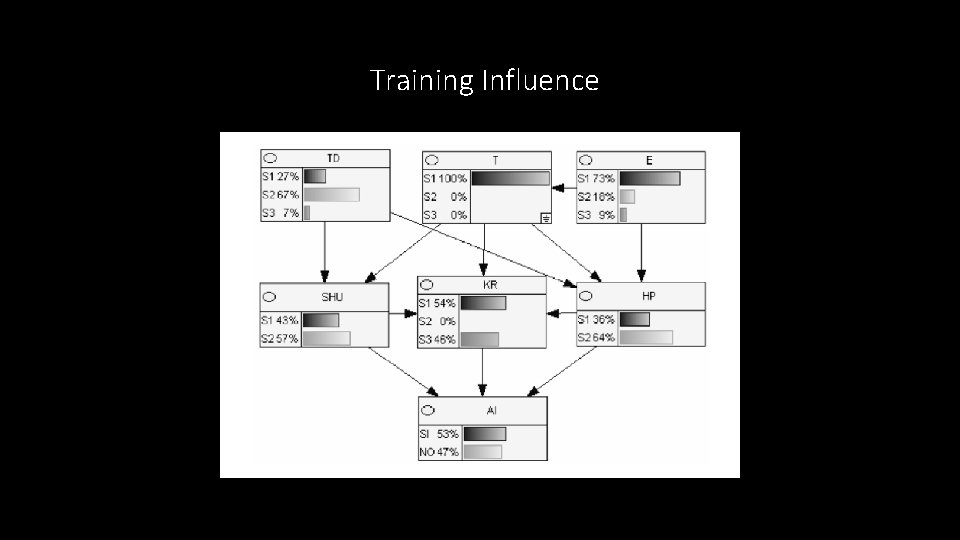
Training Influence
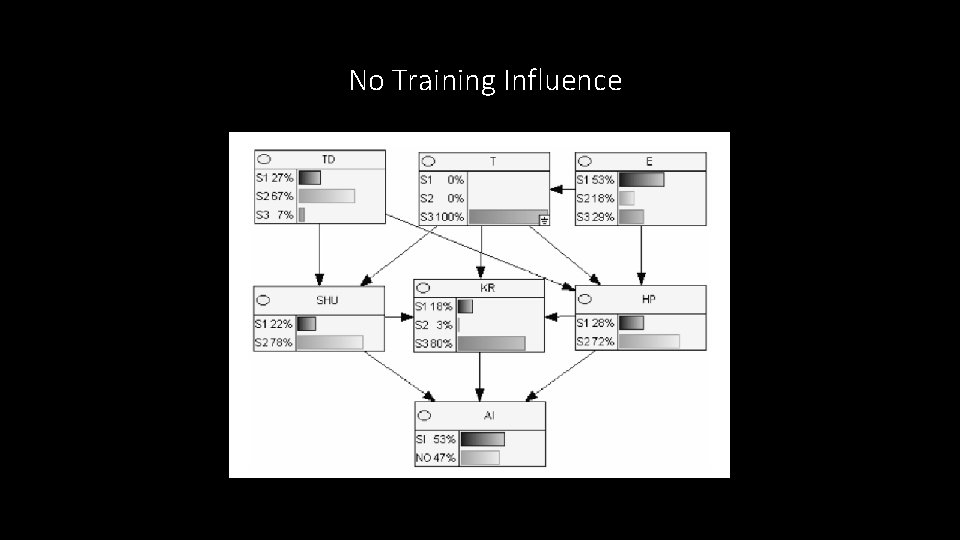
No Training Influence
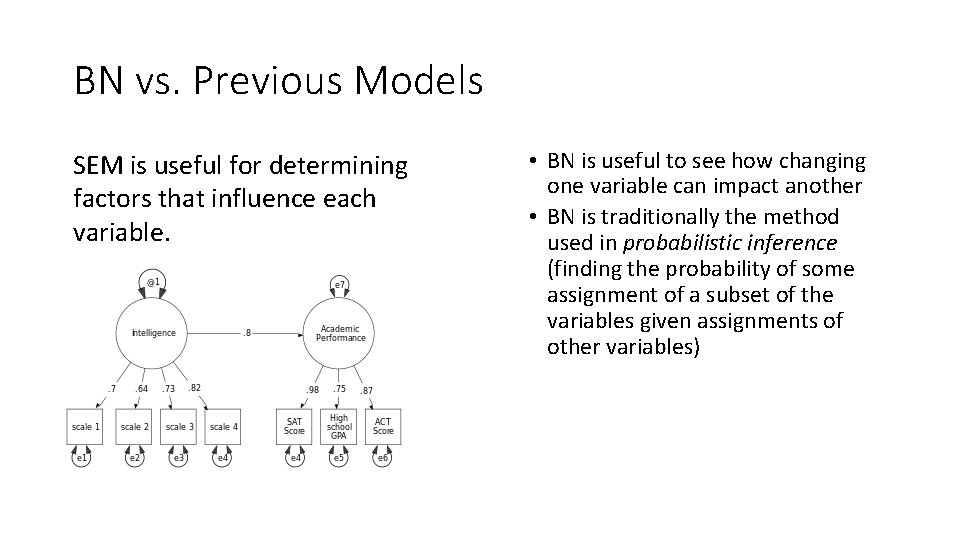
BN vs. Previous Models SEM is useful for determining factors that influence each variable. • BN is useful to see how changing one variable can impact another • BN is traditionally the method used in probabilistic inference (finding the probability of some assignment of a subset of the variables given assignments of other variables)
Advantages and Disadvantages of Bayesian Networks Advantages Disadvantages • Prognostic view of a BN • Need your own decision analysis and knowledge when deciding on variables to include • The number of possible network structures increases with the number of nodes • In general, more arbitrary and subjective than classical probability • Can handle incomplete datasets • Utilizes prior knowledge • Can use our observed knowledge to assess causality • Allow for probabilistic inference • Avoids overfitting • Experimental variables on top • Variables we are interested in in the middle • Object we are looking at at the bottom • Causes above effects, and confounding variables above everything else
- Slides: 17