
Bayesian modeling of human concept learning Outline Brief
Bayesian modeling of human concept learning 高良維
Outline • Brief talk of Bayesian framework • Concept learning • Theoretical analysis • Formal treatment • MIN • Weak Bayes • Experiment • Reference
Outline • Brief talk of Bayesian framework • Concept learning • Theoretical analysis • Formal treatment • MIN • Weak Bayes • Experiment • Reference
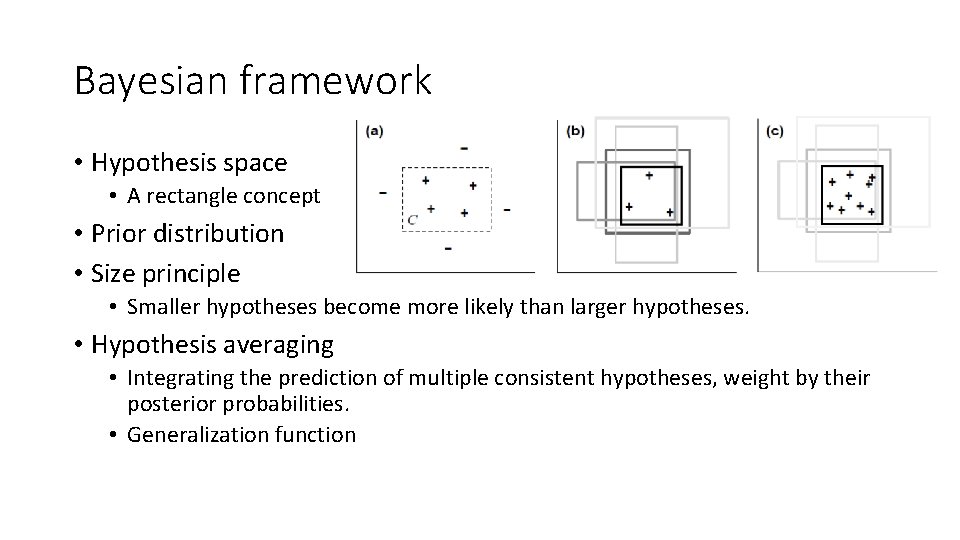
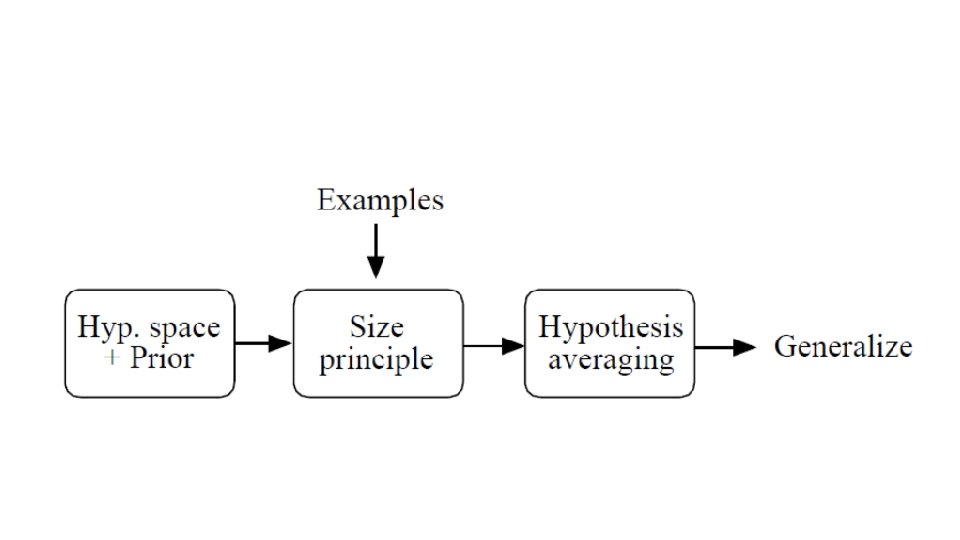
Bayesian framework • Hypothesis space • A rectangle concept • Prior distribution • Size principle • Smaller hypotheses become more likely than larger hypotheses. • Hypothesis averaging • Integrating the prediction of multiple consistent hypotheses, weight by their posterior probabilities. • Generalization function
Outline • Brief talk of Bayesian framework • Concept learning • Theoretical analysis • Formal treatment • MIN • Weak Bayes • Experiment • Reference
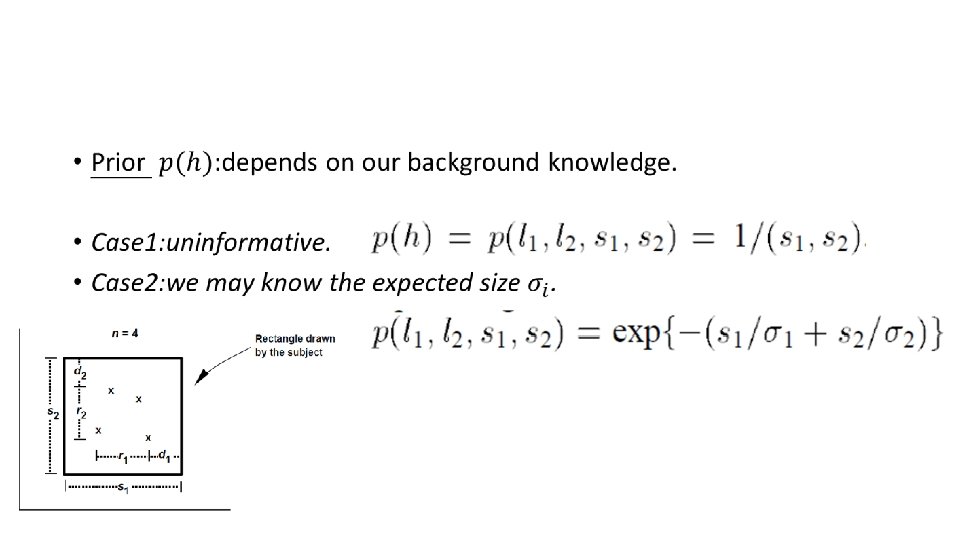
Formal treatment •
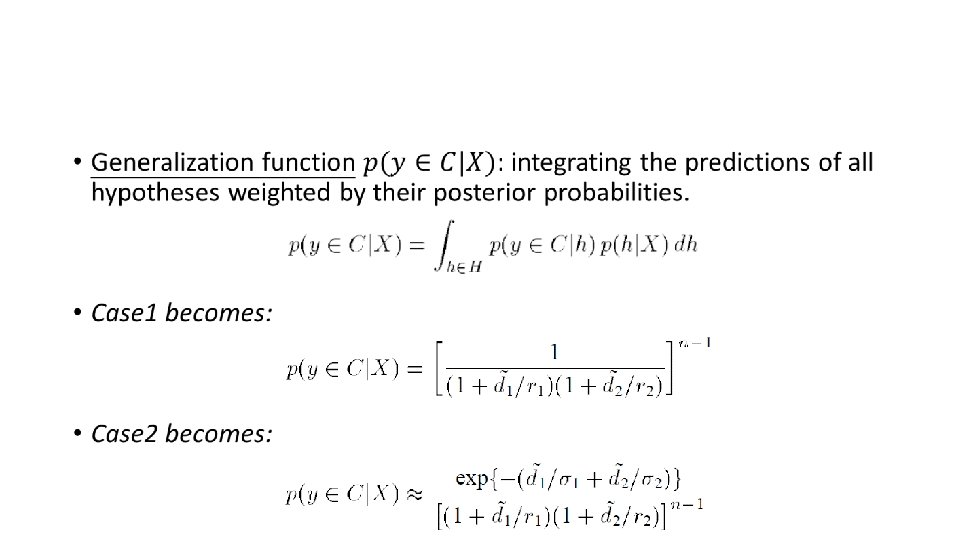
Formal treatment •
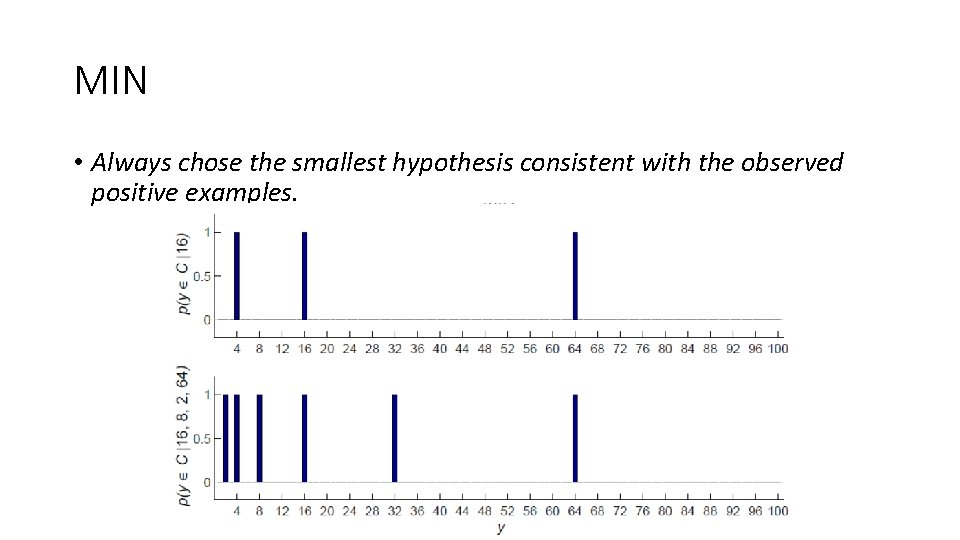
MIN • Always chose the smallest hypothesis consistent with the observed positive examples.
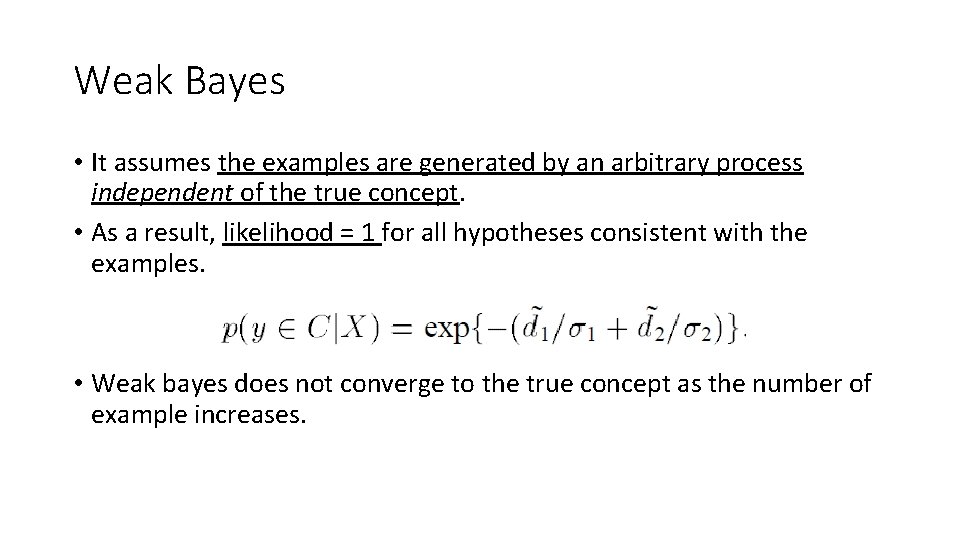
Weak Bayes • It assumes the examples are generated by an arbitrary process independent of the true concept. • As a result, likelihood = 1 for all hypotheses consistent with the examples. • Weak bayes does not converge to the true concept as the number of example increases.
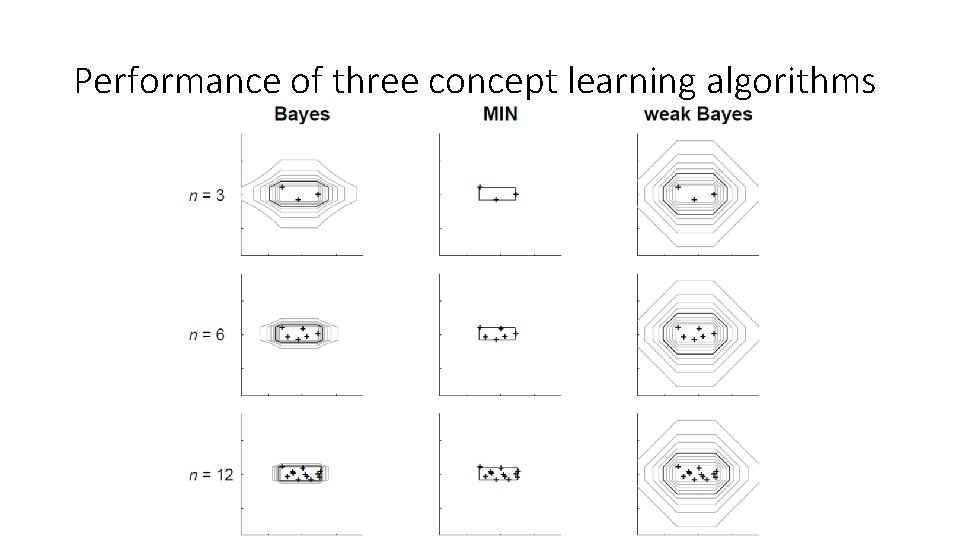
Performance of three concept learning algorithms
Outline • Brief talk of Bayesian framework • Concept learning • Theoretical analysis • Formal treatment • MIN • Weak Bayes • Experiment • Reference
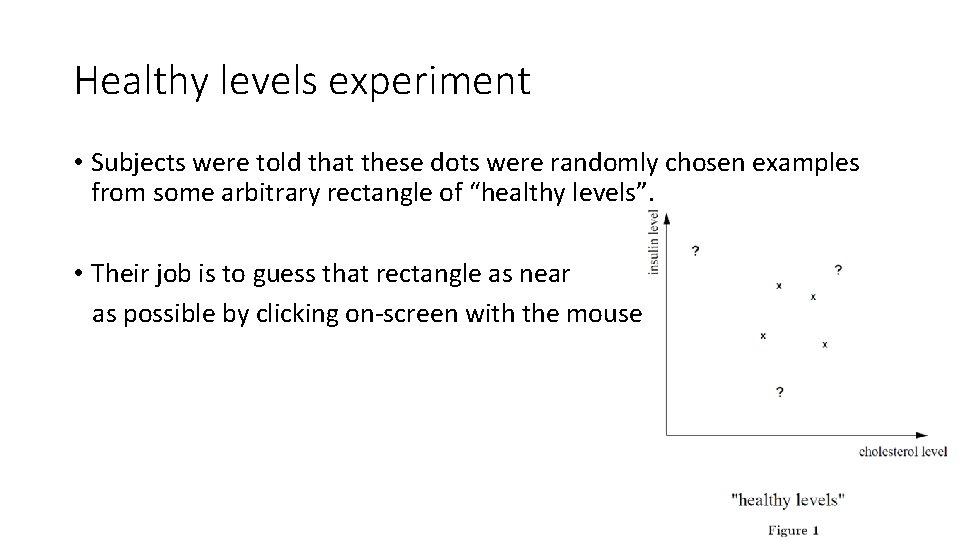
Healthy levels experiment • Subjects were told that these dots were randomly chosen examples from some arbitrary rectangle of “healthy levels”. • Their job is to guess that rectangle as near as possible by clicking on-screen with the mouse
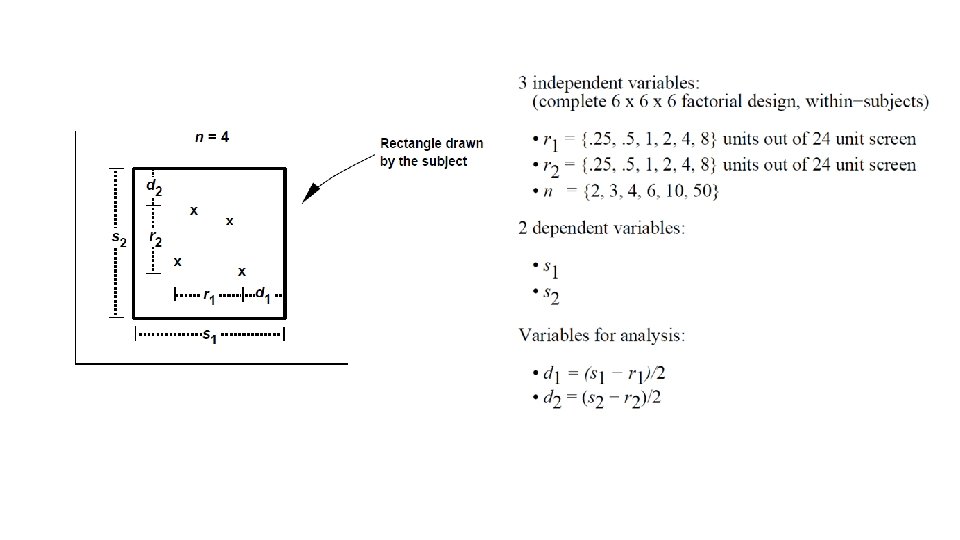
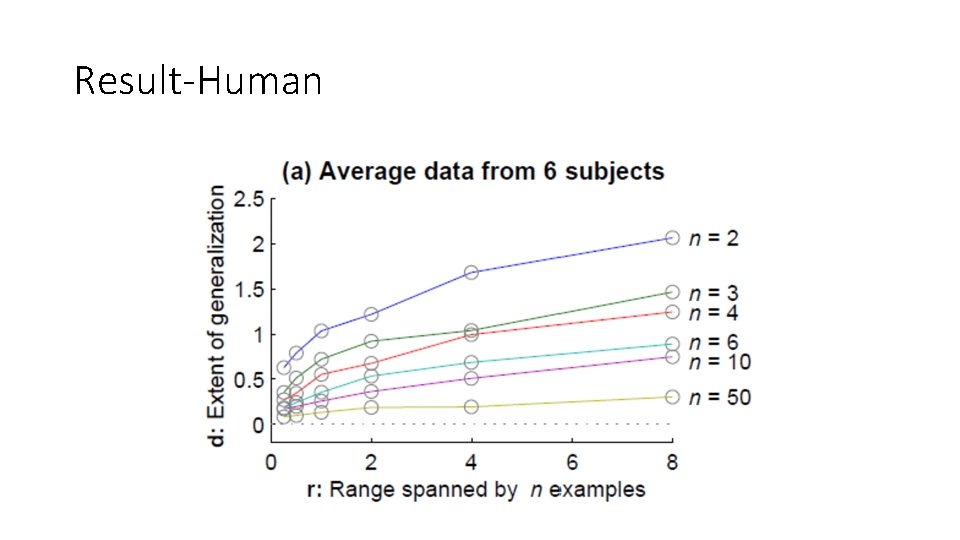
Result-Human
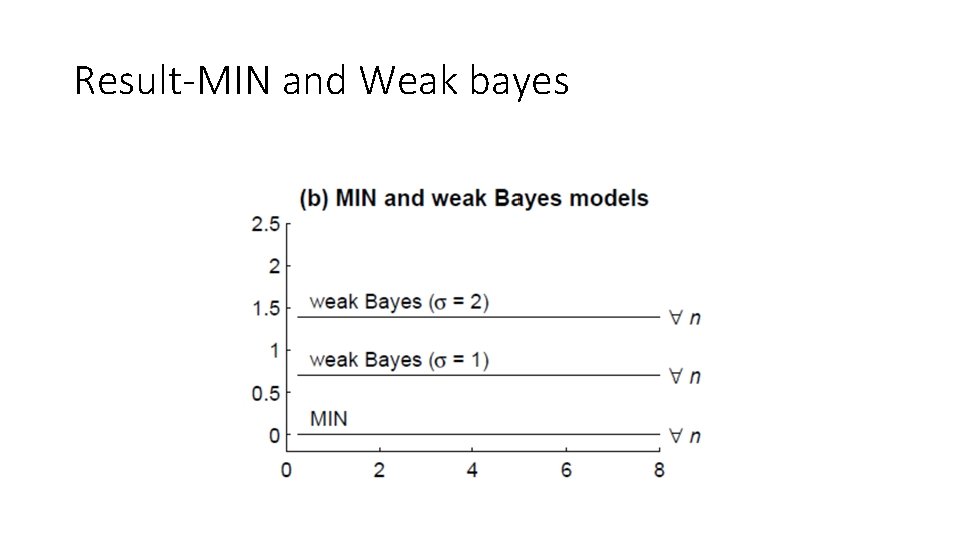
Result-MIN and Weak bayes
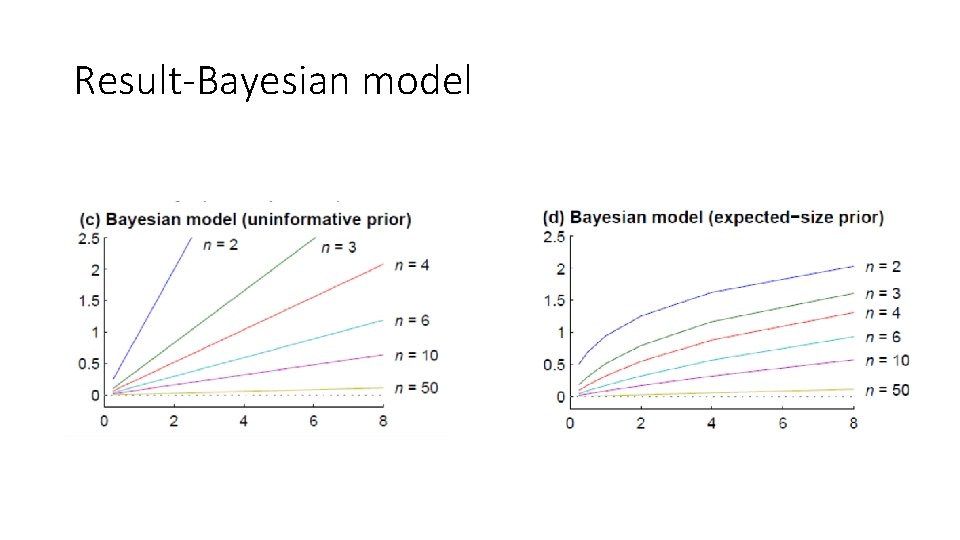
Result-Bayesian model
Conclusions • The Bayesian model has two key components: 1. A generalization function that results from integrating the prediction of all hypotheses weighted by their posterior probability. 2. The assumption that examples are sampled from the concept to be learn, and not independently of the concept as previous weak Bayes model have assumed.
![Reference • [1]Tenenbaum, J B. (1999). Bayesian Modeling of Human Concept Learning. • [2]Tenenbaum,](http://slidetodoc.com/presentation_image_h2/c3e91924d500da8dad7d82d4cf7f7fb4/image-21.jpg "Reference • [1]Tenenbaum, J B. (1999). Bayesian Modeling of Human Concept Learning. • [2]Tenenbaum,")
Reference • [1]Tenenbaum, J B. (1999). Bayesian Modeling of Human Concept Learning. • [2]Tenenbaum, J B. (1999). A Bayesian Framework for Concept Learning. Ph. D. Thesis, MIT Department of Brain Cognitive Sciences.

END
- Slides: 22