
Bayesian Learning contd Slides adapted from David Kauchak

Bayesian Learning (cont’d) Slides adapted from David Kauchak
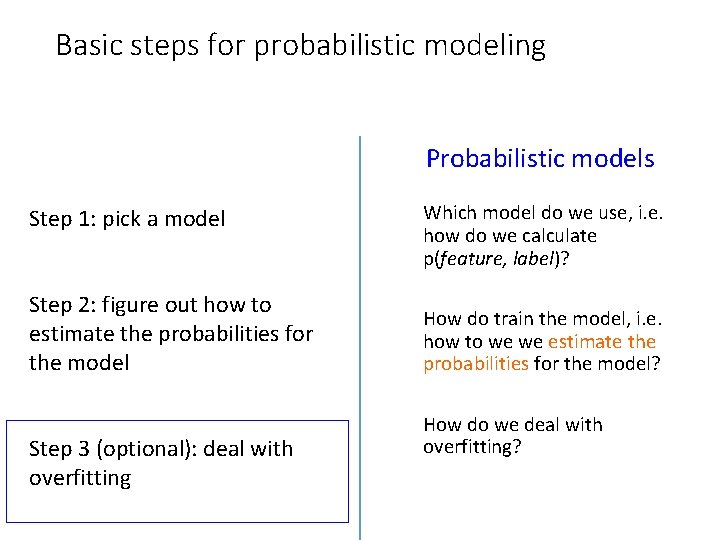
Basic steps for probabilistic modeling Probabilistic models Step 1: pick a model Step 2: figure out how to estimate the probabilities for the model Step 3 (optional): deal with overfitting Which model do we use, i. e. how do we calculate p(feature, label)? How do train the model, i. e. how to we we estimate the probabilities for the model? How do we deal with overfitting?
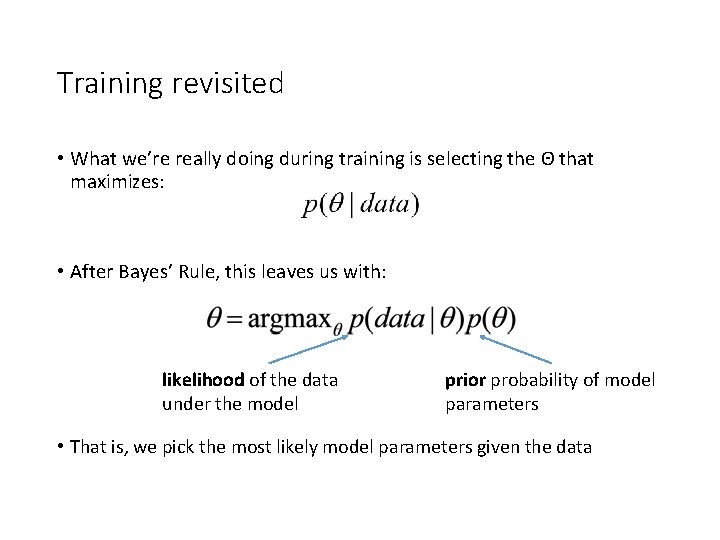
Training revisited • What we’re really doing during training is selecting the Θ that maximizes: • After Bayes’ Rule, this leaves us with: likelihood of the data under the model prior probability of model parameters • That is, we pick the most likely model parameters given the data
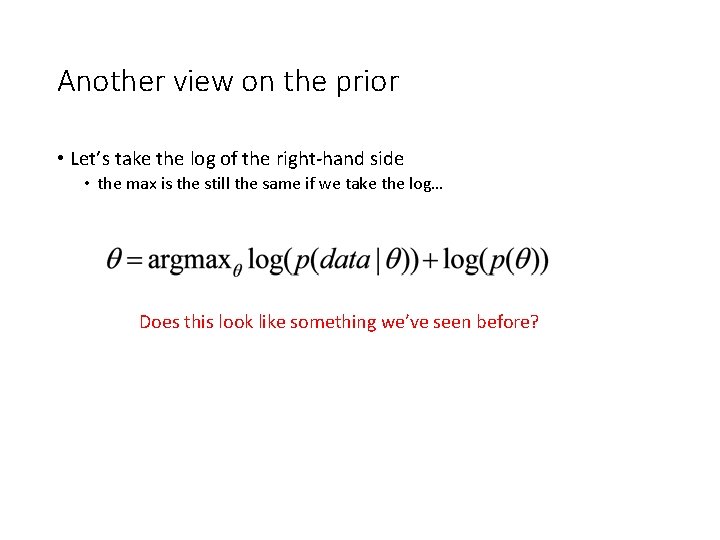
Another view on the prior • Let’s take the log of the right-hand side • the max is the still the same if we take the log… Does this look like something we’ve seen before?
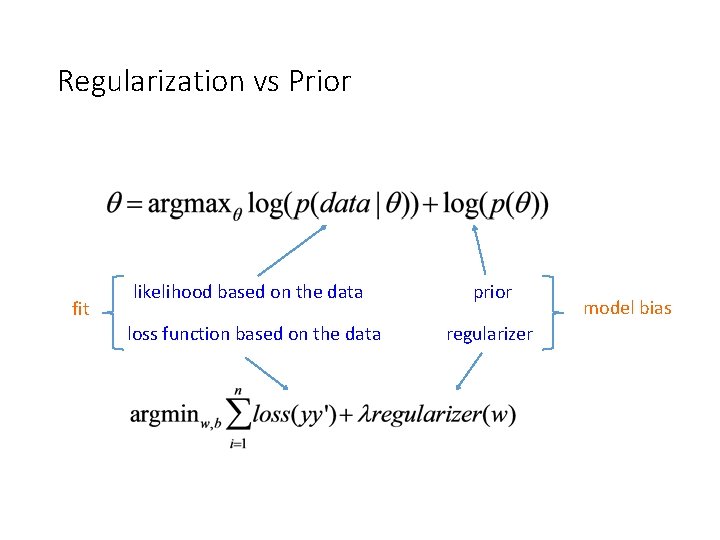
Regularization vs Prior fit likelihood based on the data prior loss function based on the data regularizer model bias
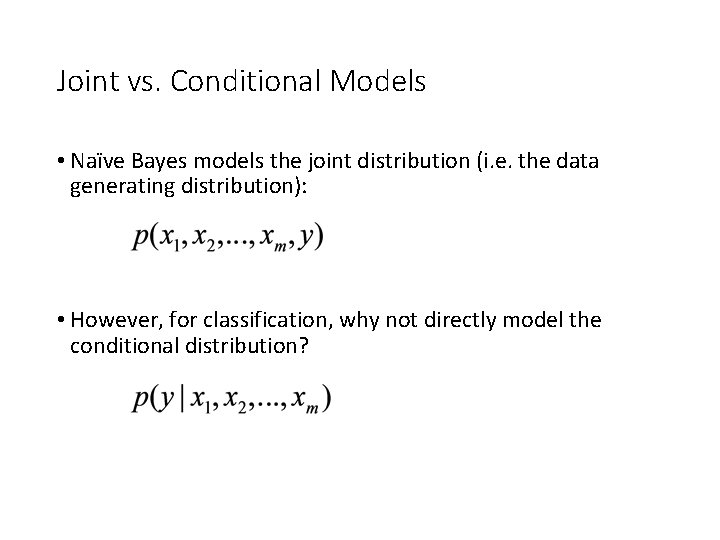
Joint vs. Conditional Models • Naïve Bayes models the joint distribution (i. e. the data generating distribution): • However, for classification, why not directly model the conditional distribution?
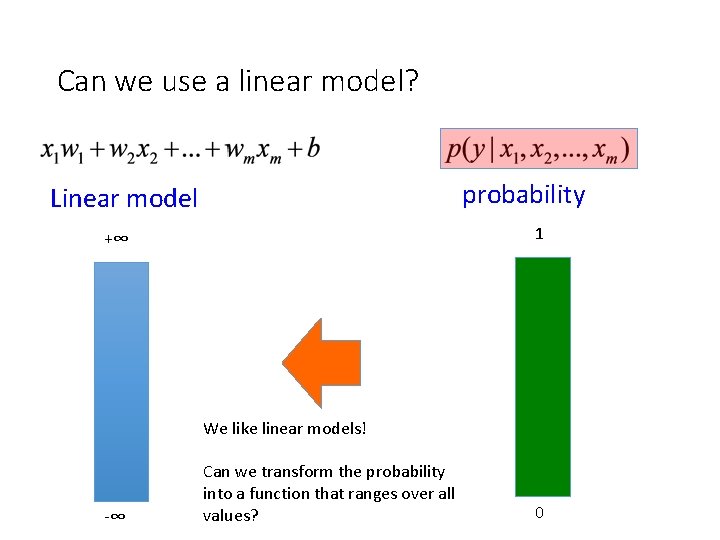
Can we use a linear model? probability Linear model 1 +∞ We like linear models! -∞ Can we transform the probability into a function that ranges over all values? 0
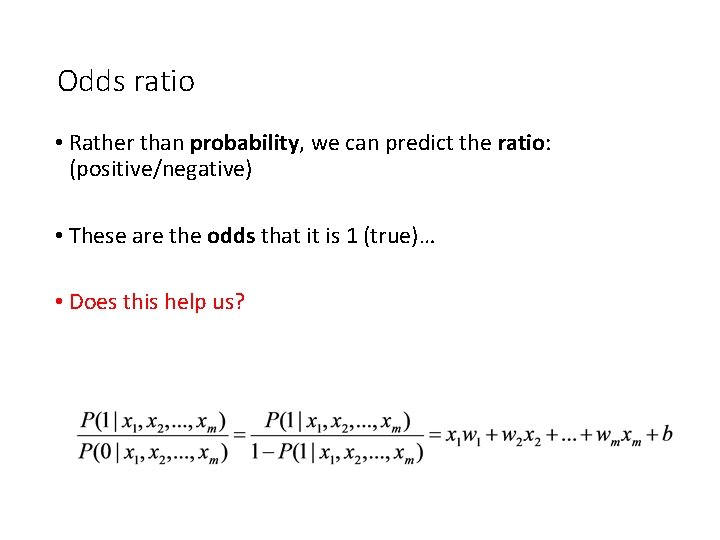
Odds ratio • Rather than probability, we can predict the ratio: (positive/negative) • These are the odds that it is 1 (true)… • Does this help us?
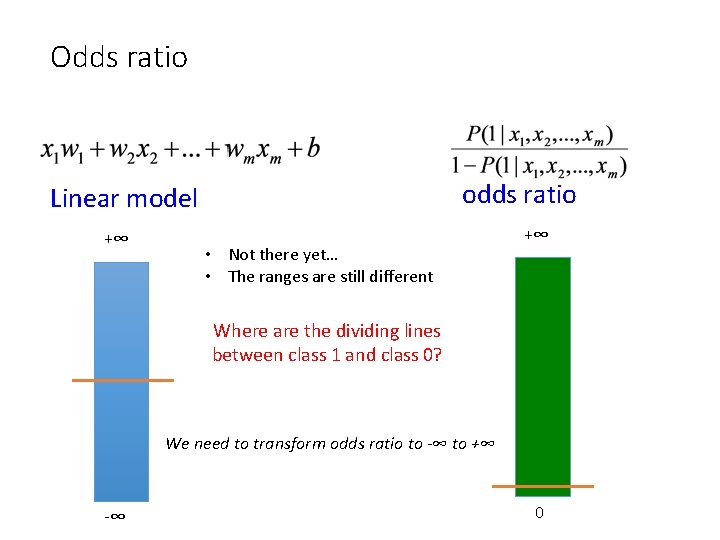
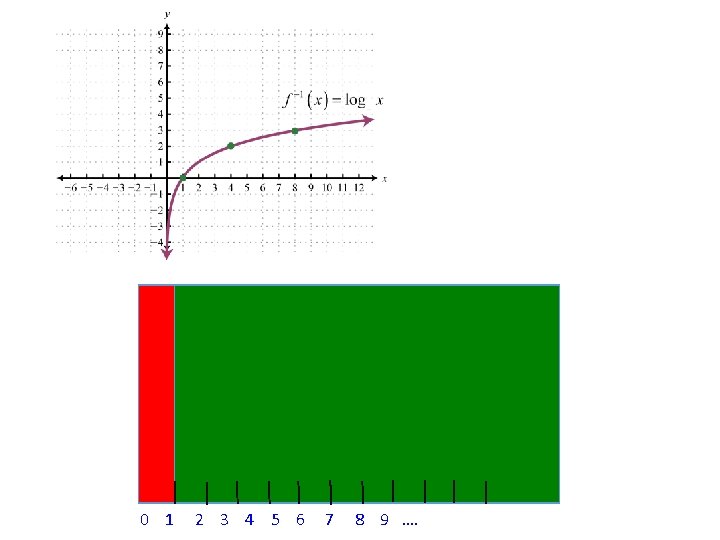
Odds ratio odds ratio Linear model +∞ • Not there yet… • The ranges are still different +∞ Where are the dividing lines between class 1 and class 0? We need to transform odds ratio to -∞ to +∞ -∞ 0
0 1 2 3 4 5 6 7 8 9 ….
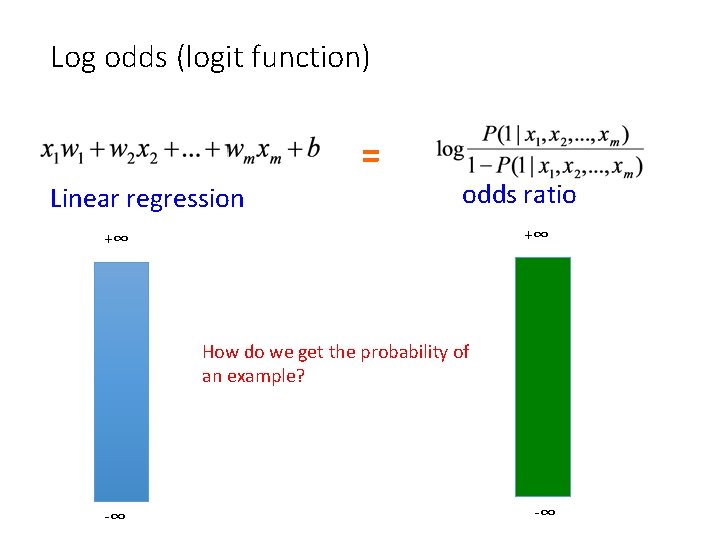
Log odds (logit function) = Linear regression odds ratio +∞ +∞ How do we get the probability of an example? -∞ -∞
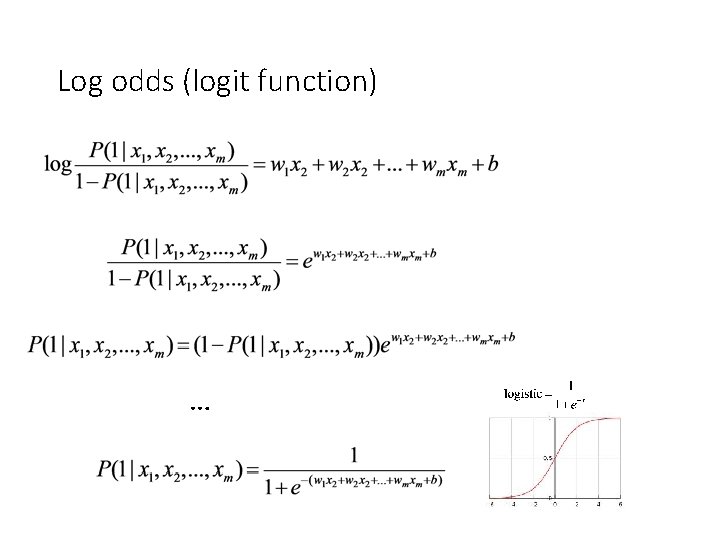
Log odds (logit function) …
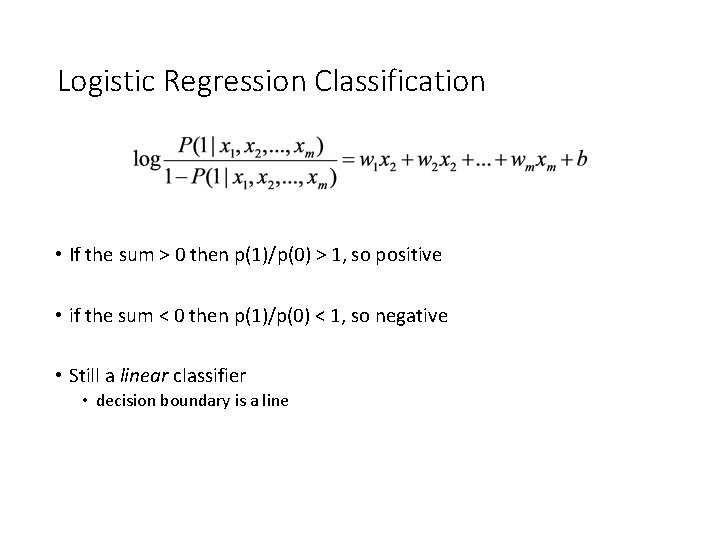
Logistic Regression Classification • If the sum > 0 then p(1)/p(0) > 1, so positive • if the sum < 0 then p(1)/p(0) < 1, so negative • Still a linear classifier • decision boundary is a line
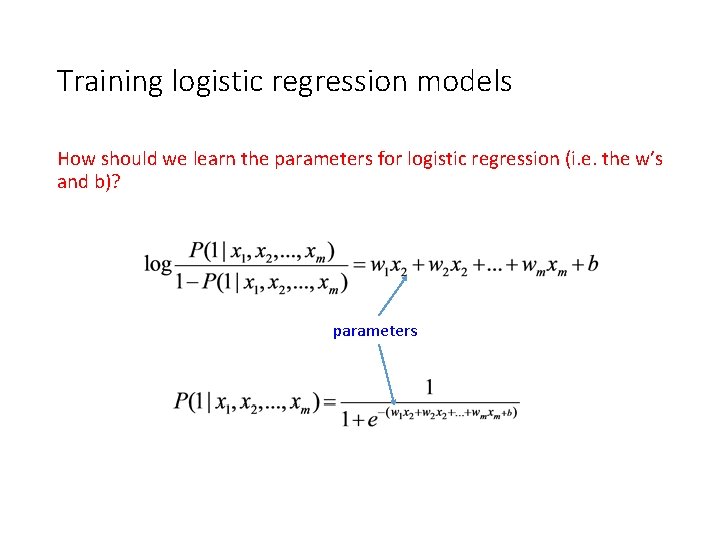
Training logistic regression models How should we learn the parameters for logistic regression (i. e. the w’s and b)? parameters
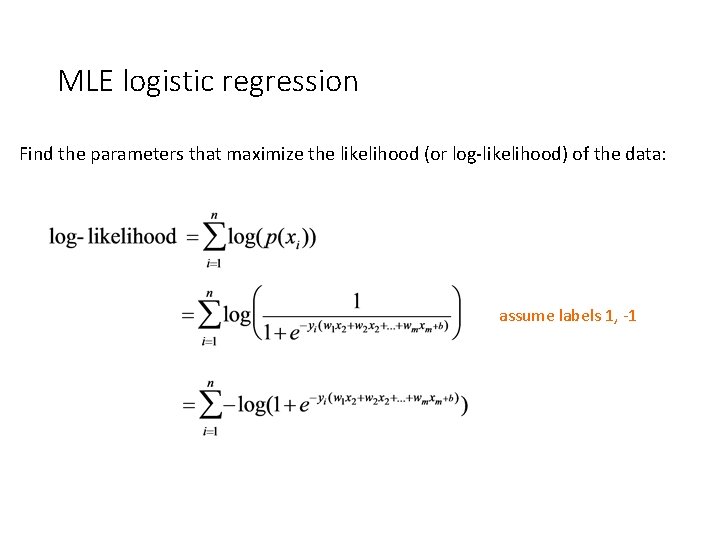
MLE logistic regression Find the parameters that maximize the likelihood (or log-likelihood) of the data: assume labels 1, -1
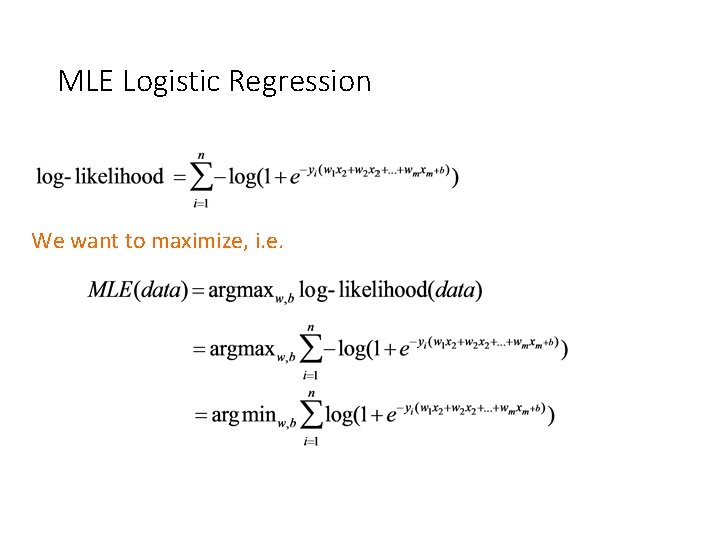
MLE Logistic Regression We want to maximize, i. e.
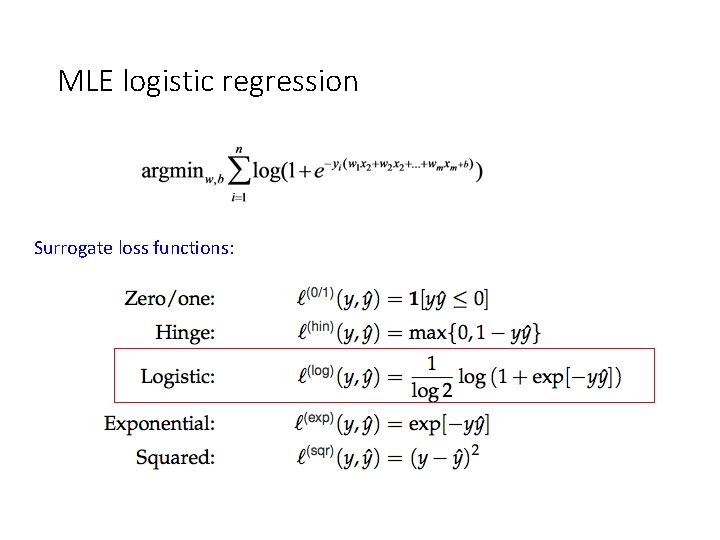
MLE logistic regression Surrogate loss functions:
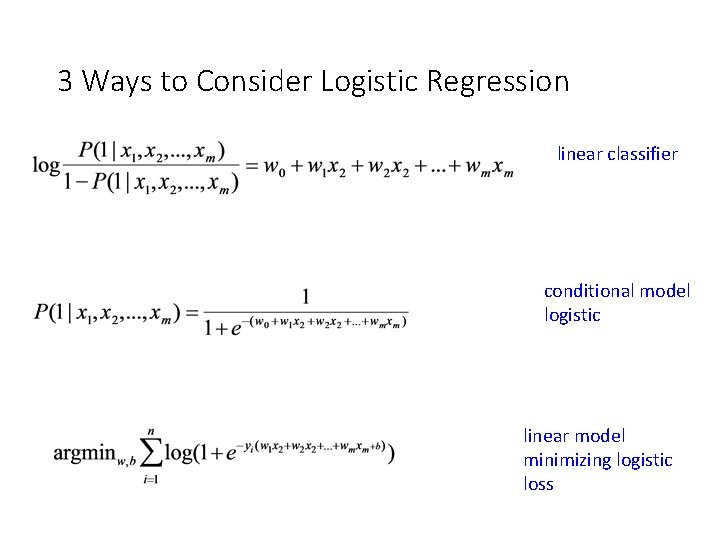
3 Ways to Consider Logistic Regression linear classifier conditional model logistic linear model minimizing logistic loss
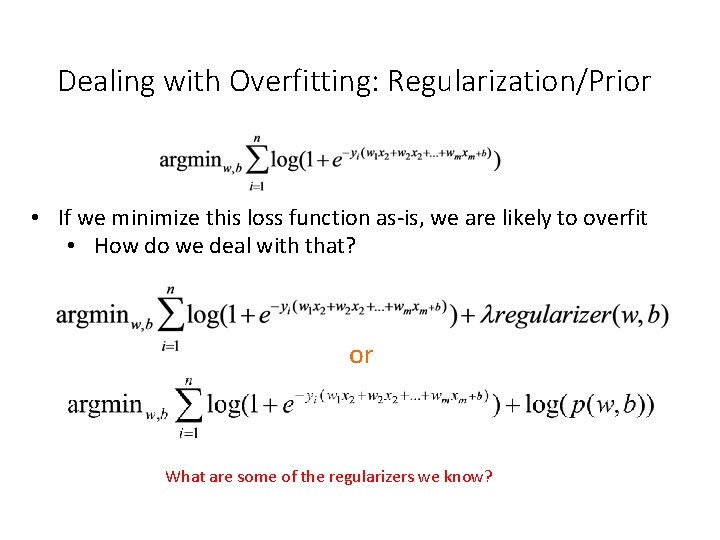
Dealing with Overfitting: Regularization/Prior • If we minimize this loss function as-is, we are likely to overfit • How do we deal with that? or What are some of the regularizers we know?
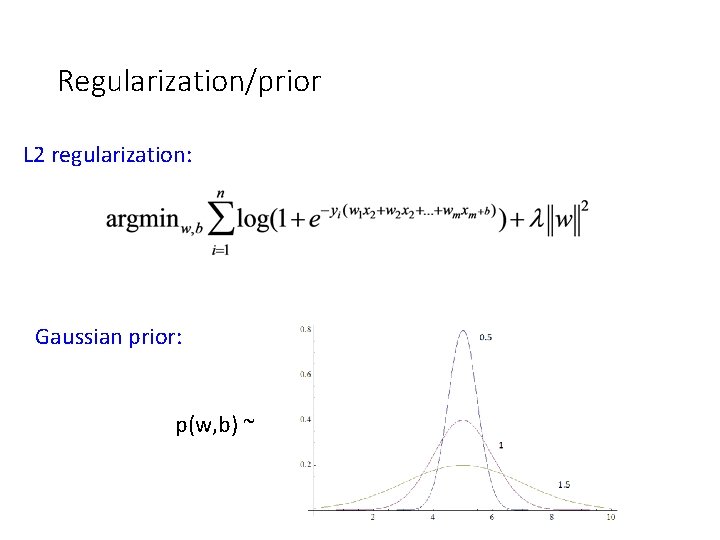
Regularization/prior L 2 regularization: Gaussian prior: p(w, b) ~
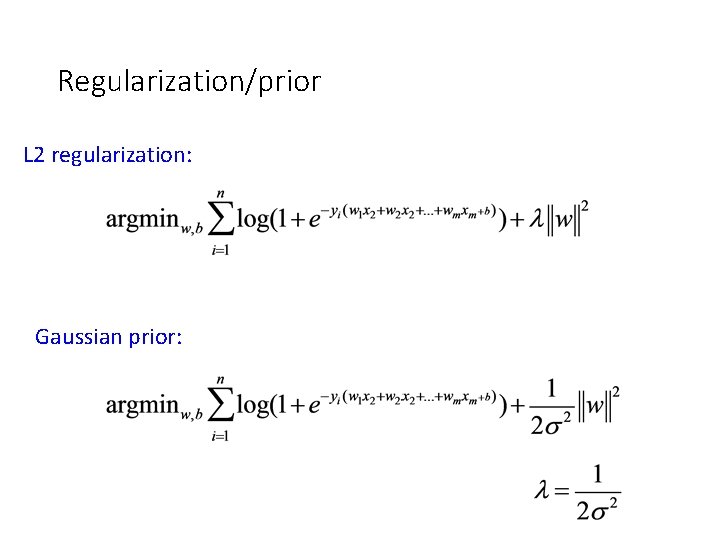
Regularization/prior L 2 regularization: Gaussian prior:
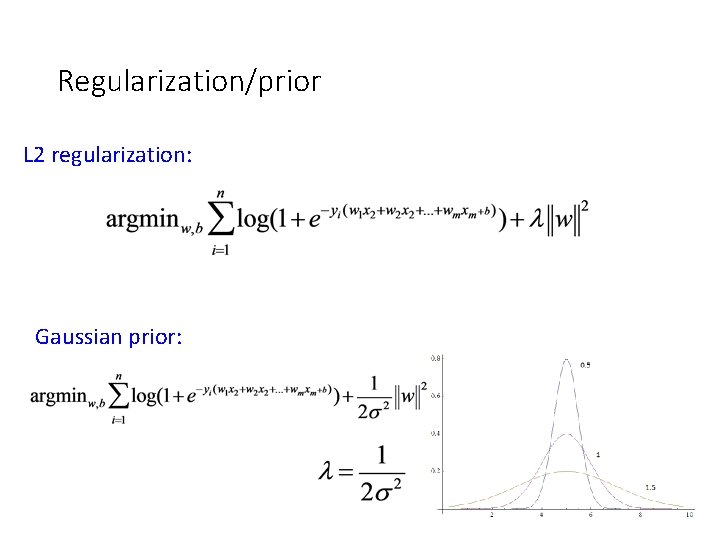
Regularization/prior L 2 regularization: Gaussian prior:
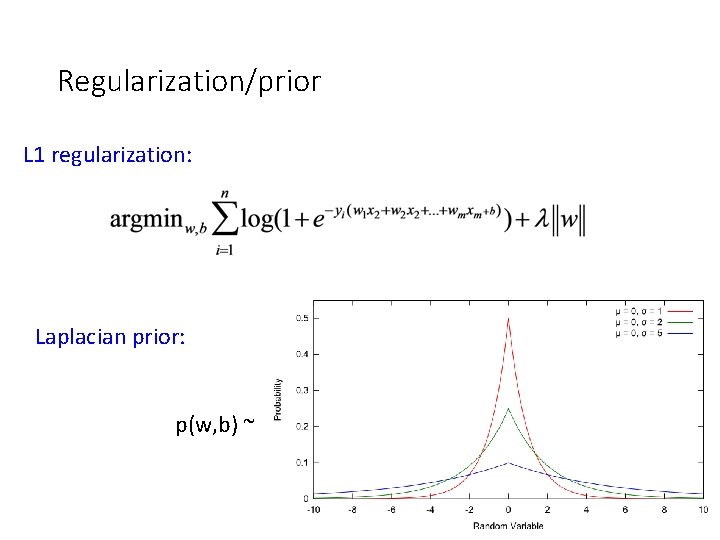
Regularization/prior L 1 regularization: Laplacian prior: p(w, b) ~
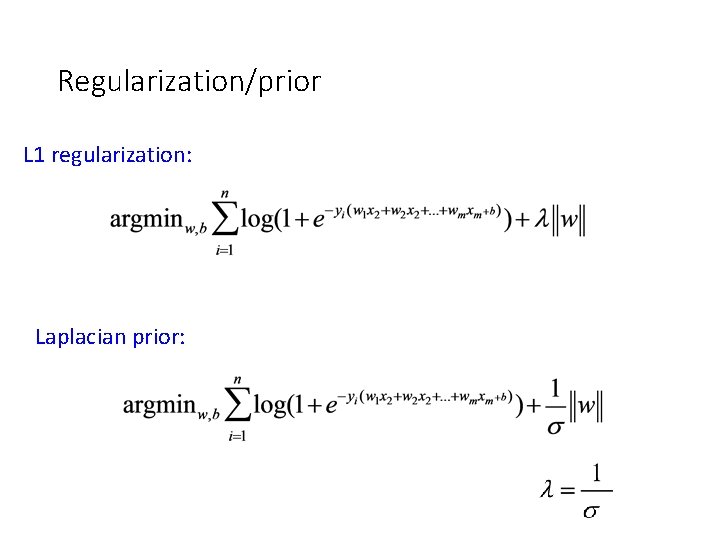
Regularization/prior L 1 regularization: Laplacian prior:
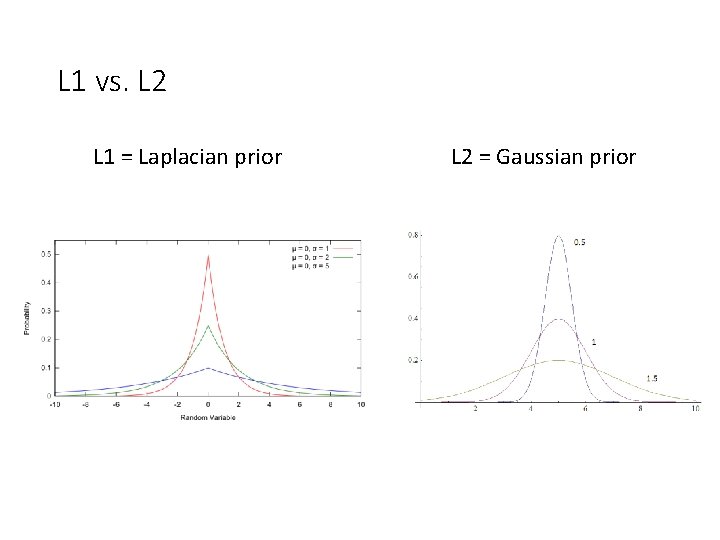
L 1 vs. L 2 L 1 = Laplacian prior L 2 = Gaussian prior
Probabilistic models summarized Two classification models: • Naïve Bayes (models joint distribution) • Logistic Regression (models conditional distribution) • In practice this tends to work better if all you want to do is classify Priors/smoothing/regularization • • • Important for both models In theory: allow us to impart some prior knowledge In practice: avoids overfitting and often tune on development data
- Slides: 26