
Bayesian inference Jean Daunizeau Wellcome Trust Centre for
Bayesian inference Jean Daunizeau Wellcome Trust Centre for Neuroimaging 16 / 05 / 2008
Overview of the talk 1 Probabilistic modelling and representation of uncertainty 1. 1 Introduction 1. 2 Bayesian paradigm 1. 3 Specification of priors 1. 4 Hierarchical models 2 Numerical Bayesian inference methods 2. 1 Sampling methods 2. 2 Variational methods (EM, VB) 3 SPM applications 3. 1 a. MRI segmentation 3. 2 f. MRI time series analysis with spatial priors 3. 3 Dynamic causal modelling 3. 4 EEG source reconstruction
Overview of the talk 1 Probabilistic modelling and representation of uncertainty 1. 1 Introduction 1. 2 Bayesian paradigm 1. 3 Specification of priors 1. 4 Hierarchical models 2 Numerical Bayesian inference methods 2. 1 Sampling methods 2. 2 Variational methods (EM, VB) 3 SPM applications 3. 1 a. MRI segmentation 3. 2 f. MRI time series analysis with spatial priors 3. 3 Dynamic causal modelling 3. 4 EEG source reconstruction
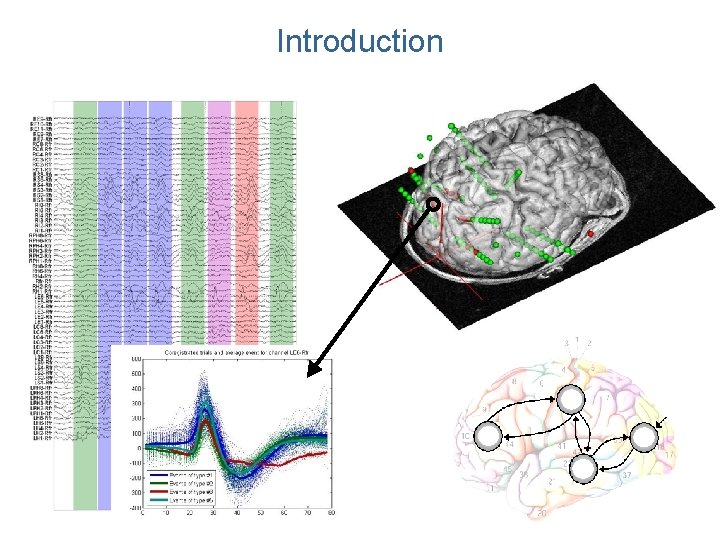
Introduction
Overview of the talk 1 Probabilistic modelling and representation of uncertainty 1. 1 Introduction 1. 2 Bayesian paradigm 1. 3 Specification of priors 1. 4 Hierarchical models 2 Numerical Bayesian inference methods 2. 1 Sampling methods 2. 2 Variational methods (EM, VB) 3 SPM applications 3. 1 a. MRI segmentation 3. 2 f. MRI time series analysis with spatial priors 3. 3 Dynamic causal modelling 3. 4 EEG source reconstruction
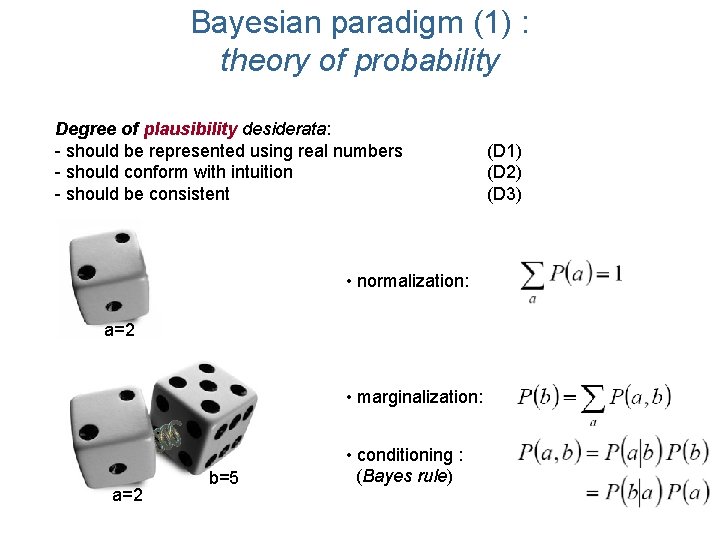
Bayesian paradigm (1) : theory of probability Degree of plausibility desiderata: - should be represented using real numbers - should conform with intuition - should be consistent • normalization: a=2 • marginalization: a=2 b=5 • conditioning : (Bayes rule) (D 1) (D 2) (D 3)
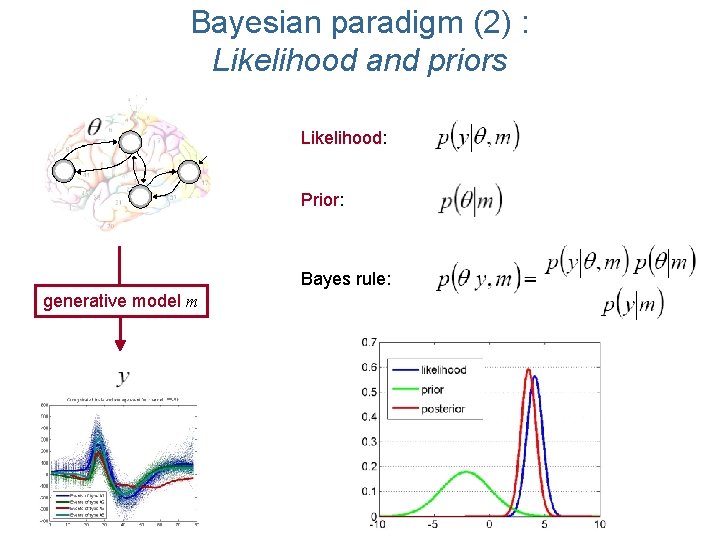
Bayesian paradigm (2) : Likelihood and priors Likelihood: Prior: Bayes rule: generative model m
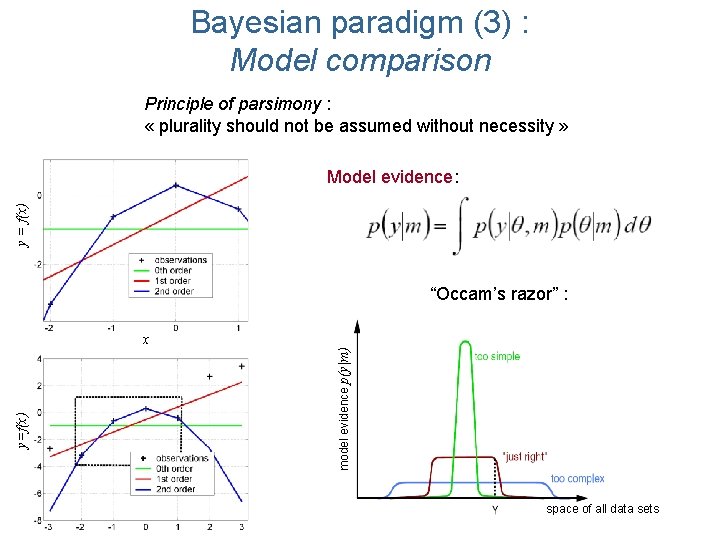
Bayesian paradigm (3) : Model comparison Principle of parsimony : « plurality should not be assumed without necessity » y = f(x) Model evidence: “Occam’s razor” : model evidence p(y|m) y=f(x) x space of all data sets
Overview of the talk 1 Probabilistic modelling and representation of uncertainty 1. 1 Introduction 1. 2 Bayesian paradigm 1. 3 Specification of priors 1. 4 Hierarchical models 2 Numerical Bayesian inference methods 2. 1 Sampling methods 2. 2 Variational methods (EM, VB) 3 SPM applications 3. 1 a. MRI segmentation 3. 2 f. MRI time series analysis with spatial priors 3. 3 Dynamic causal modelling 3. 4 EEG source reconstruction
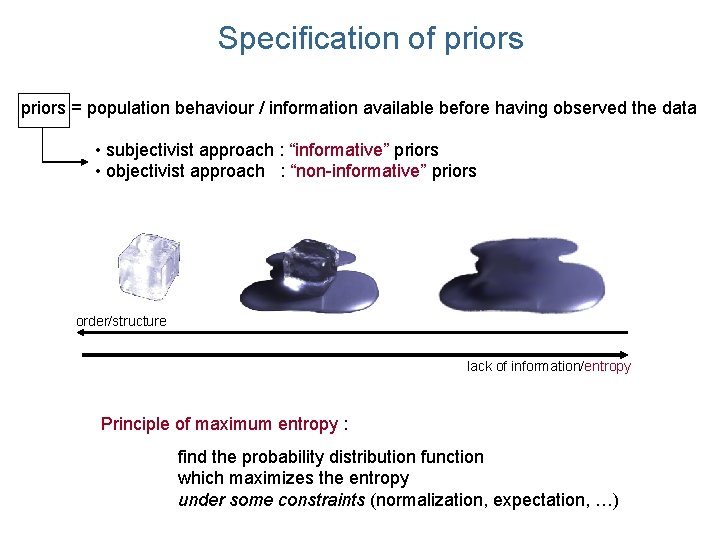
Specification of priors = population behaviour / information available before having observed the data • subjectivist approach : “informative” priors • objectivist approach : “non-informative” priors order/structure lack of information/entropy Principle of maximum entropy : find the probability distribution function which maximizes the entropy under some constraints (normalization, expectation, …)
Overview of the talk 1 Probabilistic modelling and representation of uncertainty 1. 1 Introduction 1. 2 Bayesian paradigm 1. 3 Specification of priors 1. 4 Hierarchical models 2 Numerical Bayesian inference methods 2. 1 Sampling methods 2. 2 Variational methods (EM, VB) 3 SPM applications 3. 1 a. MRI segmentation 3. 2 f. MRI time series analysis with spatial priors 3. 3 Dynamic causal modelling 3. 4 EEG source reconstruction
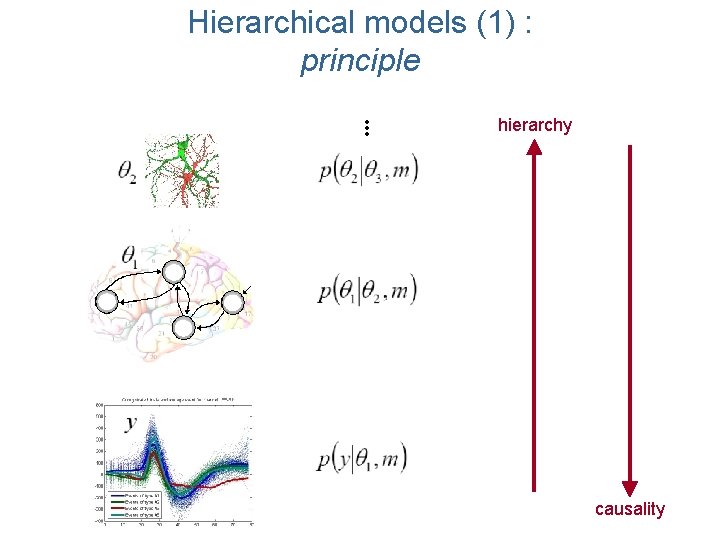
Hierarchical models (1) : principle • • • hierarchy causality
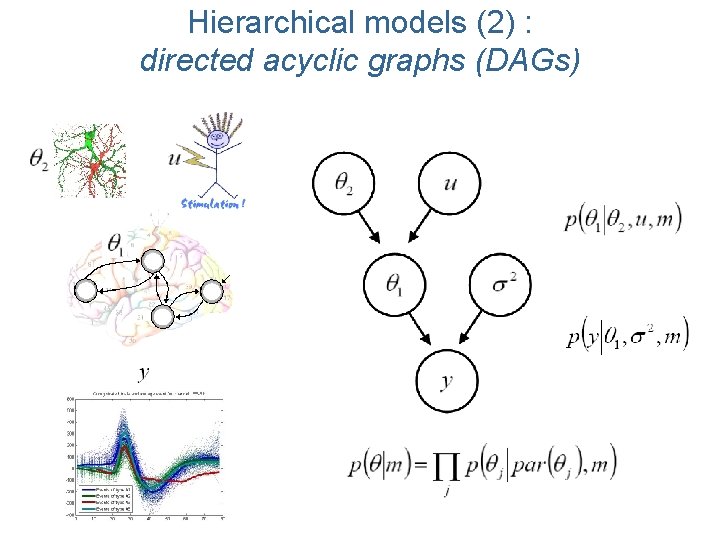
Hierarchical models (2) : directed acyclic graphs (DAGs)
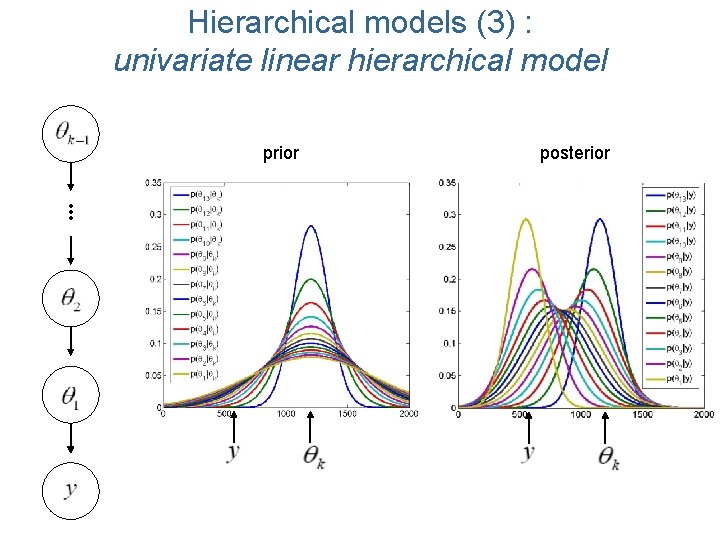
Hierarchical models (3) : univariate linear hierarchical model prior posterior • • •
Overview of the talk 1 Probabilistic modelling and representation of uncertainty 1. 1 Introduction 1. 2 Bayesian paradigm 1. 3 Specification of priors 1. 4 Hierarchical models 2 Numerical Bayesian inference methods 2. 1 Sampling methods 2. 2 Variational methods (EM, VB) 3 SPM applications 3. 1 a. MRI segmentation 3. 2 f. MRI time series analysis with spatial priors 3. 3 Dynamic causal modelling 3. 4 EEG source reconstruction
Overview of the talk 1 Probabilistic modelling and representation of uncertainty 1. 1 Introduction 1. 2 Bayesian paradigm 1. 3 Specification of priors 1. 4 Hierarchical models 2 Numerical Bayesian inference methods 2. 1 Sampling methods 2. 2 Variational methods (EM, VB) 3 SPM applications 3. 1 a. MRI segmentation 3. 2 f. MRI time series analysis with spatial priors 3. 3 Dynamic causal modelling 3. 4 EEG source reconstruction
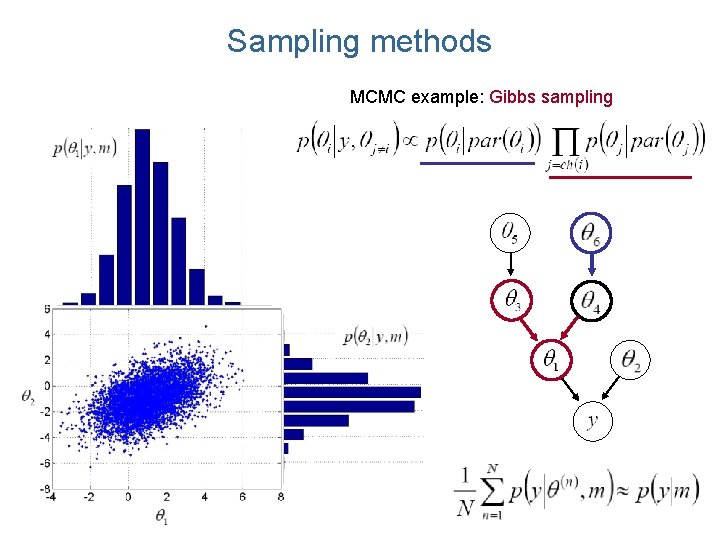
Sampling methods MCMC example: Gibbs sampling
Overview of the talk 1 Probabilistic modelling and representation of uncertainty 1. 1 Introduction 1. 2 Bayesian paradigm 1. 3 Specification of priors 1. 4 Hierarchical models 2 Numerical Bayesian inference methods 2. 1 Sampling methods 2. 2 Variational methods (EM, VB) 3 SPM applications 3. 1 a. MRI segmentation 3. 2 f. MRI time series analysis with spatial priors 3. 3 Dynamic causal modelling 3. 4 EEG source reconstruction
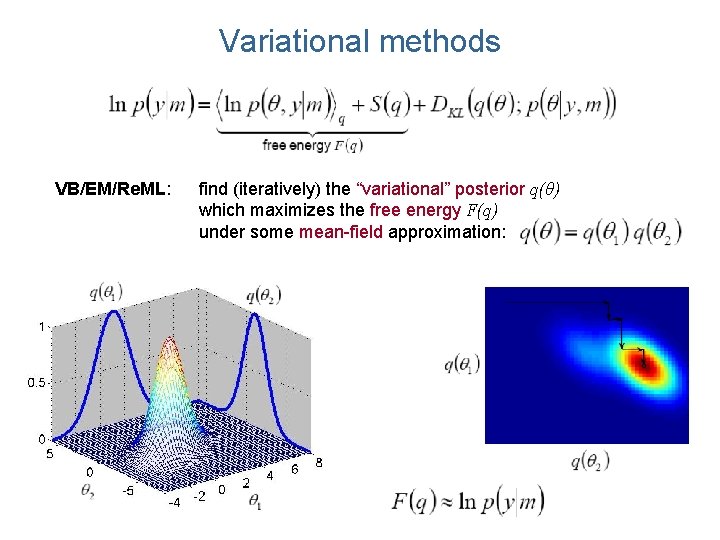
Variational methods VB/EM/Re. ML: find (iteratively) the “variational” posterior q(θ) which maximizes the free energy F(q) under some mean-field approximation:
Overview of the talk 1 Probabilistic modelling and representation of uncertainty 1. 1 Introduction 1. 2 Bayesian paradigm 1. 3 Specification of priors 1. 4 Hierarchical models 2 Numerical Bayesian inference methods 2. 1 Sampling methods 2. 2 Variational methods (EM, VB) 3 SPM applications 3. 1 a. MRI segmentation 3. 2 f. MRI time series analysis with spatial priors 3. 3 Dynamic causal modelling 3. 4 EEG source reconstruction
Overview of the talk 1 Probabilistic modelling and representation of uncertainty 1. 1 Introduction 1. 2 Bayesian paradigm 1. 3 Specification of priors 1. 4 Hierarchical models 2 Numerical Bayesian inference methods 2. 1 Sampling methods 2. 2 Variational methods (EM, VB) 3 SPM applications 3. 1 a. MRI segmentation 3. 2 f. MRI time series analysis with spatial priors 3. 3 Dynamic causal modelling 3. 4 EEG source reconstruction
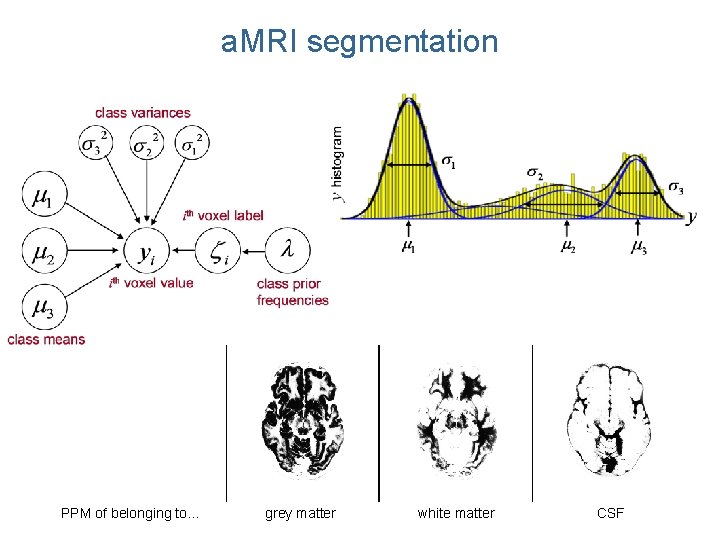
a. MRI segmentation PPM of belonging to… grey matter white matter CSF
Overview of the talk 1 Probabilistic modelling and representation of uncertainty 1. 1 Introduction 1. 2 Bayesian paradigm 1. 3 Specification of priors 1. 4 Hierarchical models 2 Numerical Bayesian inference methods 2. 1 Sampling methods 2. 2 Variational methods (EM, VB) 3 SPM applications 3. 1 a. MRI segmentation 3. 2 f. MRI time series analysis with spatial priors 3. 3 Dynamic causal modelling 3. 4 EEG source reconstruction
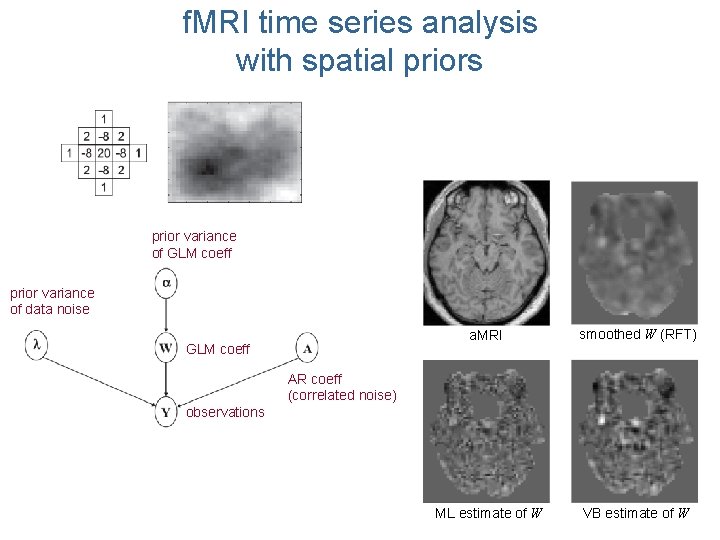
f. MRI time series analysis with spatial priors prior variance of GLM coeff prior variance of data noise GLM coeff a. MRI smoothed W (RFT) ML estimate of W VB estimate of W AR coeff (correlated noise) observations
Overview of the talk 1 Probabilistic modelling and representation of uncertainty 1. 1 Introduction 1. 2 Bayesian paradigm 1. 3 Specification of priors 1. 4 Hierarchical models 2 Numerical Bayesian inference methods 2. 1 Sampling methods 2. 2 Variational methods (EM, VB) 3 SPM applications 3. 1 a. MRI segmentation 3. 2 f. MRI time series analysis with spatial priors 3. 3 Dynamic causal modelling 3. 4 EEG source reconstruction
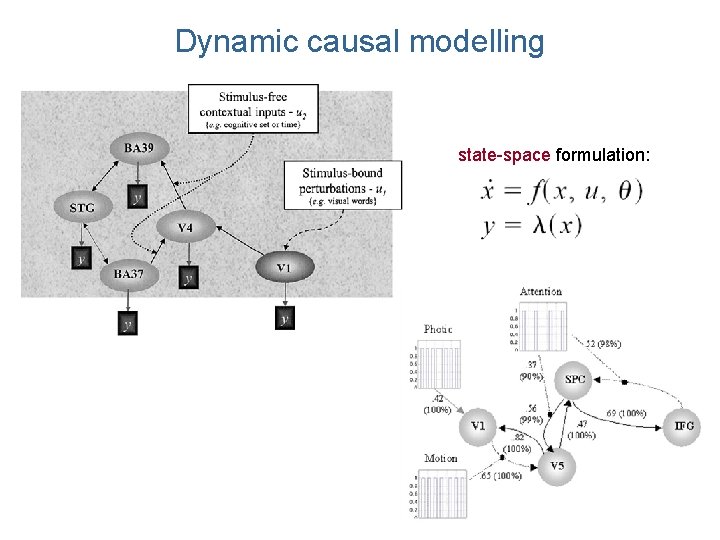
Dynamic causal modelling state-space formulation:
Overview of the talk 1 Probabilistic modelling and representation of uncertainty 1. 1 Introduction 1. 2 Bayesian paradigm 1. 3 Specification of priors 1. 4 Hierarchical models 2 Numerical Bayesian inference methods 2. 1 Sampling methods 2. 2 Variational methods (EM, VB) 3 SPM applications 3. 1 a. MRI segmentation 3. 2 f. MRI time series analysis with spatial priors 3. 3 Dynamic causal modelling 3. 4 EEG source reconstruction
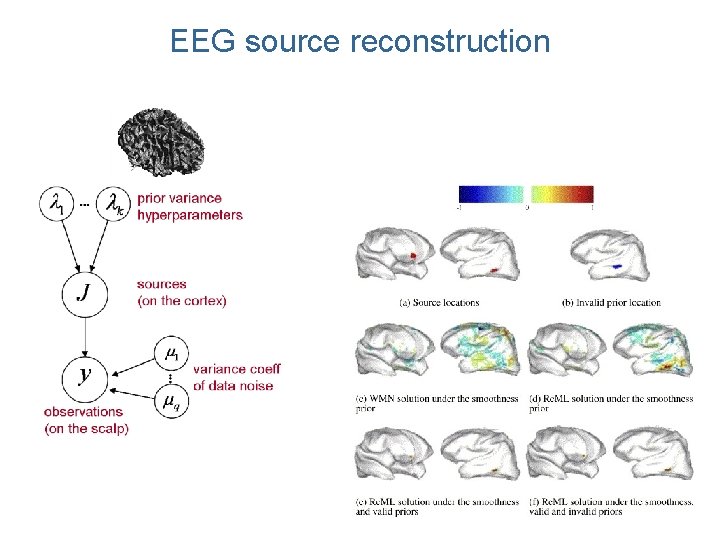
EEG source reconstruction
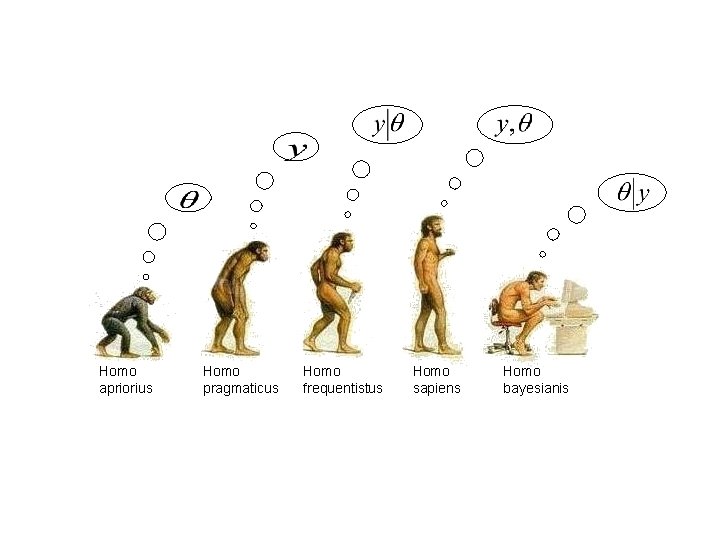
Homo apriorius Homo pragmaticus Homo frequentistus Homo sapiens Homo bayesianis
- Slides: 29