
Bayesian inference J Daunizeau Institute of Empirical Research
Bayesian inference J. Daunizeau Institute of Empirical Research in Economics, Zurich, Switzerland Brain and Spine Institute, Paris, France
Overview of the talk 1 Probabilistic modelling and representation of uncertainty 1. 1 Bayesian paradigm 1. 2 Hierarchical models 1. 3 Frequentist versus Bayesian inference 2 Numerical Bayesian inference methods 2. 1 Sampling methods 2. 2 Variational methods (Re. ML, EM, VB) 3 SPM applications 3. 1 a. MRI segmentation 3. 2 Decoding of brain images 3. 3 Model-based f. MRI analysis (with spatial priors) 3. 4 Dynamic causal modelling
Overview of the talk 1 Probabilistic modelling and representation of uncertainty 1. 1 Bayesian paradigm 1. 2 Hierarchical models 1. 3 Frequentist versus Bayesian inference 2 Numerical Bayesian inference methods 2. 1 Sampling methods 2. 2 Variational methods (Re. ML, EM, VB) 3 SPM applications 3. 1 a. MRI segmentation 3. 2 Decoding of brain images 3. 3 Model-based f. MRI analysis (with spatial priors) 3. 4 Dynamic causal modelling
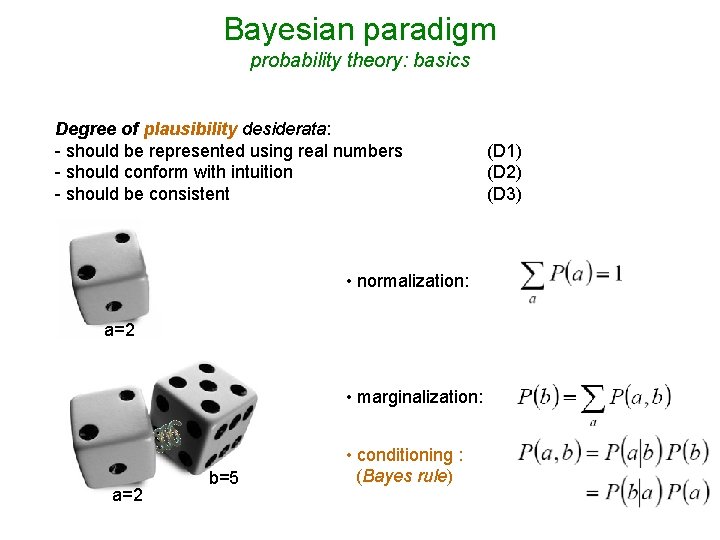
Bayesian paradigm probability theory: basics Degree of plausibility desiderata: - should be represented using real numbers - should conform with intuition - should be consistent • normalization: a=2 • marginalization: a=2 b=5 • conditioning : (Bayes rule) (D 1) (D 2) (D 3)
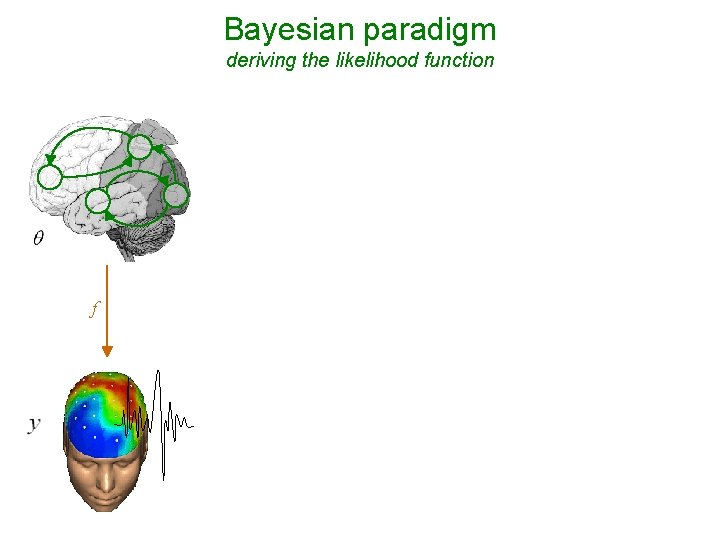
Bayesian paradigm deriving the likelihood function - Model of data with unknown parameters: e. g. , GLM: - But data is noisy: - Assume noise/residuals is ‘small’: f → Distribution of data, given fixed parameters:
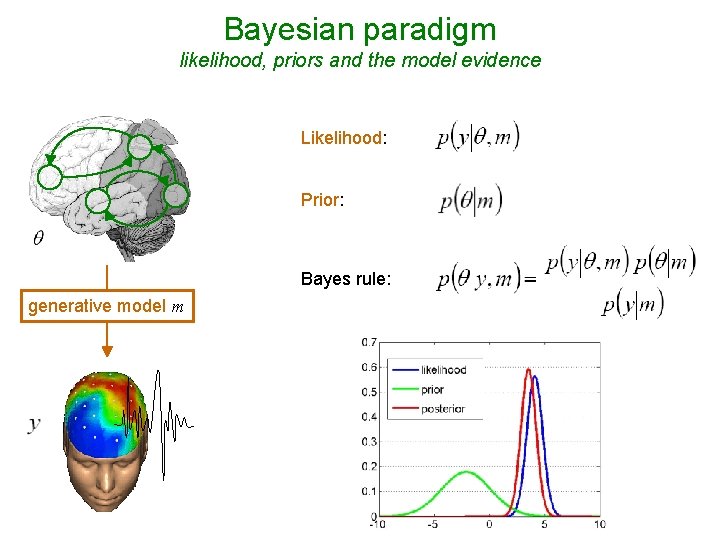
Bayesian paradigm likelihood, priors and the model evidence Likelihood: Prior: Bayes rule: generative model m
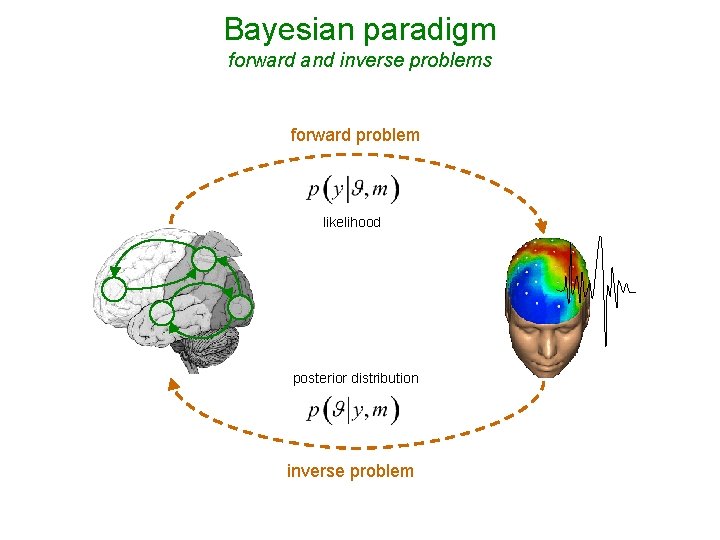
Bayesian paradigm forward and inverse problems forward problem likelihood posterior distribution inverse problem
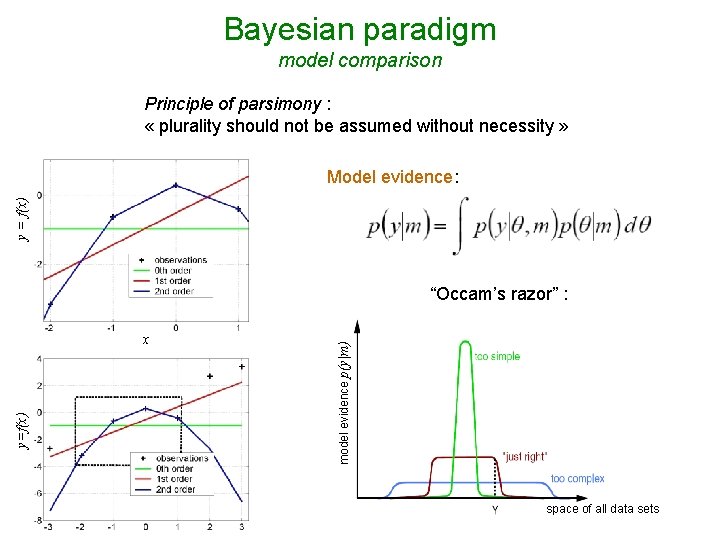
Bayesian paradigm model comparison Principle of parsimony : « plurality should not be assumed without necessity » y = f(x) Model evidence: y=f(x) x model evidence p(y|m) “Occam’s razor” : space of all data sets
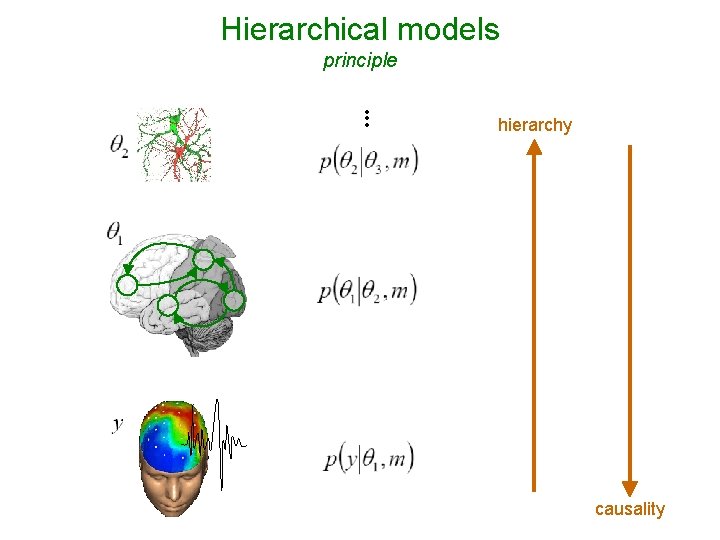
Hierarchical models principle • • • hierarchy causality
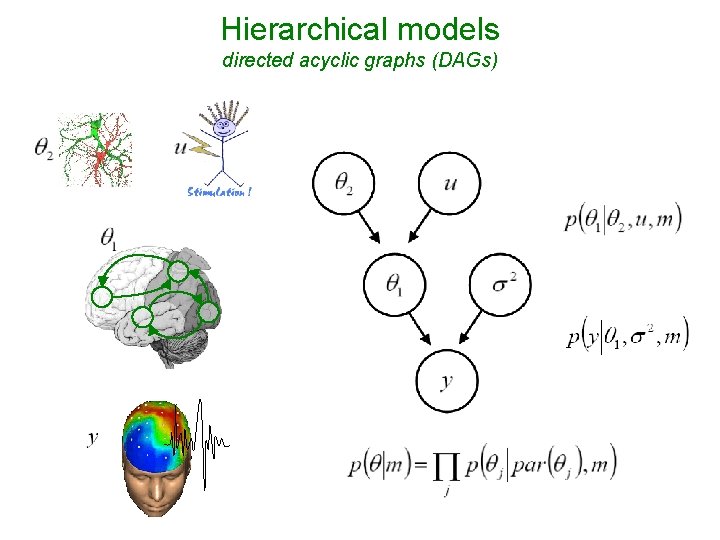
Hierarchical models directed acyclic graphs (DAGs)
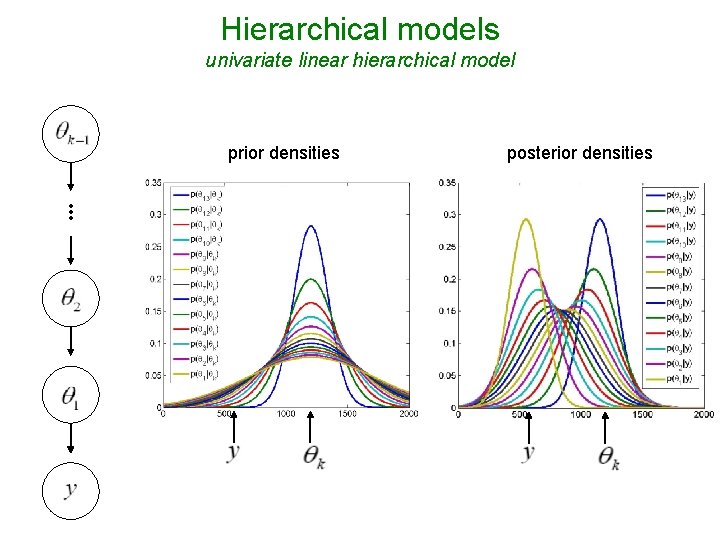
Hierarchical models univariate linear hierarchical model prior densities posterior densities • • •
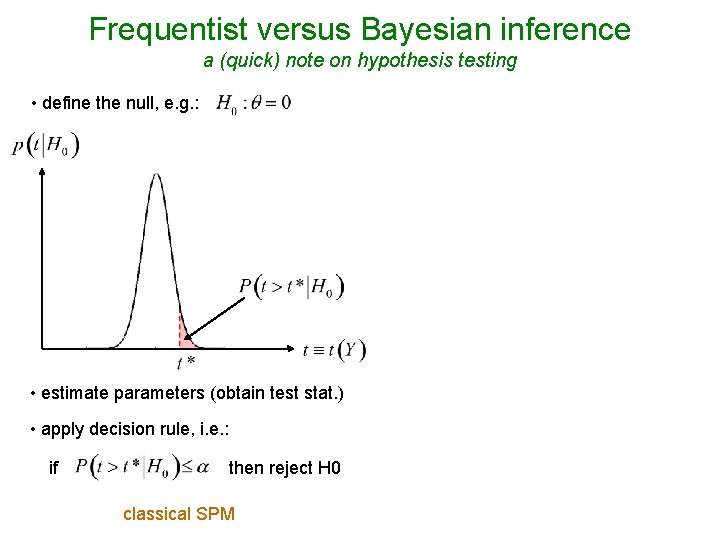
Frequentist versus Bayesian inference a (quick) note on hypothesis testing • define the null, e. g. : • invert model (obtain posterior pdf) • estimate parameters (obtain test stat. ) • define the null, e. g. : • apply decision rule, i. e. : if then reject H 0 classical SPM if then accept H 0 Bayesian PPM
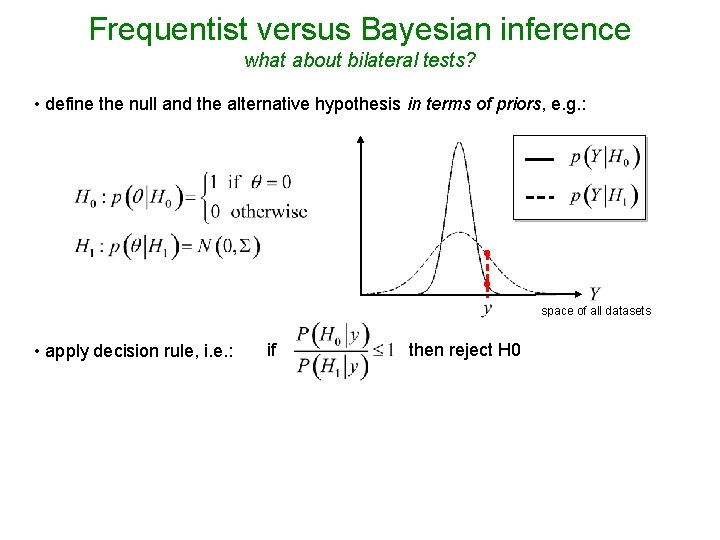
Frequentist versus Bayesian inference what about bilateral tests? • define the null and the alternative hypothesis in terms of priors, e. g. : space of all datasets • apply decision rule, i. e. : if then reject H 0 • Savage-Dickey ratios (nested models, i. i. d. priors):
Overview of the talk 1 Probabilistic modelling and representation of uncertainty 1. 1 Bayesian paradigm 1. 2 Hierarchical models 1. 3 Frequentist versus Bayesian inference 2 Numerical Bayesian inference methods 2. 1 Sampling methods 2. 2 Variational methods (Re. ML, EM, VB) 3 SPM applications 3. 1 a. MRI segmentation 3. 2 Decoding of brain images 3. 3 Model-based f. MRI analysis (with spatial priors) 3. 4 Dynamic causal modelling
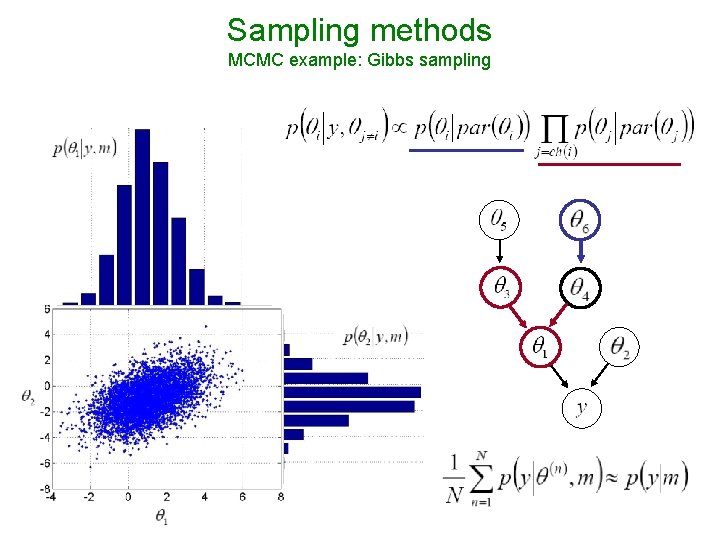
Sampling methods MCMC example: Gibbs sampling
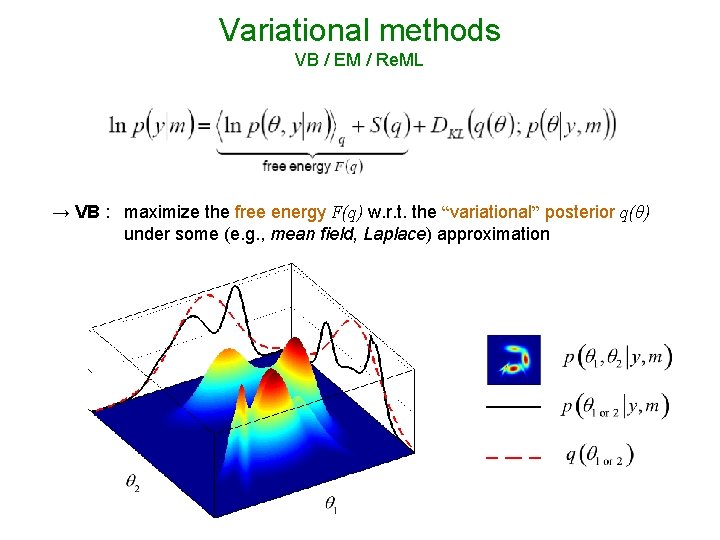
Variational methods VB / EM / Re. ML → VB : maximize the free energy F(q) w. r. t. the “variational” posterior q(θ) under some (e. g. , mean field, Laplace) approximation
Overview of the talk 1 Probabilistic modelling and representation of uncertainty 1. 1 Bayesian paradigm 1. 2 Hierarchical models 1. 3 Frequentist versus Bayesian inference 2 Numerical Bayesian inference methods 2. 1 Sampling methods 2. 2 Variational methods (Re. ML, EM, VB) 3 SPM applications 3. 1 a. MRI segmentation 3. 2 Decoding of brain images 3. 3 Model-based f. MRI analysis (with spatial priors) 3. 4 Dynamic causal modelling
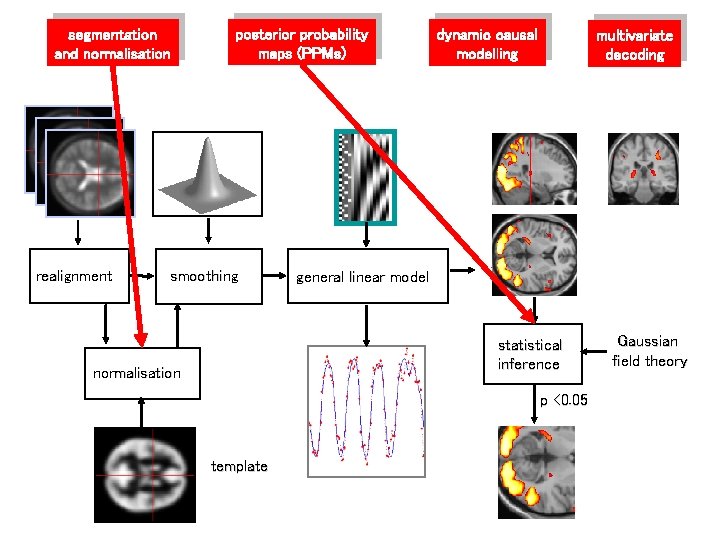
segmentation and normalisation realignment posterior probability maps (PPMs) smoothing dynamic causal modelling multivariate decoding general linear model statistical inference normalisation p <0. 05 template Gaussian field theory
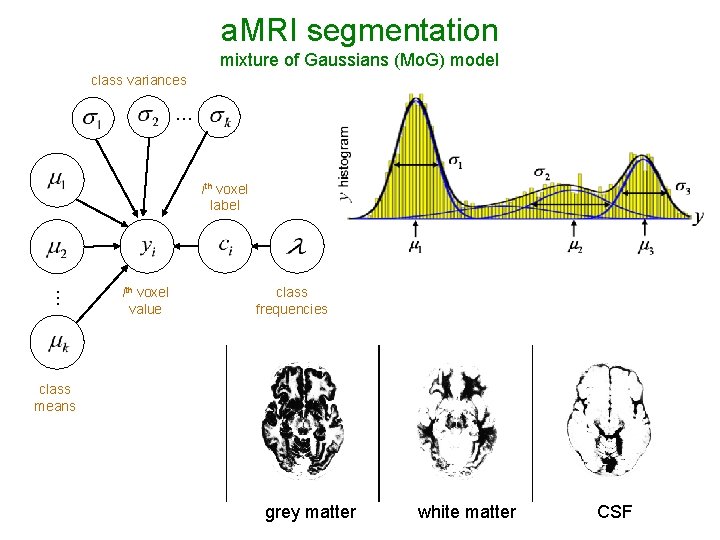
a. MRI segmentation mixture of Gaussians (Mo. G) model class variances … … ith voxel label ith voxel value class frequencies class means grey matter white matter CSF
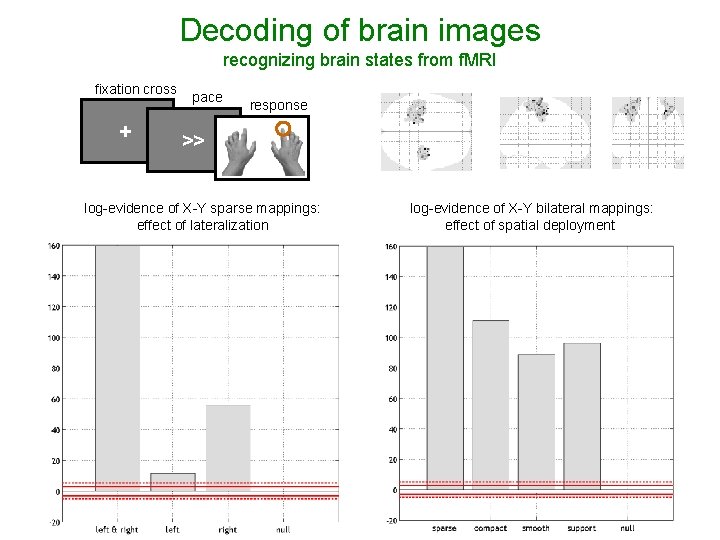
Decoding of brain images recognizing brain states from f. MRI fixation cross + pace response >> log-evidence of X-Y sparse mappings: effect of lateralization log-evidence of X-Y bilateral mappings: effect of spatial deployment
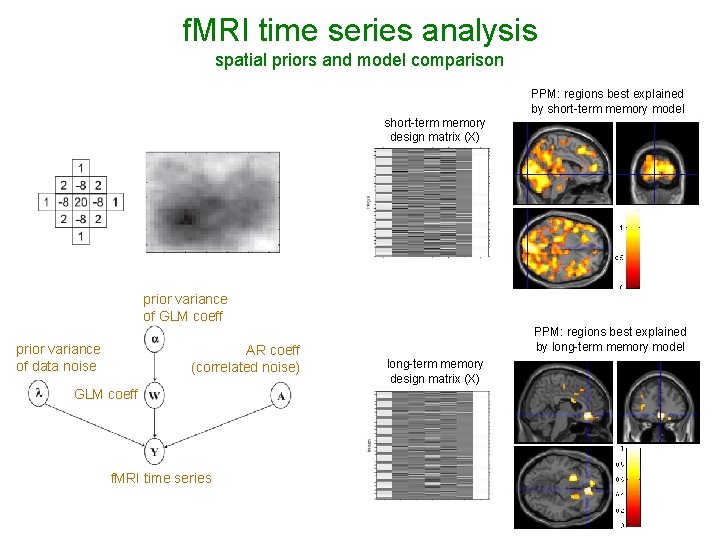
f. MRI time series analysis spatial priors and model comparison PPM: regions best explained by short-term memory model short-term memory design matrix (X) prior variance of GLM coeff prior variance of data noise AR coeff (correlated noise) GLM coeff f. MRI time series PPM: regions best explained by long-term memory model long-term memory design matrix (X)
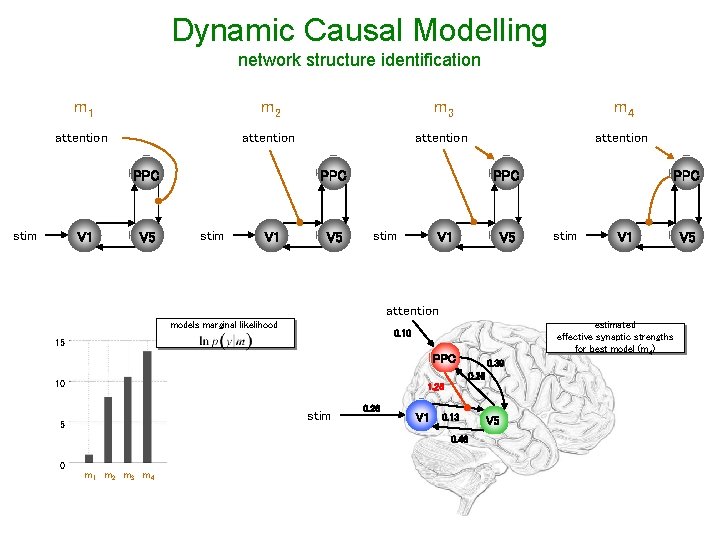
Dynamic Causal Modelling network structure identification m 1 m 2 m 3 m 4 attention PPC stim V 1 V 5 PPC stim V 1 attention models marginal likelihood estimated effective synaptic strengths for best model (m 4) 0. 10 15 PPC 10 1. 25 stim 5 0. 26 V 1 0. 13 0. 46 0 0. 39 0. 26 m 1 m 2 m 3 m 4 V 5
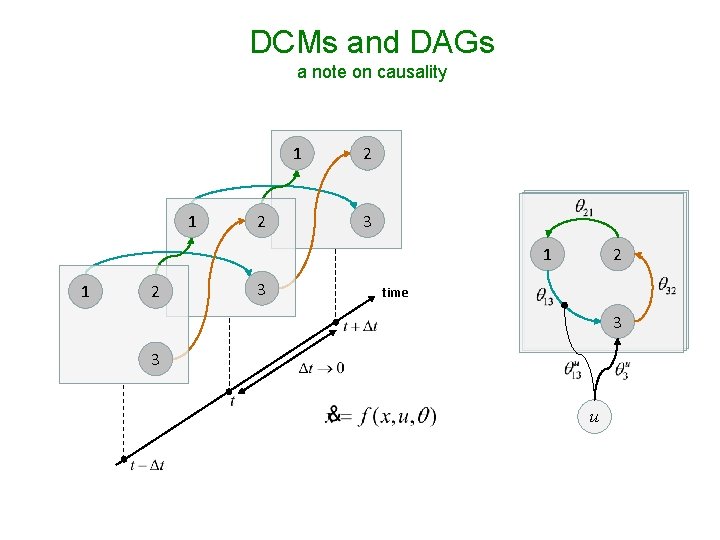
DCMs and DAGs a note on causality 1 1 2 2 3 1 1 2 3 2 time 3 3 u
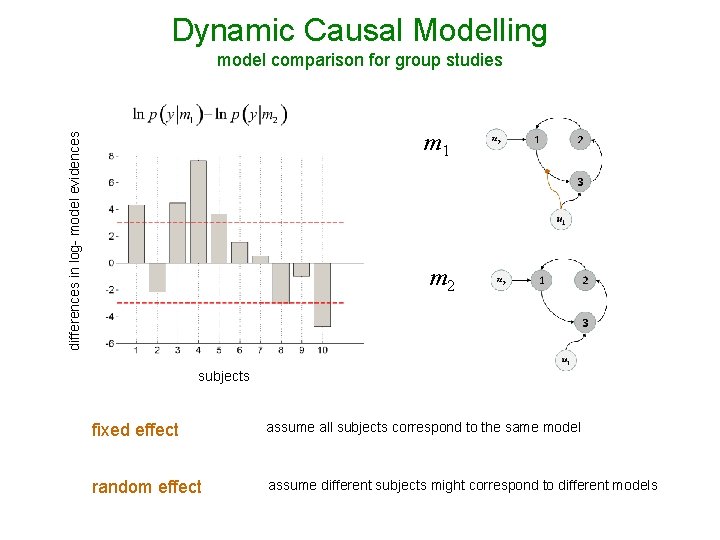
Dynamic Causal Modelling model comparison for group studies differences in log- model evidences m 1 m 2 subjects fixed effect assume all subjects correspond to the same model random effect assume different subjects might correspond to different models

I thank you for your attention.
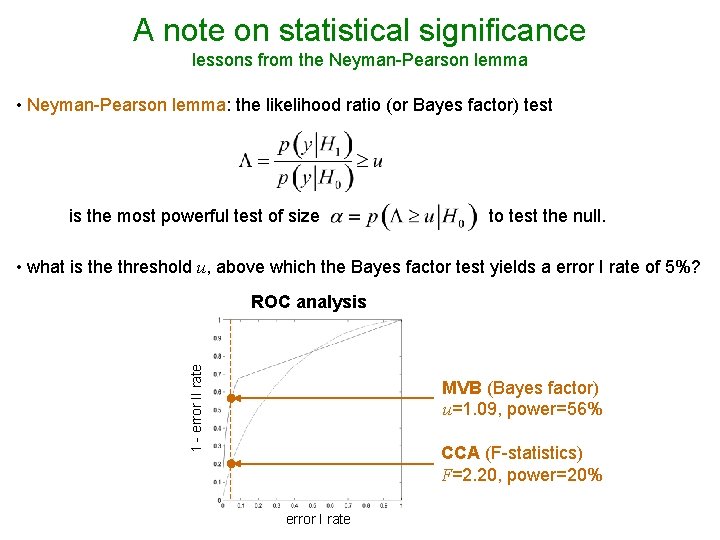
A note on statistical significance lessons from the Neyman-Pearson lemma • Neyman-Pearson lemma: the likelihood ratio (or Bayes factor) test is the most powerful test of size to test the null. • what is the threshold u, above which the Bayes factor test yields a error I rate of 5%? 1 - error II rate ROC analysis MVB (Bayes factor) u=1. 09, power=56% CCA (F-statistics) F=2. 20, power=20% error I rate
- Slides: 26