
Bayesian data analysis getting started Matti Heino www
Bayesian data analysis: getting started Matti Heino www. mattiheino. com
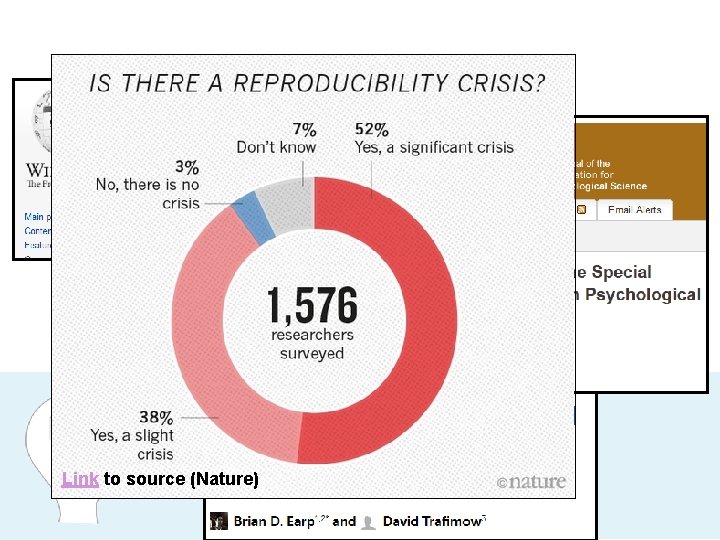
Link to source (Nature)
The good news. . . Bayes may help! (if applied transparently and mindfully *) The bad news. . . ● BFs can be hacked, just as p-values currently are ● Selective reporting will still undermine reliability of results ** ● Average power in good health psych journals only ~0. 60 *** * See e. g. link or link ** see link *** see link
… but subjectivity is salient(think UFOs vs. Higgs boson) ● BFs can be hacked, just as p-values currently are ● Selective reporting will still undermine reliability of results ** ● Average power in good health psych journals only ~0. 60 *** * See e. g. link or link ** see link *** see link
… but (maybe) we know to ask for more info … but subjectivity is salient(think UFOs vs. Higgs boson) ● BFs can be hacked, just as p-values currently are ● Selective reporting will still undermine reliability of results ** ● Average power in good health psych journals only ~0. 60 *** * See e. g. link or link ** see link *** see link
… but lack of evidence from small samples becomes clear … but (maybe) we know to ask for more info … but subjectivity is salient(think UFOs vs. Higgs boson) ● BFs can be hacked, just as p-values currently are ● Selective reporting will still undermine reliability of results ** ● Average power in good health psych journals only ~0. 60 *** * See e. g. link or link ** see link *** see link
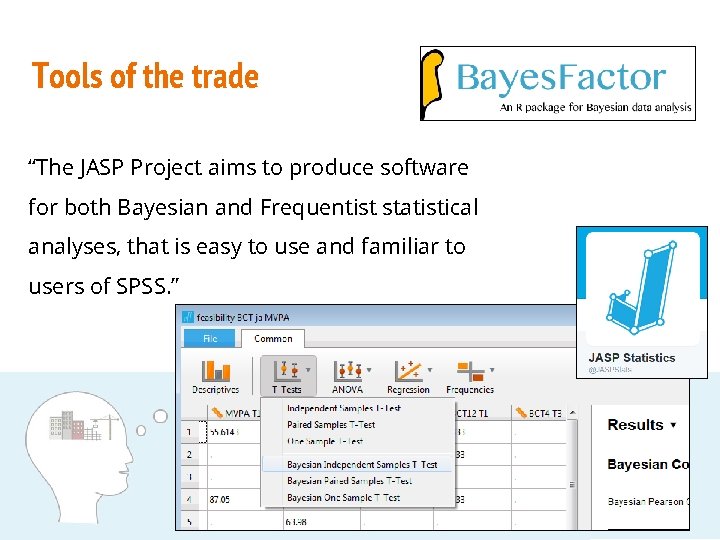
Tools of the trade “The JASP Project aims to produce software for both Bayesian and Frequentist statistical analyses, that is easy to use and familiar to users of SPSS. ”
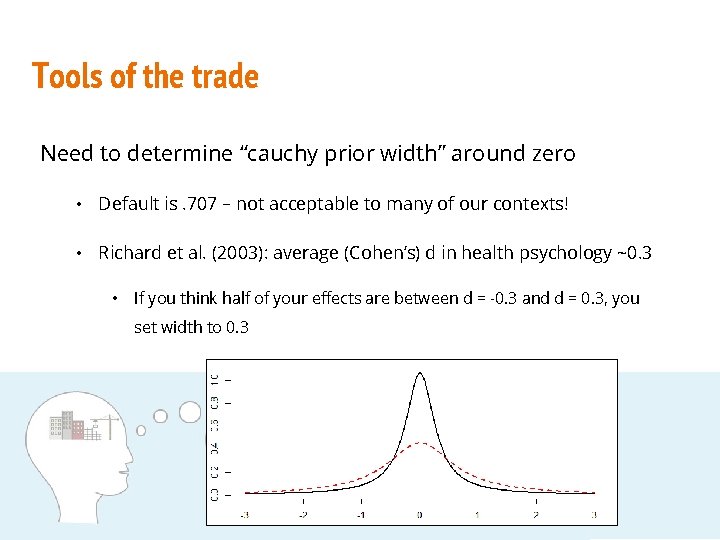
Tools of the trade Need to determine “cauchy prior width” around zero • Default is. 707 – not acceptable to many of our contexts! • Richard et al. (2003): average (Cohen’s) d in health psychology ~0. 3 • If you think half of your effects are between d = -0. 3 and d = 0. 3, you set width to 0. 3
Example: BCT usage among girls and boys “We did not detect a difference between boys and girls, t(439) = -0. 773, p = 0. 440” “The results indicated moderate support for the null hypothesis of no difference between boys and girls (BF 01 = 6. 579)” What’s under the hood?
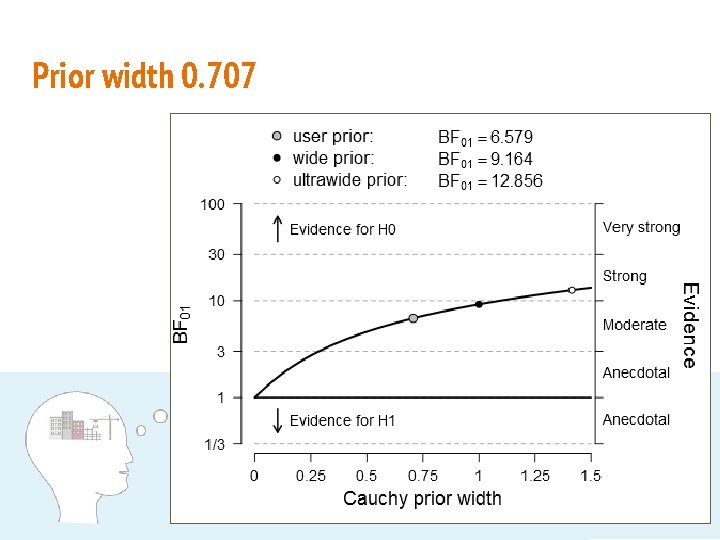
Prior width 0. 707
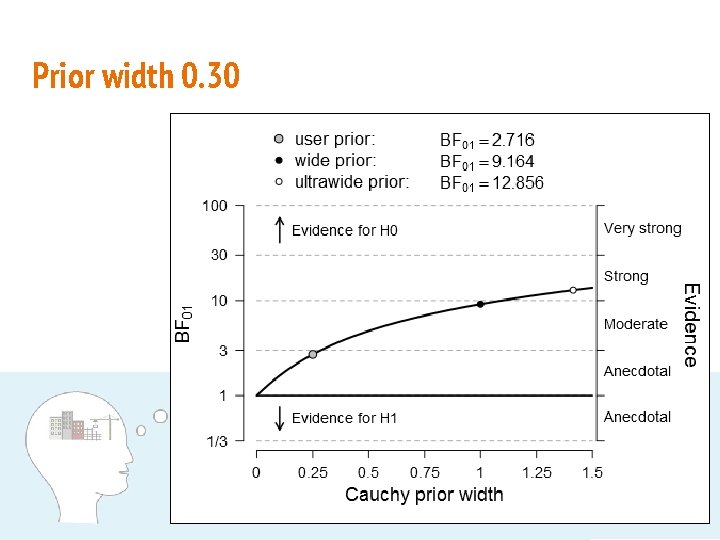
Prior width 0. 30
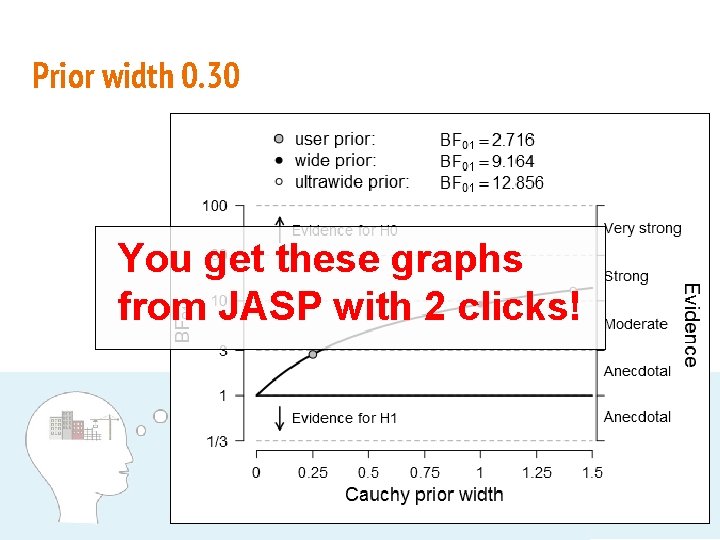
Prior width 0. 30 You get these graphs from JASP with 2 clicks!
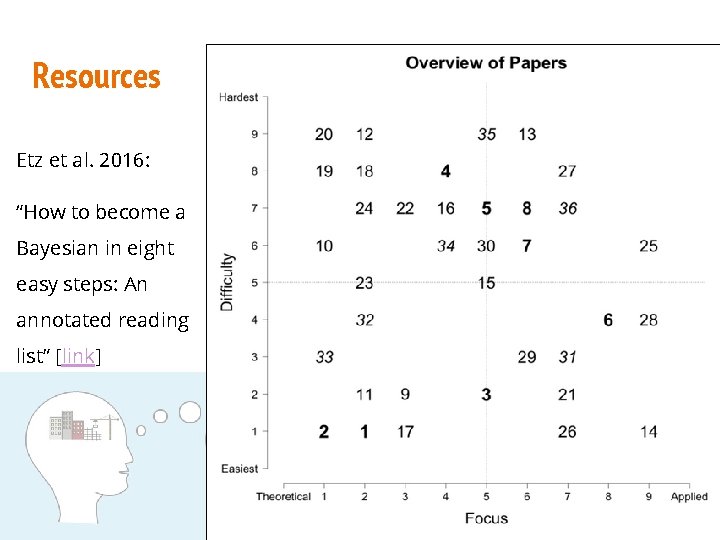
Resources Etz et al. 2016: “How to become a Bayesian in eight easy steps: An annotated reading list” [link]
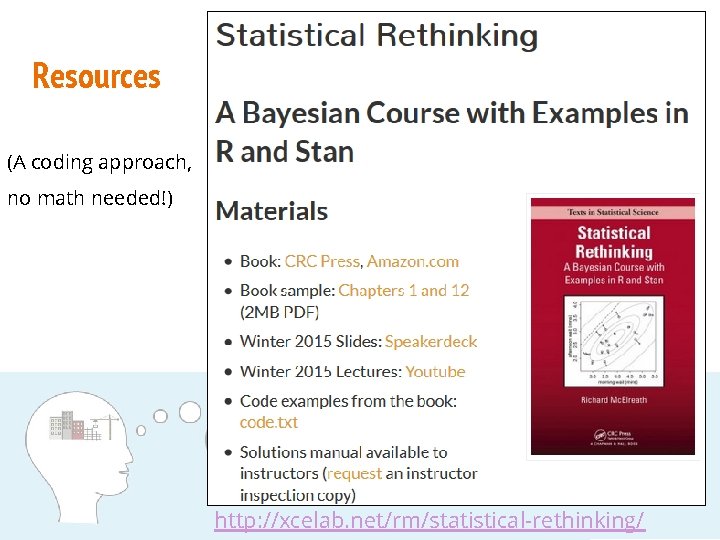
Resources (A coding approach, no math needed!) http: //xcelab. net/rm/statistical-rethinking/
Thank you! Take home: • Transparency counteracts hacking • Subjective elements (e. g. priors) can and need to be justified • Lack of reporting space no issue nowadays • Pre-registration, data sharing, supplementary materials… ➡ e. g. store them at OSF: osf. io www. mattiheino. com @heinonmatti
Additional slides
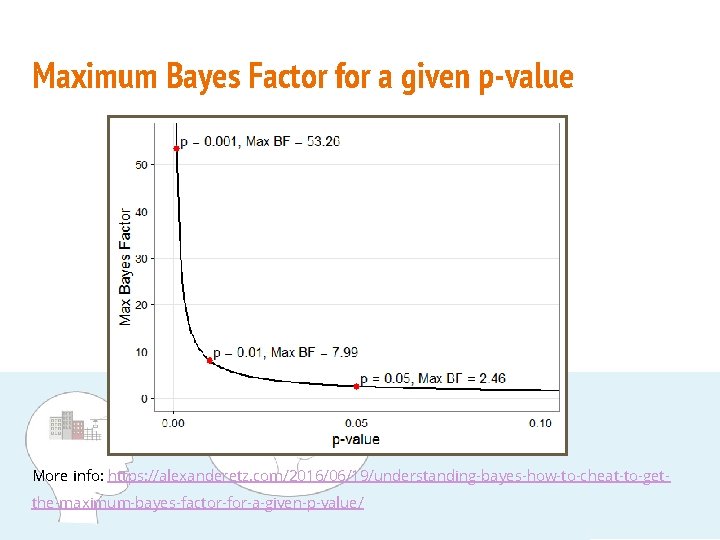
Maximum Bayes Factor for a given p-value More info: https: //alexanderetz. com/2016/06/19/understanding-bayes-how-to-cheat-to-getthe-maximum-bayes-factor-for-a-given-p-value/
Maximum Bayes Factor for a given p-value More info: https: //alexanderetz. com/2016/06/19/understanding-bayes-how-to-cheat-to-getthe-maximum-bayes-factor-for-a-given-p-value/
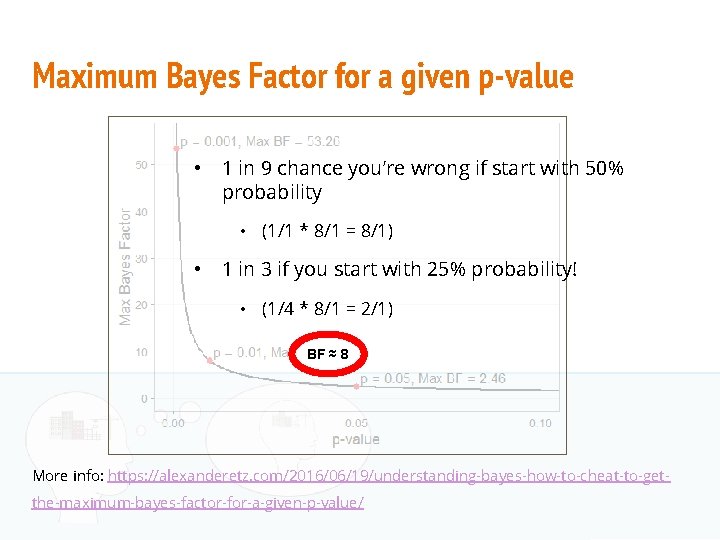
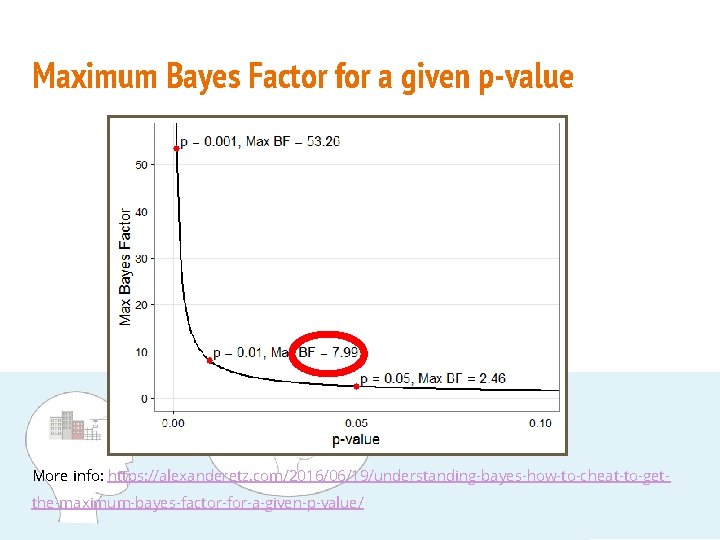
Maximum Bayes Factor for a given p-value • 1 in 9 chance you’re wrong if start with 50% probability • (1/1 * 8/1 = 8/1) • 1 in 3 if you start with 25% probability! • (1/4 * 8/1 = 2/1) BF ≈ 8 More info: https: //alexanderetz. com/2016/06/19/understanding-bayes-how-to-cheat-to-getthe-maximum-bayes-factor-for-a-given-p-value/
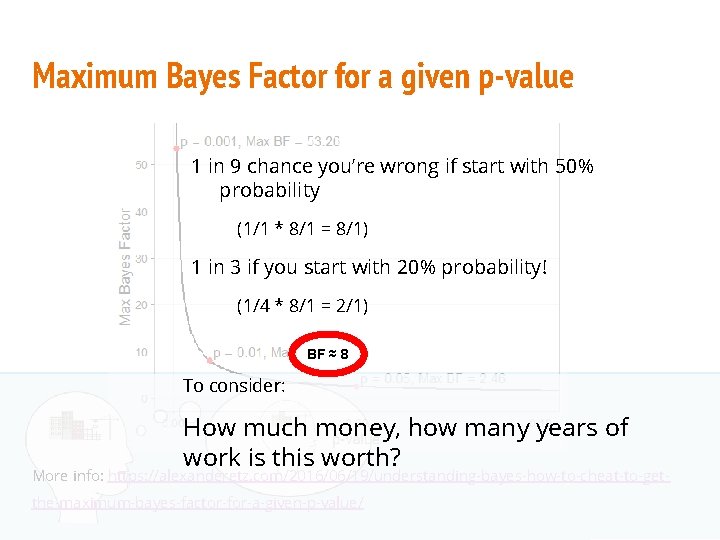
Maximum Bayes Factor for a given p-value 1 in 9 chance you’re wrong if start with 50% probability (1/1 * 8/1 = 8/1) 1 in 3 if you start with 20% probability! (1/4 * 8/1 = 2/1) BF ≈ 8 To consider: How much money, how many years of work is this worth? More info: https: //alexanderetz. com/2016/06/19/understanding-bayes-how-to-cheat-to-getthe-maximum-bayes-factor-for-a-given-p-value/
A note on p/BF-hacking Simmons, Nelson & Simonsohn (2012): A 21 word solution: “We report how we determined our sample size, all data exclusions (if any), all manipulations and all measures in the study. ”
A note on p/BF-hacking ● Some p-hacking methods apply to Bayes, e. g. ○ Selective dropping of outliers ○ Reporting exploratory results as confirmatory ○ Outcome switching ● Some don’t ○ E. g. arbitrary stopping rules
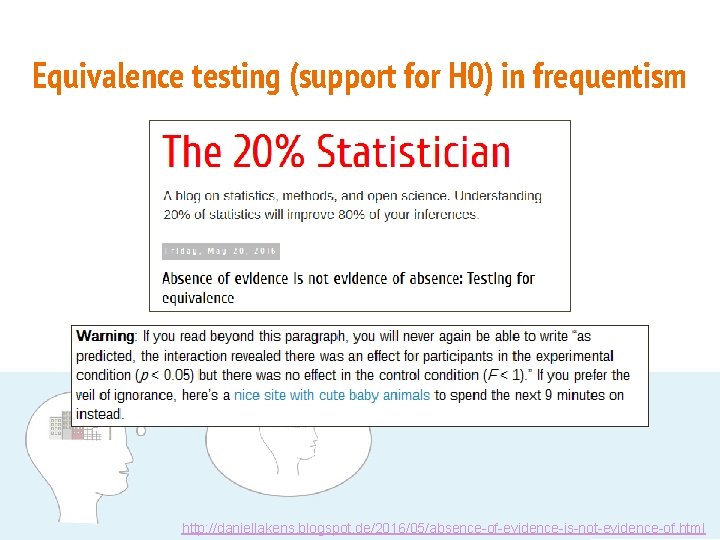
Equivalence testing (support for H 0) in frequentism http: //daniellakens. blogspot. de/2016/05/absence-of-evidence-is-not-evidence-of. html
A new kind of selective reporting? Researcher wants to show an effect ● Reports a p-value Researcher wants to show evidence of no effect ● Reports a BF (with a wide prior scale) Reviewers: you may want to see a BF for every p If you see arbitrary reporting, unreported statistics may be lurking in the shadows, unseen. . .
“But I don’t know which prior to use!”
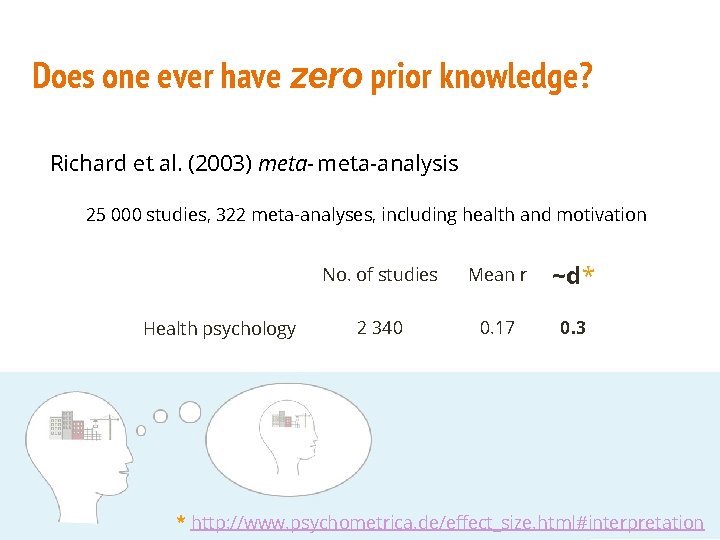
Does one ever have zero prior knowledge? Richard et al. (2003) meta-analysis 25 000 studies, 322 meta-analyses, including health and motivation Health psychology No. of studies Mean r ~d* 2 340 0. 17 0. 3 * http: //www. psychometrica. de/effect_size. html#interpretation
Power and evidence
Power and evidence • We set alpha at p=0. 05 because orthodoxy: then “worthy of another look” • Never “finding is real” • Not the probability hypothesis is false • We set power at 80% because orthodoxy: “type 2 errors four times more acceptable than type 1 errors”
Power and evidence • We set BF at 3 / 100 because…? ! • In Bayes, evidence is relative • If H 1 is a 1000 times more likely than H 2, a third hypothesis might be more likely than either! • In Frequentism, no evidence • Only long-run error rates, conditional on p being computed correctly!* * Greenland et al. Statistical tests, P values, confidence intervals, and power: a guide tomisinterpretations[link]
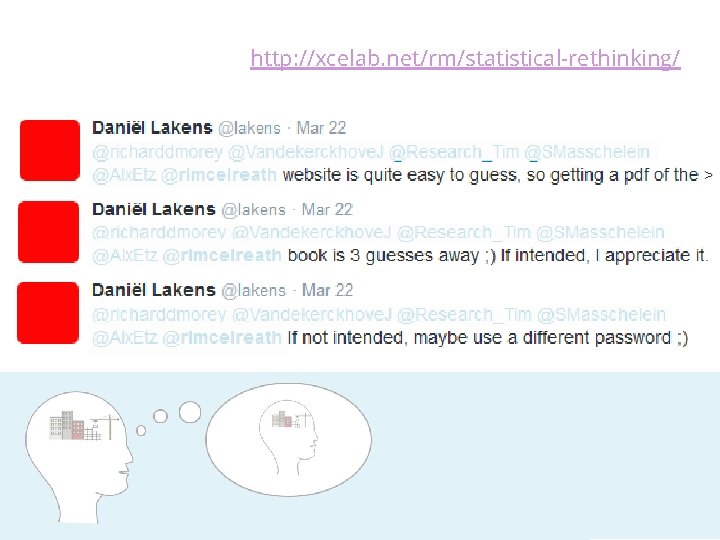
http: //xcelab. net/rm/statistical-rethinking/
The pessimistic view… “In fact, I think that kind of interpretation is almost supported by the availability of qualitative interpretation guidelines for Bayes factors: The notion that Bayes factors can be directly interpreted themselves - rather than converted first to posterior odds - seems to me to reinforce the idea that they're the endpoint of an analysis: that the Bayes factor directly tells us about how certain we can be that a particular hypothesis is correct. I know that Jeff Rouder has explicitly argued against this interpretation - instead saying that researchers should report Bayes factors and let researchers select and update their own priors (perhaps aided by suggestions from the researchers), and in an ideal world, that's exactly how things would work, but I don't think that this is realistic for everyday readers and researchers with limited statistical expertise. ” http: //thepathologicalscience. blogspot. fi/2016/06/my-talk-at-m 3 -conference-on-bayes. html? m=1

Bonus: a great reading list! Link
Now it’s really over! Questions? @heinonmatti Comments? Ideas? www. mattiheino. com
- Slides: 34