
Bayesian Classification of Protein Data Thomas Huber hubermaths
Bayesian Classification of Protein Data Thomas Huber huber@maths. uq. edu. au Computational Biology and Bioinformatics Environment Com. Bin. E Department of Mathematics The University of Queensland
Today’s talk • Protein score functions from mining protein data – Bayesian classification • A toy example • A protein scoring function for fold recognition • Where are score/energy functions useful? – A few examples
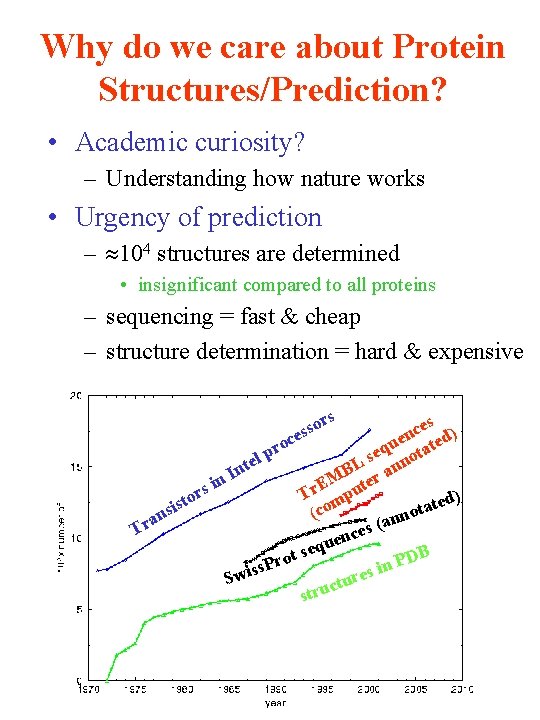
Why do we care about Protein Structures/Prediction? • Academic curiosity? – Understanding how nature works • Urgency of prediction – 104 structures are determined • insignificant compared to all proteins – sequencing = fast & cheap – structure determination = hard & expensive s or s s e es ) c n ue tated roc q e p s o l e n L t n In MB ter a n i E r pu rs T o d) t e m t s i o a t s (c nno an a r ( T ces n e equ s B t D o r P P ss s in e r Swi u ct stru
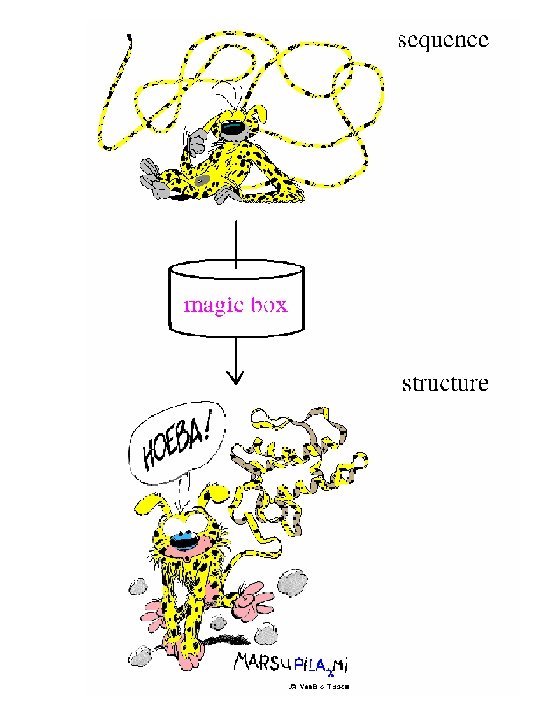
Three basic choices in (molecular) modelling • Representation – Which degrees of freedom are treated explicitly • Scoring – Which scoring function (force field) • Searching – Which method to search or sample conformational space
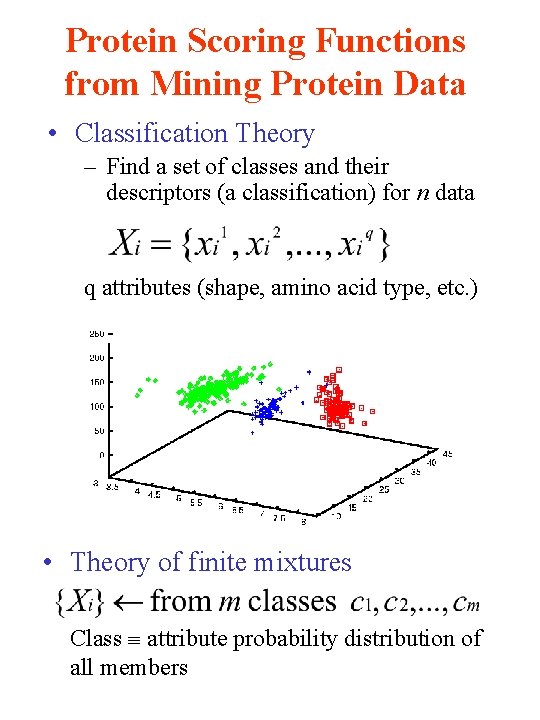
Protein Scoring Functions from Mining Protein Data • Classification Theory – Find a set of classes and their descriptors (a classification) for n data q attributes (shape, amino acid type, etc. ) • Theory of finite mixtures Class attribute probability distribution of all members
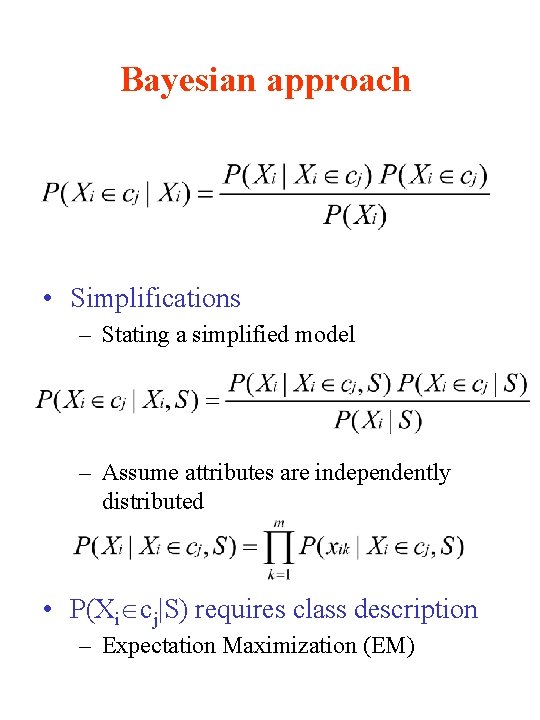
Bayesian approach • Simplifications – Stating a simplified model – Assume attributes are independently distributed • P(Xi cj|S) requires class description – Expectation Maximization (EM)
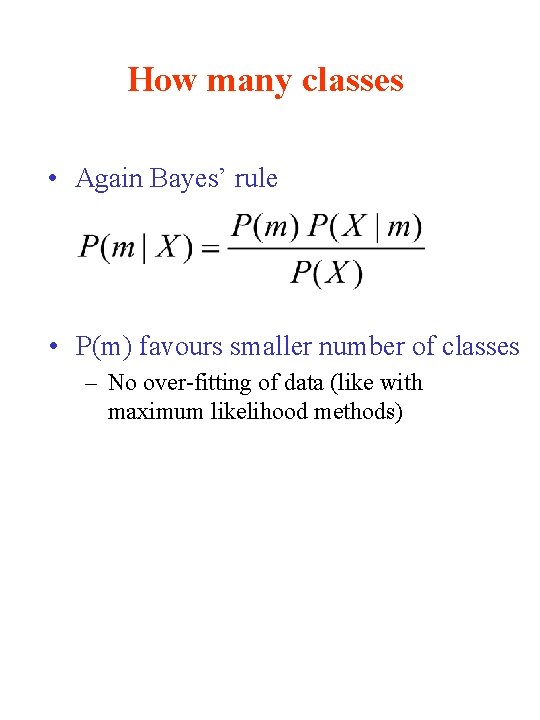
How many classes • Again Bayes’ rule • P(m) favours smaller number of classes – No over-fitting of data (like with maximum likelihood methods)
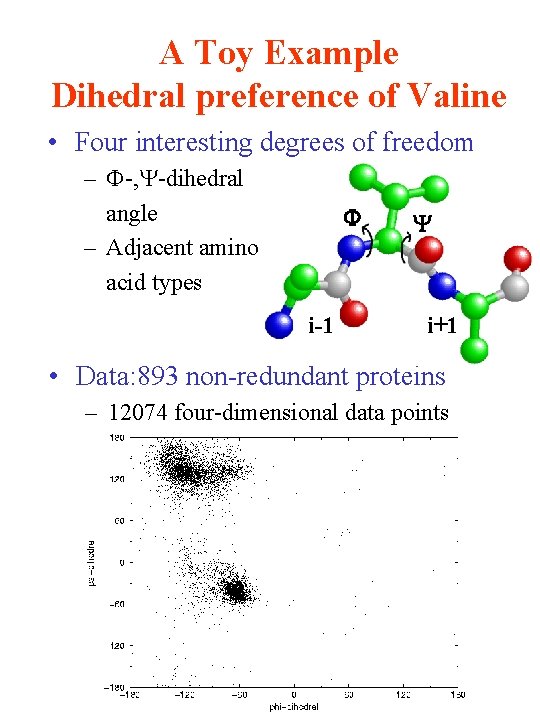
A Toy Example Dihedral preference of Valine • Four interesting degrees of freedom – -, -dihedral angle – Adjacent amino acid types i-1 i+1 • Data: 893 non-redundant proteins – 12074 four-dimensional data points
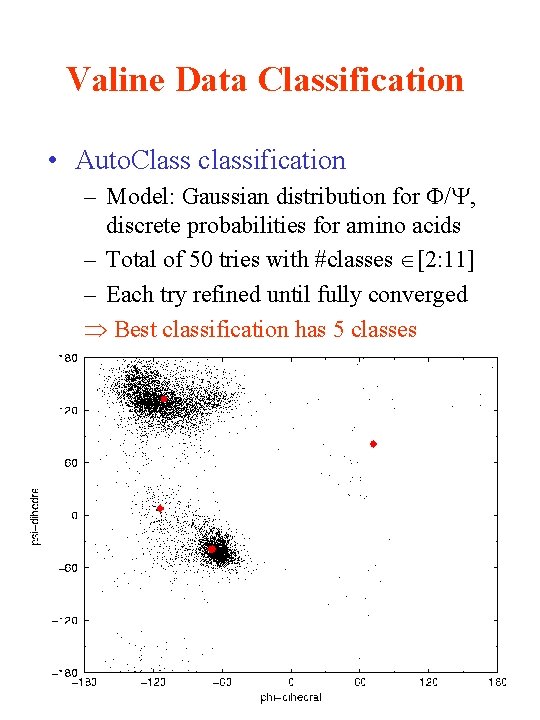
Valine Data Classification • Auto. Class classification – Model: Gaussian distribution for / , discrete probabilities for amino acids – Total of 50 tries with #classes [2: 11] – Each try refined until fully converged Þ Best classification has 5 classes
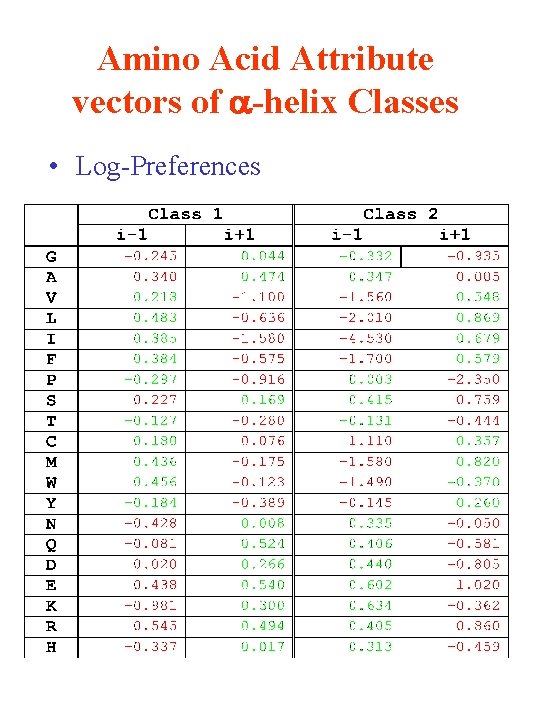
Amino Acid Attribute vectors of -helix Classes • Log-Preferences
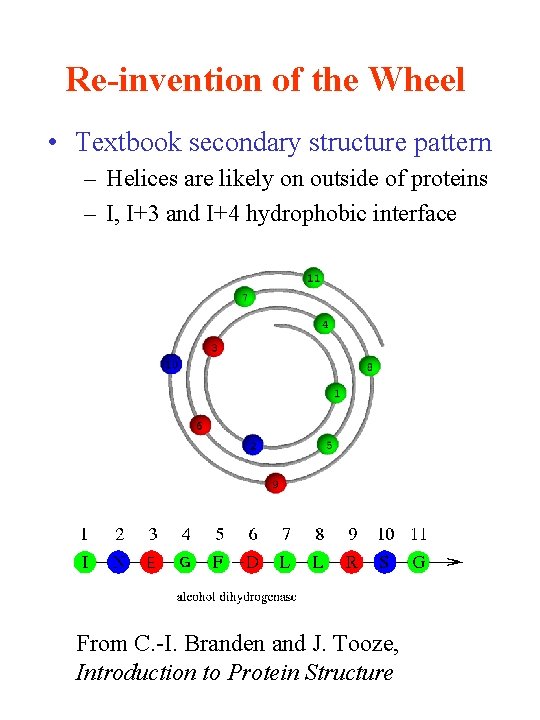
Re-invention of the Wheel • Textbook secondary structure pattern – Helices are likely on outside of proteins – I, I+3 and I+4 hydrophobic interface From C. -I. Branden and J. Tooze, Introduction to Protein Structure
Fragment-based Protein Scoring • Find classification for fragments of size 7 residues – 237566 fragments (1494 non-redundant protein chains) – 28 descriptors • 7 amino acid type • 14 -/ -dihedral angles • 7 number of neighbours of each amino acid 200 CPU hours on National Facility computers Þ 325 classes (modelling the probability distribution of native fragments) • Use this classification to evaluate likelihood of a fragment sequencestructure match • Total score = fragment scores
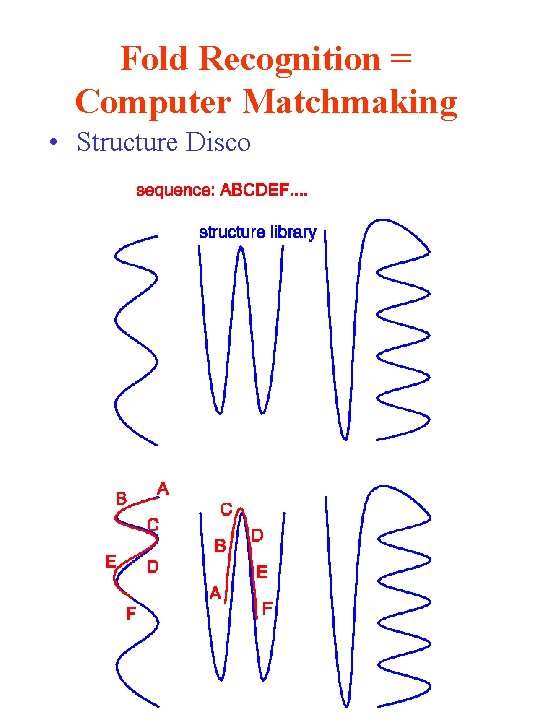
Fold Recognition = Computer Matchmaking • Structure Disco
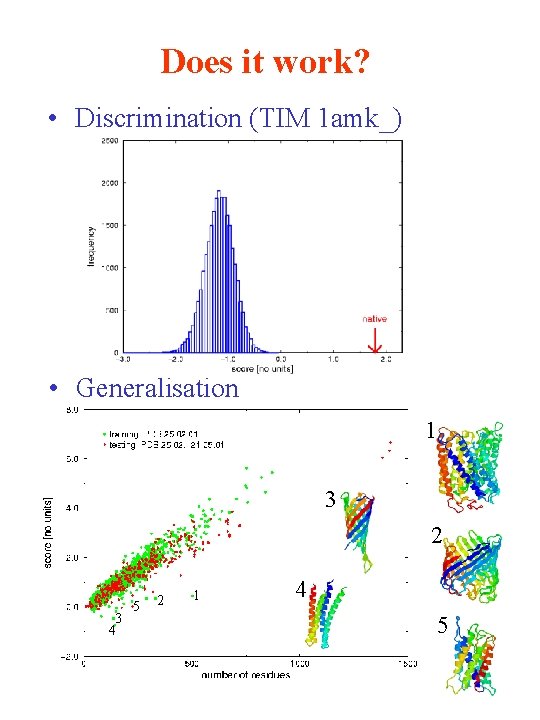
Does it work? • Discrimination (TIM 1 amk_) • Generalisation 1 3 2 3 4 5 2 1 4 5
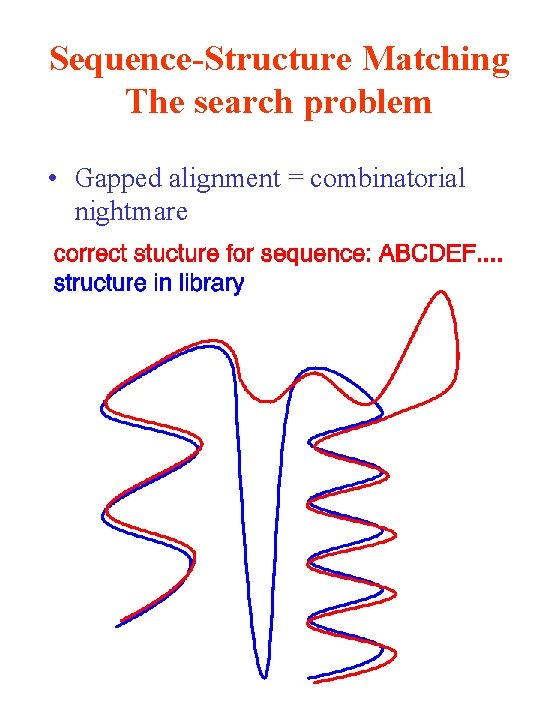
Sequence-Structure Matching The search problem • Gapped alignment = combinatorial nightmare
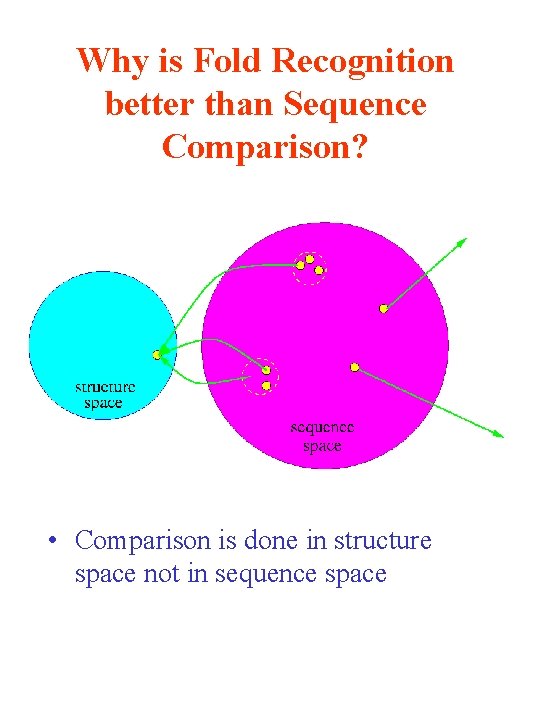
Why is Fold Recognition better than Sequence Comparison? • Comparison is done in structure space not in sequence space
Finding Remote Homologues with sausage • • 572 sequence-structure pairs Structures are similar (FSSP) > 70% structurally aligned < 20% sequence identity
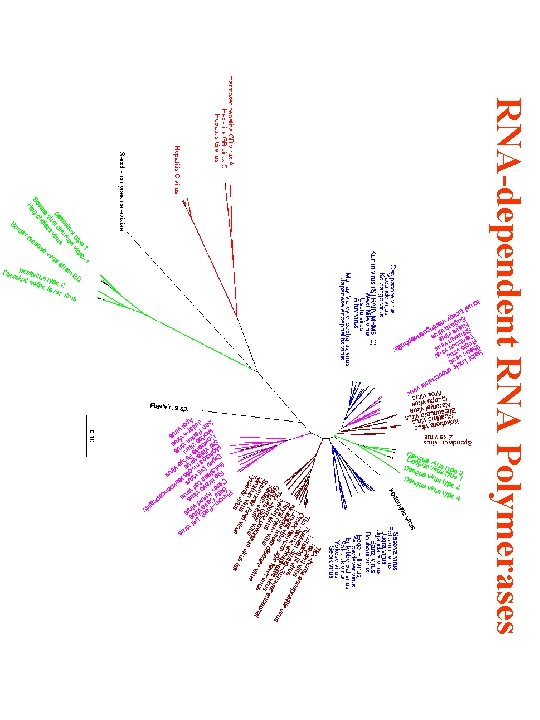
RNA-dependent RNA Polymerases
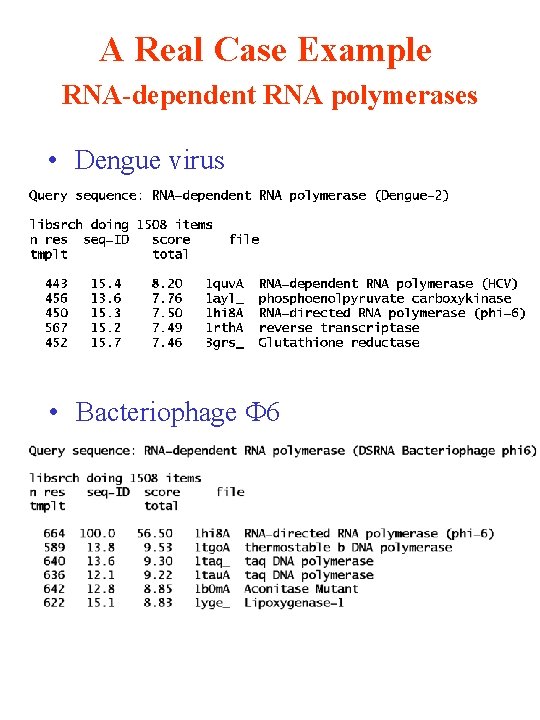
A Real Case Example RNA-dependent RNA polymerases • Dengue virus • Bacteriophage 6
Is this Yet Another Profile Method? • Yes, but a much more general profile method – Profile is not residue based (like profilelike threading force fields) – Profiles not for protein families (like in HMMs or -Blast) – BUT local sequence profiles for optimally chosen classes of fragments • Local profiles can be arbitrarily assembled – Extreme flexibility • Sequence-structure alignment (=assembling best profile matches) – Deterministic, using dynamic programming
People • sausage – Andrew Torda (RSC) – Oliver Martin (RSC) • Gln. B/Gln. K, Rd. R polymerases – Subhash Vasudevan (JCU) Sausage and Cassandra freely available http: //rsc. anu. edu. au/~torda huber@maths. uq. edu. au
- Slides: 22