
Battle Against Extinction The Desert Fishes Council legacy
Battle Against Extinction: The Desert Fishes Council legacy of dedication to imperiled desert aquatic species Kathryn Boyer, Oregon State University
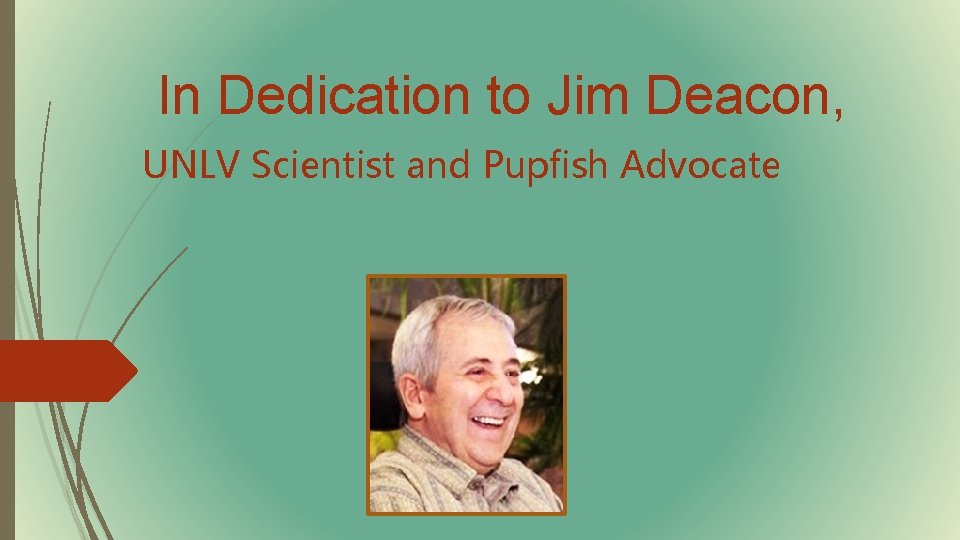
In Dedication to Jim Deacon, UNLV Scientist and Pupfish Advocate

The Discovery of Desert Fishes First there was the challenge of surveying for new fish in the desert, describing them, naming them. Names of those who contributed to the id and naming of desert fishes: Spencer Fullerton Baird, Charles Frederic Girard, Charles Henry Gilbert, David Starr Jordan, Barton Warren Evermann, Edward Cope, William Ayres, Rosa Smith, John Snyder, Carl Hubbs and Robert Rush Miller. Collecting Trip Nye County 1934 Carl and Laura Hubbs and children. Nye County, Nevada 1934
The geographic and socioeconomic setting 1965 - Aquatic ecosystems east of the Sierra Nevada and throughout the desert Southwest of North America were in trouble due to increased groundwater pumping and stream diversion. Desert springs and streams were drying up, and the endemic fish fauna found nowhere else on earth was in peril of extinction.
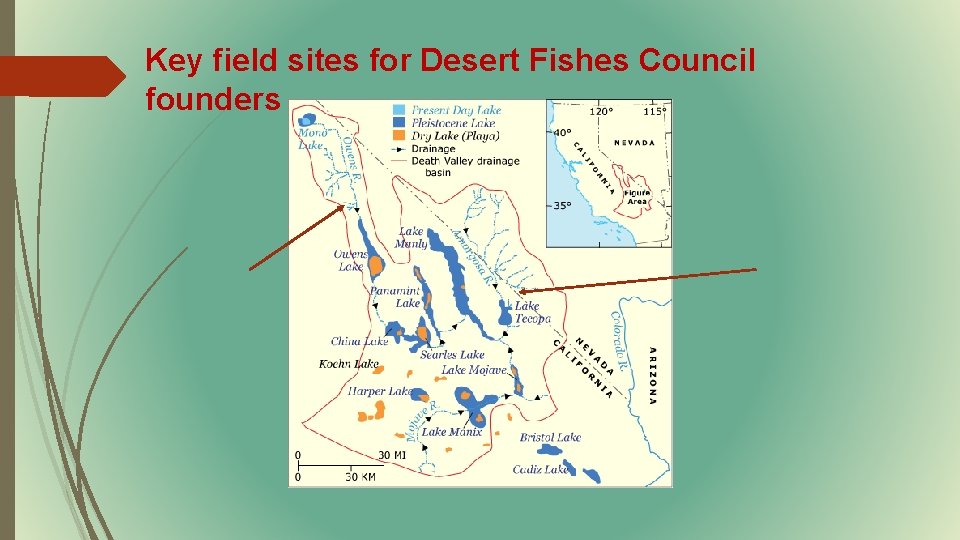
Key field sites for Desert Fishes Council founders

The Iconic Species – Cyprinodon diabolis It all began with a pupfish… Photo by J. M. Ferreira
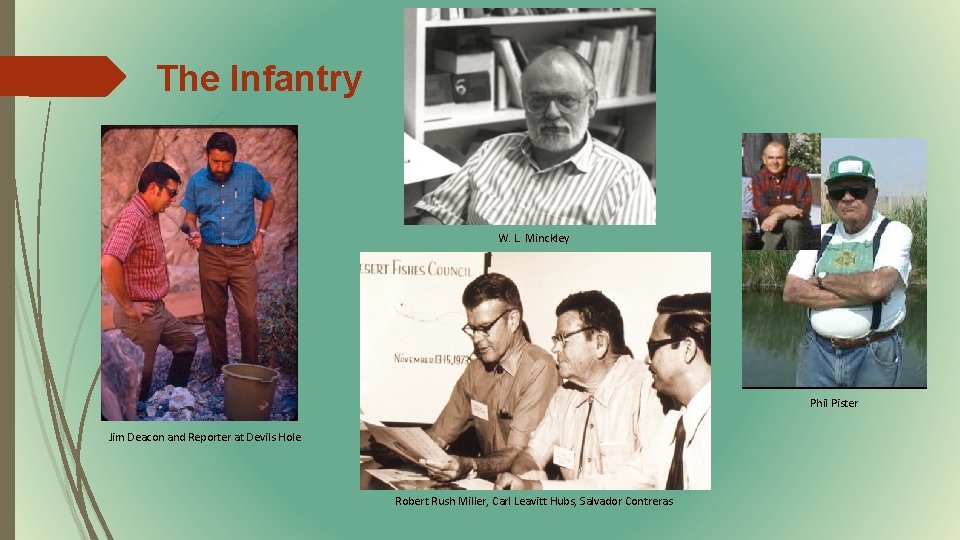
The Infantry W. L. Minckley Phil Pister Jim Deacon and Reporter at Devils Hole Robert Rush Miller, Carl Leavitt Hubs, Salvador Contreras

Timeline of the Spiral Towards Extinction 1967: Phil Pister’s field assignment with California Department of Fish and Game (CADFG) was in the Owens Valley of eastern CA. Dwindling surface waters triggered development of the Owens Valley Native Fish Sanctuary, first of its kind in CA, to preserve the four native fishes of the Owens River portion of the Death Valley hydrographic area. 1968: National Park Service called CADFG in Bishop to report that “Amargosa River drainage should be looked at”. Field visits in March revealed major habitat changes, mainly water depletion in the entire Ash Meadows area. 1969: Biologists visited key desert fish habitats in Death Valley National Monument and in Amargosa River drainage, followed by an informal meeting in Ash Meadows. Because it was early spring, and there was no time or money in agency schedules and budgets, the undaunted group re-scheduled for a meeting in Furnace Creek in November. Meanwhile, groundwater pumping was accelerating…
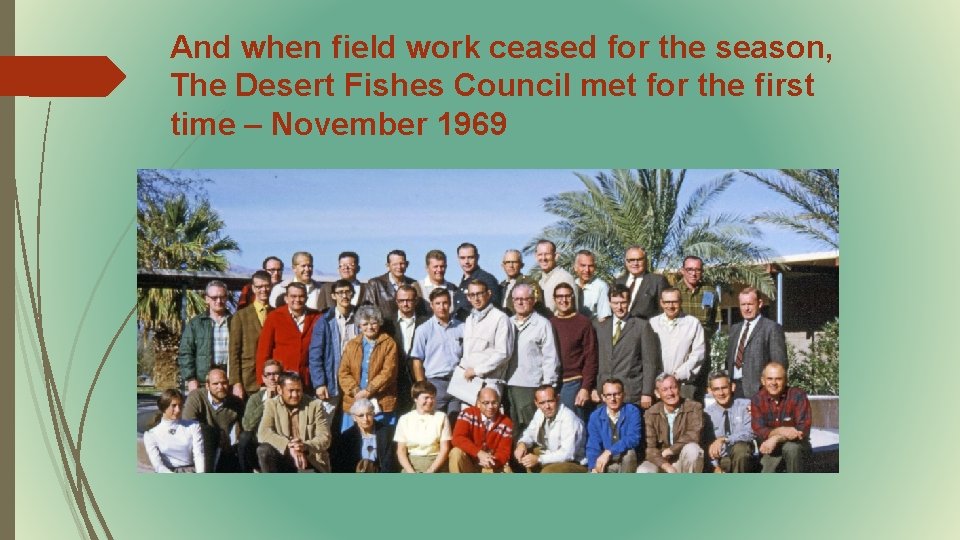
And when field work ceased for the season, The Desert Fishes Council met for the first time – November 1969
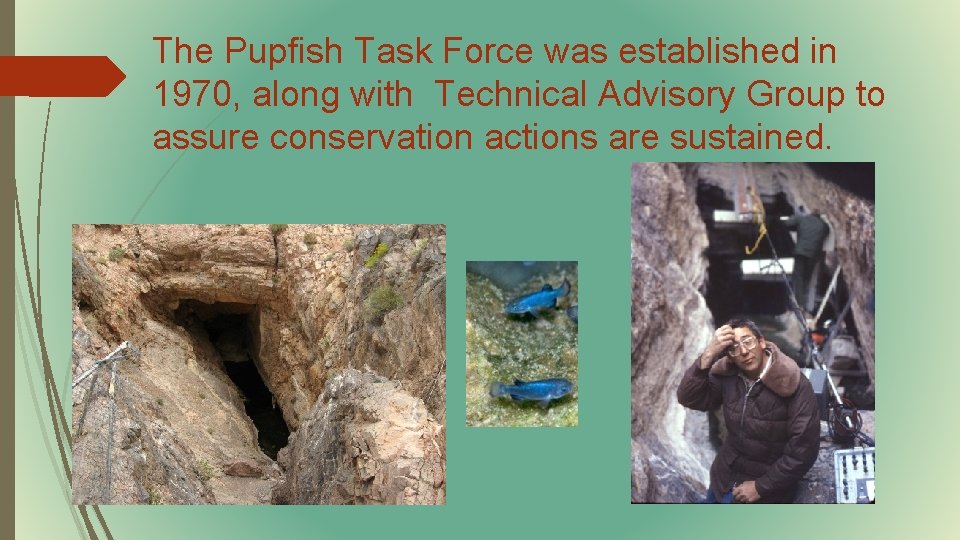
The Pupfish Task Force was established in 1970, along with Technical Advisory Group to assure conservation actions are sustained.
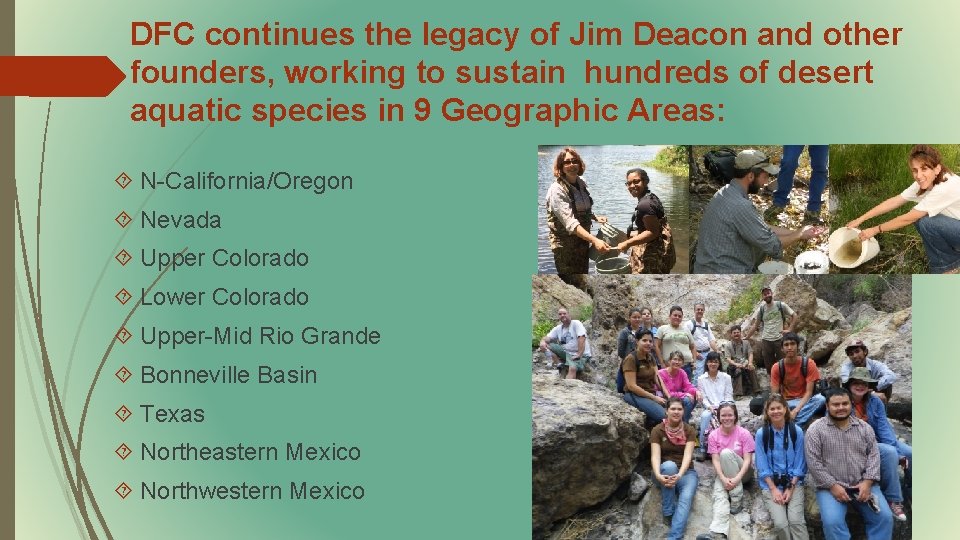
DFC continues the legacy of Jim Deacon and other founders, working to sustain hundreds of desert aquatic species in 9 Geographic Areas: N-California/Oregon Nevada Upper Colorado Lower Colorado Upper-Mid Rio Grande Bonneville Basin Texas Northeastern Mexico Northwestern Mexico
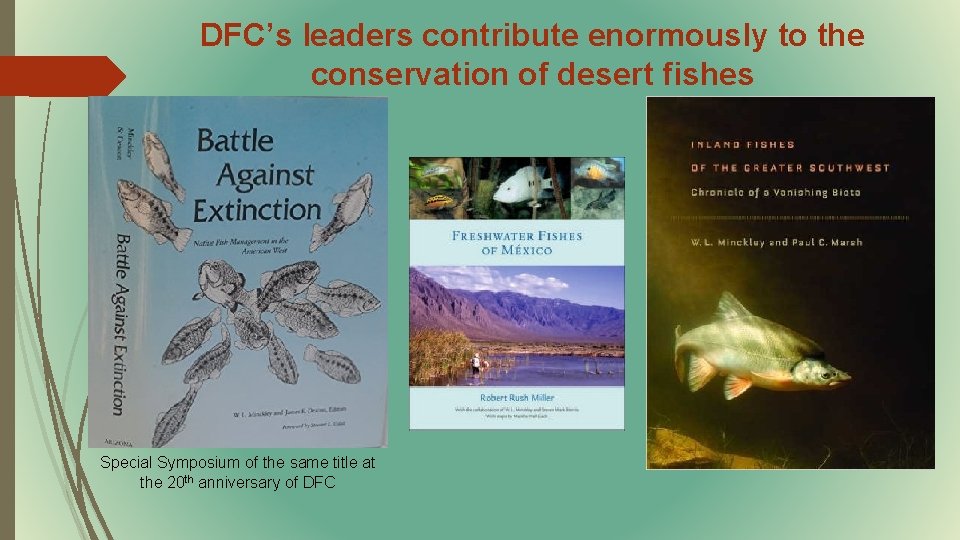
DFC’s leaders contribute enormously to the conservation of desert fishes Special Symposium of the same title at the 20 th anniversary of DFC
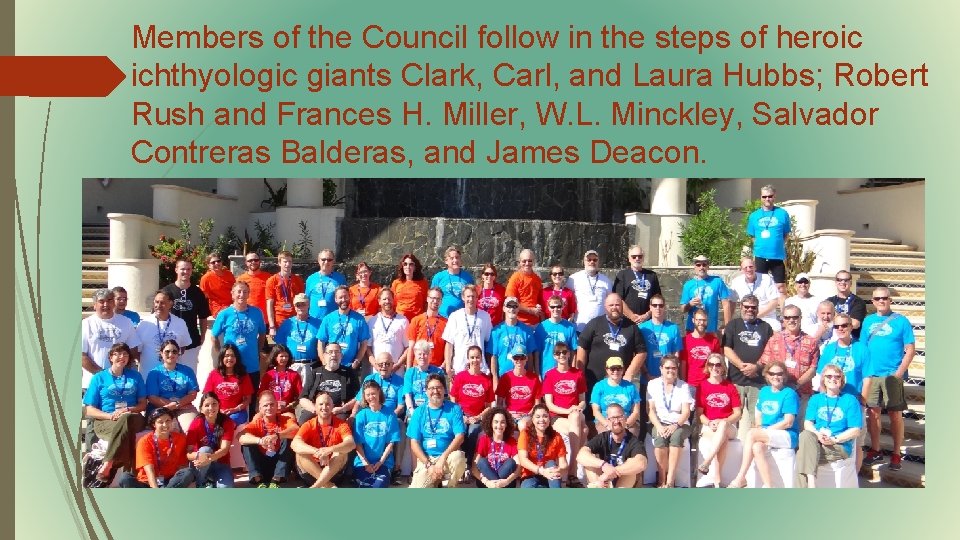
Members of the Council follow in the steps of heroic ichthyologic giants Clark, Carl, and Laura Hubbs; Robert Rush and Frances H. Miller, W. L. Minckley, Salvador Contreras Balderas, and James Deacon.
Acknowledgments: • Jim Deacon, Mary Dale Deacon, and all who have dedicated decades of collecting, describing, studying, managing, and protecting desert fishes and other desert aquatic species • Founding fathers and mothers of the Desert Fishes Council • Contributing authors of the Battle Against Extinction • Present Day Warriors/Members of the Desert Fishes Council • Photo Credits and Acquisitions: Steve Parmenter, Joe Ferreira, Cindy Deacon Williams, Phil Pister, Stan Gregory
- Slides: 14