
Batching for high throughput PCR setup Chris Mattocks
Batching for high throughput PCR setup Chris Mattocks – NGRL (Wessex)
Batching Schemes n The primary purpose of a batching scheme is to enable the timely processing of samples. n Types of batching n n Standard batching Variable batching Flexible batching Use of robotics and work lists
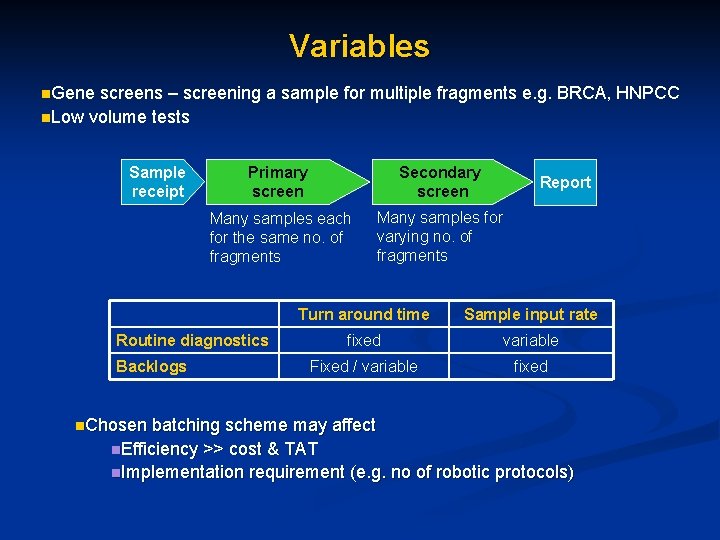
Variables n. Gene screens – screening a sample for multiple fragments e. g. BRCA, HNPCC n. Low volume tests Sample receipt Primary screen Secondary screen Many samples each for the same no. of fragments Many samples for varying no. of fragments Routine diagnostics Backlogs n. Chosen Report Turn around time Sample input rate fixed variable Fixed / variable fixed batching scheme may affect n. Efficiency >> cost & TAT n. Implementation requirement (e. g. no of robotic protocols)
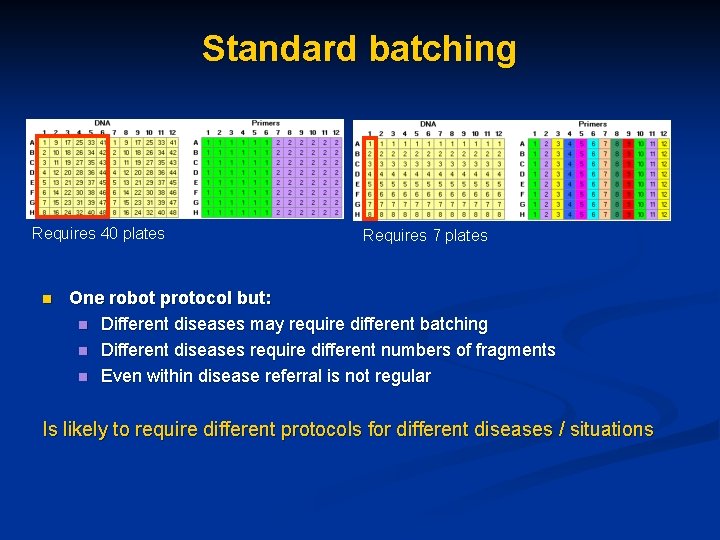
Standard batching Requires 40 plates n Requires 7 plates One robot protocol but: n Different diseases may require different batching n Different diseases require different numbers of fragments n Even within disease referral is not regular Is likely to require different protocols for different diseases / situations
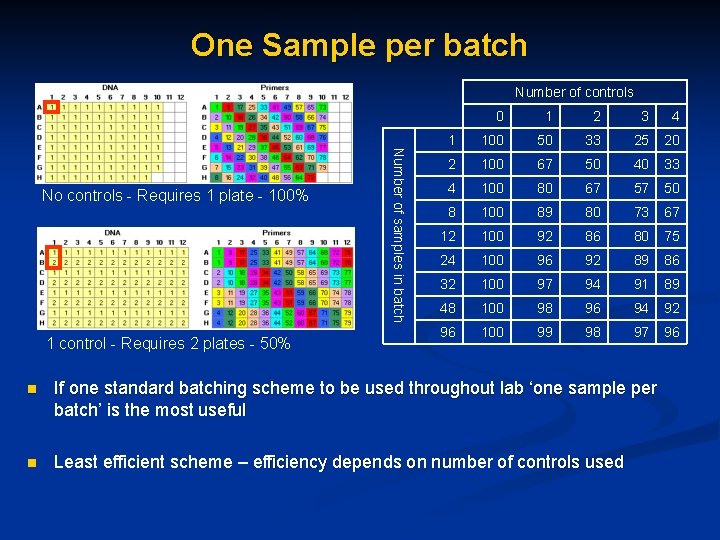
One Sample per batch Number of controls 1 control - Requires 2 plates - 50% Number of samples in batch No controls - Requires 1 plate - 100% 0 1 2 3 4 1 100 50 33 25 20 2 100 67 50 40 33 4 100 80 67 57 50 8 100 89 80 73 67 12 100 92 86 80 75 24 100 96 92 89 86 32 100 97 94 91 89 48 100 98 96 94 92 96 100 99 98 97 96 n If one standard batching scheme to be used throughout lab ‘one sample per batch’ is the most useful n Least efficient scheme – efficiency depends on number of controls used
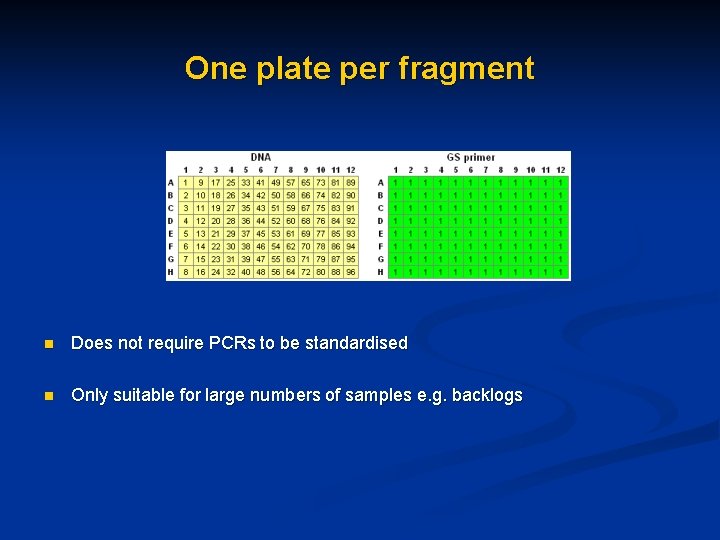
One plate per fragment n Does not require PCRs to be standardised n Only suitable for large numbers of samples e. g. backlogs
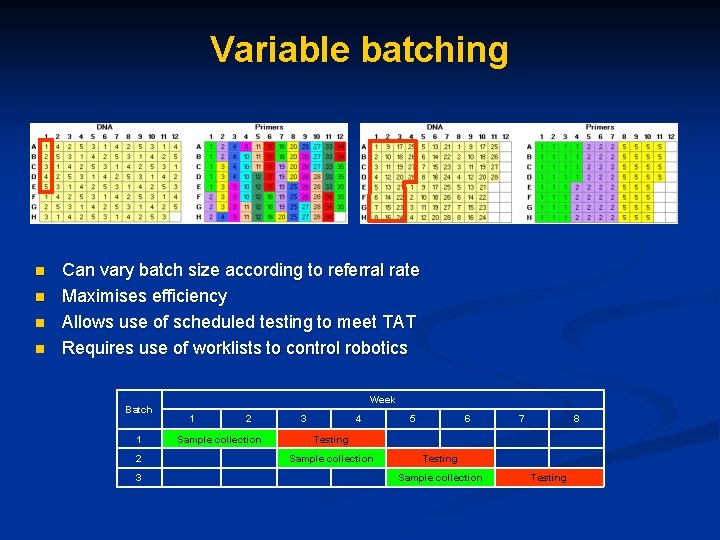
Variable batching n n Can vary batch size according to referral rate Maximises efficiency Allows use of scheduled testing to meet TAT Requires use of worklists to control robotics Batch 1 2 3 Week 1 2 Sample collection 3 4 5 6 7 8 Testing Sample collection Testing
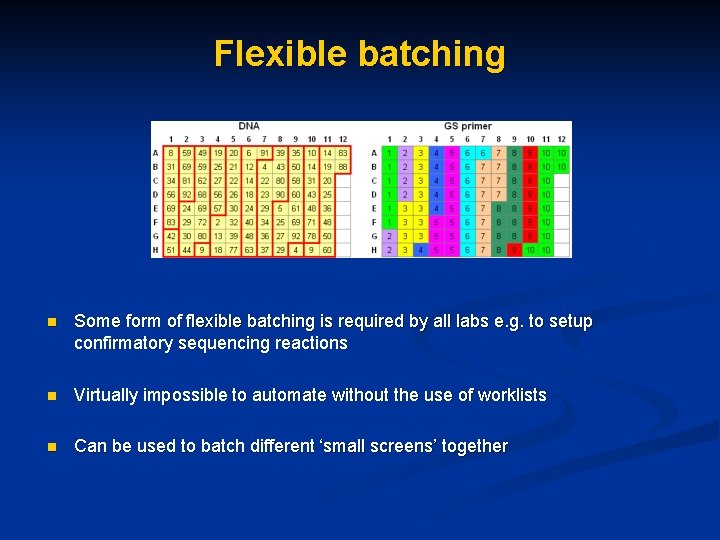
Flexible batching n Some form of flexible batching is required by all labs e. g. to setup confirmatory sequencing reactions n Virtually impossible to automate without the use of worklists n Can be used to batch different ‘small screens’ together
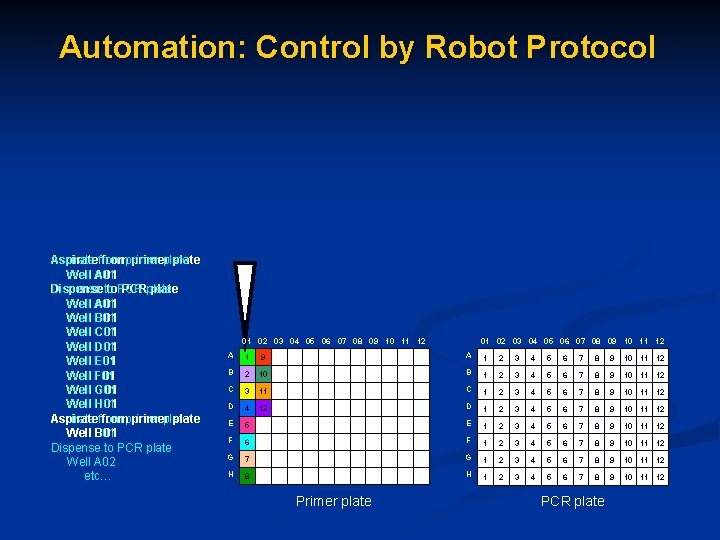
Automation: Control by Robot Protocol Aspiratefrom Aspirate fromprimer plate Well A 01 Dispenseto Dispense to. PCRplate Well A 01 Well B 01 Well C 01 Well D 01 Well E 01 Well F 01 Well G 01 Well H 01 Aspirate fromprimer plate Well B 01 Dispense to PCR plate Well A 02 etc… 01 02 03 04 05 06 07 08 09 10 11 12 A 1 01 02 03 04 05 06 07 08 09 10 11 12 9 A 1 2 3 4 5 6 7 8 9 10 11 12 B 2 10 B C 3 11 C 1 2 3 4 5 6 7 8 9 10 11 12 D 4 12 D 1 2 3 4 5 6 7 8 9 10 11 12 E 5 E 1 2 3 4 5 6 7 8 9 10 11 12 F 6 F 1 2 3 4 5 6 7 8 9 10 11 12 G 7 G 1 2 3 4 5 6 7 8 9 10 11 12 H 8 H 1 2 3 4 5 6 7 8 9 10 11 12 Primer plate PCR plate
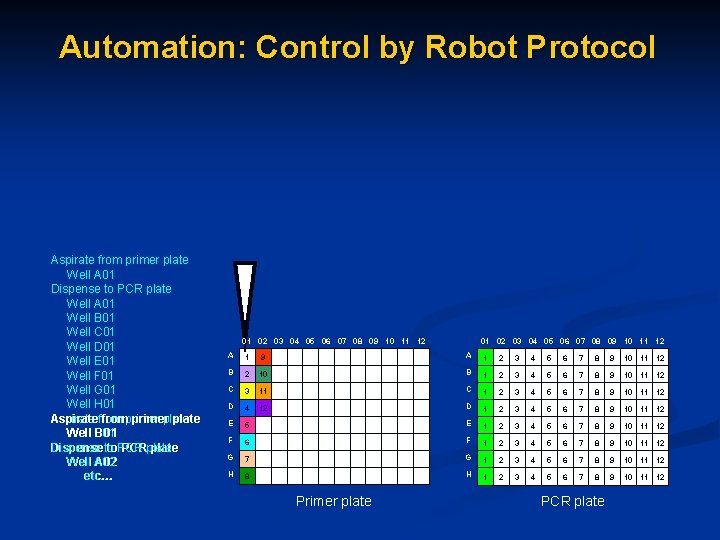
Automation: Control by Robot Protocol Aspirate from primer plate Well A 01 Dispense to PCR plate Well A 01 Well B 01 Well C 01 Well D 01 Well E 01 Well F 01 Well G 01 Well H 01 Aspirate fromprimer plate Well B 01 Dispenseto Dispense to. PCRplate Well A 02 etc… 01 02 03 04 05 06 07 08 09 10 11 12 A 1 01 02 03 04 05 06 07 08 09 10 11 12 9 A 1 2 3 4 5 6 7 8 9 10 11 12 B 2 10 B C 3 11 C 1 2 3 4 5 6 7 8 9 10 11 12 D 4 12 D 1 2 3 4 5 6 7 8 9 10 11 12 E 5 E 1 2 3 4 5 6 7 8 9 10 11 12 F 6 F 1 2 3 4 5 6 7 8 9 10 11 12 G 7 G 1 2 3 4 5 6 7 8 9 10 11 12 H 8 H 1 2 3 4 5 6 7 8 9 10 11 12 Primer plate PCR plate
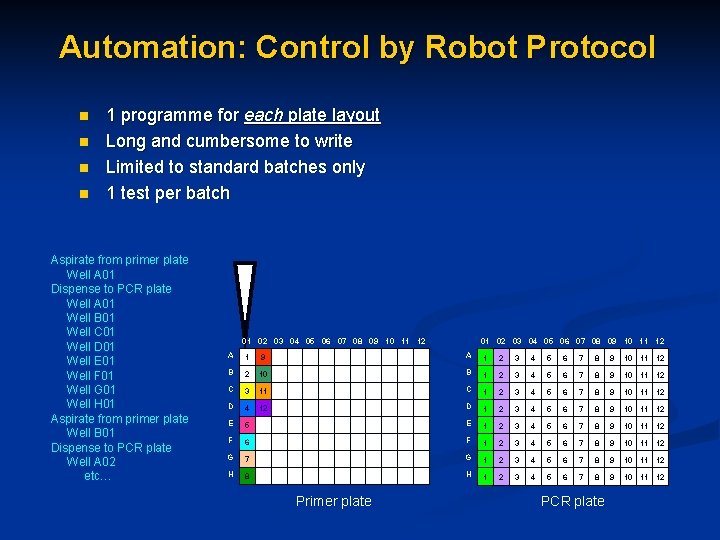
Automation: Control by Robot Protocol n n 1 programme for each plate layout Long and cumbersome to write Limited to standard batches only 1 test per batch Aspirate from primer plate Well A 01 Dispense to PCR plate Well A 01 Well B 01 Well C 01 Well D 01 Well E 01 Well F 01 Well G 01 Well H 01 Aspirate from primer plate Well B 01 Dispense to PCR plate Well A 02 etc… 01 02 03 04 05 06 07 08 09 10 11 12 A 1 01 02 03 04 05 06 07 08 09 10 11 12 9 A 1 2 3 4 5 6 7 8 9 10 11 12 B 2 10 B C 3 11 C 1 2 3 4 5 6 7 8 9 10 11 12 D 4 12 D 1 2 3 4 5 6 7 8 9 10 11 12 E 5 E 1 2 3 4 5 6 7 8 9 10 11 12 F 6 F 1 2 3 4 5 6 7 8 9 10 11 12 G 7 G 1 2 3 4 5 6 7 8 9 10 11 12 H 8 H 1 2 3 4 5 6 7 8 9 10 11 12 Primer plate PCR plate
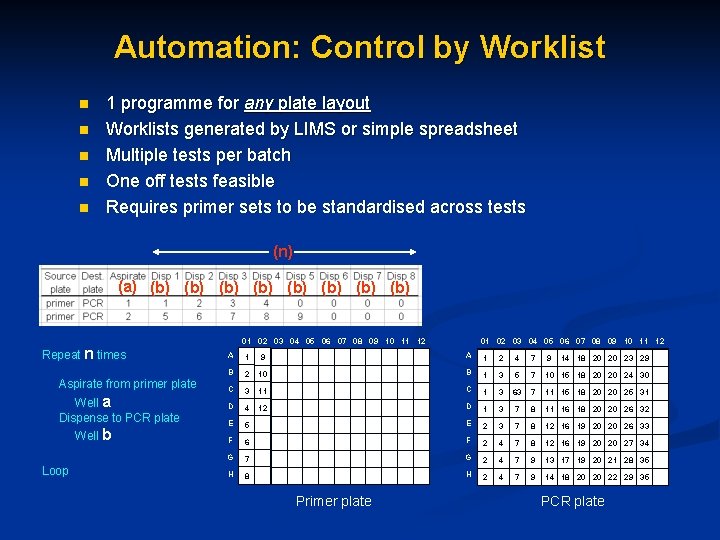
Automation: Control by Worklist n n n 1 programme for any plate layout Worklists generated by LIMS or simple spreadsheet Multiple tests per batch One off tests feasible Requires primer sets to be standardised across tests (n) (a) (b) (b) Repeat n times Aspirate from primer plate Well a Dispense to PCR plate Well Loop b 01 02 03 04 05 06 07 08 09 10 11 12 A 1 01 02 03 04 05 06 07 08 09 10 11 12 9 A 1 2 4 7 9 1 3 5 7 10 15 18 20 20 24 30 14 18 20 20 23 29 B 2 10 B C 3 11 C 1 3 63 7 11 15 18 20 20 25 31 D 4 12 D 1 3 7 8 11 16 18 20 20 26 32 E 5 E 2 3 7 8 12 16 19 20 20 26 33 F 6 F 2 4 7 8 12 16 19 20 20 27 34 G 7 G 2 4 7 9 13 17 19 20 21 28 35 H 8 H 2 4 7 9 14 18 20 20 22 29 35 Primer plate PCR plate
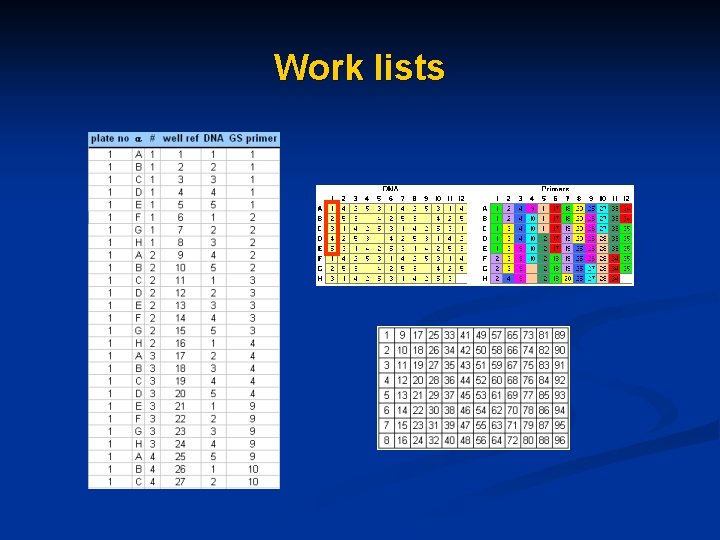
Work lists
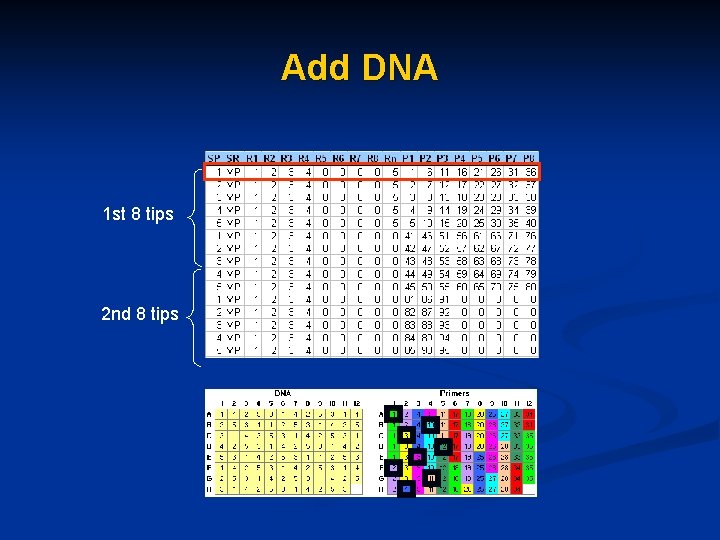
Add DNA 1 st 8 tips 2 nd 8 tips
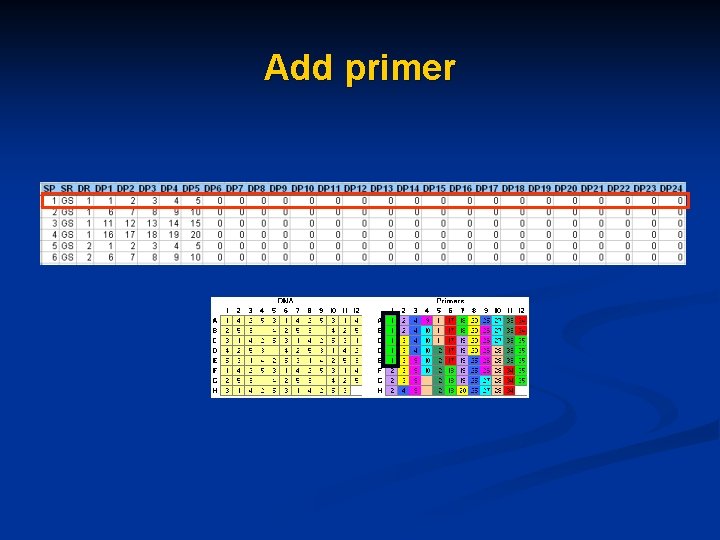
Add primer
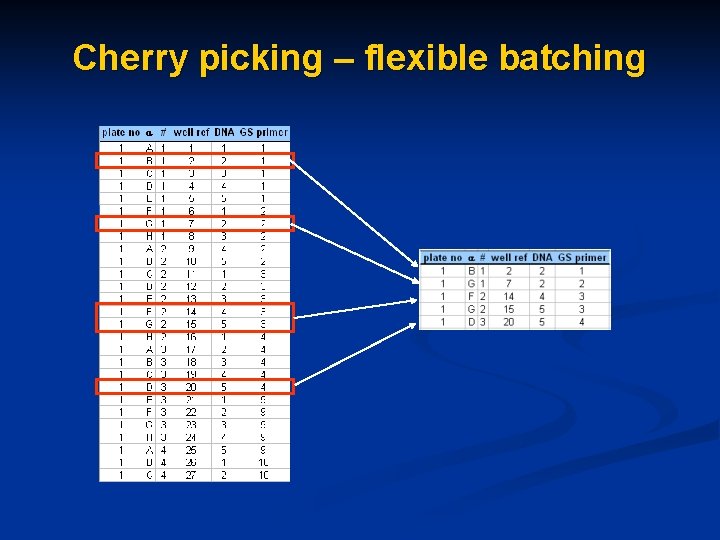
Cherry picking – flexible batching
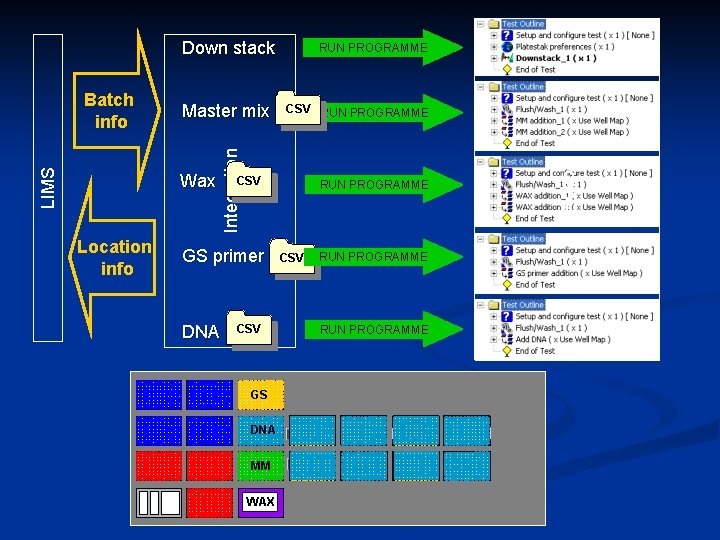
Down stack Wax Location info CSV RUN PROGRAMME CSV GS primer DNA CSV GS DNA MM WAX RUN PROGRAMME CSV RUN PROGRAMME Robot Master mix Integration LIMS Batch info RUN PROGRAMME
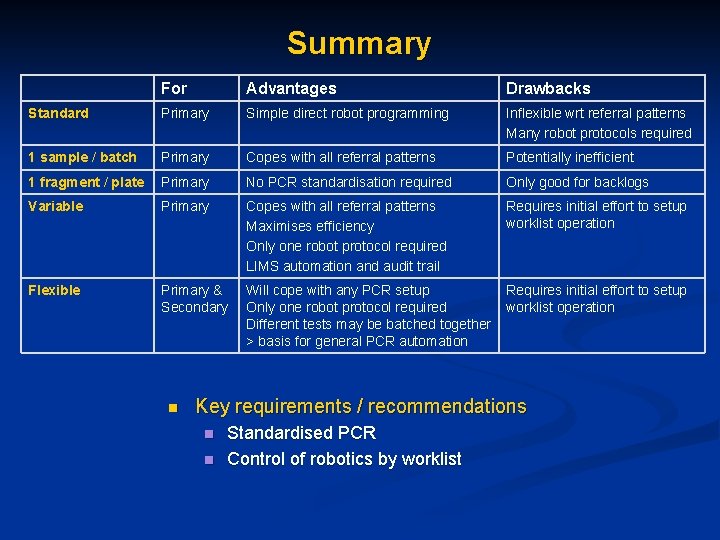
Summary For Advantages Drawbacks Standard Primary Simple direct robot programming Inflexible wrt referral patterns Many robot protocols required 1 sample / batch Primary Copes with all referral patterns Potentially inefficient 1 fragment / plate Primary No PCR standardisation required Only good for backlogs Variable Primary Copes with all referral patterns Maximises efficiency Only one robot protocol required LIMS automation and audit trail Requires initial effort to setup worklist operation Flexible Primary & Secondary Will cope with any PCR setup Only one robot protocol required Different tests may be batched together > basis for general PCR automation Requires initial effort to setup worklist operation n Key requirements / recommendations n n Standardised PCR Control of robotics by worklist
- Slides: 18