
Bat Pack Group 2 Christian Jackson Connor Roggero

Bat. Pack Group 2 Christian Jackson Connor Roggero Lucas Pasqualin
Motivations ○ No advancement in technology for visually impaired ○ Breakthroughs in Computer Vision ○ 39 million blind, 246 million legally blind (World Health Organization) ○ Improve quality of life for the visually impaired ○ Users of walking sticks have one hand occupied
Goals and Objectives To build a device that will provide blind users with all of the functionality that a cane provides, but using modern technology. Users should be able to readily tell where they’re going, detect obstacles, and have both hands free while doing so.
Specifications ○ ○ Unit Housing Dimensions : Fit in Backpack ○ Power : Less than 0. 1 W ○ Weight ○ Signal : PWM : Less than 2 lbs Micro-Controller ○ ○ I/O : I 2 C and SPI Communication Protocols Power : Less than 1. 5 W Ultrasonic Sensor ○ ○ Vibration Unit(s) ○ ○ Distance : More than 2 m Laser Sensor ○ Distance : More than 5 m ○ Camera ○ Resolution : Compatible for Computer Vision ○ Frame Rate : 24 Battery Supply ○ Capacity : At least 20000 m. Ah ○ Duration : > 24 hrs
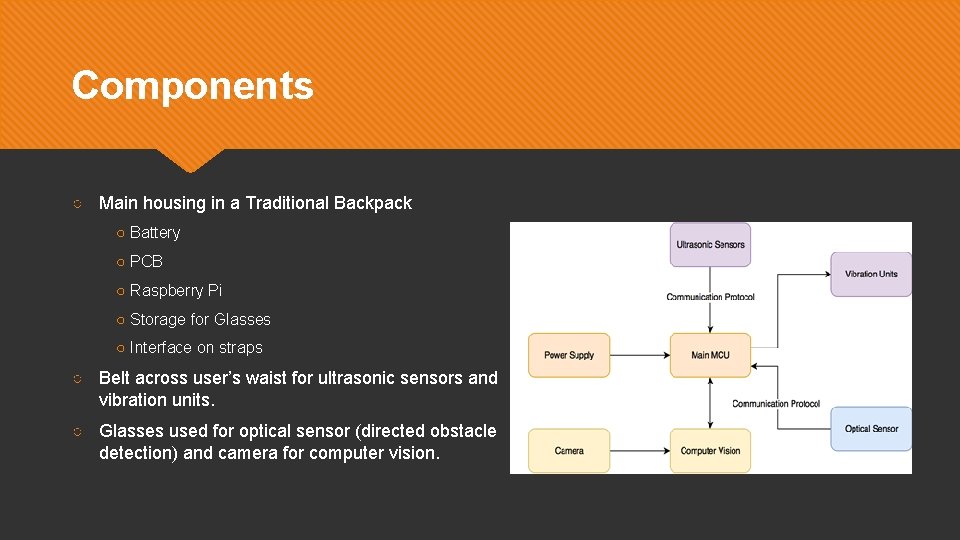
Components ○ Main housing in a Traditional Backpack ○ Battery ○ PCB ○ Raspberry Pi ○ Storage for Glasses ○ Interface on straps ○ Belt across user’s waist for ultrasonic sensors and vibration units. ○ Glasses used for optical sensor (directed obstacle detection) and camera for computer vision.
How we got to the Batpack ● The Side. Stick ○ ○ Still have a hand occupied Too bulky for comfortable use ● The fanny pack ○ ○ ○ Limited space No where to hold glasses Not stylish ● The Bat. Pack ○ ○ ○ Easily holds all components needed, with extra space Can hold collapsible walking stick Room for user interface
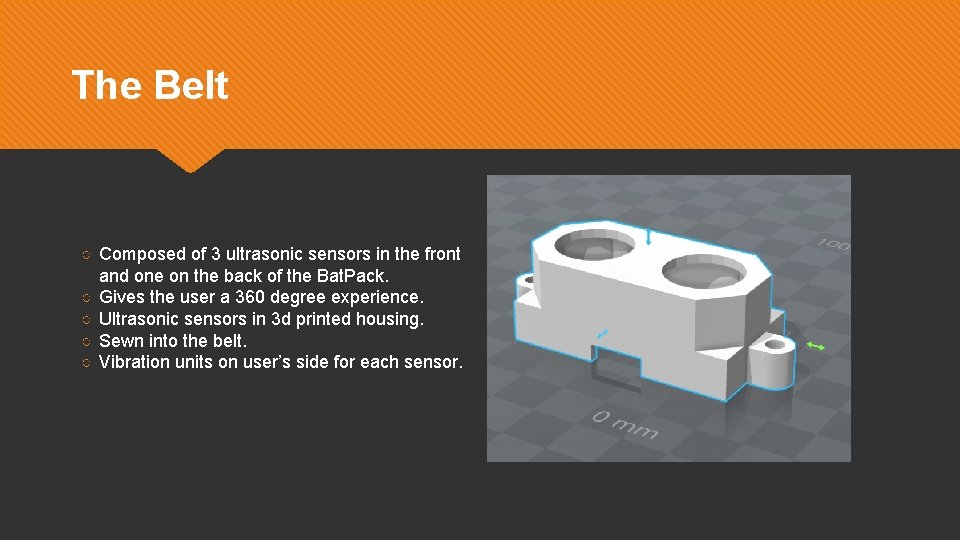
The Belt ○ Composed of 3 ultrasonic sensors in the front and one on the back of the Bat. Pack. ○ Gives the user a 360 degree experience. ○ Ultrasonic sensors in 3 d printed housing. ○ Sewn into the belt. ○ Vibration units on user’s side for each sensor.
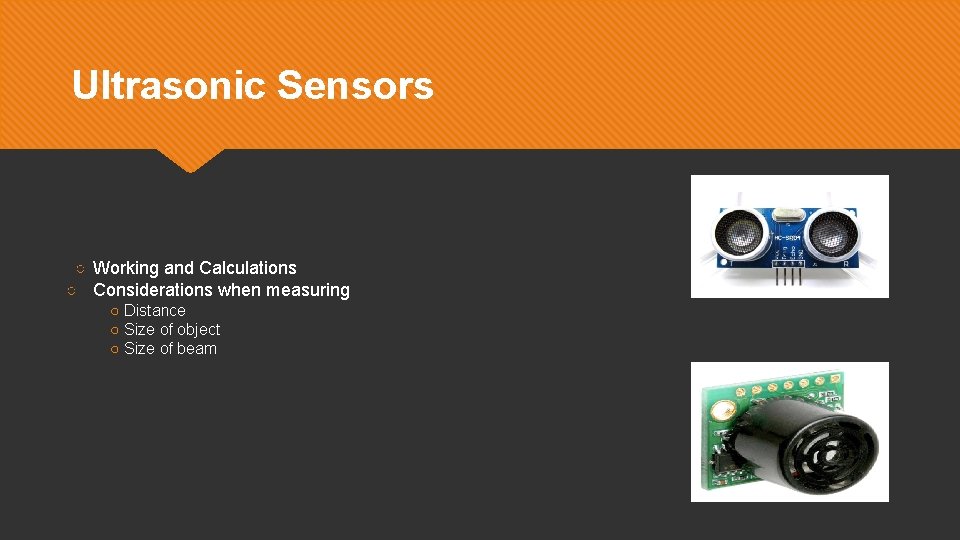
Ultrasonic Sensors ○ Working and Calculations ○ Considerations when measuring ○ Distance ○ Size of object ○ Size of beam
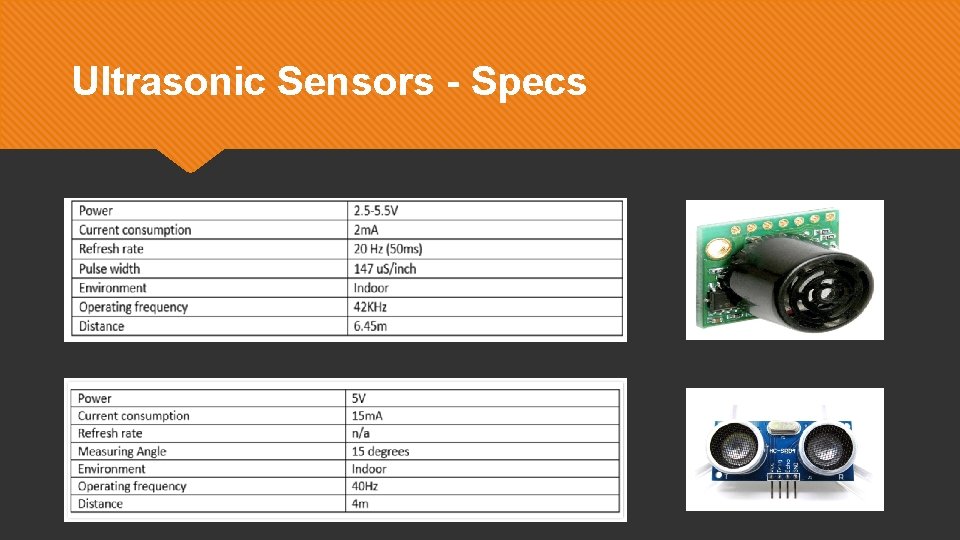
Ultrasonic Sensors - Specs
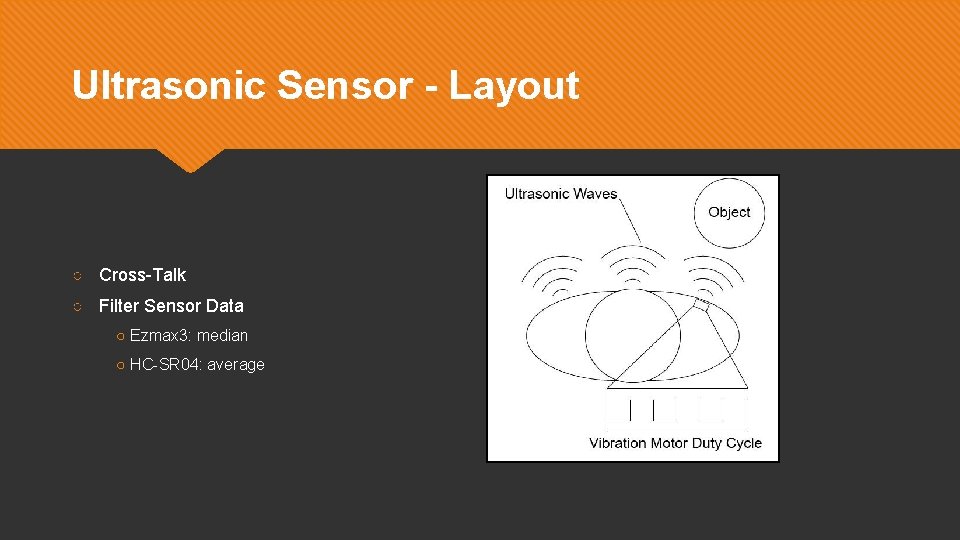
Ultrasonic Sensor - Layout ○ Cross-Talk ○ Filter Sensor Data ○ Ezmax 3: median ○ HC-SR 04: average
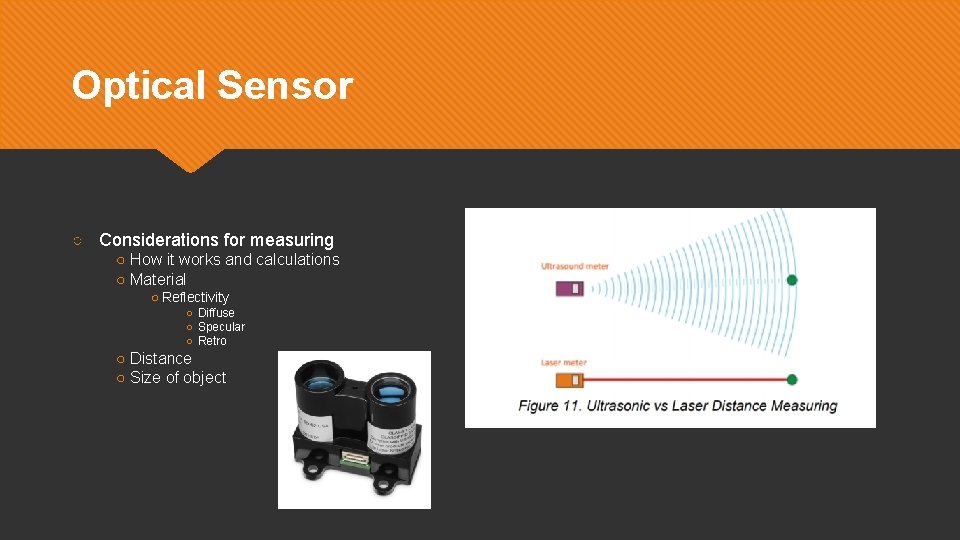
Optical Sensor ○ Considerations for measuring ○ How it works and calculations ○ Material ○ Reflectivity ○ Diffuse ○ Specular ○ Retro ○ Distance ○ Size of object
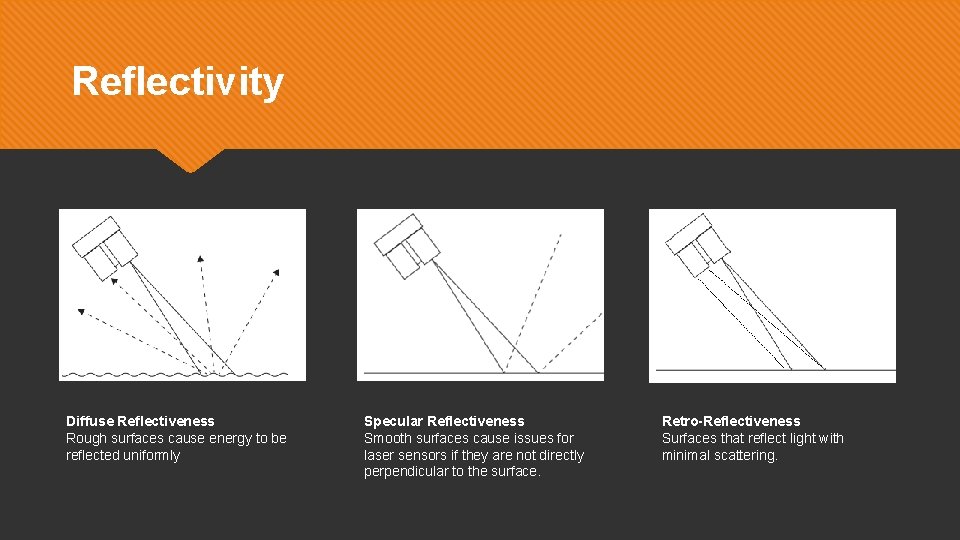
Reflectivity Diffuse Reflectiveness Rough surfaces cause energy to be reflected uniformly Specular Reflectiveness Smooth surfaces cause issues for laser sensors if they are not directly perpendicular to the surface. Retro-Reflectiveness Surfaces that reflect light with minimal scattering.
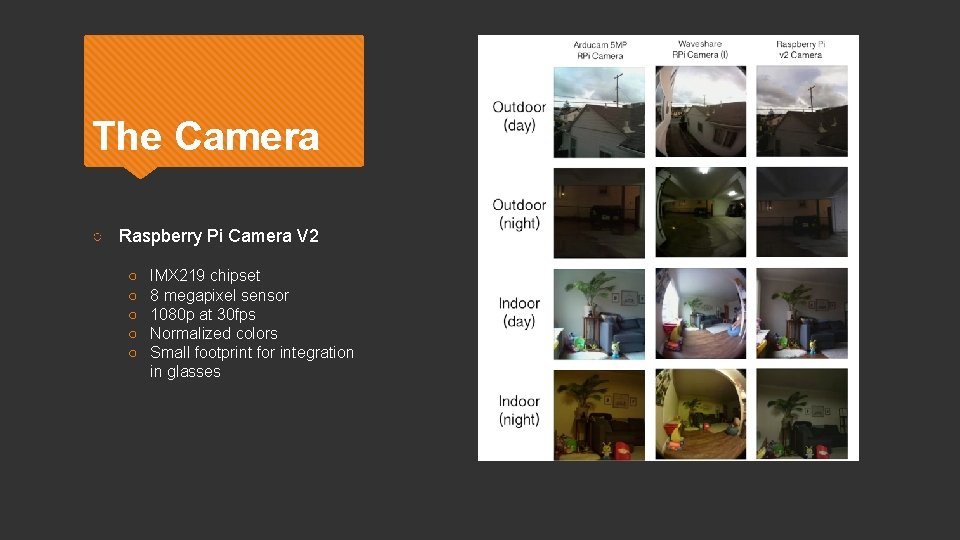
The Camera ○ Raspberry Pi Camera V 2 ○ ○ ○ IMX 219 chipset 8 megapixel sensor 1080 p at 30 fps Normalized colors Small footprint for integration in glasses
Computer Vision – Sidewalk Detection ○ Goal - To Deduce the direction of the sidewalk ○ Two Approaches ○ Traditional Computer Vision Algorithms ○ Limited accuracy ○ Limited Generalizability/ Adaptability ○ Neural Networks ○ A lot of effort goes into training ○ Complex implementation
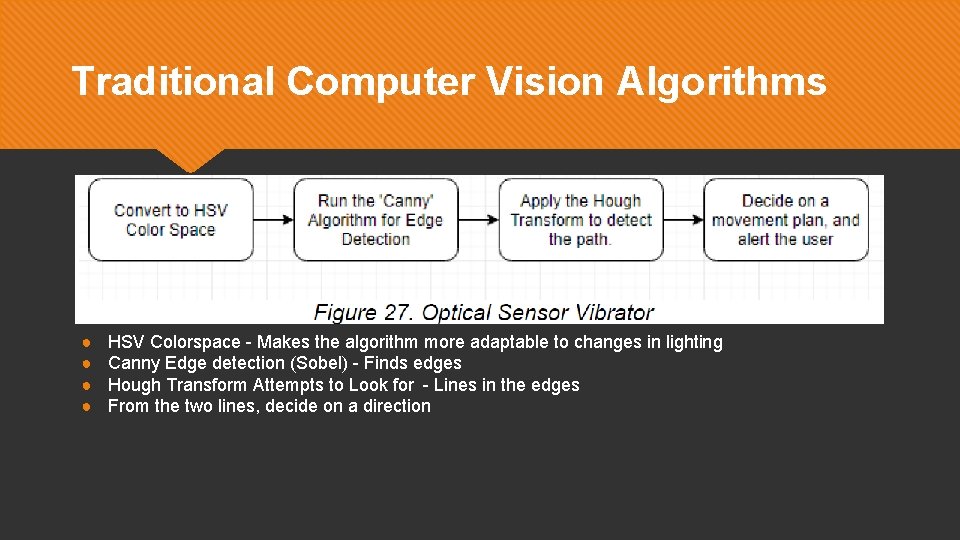
Traditional Computer Vision Algorithms ● ● HSV Colorspace - Makes the algorithm more adaptable to changes in lighting Canny Edge detection (Sobel) - Finds edges Hough Transform Attempts to Look for - Lines in the edges From the two lines, decide on a direction
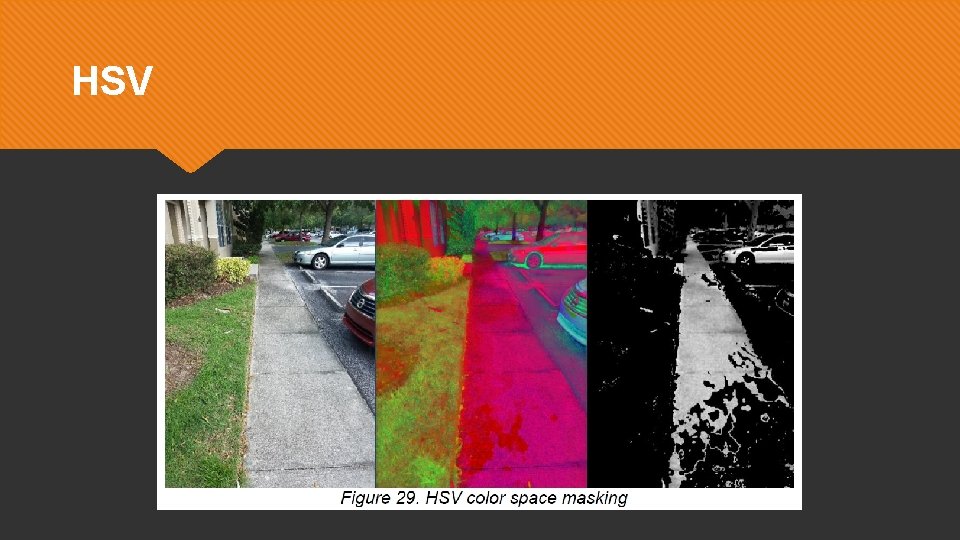
HSV
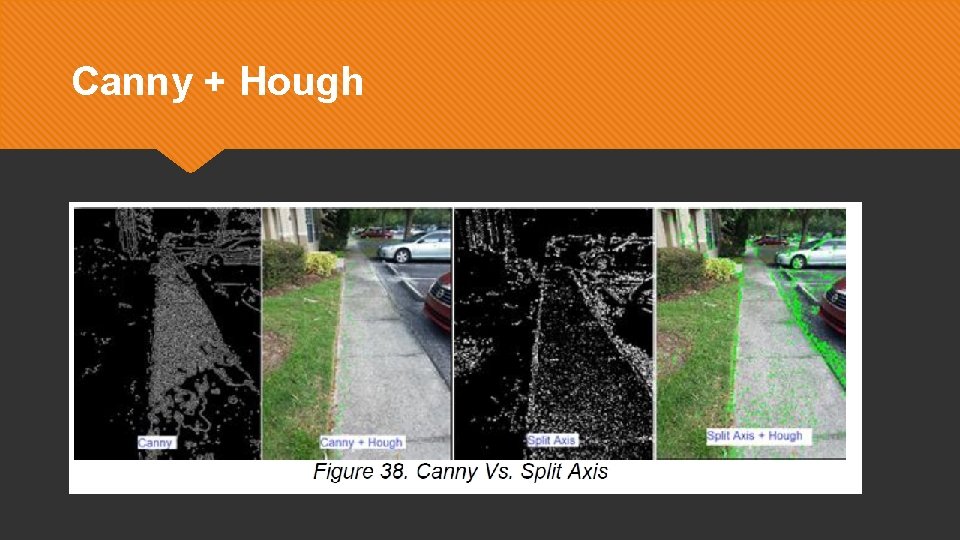
Canny + Hough
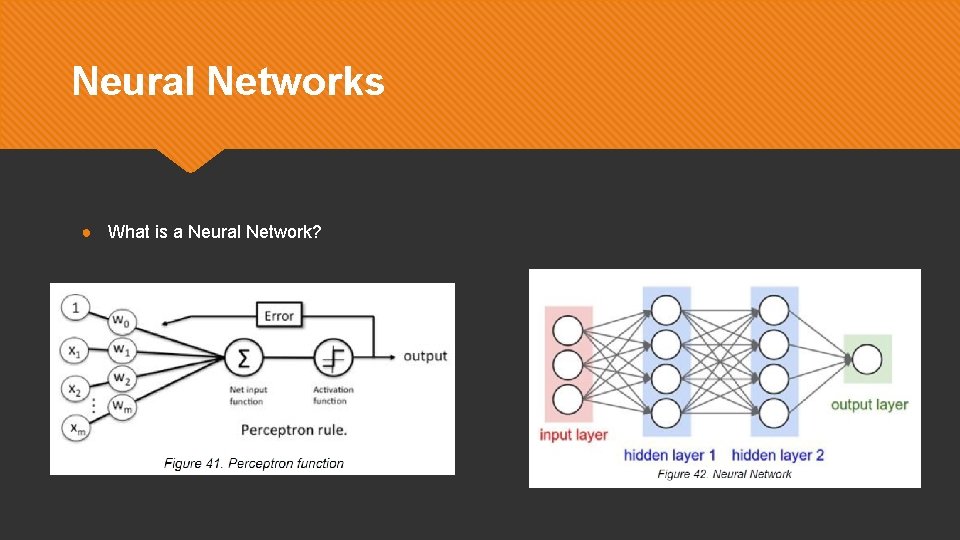
Neural Networks ● What is a Neural Network?
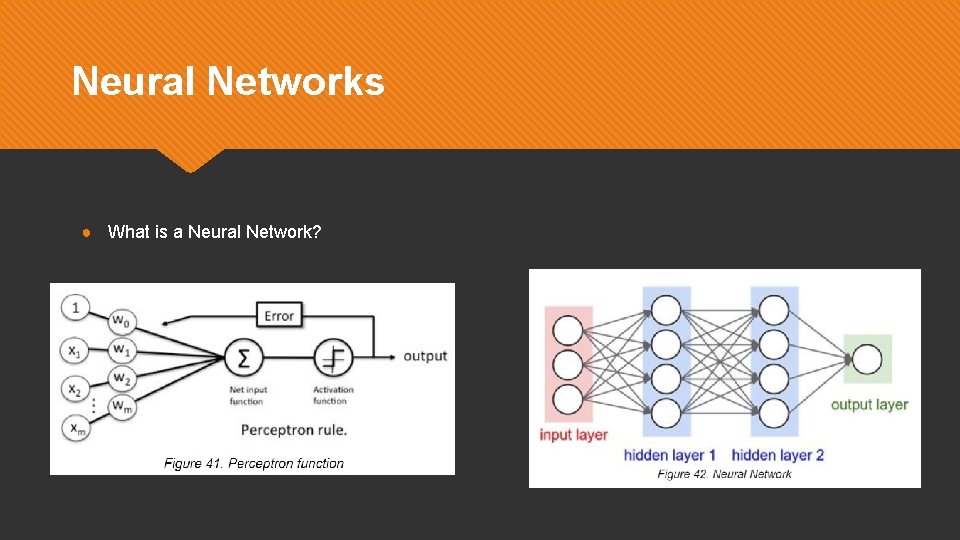
Neural Networks ● What is a Neural Network?
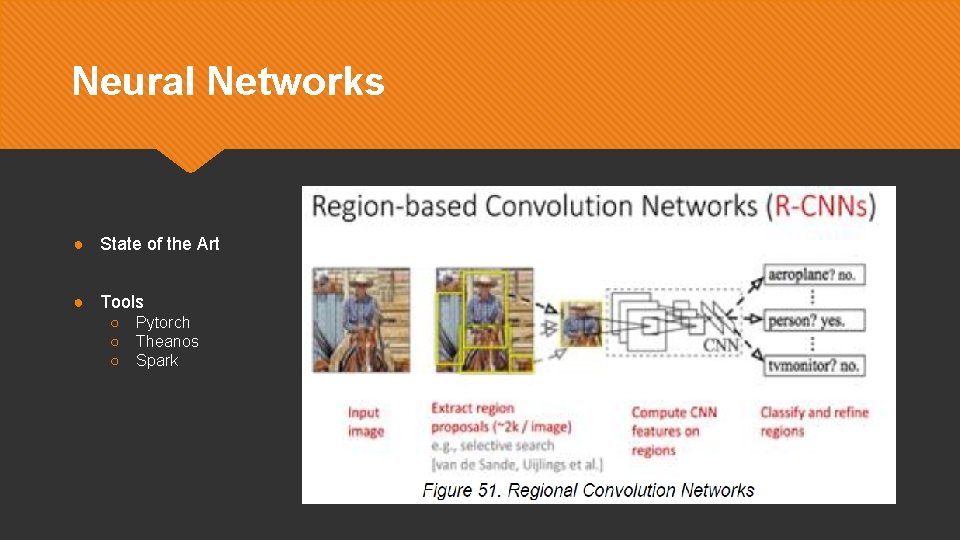
Neural Networks ● State of the Art ● Tools ○ ○ ○ Pytorch Theanos Spark
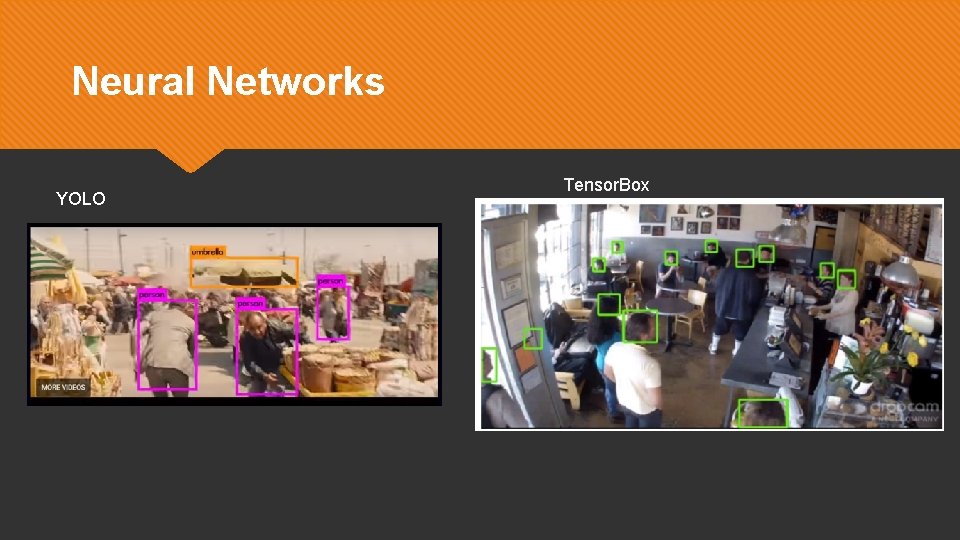
Neural Networks YOLO Tensor. Box
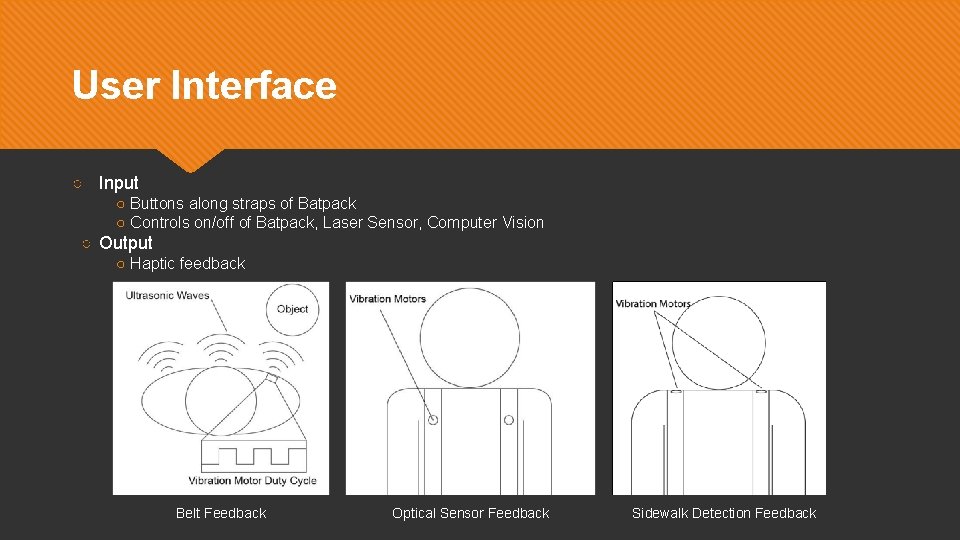
User Interface ○ Input ○ Buttons along straps of Batpack ○ Controls on/off of Batpack, Laser Sensor, Computer Vision ○ Output ○ Haptic feedback Belt Feedback Optical Sensor Feedback Sidewalk Detection Feedback
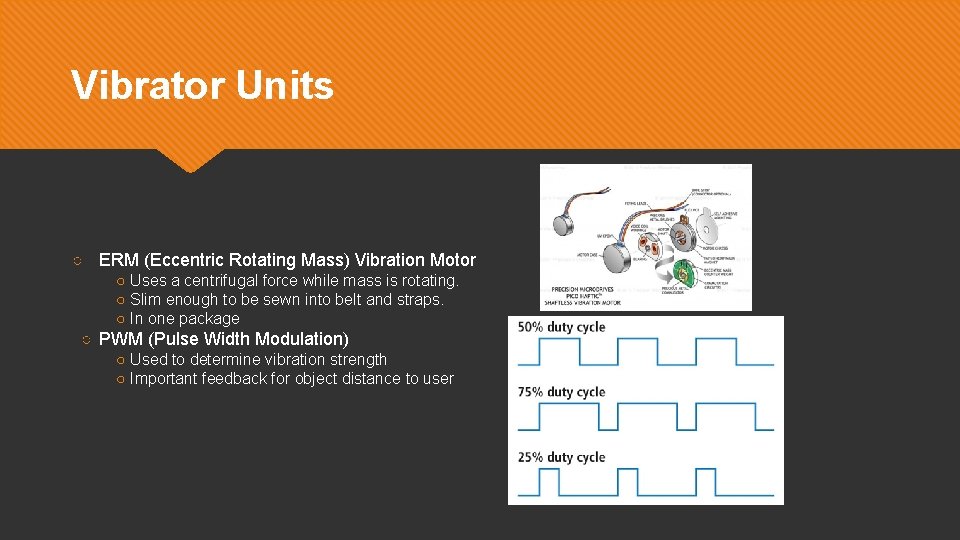
Vibrator Units ○ ERM (Eccentric Rotating Mass) Vibration Motor ○ Uses a centrifugal force while mass is rotating. ○ Slim enough to be sewn into belt and straps. ○ In one package ○ PWM (Pulse Width Modulation) ○ Used to determine vibration strength ○ Important feedback for object distance to user
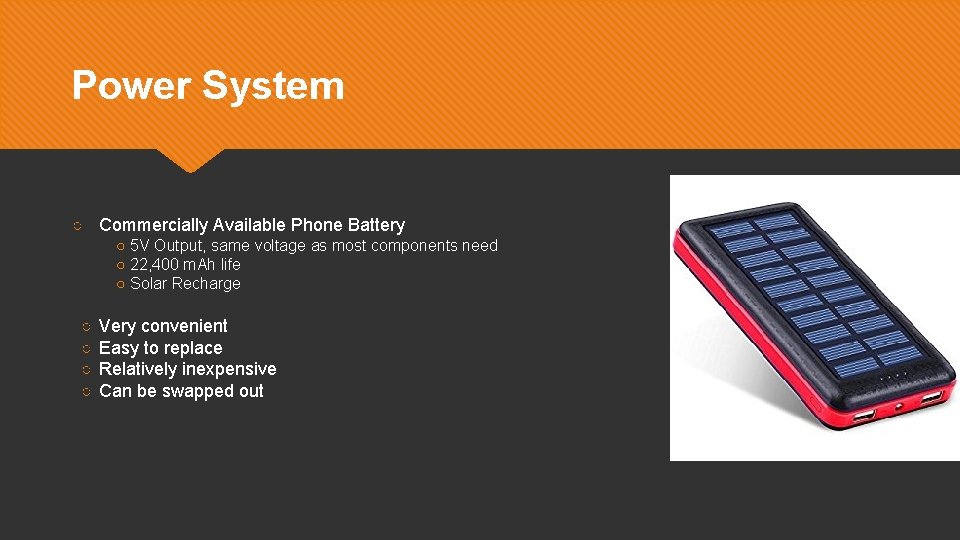
Power System ○ Commercially Available Phone Battery ○ 5 V Output, same voltage as most components need ○ 22, 400 m. Ah life ○ Solar Recharge ○ ○ Very convenient Easy to replace Relatively inexpensive Can be swapped out
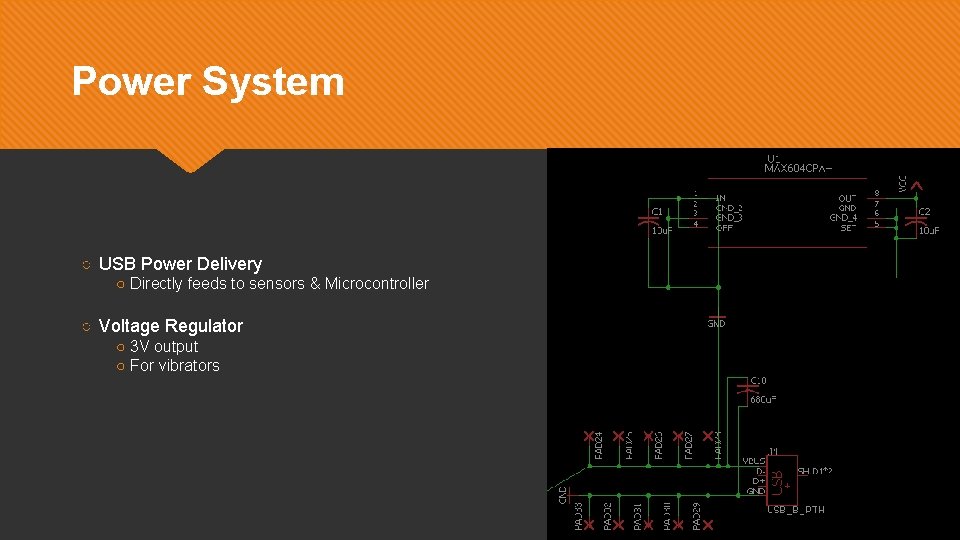
Power System ○ USB Power Delivery ○ Directly feeds to sensors & Microcontroller ○ Voltage Regulator ○ 3 V output ○ For vibrators
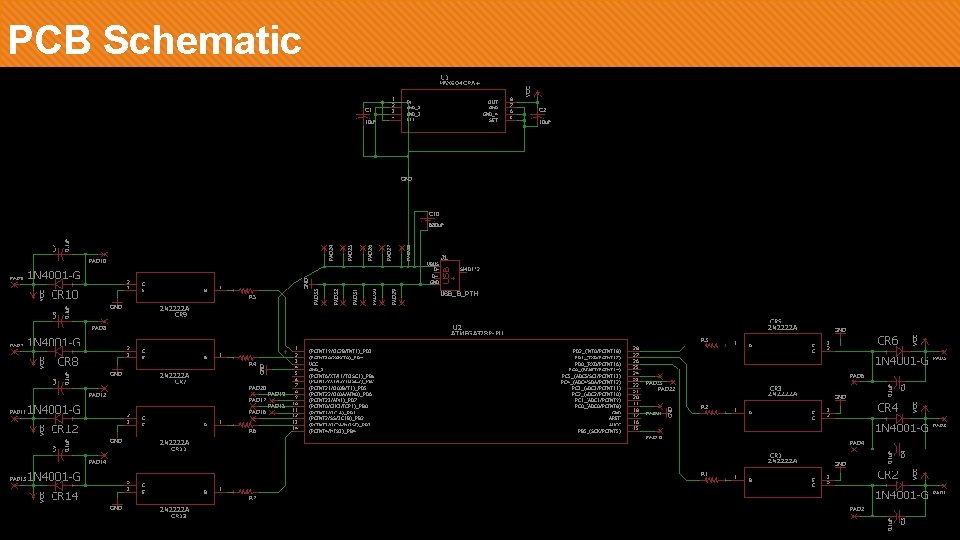
PCB Schematic
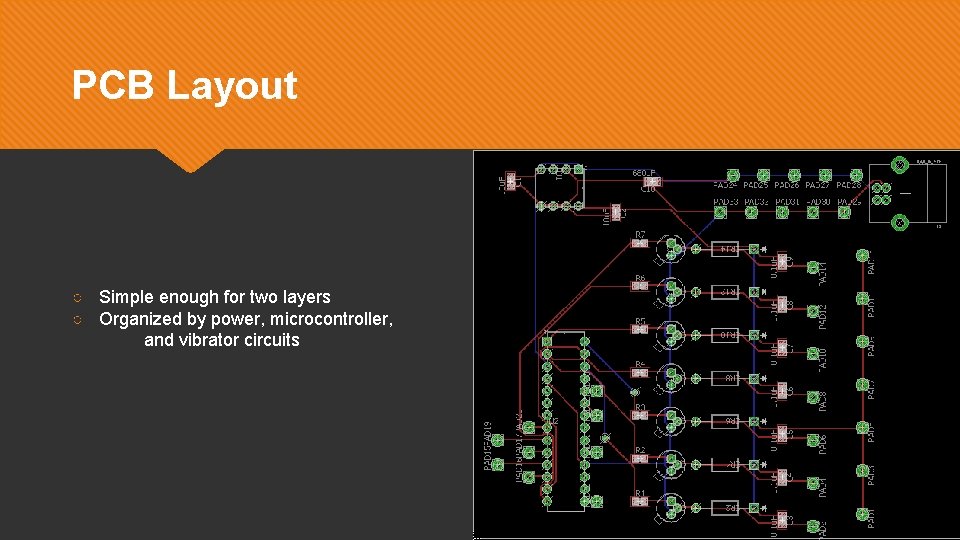
PCB Layout ○ Simple enough for two layers ○ Organized by power, microcontroller, and vibrator circuits

Administration
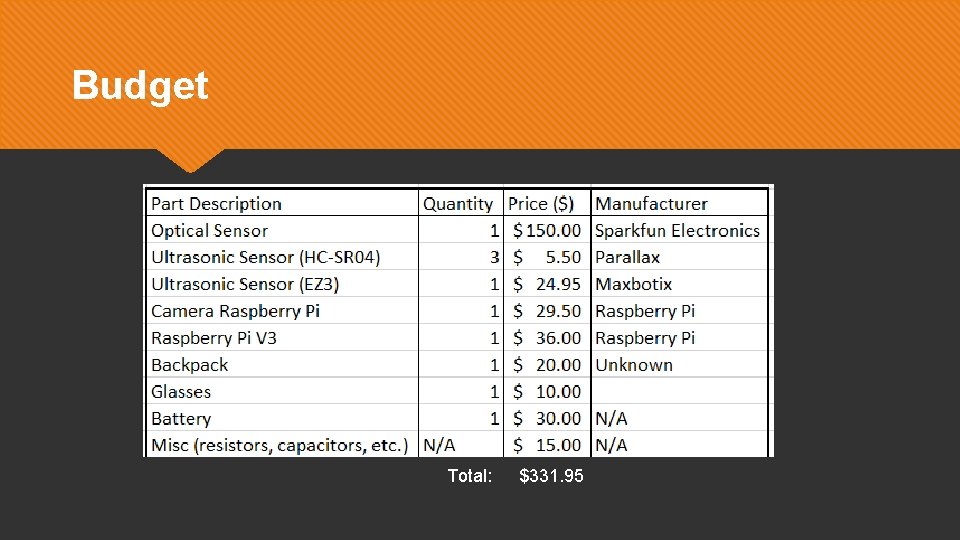
Budget Total: $331. 95
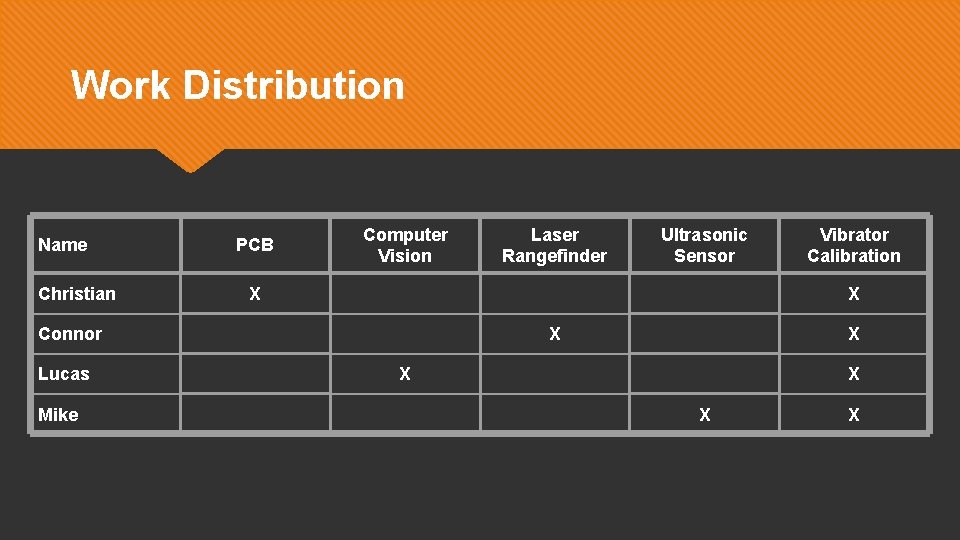
Work Distribution Name Christian PCB Computer Vision Mike Ultrasonic Sensor X Vibrator Calibration X Connor Lucas Laser Rangefinder X X X
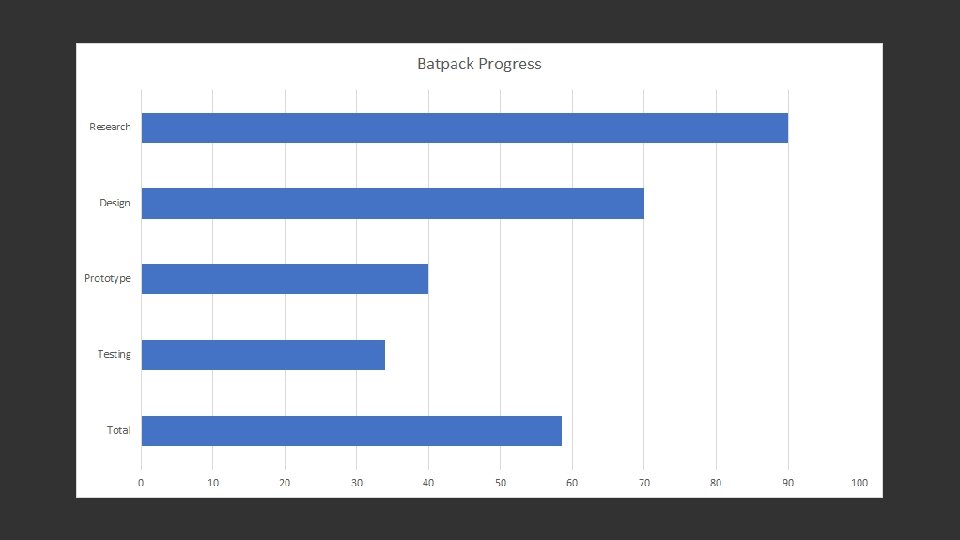

Current Issues ○ Computer Vision ○ Neural Network ○ Haptic Feedback - Output

Questions?
- Slides: 33