
Basidiomycete Plant Pathogens Wood Root Rots Rusts Rots
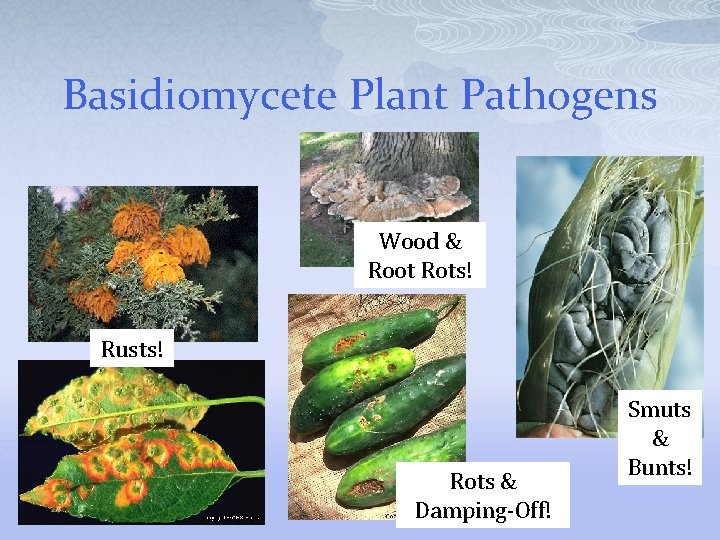
Basidiomycete Plant Pathogens Wood & Root Rots! Rusts! Rots & Damping-Off! Smuts & Bunts!
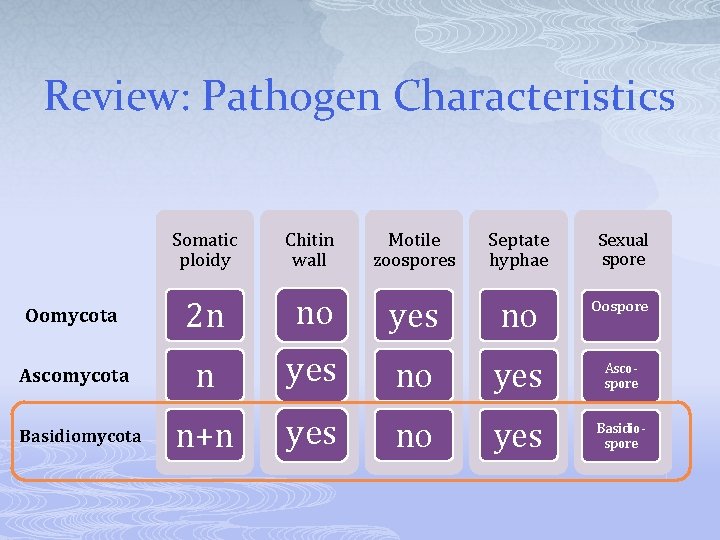
Review: Pathogen Characteristics Somatic ploidy Chitin wall Motile zoospores Septate hyphae Sexual spore Oomycota 2 n no yes no Oospore Ascomycota n yes no yes Ascospore n+n yes no yes Basidiospore Basidiomycota
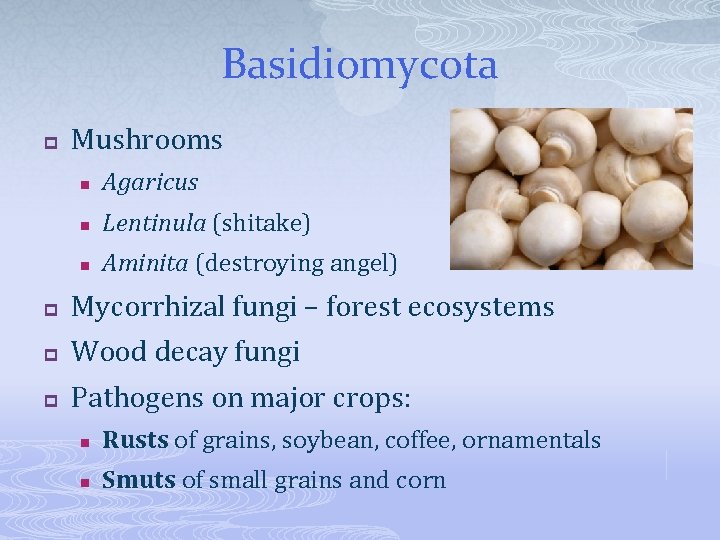
Basidiomycota p Mushrooms n Agaricus n Lentinula (shitake) n Aminita (destroying angel) p Mycorrhizal fungi – forest ecosystems p Wood decay fungi p Pathogens on major crops: n Rusts of grains, soybean, coffee, ornamentals n Smuts of small grains and corn
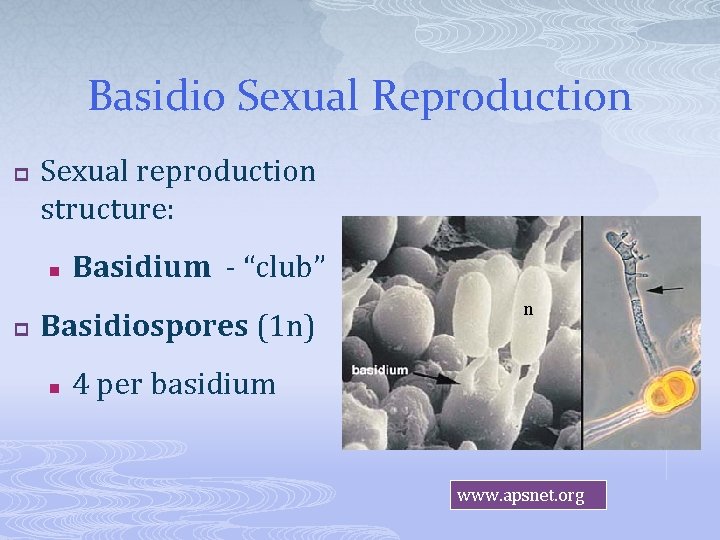
Basidio Sexual Reproduction p Sexual reproduction structure: n p Basidium - “club” Basidiospores (1 n) n n 4 per basidium www. apsnet. org
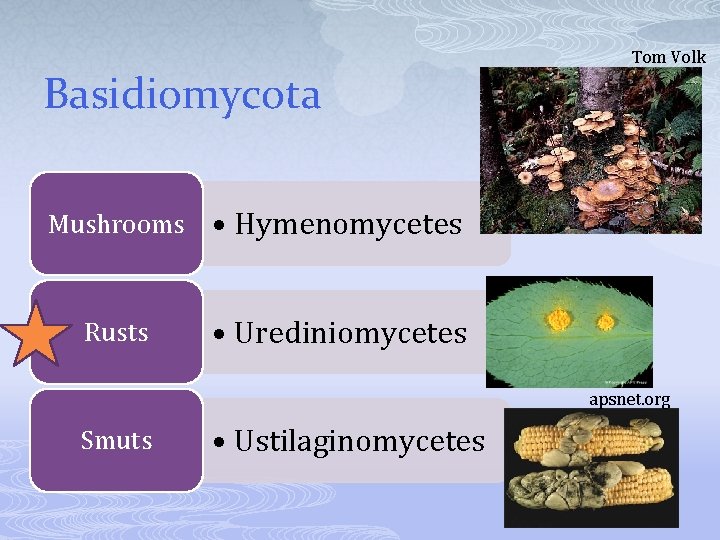
Basidiomycota Mushrooms • Hymenomycetes Rusts • Urediniomycetes Tom Volk apsnet. org Smuts • Ustilaginomycetes
Uredinales - Rusts p p p p Puccinia – grass and cereal rusts Phakopsora – Soybean Rust Gymnosporangium – Cedar-Apple Rust Hemileia – Coffee Rust Cronartium – White Pine Blister Rust Uromyces – carnation and bean rusts Phregmidium – Orange rust of blackberry
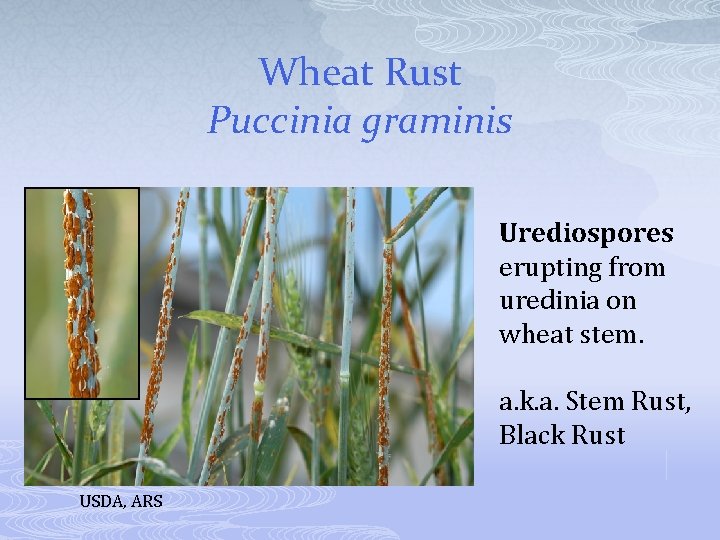
Wheat Rust Puccinia graminis Urediospores erupting from uredinia on wheat stem. a. k. a. Stem Rust, Black Rust USDA, ARS
Rusts in History p Described in Bible and Broadway: n p In writings of Theophrastus n p Famine in Joseph and Amazing Technicolor Dreamcoat story (“Father of Botany”) Robigus – Roman rust god n Honored by Robigalia – sacrificed reddish-colored animals
Puccinia graminis p Obligate biotroph – no saprophytic stage. p Heteroecious – 2 hosts required for lifecycle: n n p Grass species (monocot) Barberry (dicot) Polycyclic pathogen n Aerial urediospores spread 100 s of miles.

Lifecycle of Puccinia graminis 2 1 Spermatia and receptive hyphae Basidiospores 3 Barberry Aeciospore Wheat 5 Teliospore Urediospore 4
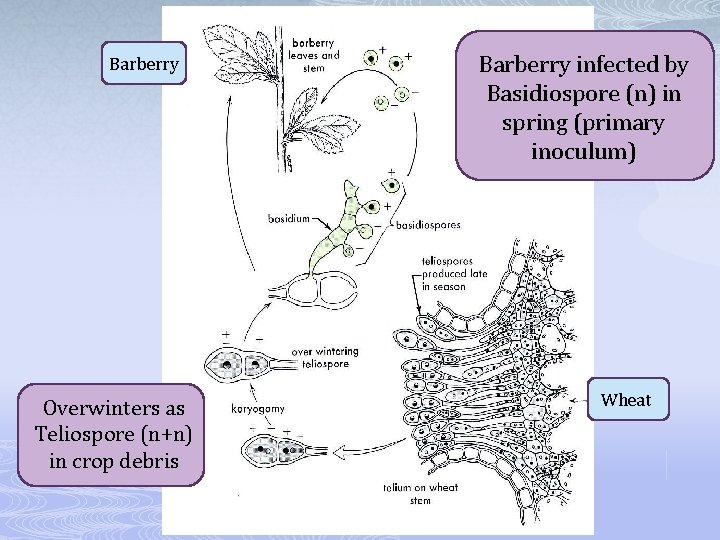
Barberry Overwinters as Teliospore (n+n) in crop debris Barberry infected by Basidiospore (n) in spring (primary inoculum) Wheat
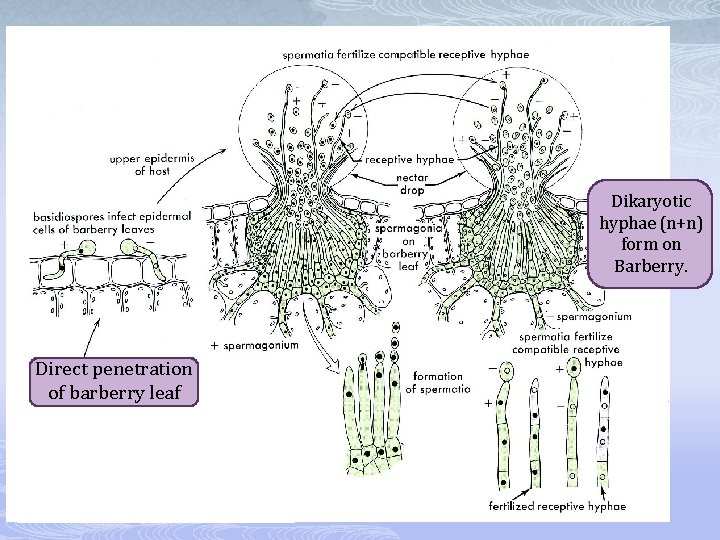
Dikaryotic hyphae (n+n) form on Barberry. Direct penetration of barberry leaf
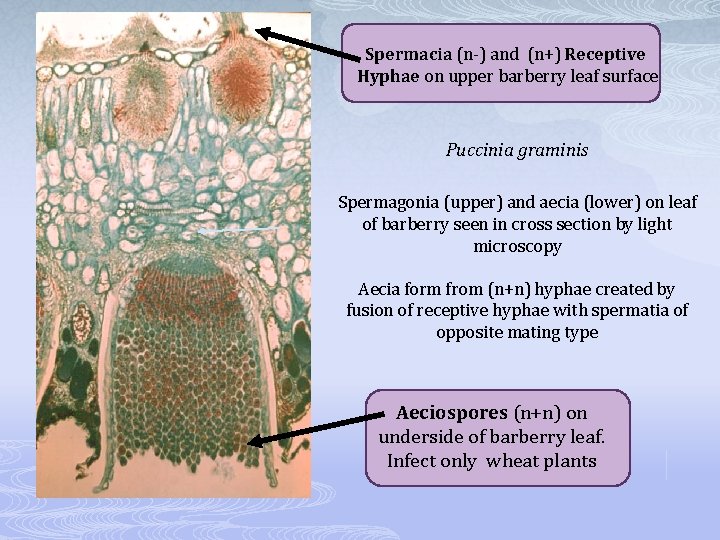
Spermacia (n-) and (n+) Receptive Hyphae on upper barberry leaf surface Puccinia graminis Spermagonia (upper) and aecia (lower) on leaf of barberry seen in cross section by light microscopy Aecia form from (n+n) hyphae created by fusion of receptive hyphae with spermatia of opposite mating type Aeciospores (n+n) on underside of barberry leaf. Infect only wheat plants
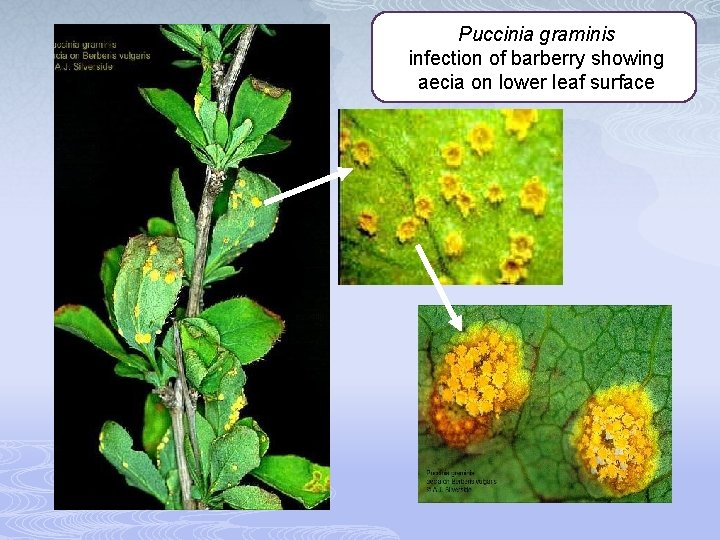
Puccinia graminis infection of barberry showing aecia on lower leaf surface
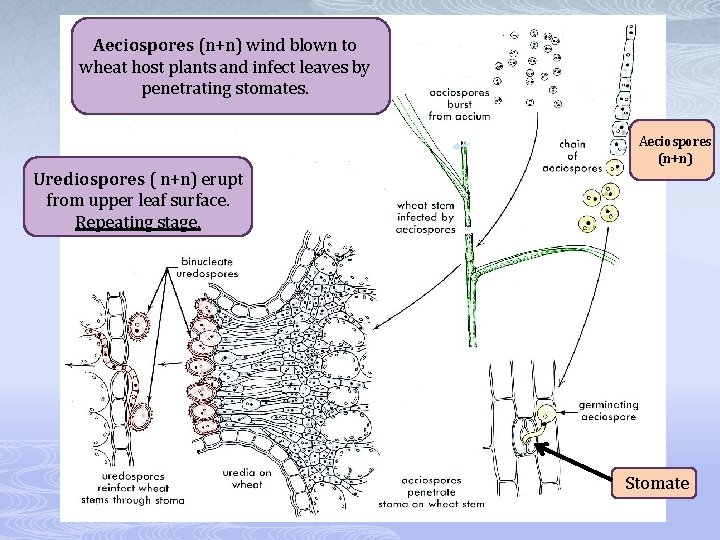
Aeciospores (n+n) wind blown to wheat host plants and infect leaves by penetrating stomates. Aeciospores (n+n) Urediospores ( n+n) erupt from upper leaf surface. Repeating stage. Stomate
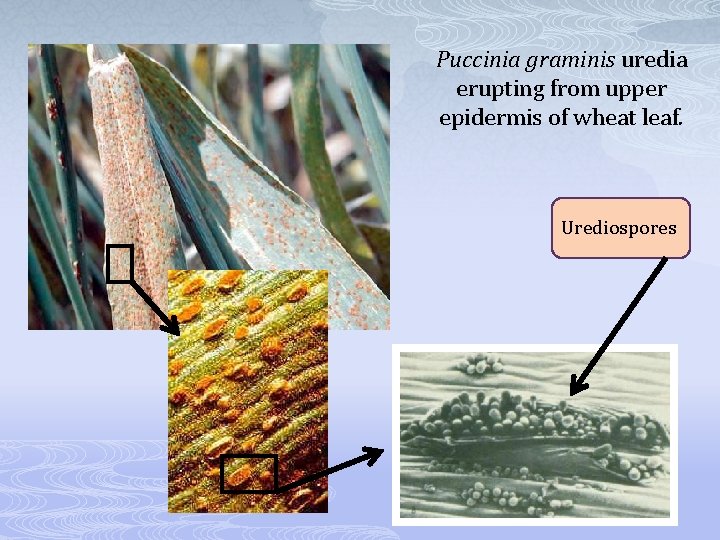
Puccinia graminis uredia erupting from upper epidermis of wheat leaf. Urediospores
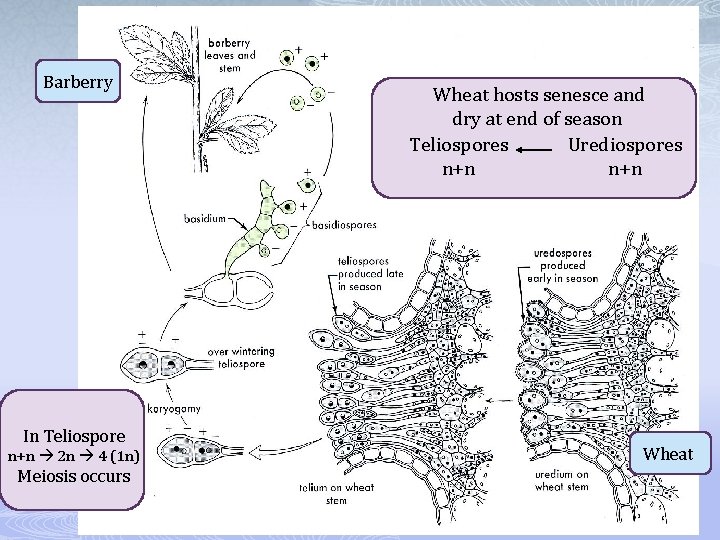
Barberry In Teliospore n+n 2 n 4 (1 n) Meiosis occurs Wheat hosts senesce and dry at end of season Teliospores Urediospores n+n Wheat
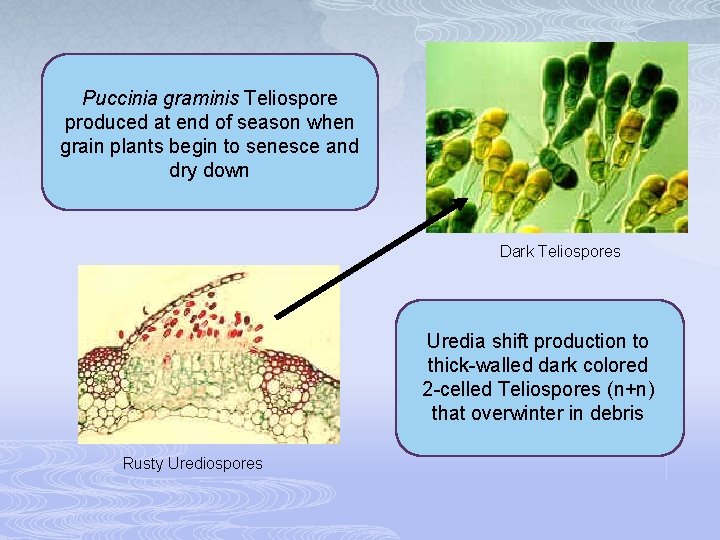
Puccinia graminis Teliospore produced at end of season when grain plants begin to senesce and dry down Dark Teliospores Uredia shift production to thick-walled dark colored 2 -celled Teliospores (n+n) that overwinter in debris Rusty Urediospores
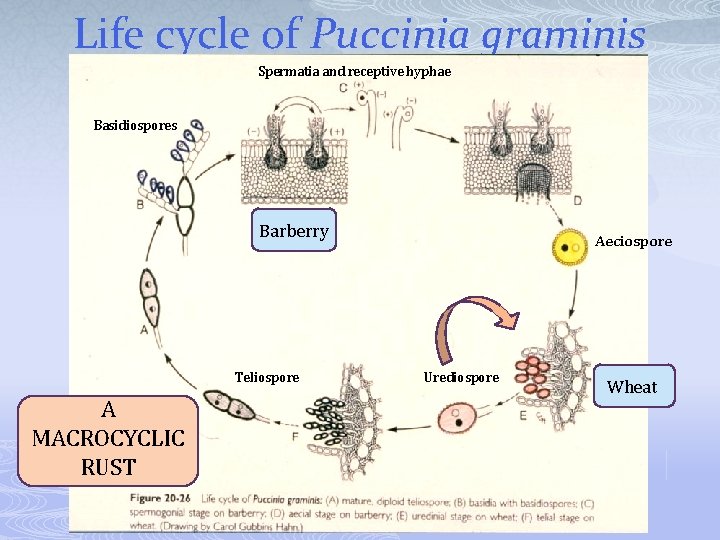
Life cycle of Puccinia graminis Spermatia and receptive hyphae Basidiospores Barberry Teliospore A MACROCYCLIC RUST Aeciospore Urediospore Wheat
Control of Wheat Rust p Resistant varieties p Fungicides n n p Many applications required = $$$ Scouting and Forecasting Barberry Eradication
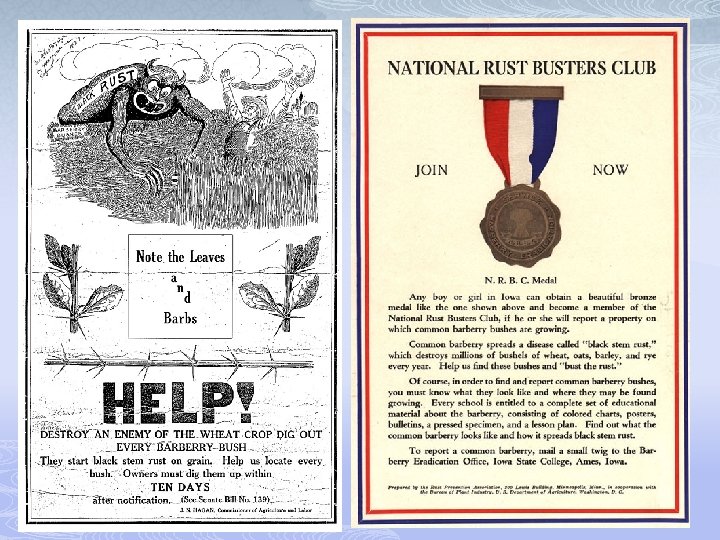
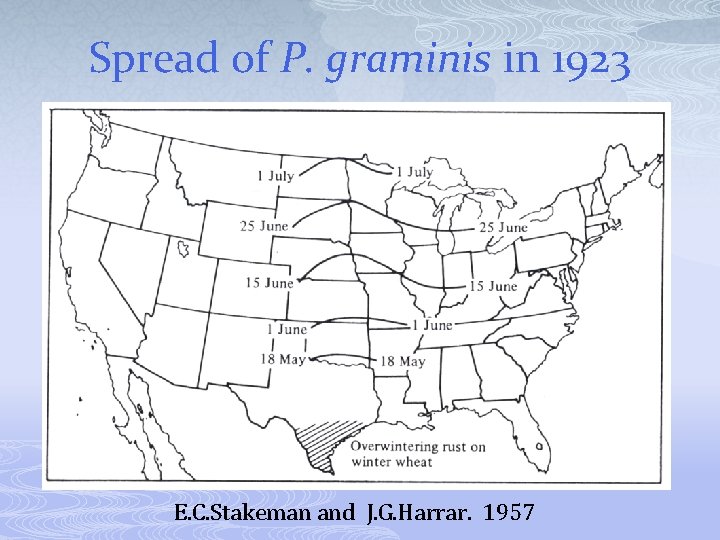
Spread of P. graminis in 1923 E. C. Stakeman and J. G. Harrar. 1957
Rusts are very specific p Formae speciales (f. sp. ) – “special forms” n n p Puccinia graminis f. sp. tritici - wheat Puccinia graminis f. sp. secalis – barley Pathogen recognizes host morphology – only then will it penetrate and infect. n n Guard cells of stomata Leaf topography
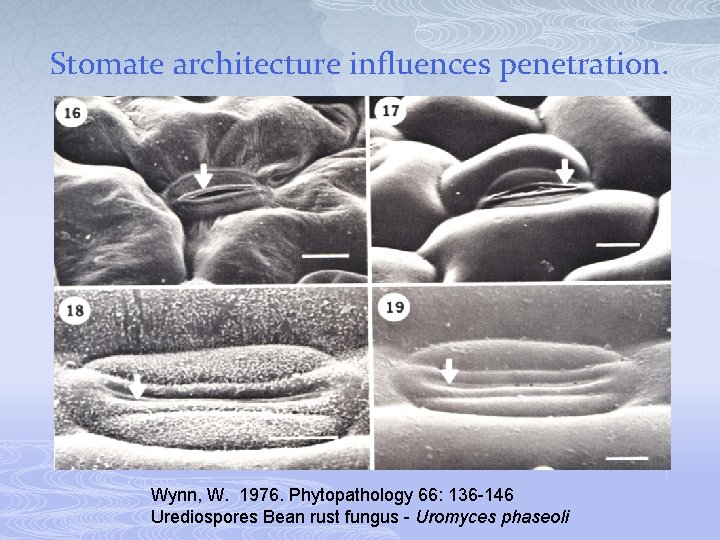
Stomate architecture influences penetration. Wynn, W. 1976. Phytopathology 66: 136 -146 Urediospores Bean rust fungus - Uromyces phaseoli

Host Specificity appressorium guard cells stomate urediospore Bean rust fungus (Uromyces phaseoli) penetrating stomate in bean leaf host.
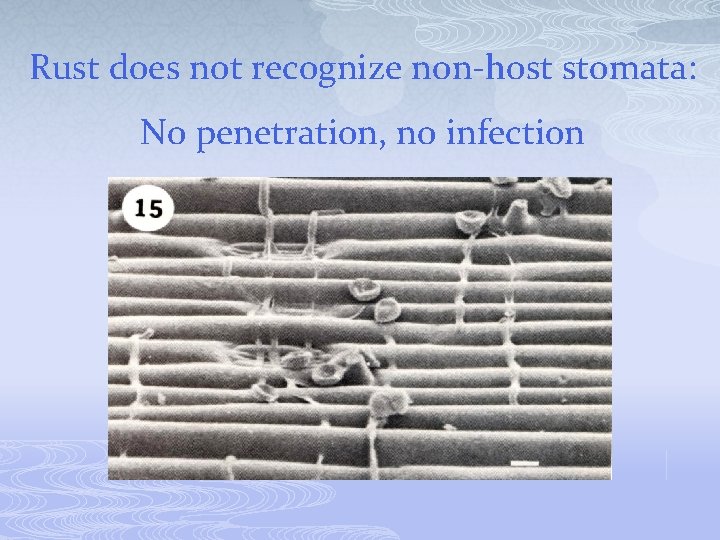
Rust does not recognize non-host stomata: No penetration, no infection
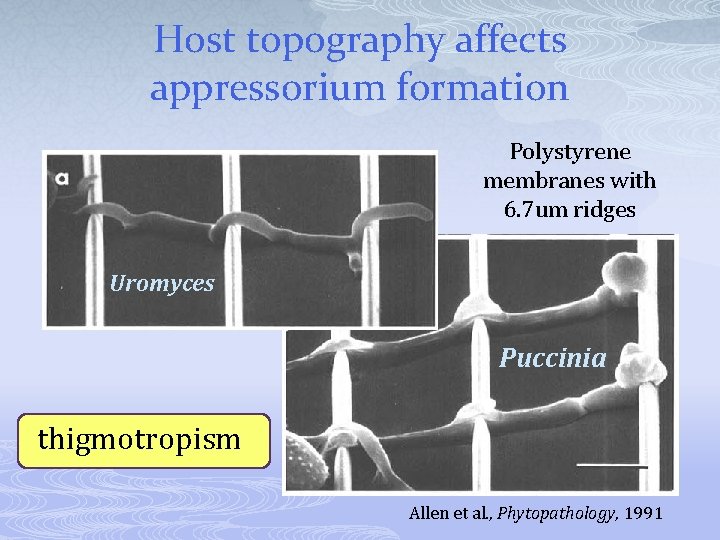
Host topography affects appressorium formation Polystyrene membranes with 6. 7 um ridges Uromyces Puccinia thigmotropism Allen et al. , Phytopathology, 1991
P. graminis as biological weapon p p Rapidly spreading (aerial), polycyclic pathogen capable of destroying an economically important crop. Potential use in bio-terrorism/warfare: n p p Rust pandemic would have negative economic, food security and psychological effects. Has been weaponized in the past by USSR and US Army Biological Weapons lab at Fort Detrick, MD. 1970 – USSR & USA signed Biological Weapons Treaty banning development and testing of biological warfare weapons.
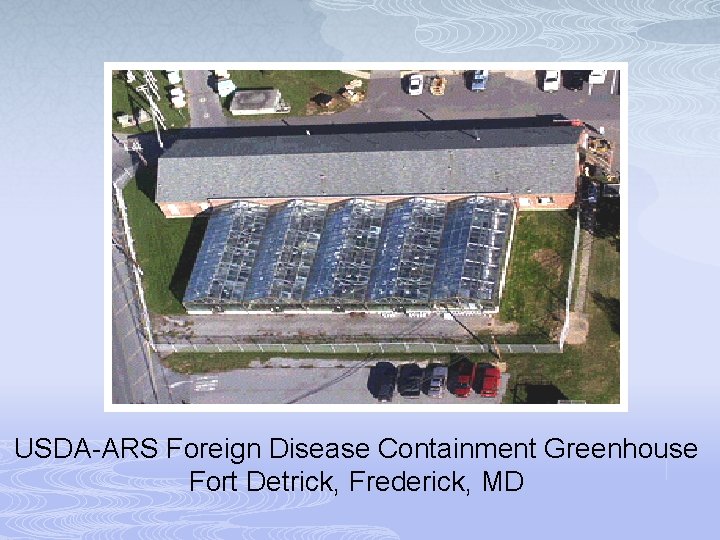
USDA-ARS Foreign Disease Containment Greenhouse Fort Detrick, Frederick, MD
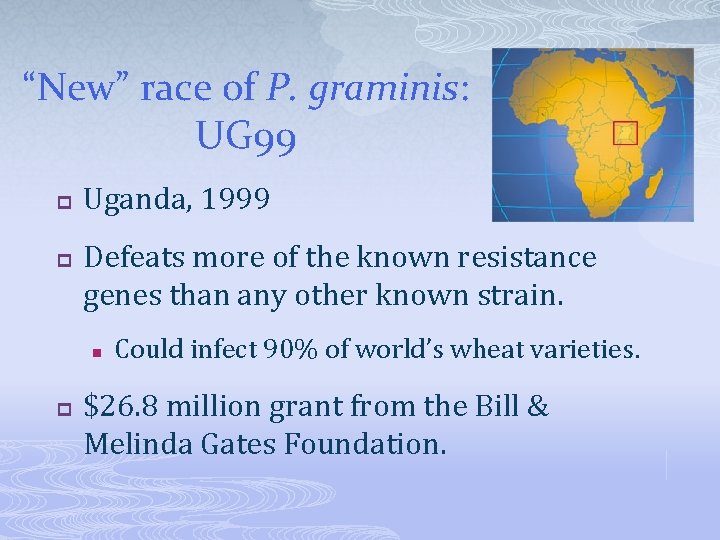
“New” race of P. graminis: UG 99 p p Uganda, 1999 Defeats more of the known resistance genes than any other known strain. n p Could infect 90% of world’s wheat varieties. $26. 8 million grant from the Bill & Melinda Gates Foundation.
- Slides: 30