
Basics of Tissue Injury Ch 2 Athletic Training
Basics of Tissue Injury Ch. 2 Athletic Training for Student Assistants
Objectives § Explain the various types of tissue injury § Explain tissue Repair and Healing § Explain various bone injuries § Explain bone repair and healing
Soft Tissue Injuries § Contusion § Abrasion § Laceration § Puncture § Incision § Amputation § Avulsion § Contrecoup § Sprain § Strain
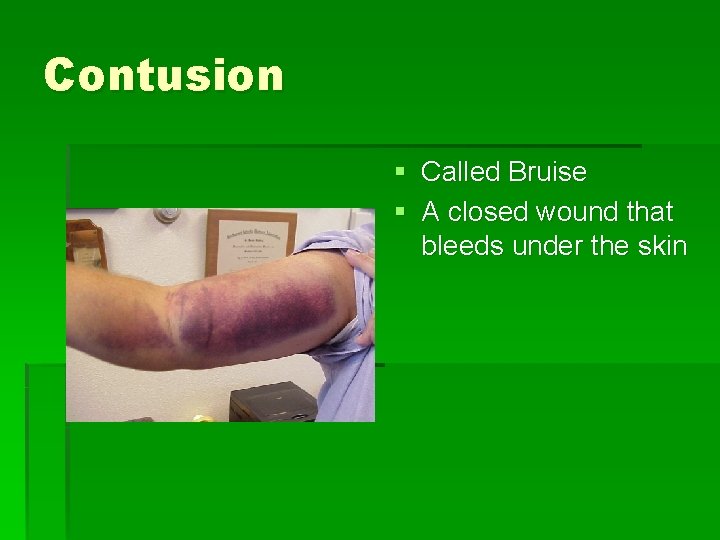
Contusion § Called Bruise § A closed wound that bleeds under the skin
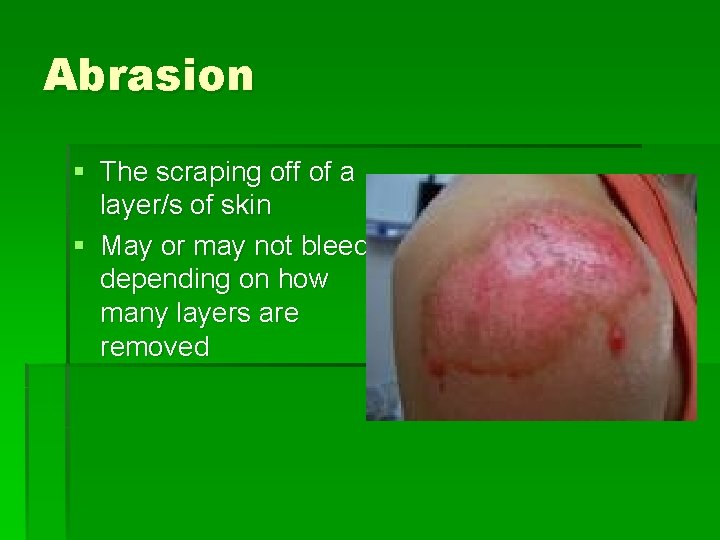
Abrasion § The scraping off of a layer/s of skin § May or may not bleed depending on how many layers are removed
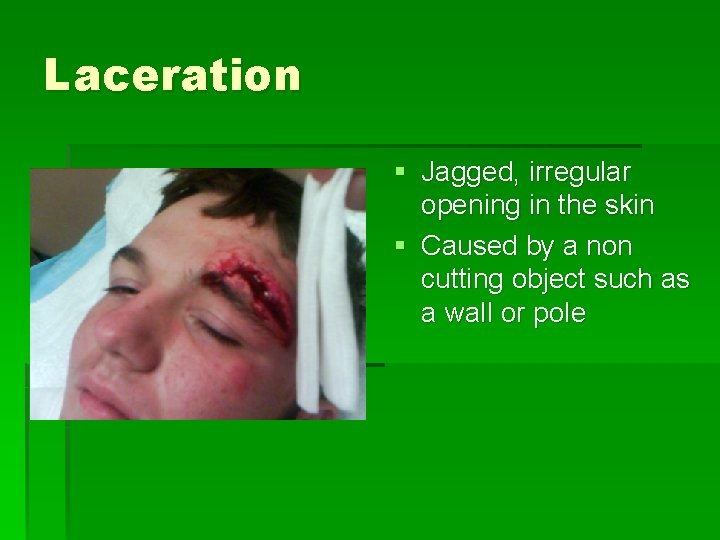
Laceration § Jagged, irregular opening in the skin § Caused by a non cutting object such as a wall or pole
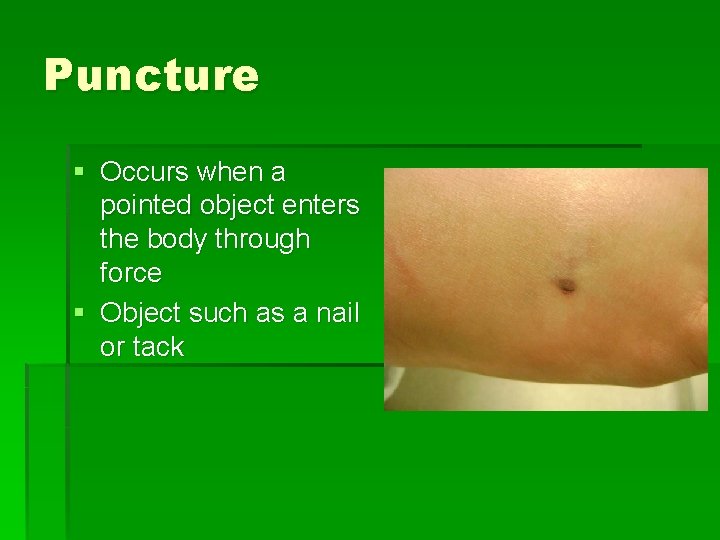
Puncture § Occurs when a pointed object enters the body through force § Object such as a nail or tack
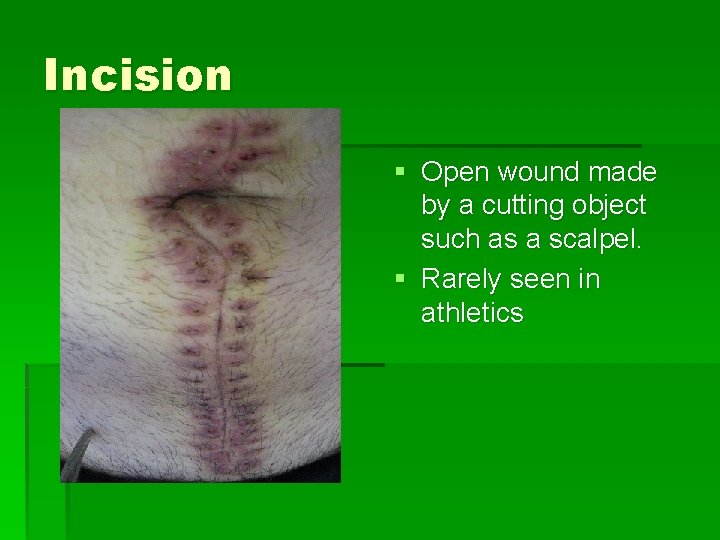
Incision § Open wound made by a cutting object such as a scalpel. § Rarely seen in athletics
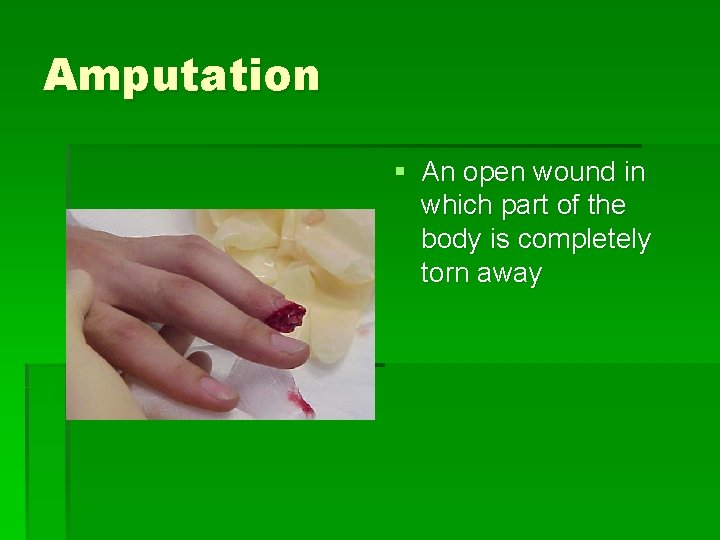
Amputation § An open wound in which part of the body is completely torn away
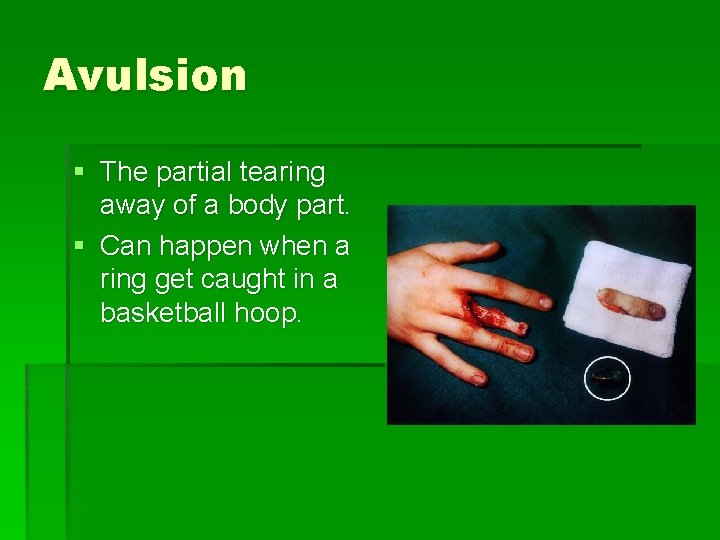
Avulsion § The partial tearing away of a body part. § Can happen when a ring get caught in a basketball hoop.
Contrecoup § Injury that occurs on the opposite side of the initial injury § Usually occurs in the brain as the head hits against an un yielding surface § Example: the posterior part of the skull makes contact with the ground and the brain hits the anterior part of the skull.
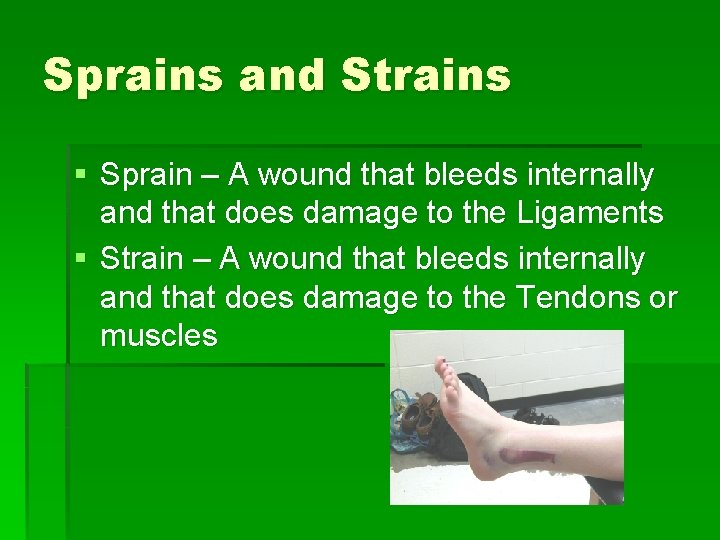
Sprains and Strains § Sprain – A wound that bleeds internally and that does damage to the Ligaments § Strain – A wound that bleeds internally and that does damage to the Tendons or muscles
Stages of Soft Tissue Healing § Stage I : Acute Inflammatory § Stage II: Repair § Stage III: Remodeling
Stage I: Acute Inflammatory § Inflammatory response phase § When a body part is injured cells in the area die § There is an increase in blood flow to the area § This brings cells and chemicals needed for the healing process § Phagocytes: Specialized cells that engulf and eat up the dead cells § Leukocytes: infectionfighting white blood cells § Platelets: Carry bloodclotting materials § Lasts as long as four days
Stage II: Repair § Fibroblastic Repair Phase § The injured area is now filled up with blood, cells, and chemicals to help rebuild the area. § Fibroblasts begin to build up scar tissue around the injured area. § This stage lasts six weeks to as long as three months depending on extent of injury

Stage III: Remodeling § Maturation-Remodeling Phase § This is the body’s way of building tissue strength in tendons, ligaments, and muscles to be able to withstand the stress that is put on them by activity and exercise. § Can take as long as three years to complete
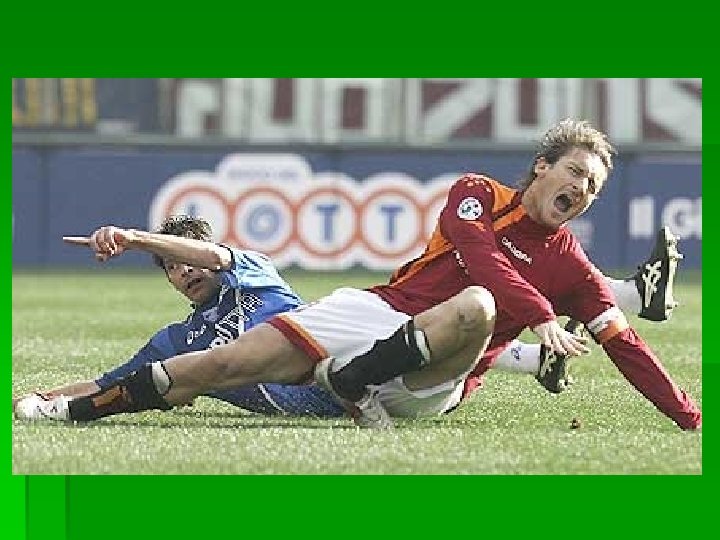
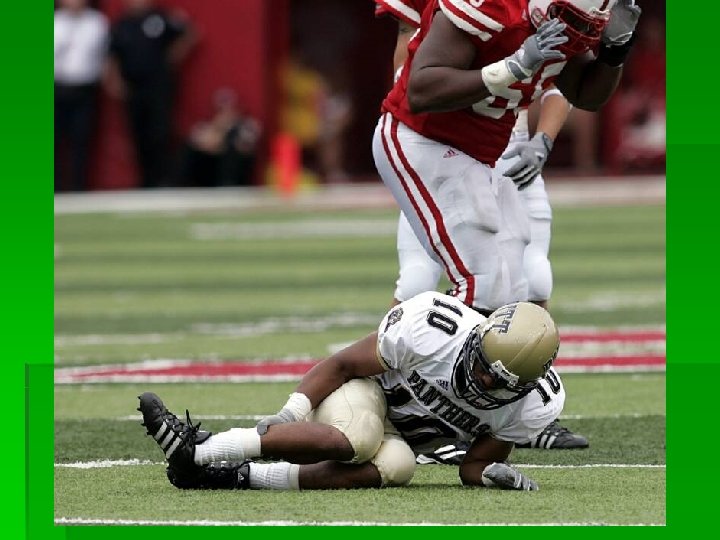
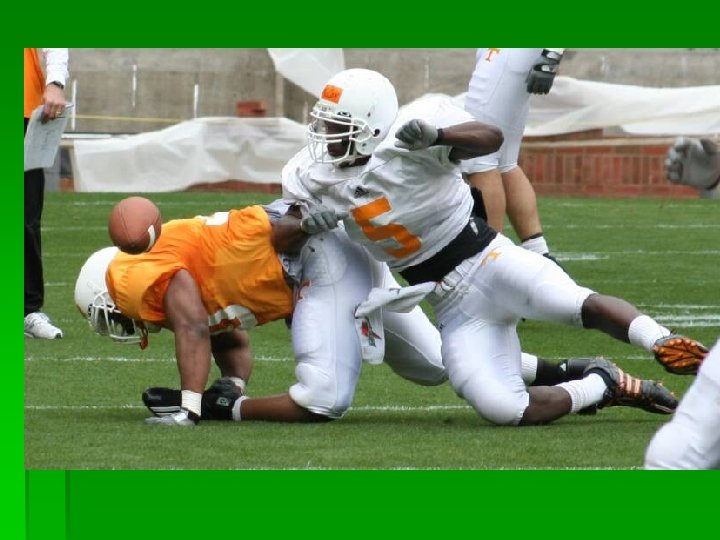
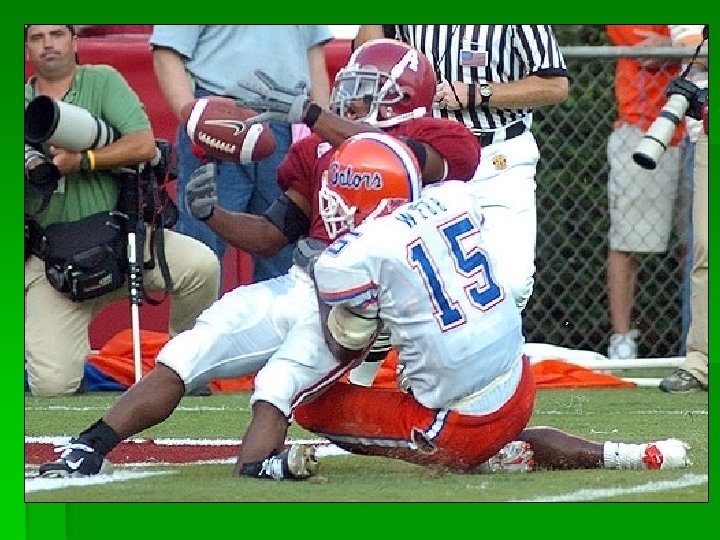
Injury Videos http: //www. csmfoundation. org/Educational_ Lower_Extremity. html
Bone Injuries § Dislocations § Fractures
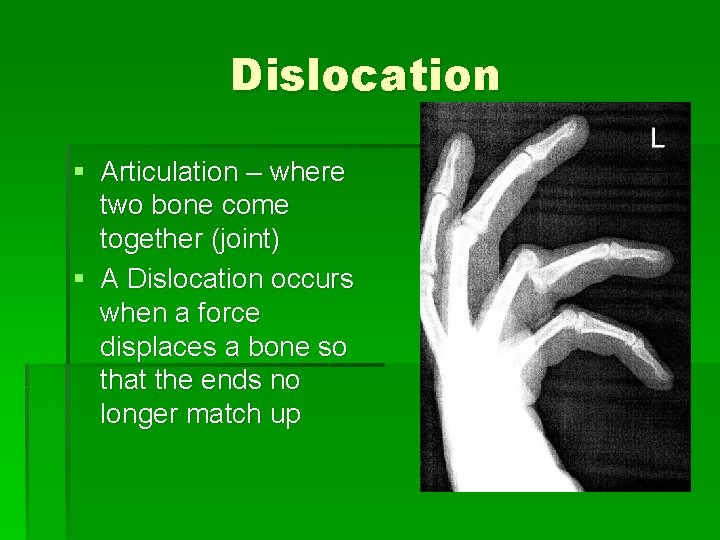
Dislocation § Articulation – where two bone come together (joint) § A Dislocation occurs when a force displaces a bone so that the ends no longer match up
Fractures § § § § Avulsion Stress Spiral Longitudinal Compression Oblique Comminuted § § § Greenstick Transverse Depressed Blowout Pathological Epiphyseal
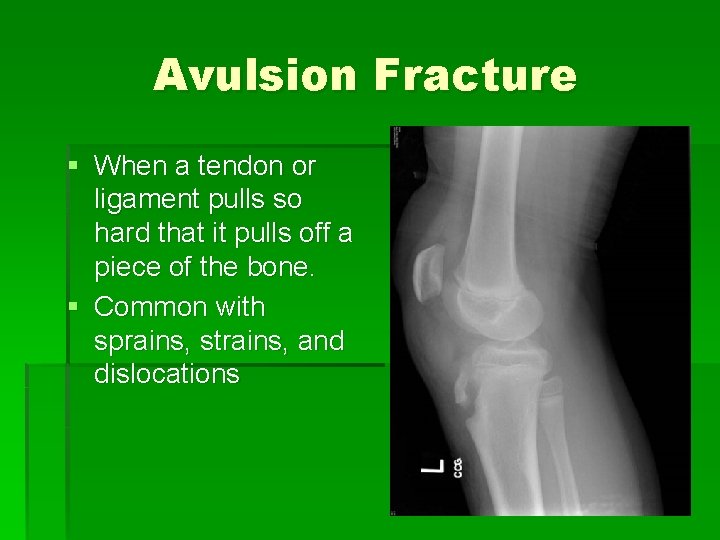
Avulsion Fracture § When a tendon or ligament pulls so hard that it pulls off a piece of the bone. § Common with sprains, strains, and dislocations
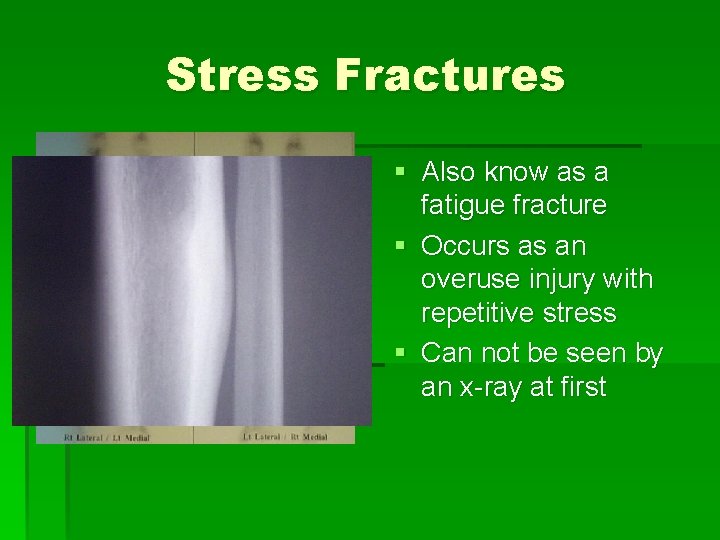
Stress Fractures § Also know as a fatigue fracture § Occurs as an overuse injury with repetitive stress § Can not be seen by an x-ray at first
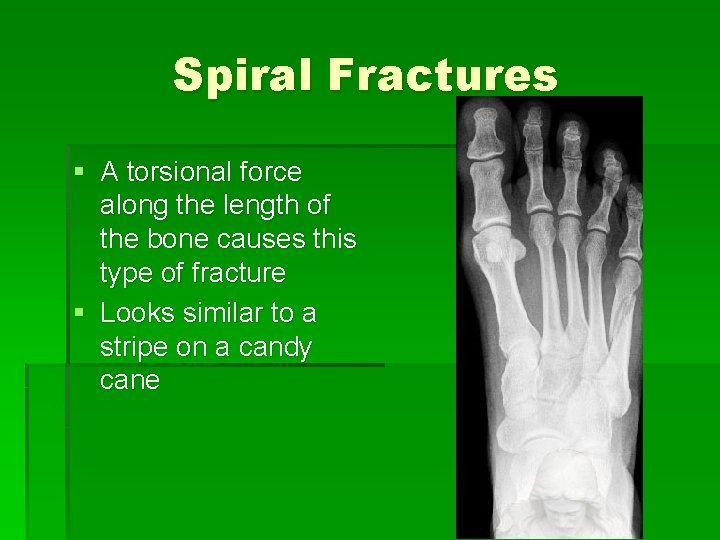
Spiral Fractures § A torsional force along the length of the bone causes this type of fracture § Looks similar to a stripe on a candy cane
Longitudinal Fracture § Fracture that runs the length of the bone § Usually occurs by an impact
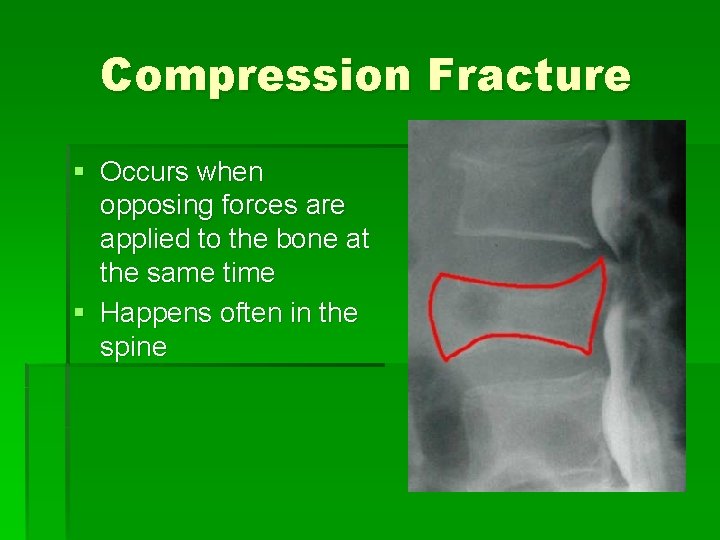
Compression Fracture § Occurs when opposing forces are applied to the bone at the same time § Happens often in the spine
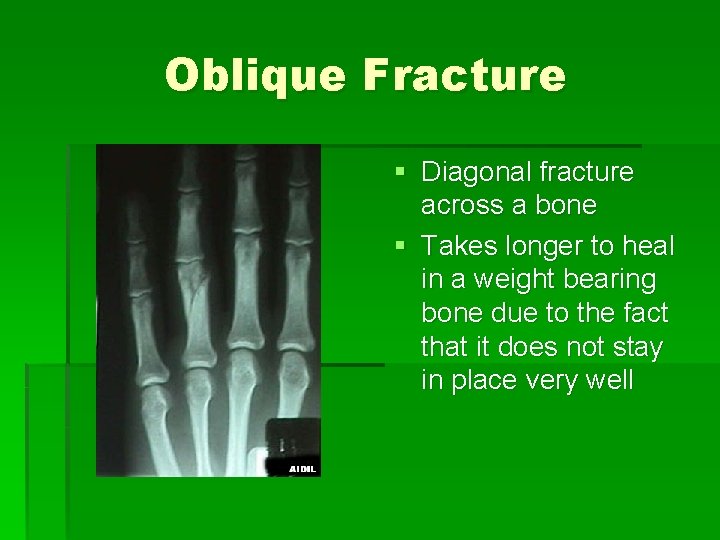
Oblique Fracture § Diagonal fracture across a bone § Takes longer to heal in a weight bearing bone due to the fact that it does not stay in place very well
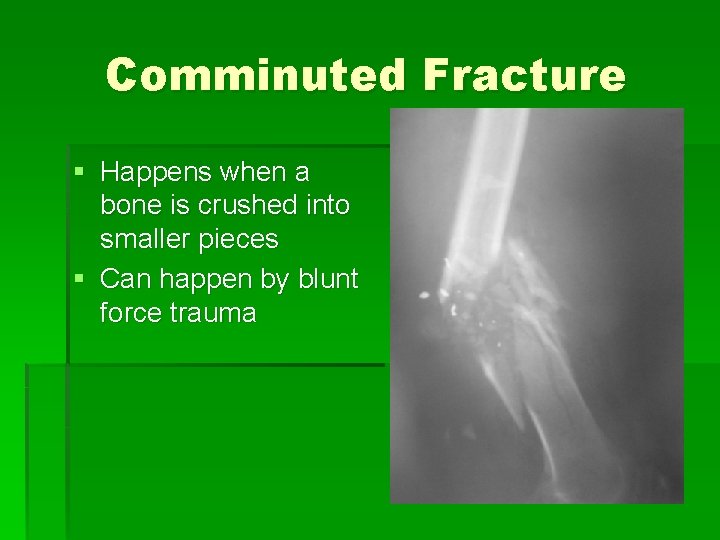
Comminuted Fracture § Happens when a bone is crushed into smaller pieces § Can happen by blunt force trauma
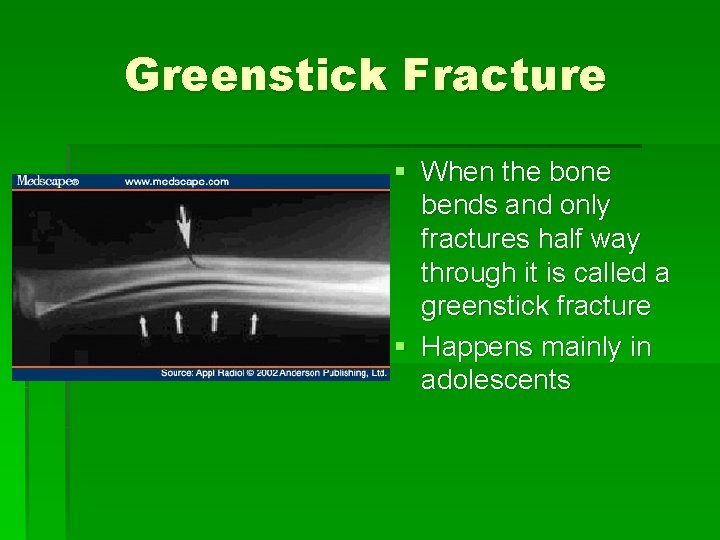
Greenstick Fracture § When the bone bends and only fractures half way through it is called a greenstick fracture § Happens mainly in adolescents
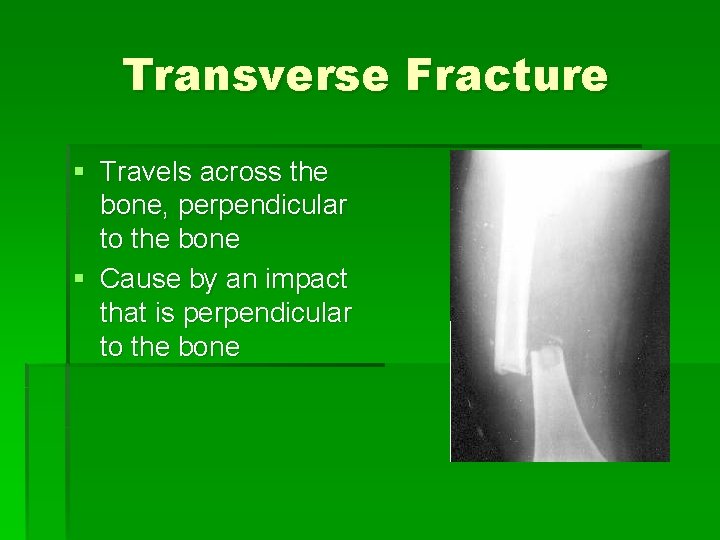
Transverse Fracture § Travels across the bone, perpendicular to the bone § Cause by an impact that is perpendicular to the bone
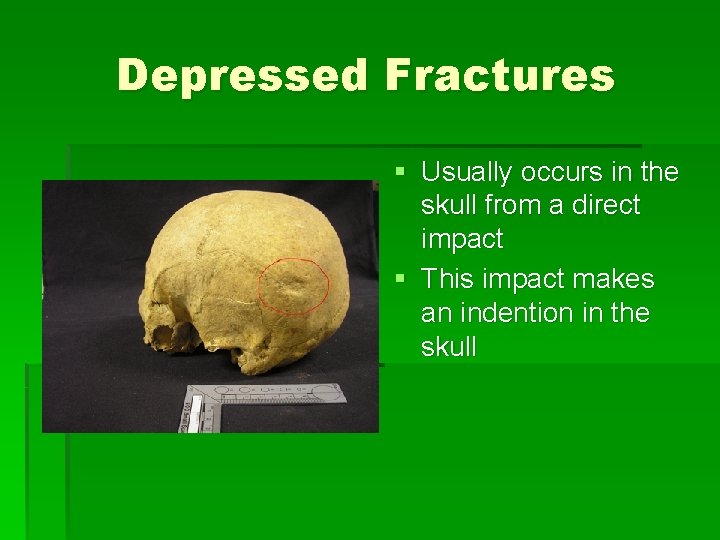
Depressed Fractures § Usually occurs in the skull from a direct impact § This impact makes an indention in the skull
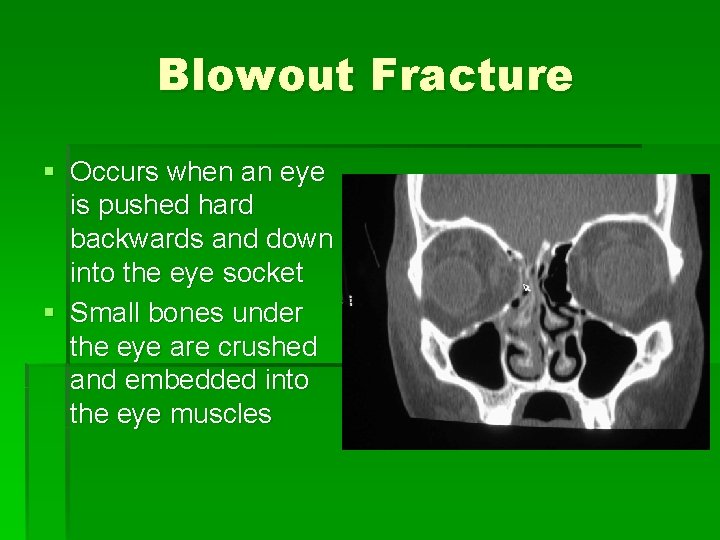
Blowout Fracture § Occurs when an eye is pushed hard backwards and down into the eye socket § Small bones under the eye are crushed and embedded into the eye muscles
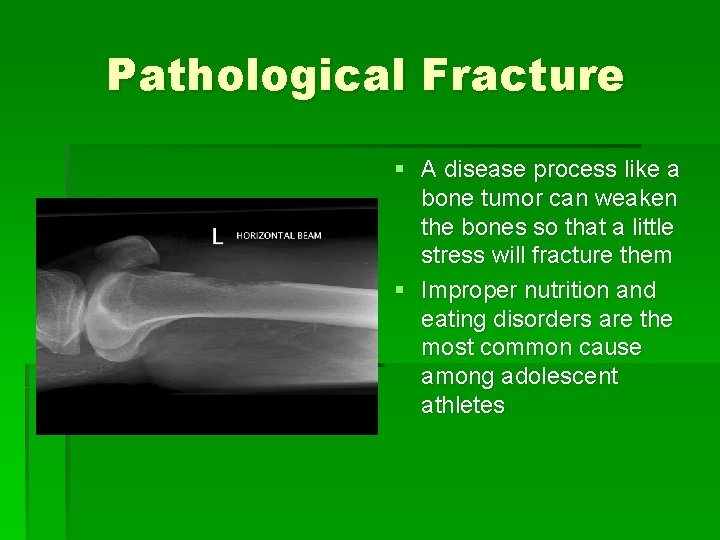
Pathological Fracture § A disease process like a bone tumor can weaken the bones so that a little stress will fracture them § Improper nutrition and eating disorders are the most common cause among adolescent athletes
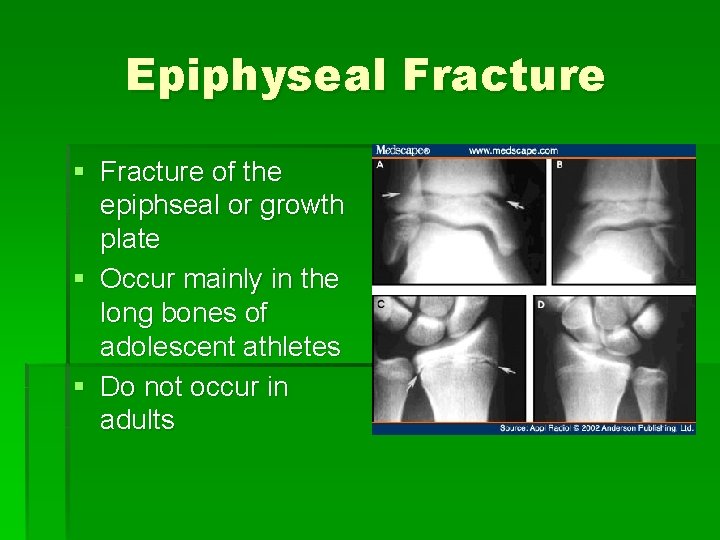
Epiphyseal Fracture § Fracture of the epiphseal or growth plate § Occur mainly in the long bones of adolescent athletes § Do not occur in adults
Bone Healing § Stage I: Acute § Stage II: Repair § Stage III: Remodeling
Stage I: Acute § Bleeding occurs in the area § Osteoclasts begin to “Eat” the debris or reabsorb it to the body § Osteoblasts begin to add new layers to the outside of the bone tissue § Continues for about four days
Stage II: Repair § Osteoclasts and osteoblasts continue to regenerate bone § A bony splint (fibrous callus) forms § The fibrous callus is transformed into a sleeve of hard callus bone § The process of turning callus into bone starts at about week three and continues for about three months
Stage III: Remodeling § Takes several years to complete § Callus is reabsorbed and replaced with a fibrous cord of bone that is formed around the fracture site § If a bone never heals it is called a nonunion fracture § Nonunion fractures are common in the scaphoid bone of the wrist
- Slides: 42