
Basics of Platting Keith Schauer P E Vice
Basics of Platting Keith Schauer, P. E. Vice President Doucet & Associates
Basic Land Use and Development Controls ◦ Zoning regulates the use of land. Zoning authority may be extended to areas within a municipality’s corporate limits. Once established, the Council has broad discretion to approve or disapprove requests for changes to the zoning map provided that the decision is not arbitrary and capricious. ◦ Subdivision and Platting regulations govern the subdivision and development of land. May be extended to a city’s extraterritorial jurisdiction. If plat application complies with Chapter 212 and municipality’s platting regulations it must be approved (No discretion here!).
Purpose of Platting Regulations Primary areas that the plat approval process addresses are: ingress and egress; water, sewer, drainage, electricity and other utilities; and public dedications necessary to support the perpetual operation and maintenance of all of these. Additional subdivision and platting regulations can include matters such as tree preservation; lighting regulations; parkland dedication; storm water detention; MS 4 water quality compliance; and infrastructure design and acceptance requirements.
Adoption of Subdivision Regulations: Plat & Subdivision Authority After a Public Hearing on the matter cities may adopt rules governing plats and subdivisions of land within the municipality’s jurisdiction to promote the health, safety, morals, or general welfare of the municipality and the safe, orderly, and healthful development of the city. Tex. Loc. Gov’t Code § 212. 002

When are Plats Required? LGC § 212. 004 ◦ Plats are required when an “Owner divides the tract into 2 or more parts to lay out a subdivision…to lay out suburban, building, or other lots, or to lay out streets, alleys, squares, parks or other parts of the tract intended to be dedicated to public use or for the use of purchasers or owners of lots fronting on or adjacent to the streets, alleys, squares, parks, or other parts. ”
EXCEPTION: When are Plats Required? LGC § 212. 004 ◦ Division of land into lots greater than Five Acres where each part has access and no public improvement is being dedicated. ◦ A municipality need not require platting for every division of land not covered by the scope of section 212. 004.
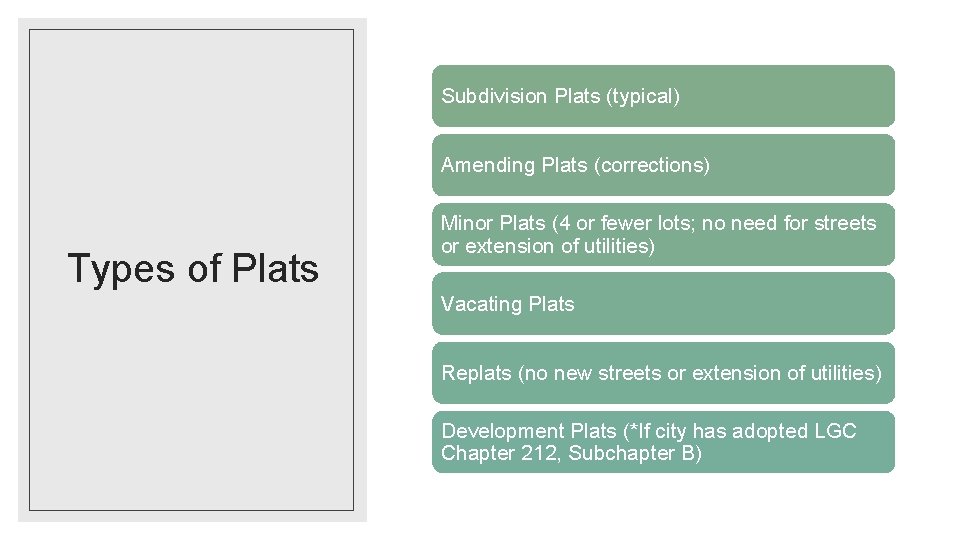
Subdivision Plats (typical) Amending Plats (corrections) Types of Plats Minor Plats (4 or fewer lots; no need for streets or extension of utilities) Vacating Plats Replats (no new streets or extension of utilities) Development Plats (*If city has adopted LGC Chapter 212, Subchapter B)
The municipal authority responsible for approving plats under this subchapter is the municipal planning commission or, if the municipality has no planning commission, the governing body of the municipality. The governing body by ordinance may require the approval of the governing body in addition to that of the municipal planning commission. The city may also delegate approval authority for amending plats, minor plats and replats involving 4 or fewer lots to a city employee. Authority Responsible for Approval Generally LGC §§ 212. 004, 212. 0065
Delegation of Approval LGC § 212. 0065 Types of Plats: ◦ Amending Plats (corrections) ◦ Minor Plats (4 or fewer lots; no need for streets or extension of utilities) ◦ Minor Replats (no new streets or extension of utilities) *No person shall disapprove the plat and shall refer any plat to the municipal authority responsible for approving plats.
Approval Procedure LGC § 212. 009 The municipal authority responsible for approving plats shall act on a plat within 30 days after the date the plat is filed!
A plat MUST be approved if: Standards for Approval LGC § 212. 010 It conforms to the general plan of the municipality and its current and future streets, alleys, parks, playgrounds, and public utility facilities; AND
Standards for Approval LGC § 212. 010 A plat MUST be approved if: The extension of the municipality and its roads, streets, and public highways within the municipality taking into account access to and extension of sewer and water mains and the instrumentalities of public utilities; AND
Standards for Approval LGC § 212. 010 A plat MUST be approved if: It conforms to the city’s subdivision regulations
Approval Procedure LGC § 212. 009 A plat is considered APPROVED by act of law unless it is denied within 30 days after the date the plat application is filed!
Enforcement Against the “Non-Platter”! LGC § 212. 012: Connection to Utilities • Unless land is properly platted (or exempt from platting) public utility providers are prohibited from providing services to the land. LGC § 212. 018: Enforcement in General • City authorized to file suit to enjoin the landowner from violating subdivision regulations OR “to recover damages from the owner of a tract of land in an amount adequate for the municipality to undertake any construction or other activity necessary to bring about compliance” with the subdivision regulations.
Apportionment of Municipal Infrastructure Costs LGC § 212. 904 ◦ If a municipality requires as a condition of approval for a property development project that the developer bear a portion of the costs of municipal infrastructure improvements by the making of dedications, the payment of fees, or the payment of construction costs, the developer's portion of the costs may not exceed the amount required for infrastructure improvements that are roughly proportionate to the proposed development as approved by a professional engineer who holds a license issued under Chapter 1001, Occupations Code, and is retained by the municipality.

Keith Schauer, P. E. Vice President kschauer@doucetenginners. com Questions? Main Office: 7401 B Hwy 71 West, Suite 160 | Austin, TX 78735 | (512) 583 -2600 Gonzales Location: 829 N. Saint Joseph St. | Gonzales, TX 78629 | (512) 823 -2672 San Antonio Location: 12045 Starcrest Drive | San Antonio, TX 78247 | (210) 469 -4564
- Slides: 17