
Basics of Lightning Protection for Communication Towers February
Basics of Lightning Protection for Communication Towers February 2018 Jim Bacher, WB 8 VSU Electronic Product Regulatory Consultant JB Consulting Presented by: Dr. Al Torres, KP 4 AQI
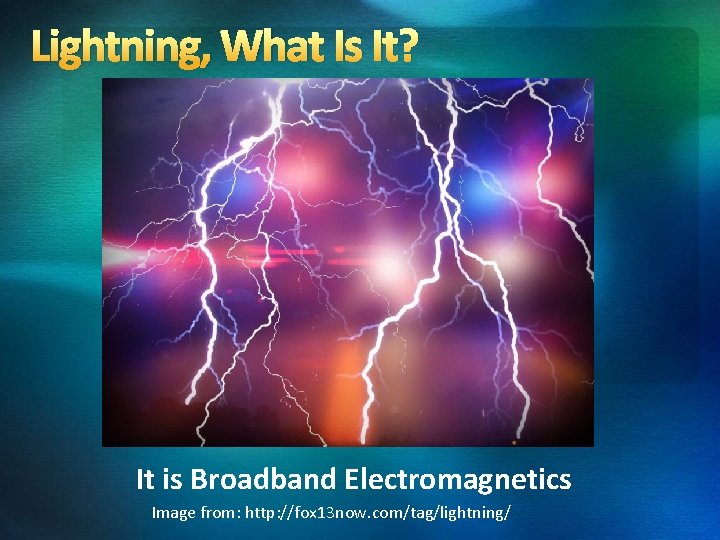
Lightning, What Is It? It is Broadband Electromagnetics Image from: http: //fox 13 now. com/tag/lightning/
Characteristics Three to four pulses per strike (10 to 170 µs total) First pulse averages about 18 k. A with 98% falling between 3 k. A and 140 k. A Subsequent pulses are half the current The Dayton Ohio area has about 50 thunderstorms a year; Gainesville, FL is lightning capital in the US If you have a 75 ft tower you are likely to have one strike a year (GE Technical Training) or more For this presentation we use 10 k. A for strike energy and 10 µs rise time From: ARRL book on Grounding and Bonding for the Amateur Radio Operator
How I learned the hard way 1984 Built a new House with builder pouring the concrete for the base of the tower Then the neighbors showed up when they saw the tower base And they were right, first 7 years we had direct strikes resulting in damage every year Then I read / implemented Polyphaser’s book on lightning protection and no more damage
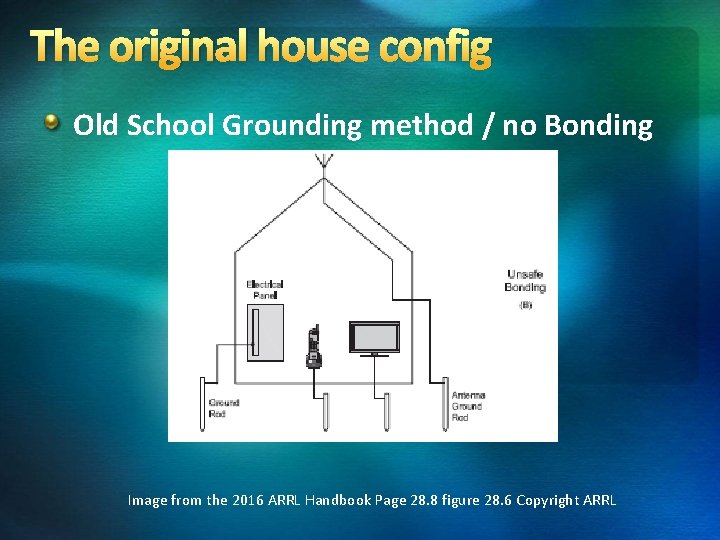
The original house config Old School Grounding method / no Bonding Image from the 2016 ARRL Handbook Page 28. 8 figure 28. 6 Copyright ARRL
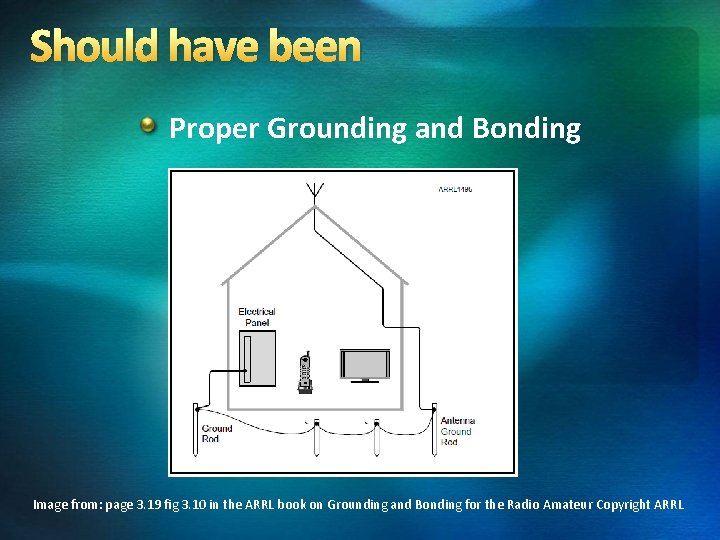
Should have been Proper Grounding and Bonding Image from: page 3. 19 fig 3. 10 in the ARRL book on Grounding and Bonding for the Radio Amateur Copyright ARRL
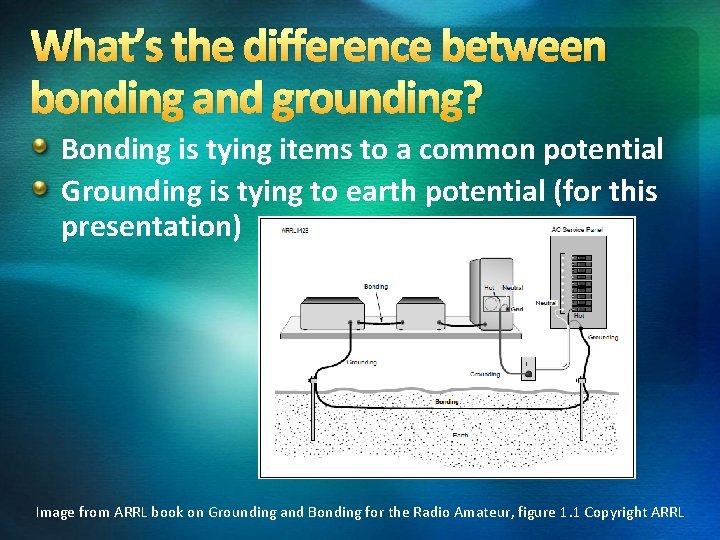
What’s the difference between bonding and grounding? Bonding is tying items to a common potential Grounding is tying to earth potential (for this presentation) Image from ARRL book on Grounding and Bonding for the Radio Amateur, figure 1. 1 Copyright ARRL
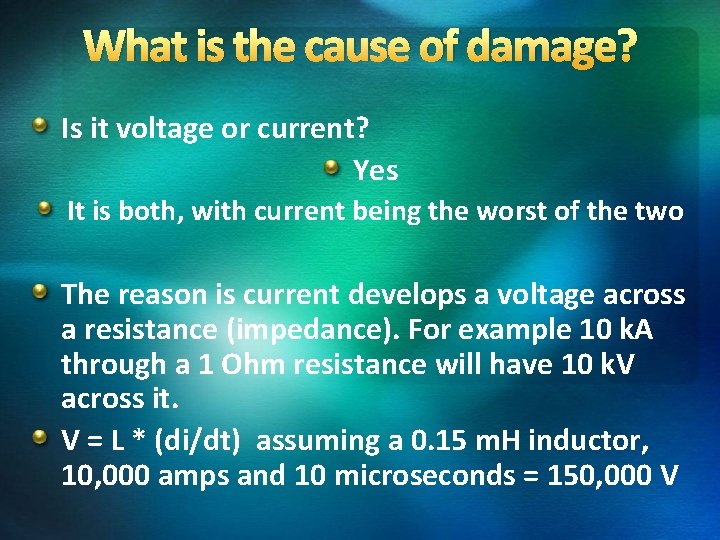
What is the cause of damage? Is it voltage or current? Yes It is both, with current being the worst of the two The reason is current develops a voltage across a resistance (impedance). For example 10 k. A through a 1 Ohm resistance will have 10 k. V across it. V = L * (di/dt) assuming a 0. 15 m. H inductor, 10, 000 amps and 10 microseconds = 150, 000 V
Resistance is ……. Resistance is both a friend a enemy In a way lightning protection breaks down to just Ohm’s law However you have to consider inductance as well as just plain resistance, so it is impedance verse just resistance. For example: 0. 5 inch coax about 100 ft long is about 51 µH A tower is probably about 5 µH per 10 ft. Tower Joint resistance is 0. 001 ohms http: //www. wvraclub. org/technical-documents/grounding-principles/
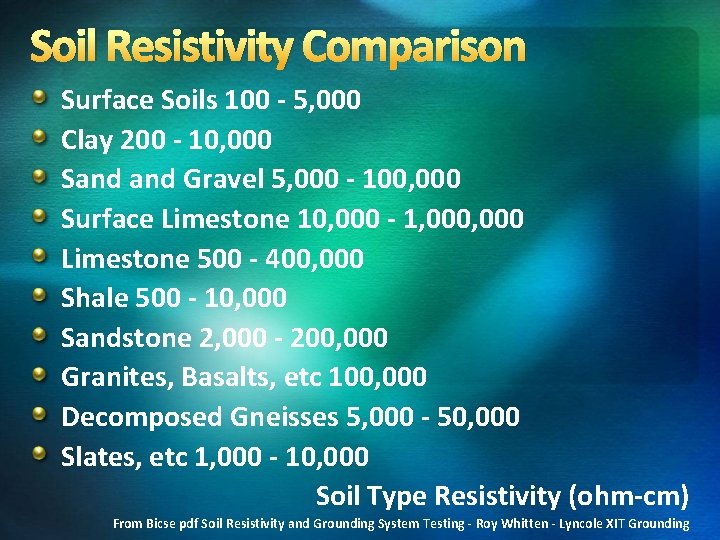
Soil Resistivity Comparison Surface Soils 100 - 5, 000 Clay 200 - 10, 000 Sand Gravel 5, 000 - 100, 000 Surface Limestone 10, 000 - 1, 000 Limestone 500 - 400, 000 Shale 500 - 10, 000 Sandstone 2, 000 - 200, 000 Granites, Basalts, etc 100, 000 Decomposed Gneisses 5, 000 - 50, 000 Slates, etc 1, 000 - 10, 000 Soil Type Resistivity (ohm-cm) From Bicse pdf Soil Resistivity and Grounding System Testing - Roy Whitten - Lyncole XIT Grounding
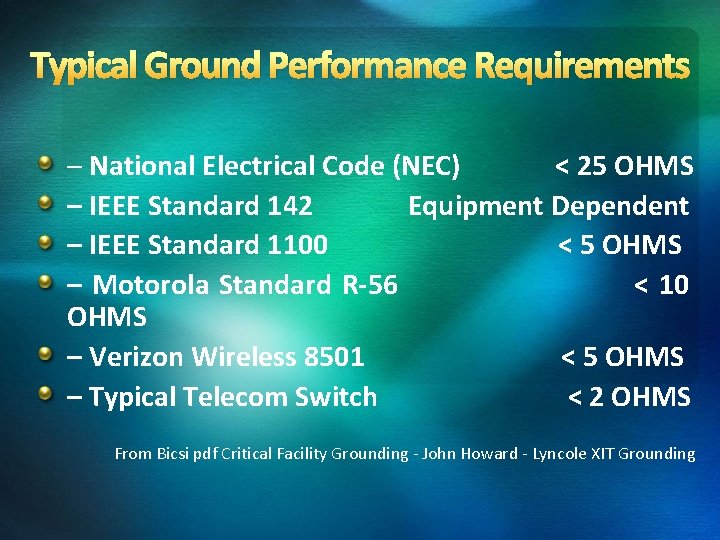
Typical Ground Performance Requirements – National Electrical Code (NEC) < 25 OHMS – IEEE Standard 142 Equipment Dependent – IEEE Standard 1100 < 5 OHMS – Motorola Standard R-56 < 10 OHMS – Verizon Wireless 8501 < 5 OHMS – Typical Telecom Switch < 2 OHMS From Bicsi pdf Critical Facility Grounding - John Howard - Lyncole XIT Grounding
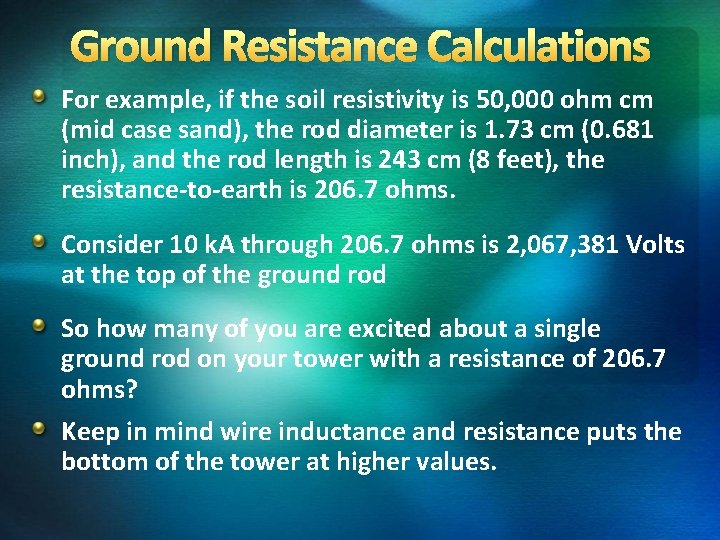
Ground Resistance Calculations For example, if the soil resistivity is 50, 000 ohm cm (mid case sand), the rod diameter is 1. 73 cm (0. 681 inch), and the rod length is 243 cm (8 feet), the resistance-to-earth is 206. 7 ohms. Consider 10 k. A through 206. 7 ohms is 2, 067, 381 Volts at the top of the ground rod So how many of you are excited about a single ground rod on your tower with a resistance of 206. 7 ohms? Keep in mind wire inductance and resistance puts the bottom of the tower at higher values.
Ground Resistance Calculations Page 2 If soil resistance is 5, 000 ohm cm then resistanceto-earth is 20. 67 Ohms If soil resistance is 2, 500 ohm cm then resistanceto-earth is 10. 34 Ohms If soil resistance is 100 ohm cm then resistance-toearth is 0. 41 Ohms How excited are you with 1 ground rod at 0. 41 Ohms with 10 k. A current puts the bottom of the tower 4, 135 V? Or three ground rods at 0. 14 Ohms or 1, 378 V?
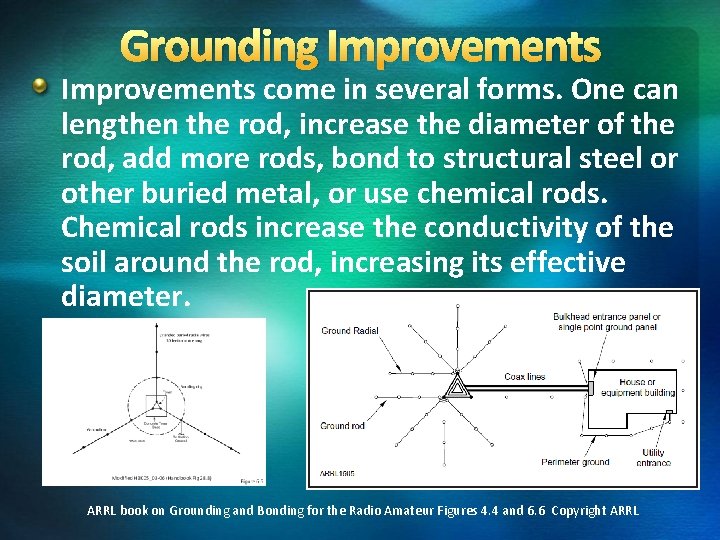
Grounding Improvements come in several forms. One can lengthen the rod, increase the diameter of the rod, add more rods, bond to structural steel or other buried metal, or use chemical rods. Chemical rods increase the conductivity of the soil around the rod, increasing its effective diameter. ARRL book on Grounding and Bonding for the Radio Amateur Figures 4. 4 and 6. 6 Copyright ARRL
Protectors and Misc. Use coax protectors From Polyphaser, Nextek or Industrial Communications Engineers If possible use quarterwave shorting stubs at VHF+ Use AC Line Surge protectors – use only Tripplite, SGL Waber or Polyphaser Only use Safety Certified products IE UL, Nemko, CSA, ETL, etc. Use a AC Line Surge protector in the service panel (installed by a licensed electrician) Use only safety certified power supplies that have a CE mark, such as Samlex Guy wires need to be grounded
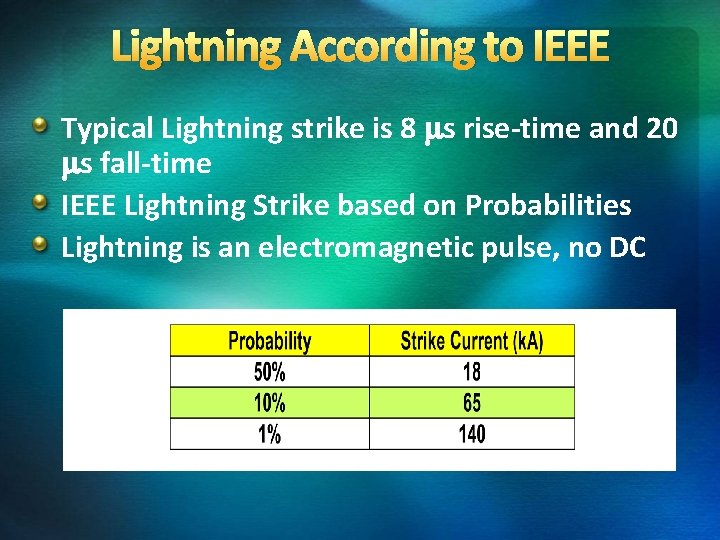
Lightning According to IEEE Typical Lightning strike is 8 s rise-time and 20 s fall-time IEEE Lightning Strike based on Probabilities Lightning is an electromagnetic pulse, no DC
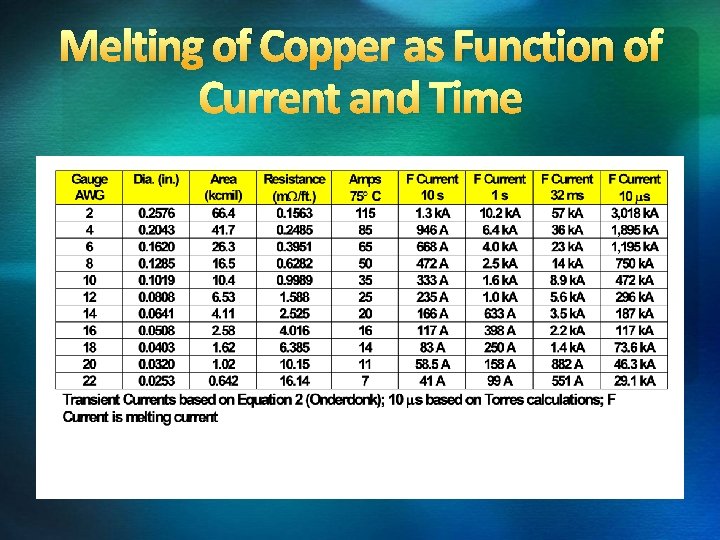
Melting of Copper as Function of Current and Time
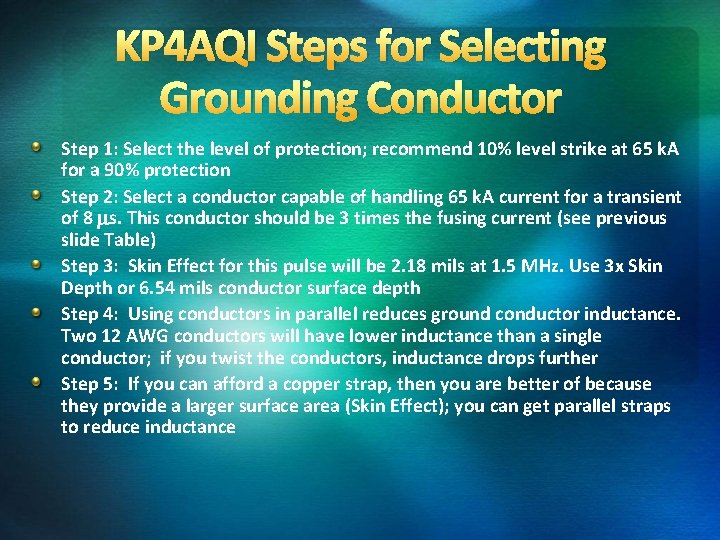
KP 4 AQI Steps for Selecting Grounding Conductor Step 1: Select the level of protection; recommend 10% level strike at 65 k. A for a 90% protection Step 2: Select a conductor capable of handling 65 k. A current for a transient of 8 s. This conductor should be 3 times the fusing current (see previous slide Table) Step 3: Skin Effect for this pulse will be 2. 18 mils at 1. 5 MHz. Use 3 x Skin Depth or 6. 54 mils conductor surface depth Step 4: Using conductors in parallel reduces ground conductor inductance. Two 12 AWG conductors will have lower inductance than a single conductor; if you twist the conductors, inductance drops further Step 5: If you can afford a copper strap, then you are better of because they provide a larger surface area (Skin Effect); you can get parallel straps to reduce inductance
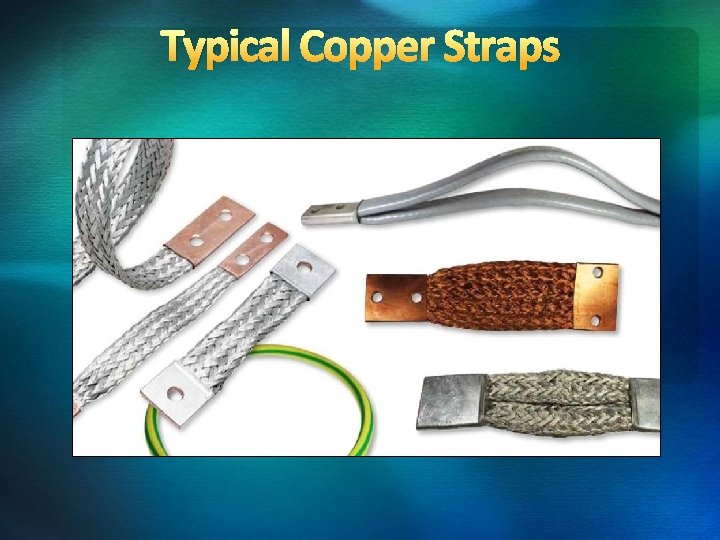
Typical Copper Straps
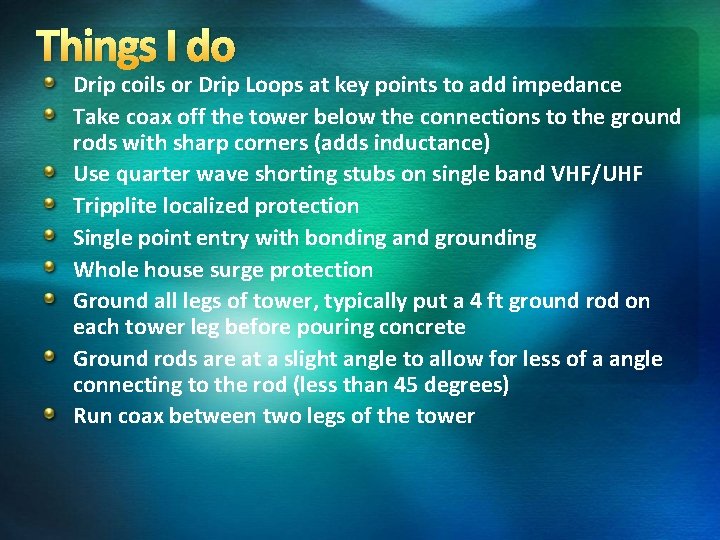
Things I do Drip coils or Drip Loops at key points to add impedance Take coax off the tower below the connections to the ground rods with sharp corners (adds inductance) Use quarter wave shorting stubs on single band VHF/UHF Tripplite localized protection Single point entry with bonding and grounding Whole house surge protection Ground all legs of tower, typically put a 4 ft ground rod on each tower leg before pouring concrete Ground rods are at a slight angle to allow for less of a angle connecting to the rod (less than 45 degrees) Run coax between two legs of the tower
Summary Single point of entry Bonding is a superb thing Lots of ground rods Minimize resistance and impedance to ground Use heavy gauge or larger wires or copper straps Ground every leg of the tower Ground guy wires Get out of the shack during storms Think safety This presentation only scratches the surface Lightning is very complex
Special Thanks to H Ward Silver, N 0 AX for supplying the images for this presentation that are in his book Dr Al. Torres, KP 4 AQI for his additional information And The reviewers: John Monteith, WB 8 YXD along with H Ward Silver, N 0 AX and Dr. Al Torres, KP 4 AQI
Questions? You can email me at: WB 8 VSU@arrl. net Or j. bacher@ieee. org Or jim@trc. guru (JB Consulting) Thanks for listening https: //www. the-regulatory-compliance. guru JBRC Consulting LLC dba JB Consulting
- Slides: 23