
Basics of Fluorescence Microscopy Gza Antalffy Ph D
Basics of Fluorescence Microscopy Géza Antalffy Ph. D. Confocal and Fluorescence Scanning Specialist
Overview - outline Immunofluorescent Staining and Probes Fluorescence in a Nutshell Light Source, Fluorescent Filters and Dichroic Mirrors Conventional Fluorescent Microscopy
Immunofluorescent Staining and Probes Immunofluorescent probes mark well-identified organells in the cell, (e. g. DAPI Nucleus, Mito. Tracker – Mithocondria). In cell biology and molecular biology, a genes encoding a fluorescent protein (e. g. EGFP) are frequently used as reporters of expression. Immunofluorescent staining makes use of antibodies to locate and identify patterns of protein expression in cells or tissues. Primary antibody binds to the antigen (protein of interest), the antibody-antigen complex is bound by a secondary antibody conjugated to a fluorophore, and allows detection of the antigen.

Fluorescence in a Nutshell Upon absorption of high energy light, the fluorochrome emits light at its own characteristic wavelength.
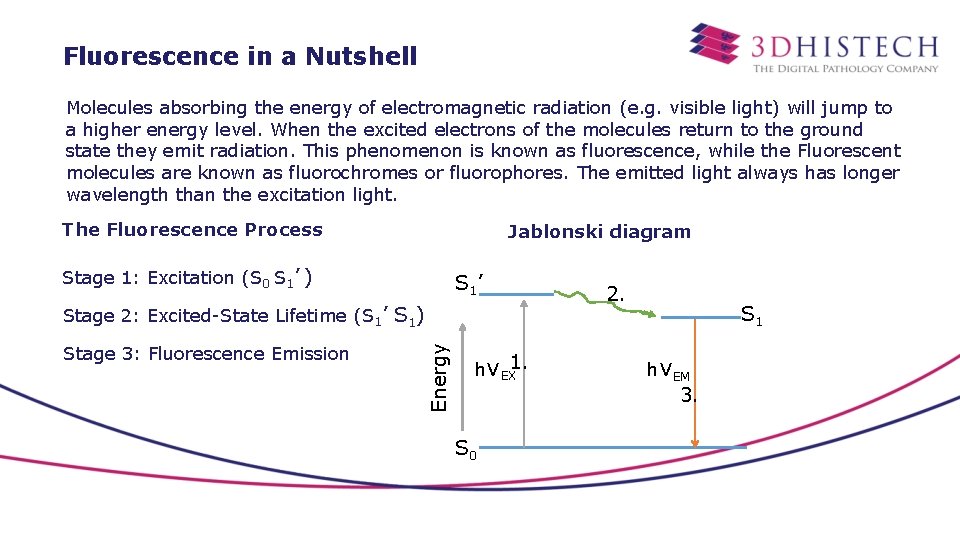
Fluorescence in a Nutshell Molecules absorbing the energy of electromagnetic radiation (e. g. visible light) will jump to a higher energy level. When the excited electrons of the molecules return to the ground state they emit radiation. This phenomenon is known as fluorescence, while the Fluorescent molecules are known as fluorochromes or fluorophores. The emitted light always has longer wavelength than the excitation light. The Fluorescence Process Jablonski diagram Stage 1: Excitation (S 0 S 1’ ) S 1’ Stage 3: Fluorescence Emission Energy Stage 2: Excited-State Lifetime (S 1’ S 1) hνEX 1. S 0 2. S 1 hνEM 3.
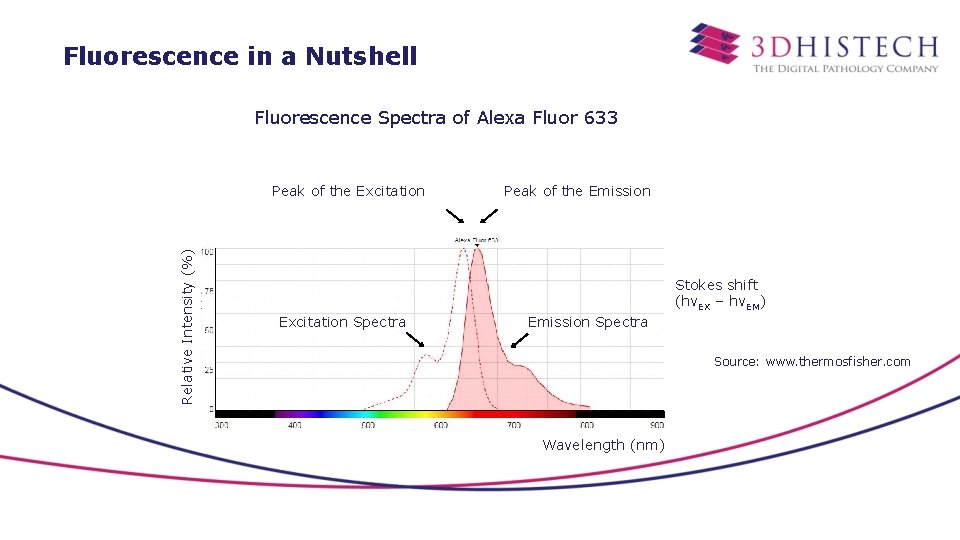
Fluorescence in a Nutshell Fluorescence Spectra of Alexa Fluor 633 Relative Intensity (%) Peak of the Excitation Peak of the Emission Stokes shift (hνEX – hνEM) Excitation Spectra Emission Spectra Source: www. thermosfisher. com Wavelength (nm)

Fluorescence in a Nutshell Anatomy of Fluorescence Spectrum – The Excitation Spectrum Relative Intensity (%) Excitation Spectrum of Alexa Fluor 633 Optimum instrument setup should deliver excitation light as close to the peak of the excitation spectrum of the fluorophore and overlap the spectrum as possible. Wavelength (nm)
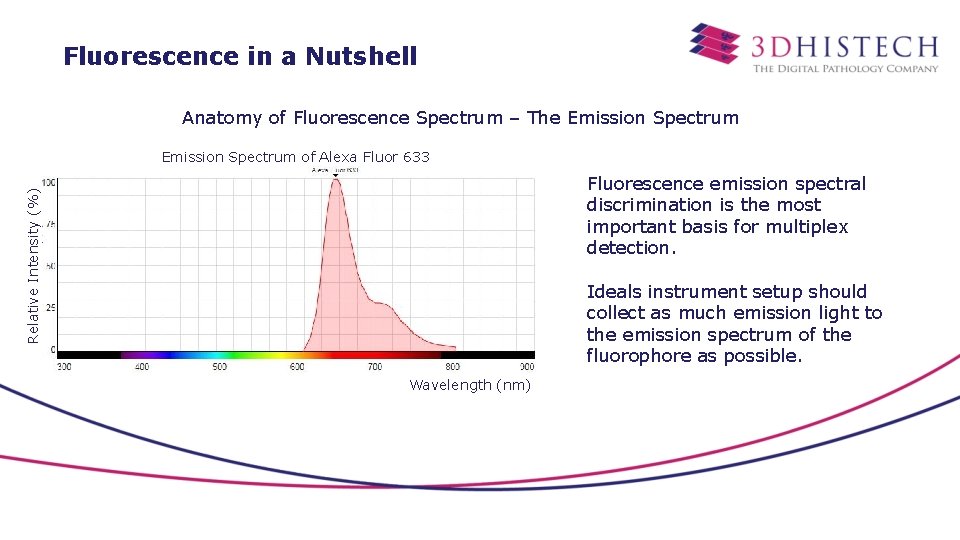
Fluorescence in a Nutshell Anatomy of Fluorescence Spectrum – The Emission Spectrum of Alexa Fluor 633 Relative Intensity (%) Fluorescence emission spectral discrimination is the most important basis for multiplex detection. Ideals instrument setup should collect as much emission light to the emission spectrum of the fluorophore as possible. Wavelength (nm)

Light Source, Fluorescent Filters and Dichroic Mirrors The spectrum characteristics of the light source defines the types of the fluorophores to be used. The spectra characteristics of the used fluorophores can be overlayed with the spectral profile of a fluorecence filter set. The spectra characteristics of the light source and the filters define the number of the fluorophores can be used.

Light Source Lumencor Spectra - Brighter than Metal Halid - Extra Flexibility and high power - 15 000 hours lifetime

Light Source Lumencor Sola Lamp

Fluorescent Filters and Dichroic Mirrors Anatomy of the Fluorescent filter - component Dichroic mirror Emission filter Excitation filter Source: www. chroma. com
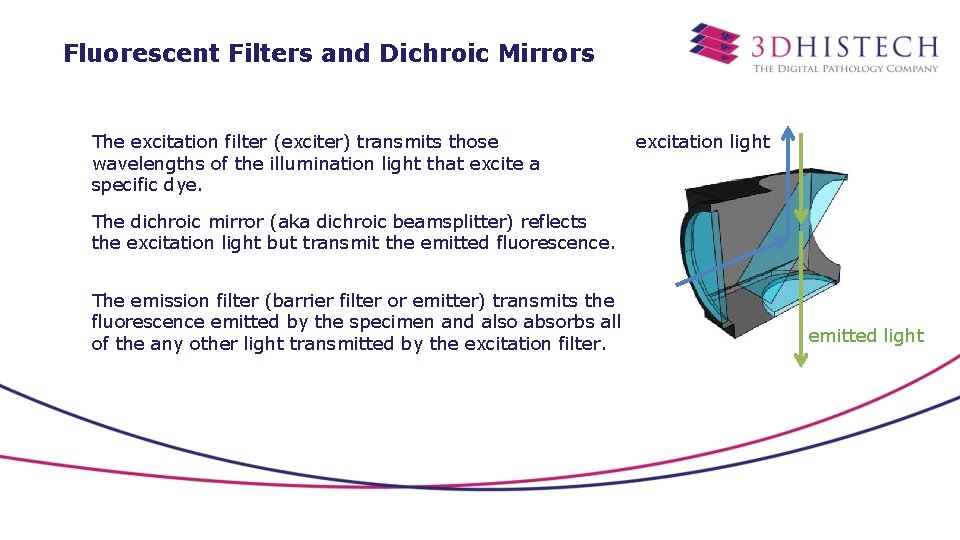
Fluorescent Filters and Dichroic Mirrors The excitation filter (exciter) transmits those wavelengths of the illumination light that excite a specific dye. excitation light The dichroic mirror (aka dichroic beamsplitter) reflects the excitation light but transmit the emitted fluorescence. The emission filter (barrier filter or emitter) transmits the fluorescence emitted by the specimen and also absorbs all of the any other light transmitted by the excitation filter. emitted light
Conventional Fluorescent Microscopy Simplified Optics of a Fluorescent Microscope A light source is used to illuminate the sample with light through the objective lens.
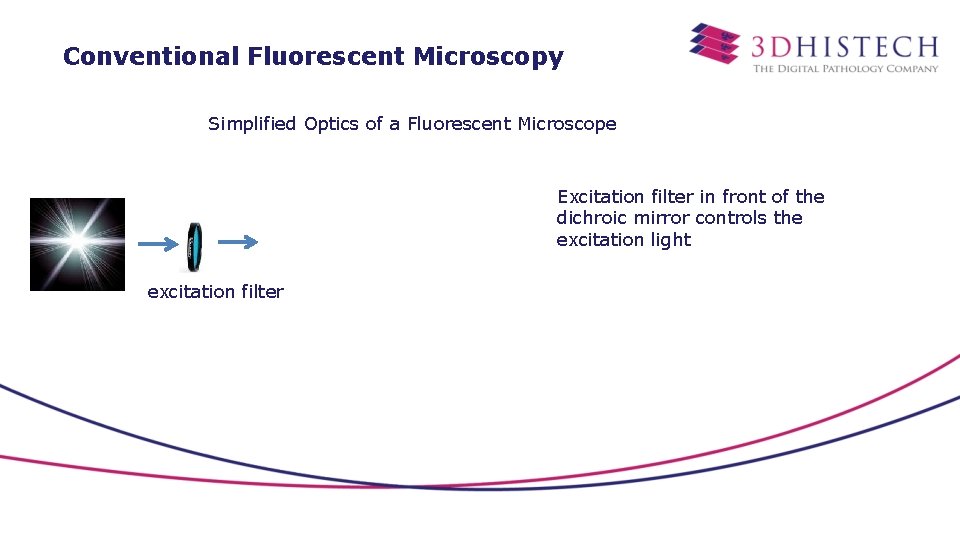
Conventional Fluorescent Microscopy Simplified Optics of a Fluorescent Microscope Excitation filter in front of the dichroic mirror controls the excitation light excitation filter
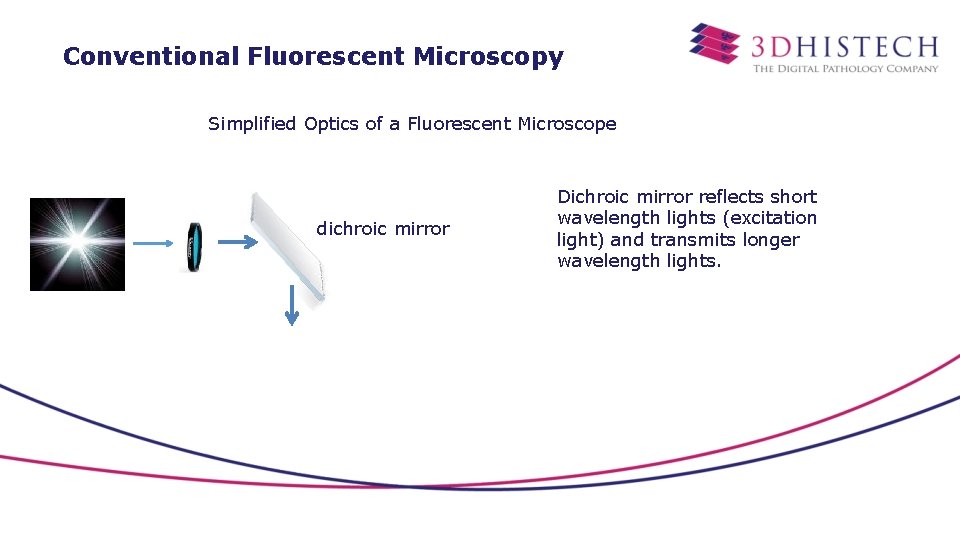
Conventional Fluorescent Microscopy Simplified Optics of a Fluorescent Microscope dichroic mirror Dichroic mirror reflects short wavelength lights (excitation light) and transmits longer wavelength lights.
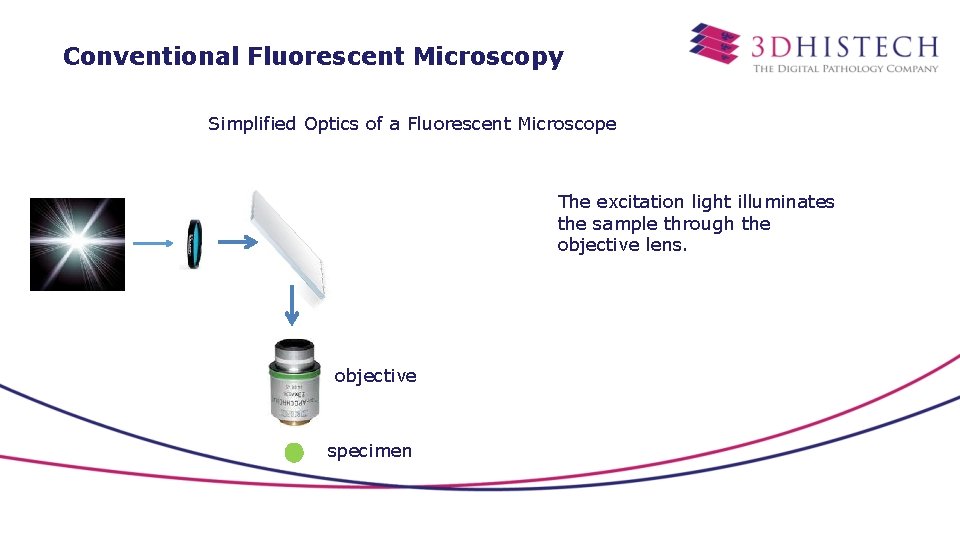
Conventional Fluorescent Microscopy Simplified Optics of a Fluorescent Microscope The excitation light illuminates the sample through the objective lens. objective specimen
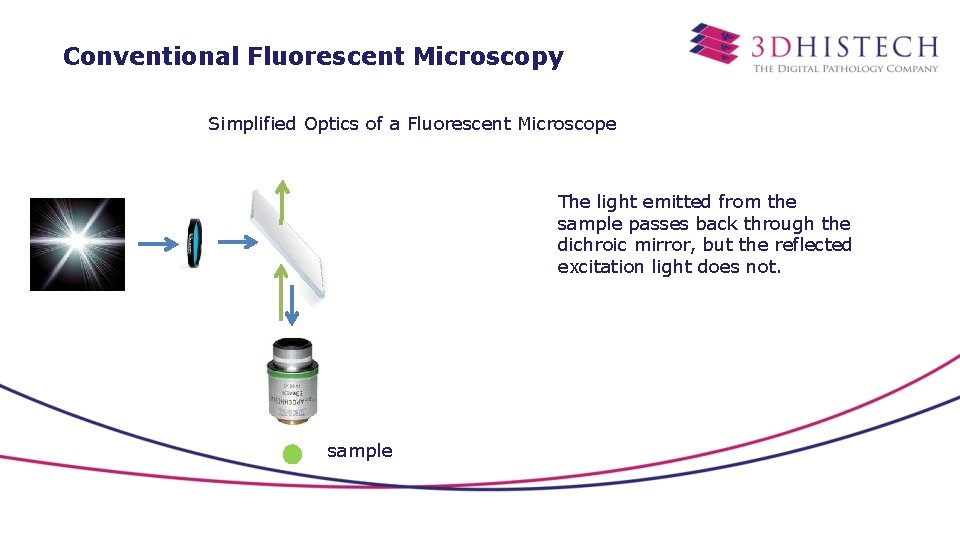
Conventional Fluorescent Microscopy Simplified Optics of a Fluorescent Microscope The light emitted from the sample passes back through the dichroic mirror, but the reflected excitation light does not. sample
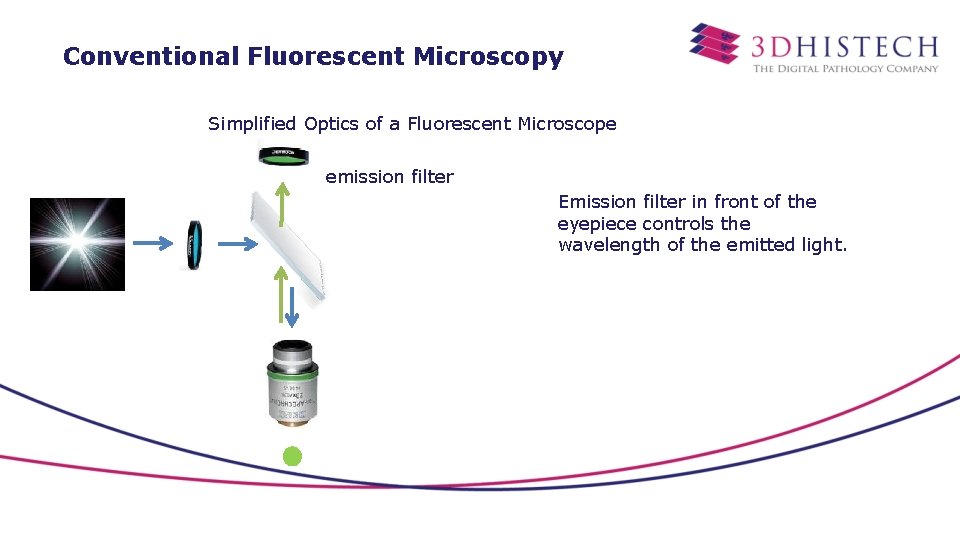
Conventional Fluorescent Microscopy Simplified Optics of a Fluorescent Microscope emission filter Emission filter in front of the eyepiece controls the wavelength of the emitted light.

Thank you for your attention! Visit our website and follow our social media channels:
- Slides: 20