
Basics of Crop Protection Pest Control Goals Prevention

Basics of Crop Protection
Pest Control Goals • Prevention - goal when pest presence or abundance can be predicted • Suppression - goal is to reduce pest population to an acceptable level • Eradication - rare goal, difficult to achieve, more common indoors and controlling foreign pests

Types of Pests Insects Bacteria Viruses Weeds Climate Mites Fungi Nematodes Wildlife Man-made
Pest Identification • As a producer, you need to be familiar with the pests that you are likely to encounter. • You need to know: - the physical features of the pests - their development and biology - characteristics of their damage - what your control goal is
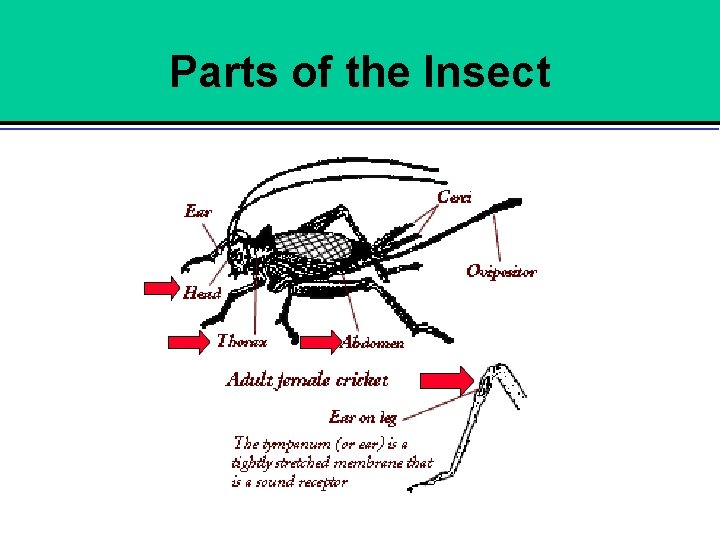
Parts of the Insect
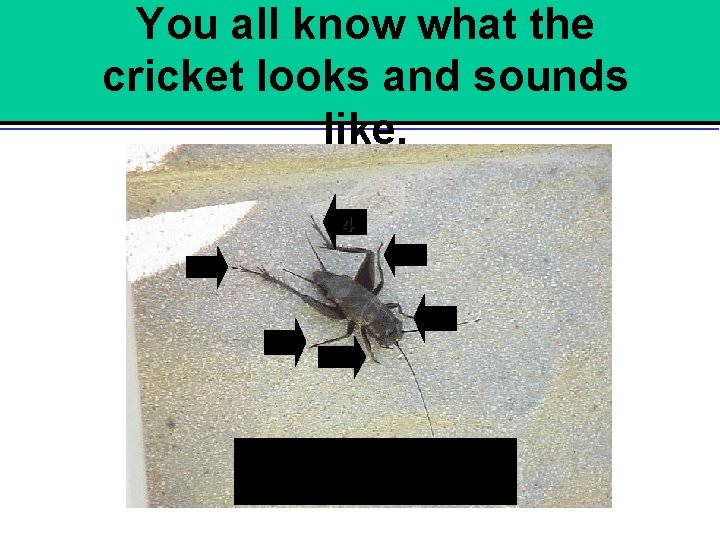
You all know what the cricket looks and sounds like. 4 5 1 2 6 3 Insects have six legs; let’s count them on this cricket.
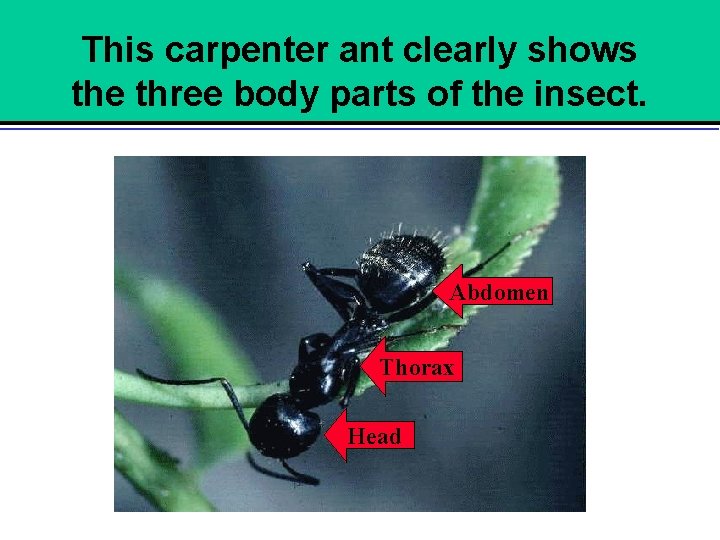
This carpenter ant clearly shows the three body parts of the insect. Abdomen Thorax Head
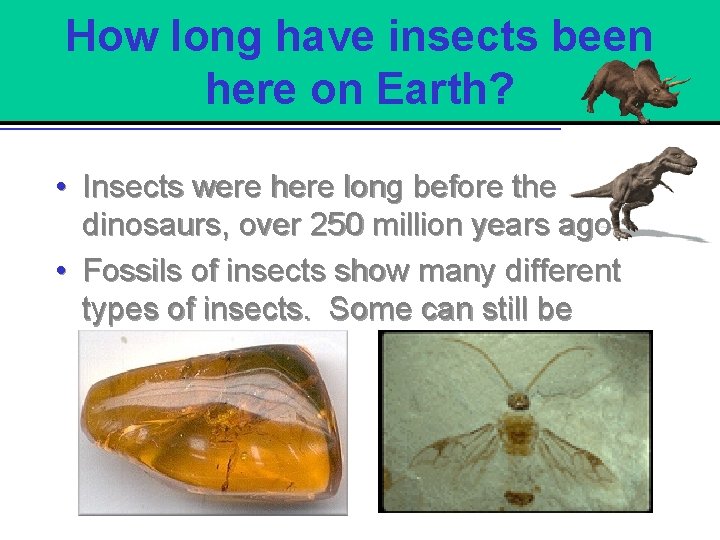
How long have insects been here on Earth? • Insects were here long before the dinosaurs, over 250 million years ago. • Fossils of insects show many different types of insects. Some can still be found today.
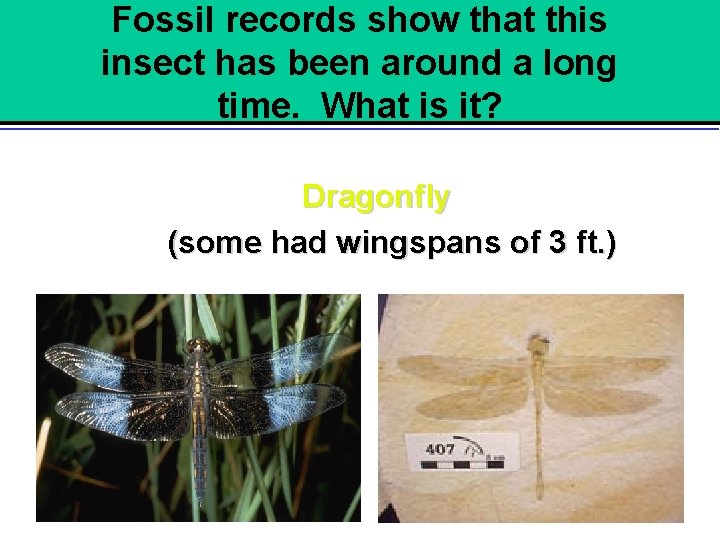
Fossil records show that this insect has been around a long time. What is it? Dragonfly (some had wingspans of 3 ft. )
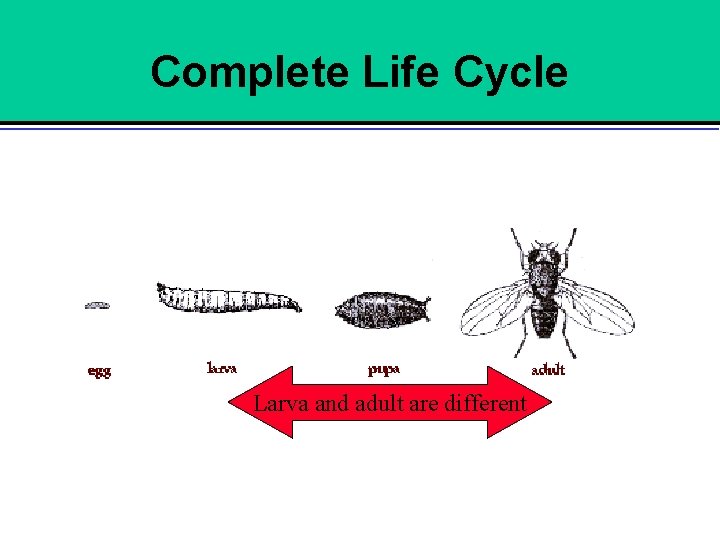
Complete Life Cycle Larva and adult are different
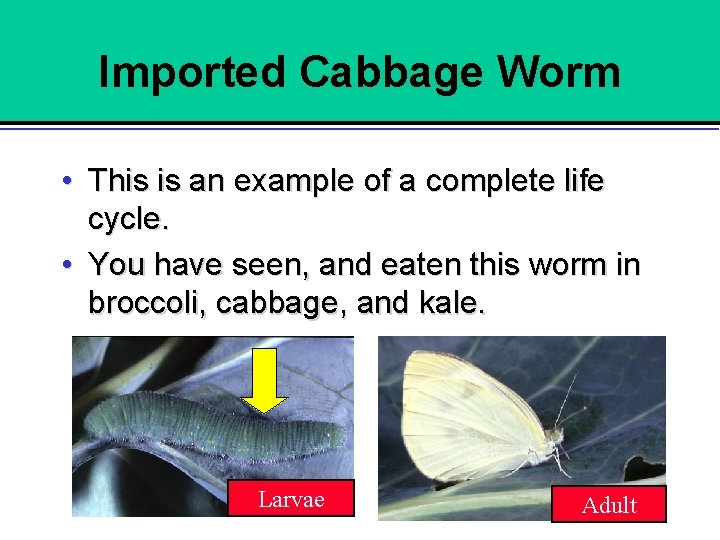
Imported Cabbage Worm • This is an example of a complete life cycle. • You have seen, and eaten this worm in broccoli, cabbage, and kale. Larvae Adult
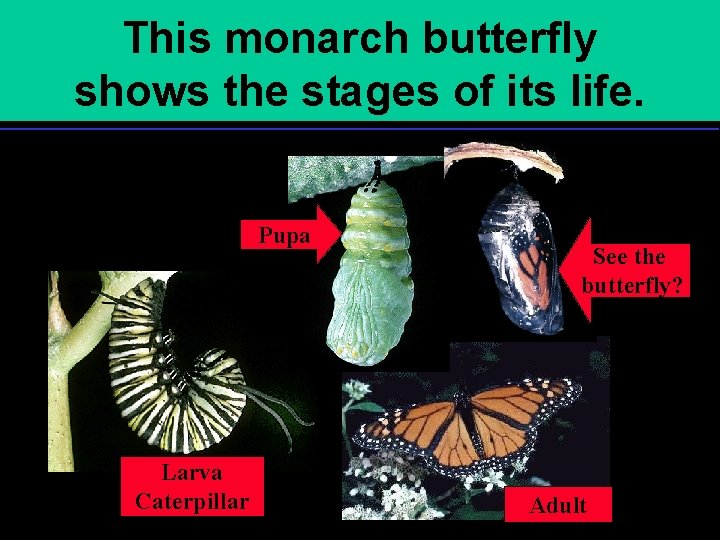
This monarch butterfly shows the stages of its life. Pupa Larva Caterpillar See the butterfly? Adult
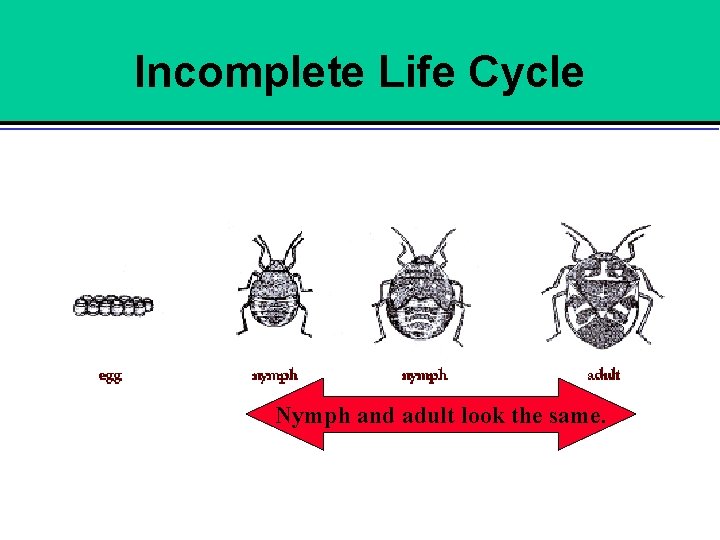
Incomplete Life Cycle Nymph and adult look the same.
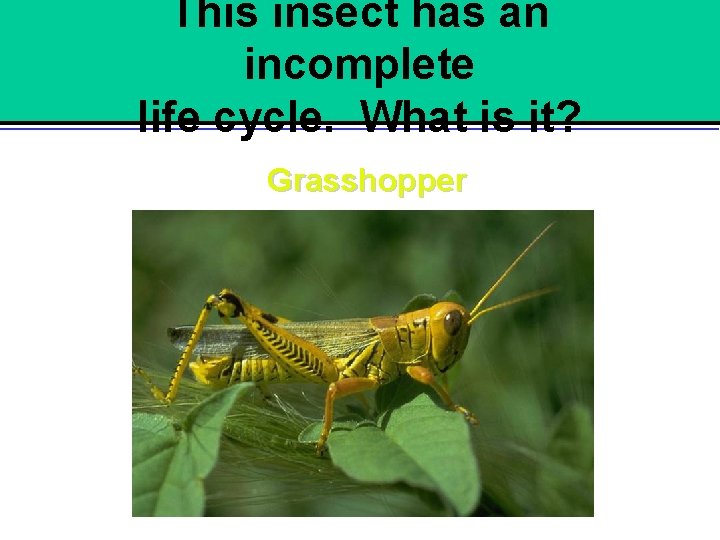
This insect has an incomplete life cycle. What is it? Grasshopper
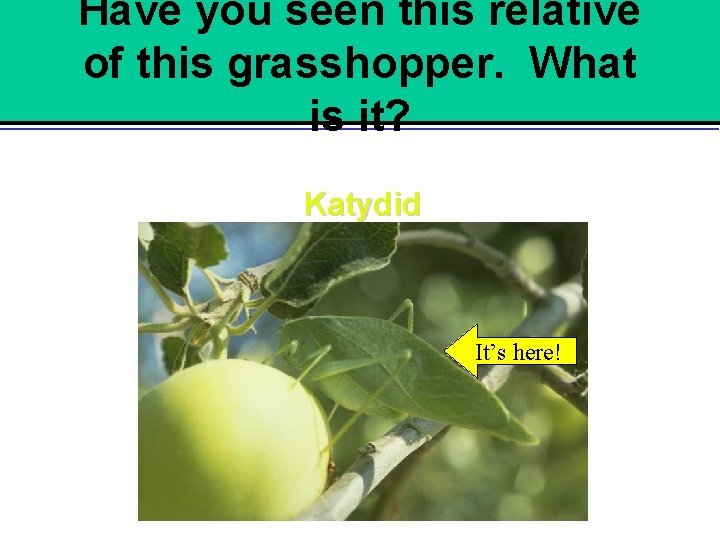
Have you seen this relative of this grasshopper. What is it? Katydid It’s here!
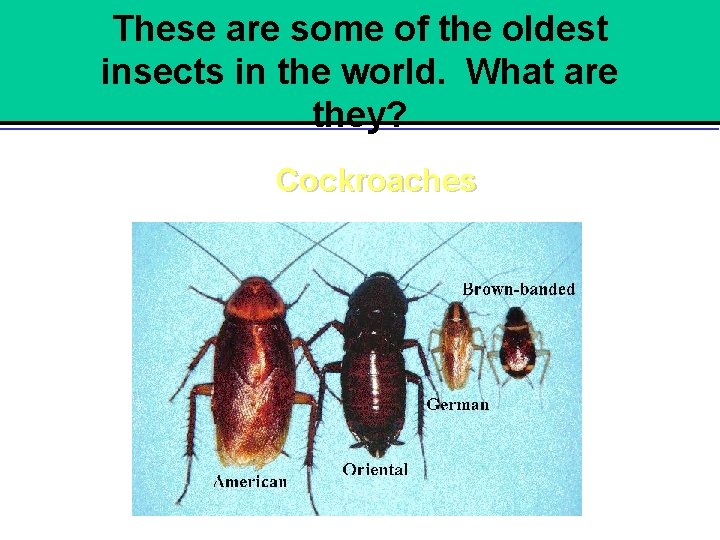
These are some of the oldest insects in the world. What are they? Cockroaches
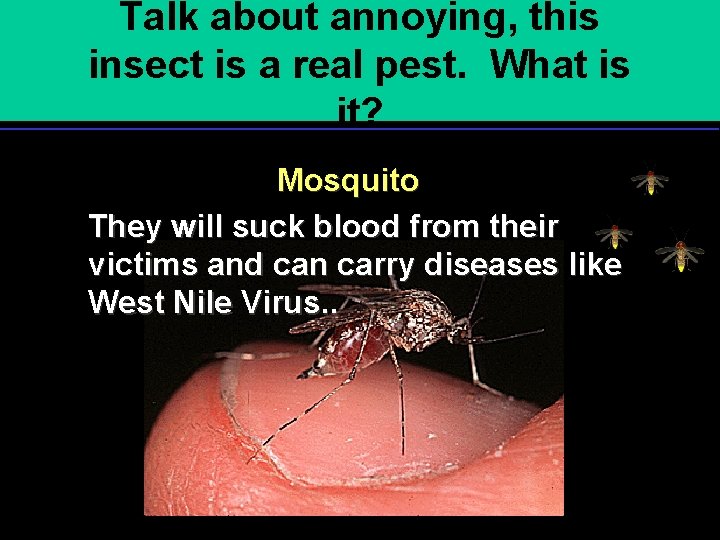
Talk about annoying, this insect is a real pest. What is it? Mosquito They will suck blood from their victims and can carry diseases like West Nile Virus. .
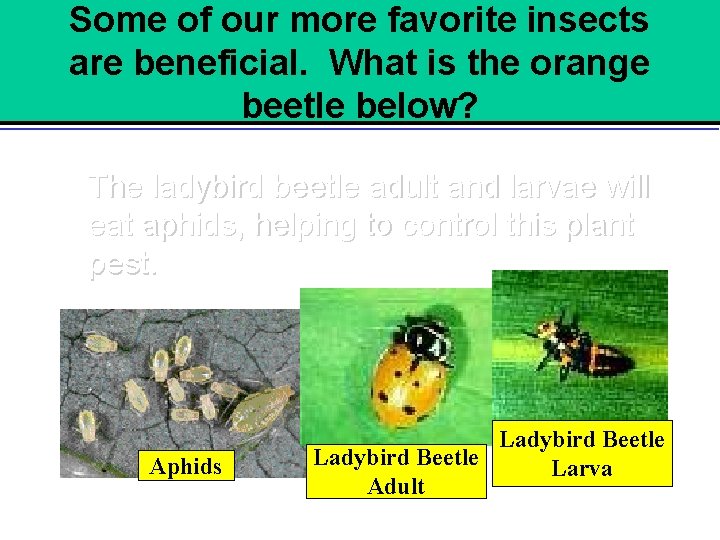
Some of our more favorite insects are beneficial. What is the orange beetle below? The ladybird beetle adult and larvae will eat aphids, helping to control this plant pest. Aphids Ladybird Beetle Larva Adult
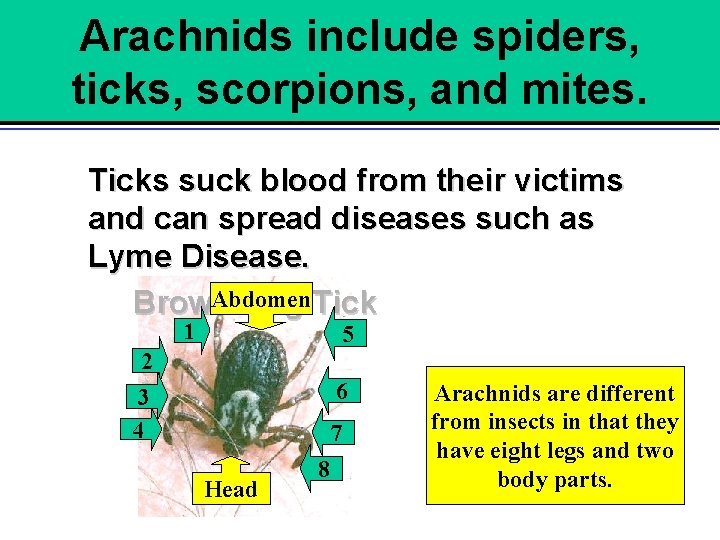
Arachnids include spiders, ticks, scorpions, and mites. Ticks suck blood from their victims and can spread diseases such as Lyme Disease. Abdomen Brown Dog Tick 1 5 2 3 4 6 7 Head 8 Arachnids are different from insects in that they have eight legs and two body parts.
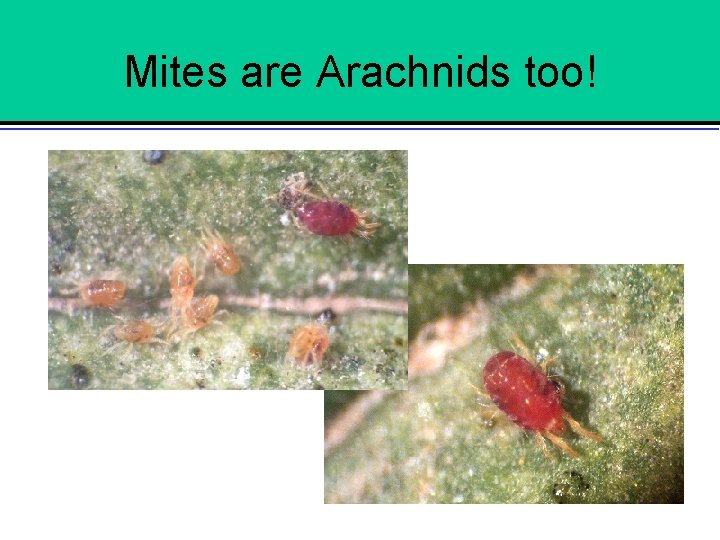
Mites are Arachnids too!
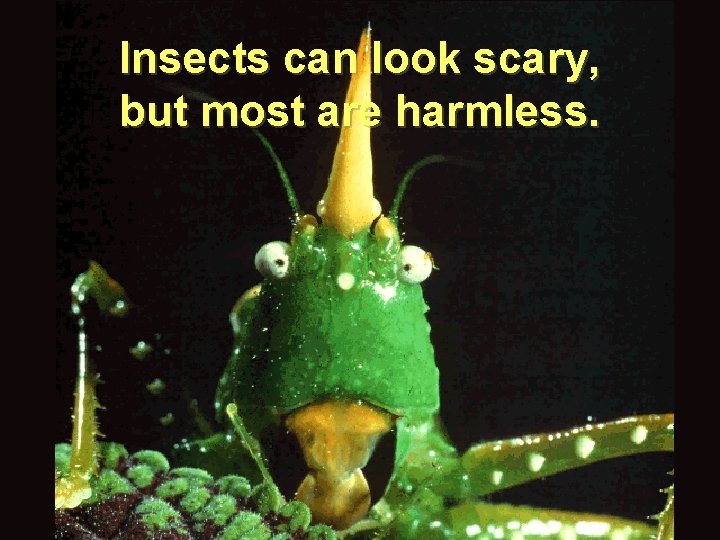
Insects can look scary, but most are harmless.
Why Control Weeds? • Some have been declared noxious weeds by the State. It’s the law! • Weeds look bad, they reflect poorly on your management.
Why control weeds? • Weeds reduce the desirable plant population. • Weeds reduce overall forage quality and yield. • Weeds reduce overall animal yield.
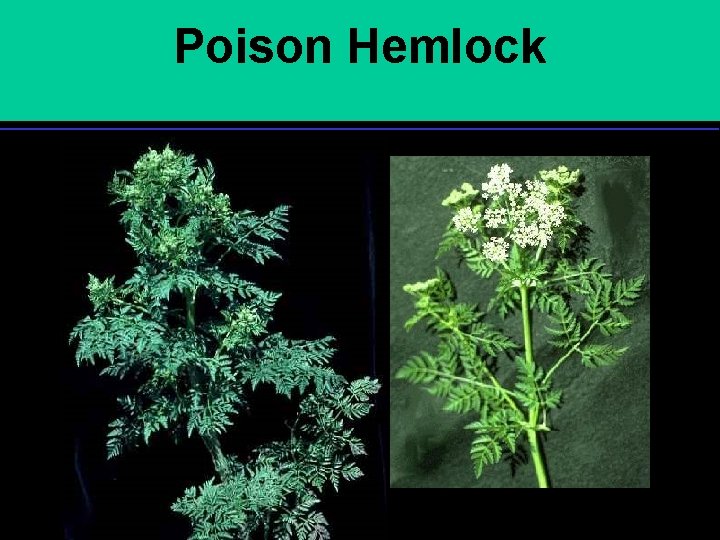
Poison Hemlock
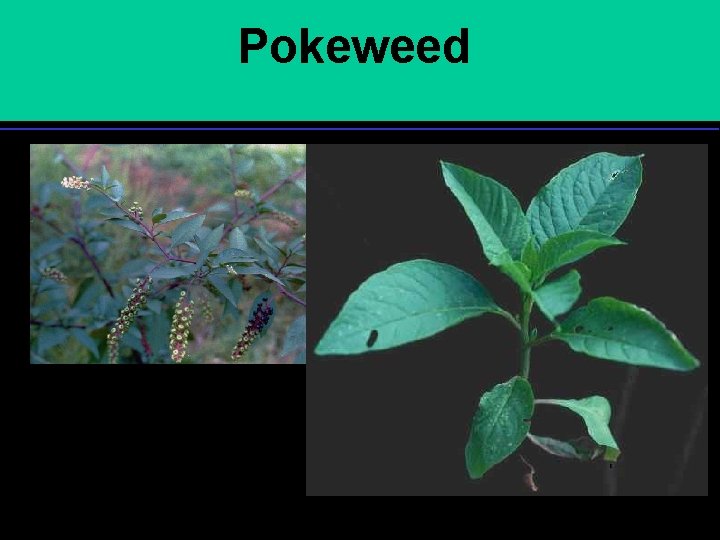
Pokeweed
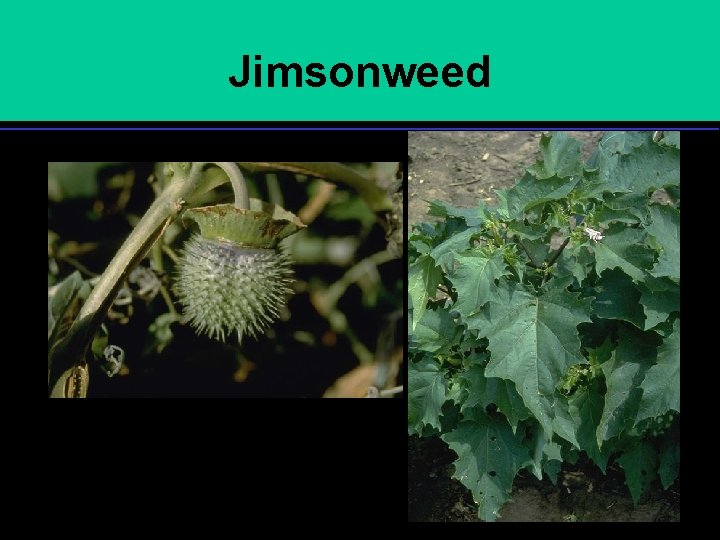
Jimsonweed
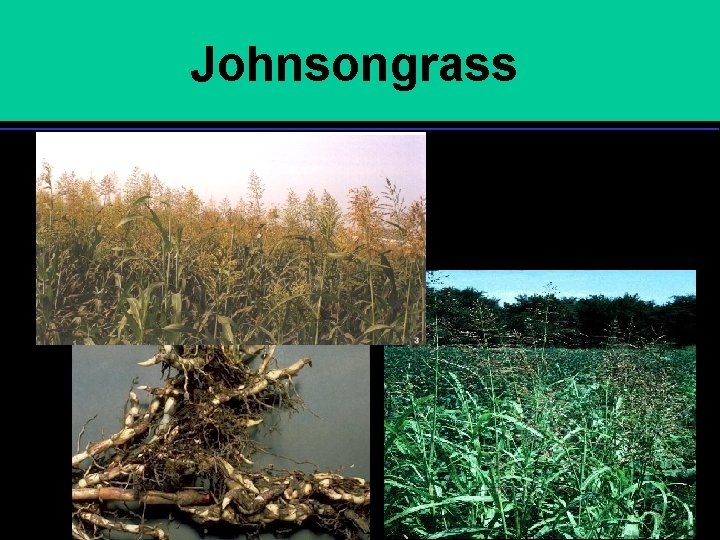
Johnsongrass •
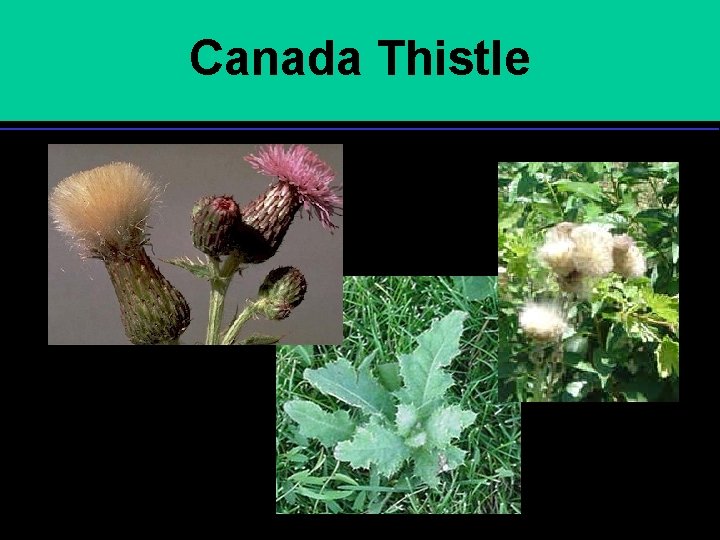
Canada Thistle
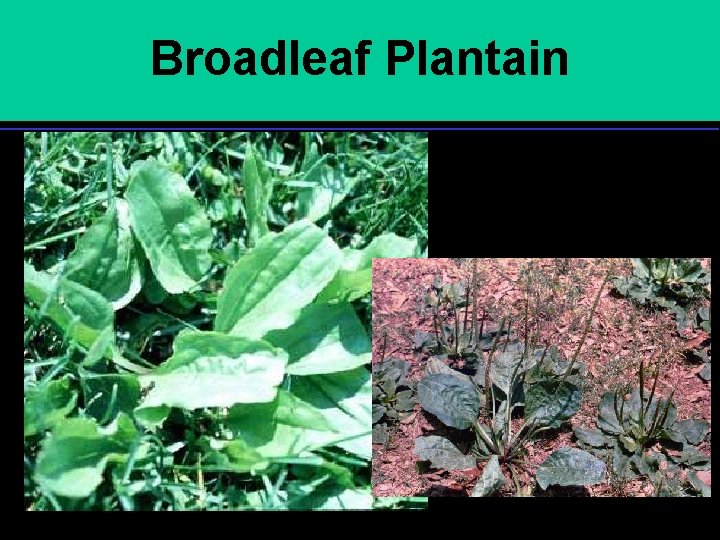
Broadleaf Plantain
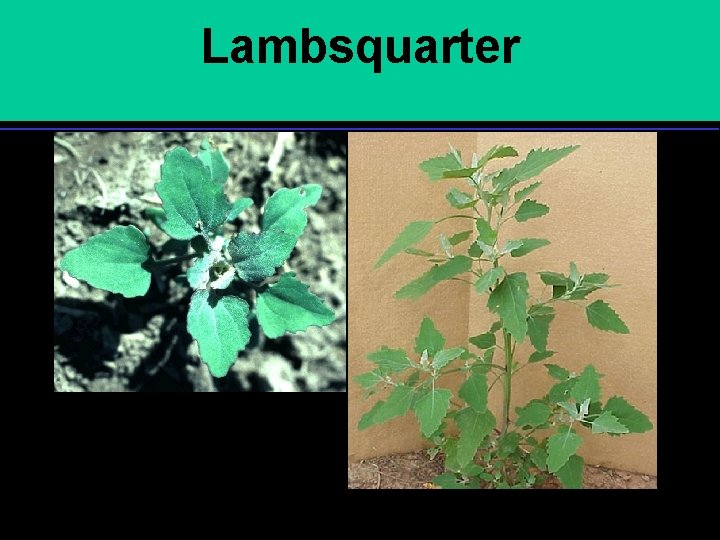
Lambsquarter
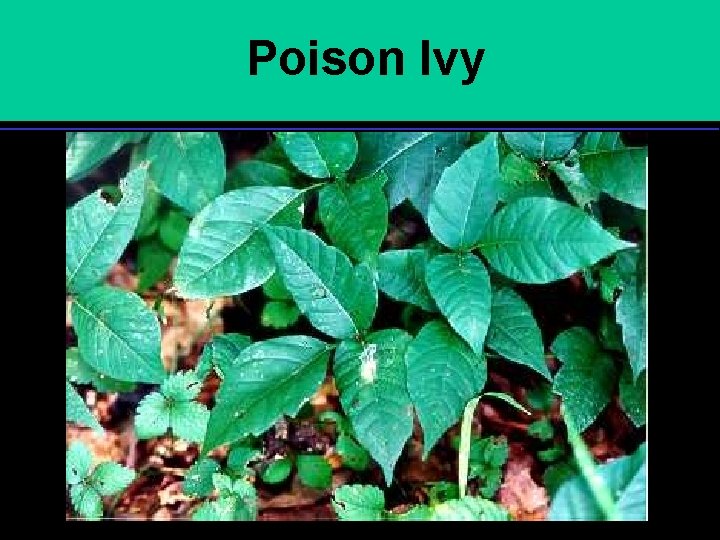
Poison Ivy
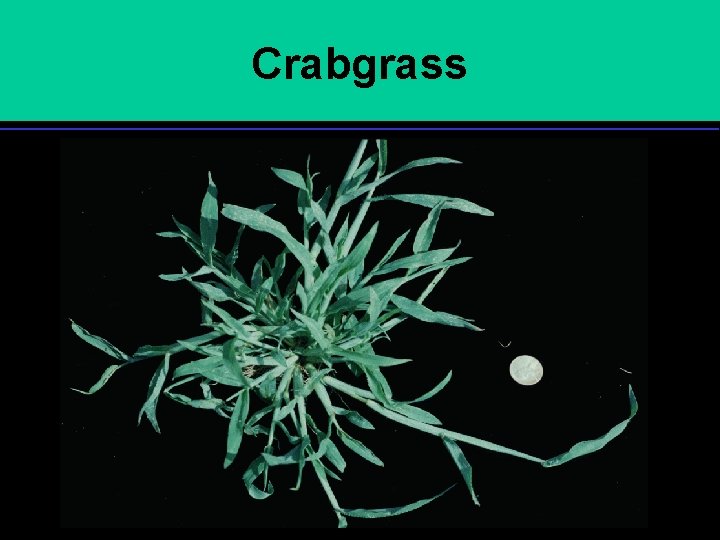
Crabgrass
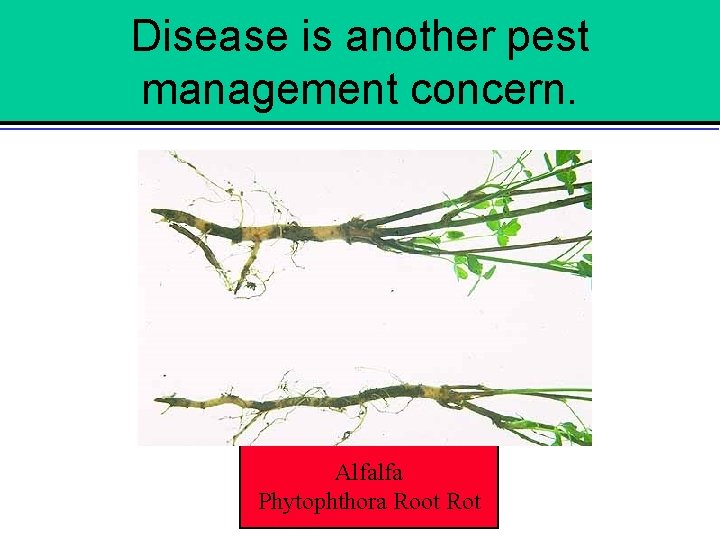
Disease is another pest management concern. Alfalfa Phytophthora Root Rot
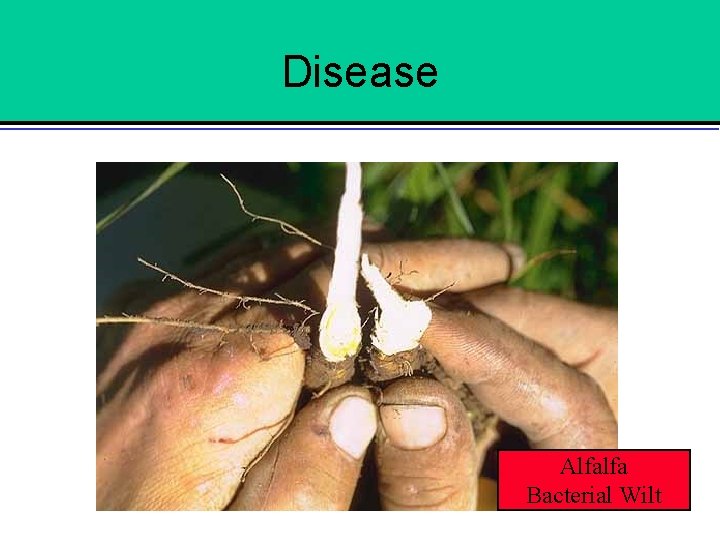
Disease Alfalfa Bacterial Wilt
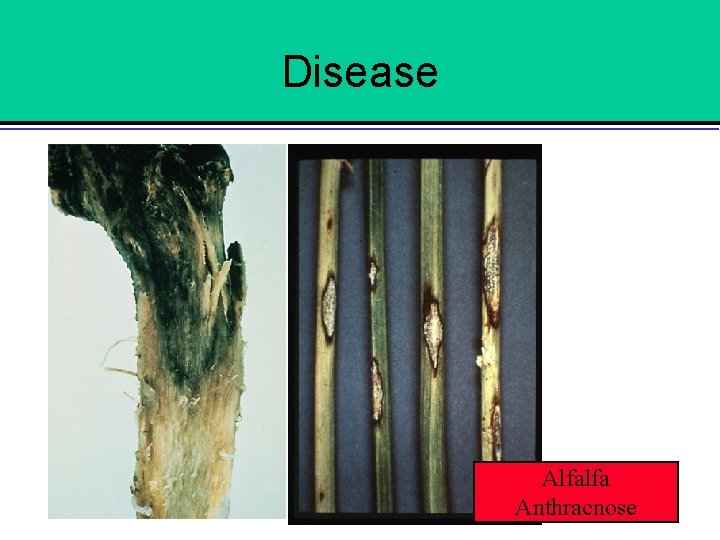
Disease Alfalfa Anthracnose
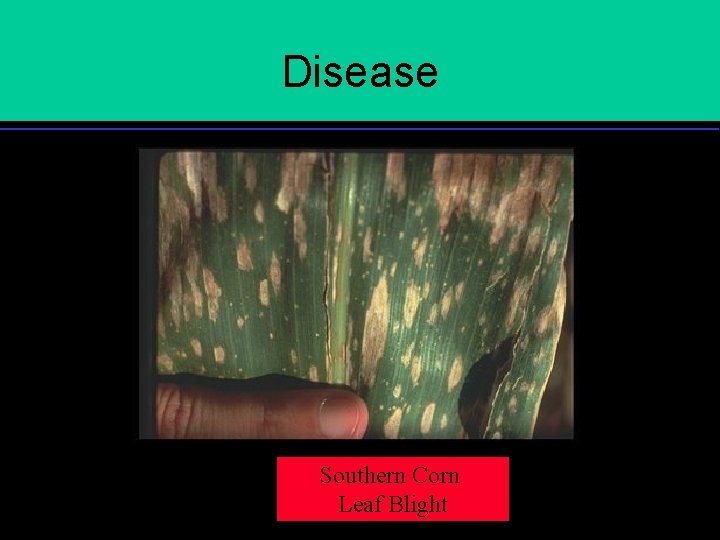
Disease Southern Corn Leaf Blight
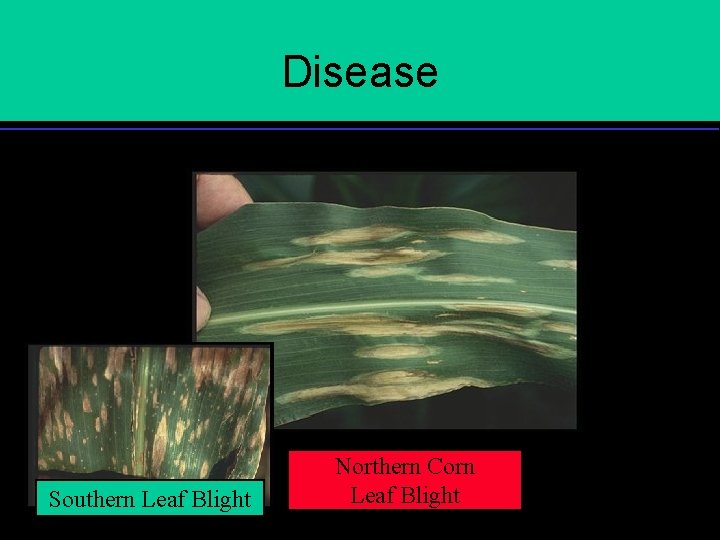
Disease Southern Leaf Blight Northern Corn Leaf Blight
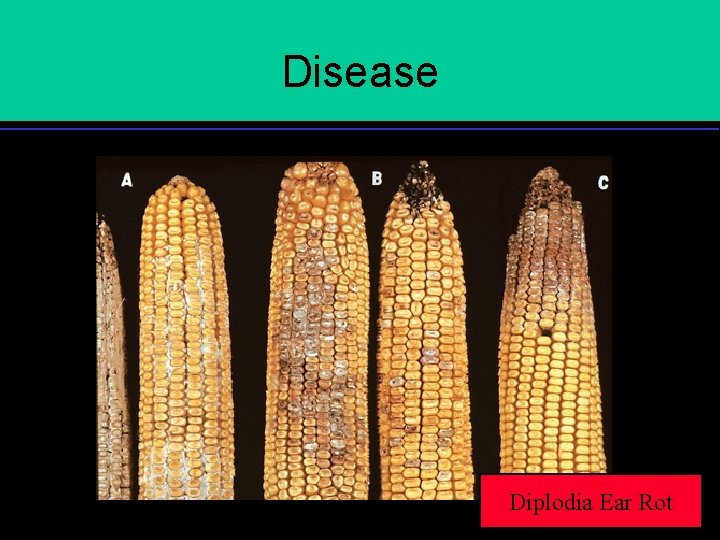
Disease Diplodia Ear Rot
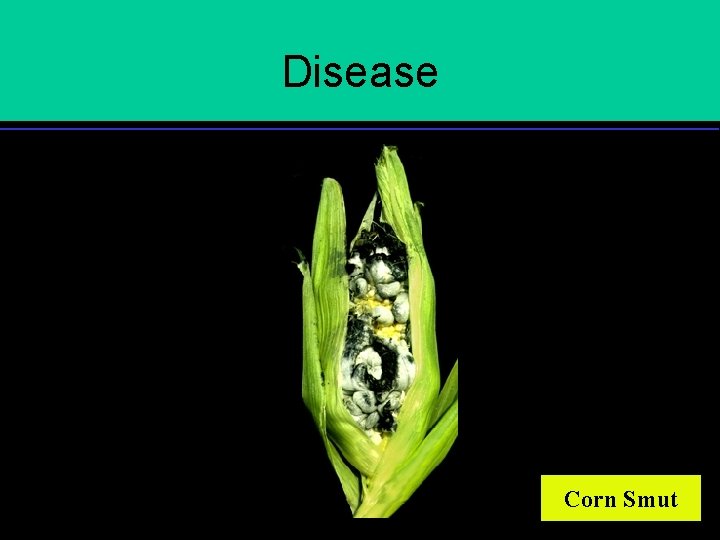
Disease Corn Smut
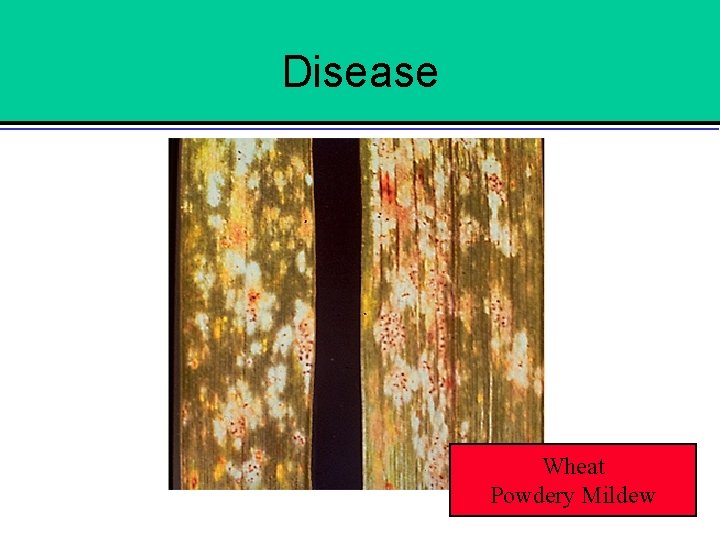
Disease Wheat Powdery Mildew
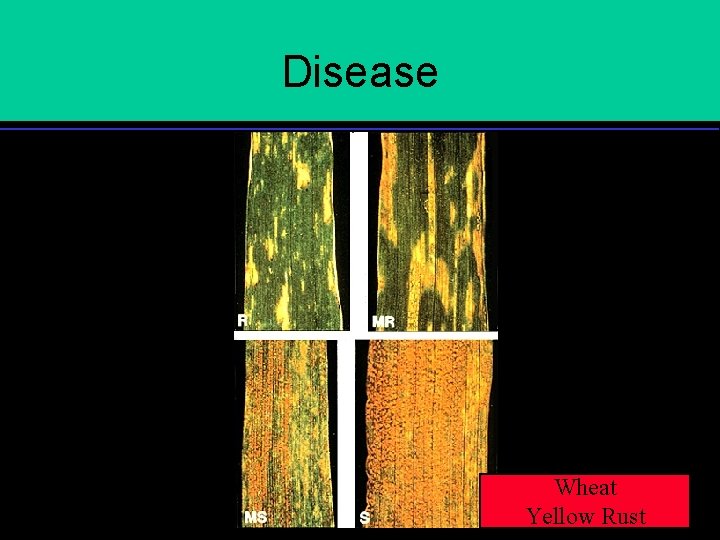
Disease Wheat Yellow Rust
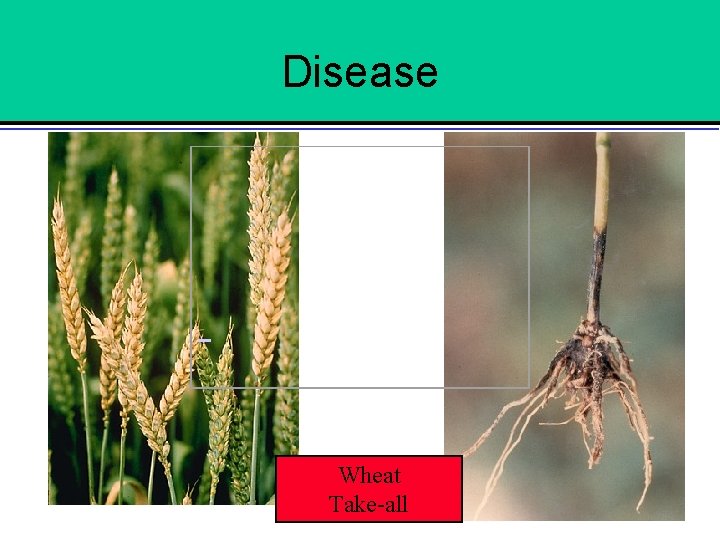
Disease Wheat Take-all
Methods of Control • Natural Control Climate Natural enemies Geographic barriers Food and water supply Shelter
Methods of Control • Applied Controls Resistant varieties Biological control Cultural control Mechanical control Sanitation Chemical control • An integrated system uses components of all of these applied controls
The Threshold • Level of pest populations at which you should take pest control action to prevent unacceptable injury. • A threshold may be based on aesthetic, health, or economic considerations. • A threshold often is set at the level at which the economic losses from the pest damage is greater than the cost of control.
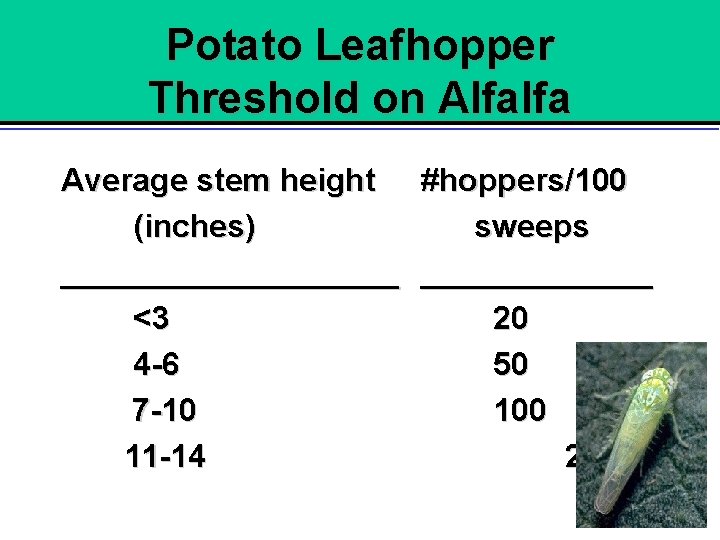
Potato Leafhopper Threshold on Alfalfa Average stem height #hoppers/100 (inches) sweeps __________ <3 20 4 -6 50 7 -10 100 11 -14 200
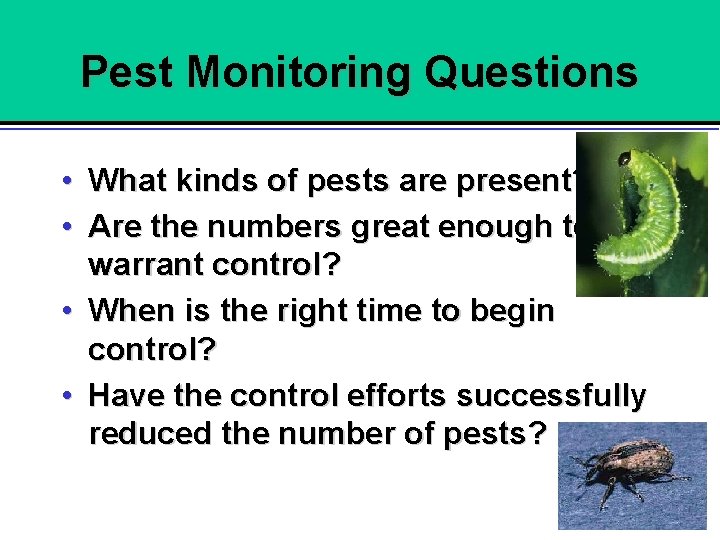
Pest Monitoring Questions • What kinds of pests are present? • Are the numbers great enough to warrant control? • When is the right time to begin control? • Have the control efforts successfully reduced the number of pests?
Organic & Low-input Systems Rely on: • Sanitation - habitat, over-wintering sites • Eliminating, or managing nearby weeds that host pests • Rotations for fertility & to deprive pests of a suitable host • Maintain proper plant nutrition
Organic & Low-input Systems Rely on: • Building and maintaining soil organic matter, which improves drainage and water-holding capacity *Soil organic matter helps to support populations of microorganisms which feed on disease organisms and nematodes. • Encouraging indigenous beneficials
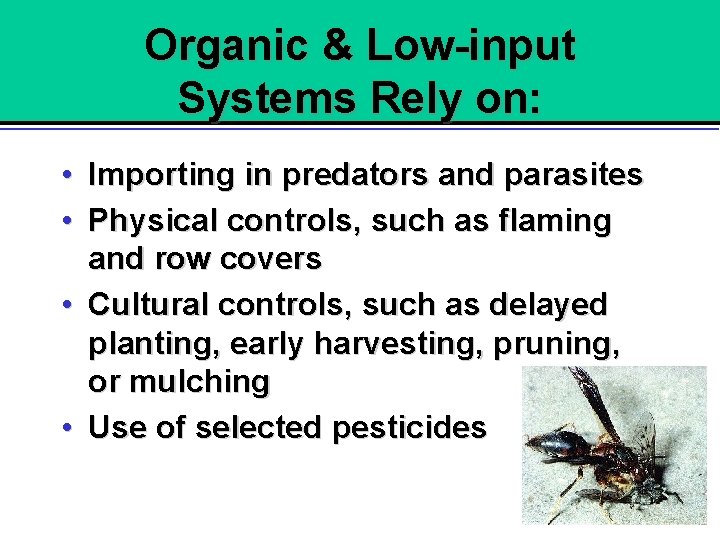
Organic & Low-input Systems Rely on: • Importing in predators and parasites • Physical controls, such as flaming and row covers • Cultural controls, such as delayed planting, early harvesting, pruning, or mulching • Use of selected pesticides
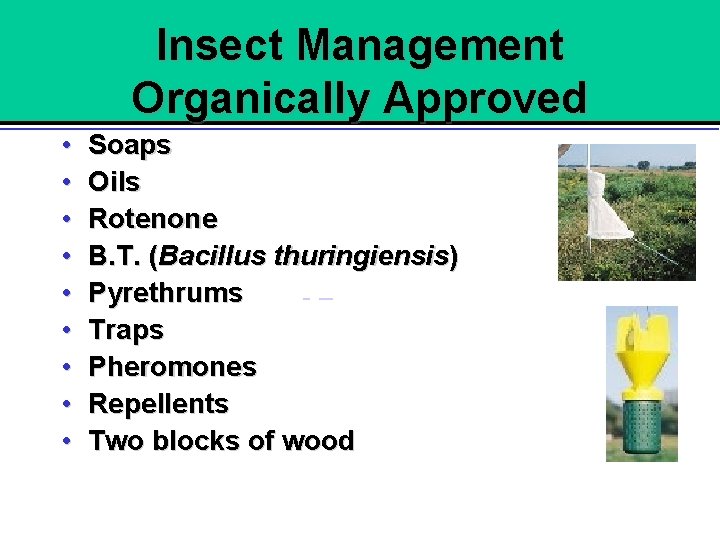
Insect Management Organically Approved • • • Soaps Oils Rotenone B. T. (Bacillus thuringiensis) Pyrethrums Traps Pheromones Repellents Two blocks of wood
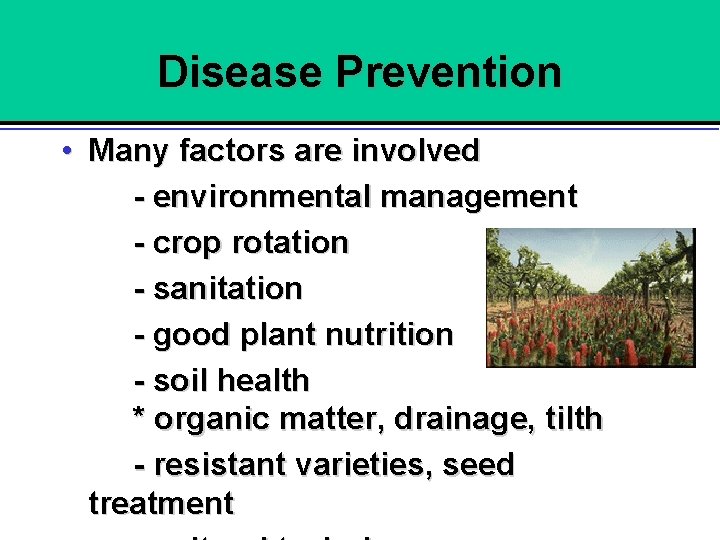
Disease Prevention • Many factors are involved - environmental management - crop rotation - sanitation - good plant nutrition - soil health * organic matter, drainage, tilth - resistant varieties, seed treatment
Minerals for Disease Control • Copper - blights, downy mildew, black rots, anthracnose • Sulfur - scab, powdery mildew, brown rot, on strawberries, grapes, tomatoes, potatoes, field crops, tree fruits • Lime-sulfur - scales, mildews, anthracnose,
Minerals for Disease Control • Bordeaux mix (copper sulfate) - anthracnose, mildews, blights, black rots on small fruits, flowers, shade trees • Liquid copper-sulfur - blights, mildews, leaf rust, black rot, anthracnose on vegetables and fireblight on pears
Natural Sprays for Disease Control • • • Fermented nettle tea (preventative) Equisetum tea (root dip, foliar spray) Chamomile tea (seed soak) Liquid seaweed (seed & root soak) Watery compost extract (preventative) - compost in soils and starting media can prevent some diseases
Managing Weeds • Organic & low-input systems rely on: - cultivation - giving the crop a head start - mulches - smother crops (cover crop) - companion crop - mowing
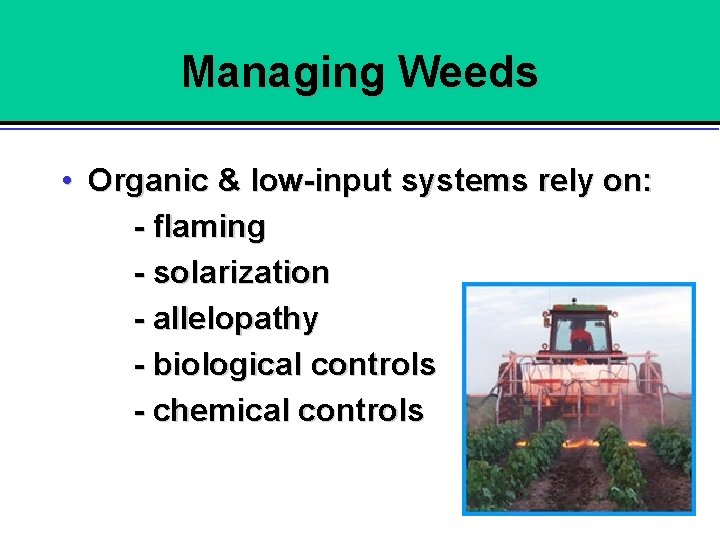
Managing Weeds • Organic & low-input systems rely on: - flaming - solarization - allelopathy - biological controls - chemical controls
Preventing Weeds • Simplest & most effective approach * sanitation is essential * check transplant root balls * wipe soil tilling implements clean * keep field perimeters mowed * do not let weeds go to seed - this includes cover crops
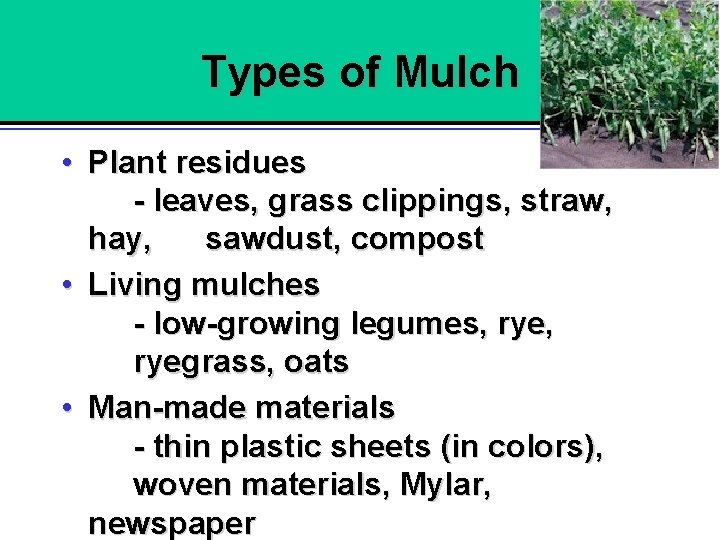
Types of Mulch • Plant residues - leaves, grass clippings, straw, hay, sawdust, compost • Living mulches - low-growing legumes, ryegrass, oats • Man-made materials - thin plastic sheets (in colors), woven materials, Mylar, newspaper
Pesticides “Any chemical used to control pests” • Types insecticides fungicides herbicides rodenticides miticides
Pesticides • Formulation examples include: granules wettable powders dusts dry flowables aerosols fumigants
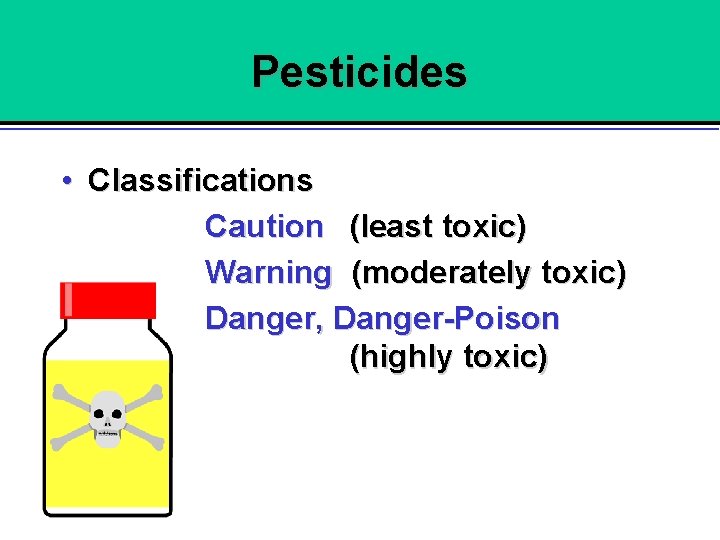
Pesticides • Classifications Caution (least toxic) Warning (moderately toxic) Danger, Danger-Poison (highly toxic)
Pesticides • • Pesticides are also classified into two other categories: Restricted Use - hazardous to humans or environment - requires Private Applicator License General Use - anyone can purchase and use these products
Pesticide Modes of Action • Insecticides stomach poison systemic contact broad spectrum selective • Fungicides contact systemic
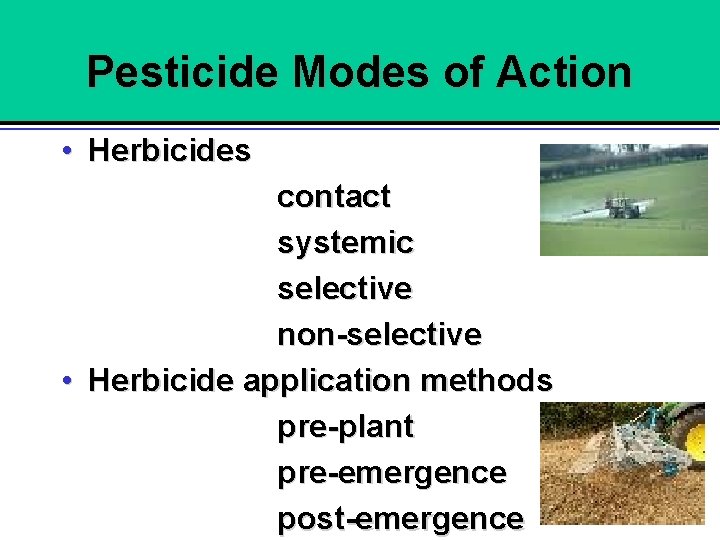
Pesticide Modes of Action • Herbicides contact systemic selective non-selective • Herbicide application methods pre-plant pre-emergence post-emergence
Steps to Selecting a Pesticide 1) Identify the pest 2) Try cultural, non-chemical alternatives 3) Review economic considerations - threshold level of the pest - what is the effectiveness of the recommended pesticides - expense (material, labor)
Steps to Selecting a Pesticide 4) Select the pesticide - crop and pest must be on the label - least toxic to man & environment - compatibility (mixing materials? ) - Selectivity - Residual * length of control, reentry, and days to harvest
Factors Affecting Pesticide Application Rate • Soil type - heavy soils require higher rate • Percent of organic matter - higher O. M. %, higher rate • Maturity of crop - more plant material, higher rate • Maturity of pest - bigger pest, higher rate • Pest Population - more bugs, more pesticide is needed
Effective Pesticide Application “Timing is everything, regularly walk your fields” • Note pest’s stage of development • Use appropriate labeled amount of pesticide • Unless otherwise noted on the label, use an adjuvant • Evaluate weather current & forecast • Alternate pesticide chemistry
Thank You
- Slides: 70