
Basics of Biosafety Objectives Course Objectives This course
Basics of Biosafety
Objectives Course Objectives • This course on Biosafety is intended to increase your understanding of the following: – – – – Biosafety Definition Mandates & Regulations Impacts of non-compliance JSC Biosafety Review Board Risk Assessment Containment - Lab practices and techniques, safety equipment, and facility design. JSC Training Requirements Slide 2 of 58
Definition What is Biosafety? Biosafety, according to the Centers for Disease Control and Prevention (CDC), is the “discipline addressing the safe handling and containment of infectious microorganisms and hazardous biological materials. ” Slide 3 of 58
Regulations Mandates • JSC is mandated to comply with the regulations as established by: – – – CDC: Centers for Disease Control and Prevention BMBL: Biosafety in Microbiological and Biomedical Laboratories DOT: Department of Transportation ICAO: International Civil Aviation Organization IATA: International Air Transport Association • The mandate can be found in NPR 1800. 1 – NASA Procedural Requirements (NPR) 1800. 1: NASA Occupational Health Program Procedures, Section 4. 1. 1 Biosafety Slide 4 of 58
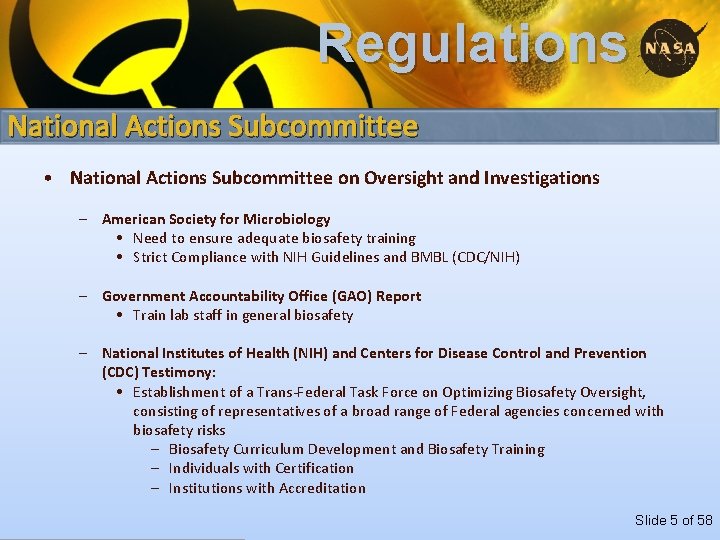
Regulations National Actions Subcommittee • National Actions Subcommittee on Oversight and Investigations – American Society for Microbiology • Need to ensure adequate biosafety training • Strict Compliance with NIH Guidelines and BMBL (CDC/NIH) – Government Accountability Office (GAO) Report • Train lab staff in general biosafety – National Institutes of Health (NIH) and Centers for Disease Control and Prevention (CDC) Testimony: • Establishment of a Trans-Federal Task Force on Optimizing Biosafety Oversight, consisting of representatives of a broad range of Federal agencies concerned with biosafety risks – Biosafety Curriculum Development and Biosafety Training – Individuals with Certification – Institutions with Accreditation Slide 5 of 58
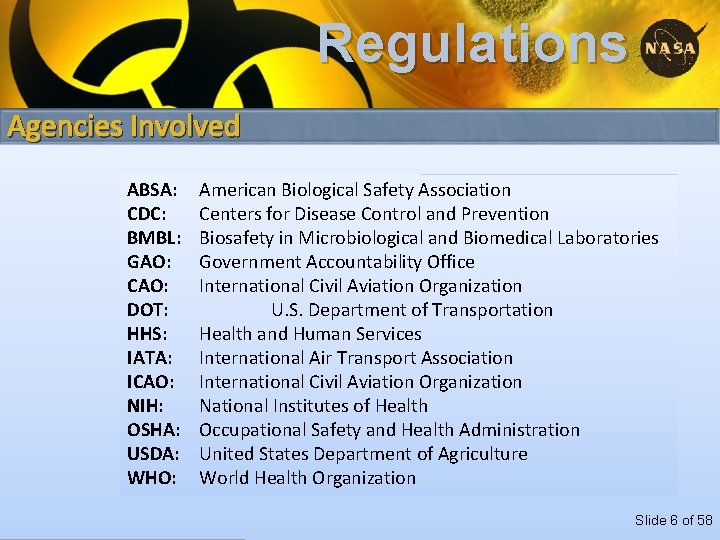
Regulations Agencies Involved ABSA: CDC: BMBL: GAO: CAO: DOT: HHS: IATA: ICAO: NIH: OSHA: USDA: WHO: American Biological Safety Association Centers for Disease Control and Prevention Biosafety in Microbiological and Biomedical Laboratories Government Accountability Office International Civil Aviation Organization U. S. Department of Transportation Health and Human Services International Air Transport Association International Civil Aviation Organization National Institutes of Health Occupational Safety and Health Administration United States Department of Agriculture World Health Organization Slide 6 of 58
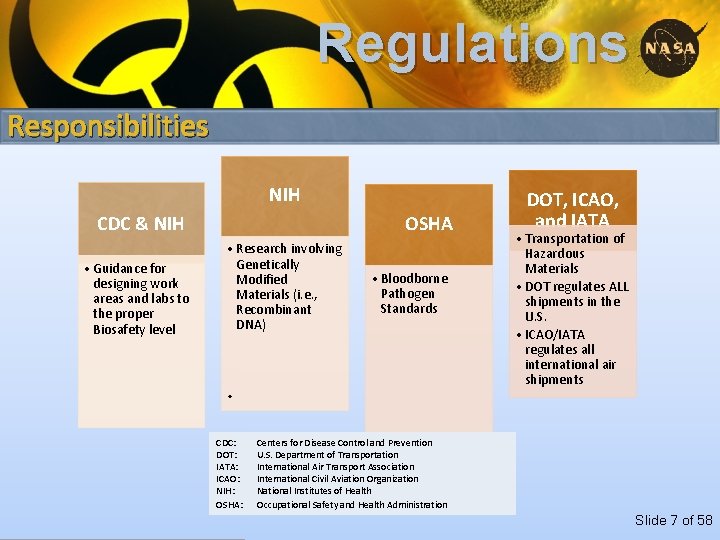
Regulations Responsibilities NIH OSHA CDC & NIH • Guidance for designing work areas and labs to the proper Biosafety level • Research involving Genetically Modified Materials (i. e. , Recombinant DNA) • Bloodborne Pathogen Standards DOT, ICAO, and IATA • Transportation of Hazardous Materials • DOT regulates ALL shipments in the U. S. • ICAO/IATA regulates all international air shipments • CDC: DOT: IATA: ICAO: NIH: OSHA: Centers for Disease Control and Prevention U. S. Department of Transportation International Air Transport Association International Civil Aviation Organization National Institutes of Health Occupational Safety and Health Administration Slide 7 of 58
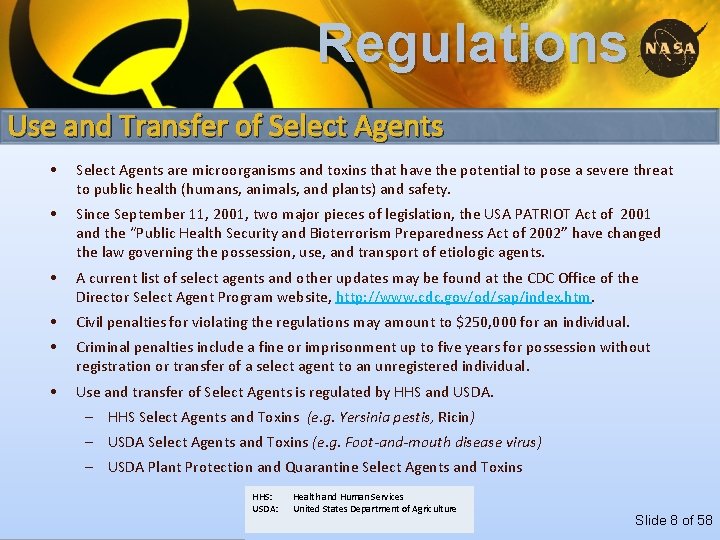
Regulations Use and Transfer of Select Agents • Select Agents are microorganisms and toxins that have the potential to pose a severe threat to public health (humans, animals, and plants) and safety. • Since September 11, 2001, two major pieces of legislation, the USA PATRIOT Act of 2001 and the “Public Health Security and Bioterrorism Preparedness Act of 2002” have changed the law governing the possession, use, and transport of etiologic agents. • A current list of select agents and other updates may be found at the CDC Office of the Director Select Agent Program website, http: //www. cdc. gov/od/sap/index. htm. • Civil penalties for violating the regulations may amount to $250, 000 for an individual. • Criminal penalties include a fine or imprisonment up to five years for possession without registration or transfer of a select agent to an unregistered individual. • Use and transfer of Select Agents is regulated by HHS and USDA. – HHS Select Agents and Toxins (e. g. Yersinia pestis, Ricin) – USDA Select Agents and Toxins (e. g. Foot-and-mouth disease virus) – USDA Plant Protection and Quarantine Select Agents and Toxins HHS: USDA: Health and Human Services United States Department of Agriculture Slide 8 of 58
Regulations Genetically Modified Materials • NIH Guidelines specify practices for constructing and handling genetically modified materials: – these are molecules constructed outside of living cells by joining natural or synthetic DNA segments to DNA molecules that can replicate in a living cell, or molecules that result from their replication. Slide 9 of 58
Regulations More Information • Area Specific Plans - – OMOHC Tuberculosis exposure control plan – Wyle BBP Program, – Wyle Chemical Hygiene Plan – Jacobs Chemical Hygiene Plan • For links to the national and international guidelines and regulations - http: //www. absa. org (Under resources and tools – Key topics and links) Slide 10 of 58
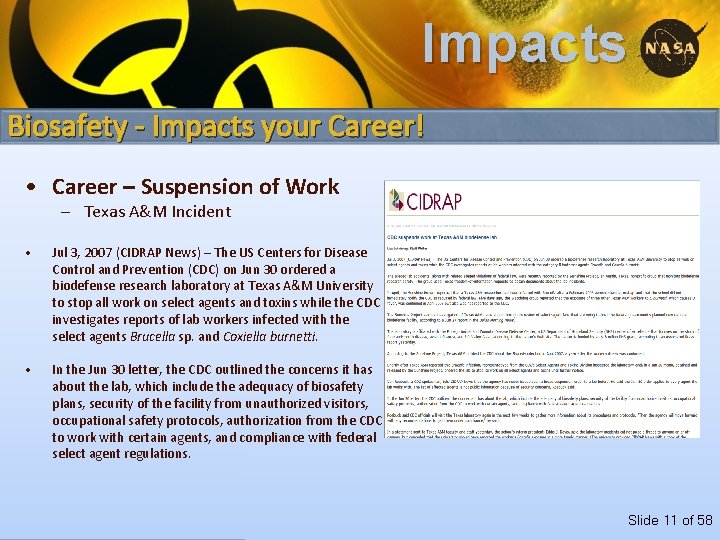
Impacts Biosafety - Impacts your Career! • Career – Suspension of Work – Texas A&M Incident • Jul 3, 2007 (CIDRAP News) – The US Centers for Disease Control and Prevention (CDC) on Jun 30 ordered a biodefense research laboratory at Texas A&M University to stop all work on select agents and toxins while the CDC investigates reports of lab workers infected with the select agents Brucella sp. and Coxiella burnetti. • In the Jun 30 letter, the CDC outlined the concerns it has about the lab, which include the adequacy of biosafety plans, security of the facility from unauthorized visitors, occupational safety protocols, authorization from the CDC to work with certain agents, and compliance with federal select agent regulations. Slide 11 of 58
Impacts could be personal! • Personal – $$$, jail and infection – Texas Tech Incident • Thomas Butler, an infectious disease specialist was arrested and jailed in 2003 for the “mis-handling” of Select Agents. – Elizabeth Griffin Research Foundation • In 1997, Beth Griffin, a research technician at Emory University, died after contracting B-virus as a result of inadequate prevention procedures and deficient treatment after exposure. Slide 12 of 58
JSC BRB Biosafety at JSC • The Biosafety Review Board (BRB) was established at JSC to identify, evaluate, control and prevent biological hazards in conformance with NASA, Federal and international health and safety regulations. http: //hefd. jsc. nasa. gov/microbrb. htm • The BRB includes a team of microbiologists, cell biologists, physicians, industrial hygienists, and occupational health professionals to assess the wide range of biohazardous materials encountered. • Biohazardous materials may consist of bacteria, fungi, viruses, protozoa, cell cultures, and other infectious agents. Slide 13 of 58
JSC BRB Functions of the JSC BRB • Operations – provide assessments of flight operations regarding biosafety and potential exposure to crew-members • Research - All biological materials for research use in JSC facilities are reviewed and approved prior to purchase. • Payloads - All biological payload experiments are assessed and biohazardous materials identified are assigned a NASA biosafety level (BSL). Slide 14 of 58
JSC BRB Additional Functions of the BRB • Conduct annual inspection of laboratories at JSC that utilize biological materials. • Train personnel in policies and procedures of transporting biological materials. • Maintain inventory of biological materials that are used at JSC including genetically modified organisms (GMO) • Investigate incidents that involved biological materials. • Obtain Transportation Security Administration exemptions for handcarrying of crew specimens. Slide 15 of 58
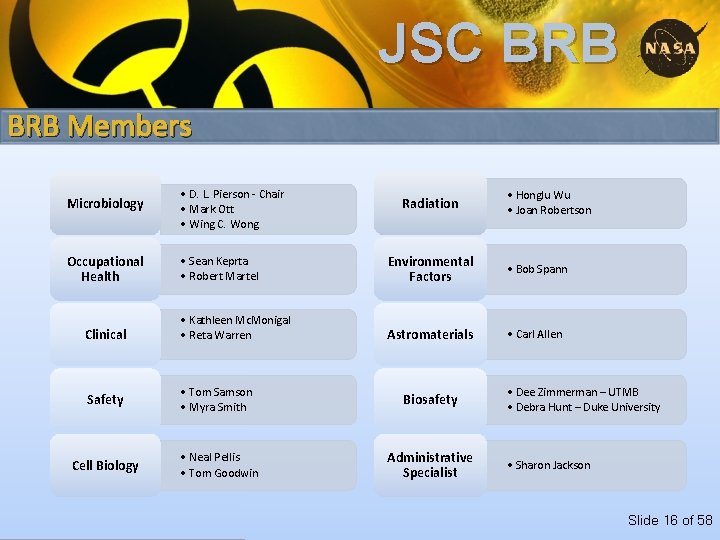
JSC BRB Members Microbiology • D. L. Pierson - Chair • Mark Ott • Wing C. Wong Occupational Health • Sean Keprta • Robert Martel Environmental Factors • Bob Spann • Kathleen Mc. Monigal • Reta Warren Astromaterials • Carl Allen Clinical Radiation Safety • Tom Samson • Myra Smith Biosafety Cell Biology • Neal Pellis • Tom Goodwin Administrative Specialist • Honglu Wu • Joan Robertson • Dee Zimmerman – UTMB • Debra Hunt – Duke University • Sharon Jackson Slide 16 of 58
JSC BRB Requirements • This Biosafety Review Board Operations and Requirements Document establishes requirements for the information required by the BRB to identify and assess biohazardous materials utilized in payload or groundbased experiments. The document also defines the requirements for tracking biohazardous materials that are stored at JSC facilities and the requirements for inspecting JSC facilities utilizing biohazardous materials. This document supersedes all biological material references in JSC 27472 "Requirements for Submission of Data Needed for Toxicological Assessment of Chemicals to be Flown on Manned Spacecraft". Slide 17 of 58
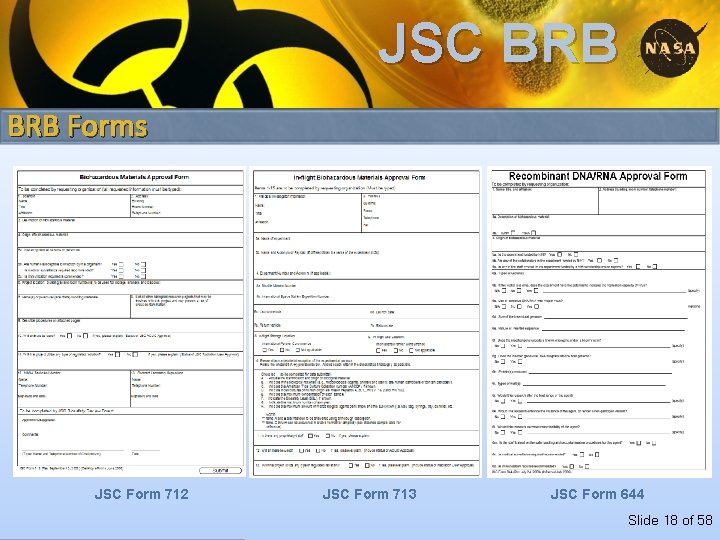
JSC BRB Forms JSC Form 712 JSC Form 713 JSC Form 644 Slide 18 of 58
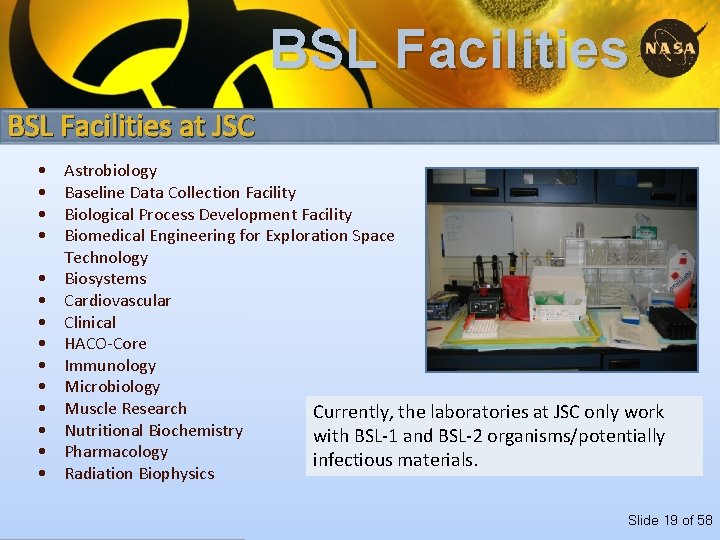
BSL Facilities at JSC • • • • Astrobiology Baseline Data Collection Facility Biological Process Development Facility Biomedical Engineering for Exploration Space Technology Biosystems Cardiovascular Clinical HACO-Core Immunology Microbiology Muscle Research Currently, the laboratories at JSC only work Nutritional Biochemistry with BSL-1 and BSL-2 organisms/potentially Pharmacology infectious materials. Radiation Biophysics Slide 19 of 58
Risk Assessment Biosafety – Assessing the Risk � What are you working with? and how much? � What Risk Group is it in? � Is it a Select Agent? GMO? � Do you have BRB approval for use? � Do you have the proper facilities, PPE, disinfectants, training, vaccinations? Slide 20 of 58

Risk Assessment Biosafety – Assessing the Risk • Risk Groups (RG) – A classification of infectious microorganisms based on the following factors: • Pathogenicity of the organism • Mode of transmission and host range • Availability of effective preventive measures (e. g. , vaccines) • Availability of effective treatment (e. g. , antibiotics) Slide 21 of 58
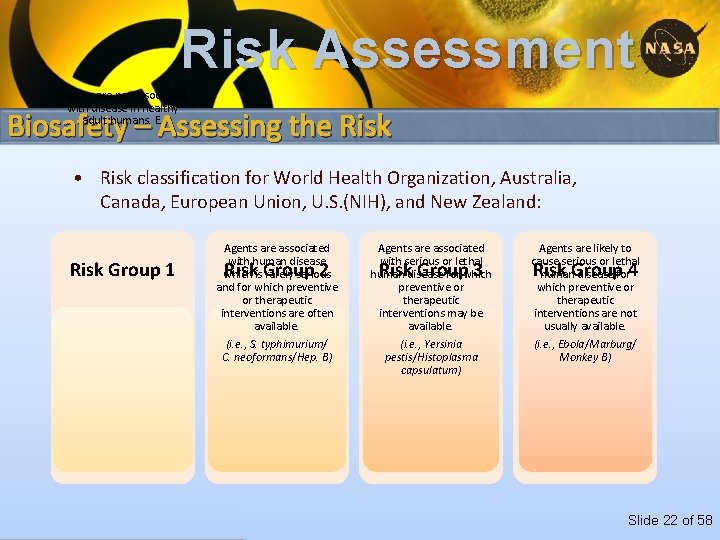
Risk Assessment Agents are not associated with disease in healthy adult humans. E. Biosafety – Assessing the Risk • Risk classification for World Health Organization, Australia, Canada, European Union, U. S. (NIH), and New Zealand: Risk Group 1 Agents are associated with human disease which is rarely serious and for which preventive or therapeutic interventions are often available. Agents are associated with serious or lethal human disease for which preventive or therapeutic interventions may be available. Agents are likely to cause serious or lethal human disease for which preventive or therapeutic interventions are not usually available. (i. e. , S. typhimurium/ C. neoformans/Hep. B) (i. e. , Yersinia pestis/Histoplasma capsulatum) (i. e. , Ebola/Marburg/ Monkey B) Risk Group 2 Risk Group 3 Risk Group 4 Slide 22 of 58
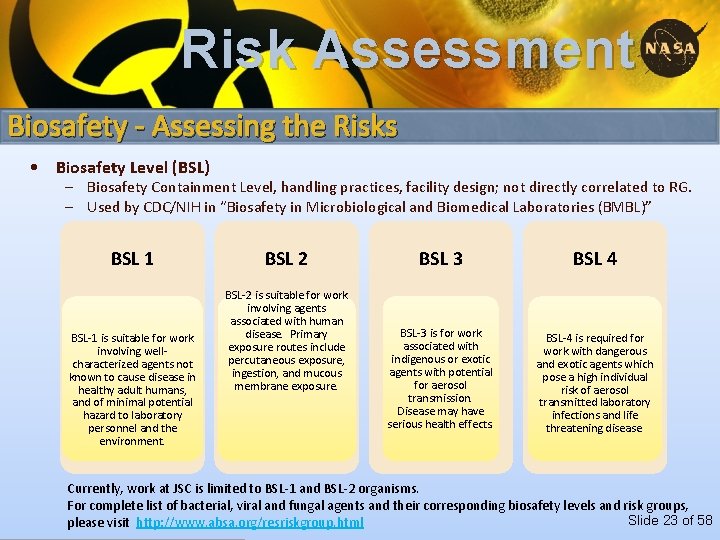
Risk Assessment Biosafety - Assessing the Risks • Biosafety Level (BSL) – Biosafety Containment Level, handling practices, facility design; not directly correlated to RG. – Used by CDC/NIH in “Biosafety in Microbiological and Biomedical Laboratories (BMBL)” BSL 1 BSL-1 is suitable for work involving wellcharacterized agents not known to cause disease in healthy adult humans, and of minimal potential hazard to laboratory personnel and the environment. BSL 2 BSL-2 is suitable for work involving agents associated with human disease. Primary exposure routes include percutaneous exposure, ingestion, and mucous membrane exposure. BSL 3 BSL 4 BSL-3 is for work associated with indigenous or exotic agents with potential for aerosol transmission. Disease may have serious health effects. BSL-4 is required for work with dangerous and exotic agents which pose a high individual risk of aerosol transmitted laboratory infections and life threatening disease. Currently, work at JSC is limited to BSL-1 and BSL-2 organisms. For complete list of bacterial, viral and fungal agents and their corresponding biosafety levels and risk groups, Slide 23 of 58 please visit http: //www. absa. org/resriskgroup. html
Risk Assessment 1 Biosafety Levels 2 3 4 Slide 24 of 58
Facility Design BSL-3 BSL-1 Higher Risk Lower Risk BSL-2 / Universal Precautions Slide 25 of 58
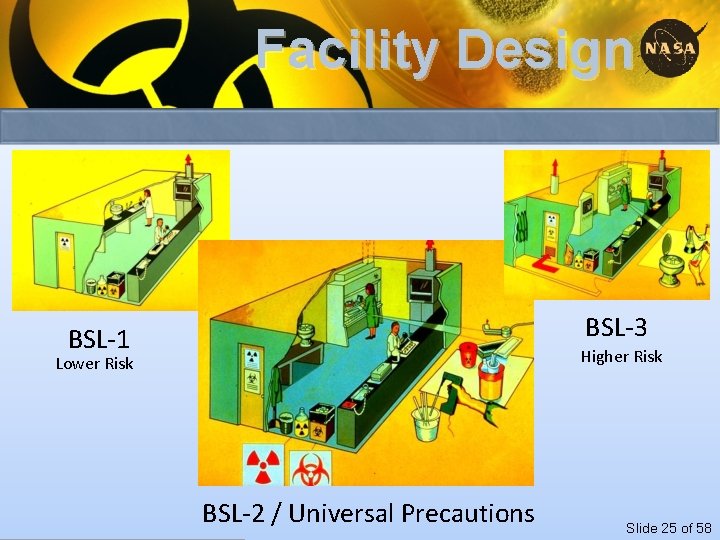
Risk Assessment Biosafety – Assessing the Risk • BSL-2 differs from BSL-1: – laboratory personnel have specific training in handling pathogenic agents and are directed by scientists with advanced training; – access to the laboratory is limited when work is being conducted; – extreme precautions are taken with contaminated sharp items; and – certain procedures in which infectious aerosols or splashes may be created are conducted in biological safety cabinets or other physical containment equipment. Slide 26 of 58
Risks Reducing the Risk • Biological – Use Attenuated or less virulent strains (E. coli K-12) • Physical – Primary & secondary containment § Primary: physical separation of hazard from worker (i. e. , personal protective equipment (PPE), biological safety cabinets, enclosed centrifuge containers) § Secondary: lab design, separation of hazard from others in facility and the environment, separate labs, unidirectional airflow • Risk Assessments/Safe Microbiological Practices/Training/Vaccinations Slide 27 of 58
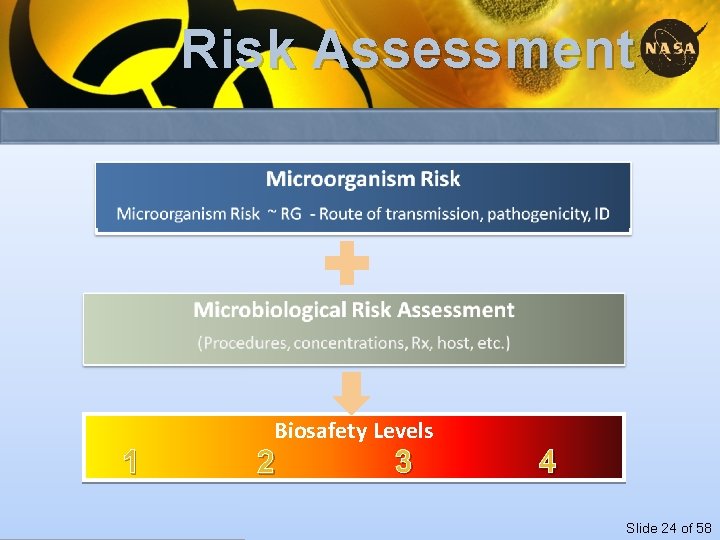
Containment • Containment is used in describing safe methods for managing biological agents in the laboratory environment where they are being handled or maintained. The purpose of containment is to reduce or eliminate exposure of laboratory workers, persons outside the laboratory, and the environment to potentially hazardous agents. • The three elements of containment include laboratory practice and technique, safety equipment, and facility design. • The proper containment is determined by identification of the risk group and the appropriate biosafety level. • The biosafety levels consist of combinations of laboratory practices and techniques, safety equipment, and laboratory facilities appropriate for the operations performed. They are also based on the potential hazards imposed by the agents used and for the laboratory function and activity. • As a general rule, a biosafety level should be used that matches the highest Risk Group (RG) classification of the organism involved. Slide 28 of 58
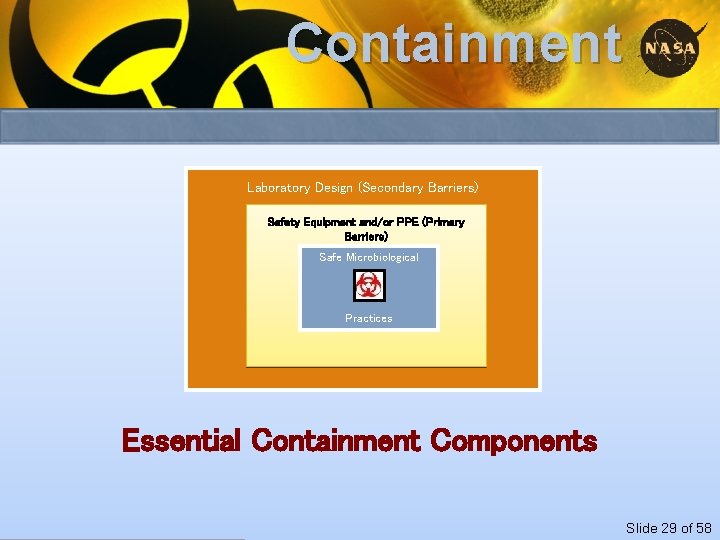
Containment Laboratory Design (Secondary Barriers) Safety Equipment and/or PPE (Primary Barriers) Safe Microbiological ) Practices Essential Containment Components Slide 29 of 58
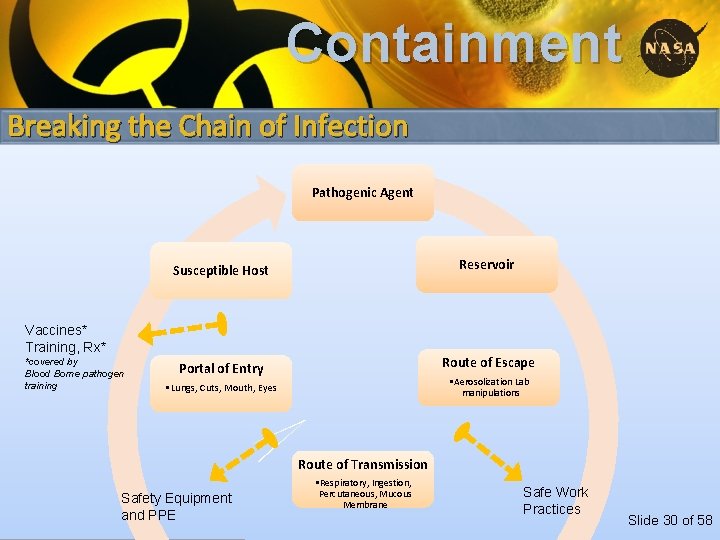
Containment Breaking the Chain of Infection Pathogenic Agent Susceptible Host Reservoir Portal of Entry Route of Escape Vaccines* Training, Rx* *covered by Blood Borne pathogen training • Aerosolization Lab manipulations • Lungs, Cuts, Mouth, Eyes Route of Transmission Safety Equipment and PPE • Respiratory, Ingestion, Percutaneous, Mucous Membrane Safe Work Practices Slide 30 of 58
Containment Proper Biosafety Techniques • Hands must be washed with soap and water frequently during the day after removing gloves, when gloves are torn or damaged, after spills, and before leaving the laboratory. • All procedures are performed carefully to minimize the production of splashes or aerosols. • Keep disinfectants and spill supplies close at hand. • Work surfaces are decontaminated at the completion of work or at the end of the day and after any spills. • When working with sharps extra-care should be taken and sharps should be disposed of in a hard-walled closeable container. • Organize and plan work procedures with safety in mind and keep an uncluttered work space. • Eating, drinking, smoking, applying cosmetics, and lip balm and handling contact lenses are prohibited in the laboratory. • Closed-toed shoes are required in the laboratories. Slide 31 of 58
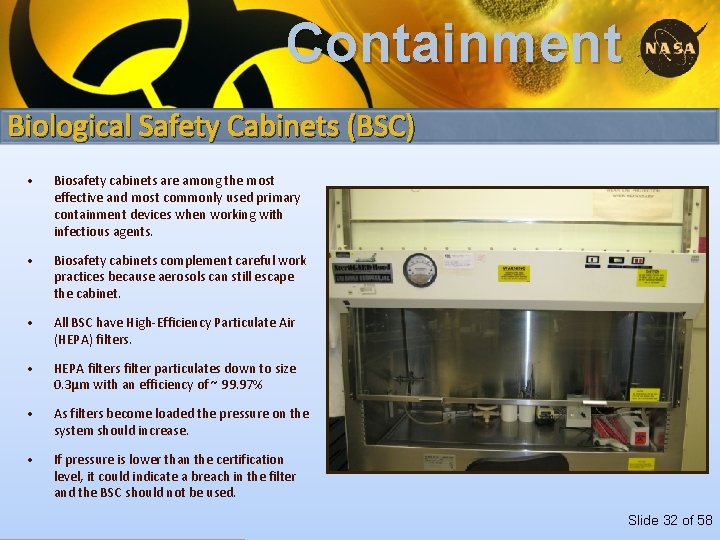
Containment Biological Safety Cabinets (BSC) • Biosafety cabinets are among the most effective and most commonly used primary containment devices when working with infectious agents. • Biosafety cabinets complement careful work practices because aerosols can still escape the cabinet. • All BSC have High-Efficiency Particulate Air (HEPA) filters. • HEPA filters filter particulates down to size 0. 3µm with an efficiency of ~ 99. 97% • As filters become loaded the pressure on the system should increase. • If pressure is lower than the certification level, it could indicate a breach in the filter and the BSC should not be used. Slide 32 of 58

Containment Biological Safety Cabinets (BSC) • Class I – For BSL 1 -3 – Provides personnel and environmental protection, but no product protection. – It is similar in air movement to a chemical fume hood (+ HEPA filter) – All filtered air (100%) is exhausted into the lab or to the outside Slide 33 of 58
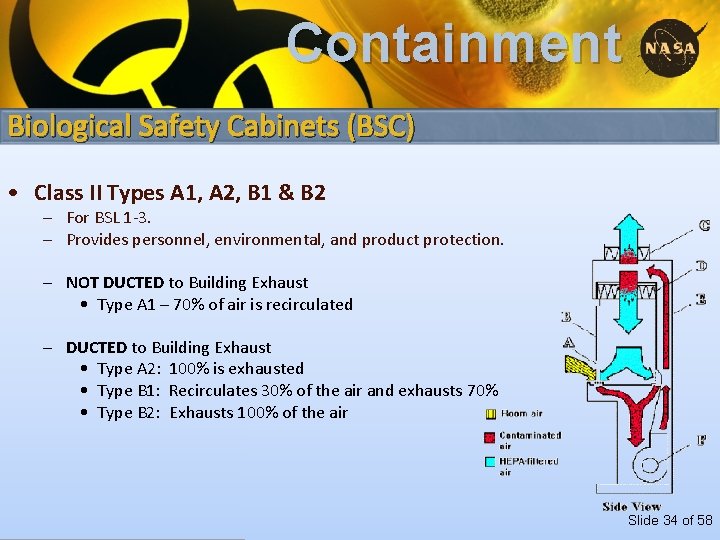
Containment Biological Safety Cabinets (BSC) • Class II Types A 1, A 2, B 1 & B 2 – For BSL 1 -3. – Provides personnel, environmental, and product protection. – NOT DUCTED to Building Exhaust • Type A 1 – 70% of air is recirculated – DUCTED to Building Exhaust • Type A 2: 100% is exhausted • Type B 1: Recirculates 30% of the air and exhausts 70% • Type B 2: Exhausts 100% of the air Slide 34 of 58
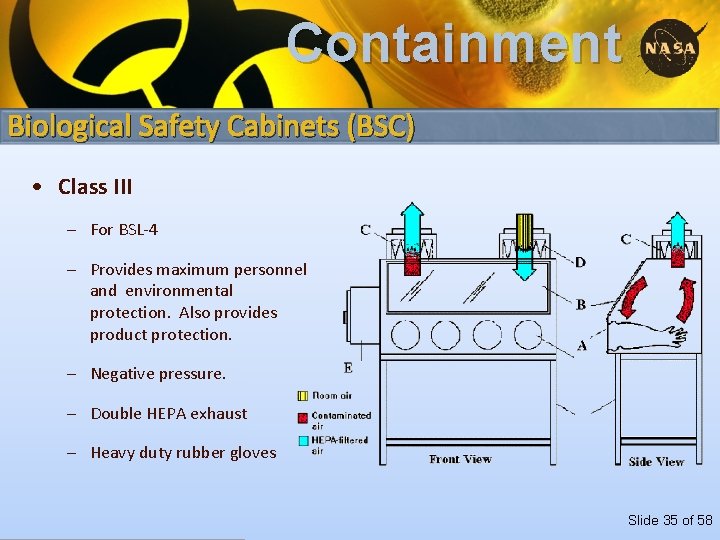
Containment Biological Safety Cabinets (BSC) • Class III – For BSL-4 – Provides maximum personnel and environmental protection. Also provides product protection. – Negative pressure. – Double HEPA exhaust – Heavy duty rubber gloves Slide 35 of 58
Containment Biological Safety Cabinets (BSC) • Inward directional airflow is what protects you from the agents in the cabinet – Do not disturb it! • Things that disrupt flow include – – – Sweeping sideways motion in the cabinet. Repeated insertion and withdrawal of arms in and out Opening and closing laboratory doors in the vicinity Improper placement or operation of materials in the cabinet Brisk walking past a BSC during use Slide 36 of 58
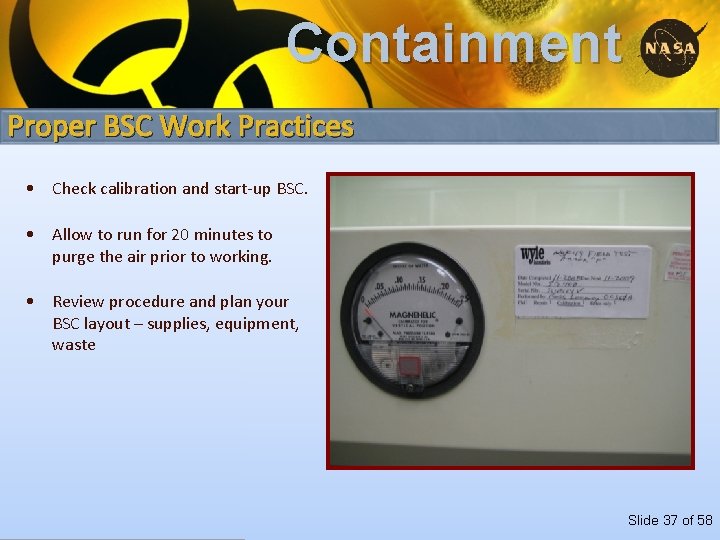
Containment Proper BSC Work Practices • Check calibration and start-up BSC. • Allow to run for 20 minutes to purge the air prior to working. • Review procedure and plan your BSC layout – supplies, equipment, waste Slide 37 of 58
Containment Proper BSC Work Practices • • Disinfect cabinet and equipment going into cabinet. Do not place items over front grille, do not block back grille. Perform work 6 inches back of front intake grille. (use the middle of the cabinet) Use plastic backed towels on work surface to absorb spills. Minimize movement of contaminated items over clean items (work from clean to dirty). Clean items - front, contaminated - rear. Do not use a flame. Turbulence and filter damage may occur. Equipment that causes turbulence (centrifuge, blender, etc. ) should be placed in back 1/3 of work surface. All other work in the cabinet should stop while apparatus is running. • Waste disposal area – biohazard bags and disinfectant pans • Remove contaminated items only after sealed or decontaminated. • Decontaminate after work is complete with appropriate disinfectant. Slide 38 of 58
Containment BSC Certification • New/at least annually • When moved • After maintenance • Maintenance should be performed by NSF-certified personnel Slide 39 of 58
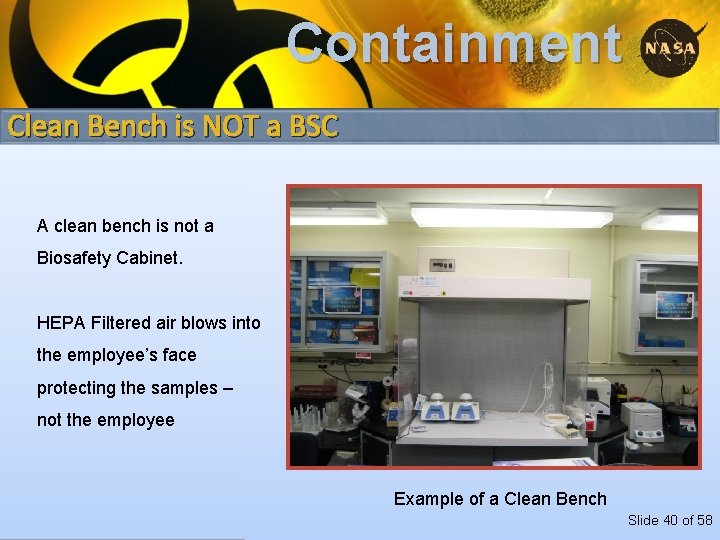
Containment Clean Bench is NOT a BSC A clean bench is not a Biosafety Cabinet. HEPA Filtered air blows into the employee’s face protecting the samples – not the employee Example of a Clean Bench Slide 40 of 58
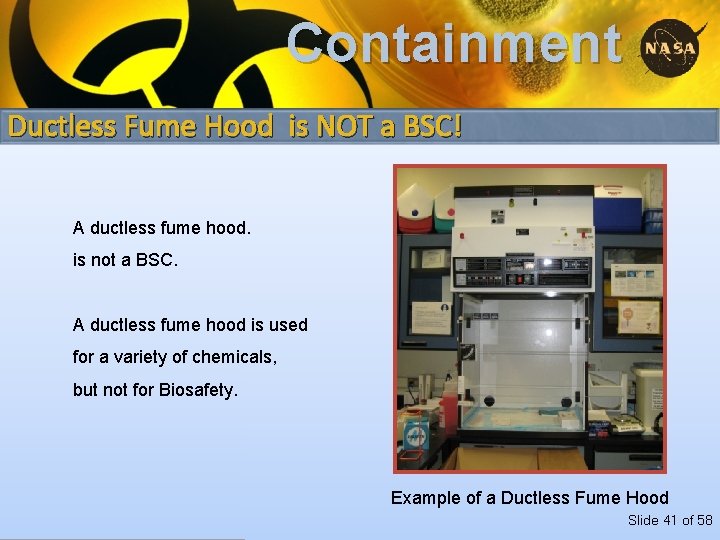
Containment Ductless Fume Hood is NOT a BSC! A ductless fume hood. is not a BSC. A ductless fume hood is used for a variety of chemicals, but not for Biosafety. Example of a Ductless Fume Hood Slide 41 of 58
Containment Proper PPE Work Practices • Minimum Personal Protective Equipment (PPE) requirements for BSL-2 are closed laboratory coat, one pair of gloves and closed-toed shoes • Eye protection or splash guards in place for work that will produce aerosols. • Wear PPE that is sized-properly. • Don and doff gloves properly to prevent touching contaminated glove surfaces. Slide 42 of 58
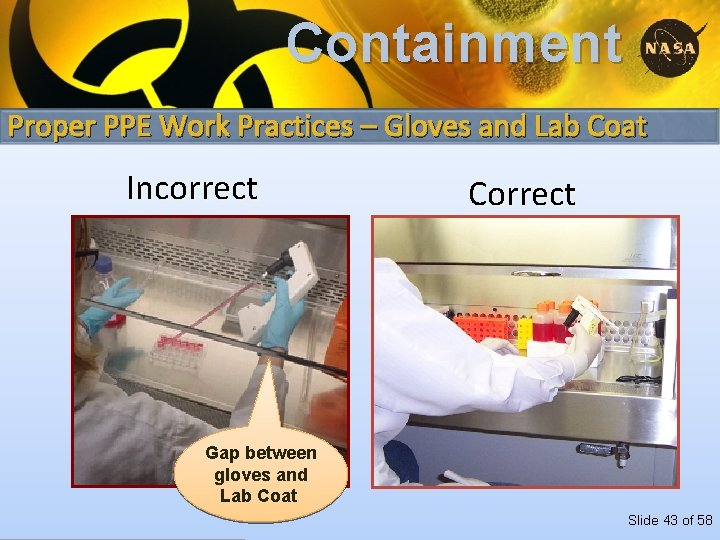
Containment Proper PPE Work Practices – Gloves and Lab Coat Incorrect Correct Gap between gloves and Lab Coat Slide 43 of 58
Containment Facility Requirements for BSL-2 • • • Lockable doors (a must for restricted agents) Sink Bench tops/furniture impervious and easily cleaned Biological safety cabinet (if applicable) Eyewash Inward airflow (desirable) Slide 44 of 58
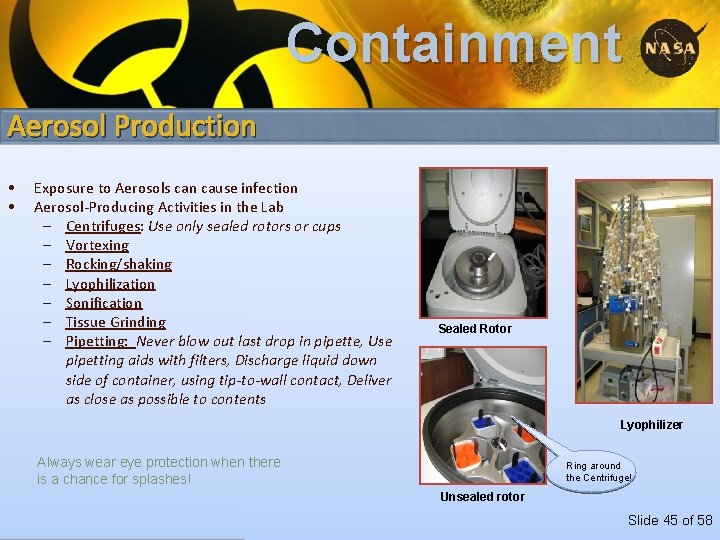
Containment Aerosol Production • • Exposure to Aerosols can cause infection Aerosol-Producing Activities in the Lab – Centrifuges: Use only sealed rotors or cups – Vortexing – Rocking/shaking – Lyophilization – Sonification – Tissue Grinding – Pipetting: Never blow out last drop in pipette, Use pipetting aids with filters, Discharge liquid down side of container, using tip-to-wall contact, Deliver as close as possible to contents Sealed Rotor Lyophilizer Always wear eye protection when there is a chance for splashes! Ring around the Centrifuge! Unsealed rotor Slide 45 of 58
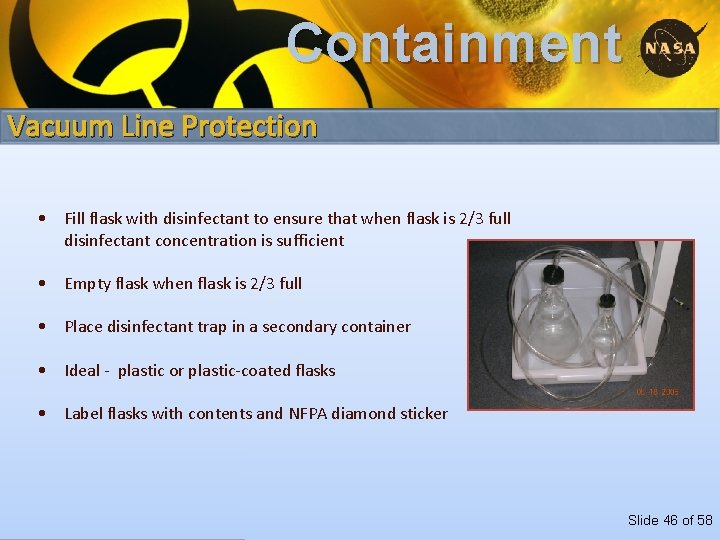
Containment Vacuum Line Protection • Fill flask with disinfectant to ensure that when flask is 2/3 full disinfectant concentration is sufficient • Empty flask when flask is 2/3 full • Place disinfectant trap in a secondary container • Ideal - plastic or plastic-coated flasks • Label flasks with contents and NFPA diamond sticker Slide 46 of 58
Decontamination Autoclave • An autoclave is a steam sterilizer that is used for biohazardous laboratory waste. In order to dispose of infectious laboratory waste (petri dishes, pipettes, culture tubes, glassware, etc. ), the waste must be autoclaved for minimum of 15 minutes at 121°C (minimum 15 psi). • The effectiveness of decontamination by steam autoclaving depends upon various loading factors that influence the temperature to which the material is subjected and the contact time. • Particular attention must be given to packaging, including the size of containers and their distribution in the autoclave. Containers must be arranged in a manner that permits free circulation of steam. • All processed items must have heat-sensitive tape, or other acceptable method (such as commercially available strips or vials of Bacillus species endospores or thermocouples), attached to confirm proper sterilization. Once the cycle has been completed, the waste can then be disposed of as medical waste. Slide 47 of 58
Waste Disposal • In lab - keep containers covered/closed! • Use appropriate container – Plastic bags/cardboard – Red plastic bins are available for frozen items • Do not over fill – use the 2/3 rule - must be able tie bags and close box • Label box before putting in storage – Name, date and Room # Slide 48 of 58
Labels and Signs • Warning labels shall be affixed: to containers of regulated waste; incubators, refrigerators and freezers containing blood or other potentially infectious material; and other containers used to store, transport or ship blood or other potentially infectious materials. • Biohazard signs must be posted at entrances to all biosafety laboratories. The labels shall be fluorescent orange or orange-red or predominately so, with lettering and symbols in a contrasting color. • An Emergency Action Plan must also be placed in each laboratory. Slide 49 of 58
Spill Cleanup Exposure / Spill Procedures • Choose appropriate disinfectant and PPE • Treat and allow to disinfect for specified time • Dispose of all wastes including PPE in Biohazard • Sharps Disposal - plastic or cardboard container Further information on disinfectant selection can be found at http: //www. cdc. gov/od/ohs/biosfty/bmbl 5/BMBL_5 th_Edition. pdf in Appendix B Slide 50 of 58
Spill Cleanup Spill Kits • Recommended kit contents– 1. Gloves (several pairs) 2. Small disposable broom with dust pan, tongs, or forceps 3. Red medical waste bags 4. Disinfectant suitable for the biologically hazardous materials found in the lab (check expiration dates) 5. Germicidal gelling agent (optional) 6. Paper towels 7. Diking material or spillows for large spills(optional) 8. Instructions for spill clean-up Slide 51 of 58
Reporting Exposure • Needle sticks sharps incidence – Notify supervisor – Report to JSC Clinic for treatment • If working with infectious agents, report any illnesses with a fever to your supervisor. Slide 52 of 58
Transportation • Domestic and International Shipment: www. cdc. gov/od/ohs/biosfty/shipregs. htm • Select Agent Transfer Tracking System: www. cdc. gov/od/ohs/lrsat. htm • Import and Export permits for Biological Materials: www. cdc. gov/od/ohs/biosfty/imprtper. htm • Organization specific protocols: examples: (JSC 290/Wyle SHE-WLS-319) • IATA DGR training - specific to hazards being shipped Slide 53 of 58
Biosecurity at JSC • Biosecurity is a set of preventive measures designed to reduce the risk of loss and/or intentional removal (theft) of valuable biological material. • Biosecurity at JSC is addressed at JSC by having the following safeguards in place. – – – – – Risk and threat assessment; facility security plans; physical security; security policies for personnel; policies regarding accessing the laboratory and animal areas; specimen accountability/inventory; receipt of agents into the laboratory; emergency response plans; and reporting of incidents, unintentional injuries, and security breaches. Slide 54 of 58
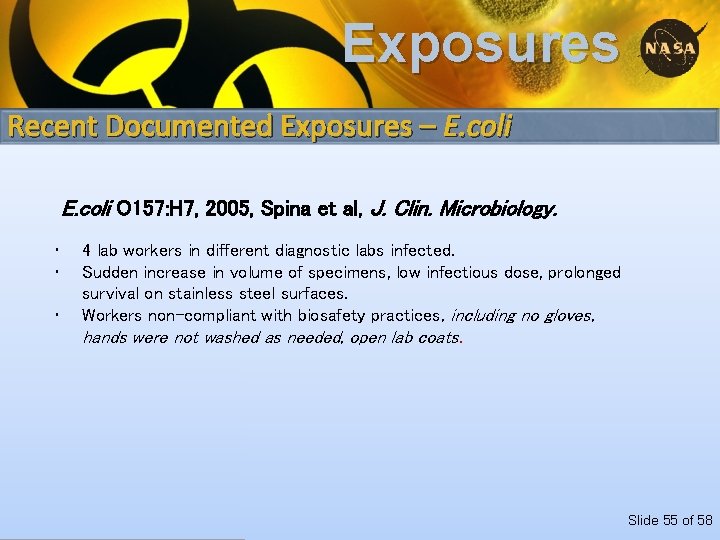
Exposures Recent Documented Exposures – E. coli O 157: H 7, 2005, Spina et al, J. Clin. Microbiology. • • • 4 lab workers in different diagnostic labs infected. Sudden increase in volume of specimens, low infectious dose, prolonged survival on stainless steel surfaces. Workers non-compliant with biosafety practices, including no gloves, hands were not washed as needed, open lab coats. Slide 55 of 58
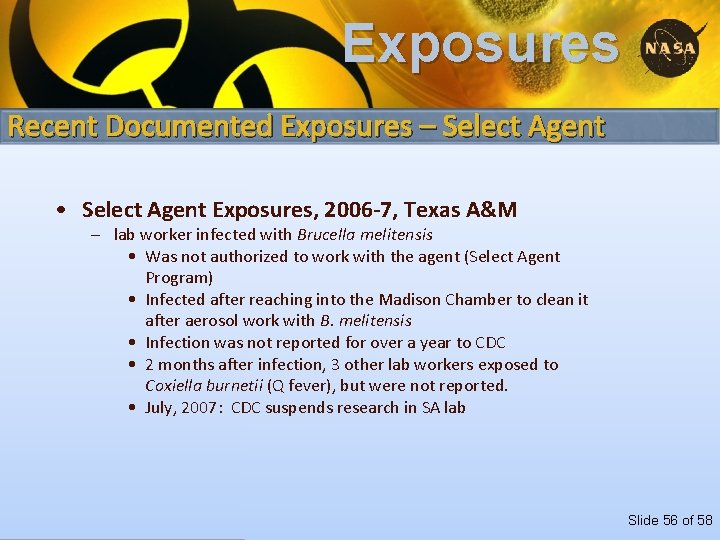
Exposures Recent Documented Exposures – Select Agent • Select Agent Exposures, 2006 -7, Texas A&M – lab worker infected with Brucella melitensis • Was not authorized to work with the agent (Select Agent Program) • Infected after reaching into the Madison Chamber to clean it after aerosol work with B. melitensis • Infection was not reported for over a year to CDC • 2 months after infection, 3 other lab workers exposed to Coxiella burnetii (Q fever), but were not reported. • July, 2007: CDC suspends research in SA lab Slide 56 of 58
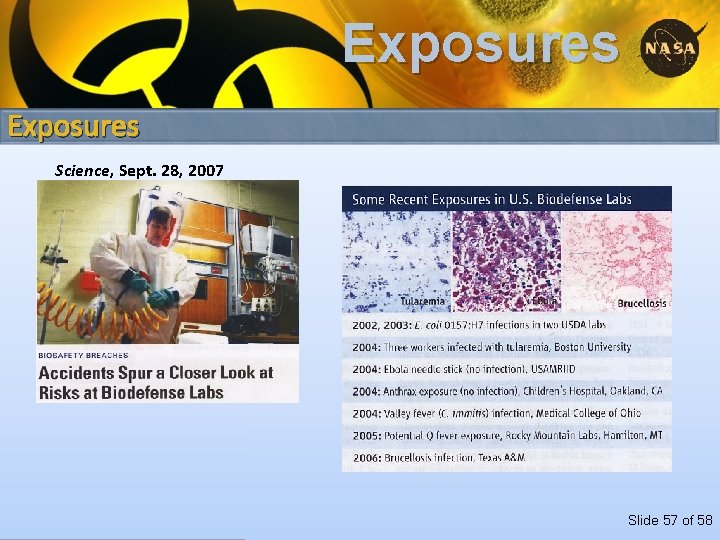
Exposures Science, Sept. 28, 2007 Slide 57 of 58
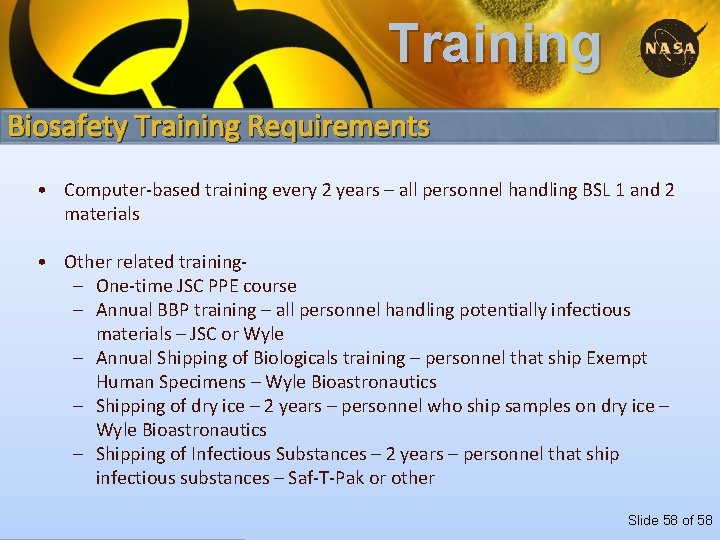
Training Biosafety Training Requirements • Computer-based training every 2 years – all personnel handling BSL 1 and 2 materials • Other related training- – One-time JSC PPE course – Annual BBP training – all personnel handling potentially infectious materials – JSC or Wyle – Annual Shipping of Biologicals training – personnel that ship Exempt Human Specimens – Wyle Bioastronautics – Shipping of dry ice – 2 years – personnel who ship samples on dry ice – Wyle Bioastronautics – Shipping of Infectious Substances – 2 years – personnel that ship infectious substances – Saf-T-Pak or other Slide 58 of 58
- Slides: 58