
Basics Ebeam lithography 1 2 3 4 Introduction
Basics E-beam lithography 1. 2. 3. 4. Introduction of concepts Pattern handling Hardware issues Miscellaneous
![Main issues Introduction of concepts Resist • Dose [µC/cm²] Pattern • From design to](http://slidetodoc.com/presentation_image/11e61570be8f649da0bea984c809b288/image-2.jpg "Main issues Introduction of concepts Resist • Dose [µC/cm²] Pattern • From design to")
Main issues Introduction of concepts Resist • Dose [µC/cm²] Pattern • From design to beam stepping Electron Beam Pattern Generator • • Holder/substrate Positioning Beam Exposure
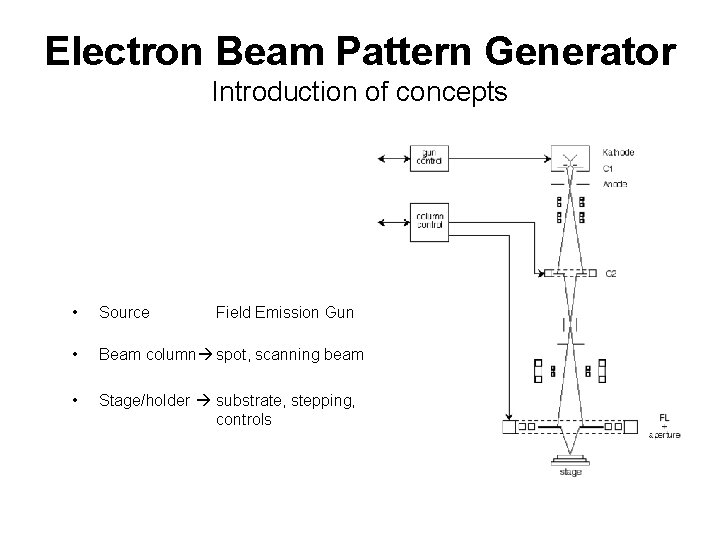
Electron Beam Pattern Generator Introduction of concepts • Source • Beam column spot, scanning beam • Stage/holder substrate, stepping, controls Field Emission Gun
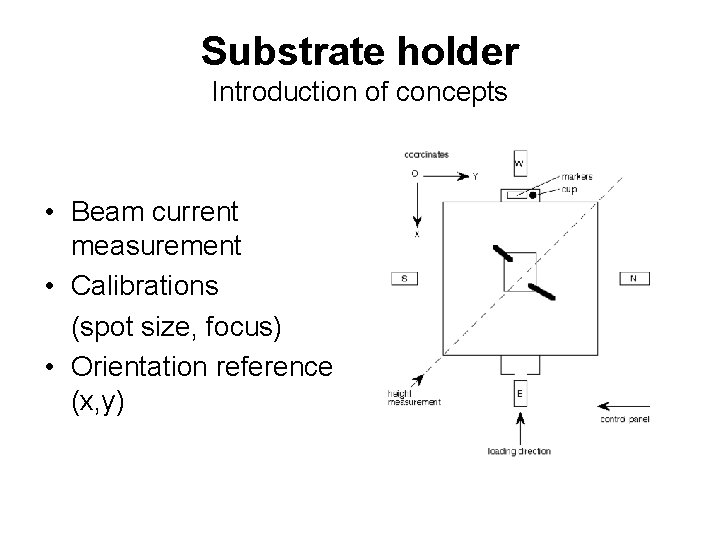
Substrate holder Introduction of concepts • Beam current measurement • Calibrations (spot size, focus) • Orientation reference (x, y)
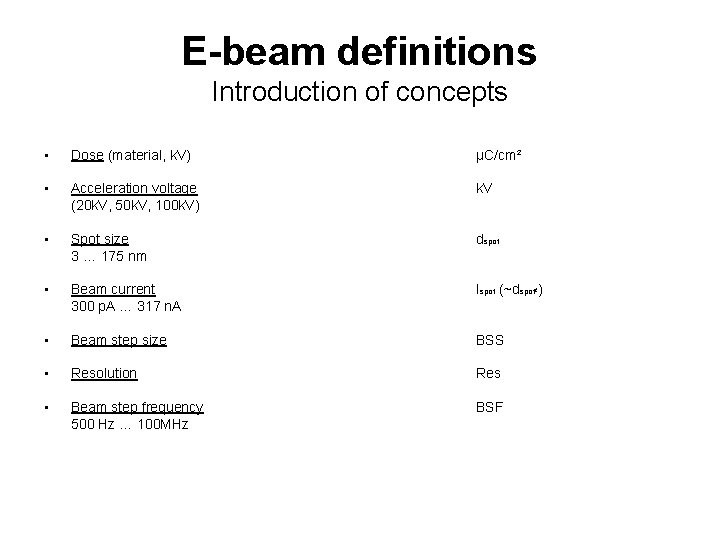
E-beam definitions Introduction of concepts • Dose (material, k. V) µC/cm² • Acceleration voltage (20 k. V, 50 k. V, 100 k. V) k. V • Spot size 3 … 175 nm dspot • Beam current 300 p. A … 317 n. A Ispot (~dspot²) • Beam step size BSS • Resolution Res • Beam step frequency 500 Hz … 100 MHz BSF
From pattern to e-beam writing process pattern handling Hardware • Stage movement • Beam deflection Fracturing • Main field (scanfield, block) • Trapezium
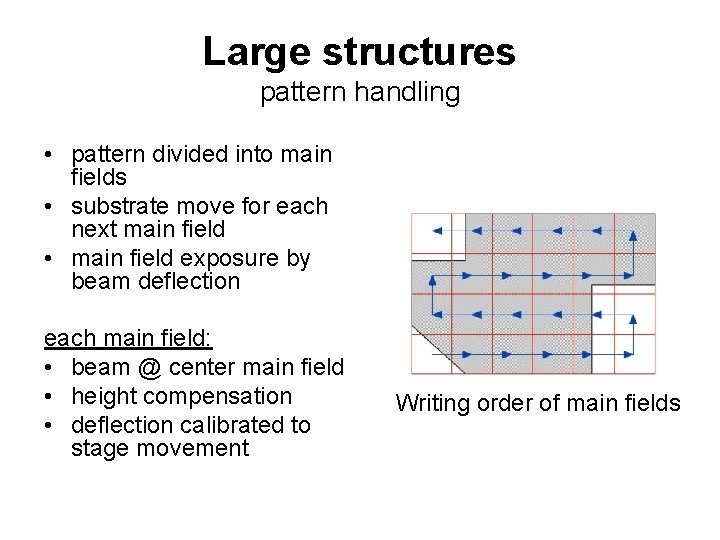
Large structures pattern handling • pattern divided into main fields • substrate move for each next main field • main field exposure by beam deflection each main field: • beam @ center main field • height compensation • deflection calibrated to stage movement Writing order of main fields
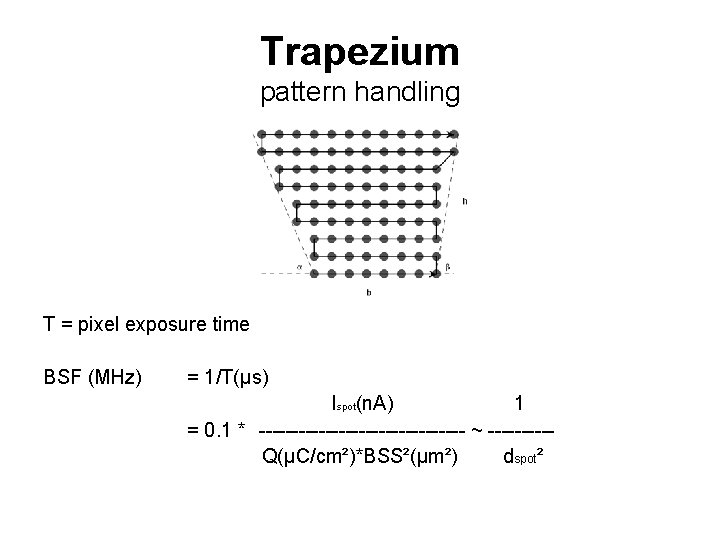
Trapezium pattern handling T = pixel exposure time BSF (MHz) = 1/T(µs) Ispot(n. A) 1 = 0. 1 * ---------------- ~ -----Q(µC/cm²)*BSS²(µm²) dspot²
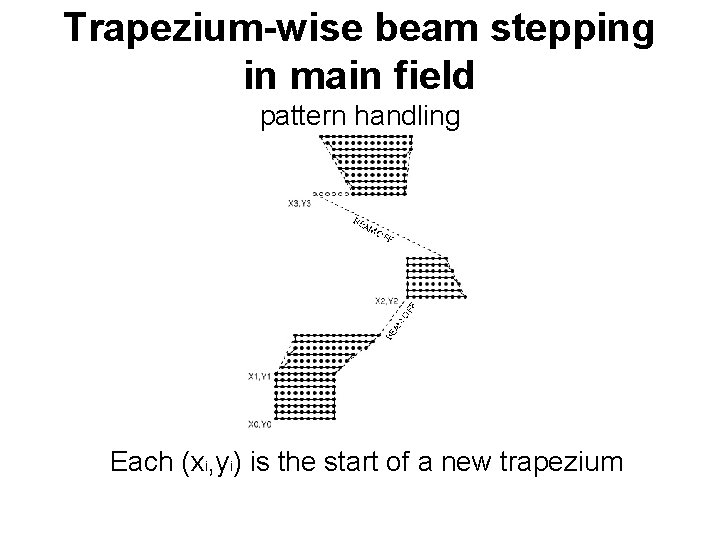
Trapezium-wise beam stepping in main field pattern handling Each (xi, yi) is the start of a new trapezium
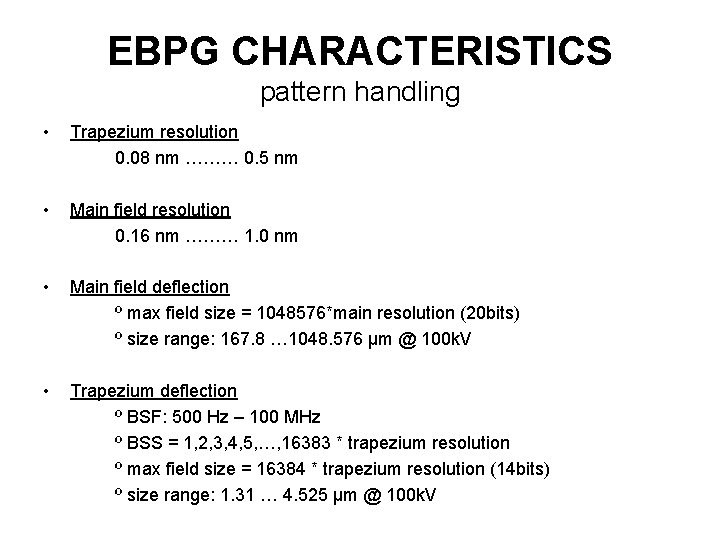
EBPG CHARACTERISTICS pattern handling • Trapezium resolution 0. 08 nm ……… 0. 5 nm • Main field resolution 0. 16 nm ……… 1. 0 nm • Main field deflection º max field size = 1048576*main resolution (20 bits) º size range: 167. 8 … 1048. 576 µm @ 100 k. V • Trapezium deflection º BSF: 500 Hz – 100 MHz º BSS = 1, 2, 3, 4, 5, …, 16383 * trapezium resolution º max field size = 16384 * trapezium resolution (14 bits) º size range: 1. 31 … 4. 525 µm @ 100 k. V
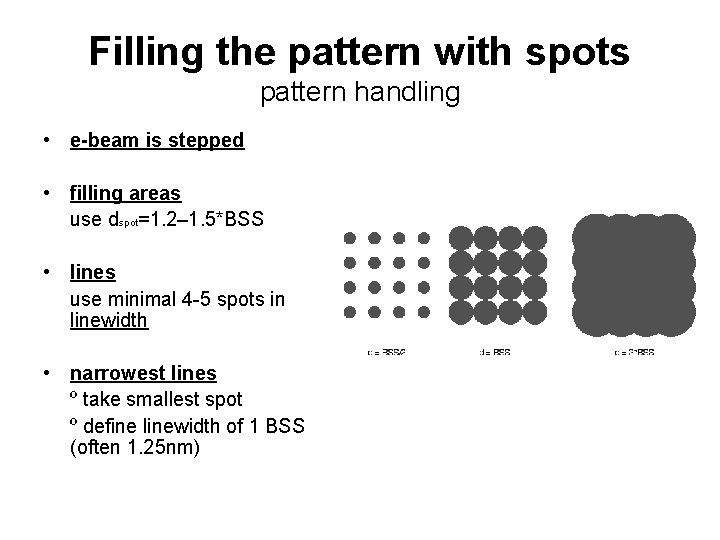
Filling the pattern with spots pattern handling • e-beam is stepped • filling areas use dspot=1. 2– 1. 5*BSS • lines use minimal 4 -5 spots in linewidth • narrowest lines º take smallest spot º define linewidth of 1 BSS (often 1. 25 nm)
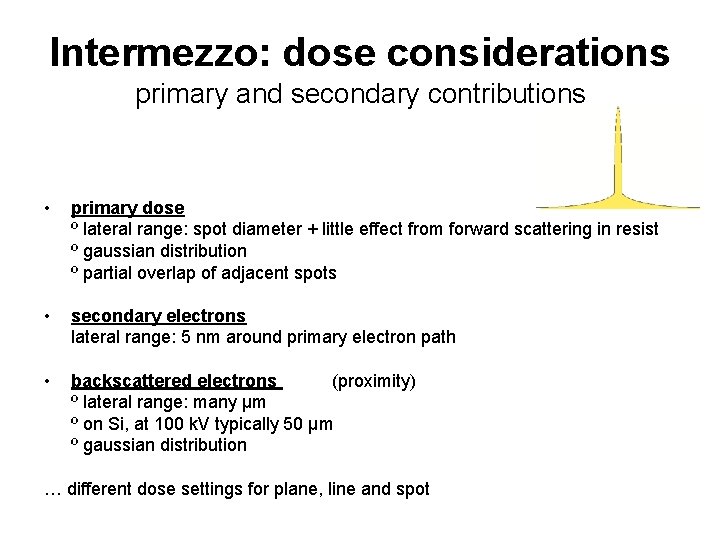
Intermezzo: dose considerations primary and secondary contributions • primary dose º lateral range: spot diameter + little effect from forward scattering in resist º gaussian distribution º partial overlap of adjacent spots • secondary electrons lateral range: 5 nm around primary electron path • backscattered electrons (proximity) º lateral range: many µm º on Si, at 100 k. V typically 50 µm º gaussian distribution … different dose settings for plane, line and spot
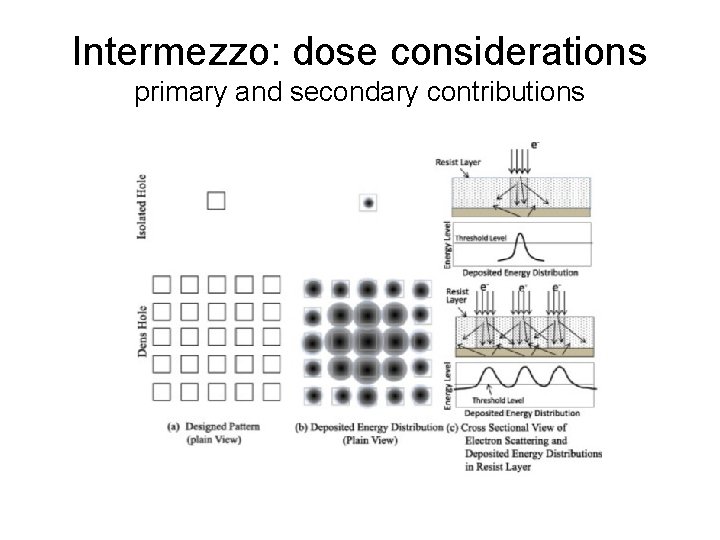
Intermezzo: dose considerations primary and secondary contributions
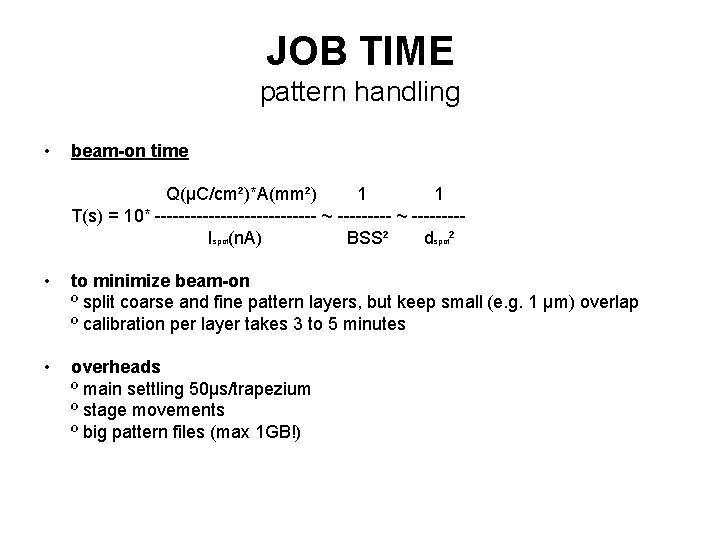
JOB TIME pattern handling • beam-on time Q(µC/cm²)*A(mm²) 1 1 T(s) = 10* -------------- ~ --------Ispot(n. A) BSS² dspot² • to minimize beam-on º split coarse and fine pattern layers, but keep small (e. g. 1 µm) overlap º calibration per layer takes 3 to 5 minutes • overheads º main settling 50µs/trapezium º stage movements º big pattern files (max 1 GB!)
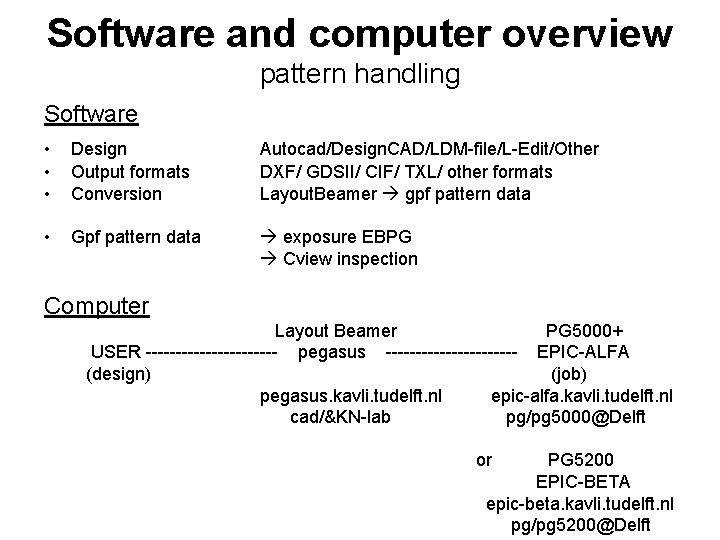
Software and computer overview pattern handling Software • • • Design Output formats Conversion Autocad/Design. CAD/LDM-file/L-Edit/Other DXF/ GDSII/ CIF/ TXL/ other formats Layout. Beamer gpf pattern data • Gpf pattern data exposure EBPG Cview inspection Computer Layout Beamer PG 5000+ USER ----------- pegasus ----------- EPIC-ALFA (design) (job) pegasus. kavli. tudelft. nl epic-alfa. kavli. tudelft. nl cad/&KN-lab pg/pg 5000@Delft or PG 5200 EPIC-BETA epic-beta. kavli. tudelft. nl pg/pg 5200@Delft
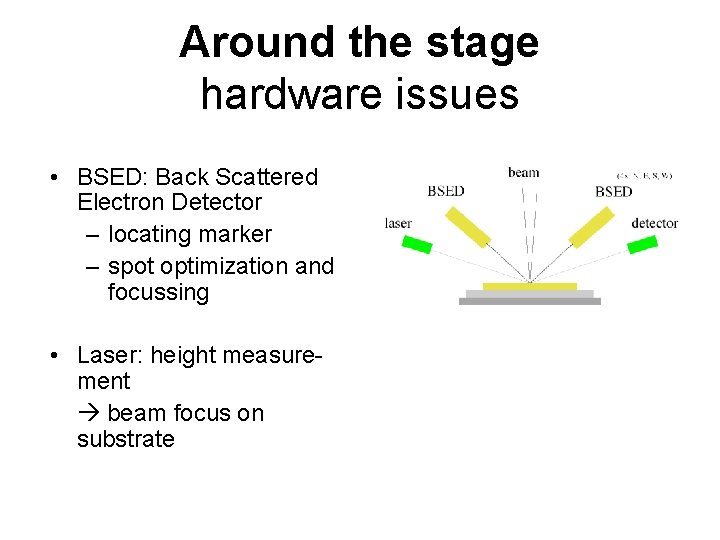
Around the stage hardware issues • BSED: Back Scattered Electron Detector – locating marker – spot optimization and focussing • Laser: height measurement beam focus on substrate
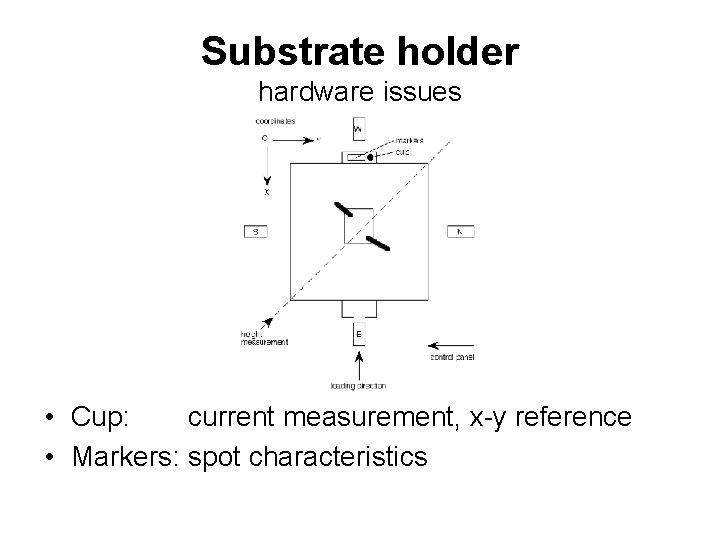
Substrate holder hardware issues • Cup: current measurement, x-y reference • Markers: spot characteristics
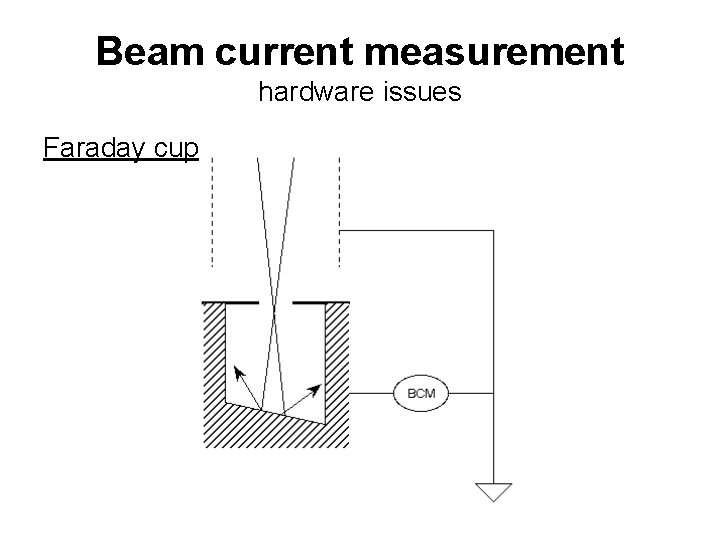
Beam current measurement hardware issues Faraday cup
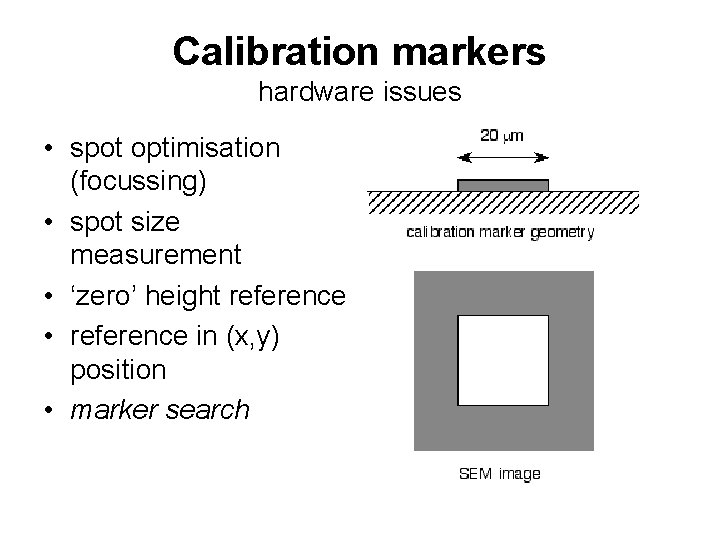
Calibration markers hardware issues • spot optimisation (focussing) • spot size measurement • ‘zero’ height reference • reference in (x, y) position • marker search
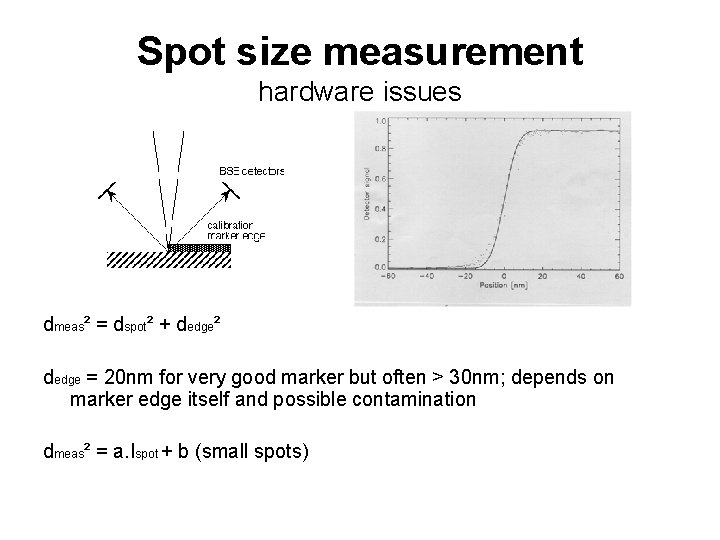
Spot size measurement hardware issues dmeas² = dspot² + dedge² dedge = 20 nm for very good marker but often > 30 nm; depends on marker edge itself and possible contamination dmeas² = a. Ispot + b (small spots)
Spot size adjustment hardware issues FEG: high brightness electron source BSF too high need for defocus • discrete steps of 20 nm/16 bit in FL@400 µm aperture or 0. 8 nm/bit FF • adds quadratically to initial spot dadjust² = dmeas² + ddefocus² • unround spot if a few bits • real big spots: 4/3*measured size • defocus to dmeas or adjust by [+ -]<bits>
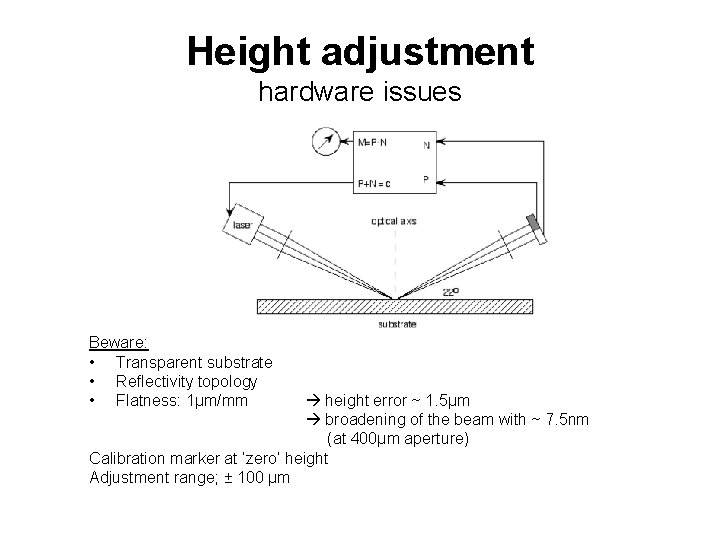
Height adjustment hardware issues Beware: • Transparent substrate • Reflectivity topology • Flatness: 1µm/mm height error ~ 1. 5µm broadening of the beam with ~ 7. 5 nm (at 400µm aperture) Calibration marker at ‘zero’ height Adjustment range; ± 100 µm
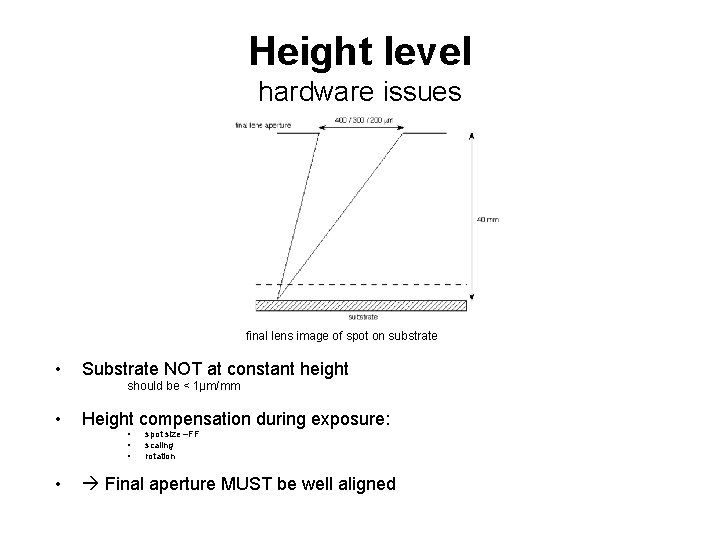
Height level hardware issues final lens image of spot on substrate • Substrate NOT at constant height should be < 1µm/mm • • Height compensation during exposure: • • • spot size –FF scaling rotation Final aperture MUST be well aligned
E-beam threats miscellaneous • Charging • e-drain required conductive layer* • Contamination • work clean! • handle holders carefully and with gloves • Vibrations • turbo: around 800 Hz writing strategy!* • don’t be around during writing • Thermal stability • Keep door closed * In more detail in Advanced E-beam Litho
Limitations miscellaneous • Resist • shot noise: N ± √N • swelling • secondary electrons: 8 nm extra • Position accuracy • • • laser interferometer: 0. 15 nm marker location: 30 nm drift (0. 1 µm/hr possible) main field overlay stitching: 60 nm
- Slides: 25