
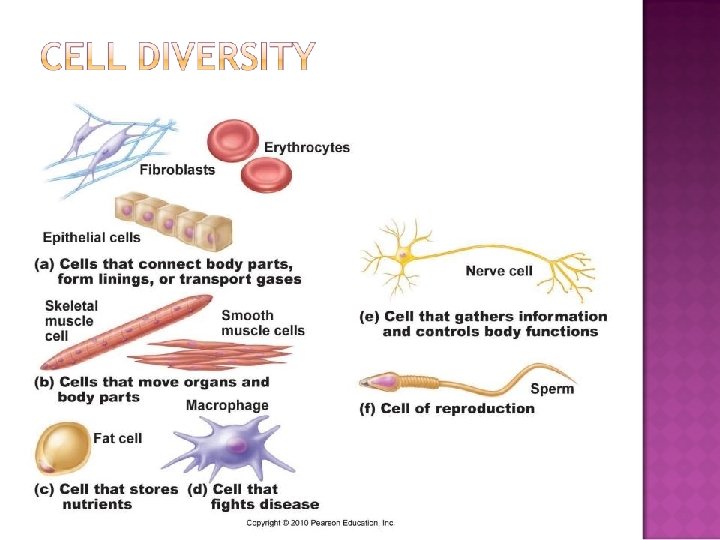
Basic unit of structure function 200 different cell
⦿Basic unit of structure & function ⦿ 200 different cell types ⦿Made of C, O, H, N + trace elements ⦿ 3 main parts: 1. Plasma membrane 2. Cytoplasm 3. Nucleus
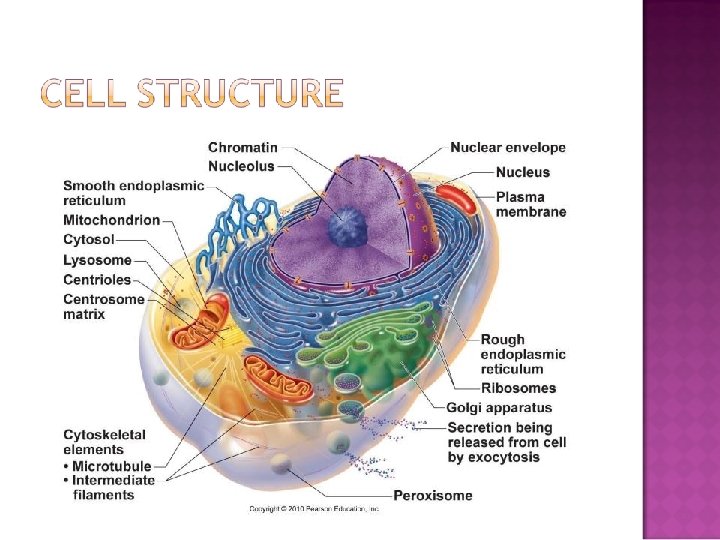

⦿ Between plasma membrane & nucleus ⦿ Three elements: �Cytosol: fluid • Eg. water, proteins, salts, sugars �Inclusions: chemical substances that vary depending on cell type • Eg. glycogen (liver), lipid droplets (fat cells), melanin (skin & hair) �Organelles: specific functions
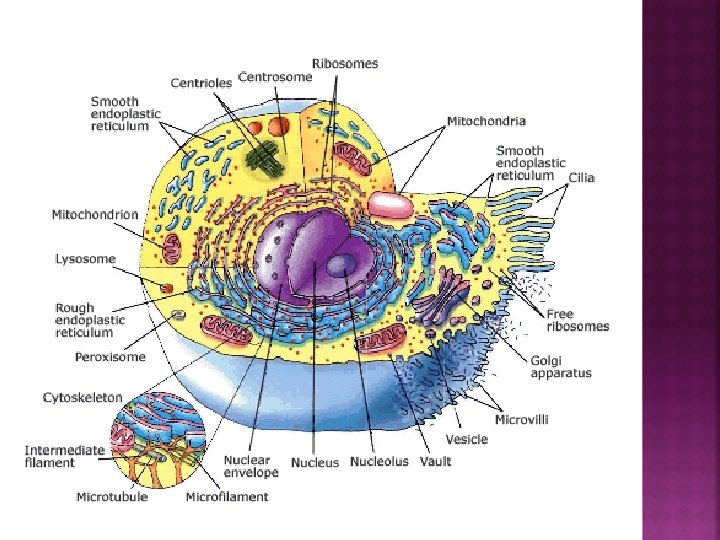
⦿ “little organs” ⦿ Specialized compartments → specific functions ⦿ Membranous = membrane-bound �Mitochondria, peroxisomes, lysosomes, ER, Golgi apparatus ⦿ Nonmembranous = no membrane �cytoskeleton, centrioles, ribosomes
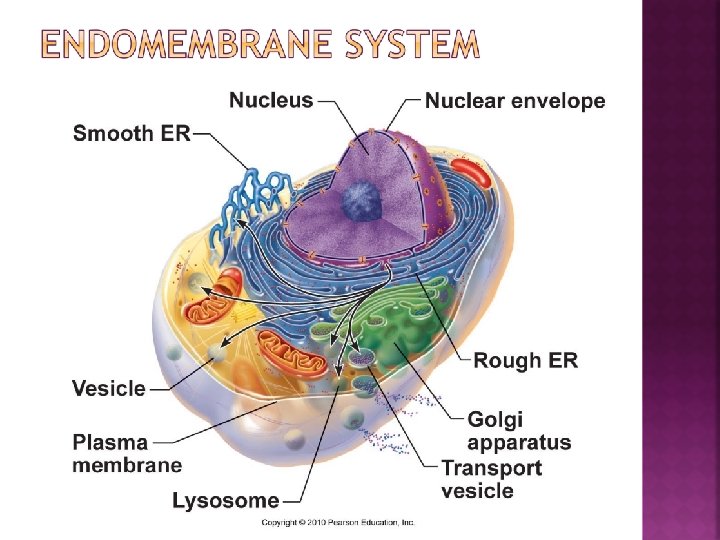
⦿ System of organelles that work to 1. Produce, store, export biological molecules 2. Degrade harmful substances ⦿ Nuclear envelope, rough ER, smooth ER, Golgi apparatus, secretory vesicles, lysosomes
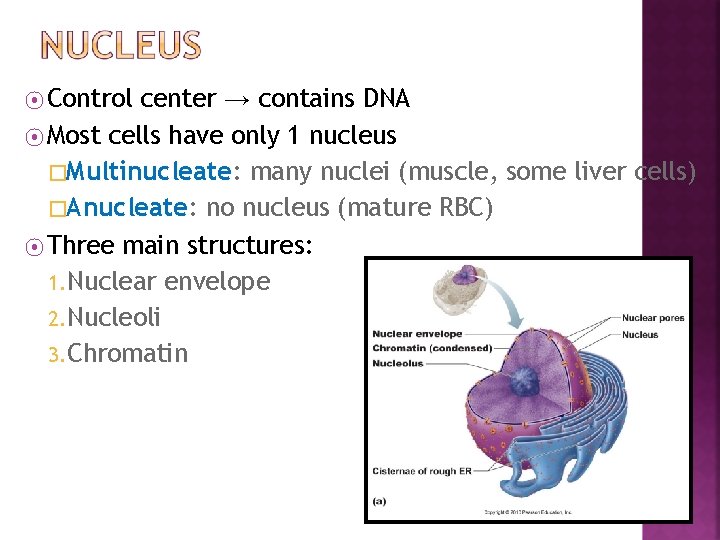
⦿ Control center → contains DNA ⦿ Most cells have only 1 nucleus �Multinucleate: many nuclei (muscle, some liver cells) �Anucleate: no nucleus (mature RBC) ⦿ Three main structures: 1. Nuclear envelope 2. Nucleoli 3. Chromatin
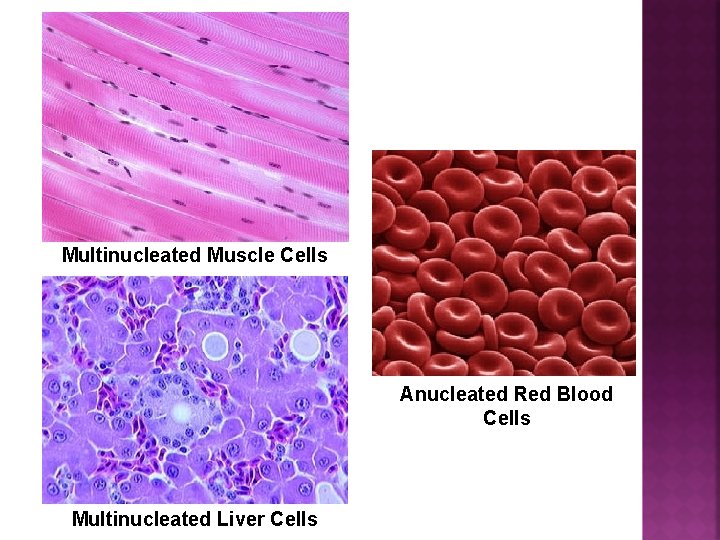
Multinucleated Muscle Cells Anucleated Red Blood Cells Multinucleated Liver Cells
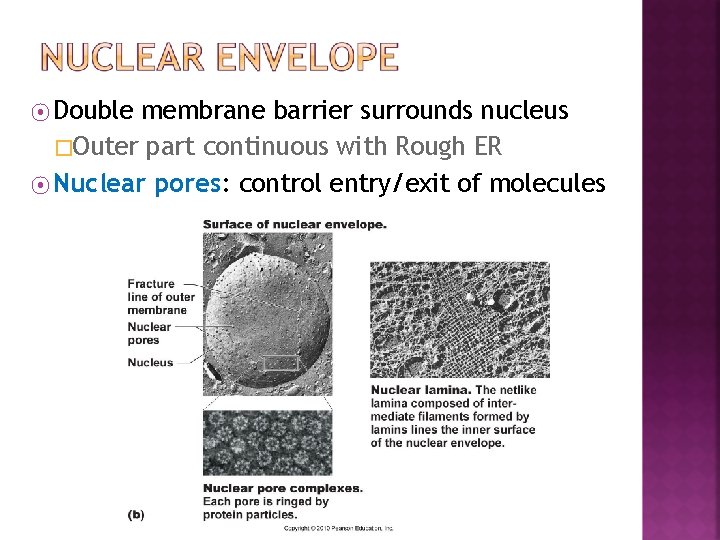
⦿ Double membrane barrier surrounds nucleus �Outer part continuous with Rough ER ⦿ Nuclear pores: control entry/exit of molecules
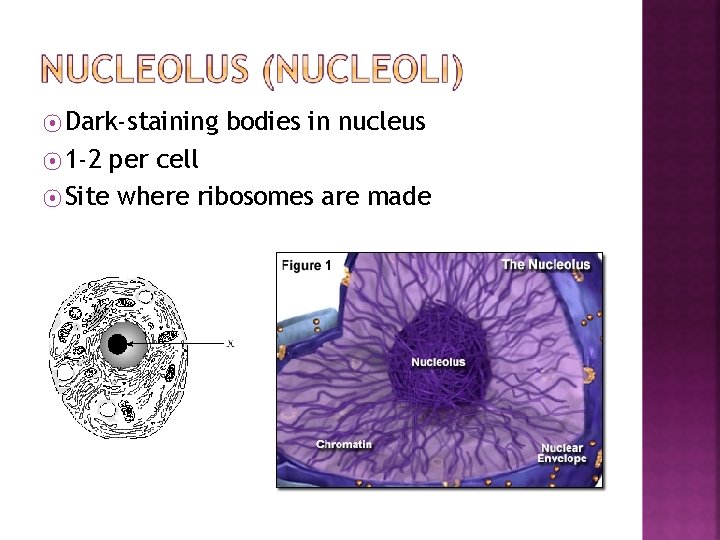
⦿ Dark-staining ⦿ 1 -2 bodies in nucleus per cell ⦿ Site where ribosomes are made
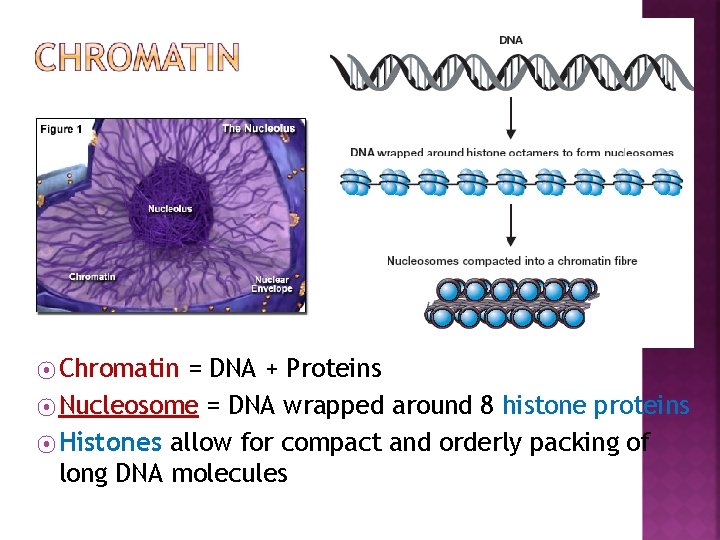
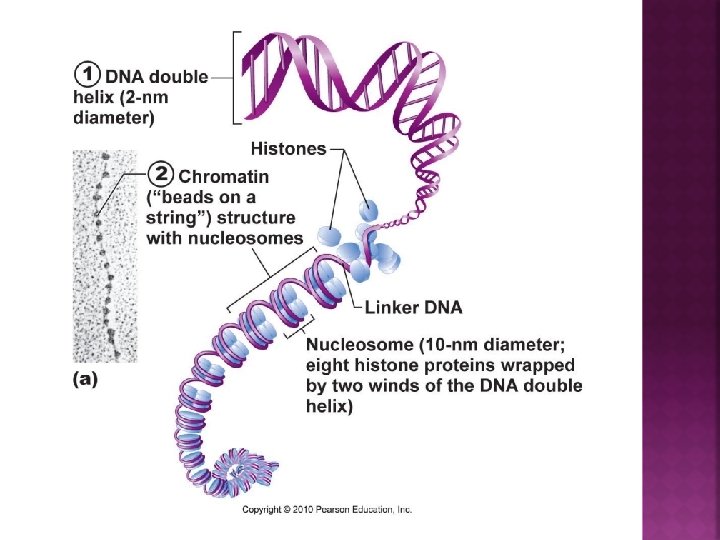
⦿ Chromatin = DNA + Proteins ⦿ Nucleosome = DNA wrapped around 8 histone proteins ⦿ Histones allow for compact and orderly packing of long DNA molecules
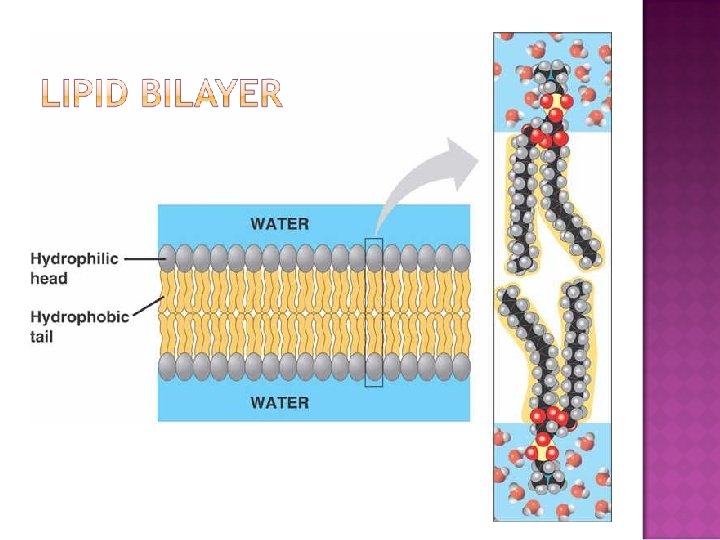
⦿Function: enclose cell contents, control exchange of substances with environment, cell communication ⦿Made of: �Lipid bilayer �Cholesterol �Glycolipids �Proteins
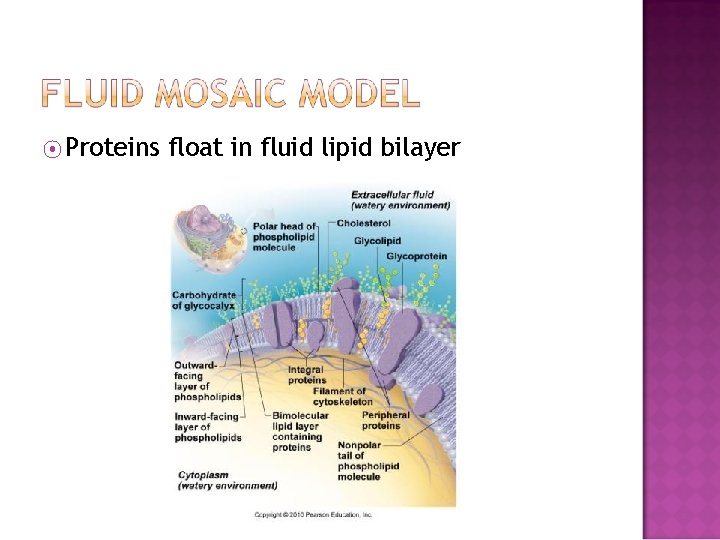
⦿ Proteins float in fluid lipid bilayer
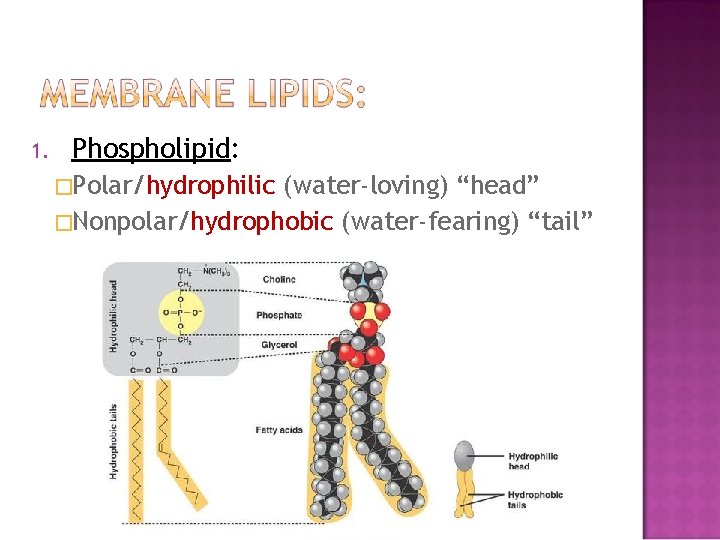
1. Phospholipid: �Polar/hydrophilic (water-loving) “head” �Nonpolar/hydrophobic (water-fearing) “tail”
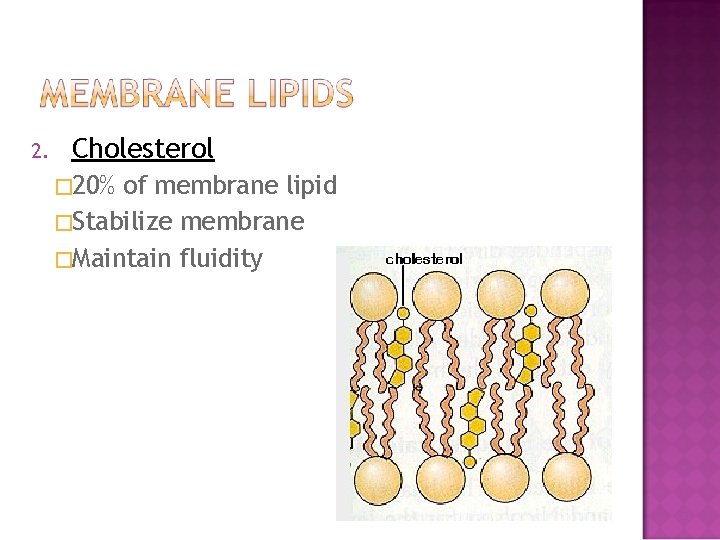
2. Cholesterol � 20% of membrane lipid �Stabilize membrane �Maintain fluidity
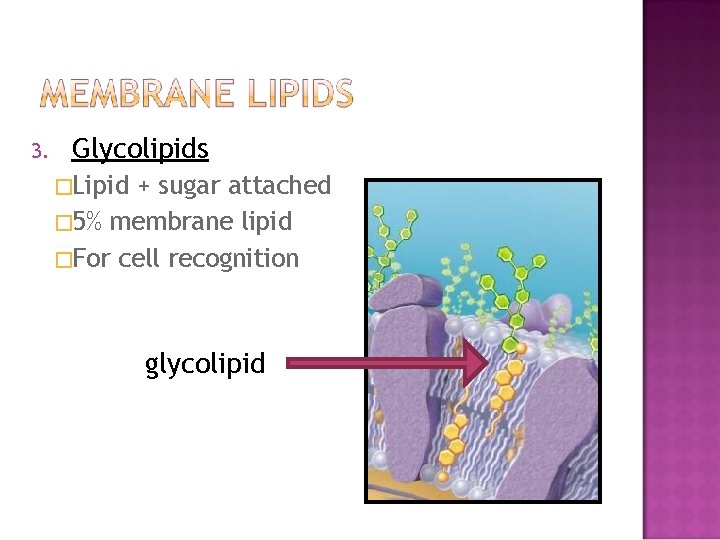
3. Glycolipids �Lipid + sugar attached � 5% membrane lipid �For cell recognition glycolipid
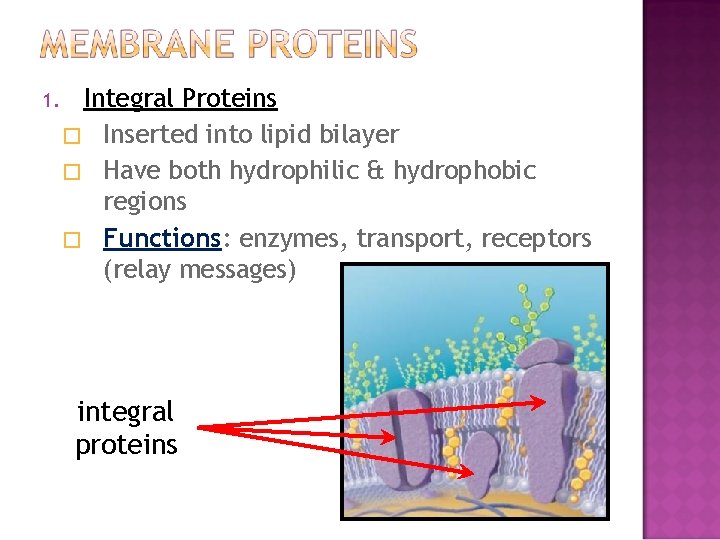
1. Integral Proteins � Inserted into lipid bilayer � Have both hydrophilic & hydrophobic regions � Functions: enzymes, transport, receptors (relay messages) integral proteins
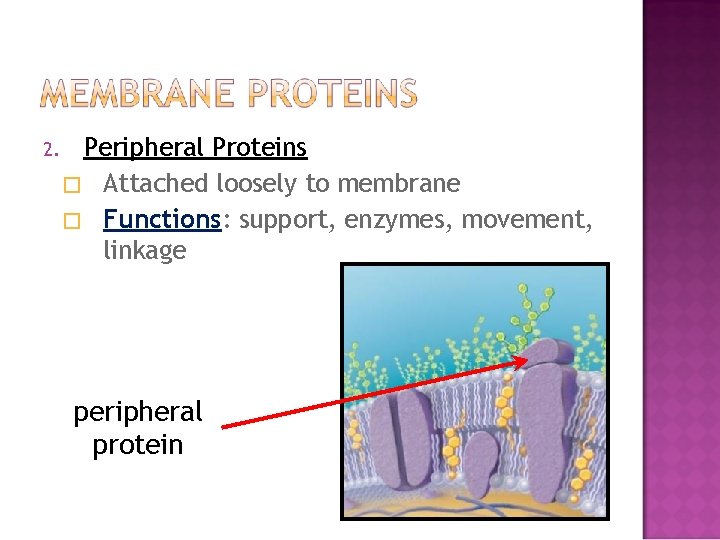
2. Peripheral Proteins � Attached loosely to membrane � Functions: support, enzymes, movement, linkage peripheral protein
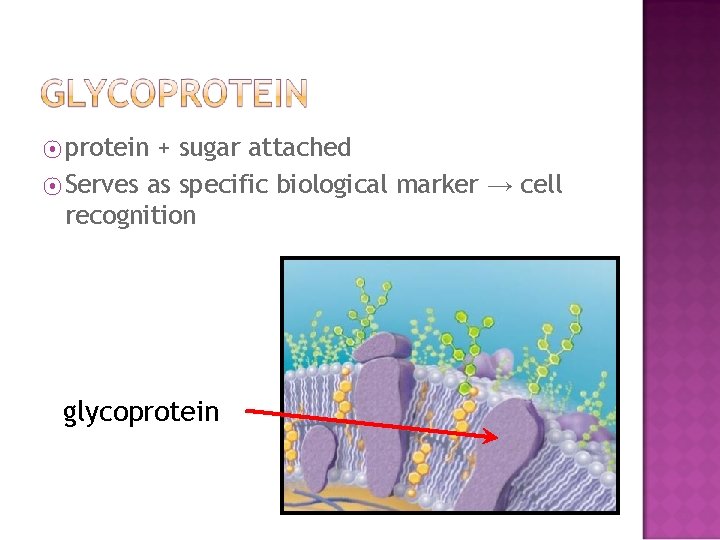
⦿ protein + sugar attached ⦿ Serves as specific biological marker → cell recognition glycoprotein
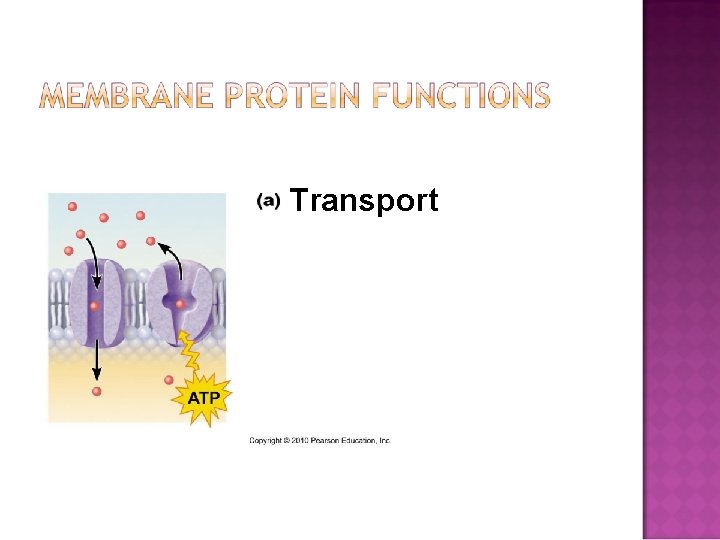
Transport
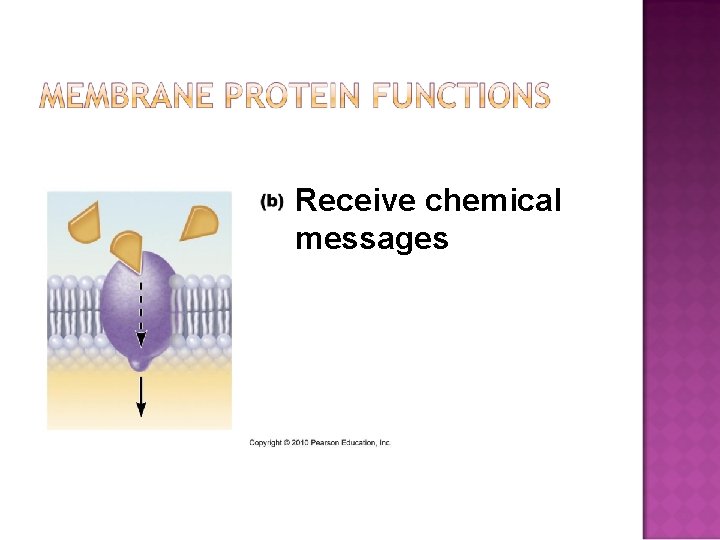
Receive chemical messages
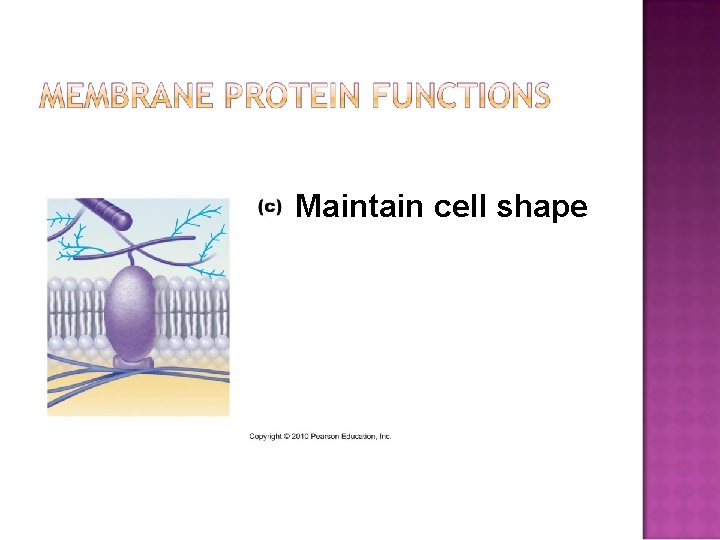
Maintain cell shape
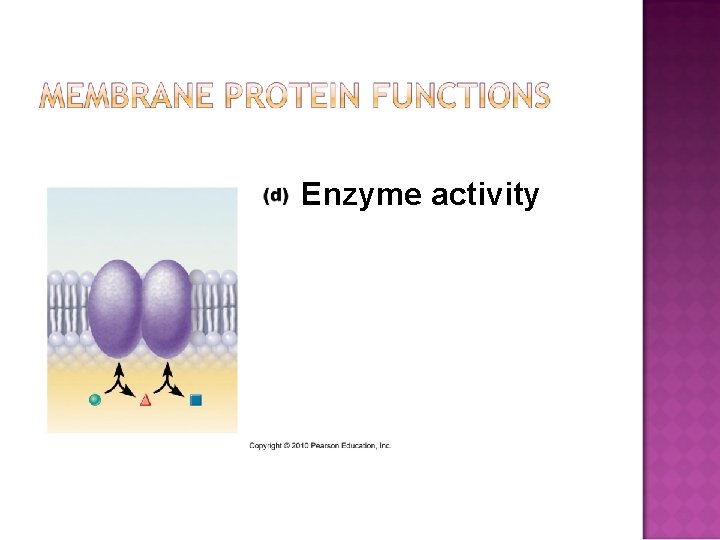
Enzyme activity
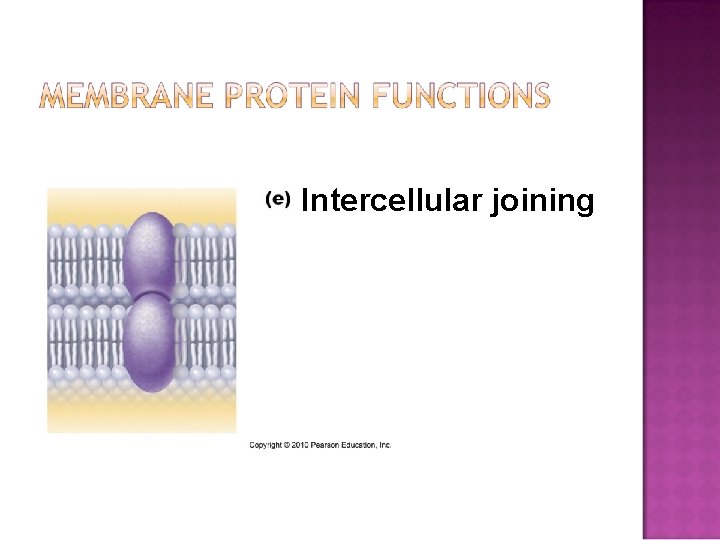
Intercellular joining
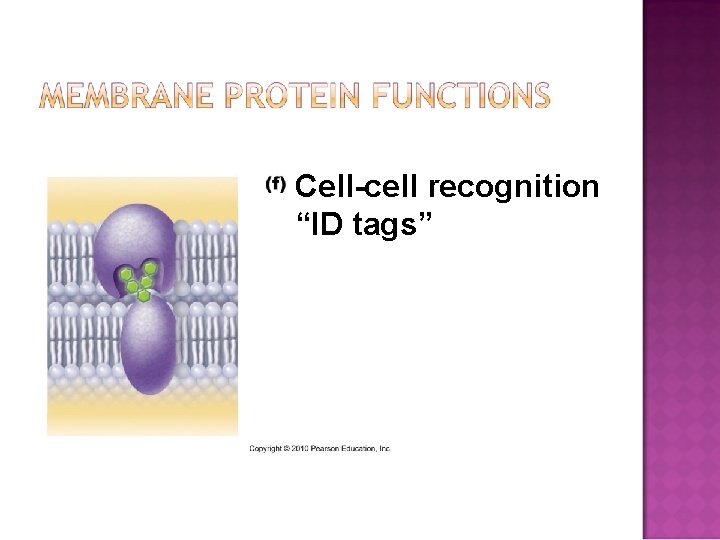
Cell-cell recognition “ID tags”
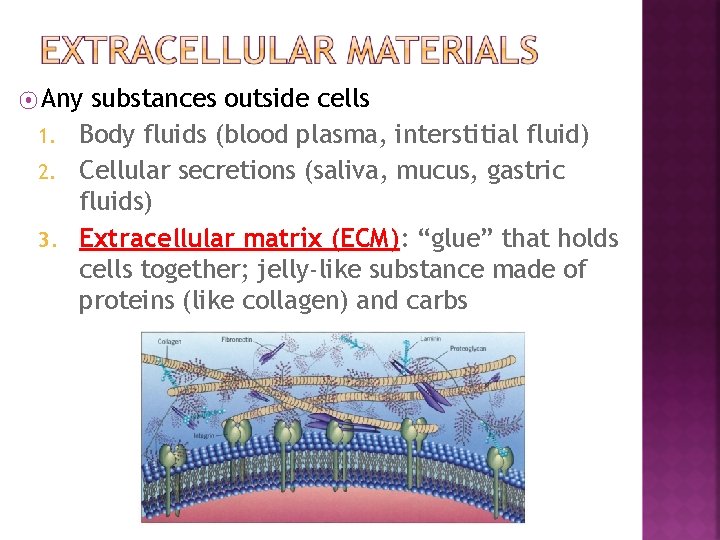
⦿ Any substances outside cells 1. Body fluids (blood plasma, interstitial fluid) 2. Cellular secretions (saliva, mucus, gastric fluids) 3. Extracellular matrix (ECM): “glue” that holds cells together; jelly-like substance made of proteins (like collagen) and carbs
Interstitial fluid: ⦿ Fluid outside cells ⦿ Rich, nutritious “soup” – amino acids, sugars, fatty acids, vitamins, hormones, salts, wastes Selective Permeability: ⦿ Plasma membrane only allows some substances to enter cell ⦿ Nutrients in, wastes out ⦿ By passive or active transport
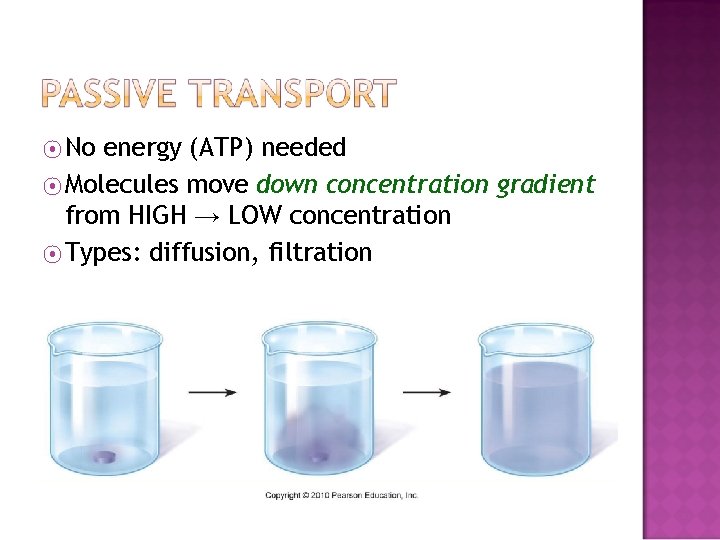
⦿ No energy (ATP) needed ⦿ Molecules move down concentration gradient from HIGH → LOW concentration ⦿ Types: diffusion, filtration
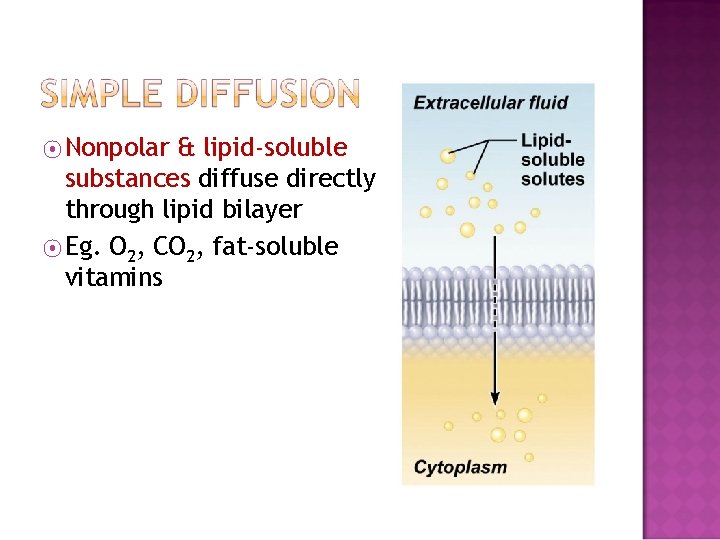
⦿ Nonpolar & lipid-soluble substances diffuse directly through lipid bilayer ⦿ Eg. O 2, CO 2, fat-soluble vitamins
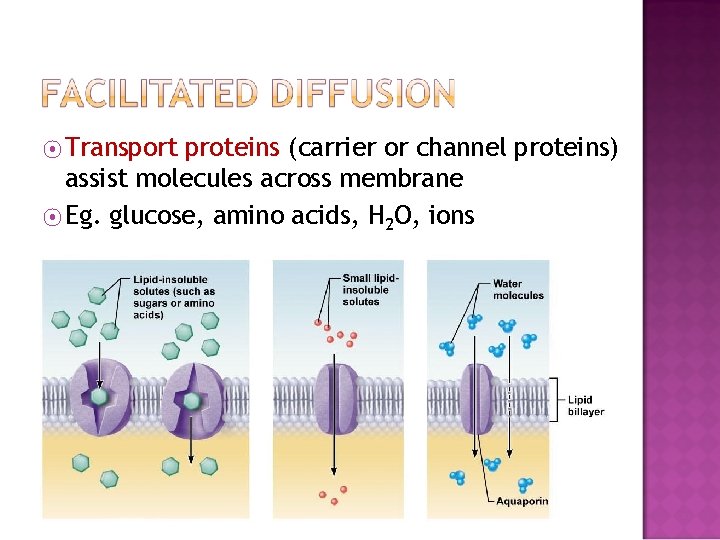
⦿ Transport proteins (carrier or channel proteins) assist molecules across membrane ⦿ Eg. glucose, amino acids, H 2 O, ions
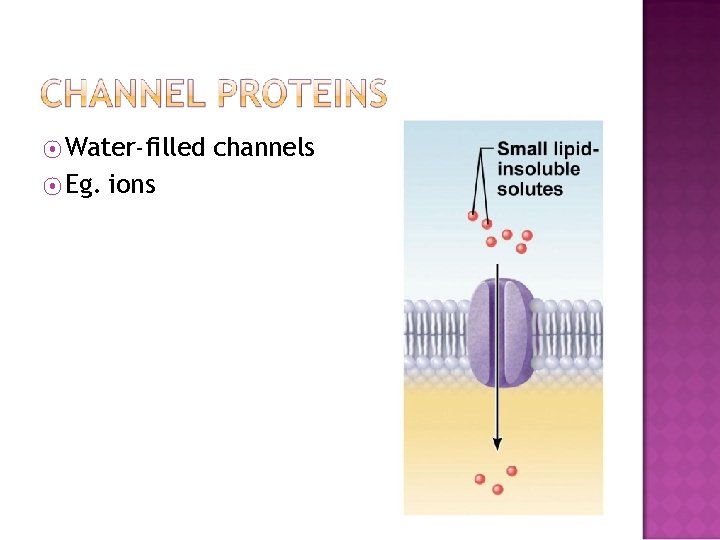
⦿ Water-filled ⦿ Eg. ions channels
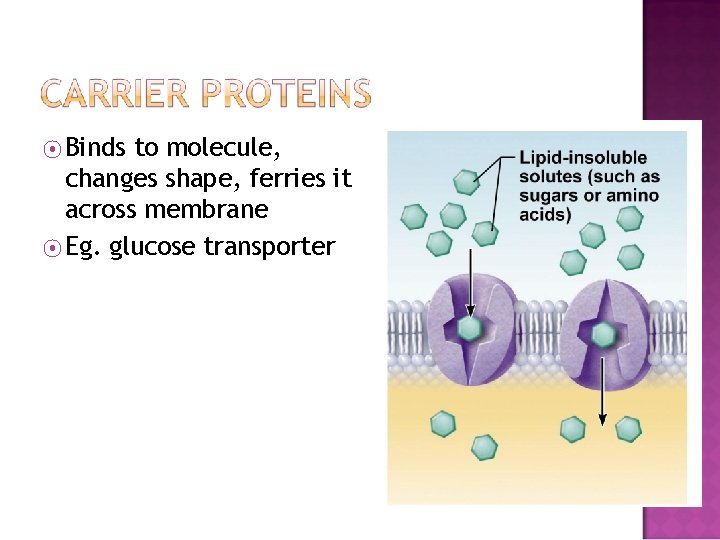
⦿ Binds to molecule, changes shape, ferries it across membrane ⦿ Eg. glucose transporter
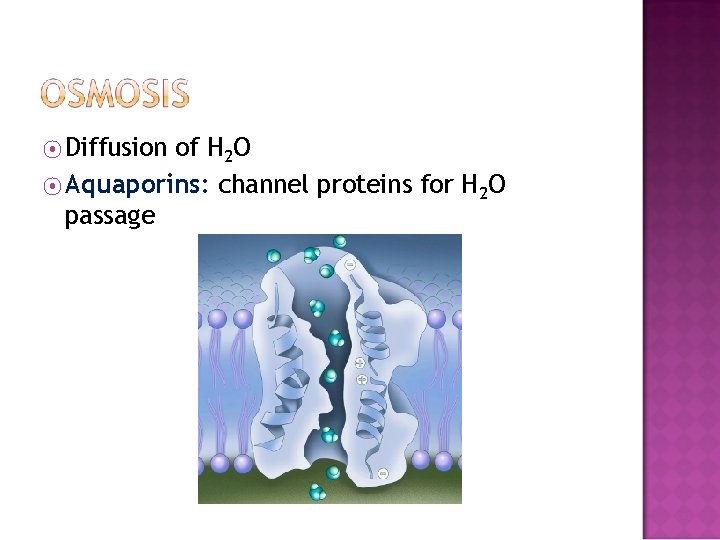
⦿ Diffusion of H 2 O ⦿ Aquaporins: channel proteins for H 2 O passage
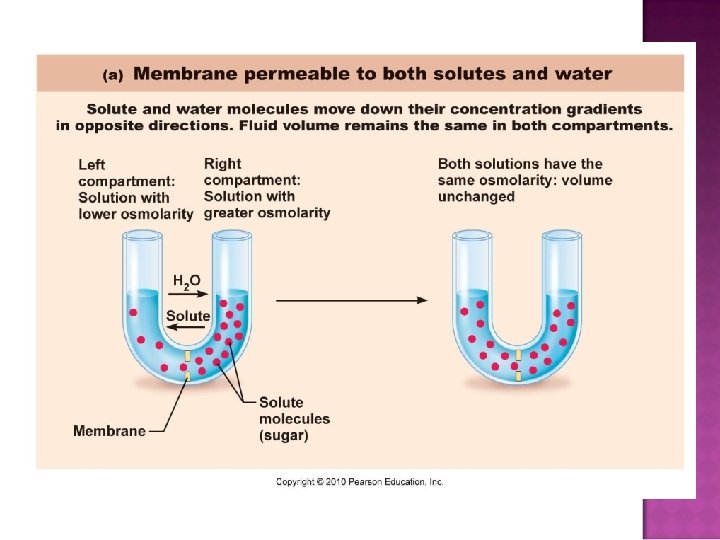
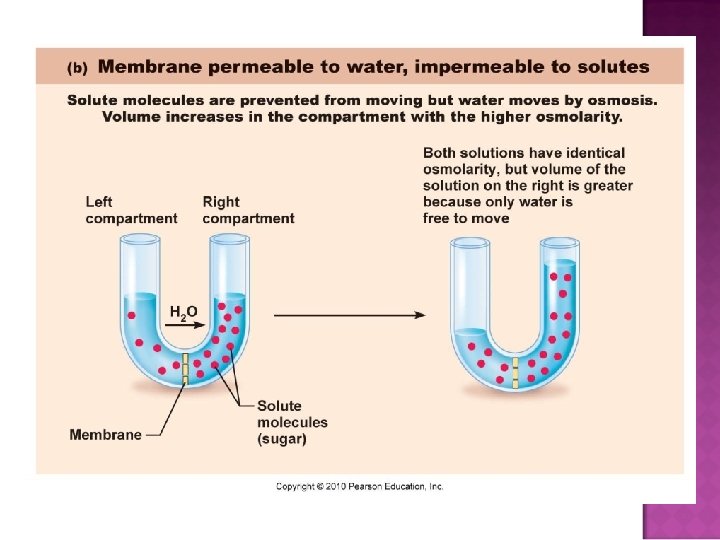
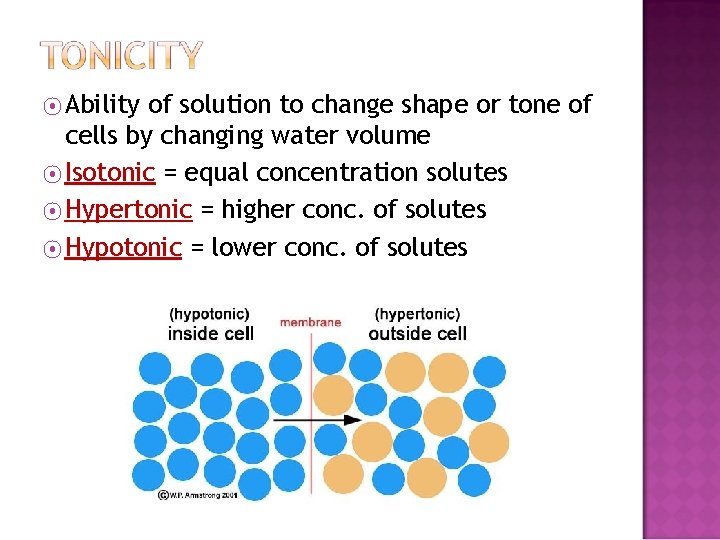
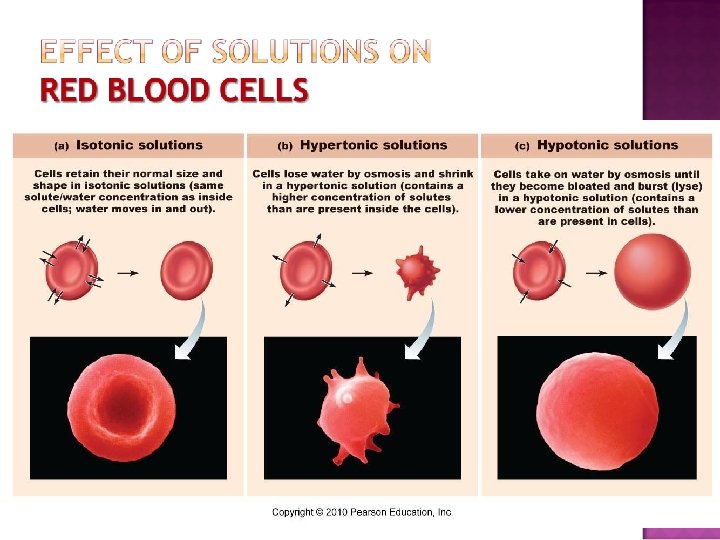
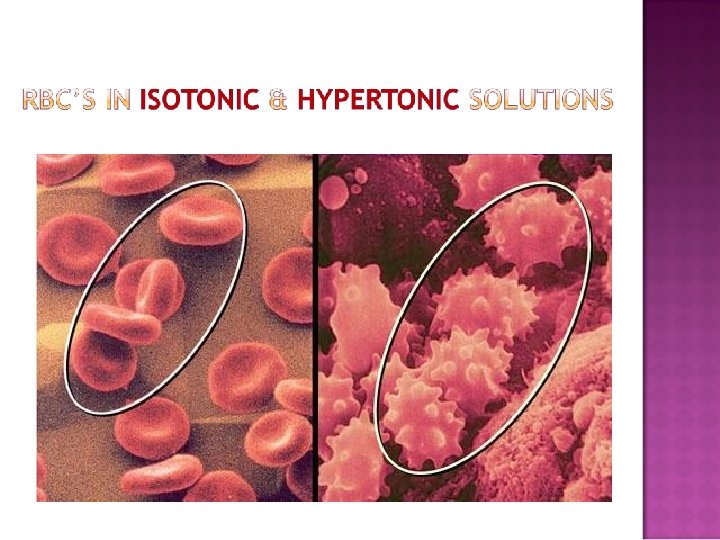
⦿ Ability of solution to change shape or tone of cells by changing water volume ⦿ Isotonic = equal concentration solutes ⦿ Hypertonic = higher conc. of solutes ⦿ Hypotonic = lower conc. of solutes
⦿ Energy (ATP) is needed!! ⦿ Move molecules against concentration gradient from LOW → HIGH concentration ⦿ Types: Primary and Secondary
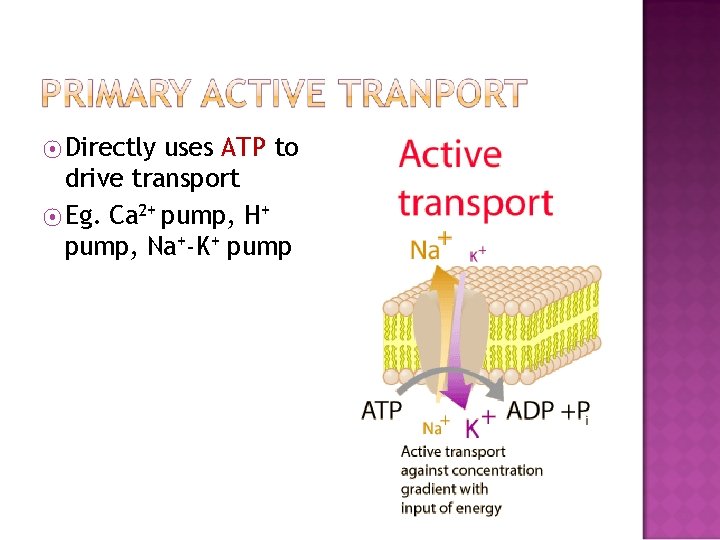
⦿ Directly uses ATP to drive transport ⦿ Eg. Ca 2+ pump, H+ pump, Na+-K+ pump
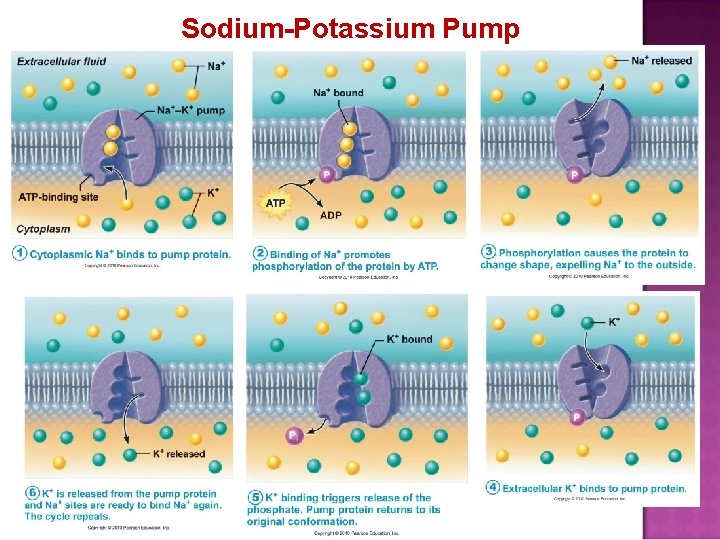
Sodium-Potassium Pump
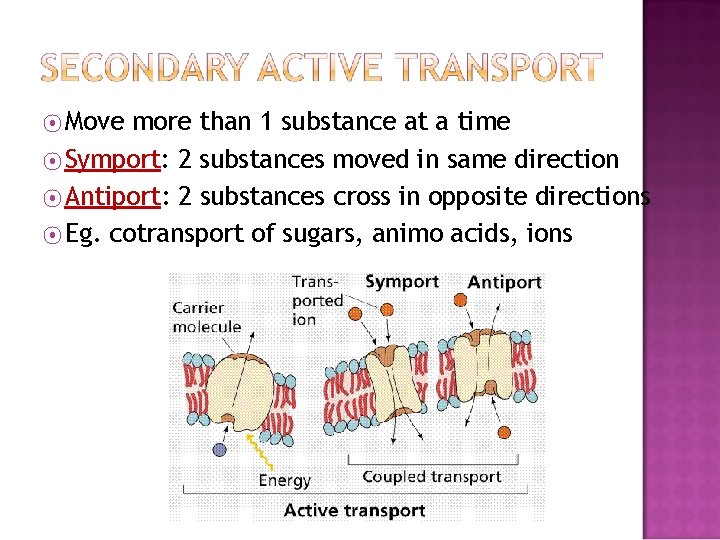
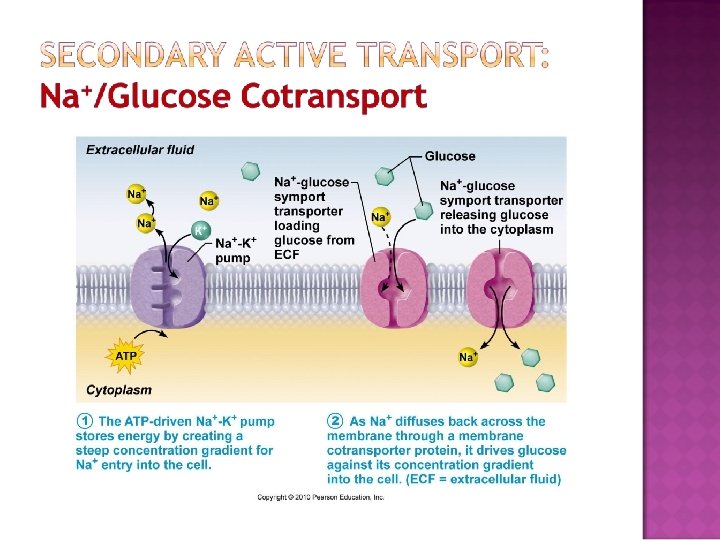
⦿ Move more than 1 substance at a time ⦿ Symport: 2 substances moved in same direction ⦿ Antiport: 2 substances cross in opposite directions ⦿ Eg. cotransport of sugars, animo acids, ions
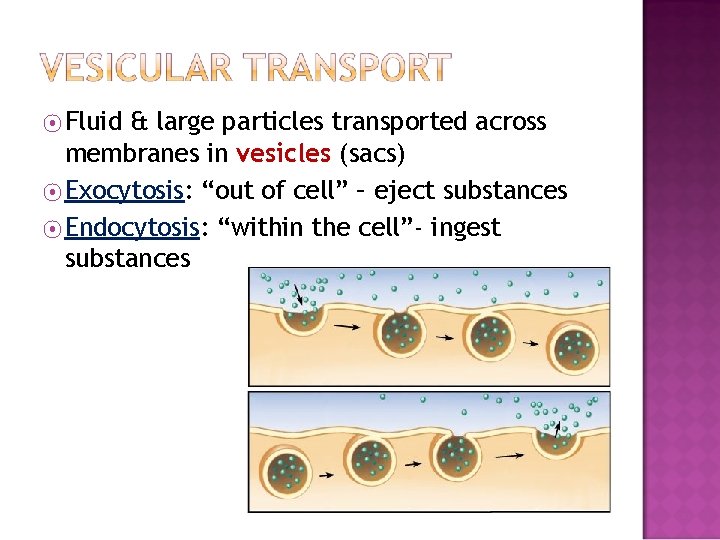
⦿ Fluid & large particles transported across membranes in vesicles (sacs) ⦿ Exocytosis: “out of cell” – eject substances ⦿ Endocytosis: “within the cell”- ingest substances
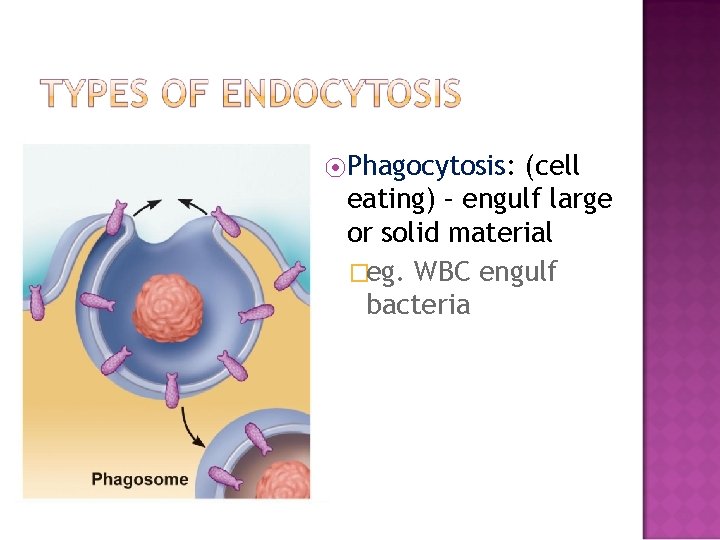
⦿Phagocytosis: (cell eating) – engulf large or solid material �eg. WBC engulf bacteria
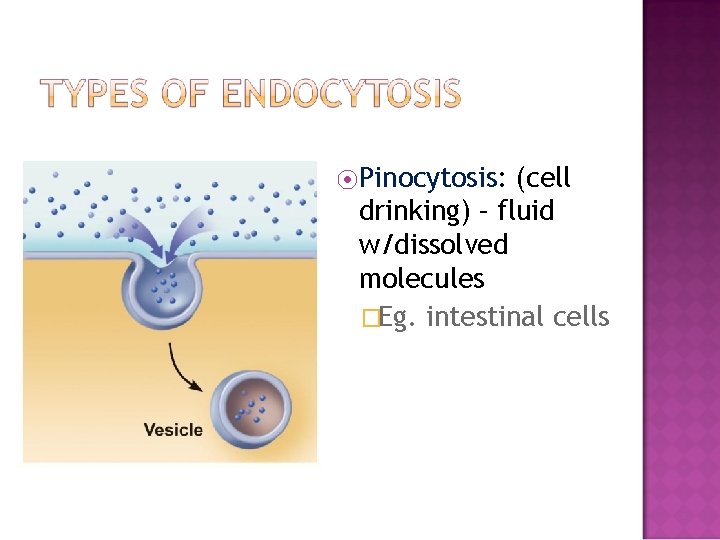
⦿Pinocytosis: (cell drinking) – fluid w/dissolved molecules �Eg. intestinal cells
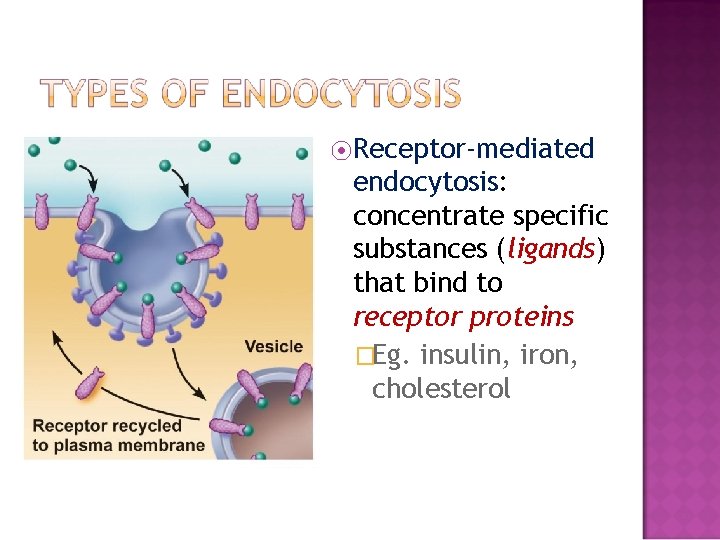
⦿Receptor-mediated endocytosis: concentrate specific substances (ligands) that bind to receptor proteins �Eg. insulin, iron, cholesterol
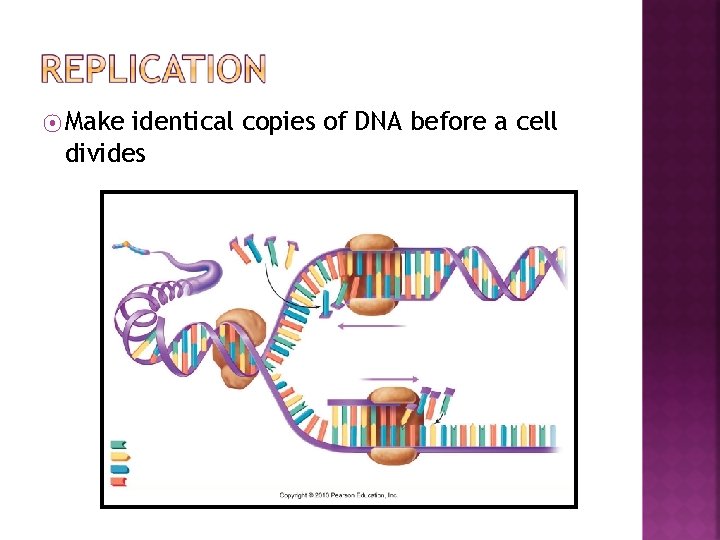
⦿ Make identical copies of DNA before a cell divides
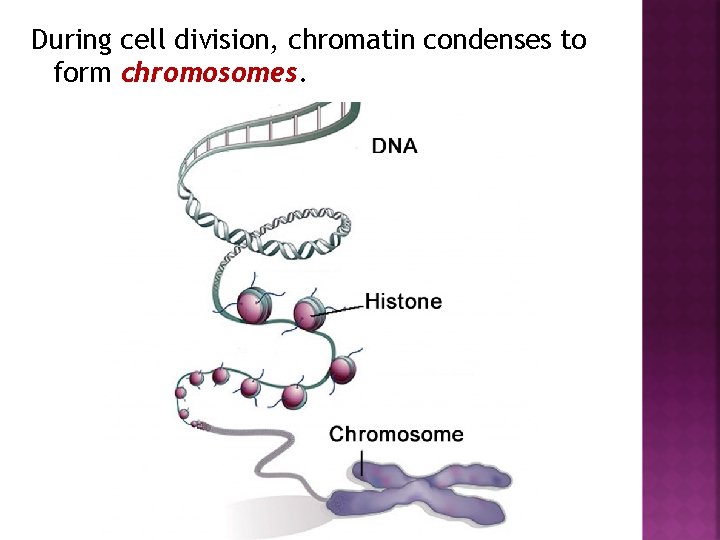
During cell division, chromatin condenses to form chromosomes.
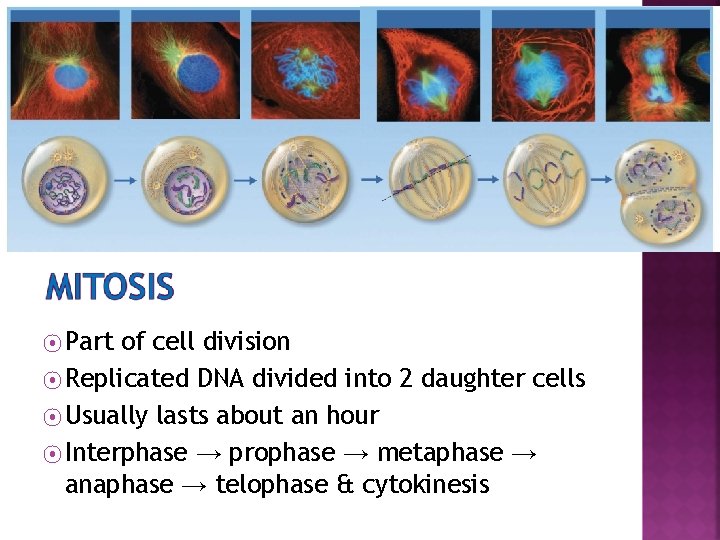
⦿ Part of cell division ⦿ Replicated DNA divided into 2 daughter cells ⦿ Usually lasts about an hour ⦿ Interphase → prophase → metaphase → anaphase → telophase & cytokinesis
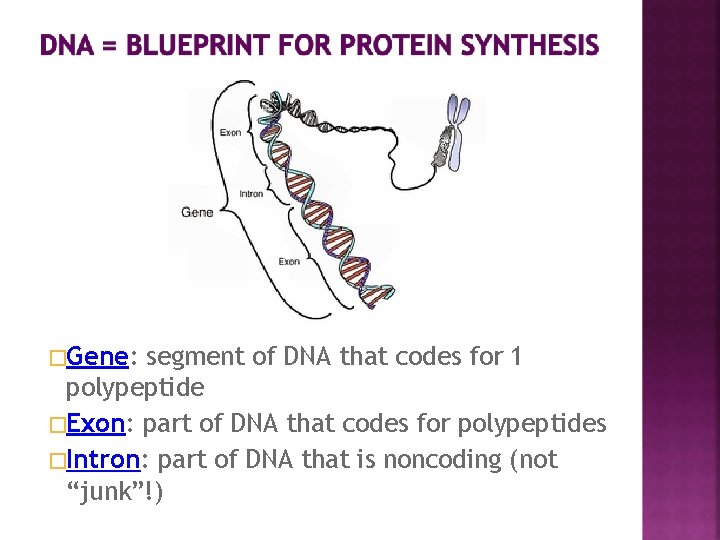
�Gene: segment of DNA that codes for 1 polypeptide �Exon: part of DNA that codes for polypeptides �Intron: part of DNA that is noncoding (not “junk”!)
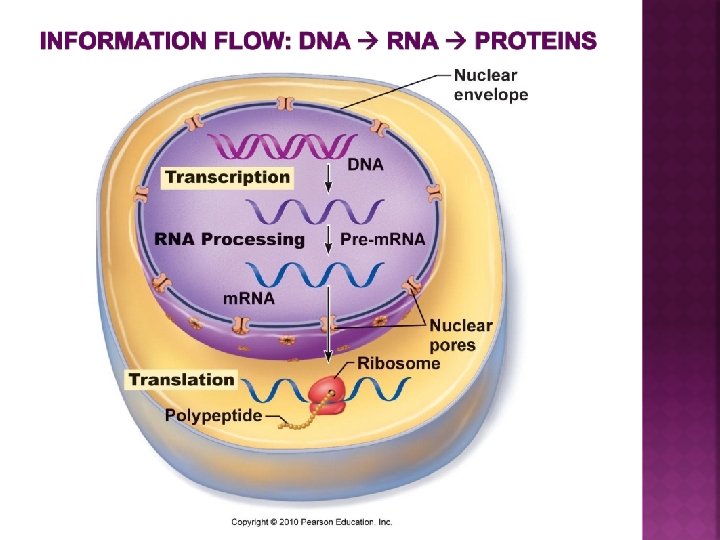
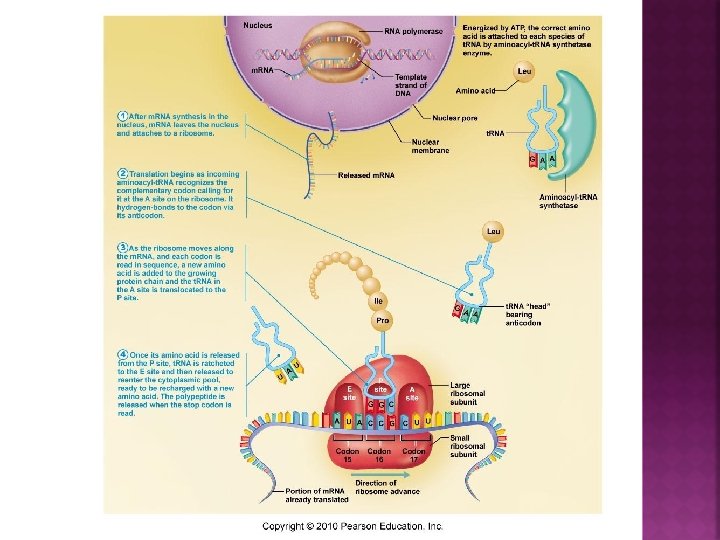
⦿ Transcription: RNA formed from DNA �Occurs in nucleus �Types: m. RNA, t. RNA, r. RNA ⦿ Translation: protein synthesis �polypeptide formed from m. RNA �Occurs in cytoplasm �By ribosomes
- Slides: 59