
Basic unit of life CELLS What is A
Basic unit of life CELLS

What is A Cell? �A cell is the basic unit of all living organism �Cells carry on the life processes of living organisms
Cell Theory �All organisms are made up of one or more cell. �All cells carry on life activities �New cells arise from old cells by the process of cell division
Types of cells �There are two general types of cells �Prokaryotes �Eukaryotes
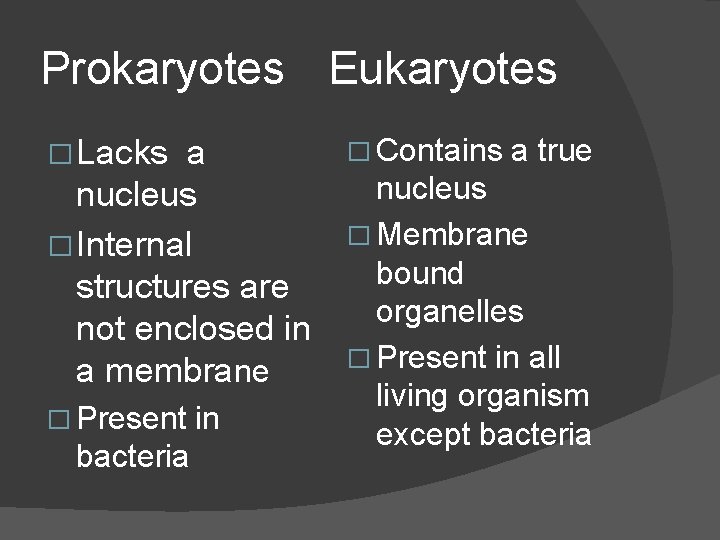
Prokaryotes Eukaryotes � Lacks a nucleus � Internal structures are not enclosed in a membrane � Present bacteria in � Contains a true nucleus � Membrane bound organelles � Present in all living organism except bacteria
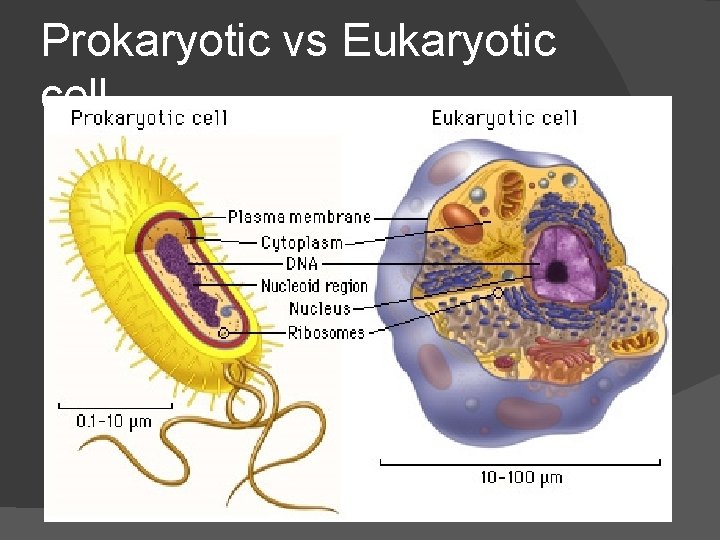
Prokaryotic vs Eukaryotic cell
Animal Cells �Animal cells are eukaryotic cells �They contain organelles which are internal structures that carry out the processes of the cell. �Some organelles are enclosed in their own membrane while others are not.
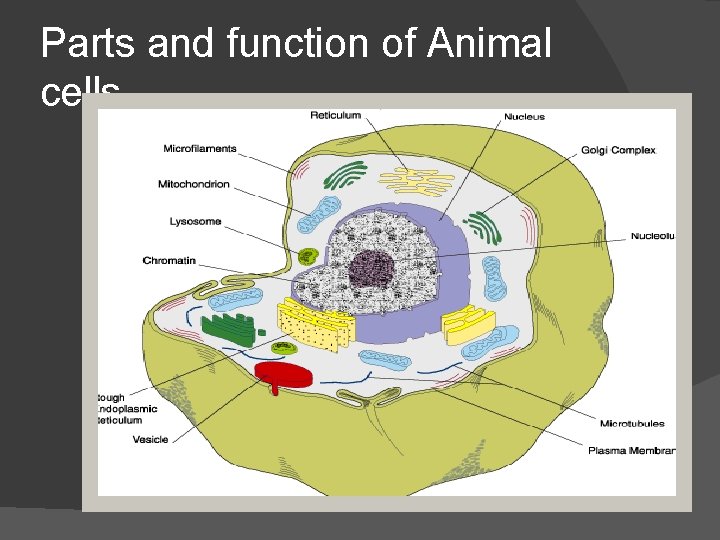
Parts and function of Animal cells
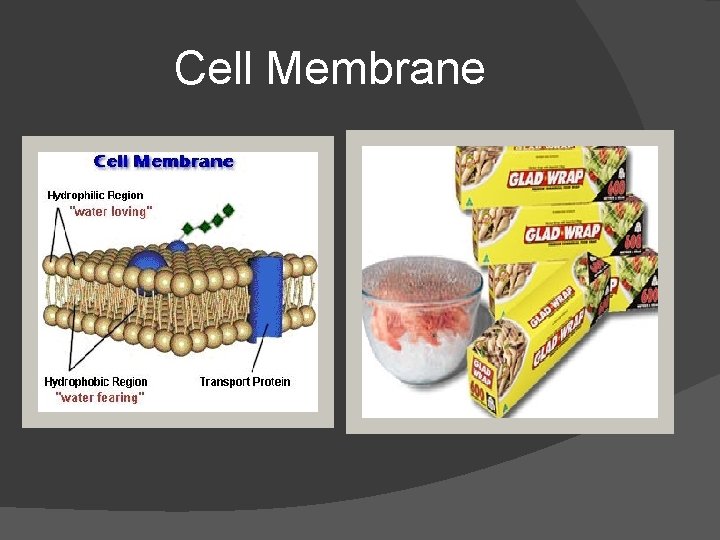
Cell Membrane
Cell Membrane or plasma membrane (phospholipid Bilayer) �Consist of two layers made up of lipids, proteins and carbohydrates. �Separates the cell from its surrounding environment �Controls the movement of materials into and out of the cell �Maintains the internal environment of the cell (homeostasis) �Selectively permeable
Nucleus
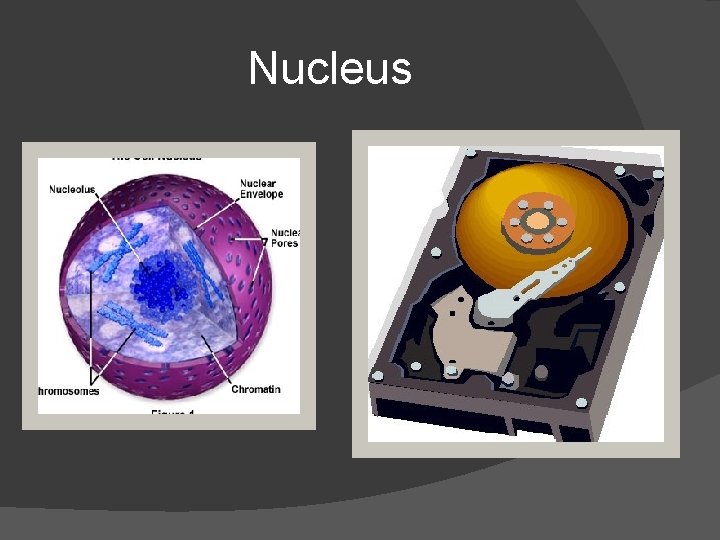
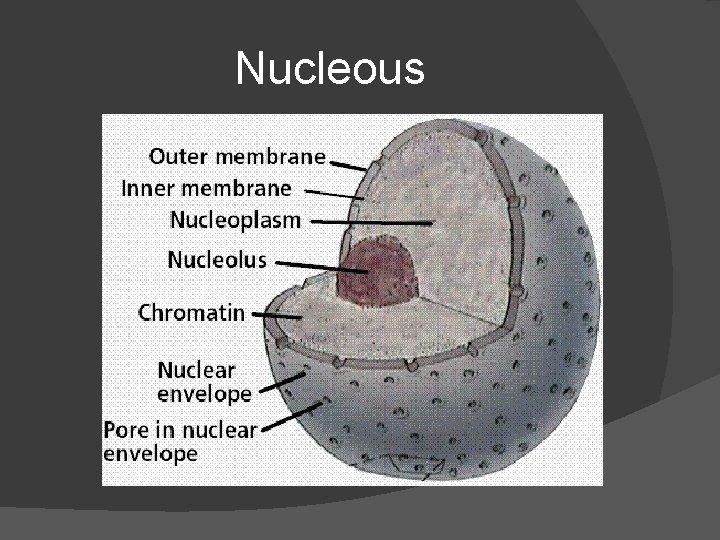
nucleus � Round membrane bound structure � Nuclear envelope/membrane-the double membrane that surrounds the nucleus � Serves as the control center for cell metabolism and reproduction � Contains the DNA material � Selectively permeable � Contains nuclear pores which control the passage of materials into and out of the nucleus.
Nucleous
Nucleolus �Dense granular body found inside of the nucleus �They are made up of RNA, DNA, Protein �They are responsible for the production of Ribosomes
Cytoplasm
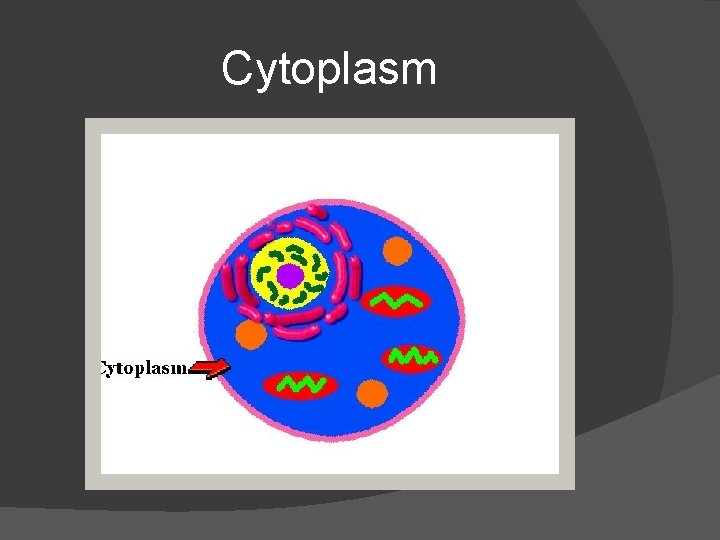
Cytoplasm � Watery substance within the cell � Located between the cell membrane and nucleus � Cytoplasm dissolves many of the substances needed for the cell to carry out metabolic activities � Contains many organelles that carry out specific metabolic functions.
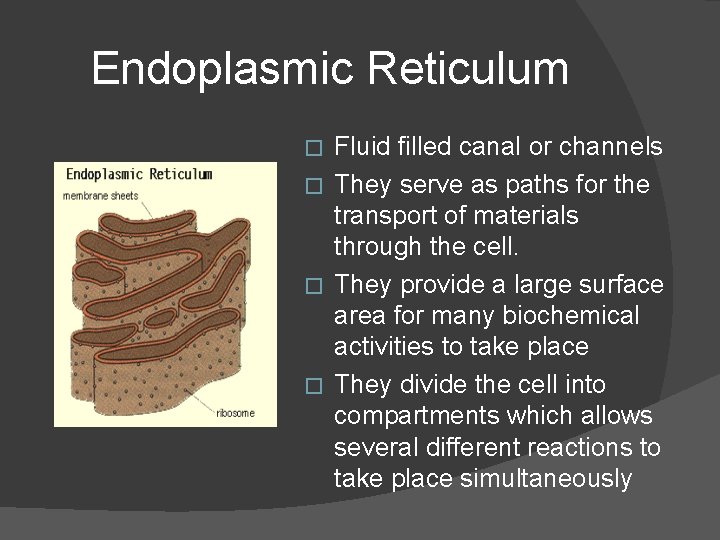
Endoplasmic Reticulum Fluid filled canal or channels � They serve as paths for the transport of materials through the cell. � They provide a large surface area for many biochemical activities to take place � They divide the cell into compartments which allows several different reactions to take place simultaneously �
Endoplasmic Reticulum � There are two types of endoplasmic reticulum (E. R. ): � Rough E. R: contains ribosomes which gives the membrane a granular appearance � Smooth E. R. -Lacks ribosomes
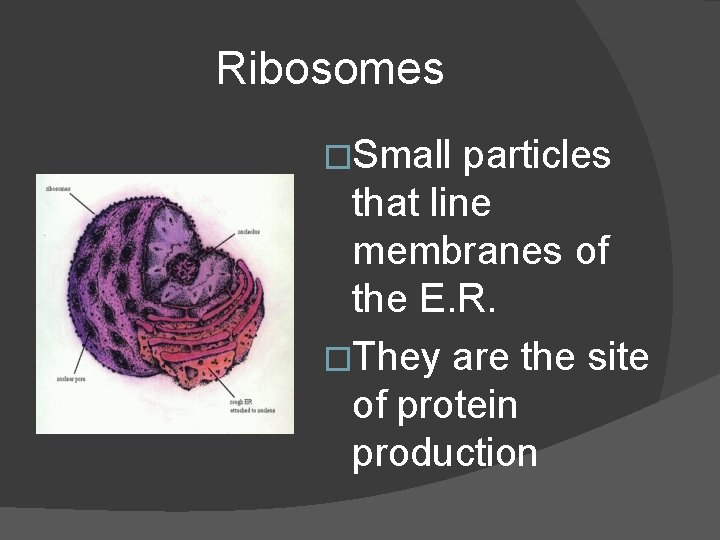
Ribosomes �Small particles that line membranes of the E. R. �They are the site of protein production
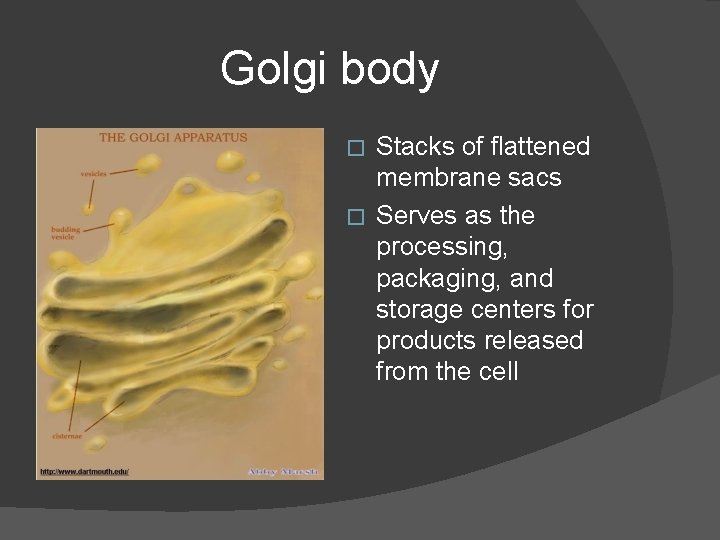
Golgi body Stacks of flattened membrane sacs � Serves as the processing, packaging, and storage centers for products released from the cell �
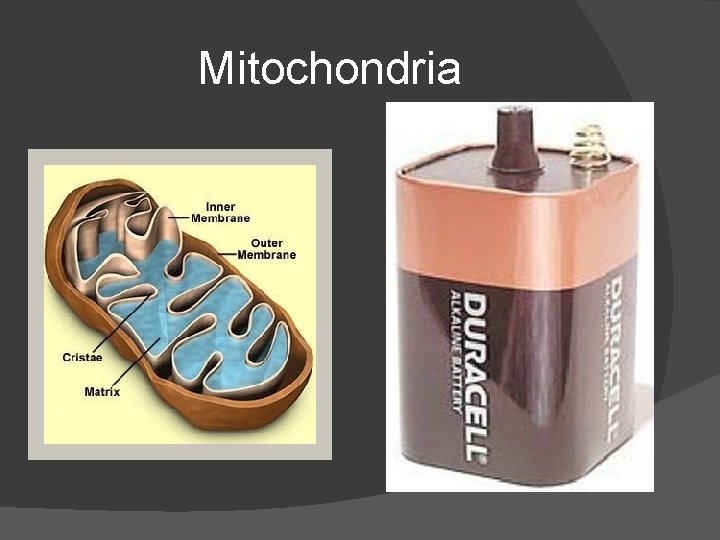
Mitochondria
� Hot Mitochondria dog shaped organelle � The mitochondria is considered the power house of the cell � It releases the energy stored in food � This energy allows the cell to carry on the processes that are necessary to sustain life.
- Slides: 22